








Contents 20 sections
- The Etiquette of Supplication During Hajj
- Can you make dua in your own language during Hajj?
- Supplication at Arafat: The Virtue of the Day of Arafah
- Which dua is recited on the Day of Arafah?
- Is it obligatory to recite a specific dua at Arafat?
- Suggestions for making the most of your time at Arafat
- Remembrance and Supplication at Muzdalifah
- Duas at the Jamarat in Mina
- What is said when stoning the Jamarat?
- Supplication after the small and middle jamrahs
- When is the talbiyah stopped?
- The Takbir of Tashriq
- When is the takbir of tashriq recited?
- When Offering the Sacrifice and During Tawaf and Sa’i
- Key Remembrances Throughout Hajj
- Good Wishes on Returning from Hajj and Important Reminders
- Spiritual Preparation Calendar for the 2027 Hajj Season
- Current practices at the holy sites
- Keep reading
- Frequently Asked Questions
Hajj is one of the five pillars of Islam, and with its rites stretching from Arafat to Muzdalifah and from there to Mina, it is an act of worship woven with remembrance and supplication from beginning to end. In this article, we look at Hajj duas: we present the declaration of Allah’s oneness (tawhid) recited on the Day of Arafah, the practices transmitted from the Prophet (peace be upon him) at Muzdalifah and Mina, the takbir of tashriq and what is said when offering the sacrifice, with their transliterations and English meanings. If you would like to see the steps of Hajj in order, you can make use of our article How to Perform Hajj? and our Hajj guide.
The Etiquette of Supplication During Hajj
Supplication during Hajj is not merely reciting certain texts from memory; what truly matters is the servant turning to their Lord with their heart. Being in a state of wudu if possible, facing the qiblah, raising the hands, beginning with praise of Allah and salawat, and being hopeful and patient are all part of the etiquette of supplication. The Prophet stated that the reward of an accepted Hajj (Hajj mabrur) is nothing but Paradise (Bukhari, Muslim); the supplications made throughout Hajj are also the strongest expression of this hope of acceptance.
Can you make dua in your own language during Hajj?
Yes, you can supplicate in any language you wish throughout Hajj. Learning the remembrances and supplications transmitted from the Prophet is virtuous; however, a person who does not know them or cannot grasp their meaning can supplicate sincerely in their own language. What matters is that the supplication comes from the heart and that the person is aware of what they are asking of their Lord.
Supplication at Arafat: The Virtue of the Day of Arafah
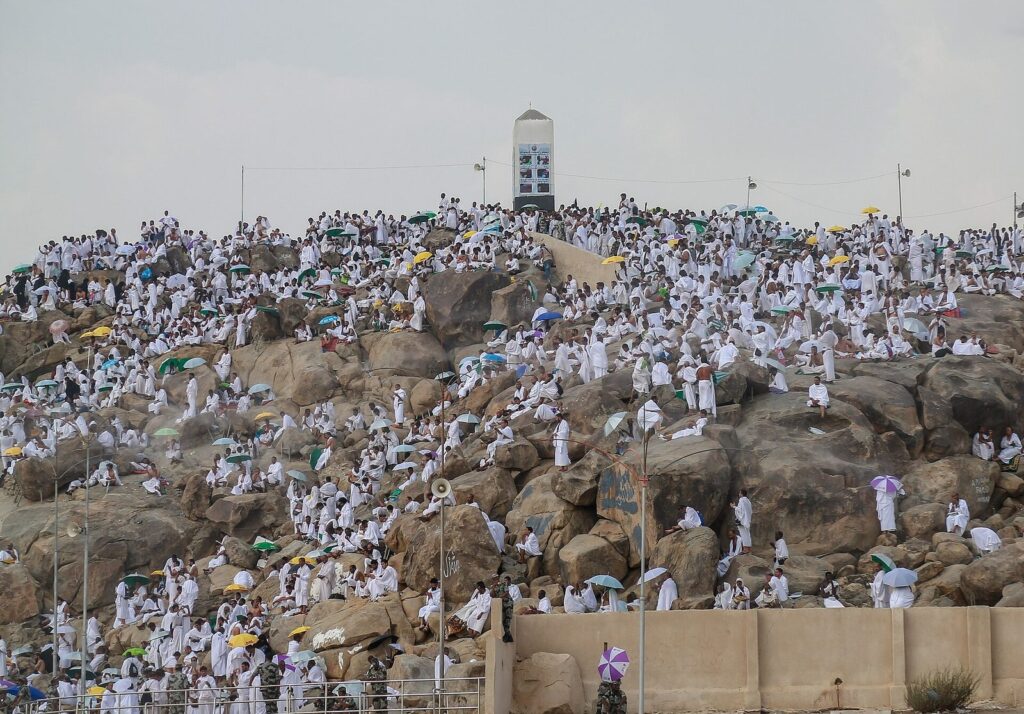
The standing at Arafat (wuquf) is the most important pillar of Hajj; the Prophet said, “Hajj is Arafat” (Abu Dawud, Tirmidhi). The wuquf is fulfilled by being present within the boundaries of Arafat for a while, in a state of ihram, during the period from the time the sun passes its zenith (zawal) on the Day of Arafah until dawn (fajr) on the first day of Eid.
Which dua is recited on the Day of Arafah?
The most prominent remembrance for the Day of Arafah is the declaration of Allah’s oneness mentioned in the hadith in which the Prophet said, “The best supplication is the supplication made on the Day of Arafah.” The same hadith states that the most virtuous of the words said by him and by the prophets before him is this declaration (Tirmidhi, Da’awat). Repeating this remembrance frequently is one of the most beautiful ways to make the most of the time at Arafat.
Transliteration: Lâ ilâhe illallâhu vahdehû lâ şerîke leh, lehü’l-mülkü ve lehü’l-hamdü ve hüve alâ külli şey’in kadîr. (Common English spelling: La ilaha illallahu wahdahu la sharika lah, lahul-mulku wa lahul-hamdu wa huwa ‘ala kulli shay’in qadir.)
Meaning: There is no god but Allah; He is One and has no partner. His is the dominion, to Him belongs all praise, and He has power over all things.
Is it obligatory to recite a specific dua at Arafat?
No, there is no specific supplication text that must be recited at Arafat. For the wuquf to be valid, it is sufficient to be within the boundaries of Arafat in a state of ihram during the specified time; supplication, remembrance and seeking forgiveness, however, form the spirit of this time. The pilgrim may make any supplication they wish, in any language they wish.
Suggestions for making the most of your time at Arafat
It is narrated that the Prophet remained in wuquf at Arafat, facing the qiblah, until the sun set (Muslim). To make the most of these long and precious hours, the following can be suggested:
- Reciting the Holy Qur’an and reflecting on the meaning of the verses recited,
- Seeking forgiveness with sincere repentance,
- Sending blessings (salawat) upon the Prophet,
- Repeating remembrances such as the declaration of Allah’s oneness, the takbir and the tasbih,
- Using a list prepared in advance to supplicate for your parents, spouse, children, relatives, friends and the whole Ummah,
- Repeating the talbiyah at intervals,
- Not tiring yourself in the heat, staying in the shade and drinking plenty of water.
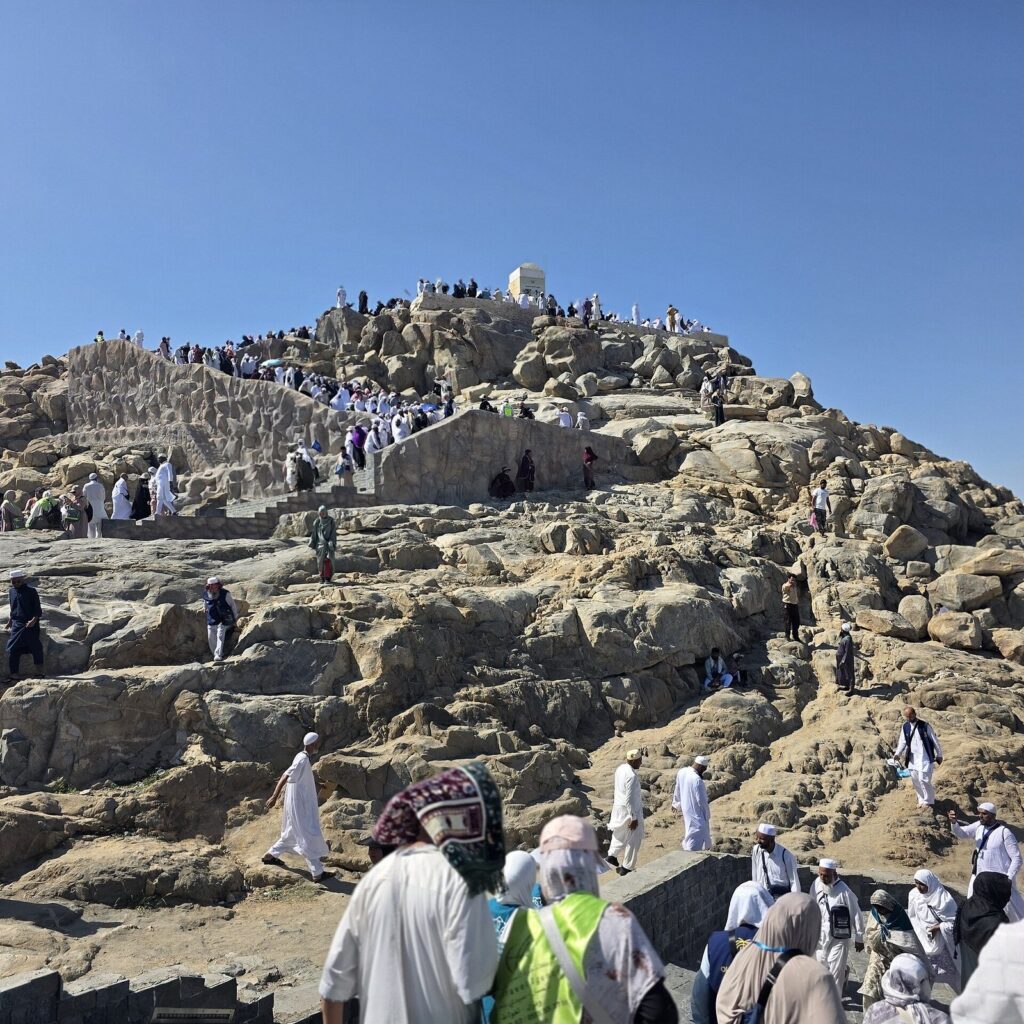
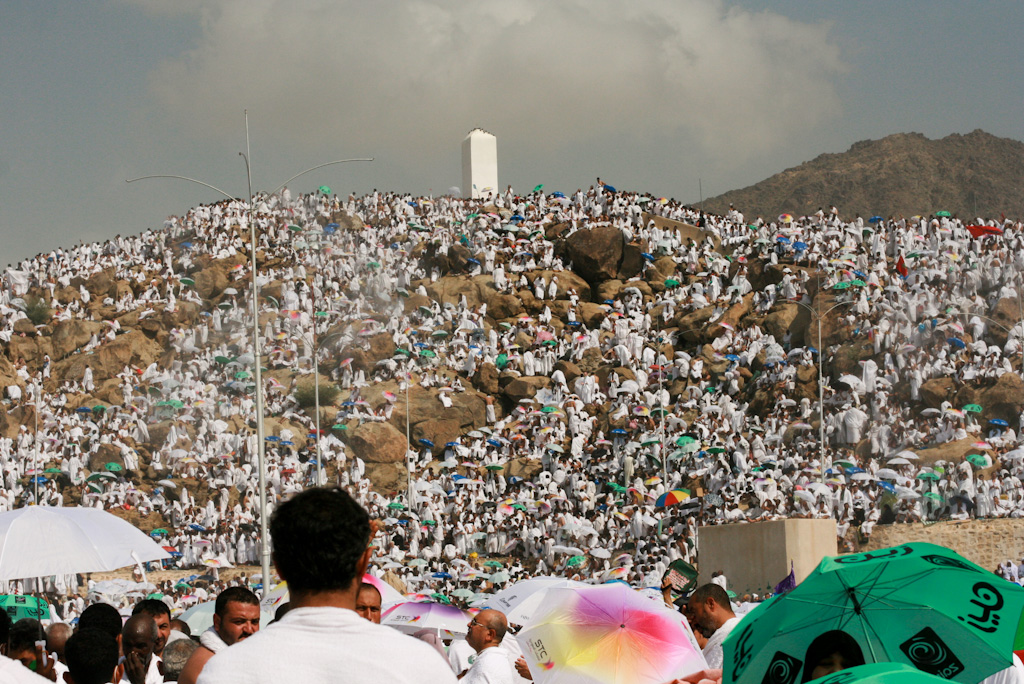
Climbing Jabal ar-Rahmah is not a condition of the wuquf. Without putting yourself or others in difficulty in the crowds, you can also perform the wuquf in your tent within the boundaries of Arafat.
Remembrance and Supplication at Muzdalifah
After sunset on the Day of Arafah, pilgrims move from Arafat to Muzdalifah, and the maghrib and isha prayers are performed together at Muzdalifah in the time of isha. The Holy Qur’an clearly commands that Allah be remembered at this place (al-Baqarah 2:198):
Transliteration: Fe izâ efadtüm min Arafâtin fezkürullâhe inde’l-meş’ari’l-harâm. (Common English spelling: Fa idha afadtum min ‘Arafatin fadhkurullaha ‘indal-mash’aril-haram.)
Meaning: When you surge forth from Arafat, remember Allah at al-Mash’ar al-Haram.
According to the narration of Jabir, after performing the dawn prayer on the morning of Eid, the Prophet came to al-Mash’ar al-Haram, faced the qiblah and supplicated, said the takbir, the tahlil and the declaration of Allah’s oneness, and remained there until it had become quite light (Muslim). According to the Hanafi school, the wuquf at Muzdalifah is performed in the time between dawn (fajr) and sunrise on the first day of Eid. During this time, occupying oneself with the talbiyah, takbir, tahlil, salawat and supplication is in keeping with the Sunnah. The pebbles to be thrown at the Jamarat are also usually collected at Muzdalifah.
Duas at the Jamarat in Mina
On the first day of Eid, seven pebbles are thrown only at the large jamrah (Jamrat al-Aqabah), while on the following days seven pebbles each are thrown at the small, middle and large jamrahs, in that order. The stoning is an expression of submission to Allah’s command and of remembering Him; for this reason, it is important that each throw is accompanied by remembrance.
What is said when stoning the Jamarat?
The takbir is said as each pebble is thrown. Authentic narrations report that the Prophet said the takbir with each pebble he threw at the jamrah (Bukhari). In practice, the following is said with each pebble:
Transliteration: Bismillâhi Allâhu ekber. (Common English spelling: Bismillahi Allahu akbar.)
Meaning: In the name of Allah. Allah is the Greatest.
Supplication after the small and middle jamrahs
According to the narration of Abdullah ibn Umar, after stoning the small jamrah, the Prophet moved forward a little, faced the qiblah, raised his hands and supplicated for a long time. After the middle jamrah, he likewise faced the qiblah and supplicated, whereas after stoning the large jamrah, he left without stopping there (Bukhari). For this reason, after the small and middle jamrahs, it is Sunnah to move to a spot where you will not block the flow of the crowd, face the qiblah and supplicate; after the large jamrah, one leaves without waiting.
When is the talbiyah stopped?
A person who has entered ihram for Hajj stops the talbiyah when they throw the first pebble at the large jamrah on the first day of Eid. It is narrated that the Prophet continued the talbiyah until he had stoned Jamrat al-Aqabah (Bukhari, Muslim). From this moment on, the takbir and other remembrances take the place of the talbiyah.
The Takbir of Tashriq
The takbir of tashriq is the takbir said after the obligatory prayers during the days of Eid al-Adha. According to the Hanafi school, it is necessary (wajib) for every Muslim who performs the obligatory prayer to say this takbir, whether they are a pilgrim or not. Men recite it aloud, while women recite it quietly, only loud enough for themselves to hear.
Transliteration: Allâhu ekber Allâhu ekber, lâ ilâhe illallâhu vallâhu ekber, Allâhu ekber ve lillâhi’l-hamd. (Common English spelling: Allahu akbar Allahu akbar, la ilaha illallahu wallahu akbar, Allahu akbar wa lillahil-hamd.)
Meaning: Allah is the Greatest, Allah is the Greatest. There is no god but Allah, and Allah is the Greatest. Allah is the Greatest, and all praise belongs to Allah alone.
When is the takbir of tashriq recited?
According to the Hanafi school and the explanations of Diyanet (Türkiye’s Presidency of Religious Affairs), the takbir of tashriq is recited once after each obligatory prayer, starting from the dawn prayer on the Day of Arafah until the afternoon (asr) prayer on the fourth day of Eid, after a total of 23 obligatory prayers. The takbir is said immediately after the closing salam of the obligatory prayer. For details such as what to do if it is forgotten, you can consult Diyanet’s ilmihal (basic religious knowledge) resources.
When Offering the Sacrifice and During Tawaf and Sa’i
According to the Hanafi school, mentioning the name of Allah during the slaughter is required. It is narrated that the Prophet said the basmalah and the takbir when slaughtering his sacrificial animals (Bukhari, Muslim). Accordingly, the following is said during the slaughter:
Transliteration: Bismillâhi Allâhu ekber. (Common English spelling: Bismillahi Allahu akbar.)
Meaning: In the name of Allah. Allah is the Greatest.
For those performing tamattu or qiran Hajj, offering a sacrifice of thanksgiving is necessary (wajib). As the slaughter is mostly carried out through authorised institutions today, it is advisable to learn the details regarding proxy (wakalah) and the time of slaughter from Diyanet’s Hajj information.
The supplications that can be recited during the tawaf and sa’i parts of Hajj are the same as those recited during Umrah. You can find the remembrances recited when saluting the Black Stone, between the Yemeni Corner and the Black Stone, and at Safa and Marwah in detail in our article Umrah Duas. If you are curious about the basic differences between the two acts of worship, you can also take a look at our article on the differences between Hajj and Umrah.
Key Remembrances Throughout Hajj
The table below summarises the remembrances covered in this article, together with their place in the rites:
| Place / Time | Key remembrance | Source |
|---|---|---|
| Throughout ihram | Talbiyah | Bukhari, Muslim |
| Arafat (Day of Arafah) | The declaration of Allah’s oneness, “Lâ ilâhe illallâhu vahdehû lâ şerîke leh…” | Tirmidhi |
| Muzdalifah (al-Mash’ar al-Haram) | Remembrance, takbir, tahlil and supplication | al-Baqarah 2:198; Muslim |
| Stoning the Jamarat | Takbir with each pebble (“Bismillâhi Allâhu ekber”) | Bukhari |
| After the small and middle jamrahs | Supplication while facing the qiblah | Bukhari |
| Slaughtering the sacrifice | “Bismillâhi Allâhu ekber” | Bukhari, Muslim |
| After the obligatory prayers from the dawn prayer on the Day of Arafah until the afternoon prayer on the 4th day of Eid | Takbir of tashriq | Hanafi school, Diyanet |
Good Wishes on Returning from Hajj and Important Reminders
When we visit a loved one who has returned from Hajj, offering kind wishes such as “May Allah accept your Hajj” and “May your Hajj be mabrur (accepted)” is a way of sharing in their joy. The pilgrim, in turn, takes care to be modest when sharing their experiences during these visits, not to turn their worship into a show, and to reflect in their life the spiritual lessons they have learnt.
The transliterations in this article are given in Latin letters and do not fully represent some of the sounds in Arabic; it is recommended that the supplications be learnt from a qualified teacher for correct pronunciation. For detailed matters of Islamic jurisprudence, such as the wuquf, the combining of prayers, the times for stoning and the sacrifice, we recommend that you consult Diyanet’s Hajj ilmihal and its officials.
Spiritual Preparation Calendar for the 2027 Hajj Season
Hajj 2026 was completed at the end of May, and Hajj 2027 is expected to fall in mid-May 2027. The exact days will become clear with the Diyanet calendar and the announcement of the Saudi authorities. As Hajj is an act of worship spent in supplication and remembrance from beginning to end, from the long hours of the wuquf at Arafat to the days of tashriq in Mina, spiritual preparation should not be left to the final weeks. We have covered the order of the days of Dhul Hijjah in our article when is Hajj; the calendar below is a suggestion for those who intend to go on Hajj in 2027.
| Period | Suggestion |
|---|---|
| September – November 2026 | Following Diyanet’s announcements on the Hajj registration and lottery process; starting to read the meanings of the remembrances in this article |
| December 2026 – January 2027 | Increasing repentance and seeking forgiveness, taking the three sacred months and the holy nights as an occasion; creating a personal dua list for Arafat |
| February – March 2027 | Throughout Ramadan, consolidating the talbiyah, the declaration of Allah’s oneness highlighted for the Day of Arafah and the takbir of tashriq by listening to a qualified teacher |
| March – April 2027 | Attending briefings on the rites; consulting your family doctor or the travel health centres of Türkiye’s Ministry of Health about your health preparations |
| May 2027 | Reviewing the dua list one last time; planning times for remembrance according to the group’s daily programme |
You can adapt the suggestions in the calendar to your own situation. Starting this preparation while you wait for the lottery result makes it easier, if you are granted Hajj, to focus on the meaning of the remembrances amid the intensity of the rites; and if you are not, the preparation you have made remains a lasting gain for your Umrah journey and your daily life of worship.
Current practices at the holy sites
During the Hajj period, entry to the holy sites is restricted for those without a Nusuk card and a Hajj permit, and sanctions are applied to attempts to perform Hajj without a permit. In Türkiye, both Hajj via the Diyanet lottery and private Hajj are subject to Diyanet’s registration and lottery process; preparations for Hajj should only be made with the permit obtained at the end of this official process. We have explained the differences between the two options in our article on the difference between Hajj via the Diyanet lottery and private Hajj.
The Mashaer Metro serves Mina, Muzdalifah and Arafat during the days of Hajj; however, which group travels by metro, which by bus and at what time varies according to the organisation. For this reason, it is best to arrange your time for remembrance at Muzdalifah and your supplications after the Jamarat according to the plan that your group officials will explain. As the walking distances to the stations and the Jamarat can be long, comfortable shoes and a light bag help you preserve the strength you will need for remembrance and supplication.
- Simplify your dua list: In the crowds and the heat, short remembrances whose meaning you know are easier to keep up than long texts.
- Stay with your group: Learn the location of your tent in Mina and the meeting points on the first day; this way, you can focus on remembrance and supplication without worrying about getting lost.
- Plan how you will stay in touch with your family: Let your loved ones know in advance so that you can devote your time at Arafat and Muzdalifah to supplication rather than to your phone.
- Keep your card with you: Keep your Nusuk card and group ID somewhere easy to reach throughout the rites.
- Be prepared for the heat: As temperatures in the region can be high in May, plan for water, an umbrella and shade; for questions about your health, consult your family doctor.
- Confirm current conditions: As Saudi practices can change, confirm current conditions with official sources and your travel agency before you travel.
Keep reading
- Places Where Duas Are Accepted: Sites in Makkah and Madinah Where the Acceptance of Dua Is Hoped For
- Dua on Seeing the Kaaba: Transliteration, Meaning and the Etiquette of the First Glance
- Visiting the Martyrs of Uhud: The Greeting Dua and the Etiquette of the Visit
May our Lord grant all Hajj candidates an accepted Hajj. For questions about our Hajj tours or your Hajj preparations, you can reach us through our WhatsApp line or our contact page; we will be glad to help you.
Frequently Asked Questions
Should you stand while making dua at Arafat?
No, standing at Arafat is not a requirement; being within the boundaries of Arafat in a state of ihram during the specified time is sufficient for the wuquf. Those who are able can stand facing the qiblah and supplicate for a while, and those who become tired can continue supplicating while seated. Rather than exhausting yourself over long hours, it is healthier to stay in the shade, rest and spread your supplication and remembrance across these intervals.
Can a menstruating woman make dua and dhikr at Arafat?
Yes, a menstruating woman can perform the wuquf at Arafat and can also occupy herself with the talbiyah, remembrance, salawat and supplication. During Hajj, the Prophet told Aisha, who was in this state, not to perform tawaf of the Kaaba until she became pure, but otherwise to do everything the pilgrims do (Bukhari, Muslim). According to the Hanafi school, a woman in this state cannot recite the Qur’an with the intention of recitation (tilawah); she may, however, recite verses that carry the meaning of supplication with the intention of supplication.
Which remembrances are made during the days spent in Mina?
The most prominent act of worship during the days in Mina is remembering Allah abundantly. The Holy Qur’an commands that Allah be remembered on the appointed days (al-Baqarah 2:203), and the Prophet stated that the days of tashriq are days of eating, drinking and remembering Allah (Muslim). During these days, the takbir of tashriq is said after the obligatory prayers, and the time is spent in takbir, tasbih, seeking forgiveness, salawat and supplication. The stoning times, meanwhile, are planned according to the group’s programme.
Is there a special dua to recite during the farewell tawaf?
No, there is no special supplication text transmitted from the Prophet for the farewell tawaf (tawaf al-wada). As in other tawafs, the takbir is said when saluting the Black Stone, the “Rabbenâ âtinâ” supplication can be recited between the Yemeni Corner and the Black Stone, and the person makes whatever supplication they wish in their own language. It is good to implore Allah to grant the opportunity to return. For the steps of tawaf, you can look at our article on how to perform tawaf.
Is it right to ask someone going on Hajj to pray for you?
Yes, asking a loved one who is going on Hajj for their prayers, and the pilgrim praying for their loved ones, is a good practice. The Prophet stated that when a believer supplicates for their brother in his absence, an angel responds, “And for you the same” (Muslim). By writing the names of those who asked for their prayers on a list before setting off, Hajj candidates can make it easier not to forget them at Arafat and the other blessed places.

Cihat Murat Yüksel is the editor of the RotaNur blog and the founder of Markention. Drawing on the sources of Türkiye's Presidency of Religious Affairs (Diyanet), he turns the questions travellers ask most about preparing for Umrah, Hajj and halal travel into clear, practical guides.
Questions answered in this article
Can you make dua in your own language during Hajj?
Yes, you can supplicate in any language you wish throughout Hajj. Learning the remembrances and supplications transmitted from the Prophet is virtuous; however, a person who does not know them or cannot grasp their meaning can supplicate sincerely in their own language. What matters is that the supplication comes from the heart and that the person is aware of what they are asking of their Lord.
Which dua is recited on the Day of Arafah?
The most prominent remembrance for the Day of Arafah is the declaration of Allah’s oneness mentioned in the hadith in which the Prophet said, “The best supplication is the supplication made on the Day of Arafah.” The same hadith states that the most virtuous of the words said by him and by the prophets before him is this declaration (Tirmidhi, Da’awat). Repeating this remembrance frequently is one of the most beautiful ways to make the most of the time at Arafat.
Is it obligatory to recite a specific dua at Arafat?
No, there is no specific supplication text that must be recited at Arafat. For the wuquf to be valid, it is sufficient to be within the boundaries of Arafat in a state of ihram during the specified time; supplication, remembrance and seeking forgiveness, however, form the spirit of this time. The pilgrim may make any supplication they wish, in any language they wish.
What is said when stoning the Jamarat?
The takbir is said as each pebble is thrown. Authentic narrations report that the Prophet said the takbir with each pebble he threw at the jamrah (Bukhari). In practice, the following is said with each pebble:
When is the talbiyah stopped?
A person who has entered ihram for Hajj stops the talbiyah when they throw the first pebble at the large jamrah on the first day of Eid. It is narrated that the Prophet continued the talbiyah until he had stoned Jamrat al-Aqabah (Bukhari, Muslim). From this moment on, the takbir and other remembrances take the place of the talbiyah.
When is the takbir of tashriq recited?
According to the Hanafi school and the explanations of Diyanet (Türkiye’s Presidency of Religious Affairs), the takbir of tashriq is recited once after each obligatory prayer, starting from the dawn prayer on the Day of Arafah until the afternoon (asr) prayer on the fourth day of Eid, after a total of 23 obligatory prayers. The takbir is said immediately after the closing salam of the obligatory prayer. For details such as what to do if it is forgotten, you can consult Diyanet’s ilmihal (basic religious knowledge) resources.