





Contents 17 sections
- Where Is the Martyrs’ Cemetery of Uhud?
- Where are the martyrs of Uhud buried?
- A Brief Look at the Battle of Uhud
- When did the Battle of Uhud take place?
- How many martyrs of Uhud were there?
- Who Are the Martyrs of Uhud?
- Is there a special virtue in reciting the names of the martyrs of Uhud?
- The Burial of the Martyrs and the Glad Tidings in the Quran
- The Supplication for Greeting the Martyrs of Uhud
- What is the supplication for the martyrs of Uhud?
- Etiquette for Visiting the Martyrs’ Cemetery of Uhud
- Can women visit the Martyrs’ Cemetery of Uhud?
- Sites to See at Uhud
- How long does a visit to Uhud take?
- The Lessons Uhud Leaves Behind
- Uhud in Your Madinah Programme
- Frequently Asked Questions
One of the most moving stops on a visit to Madinah is the martyrs’ cemetery at the foot of Mount Uhud. In this article we cover every aspect of visiting the martyrs of Uhud: you will find where the cemetery is, a brief account of the Battle of Uhud, the Companions who stand out among the martyrs, the transliteration and meaning of the authentic supplication that can be recited when greeting the martyrs, the etiquette of the visit and the sites that can be seen at Uhud. We present the information on the basis of authentic sources and follow the approach of Diyanet (Türkiye’s Presidency of Religious Affairs).
Where Is the Martyrs’ Cemetery of Uhud?
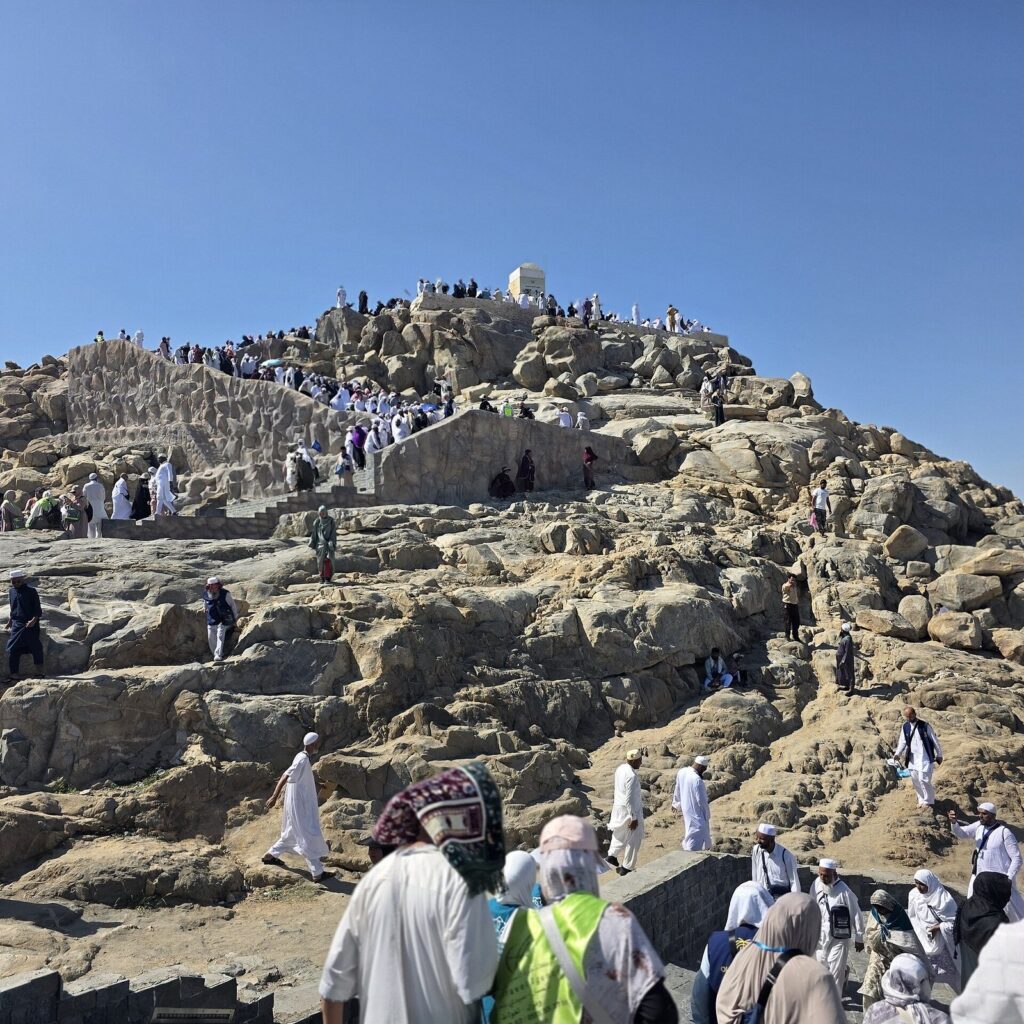
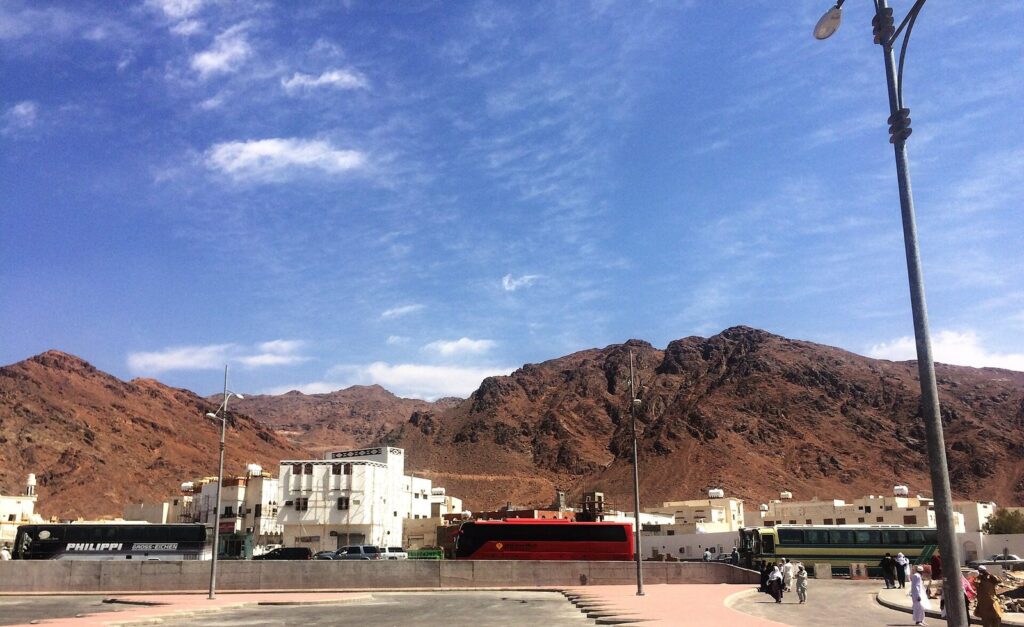
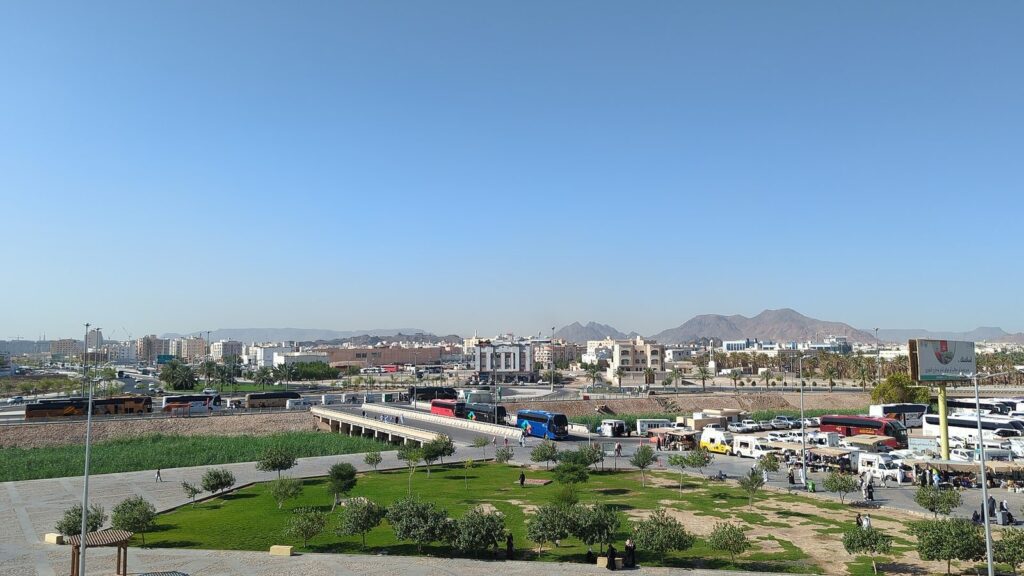
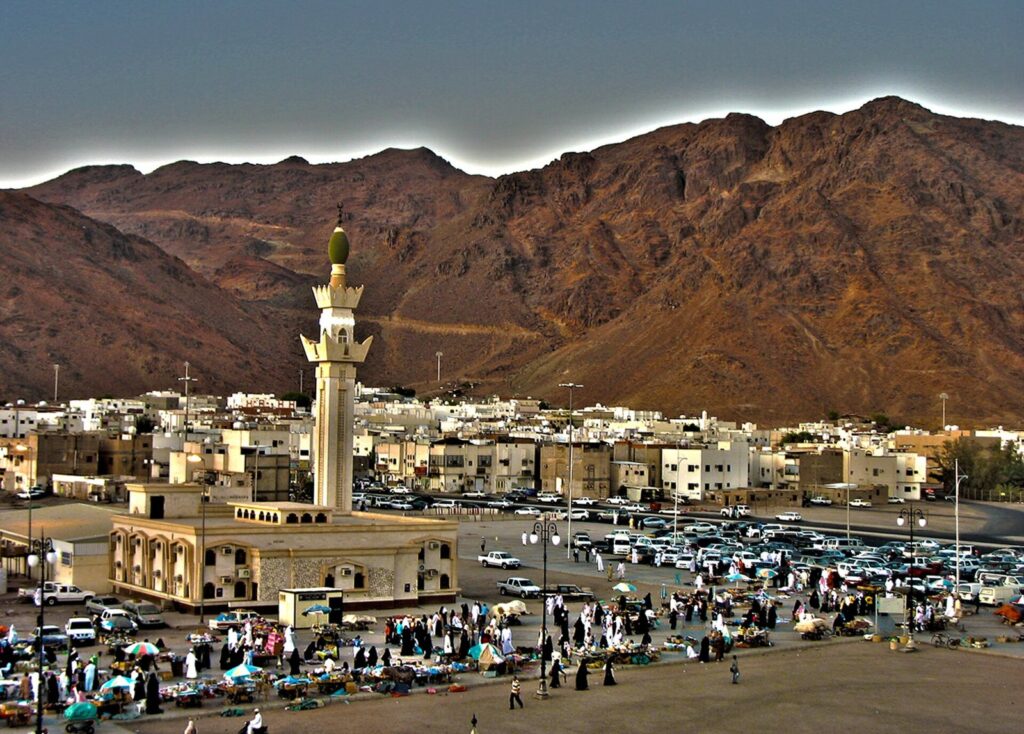
The Martyrs’ Cemetery of Uhud lies to the north of Madinah, a few kilometres from the Prophet’s Mosque, on the southern slope of Mount Uhud. The cemetery is surrounded by walls, and right next to it stands the Sayyid ash-Shuhada Mosque. The small hill opposite the cemetery is the Archers’ Hill (Jabal ar-Rumah), where the archers were positioned during the battle. From the hotels around the Prophet’s Mosque, Uhud is usually reached in a short time by group coach or taxi; the area has a large car park and small shops serving visitors.
The Prophet (peace be upon him) said of this mountain: “Uhud is a mountain that loves us and that we love.” (al-Bukhari, Muslim). For more information on the geography and history of the mountain, take a look at our article on Mount Uhud, and for the other places to visit in Madinah, see our article on places to visit in Madinah.
Where are the martyrs of Uhud buried?
The martyrs of Uhud are buried near the place where the battle was fought, at the site known today as the Martyrs’ Cemetery of Uhud. The graves of many Companions, first among them Hamzah, are here. Visitors do not enter the cemetery itself; they offer greetings and make supplication in front of the walls that surround it.
A Brief Look at the Battle of Uhud
The Battle of Uhud took place in the third year of the Hijrah, when the polytheists of Makkah, who had been defeated at Badr, marched on Madinah seeking revenge. The Prophet (peace be upon him) took up position with his Companions with Mount Uhud at their backs, stationed a unit of fifty archers under the command of Abdullah ibn Jubayr on the hill opposite, and ordered them not to leave their posts whatever happened (al-Bukhari).
At the start of the battle the Muslims gained the upper hand; however, when some of the archers came down from the hill thinking the battle was over, the enemy cavalry attacked from behind. During this attack many Companions were martyred, and the Prophet (peace be upon him) was wounded in the face and had a tooth broken (al-Bukhari, Muslim). The Holy Quran devotes considerable space in Surah Al Imran to the lessons of this battle.
When did the Battle of Uhud take place?
According to the sirah sources, the Battle of Uhud took place in the month of Shawwal in the third year of the Hijrah, in the year 625 CE. Fought about a year after the Battle of Badr, this battle took place just north of Madinah, on the plain between Mount Uhud and the Archers’ Hill. The battlefield is still largely recognisable today, and visitors can see up close the places where the events unfolded.
How many martyrs of Uhud were there?
Authentic narrations report that seventy of the Muslims were martyred at Uhud (al-Bukhari). Although small differences regarding this number appear in the sirah sources, the general view is that around seventy Companions fell as martyrs. The great majority of the martyrs were from the Ansar of Madinah, and some were from the Muhajirun who had migrated from Makkah. This loss deeply affected almost every family in the community of Madinah, whose population was limited at the time, and left an indelible mark on the city’s memory.
Who Are the Martyrs of Uhud?
Each of the martyrs of Uhud has become a symbol of self-sacrifice and loyalty in the history of Islam. The best known among them are the following:
- Hamzah: The uncle of the Prophet (peace be upon him) and the Companion remembered as “Sayyid ash-Shuhada” (the Master of the Martyrs). Authentic narrations relate that he was martyred by Wahshi (al-Bukhari).
- Mus’ab ibn Umair: The first teacher of Islam sent to Madinah and the standard-bearer at Uhud. It is narrated that the only shroud he had was a short cloth, so that when his head was covered his feet were left exposed (al-Bukhari).
- Abdullah ibn Jahsh: The son of the Prophet’s paternal aunt; the sirah sources report that he was buried in the same grave as Hamzah.
- Anas ibn an-Nadr: The Companion who was saddened at having been unable to take part in Badr and who fought heroically at Uhud. It is related that there were more than eighty wounds on his body and that he could be recognised only by his sister, from his fingertips (al-Bukhari).
- Abdullah ibn Amr: The father of the Companion Jabir. The Prophet (peace be upon him) told that the angels were shading him with their wings (al-Bukhari, Muslim).
- Hanzalah ibn Abi Amir: The Companion remembered in the sirah sources by the title “Ghasil al-Mala’ikah” (the one washed by the angels).
- Amr ibn al-Jamuh and Sa’d ibn ar-Rabi’: Companions who were among the leading figures of the Ansar and who fell as martyrs at Uhud.
Is there a special virtue in reciting the names of the martyrs of Uhud?
No authentically transmitted hadith of the Prophet (peace be upon him) is known that states a special virtue for reciting the names of the martyrs of Uhud. Getting to know these martyrs, taking lessons from their lives and praying for them is of course commendable; however, beliefs that attach particular outcomes to reciting their names should be approached with caution. On this matter, you can refer to Diyanet’s current statements.
The Burial of the Martyrs and the Glad Tidings in the Quran
According to the narration of Jabir, the Prophet (peace be upon him) ordered that the martyrs of Uhud be buried without being washed, together with their blood; he had them placed in the graves two by two and asked that the one who knew more of the Quran be laid first (al-Bukhari). The large number of martyrs and the hardship the Muslims were going through form the background to this practice.
The Holy Quran says of those who give their lives in the way of Allah: “Never think of those who have been killed in the way of Allah as dead. Rather, they are alive, receiving provision with their Lord” (Al Imran 3:169). This verse turns the sorrow felt while visiting the martyrs of Uhud into consolation.
The martyrdom of Hamzah deeply grieved the Prophet (peace be upon him). According to Wahshi’s own account, when he embraced Islam years later and came into the presence of the Prophet, the Prophet asked him about the event and then asked him not to show him his face (al-Bukhari). This narration shows how deep a mark the loss left in the Prophet’s heart.
According to the narration of Uqbah ibn Amir, shortly before his passing, eight years after Uhud, the Prophet (peace be upon him) prayed for the martyrs of Uhud as though bidding farewell to the living and the dead (al-Bukhari). This narration shows that the Prophet did not forget the martyrs of Uhud until the end of his life.
The Supplication for Greeting the Martyrs of Uhud
There is no specific supplication that must be recited particularly at the Martyrs’ Cemetery of Uhud. Here, the general greeting supplication that the Prophet (peace be upon him) taught for visiting graves is recited. The Prophet stated that he had at first forbidden visiting graves and later permitted it (Muslim), and he told that graves remind one of death (Muslim).
What is the supplication for the martyrs of Uhud?
Those visiting the martyrs of Uhud can recite the greeting supplication narrated by Buraydah, which the Prophet (peace be upon him) taught to those going to a cemetery (Muslim). This supplication applies to the graves of all believers and is recited in the same way on the visit to Uhud. After the supplication, it is commendable to recite the Quran and to ask Allah for mercy for the martyrs.
Transliteration: Esselâmü aleyküm ehle’d-diyâri mine’l-mü’minîne ve’l-müslimîn, ve innâ inşâallâhu bi-küm le-lâhikûn, nes’elullâhe lenâ ve lekümü’l-âfiyeh.
Meaning: Peace be upon you, O believing and Muslim inhabitants of these dwellings! We too, if Allah wills, shall join you. We ask Allah for well-being for us and for you.
Those who wish to offer a separate greeting to Hamzah can say, in a short expression:
Transliteration: Esselâmü aleyke yâ Hamzah. Esselâmü aleyküm yâ şühedâe Uhud.
Meaning: Peace be upon you, O Hamzah. Peace be upon you, O martyrs of Uhud.
These short sentences of greeting are the familiar expression of greeting used when visiting graves, said with the names added; they are not a text that must be recited. After the greeting, a person can recite the surahs they know, such as al-Fatihah and al-Ikhlas, and pray in their own language for the martyrs and for all believers. According to the Hanafi school, reciting the Quran for the deceased and dedicating its reward to them is regarded as permissible.
Etiquette for Visiting the Martyrs’ Cemetery of Uhud
Because the Martyrs’ Cemetery of Uhud is a cemetery, the general etiquette of visiting graves needs to be observed during the visit. The following points help the visit to be in keeping with the Sunnah and to pass peacefully:
- Offer greetings and make supplication: As you approach the cemetery, offer your greetings and then pray for the martyrs.
- Direct your supplication to Allah: When making supplication, the essential thing is to face the qiblah and to ask for what you wish from Allah alone.
- Avoid behaviour that is not in keeping with the Sunnah: Behaviour such as rubbing your hands and face on the walls, tying pieces of cloth or string, taking soil or stones, or throwing money is not appropriate.
- Keep quiet: Avoid talking loudly and laughing in front of the cemetery.
- Follow the warnings of the staff: Observe the local rules on matters such as the order of the visit and taking photographs.
- Be careful around the vendors: When shopping at the stalls around the cemetery, do not get separated from your group.
Performing wudu before setting out, wearing simple clothes in keeping with Islamic dress (hijab) and remembering the purpose of the visit help this short visit to be more mindful. The real purpose of visiting graves is to pray for the deceased and to remember the Hereafter. Standing for a short while in front of the cemetery to offer greetings, make supplication and reflect on the story of Uhud is far more valuable than rushing to take souvenir photos or to go shopping.
Can women visit the Martyrs’ Cemetery of Uhud?
According to the Hanafi school, it is permissible for women to visit graves, provided that they act with moderation and avoid inappropriate behaviour such as wailing. Since visitors to the Martyrs’ Cemetery of Uhud greet the cemetery from outside, in front of the walls, women visitors can also offer greetings and make supplication in this area. As the arrangements for entering cemeteries can change from time to time, ask your guide about the current practice.
Sites to See at Uhud
The visit to Uhud is usually made as part of a Madinah city tour and covers several nearby sites:
| Site | Significance | What you can do on the visit |
|---|---|---|
| The Martyrs’ Cemetery of Uhud | The place where Hamzah and the martyrs of Uhud are buried | Offering greetings, making supplication and reciting the Quran |
| The Archers’ Hill (Jabal ar-Rumah) | The hill where the archers were positioned | Looking out over the battlefield, reflecting on the importance of obedience |
| The Sayyid ash-Shuhada Mosque | The large mosque next to the cemetery | Performing the prescribed prayer |
| Mount Uhud | The mountain of which the Prophet (peace be upon him) said “it loves us” | Viewing the mountain and its surroundings from a distance |
How long does a visit to Uhud take?
In most programmes, the visit to Uhud is part of a city tour made in the morning hours together with sites such as Quba Mosque and Masjid al-Qiblatayn, and the stay at the cemetery is usually short. The length varies according to the crowds, the season and the group’s programme. In the hot months, going before the sun climbs high and carrying water and a hat make the visit more comfortable. For information on Quba Mosque, take a look at our article on Quba Mosque.
The Lessons Uhud Leaves Behind
Uhud is not merely a battlefield; it is a place of reflection that offers important messages to every visitor. After Uhud, the Quran told the believers: “Do not weaken and do not grieve; you will be the ones who prevail, if you are truly believers” (Al Imran 3:139). Remembering the following lessons while visiting the cemetery makes the visit more meaningful:
- The importance of obedience: The archers abandoning the order they had been given caused harm to the whole army.
- Patience and steadfastness: The Companions who did not leave the side of the Prophet (peace be upon him) in the difficult moments are the finest example of loyalty.
- Not becoming attached to this world: The consequences of the concern for spoils of war show how worldly wealth can lead a person astray.
- Faithfulness: The Prophet’s praying for the martyrs of Uhud even years later is a reminder of how precious faithfulness is.
- Remembering death: Visiting graves becomes a means for a person to reconsider their life and priorities.
Many people who visit Uhud realise how relevant these lessons are to life today. Being true to one’s word within the family, at work and in society, patience in hard times and not giving up one’s principles for the sake of worldly gain are the messages Uhud carries into every age. On visits made with children, explaining these lessons in language they can understand turns the visit into an unforgettable history lesson.
Important: The transliterations are given in Latin letters and do not fully capture some of the sounds in Arabic; for correct pronunciation, it is recommended that they be learned from a qualified teacher. On matters about which there are differences of opinion, such as visiting graves, reciting the Quran for the deceased and tawassul (seeking a means of nearness to Allah), refer to the current statements of Diyanet.
Uhud in Your Madinah Programme
Planning your visit to Uhud together with your Rawdah visit at the Prophet’s Mosque and Jannat al-Baqi allows you to make balanced use of your days in Madinah. For the etiquette of greetings and supplication in the Rawdah, you can read our article on the Rawdah Visit Supplication, and for the historic cemetery of Madinah, our article on Jannat al-Baqi.
At RotaNur, in our Madinah programmes we visit sites such as Uhud, Quba and Qiblatayn accompanied by a guide. You can choose the programme that suits you from among our Umrah tours, and for any questions you can reach us through our contact page. May our Lord make Paradise the abode of the martyrs of Uhud and of all believers.
Frequently Asked Questions
Is the visit to Uhud part of Umrah?
No, the visit to Uhud is not among the obligatory (fard), necessary (wajib) or Sunnah acts of Umrah. Umrah is an act of worship completed with ihram, tawaf, sa’i and shaving or trimming the hair (halq/taqsir). Uhud, on the other hand, is a visit to graves made during the days you spend in Madinah. Since it is narrated that the Prophet (peace be upon him) prayed for the martyrs of Uhud before his passing (al-Bukhari), it is commendable to set aside time for this visit in your Madinah programme. For the steps of Umrah, take a look at our article on how to perform Umrah.
What was the outcome of the Battle of Uhud?
The Battle of Uhud ended with heavy losses for the Muslims; however, the polytheists returned to Makkah without entering Madinah. The advantage gained at the start of the battle was lost when some of the archers left their posts, and around seventy Companions were martyred. According to the sirah sources, the next day the Prophet (peace be upon him) pursued the enemy together with his Companions as far as Hamra al-Asad. The Holy Quran devotes considerable space in Surah Al Imran to the lessons of this battle.
Can you climb the Archers’ Hill?
It is generally possible to climb the Archers’ Hill (Jabal ar-Rumah); however, access can change from time to time because of landscaping works and security measures. The hill lies directly opposite the Martyrs’ Cemetery of Uhud and is a convenient point from which to see the whole battlefield. Checking the current situation with your guide, not climbing during the hot hours, wearing comfortable shoes and making sure your elderly relatives do not become exhausted make the visit safer.
Can you pray facing the Martyrs’ Cemetery of Uhud?
No, it is not appropriate to pray facing graves. The Prophet (peace be upon him) forbade praying towards graves and sitting on graves (Muslim). When the time for prayer comes, the best thing is to pray at the Sayyid ash-Shuhada Mosque right next to the cemetery. When making supplication in front of the cemetery as well, facing the qiblah and asking for what you wish from Allah alone ensure that the visit is in keeping with the Sunnah.
Do you need a guide to visit Uhud?
A guide is not compulsory for visiting Uhud; however, the explanations of an expert guide make the visit far more meaningful. When the layout of the battlefield, the position of the archers and the stories of the martyrs are explained on the spot, the events come alive in the mind. On a guided visit, the group moving together also reduces the risk of getting lost in the crowds. At RotaNur, in our Madinah programmes we make the visit to Uhud accompanied by a guide; for details, take a look at our Umrah tours.

Cihat Murat Yüksel is the editor of the RotaNur blog and the founder of Markention. Drawing on the sources of Türkiye's Presidency of Religious Affairs (Diyanet), he turns the questions travellers ask most about preparing for Umrah, Hajj and halal travel into clear, practical guides.
Questions answered in this article
Where Is the Martyrs’ Cemetery of Uhud?
The Martyrs’ Cemetery of Uhud lies to the north of Madinah, a few kilometres from the Prophet’s Mosque, on the southern slope of Mount Uhud. The cemetery is surrounded by walls, and right next to it stands the Sayyid ash-Shuhada Mosque. The small hill opposite the cemetery is the Archers’ Hill (Jabal ar-Rumah), where the archers were positioned during the battle. From the hotels around the Prophet’s Mosque, Uhud is usually reached in a short time by group coach or taxi; the area has a large car park and small shops serving visitors.
Where are the martyrs of Uhud buried?
The martyrs of Uhud are buried near the place where the battle was fought, at the site known today as the Martyrs’ Cemetery of Uhud. The graves of many Companions, first among them Hamzah, are here. Visitors do not enter the cemetery itself; they offer greetings and make supplication in front of the walls that surround it.
When did the Battle of Uhud take place?
According to the sirah sources, the Battle of Uhud took place in the month of Shawwal in the third year of the Hijrah, in the year 625 CE. Fought about a year after the Battle of Badr, this battle took place just north of Madinah, on the plain between Mount Uhud and the Archers’ Hill. The battlefield is still largely recognisable today, and visitors can see up close the places where the events unfolded.
How many martyrs of Uhud were there?
Authentic narrations report that seventy of the Muslims were martyred at Uhud (al-Bukhari). Although small differences regarding this number appear in the sirah sources, the general view is that around seventy Companions fell as martyrs. The great majority of the martyrs were from the Ansar of Madinah, and some were from the Muhajirun who had migrated from Makkah. This loss deeply affected almost every family in the community of Madinah, whose population was limited at the time, and left an indelible mark on the city’s memory.
Who Are the Martyrs of Uhud?
Each of the martyrs of Uhud has become a symbol of self-sacrifice and loyalty in the history of Islam. The best known among them are the following:
Is there a special virtue in reciting the names of the martyrs of Uhud?
No authentically transmitted hadith of the Prophet (peace be upon him) is known that states a special virtue for reciting the names of the martyrs of Uhud. Getting to know these martyrs, taking lessons from their lives and praying for them is of course commendable; however, beliefs that attach particular outcomes to reciting their names should be approached with caution. On this matter, you can refer to Diyanet’s current statements.