




Contents 19 sections
- Where Is ar-Rawdah al-Mutahharah?
- Are the Rawdah and the Blessed Grave the same place?
- The Virtue of the Prophet’s Mosque
- Preparing for the Rawdah Visit and Booking an Appointment
- Do you need an appointment to enter the Rawdah?
- A short checklist before the visit
- Prayer and Supplication in the Rawdah
- What is the Rawdah dua?
- How Do You Offer Greetings to the Prophet (peace be upon him)?
- How is the Rawdah greeting recited?
- Salawat in front of the Blessed Grave
- Visiting Etiquette: What Should You Keep in Mind?
- Can women visit the Rawdah?
- Passing On Greetings and Sending Salawat from Afar
- How long can you stay in the Rawdah?
- Rawdah Visit Summary Table
- Is there a farewell supplication for the Rawdah?
- Making the Most of Your Days in Madinah
- Frequently Asked Questions
One of the moments every visitor who arrives in Madinah looks forward to most is praying in the Rawdah at the Prophet’s Mosque (Masjid an-Nabawi) and offering greetings to the Prophet (peace be upon him). In this article we cover every aspect of the topic people search for as the Rawdah dua: you will find where the Rawdah is, how greetings are offered to the Prophet, to Abu Bakr and to Umar, the transliterations and meanings of the salawat and supplications that can be recited during this visit, and practical information on appointments, crowds and visiting etiquette.
Where Is ar-Rawdah al-Mutahharah?
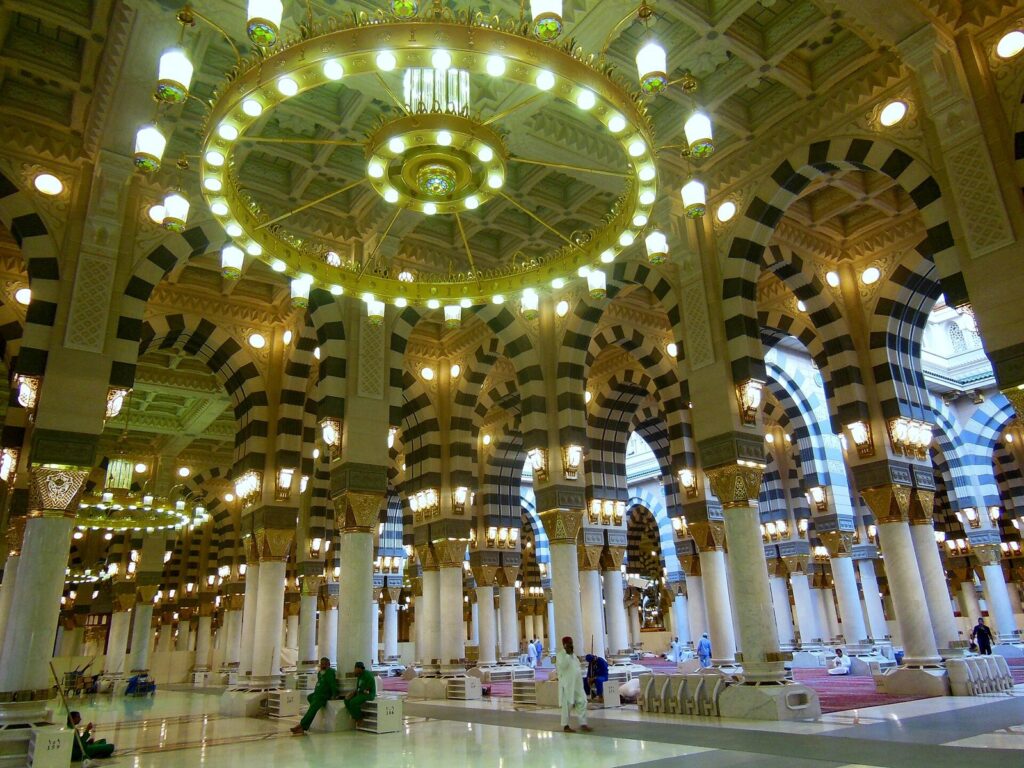
The Rawdah is the area inside the Prophet’s Mosque that lies between the Prophet’s house (the room of Aisha) and his minbar. The Prophet (peace be upon him) said of this area: “What is between my house and my minbar is one of the gardens of Paradise.” (al-Bukhari, Muslim). The word “Rawdah” itself means garden. Today this area is distinguished from the other sections of the mosque by its differently coloured carpets and its decorated pillars.
Immediately to the east of the Rawdah lies the chamber containing the grave of the Prophet (peace be upon him), and this section is known as the Blessed Grave. Abu Bakr and Umar are also buried here, beside the Prophet. For the Prophet’s Mosque and the other places to visit in Madinah, take a look at our article on places to visit in Madinah.
Are the Rawdah and the Blessed Grave the same place?
No, they are two different sections located side by side. The Rawdah is the area between the house and the minbar where people pray and make supplication; the Blessed Grave is the chamber containing the grave of the Prophet (peace be upon him), in front of which visitors pass as they offer their greetings. In the usual order of the visit, people first pray in the Rawdah and then pass in front of the Blessed Grave to offer their greetings.
The Virtue of the Prophet’s Mosque
The Prophet (peace be upon him) stated that a special journey for the purpose of worship may be made to only three mosques, and he listed them as Masjid al-Haram, his own mosque and Al-Aqsa Mosque (al-Bukhari, Muslim). He also told us that a prayer performed in the Prophet’s Mosque is better than a thousand prayers performed in other mosques, except Masjid al-Haram (al-Bukhari, Muslim).
The visit to Madinah is not part of Umrah; Umrah is completed with the acts of worship performed in Makkah. However, the great majority of those travelling from Türkiye include Madinah in their programme, and the days spent in this city are remembered as one of the most peaceful parts of the journey. After the intense days of worship in Makkah, the calm atmosphere of Madinah gives the visitor ample space for reflection and supplication. If you are curious about the stages of Umrah, take a look at our How to Perform Umrah guide.
Preparing for the Rawdah Visit and Booking an Appointment
Because the Rawdah is a limited space and the number of visitors is very high, the Saudi Arabian authorities have for some time been organising visits through an appointment system. Appointments are made through the Nusuk app, and separate time slots are generally set for women and men. As the way the app works, the appointment intervals and the rules can change over time, confirm the current conditions with official sources and your travel agency before you travel.
Do you need an appointment to enter the Rawdah?
Under the current practice, an appointment booked in advance is generally required in order to pray in the Rawdah; the staff check appointments at the entry points. A different arrangement may apply for passing in front of the Blessed Grave to offer greetings. As the rules change from period to period, check the current situation together with your guide before you arrive in Madinah.
A short checklist before the visit
- Renew your wudu: Since you will be praying in the Rawdah, you need to be in a state of wudu; the waiting time can be long.
- Keep your appointment details ready: Make sure your phone is charged and your internet connection is working.
- Find out the right gate: The entry points for women and men are different; ask your guide in advance which gate to enter through.
- Take your list of supplications with you: Deciding in advance what you will say in the short time available reduces anxiety.
- Carry fewer belongings: Large bags can cause problems at the entry check; take only what you need.
Staying at a hotel close to the mosque in Madinah makes it easy to arrive on time for your appointment. For accommodation options, take a look at our Madinah hotels page.
Prayer and Supplication in the Rawdah
On entering the Rawdah, if it is not a time in which prayer is disliked (makruh), it is a common and commendable practice to pray two rak’ahs of voluntary (nafl) prayer and then make supplication. Because the length of the visit is kept short on account of the crowds, keeping the prayer simple and the supplication concise makes things easier both for you and for those waiting in line.
What is the Rawdah dua?
There is no specific supplication that must be recited in the Rawdah and that has been transmitted from the Prophet (peace be upon him) specifically for this place. The practice known as the “Rawdah dua” consists of the salawat (blessings upon the Prophet), the seeking of forgiveness (istighfar) and the personal supplications made after the prayer performed there. A person may make whatever supplication they wish, in whatever language they wish; it is also good to choose one of the comprehensive supplications transmitted from the Prophet.
One of the supplications that can be recited in these precious minutes is the supplication in verse 201 of Surah al-Baqarah, which is reported to be the one the Prophet made most often (al-Bukhari, Muslim). For a short and comprehensive supplication seeking forgiveness, the following can also be recited:
Transliteration: Rabbenağfir lî ve li-vâlideyye ve li’l-mü’minîne yevme yekûmü’l-hisâb.
Meaning: Our Lord! Forgive me, my parents and all the believers on the Day when the reckoning will take place.
This supplication appears in verse 41 of Surah Ibrahim as the supplication of the Prophet Ibrahim, and it is also familiar from the “Rabbana” supplications recited in the prayers.
Besides these, in the Rawdah you can pray for a life devoted to the Sunnah of the Prophet (peace be upon him), for peace in your family, for your children to grow up as righteous people, for healing for the sick, for mercy upon those who have passed away and for the unity of the whole Ummah. Since the time is short, deciding on three or four main themes for your supplication in advance allows you to spend those minutes without anxiety.
How Do You Offer Greetings to the Prophet (peace be upon him)?
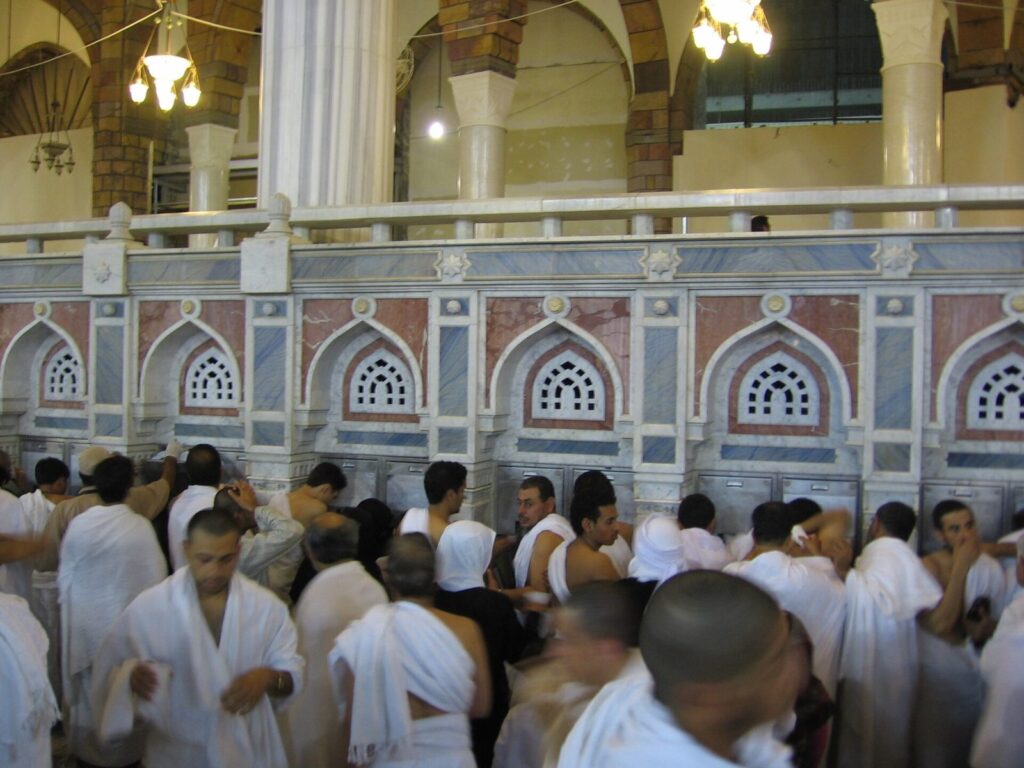
After the Rawdah, visitors offer greetings to the Prophet (peace be upon him) as they pass in front of the Blessed Grave. Since the staff keep a constant flow moving in this section, it is usually not possible to stop and wait for long. The essential thing is to offer the greeting calmly, in a low voice and with good manners. The Holy Quran commands the believers not to raise their voices in the presence of the Prophet (al-Hujurat 49:2).
How is the Rawdah greeting recited?
No long text is needed for the greeting; short words with a clear meaning are enough. On reaching the front of the Blessed Grave, greetings are offered to the Prophet (peace be upon him), and then, after moving a little further on, to Abu Bakr and to Umar. The words of greeting commonly used in practice are as follows:
Transliteration: Esselâmü aleyke yâ Rasûlallâh. Esselâmü aleyke eyyühe’n-nebiyyü ve rahmetullâhi ve berakâtüh.
Meaning: Peace be upon you, O Messenger of Allah. O Prophet! May the peace, mercy and blessings of Allah be upon you.
Transliteration: Esselâmü aleyke yâ Ebâ Bekr. Esselâmü aleyke yâ Ömer.
Meaning: Peace be upon you, O Abu Bakr. Peace be upon you, O Umar.
The second sentence is the expression of greeting that also appears in the Tashahhud (at-Tahiyyat), which we recite in every prayer. Some sources narrate that when Abdullah ibn Umar returned from a journey, he would come to the grave and offer a short greeting in this way to the Prophet (peace be upon him), to Abu Bakr and to his father. This also shows that the greeting can be kept short and simple.
Salawat in front of the Blessed Grave
It is commendable to send salawat after the greeting. The Prophet (peace be upon him) stated that whoever sends salawat upon him once, Allah will send mercy upon that person ten times (Muslim). The salawat recited in the prayers and found in authentic hadiths is as follows (al-Bukhari, Muslim):
Transliteration: Allâhümme salli alâ Muhammedin ve alâ âli Muhammed, kemâ salleyte alâ İbrâhîme ve alâ âli İbrâhîm, inneke hamîdün mecîd.
Meaning: O Allah! Send Your mercy upon Muhammad and upon the family of Muhammad, just as You sent Your mercy upon Ibrahim and upon the family of Ibrahim. Surely You are worthy of praise and exalted in glory.
Because of the crowds, it may not be possible to stop in front of the Blessed Grave. In that case, you can send your salawat and make your supplication while walking or while sitting in a suitable part of the mosque. The essential thing is to make supplication facing the qiblah and addressing it to Allah alone.
Visiting Etiquette: What Should You Keep in Mind?
Madinah is a city of tranquillity and good manners. Taking care over the following points during the visit protects both your worship and the peace of those around you:
- Do not raise your voice: Offer your greetings and supplications in a low voice; avoid group recitations and loud readings.
- Do not block the flow: Follow the directions of the staff and make room for those coming behind you.
- Do not rub yourself against the walls and grilles: Behaviour such as touching the grilles of the chamber with your hands, rubbing your face on them or tying pieces of cloth to them is not in keeping with the Sunnah.
- Do not push and shove: Do not hurt anyone in order to stay a few more minutes in the Rawdah; pushing and shoving goes against the spirit of the visit.
- Avoid taking photos and videos: Live this moment with your heart rather than through a screen, and follow the rules of the mosque.
- Pay attention to your clothing: Choose clean, loose and simple clothes; women should dress in accordance with Islamic dress (hijab).
Can women visit the Rawdah?
Yes, women can also visit the Rawdah and pray there. In practice, separate entry points and separate time slots are set for women visitors. According to the Hanafi school, women during their menstrual period should not enter the mosque, so the visit needs to be planned accordingly. Because the times can change, confirm the current practice when booking your appointment and when speaking with your guide.
Passing On Greetings and Sending Salawat from Afar
When relatives hear that you are going to Madinah and say “Please pass on my greetings to the Prophet,” this is a very common and heartfelt tradition in our society. To fulfil this trust, as you pass in front of the Blessed Grave you can convey their greetings after your own by saying “So-and-so also sends their greetings.” If the crowds do not allow you to list the names one by one, you can also use a collective expression such as “May the greetings of everyone who asked me to pass on their greetings be upon you.”
On the other hand, salawat and greetings are not sent only in Madinah. The Prophet (peace be upon him) told his Ummah to send salawat upon him wherever they may be, and stated that this salawat would reach him (Abu Dawud). For this reason, it is good to remind relatives who cannot go to Madinah that they too can send salawat from anywhere in the world.
How long can you stay in the Rawdah?
The length of time you can stay in the Rawdah is determined by the staff and varies according to how busy it is; most of the time, enough time is given to pray and make a short supplication. When the time is up, the staff politely direct visitors towards the exit. For this reason, preparing your supplication in advance and following the directions straight away when the time is up protects the rights of both you and those waiting in line.
Rawdah Visit Summary Table
| Stage | What is done? | Short note |
|---|---|---|
| Entering the mosque | Enter with the right foot and recite the supplication for entering | For the text of the supplication, see our article on Umrah supplications |
| The Rawdah | Two rak’ahs of voluntary prayer and supplication | If it is not a disliked (makruh) time; an appointment may be required |
| In front of the Blessed Grave | Greetings to the Prophet (peace be upon him) | In a low voice, moving on without stopping |
| Abu Bakr and Umar | A short greeting | Offered a few steps further on |
| After the visit | Salawat and supplication facing the qiblah | Can be done in a suitable part of the mosque |
Is there a farewell supplication for the Rawdah?
No specific farewell supplication is known that must be recited when leaving Madinah and that has been transmitted in authentic sources specifically for this moment. Reciting the farewell texts found in supplication books is permissible; however, they are not obligatory. Before leaving, it is enough to pray in the mosque, offer greetings to the Prophet (peace be upon him), send salawat and ask Allah to grant you the opportunity to come again.
Important: Transliterations given in Latin letters do not fully capture some of the sounds in Arabic; for correct pronunciation, it is recommended that the supplications be learned from a qualified teacher. On matters about which there are differences of opinion, such as visiting graves and tawassul (seeking a means of nearness to Allah), refer to the current statements of Diyanet (Türkiye’s Presidency of Religious Affairs).
Making the Most of Your Days in Madinah
The real blessing of the days spent in Madinah lies in the daily prayers performed in congregation at the Prophet’s Mosque. You can make use of the time outside your Rawdah appointment in the following ways:
- Perform the daily prayers at the mosque: The Fajr and Isha prayers in particular are times when the mosque is relatively calm.
- Set aside time to read the Quran: You can make use of the copies of the Quran on the shelves in the mosque and set yourself a daily reading goal.
- Increase your salawat: Make it a habit to send salawat at short intervals throughout the day.
- Do not neglect rest: Resting at your hotel during the hot hours allows you to take part in worship with more energy.
Although the Rawdah visit is at the centre of the Madinah programme, it is possible to enrich the days you spend in the city with other visits. Quba Mosque, the Martyrs’ Cemetery of Uhud and Jannat al-Baqi are foremost among them. For the greeting supplication at Uhud and the etiquette of the visit, you can read our article on Visiting the Martyrs of Uhud. For entering Masjid al-Haram and the moment of seeing the Kaaba for the first time, our article on the supplication to recite on seeing the Kaaba will guide you.
At RotaNur, we plan our Madinah programmes with Rawdah appointments and accommodation close to the mosque in mind. You can choose the programme that suits you from among our Umrah tours, and for any questions you can reach us through our contact page. May our Lord grant everyone the opportunity to visit the mosque of the Messenger of Allah.
Frequently Asked Questions
How do you book a Rawdah appointment through the Nusuk app?
A Rawdah appointment is booked by logging in to the Nusuk app with your personal account and then choosing a suitable date and time slot in the Rawdah visit section. Separate time slots may be opened for women and men, and limits may be placed on how often appointments can be booked. Since the steps and rules of the app change from time to time, check the current procedure together with your guide before you arrive in Madinah.
What lies beneath the Green Dome?
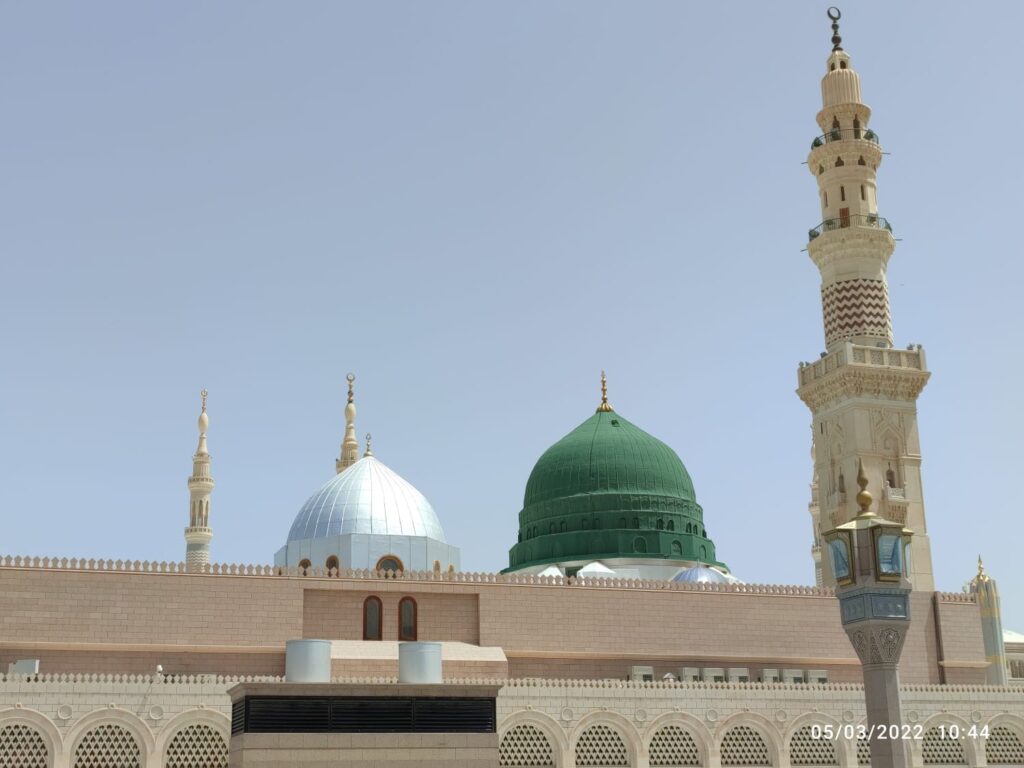
The Green Dome stands over the chamber in the Prophet’s Mosque that contains the grave of the Prophet (peace be upon him), in other words over the Blessed Grave. Abu Bakr and Umar are also buried in the same chamber, beside the Prophet. The dome has been renewed several times throughout history and took on its present green colour in the Ottoman period. Visible from the courtyard of the mosque, the dome is the best-known symbol of Madinah. We have explained how to offer greetings in front of the Blessed Grave in the relevant section of this article.
What should you do when you first arrive at the Prophet’s Mosque?
When you first arrive at the Prophet’s Mosque, you enter in a state of wudu with your right foot and recite the supplication for entering the mosque. If it is not a disliked (makruh) time, you pray two rak’ahs of tahiyyat al-masjid (the prayer greeting the mosque) and then make supplication. You can ask your guide about the arrangement in force at that time for passing in front of the Blessed Grave to offer greetings, and about your Rawdah appointment time. For the transliteration of the supplication for entering, take a look at our article on supplications to recite during Umrah.
Is it obligatory to pray forty prayers in Madinah?
No, it is not obligatory to pray forty prayers in Madinah; this practice is not considered part of Hajj or Umrah. The authenticity of the narration transmitted on this subject is debated among hadith scholars. Nevertheless, it is commendable to perform the daily prayers in congregation at the Prophet’s Mosque as far as possible throughout your stay in Madinah. For the history and sections of the mosque, take a look at our article on Masjid an-Nabawi.
Can wheelchair users visit the Rawdah?
Yes, visitors who use a wheelchair can also visit the Rawdah. At the Prophet’s Mosque, separate entry points or facilitating arrangements for elderly and disabled visitors may be in place from time to time; however, the scope of these arrangements and the appointment rules can change. Plan the visit together with your companion, and confirm the current practice with official sources and your travel agency before you travel.

Cihat Murat Yüksel is the editor of the RotaNur blog and the founder of Markention. Drawing on the sources of Türkiye's Presidency of Religious Affairs (Diyanet), he turns the questions travellers ask most about preparing for Umrah, Hajj and halal travel into clear, practical guides.
Questions answered in this article
Where Is ar-Rawdah al-Mutahharah?
The Rawdah is the area inside the Prophet’s Mosque that lies between the Prophet’s house (the room of Aisha) and his minbar. The Prophet (peace be upon him) said of this area: “What is between my house and my minbar is one of the gardens of Paradise.” (al-Bukhari, Muslim). The word “Rawdah” itself means garden. Today this area is distinguished from the other sections of the mosque by its differently coloured carpets and its decorated pillars.
Are the Rawdah and the Blessed Grave the same place?
No, they are two different sections located side by side. The Rawdah is the area between the house and the minbar where people pray and make supplication; the Blessed Grave is the chamber containing the grave of the Prophet (peace be upon him), in front of which visitors pass as they offer their greetings. In the usual order of the visit, people first pray in the Rawdah and then pass in front of the Blessed Grave to offer their greetings.
Do you need an appointment to enter the Rawdah?
Under the current practice, an appointment booked in advance is generally required in order to pray in the Rawdah; the staff check appointments at the entry points. A different arrangement may apply for passing in front of the Blessed Grave to offer greetings. As the rules change from period to period, check the current situation together with your guide before you arrive in Madinah.
What is the Rawdah dua?
There is no specific supplication that must be recited in the Rawdah and that has been transmitted from the Prophet (peace be upon him) specifically for this place. The practice known as the “Rawdah dua” consists of the salawat (blessings upon the Prophet), the seeking of forgiveness (istighfar) and the personal supplications made after the prayer performed there. A person may make whatever supplication they wish, in whatever language they wish; it is also good to choose one of the comprehensive supplications transmitted from the Prophet.
How Do You Offer Greetings to the Prophet (peace be upon him)?
After the Rawdah, visitors offer greetings to the Prophet (peace be upon him) as they pass in front of the Blessed Grave. Since the staff keep a constant flow moving in this section, it is usually not possible to stop and wait for long. The essential thing is to offer the greeting calmly, in a low voice and with good manners. The Holy Quran commands the believers not to raise their voices in the presence of the Prophet (al-Hujurat 49:2).
How is the Rawdah greeting recited?
No long text is needed for the greeting; short words with a clear meaning are enough. On reaching the front of the Blessed Grave, greetings are offered to the Prophet (peace be upon him), and then, after moving a little further on, to Abu Bakr and to Umar. The words of greeting commonly used in practice are as follows: