




 ALCOHOL-FREE -23%
 Hajj Fragrances & Bakhoor
Alcohol-free musk, oud, Taif rose and Kaaba scent attars, a 4-piece gift set, and a bakhoor and incense burner set for hosting guests and exchanging gifts after Hajj.
Showing all 8 results
-
ALCOHOL-FREE -23%
-
 MOST POPULAR -25%
 -
 ALCOHOL-FREE -22%
 -
 ALCOHOL-FREE -22%
 -
 ALCOHOL-FREE -20%
 -
 ALCOHOL-FREE -21%
 -
 ALCOHOL-FREE -21%
 -
 SET -24%
Hajj Fragrances & Bakhoor: A Guide to Hosting and Gifts After Hajj
Hajj fragrances and bakhoor are among the warmest memories a pilgrim brings home from the holy lands. When a Hajji is welcomed at the door with prayers, small attar bottles come out of the suitcase alongside prayer beads, prayer mats and dates; bakhoor is lit for visiting guests and the scent of oud fills the room. For anyone looking for attar as a Hajji gift, we have gathered alcohol-free attars, the 4-piece gift set and the bakhoor and incense burner set in one place on this page.
Hajj is a journey that is obligatory once in a lifetime for every Muslim who is able to make it, and it calls for long preparation. Before setting off, the prospective pilgrim seeks forgiveness from relatives and neighbours; on their return, the same circle knocks on the door to say “May your Hajj be accepted”. This is why a Hajji gift list often covers dozens of people. Below you will find, step by step, the guidance of Diyanet (Türkiye's Presidency of Religious Affairs) on using fragrance during Hajj, unscented alternatives for the days in ihram, a bulk gift planning table, safe use of the incense burner and storage tips.
The Tradition of Hosting After Hajj
In many parts of Anatolia, a Hajji's homecoming is a joy not just for one family but for the whole neighbourhood. For days after the return, the Hajji's home receives visitors. Guests shake the Hajji's hand, pray for their Hajj to be accepted and ask for prayers for themselves. During these visits, guests are offered treats such as dates, Turkish delight and sherbet, and as they leave they are given a small gift as a keepsake from the holy lands.
The best-known Hajji gifts are prayer beads, prayer caps, prayer mats, white cotton headscarves and attar. Attar holds a special place on this list: it takes up little room in the suitcase and, each time it is used, it brings back the gift and that visit. A bottle of oud set aside for an elder of the family, a Taif rose given to your mother or a white musk handed to your neighbour is remembered years later as “the scent they brought back from Hajj”. Because the roll-on tip touches the skin, giving each person their own bottle rather than passing one around among guests is both more hygienic and a more lasting gesture.
Some families bring their loved ones together at a mawlid or prayer gathering after the return. At such gatherings, the scent of the room is part of the hospitality: cologne is offered at the door and a light bakhoor is burned inside. As it is hard to hand a gift to everyone individually at a crowded gathering, many families prefer to bag the gifts in advance and hand them out as guests leave. To make this preparation easier, take a look at the bulk gift planning table below.
Hosting Guests After Hajj and the Culture of Bakhoor
Burning bakhoor is one of the symbols of hospitality in the Arabian Peninsula. The incense burner, called a mibkhara in Arabic, is carried around the room when a guest sits down or is about to leave, and the scent of the bakhoor settles into the guest's clothing. Many pilgrims who encounter this scent in hotel lobbies, markets and homes in Makkah and Madinah wish to recreate the same atmosphere in their own homes on their return.
Bakhoor is no stranger to the Turkish-Islamic tradition either. In the Ottoman period, the rosewater sprinkler (gulabdan) and the incense burner were among the elegant pieces of a set for hosting guests; sprinkling rosewater and burning agarwood (oud) were common customs at mawlid and Qur'an completion (khatm) gatherings. Bakhoor lit on a Hajji's return brings these two cultures together in the home and adds a warm signature scent to the days when visits continue.
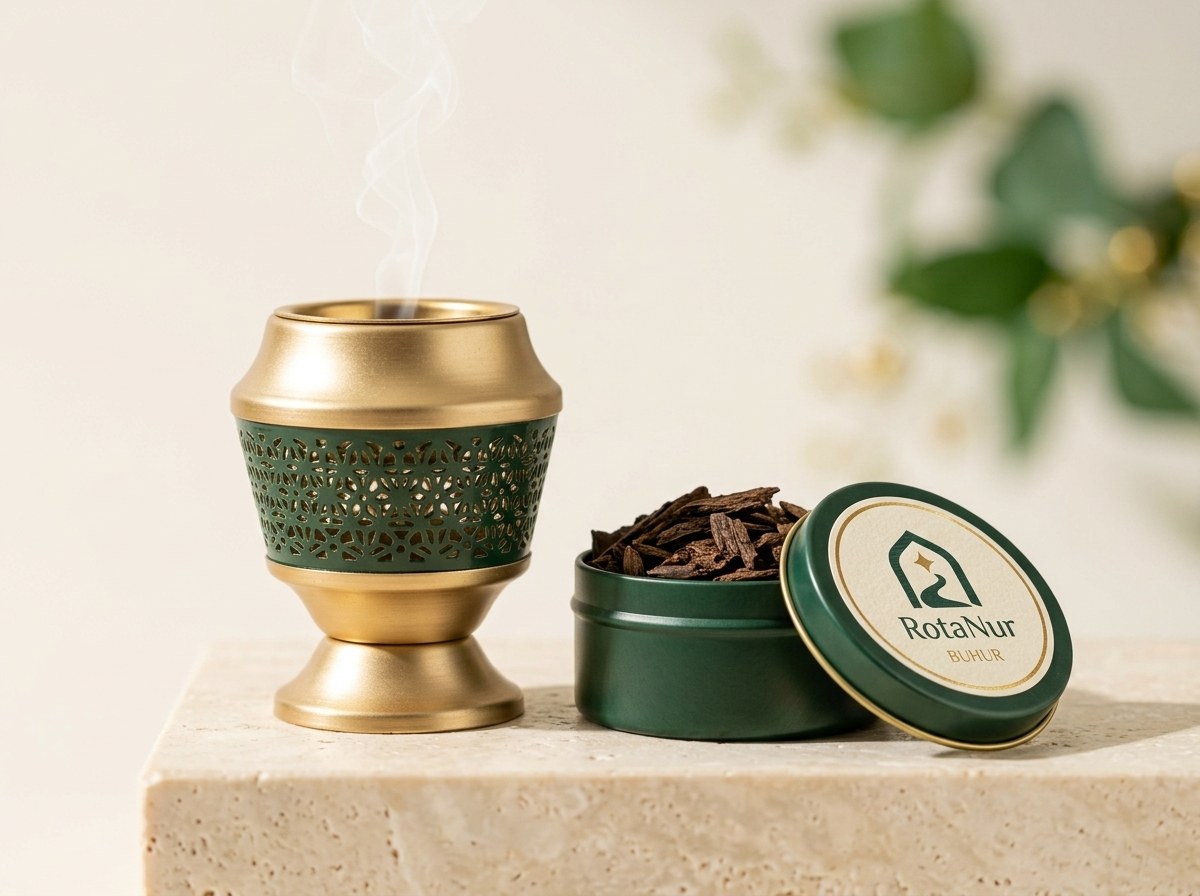
RotaNur's Bakhoor & Incense Burner Set presents a decorative metal incense burner together with a box of oud-scented bakhoor in a gift box. It can be used in the guest room while visits to the Hajji continue, at prayer gatherings, or when preparing for Friday and Eid; it also makes a meaningful home gift to take to the family home where visitors gather. As the scent of bakhoor settles lightly into fabrics and curtains, a short, controlled burn is usually enough.
Using Fragrance During Hajj: When Is It Permitted?
On the Hajj journey, whether you may use fragrance depends on whether you are in ihram at that moment. According to Diyanet's guidance, applying fragrance to the body, to the bedding or to the ihram garments is among the prohibitions of ihram for a person in that state; using perfume, spray, hair gel and brilliantine also falls into this category. By contrast, applying a pleasant fragrance to the body before entering ihram is Sunnah; if a trace of the fragrance applied before making the intention remains on the body while in ihram, this causes no problem.
For a pilgrim performing Hajj al-Tamattu, the sequence is as follows: first, ihram is entered for Umrah; once Umrah is completed and the hair has been shaved or cut, the pilgrim leaves ihram. From this point until the Day of Tarwiyah, the eighth day of Dhul Hijjah, the pilgrim wears everyday clothes and may use fragrance. On the Day of Tarwiyah, ihram is entered again for Hajj and the prohibitions begin again; the days of Arafat, Muzdalifah and Mina are spent in ihram. On the days of Eid, the first release from ihram (tahallul) takes place once pebbles have been thrown at Jamrat al-Aqabah and the head has been shaved (after the sacrifice, in Tamattu and Qiran Hajj). According to Diyanet's guidance, at this stage the prohibitions of ihram are lifted except for marital relations. With the second release, which comes after Tawaf al-Ziyarah (Tawaf al-Ifadah) and the sa'i of Hajj, all prohibitions end.
| Hajj stage | Applying fragrance | Practical tip |
|---|---|---|
| Before entering ihram at the miqat | Permitted; applying it to the body is Sunnah | Apply it to the body after ghusl or wudu; do not apply it to the ihram garments |
| In Umrah ihram (Tamattu) | Prohibited | Use unscented soap, shampoo and wipes |
| After leaving Umrah ihram until the Day of Tarwiyah | Permitted | Choose moderate, light scents for prayers at the Haram |
| Day of Tarwiyah, before entering ihram for Hajj | Permitted; applying it to the body is Sunnah | Apply it before making the intention and leave the bottle in your suitcase |
| Arafat, Muzdalifah and Mina (in ihram) | Prohibited | Use unscented care products only |
| After the first release (tahallul) | Permitted (the prohibitions other than marital relations are lifted) | Celebrate the joy of Eid in clean clothes and with a pleasant fragrance |
| After the second release and on the days spent in Madinah | Permitted | Prefer light scents at the Prophet's Mosque |
In short, the attars you will give as gifts on your return are not for the days in ihram; they can be used before entering ihram, after leaving Umrah ihram and after the first release. Pilgrims spend the first hours of Eid in ihram at Muzdalifah and Mina; putting on clean clothes and a pleasant fragrance after the release is the Hajj counterpart of the joy of Eid. As a strong scent can disturb the person next to you when praying shoulder to shoulder at the Haram, light scents are more suitable on these days. Since there are differences in detail between the schools of thought, whenever you are unsure we recommend consulting the religious guide in your group and reading our Hajj Guide.
Unscented Alternatives for the Days in Ihram
There is no need to compromise on cleanliness during the days in ihram; what matters is choosing unscented products. Diyanet's guidance notes that the schools of thought hold differing views on scented soap; even so, unscented products are the safest choice for an ihram with peace of mind. Hajj may require a longer period in ihram than Umrah; particularly in Hajj al-Ifrad and Hajj al-Qiran, the pilgrim stays in ihram for days, from the miqat until the release. Throughout this period, the following products make things easier:
- Unscented soap and shampoo: For ghusl and daily hygiene, in sizes that last a long time.
- Unscented wet wipes: For moments at Arafat and Muzdalifah when access to washbasins is limited.
- Unscented rash cream: Against the chafing that can occur on long walks and in the heat.
- Unscented detergent: For washing ihram garments during the journey.
- Unscented sunscreen: For the hours of wuquf and walking spent outdoors.
You can find all of these products in our unscented care for longer stays range. A practical tip: put your attars and scented care products in a separate bag and leave them in your suitcase during the days in ihram, and keep the unscented products in your day bag. That way, there is no risk of reaching for the wrong bottle at a moment when you are tired.
Bulk Gift Planning: What to Buy for How Many People?
A Hajji gift list often turns out longer than expected. Grouping people by how close they are to you makes both budgeting and choosing easier. The table below offers a sample plan for common gift circles; the numbers of people are only meant as a guide.
| Gift circle | Sample number of people | Suggested product | Why? |
|---|---|---|---|
| Parents and in-laws | 2-4 | 4-Piece Attar Gift Set — Musk, Oud, Taif Rose, Kaaba Scent | Four scents in one box, a lasting keepsake |
| Spouse and children | 2-5 | Taif Rose, White Musk or Rawdah Scent | Elegant scents that can be chosen to suit personal taste |
| Elders of the family (grandparents, uncles, aunts) | 3-8 | Kaaba Scent or Oud Attar | Traditional, deep scents that bring back memories of Hajj |
| The family home where visits take place | 1 | Bakhoor & Incense Burner Set | For hosting guests and prayer gatherings |
| Extended relatives and neighbours | 10-30 | Mainly White Musk, mixed with Rawdah Scent and Amber | Single attars that suit everyone and keep the budget balanced |
| Workplace, mosque congregation, association | 10-40 | White Musk Attar | A light, unisex scent that does not bother anyone in a crowd |
| Unexpected visitors | 10-20% of the total | Assorted single attars | A reserve for last-minute needs |
The following steps make planning easier:
- Write the list down: Group family, relatives, neighbours, work and congregation under separate headings; forgotten names are usually remembered on the last day.
- Match the scent to the person: Set aside deep scents for elders, floral scents for your mother, spouse and sister, and light scents for the wider circle.
- Keep a reserve: There may be visitors you did not expect on your return; keeping a reserve of attars equal to about 10-20 per cent of the total gives you peace of mind.
- Order before you travel: If the gifts are waiting ready at home, you will not have to worry about extra weight or broken glass bottles in your luggage on the way back, and you can devote your time in the holy lands to worship rather than shopping. The order can be received by a relative who stays at home. No online payment is taken: after you send your order request, our advisor contacts you, confirms availability and guides you through the payment steps.
- Pack in advance: Adding a small prayer card or name tag to each gift makes handing them out easier on busy visiting days.
A sample calculation: for a circle of about 25 people, if you choose a 4-Piece Attar Gift Set — Musk, Oud, Taif Rose, Kaaba Scent for your parents and another for your parents-in-law (2 sets), 1 Bakhoor & Incense Burner Set for the family home, 6 Kaaba Scent Attar 6 ml — Alcohol-Free for the elders, 4 Taif Rose Attar 6 ml — Alcohol-Free for female relatives, 11 White Musk Attar 6 ml — Alcohol-Free Musk Tahara for the wider circle and 3 Rawdah Scent Attar 6 ml — Alcohol-Free as a reserve, your basket will contain 27 products in total. In this example, the total comes to 10,373 ₺ at the sale prices in effect when this page was prepared; you can see current prices on the product pages and in your basket.
For bulk orders, you can message our 24/7 WhatsApp support line to plan quantities and delivery dates. To complete your gifts, you can also browse our Hajji gifts range, which includes items such as prayer beads and prayer mat sets, date boxes and Hajji headscarves.
Scent Selection Table: Which Scent for Which Memory?
When choosing an attar, it helps to look not only at the character of the scent but also at the connection the recipient will make with memories of Hajj. We compared the eight products in this range from that perspective:
| Product | Scent character | Memory it evokes | Who to give it to after Hajj? |
|---|---|---|---|
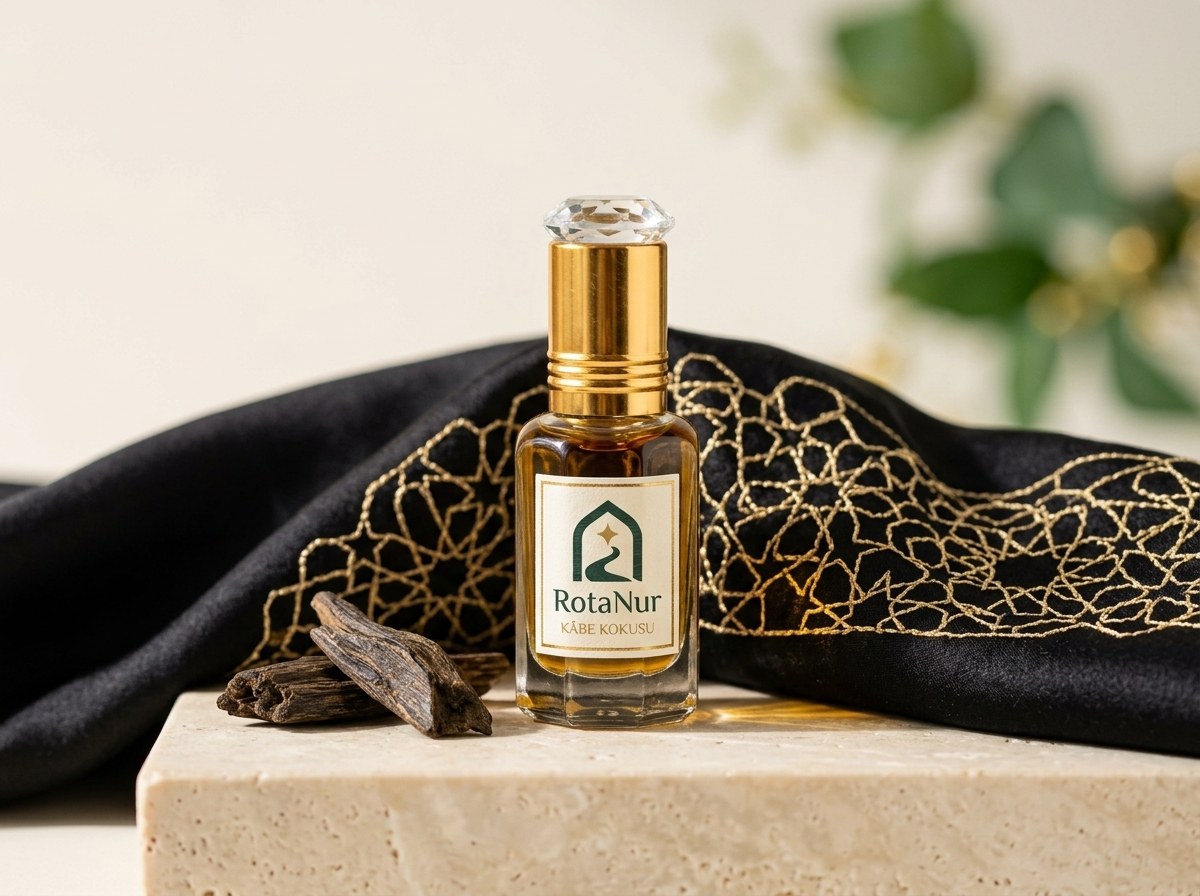
| Kaaba Scent Attar 6 ml — Alcohol-Free | Oud, amber and rose accord; intense | The Masjid al-Haram and the tradition of perfuming the Kaaba | Elders of the family, those who want a keepsake of Hajj |
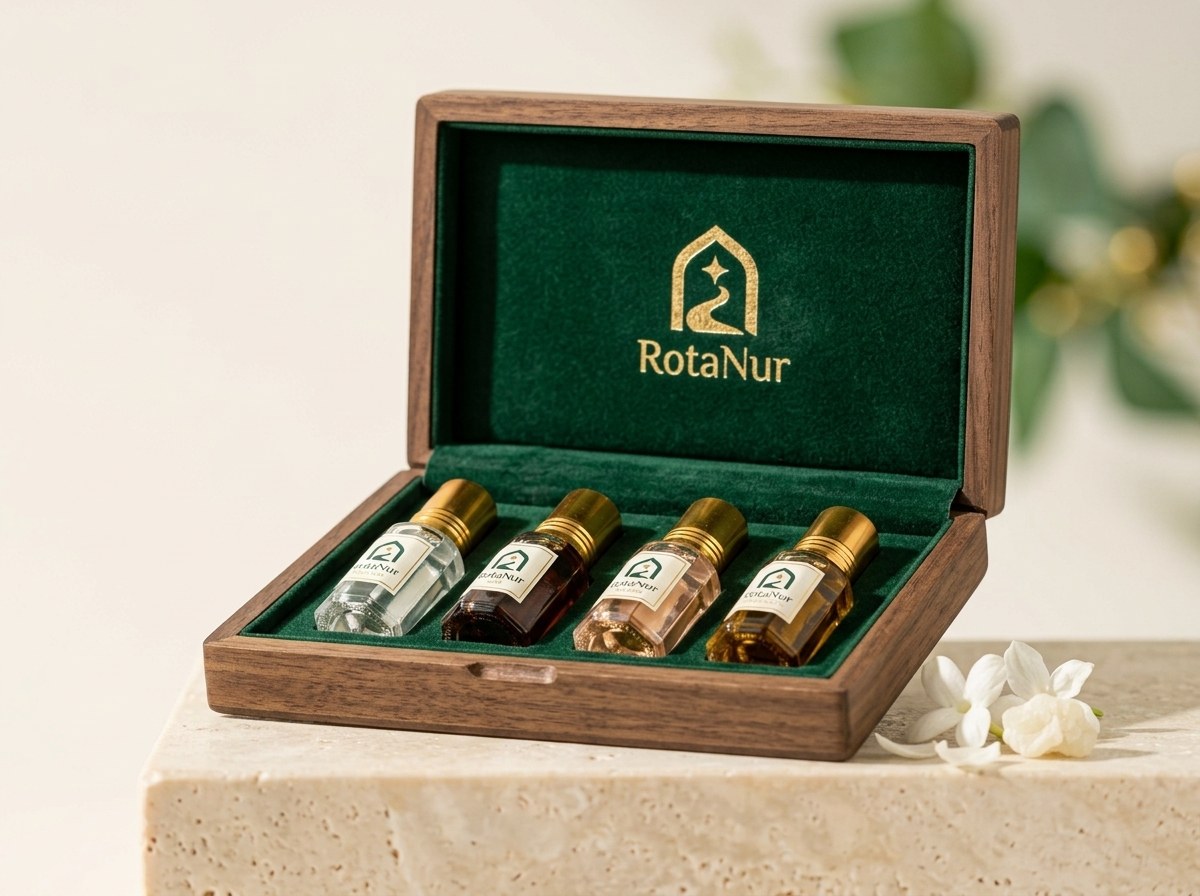
| 4-Piece Attar Gift Set — Musk, Oud, Taif Rose, Kaaba Scent | White Musk, Oud, Taif Rose, Kaaba Scent | The beloved scents of Makkah and Madinah together | Parents, spouse; loved ones whose scent preference you do not know |
| Bakhoor & Incense Burner Set | Oud-scented, resinous smoke | Hosting guests and prayer gatherings | The family home, as a home gift |
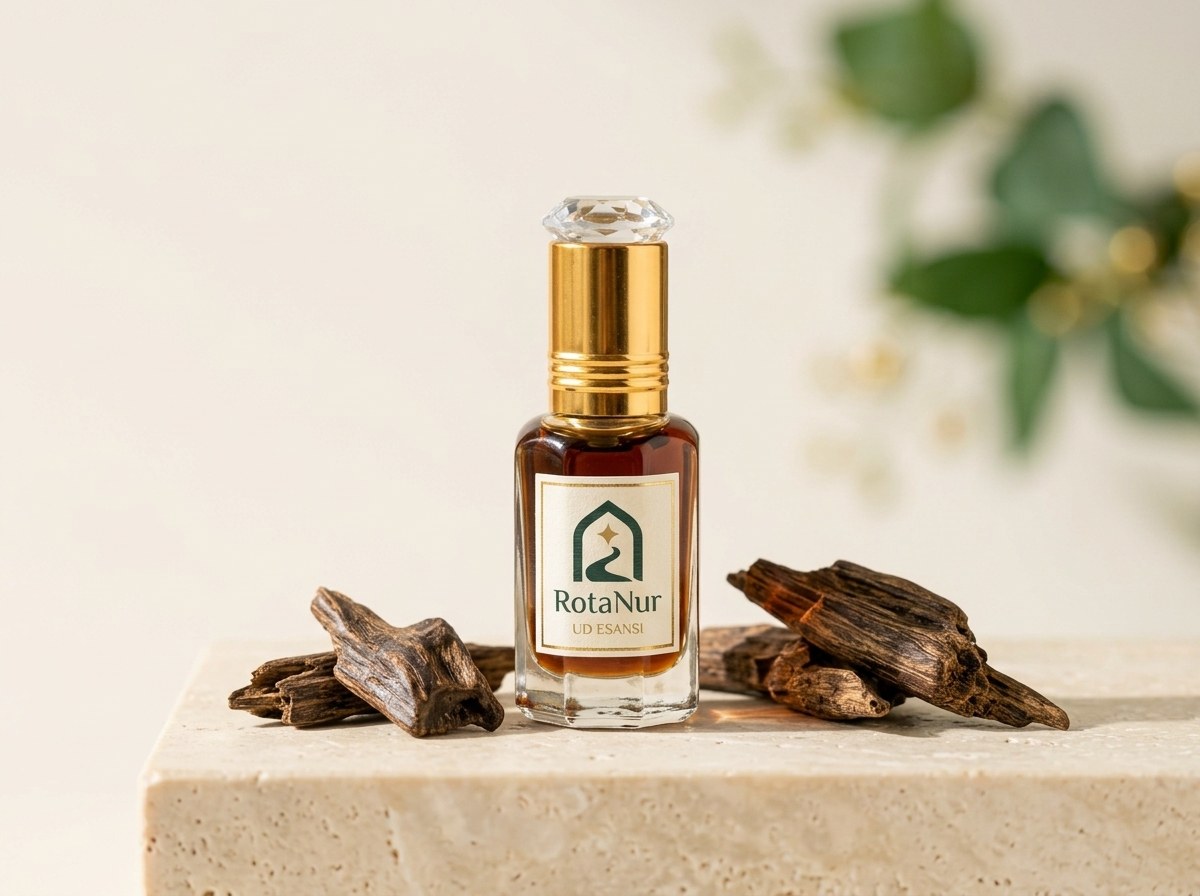
| Oud Attar 6 ml — Alcohol-Free | Woody, resinous; intense | The scent of oud in the markets of Makkah | Grandfathers, uncles, fragrance enthusiasts |
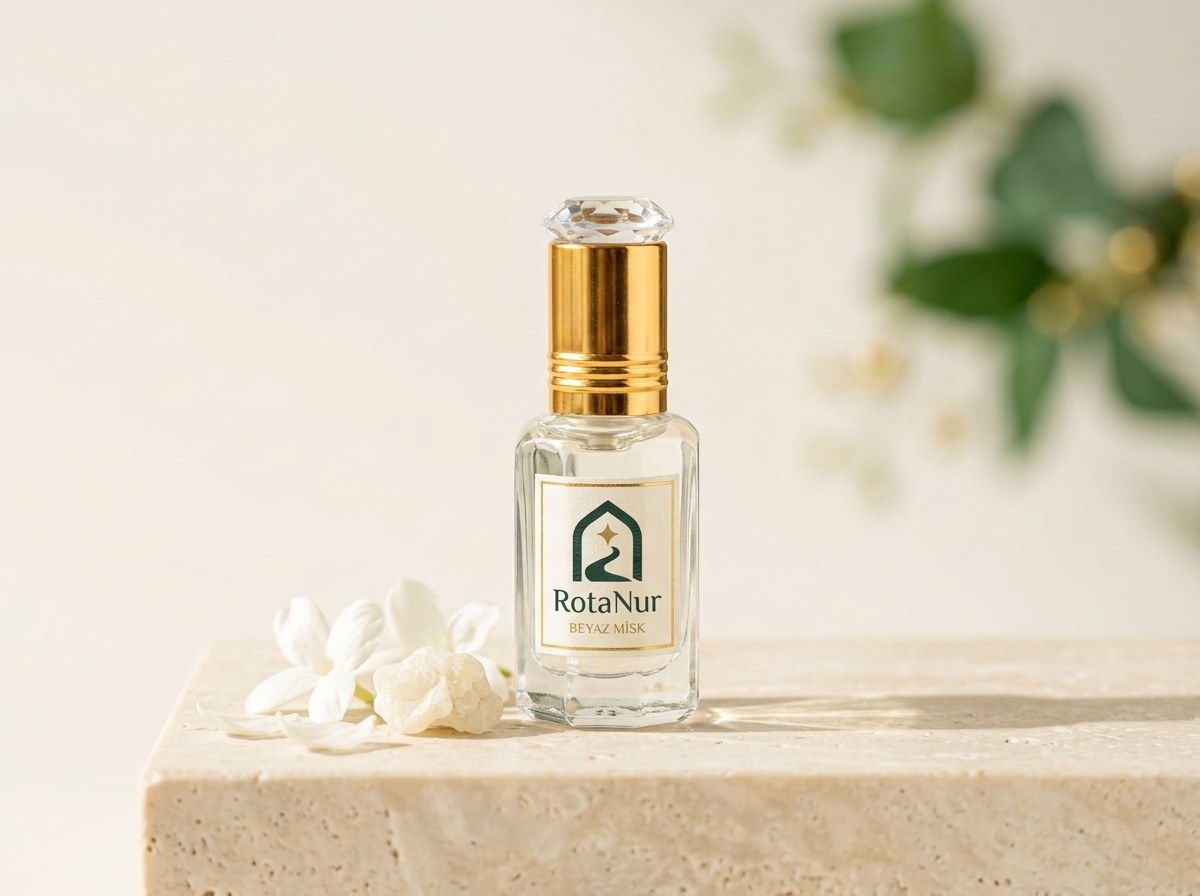
| White Musk Attar 6 ml — Alcohol-Free Musk Tahara | Clean, powdery; light | The feeling of cleanliness before worship | The wider circle, young people, those sensitive to scents |
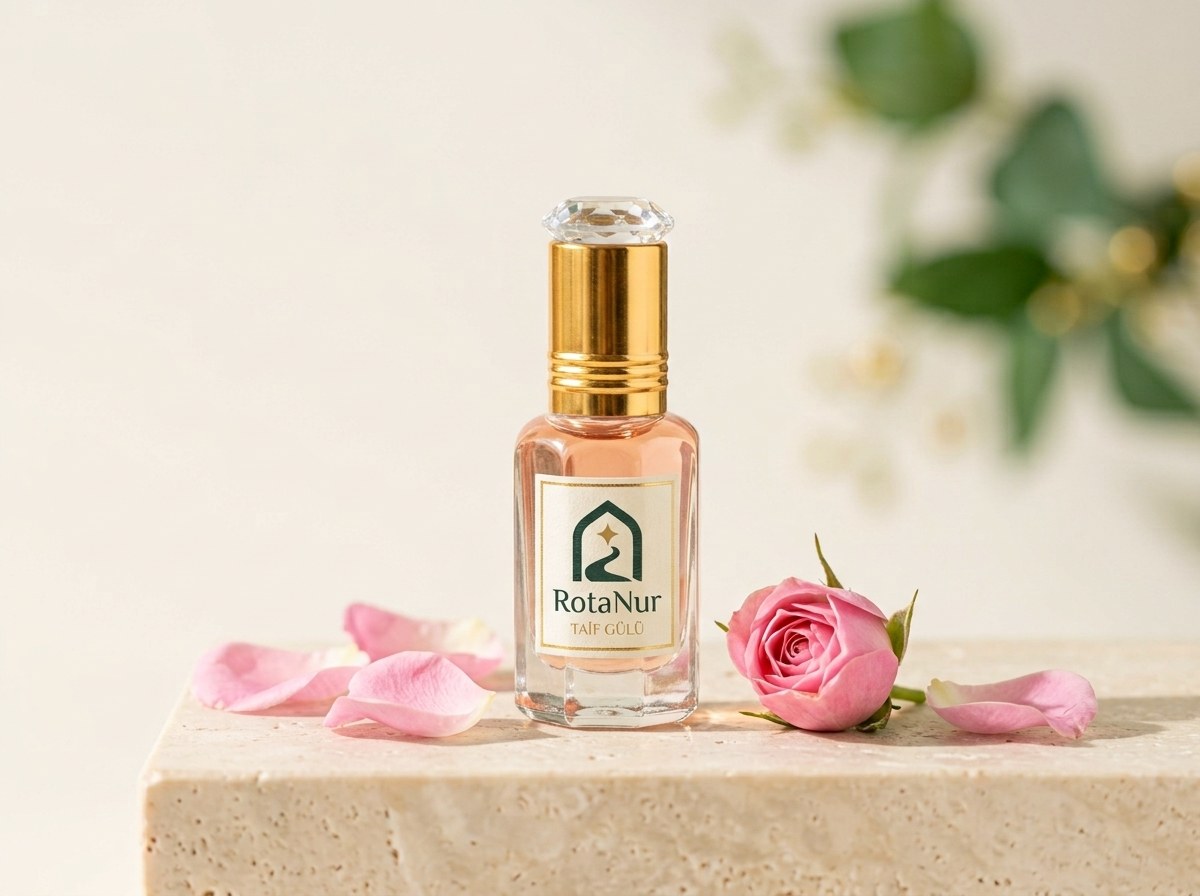
| Taif Rose Attar 6 ml — Alcohol-Free | Fresh, floral; medium | The roses of Taif, near Makkah | Mother, spouse, sister |
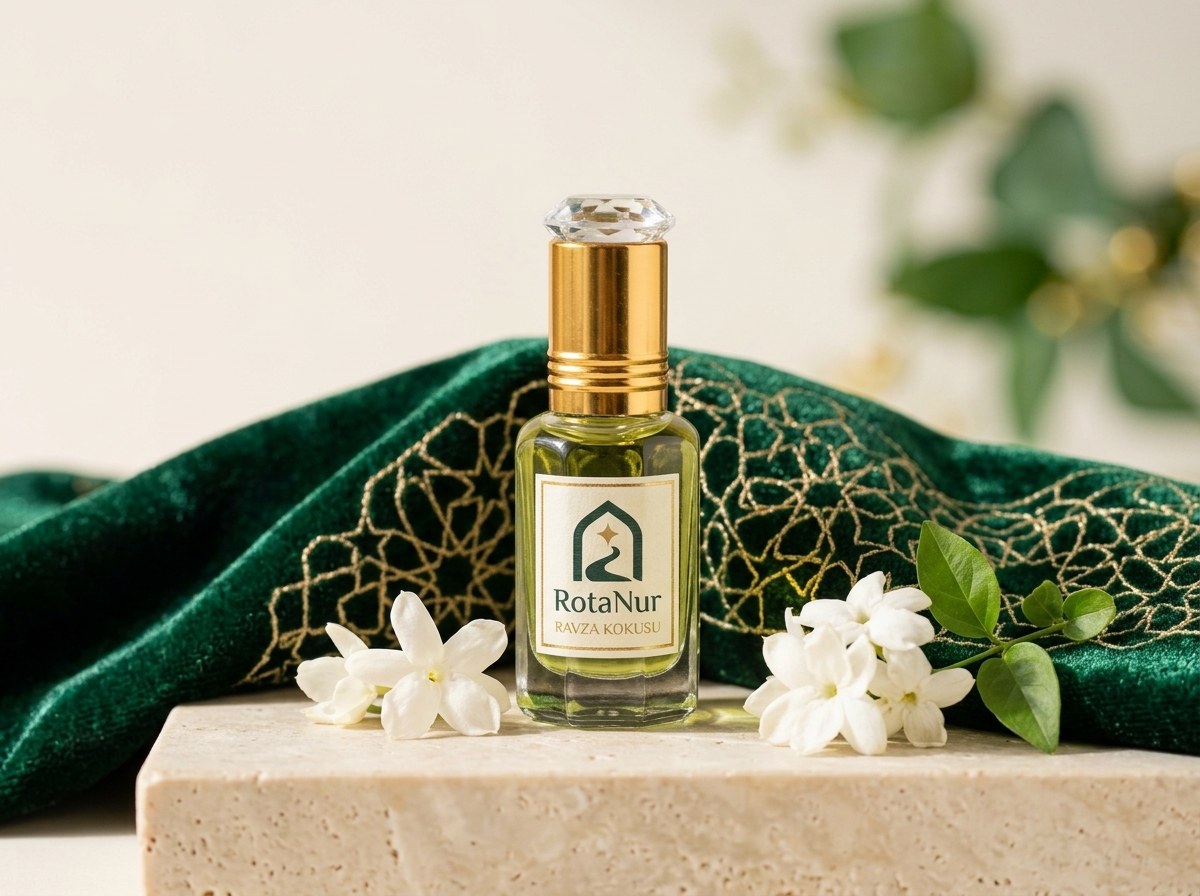
| Rawdah Scent Attar 6 ml — Alcohol-Free | Jasmine, rose and musk; light to medium | Visiting Madinah and the Prophet's Mosque | Those who long for Madinah, those who like daytime scents |
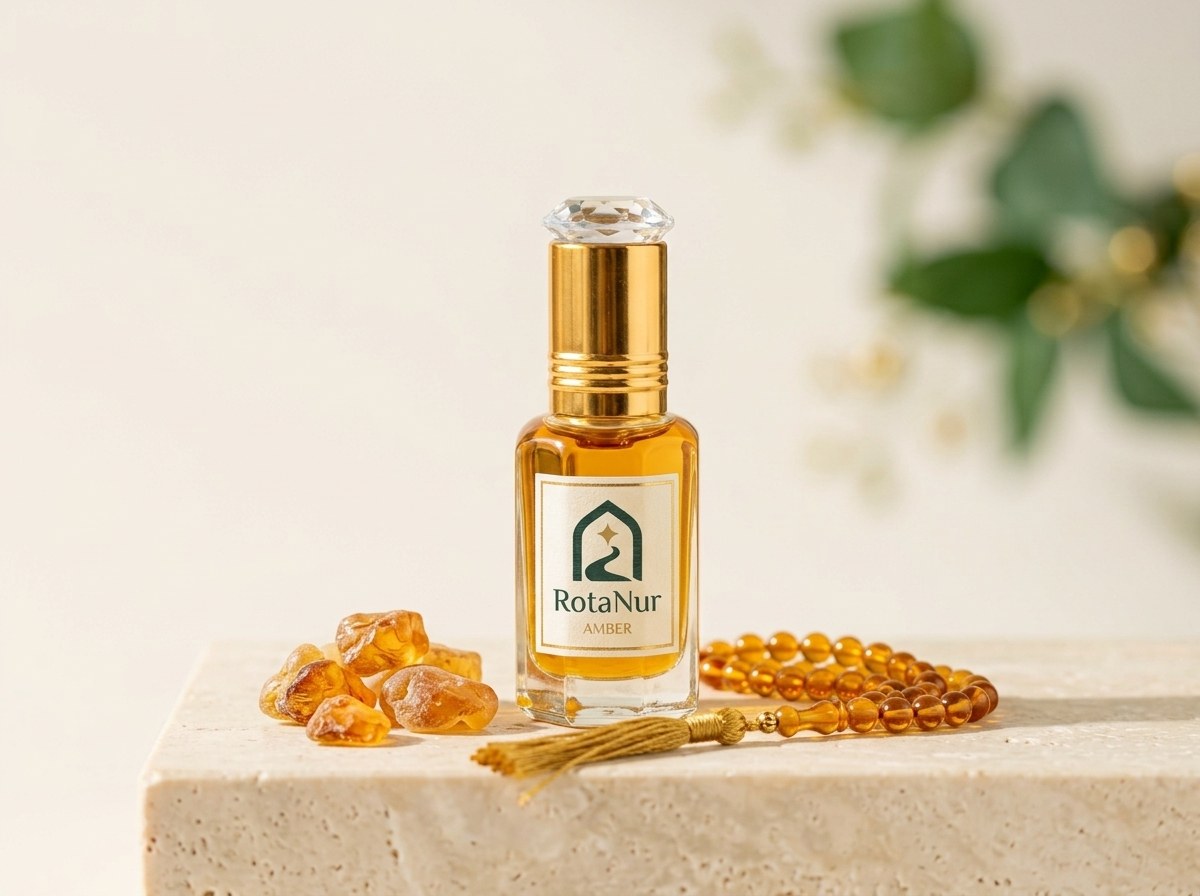
| Amber Attar 6 ml — Alcohol-Free | Warm, sweet; medium to intense | The warm scents of Eastern markets | Lovers of warm scents, gifts for the winter months |
All the single attars in this range are alcohol-free and oil-based; they come in a 6 ml cut-glass roll-on bottle with a gift box. Longevity usually ranges from 6 to 10 hours depending on skin type. The 4-piece set is a practical solution for loved ones whose taste you cannot guess: White Musk, Oud, Taif Rose and Kaaba Scent are presented together in a velvet-lined wooden box with a lid. You can find the note details of each scent on the product pages; for example, Oud Attar 6 ml — Alcohol-Free deepens with notes of saffron, agarwood and amber, while Amber Attar 6 ml — Alcohol-Free leaves a sweeter trail with notes of vanilla and resin.
Bakhoor and Incense Burners: Safe Use
Bakhoor is a delightful tradition, but it is also a product used with fire. If you follow a few simple rules, you can burn it at home with peace of mind on the days you host guests:
- Prepare the surface: Place the incense burner on a flat, stable, heat-resistant surface such as a marble, stone or metal tray; keep it away from flammable items such as curtains, tablecloths, books and cushions.
- Use the heat source correctly: With incense burners that use charcoal, light the bakhoor charcoal while holding it with tongs and wait until its surface turns grey and glows. If you use an electric bakhoor heater, follow the manufacturer's instructions.
- Start with a small amount: Place a small piece of bakhoor on the embers; the scent begins to spread within a few minutes. Adjust the intensity through the number of pieces and the burning time.
- Ventilate: Carbon monoxide can form while charcoal burns. Leave a window ajar, do not burn it for long periods in small, closed rooms, and never leave the incense burner lit during sleeping hours.
- Do not leave it unattended: Keep a lit incense burner away from children and pets; make sure the charcoal has gone out before you leave the room.
- Let it cool: The metal body heats up during and after use. Wait until the incense burner has cooled completely before moving it, and empty the ash only once it has fully cooled.
- In rooms with babies or people with respiratory sensitivities such as asthma, keep smoke to a minimum or do not burn bakhoor at all.
- Do not use the incense burner directly beneath a smoke detector; sensitive detectors may be set off.
- If you perfume clothes with bakhoor, do not bring the fabric close to the embers; take particular care with synthetic fabrics.
- Do not perfume ihram garments with bakhoor; Diyanet's guidance counts applying fragrance to the ihram garments among the prohibitions of ihram.
- While travelling, avoid burning bakhoor in hotel rooms because of smoke detectors and hotel rules.
How to Store Attar and Bakhoor
Attars change over time as they are exposed to light, heat and air. Until you hand out your Hajji gifts, keep the bottles upright in their own boxes, with the caps tightly closed, in a cool cupboard. Radiators, stoves and sunny windowsills can affect the scent and colour of attar; in the summer months, do not leave bottles inside the car or in the boot. If you keep any extra products with their boxes unopened, you can use the 14-day right of return that applies to unopened products.
Store bakhoor in its tightly closing box in a dry, cool place. As the scent of bakhoor spreads easily, it is best to keep the box on a separate shelf, away from food and from fabrics that can absorb odours. After each use, once the incense burner has cooled completely, clear it of ash and residue; wipe the metal surface with a dry, soft cloth before putting it away. If you are giving the set as a gift, handing it over unused in its original box makes the most elegant presentation.
Carrying Attar on the Hajj Journey
If you take attar with you on the Hajj journey, the 6 ml bottles are well below the 100 ml limit generally applied to liquids in cabin baggage on flights. As the rules can vary by airport and airline, we recommend checking the latest information before you travel.
- Close the bottle caps tightly and place the bottles upright in a small resealable bag.
- In hot weather, do not leave the bottles in front of a coach window, in the sun or in the outer pocket of your bag.
- Keep scented products in your suitcase, separate from unscented products, throughout the days in ihram.
- On the way home, wrap glass bottles between your clothes; if you will be handing out many gifts, it is more practical to place your order in advance from Türkiye.
- As the bakhoor and incense burner set is designed for home use, it is better to keep it ready at home rather than take it on the journey.
Plan Your Hajj Preparations in One Place
RotaNur is a travel organisation with which you plan the entire Hajj and Umrah journey together, from preparation to return. You can plan your journey by browsing our Hajj tours, and gather unscented care products for the days in ihram and, for your return, the attar and bakhoor sets on this page in the same basket. No online payment is taken: after you send your order request, our advisor contacts you, confirms availability and guides you through the payment steps. You have the right to return unopened products within 14 days. For details, see our cancellation and return terms, and for any questions you can reach our 24/7 support line.
FAQ
You can apply it to your body before entering ihram. In Hajj al-Tamattu, using fragrance is also permitted after leaving Umrah ihram until the Day of Tarwiyah, and after the first release from ihram (tahallul). According to the guidance of Diyanet (Türkiye's Presidency of Religious Affairs), the first release lifts the prohibitions of ihram except for marital relations. On the days you are in ihram, however, applying fragrance is prohibited.
According to Diyanet's guidance, it is not objectionable for a pleasant fragrance applied to the body before entering ihram to remain on the body afterwards. However, do not apply attar to the ihram garments; applying fragrance to the ihram garments is counted among the prohibitions of ihram.
Unscented soap, shampoo, wet wipes, rash cream and detergent are the safest choices. You can find products in sizes that last a long time in our unscented care for longer stays range.
There is no fixed number; we recommend drawing up your list by grouping people as family, relatives, neighbours and work contacts. Setting aside a reserve of attars equal to about 10-20 per cent of the total is a practical solution for unexpected visitors.
The easiest option is to order before you leave for Hajj. That way, the gifts are waiting at home when you return, your luggage does not get heavier and you can devote your time in Makkah and Madinah to worship. A relative at home can also receive the order.
The set contains White Musk, Oud, Taif Rose and Kaaba Scent attars. Each is a 6 ml alcohol-free, oil-based attar, and the four bottles are presented in a velvet-lined wooden gift box with a lid.
The set consists of 1 decorative metal incense burner and 1 box of oud-scented bakhoor, and it is shipped in a gift box. Bakhoor charcoal is not included in the set; if you use charcoal, you will need to obtain it separately.
It can, but ventilation is essential. As carbon monoxide can form while charcoal burns, leave a window ajar, do not burn it for long periods in small rooms and never leave it lit while you sleep. Keep smoke to a minimum where people with respiratory sensitivities are present.
Because the roll-on tip touches the skin, giving each person their own bottle is more hygienic than passing a single bottle around among guests. Bakhoor can be used to scent the room, and cologne can be offered at the door.
You have the right to return unopened products within 14 days of delivery. We therefore recommend keeping any gifts you do not hand out with their boxes unopened. For details, see our cancellation and return terms.