


 HAJJ TOURS -22%
 Hajj Tours
Compare economy, luxury and premium Hajj packages on one page: accommodation, Arafat and Mina arrangements, group size and the preparation steps for the 2027 Hajj season.
Showing all 3 results
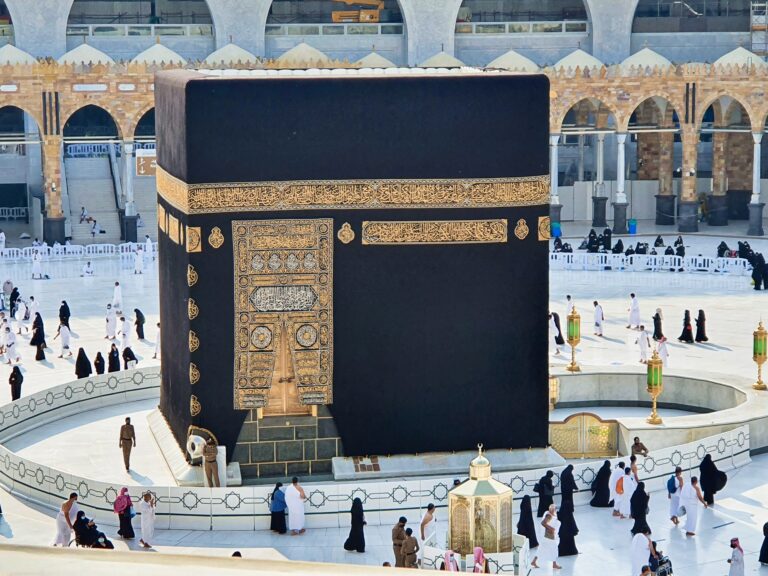
Hajj Tours Selection Guide: A Package and Preparation Roadmap for the 2027 Hajj Season
The Hajj tours category brings together the packages RotaNur offers as part of its Hajj organisation. On the cards you can see each package's accommodation class, key services and estimated starting price, and on the package page you will find a day-by-day programme summary along with the services that are and are not included in the price. This guide gathers into a single roadmap what sets Hajj packages apart, how the Hajj registration process in Türkiye affects your choice of package and the steps to take in the run-up to the 2027 Hajj season.
Unlike Umrah, Hajj is an act of worship performed only on certain days of the year, with millions of people in the same places at the same time. That is why the decisive factors in a Hajj package are the location of the hotel in Makkah, the tent arrangements in Mina and Arafat, the size of the group and the measures taken for elderly or vulnerable guests. The sections below are designed to help you compare these differences and go into your meeting with our advisor well prepared.
Hajj Packages: Economy, Luxury and Premium
Our Hajj tours are offered in three main packages. On every package, all stages of the Hajj rites (manasik) are carried out in full; the difference lies in the accommodation class, the comfort measures and the group arrangements.
| Package | Accommodation in Makkah and Madinah | Arafat and Mina arrangements | Key services | Who is it suitable for? |
|---|---|---|---|---|
| Economy Hajj | Hotels with a shuttle service to the holy sites or within a reasonable walking distance of them | Standard tent and accommodation arrangements | Full guidance and organisation, visit programmes | Those who want to perform their obligatory Hajj in full on an affordable budget |
| Luxury Hajj | 5-star hotels close to the Haram and the Prophet's Mosque | More comfortable, air-conditioned tent arrangements | Rich meal service, smaller group, regular health support | Families who value comfort on the long Hajj programme |
| Premium Hajj | Select hotels with a view of the Kaaba or within walking distance of the Haram | The most comfortable tent arrangements and priority service | Priority procedures, boutique group, personal service | Elderly and vulnerable Hajj candidates, those who want the highest level of comfort |
The table shows the general framework of the packages. Hotel names, group size and programme length are finalised as the Hajj season approaches and are confirmed to you in writing.
How to Read the Hajj Tour Cards and the Package Page
- Estimated price: On Hajj packages, the amount shown on the card is an estimate. Because Hajj costs become clear as the season approaches, the final price is given after your meeting with our advisor.
- Date information: Because Hajj dates depend on the Hijri calendar and official announcements, the booking card says "set with our advisor"; you do not need to choose a date.
- Key points: The short points at the bottom of the card summarise the features that set the package apart, such as hotel location, tent arrangements and guidance.
- Day-by-day programme summary: The package page sets out the main outline of the programme, from arrival to the farewell tawaf.
- Included and excluded services: What the price covers and the items you need to add to your budget separately are listed on the package page.
Registration First, Then the Package: The Regulatory Framework
In Türkiye, Hajj organisation is subject to the regulations of Diyanet (Türkiye's Presidency of Religious Affairs). Everyone who wishes to perform Hajj registers within the period and by the procedure that Diyanet announces; participation in Hajj groups is determined by Diyanet's registration and lottery process. This rule applies not only to Diyanet's own organisation but also to private Hajj programmes. In short, choosing a Hajj package cannot be considered separately from the registration and lottery process.
In the Diyanet-organised Hajj process, which is carried out through Diyanet's own organisation, fees and registration are handled directly by Diyanet; for this reason there is no priced package for Diyanet-organised Hajj on our site, and our related page is for information only. In private Hajj programmes, on the other hand, the accommodation class, hotel distance and scope of services vary. No organisation can provide a Hajj place outside the registration and lottery process; we advise you not to rely on such promises. You can find the differences between the two options in detail in our article Diyanet-organised Hajj or private Hajj?
Preparation Roadmap for the 2027 Hajj Season
The 2027 Hajj is expected to fall in mid-May 2027; the exact days will be confirmed by the Diyanet calendar and announcements from the Saudi authorities. The dates for registration, the lottery and final registration are also announced separately by Diyanet each year. Planning your preparation in the order below will spare you last-minute stress:
- Follow Diyanet's registration announcements for the 2027 Hajj period and review the registration requirements.
- Register for Hajj using the announced procedure; make sure your registration details are aligned with those of the relatives you want to travel with.
- Follow the lottery and final registration results; once you have been granted a Hajj place, review the package options with our advisor.
- Check your passport's validity; if necessary, start the renewal process early.
- Consult your doctor and complete your health checks and the vaccinations required for Hajj in good time.
- Attend the pre-Hajj briefing meetings and the Hajj rites (manasik) training.
- Get your ihram, unscented care products and the items you need for the days in Mina and Arafat ready before the Hajj season.
- In the final week before departure, confirm your flight, hotel and group details.
For details on preparing your documents, see our article documents required for Hajj, and for information on the calendar, see when Hajj takes place.
Criteria to Compare When Choosing a Package
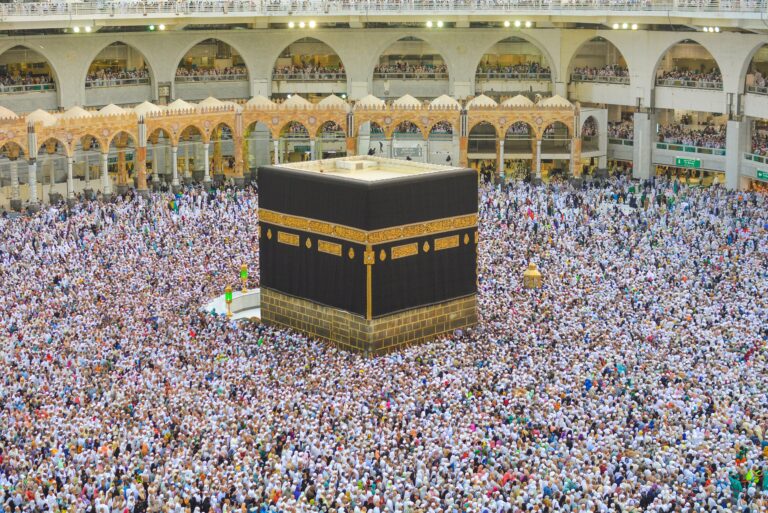
- Hotel location: In Makkah, the distance to the Haram determines how far you will walk, especially on the days of Tawaf al-Ziyarah and the farewell tawaf.
- Tent arrangements: In Mina and Arafat, the tent's facilities, the space per person and the cooling options make a big difference on long, hot days.
- Group size: In small groups it is easier to reach the guide, move as a group and stay together in the crowds.
- Meal arrangements: Because the Hajj programme is long, the timing and quality of meals matter for keeping up your energy.
- Transport: Ask how transport between cities and between the holy sites is provided, and about the use of the high-speed train on premium programmes.
- Health support: Find out about the extra measures taken for Hajj candidates who have chronic conditions or are older.
- Madinah days: Whether the programme covers Madinah before or after Hajj affects the pace of the journey.
Where Is the Package Difference Felt on the Days in Mina, Arafat and Muzdalifah?
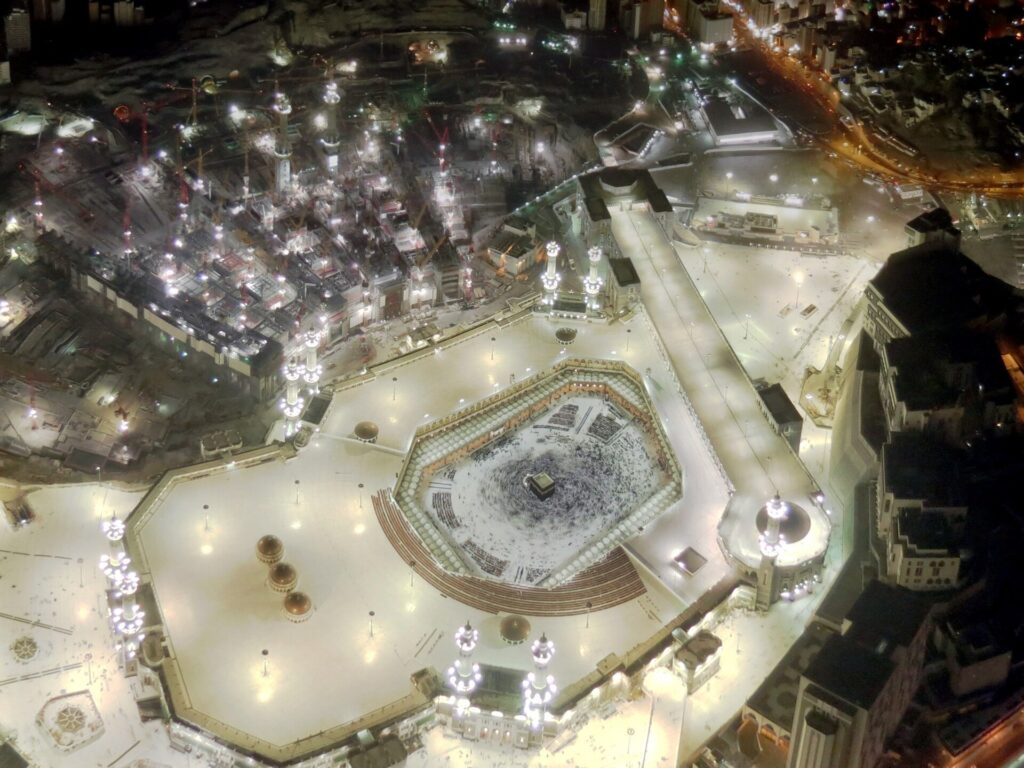
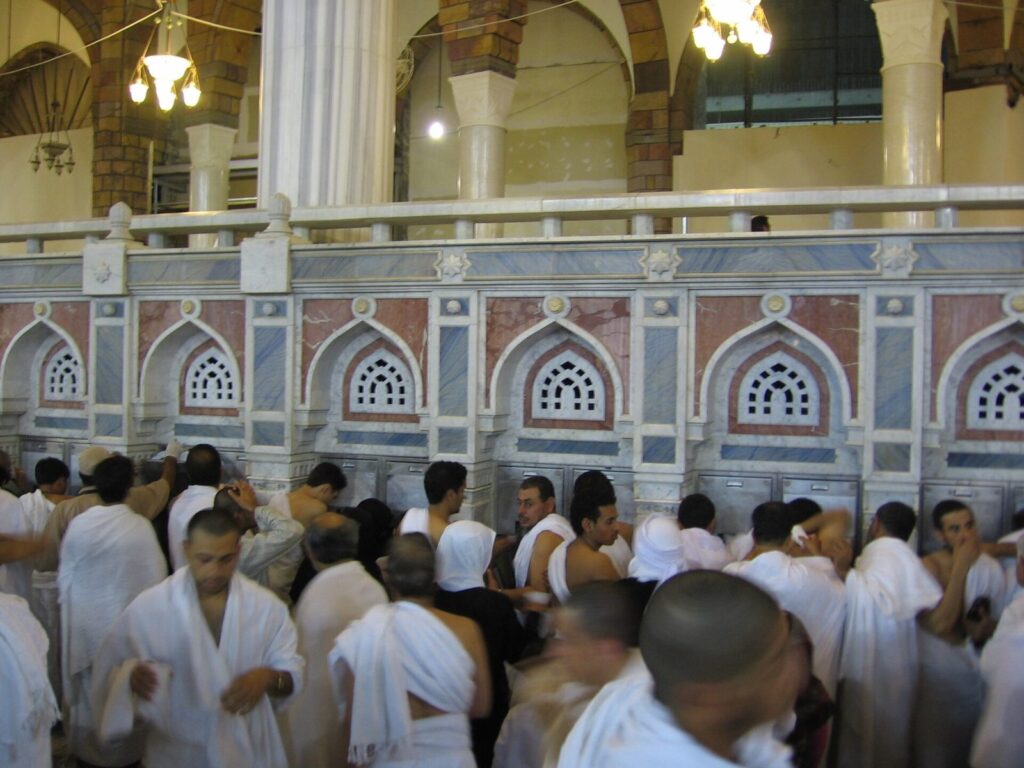
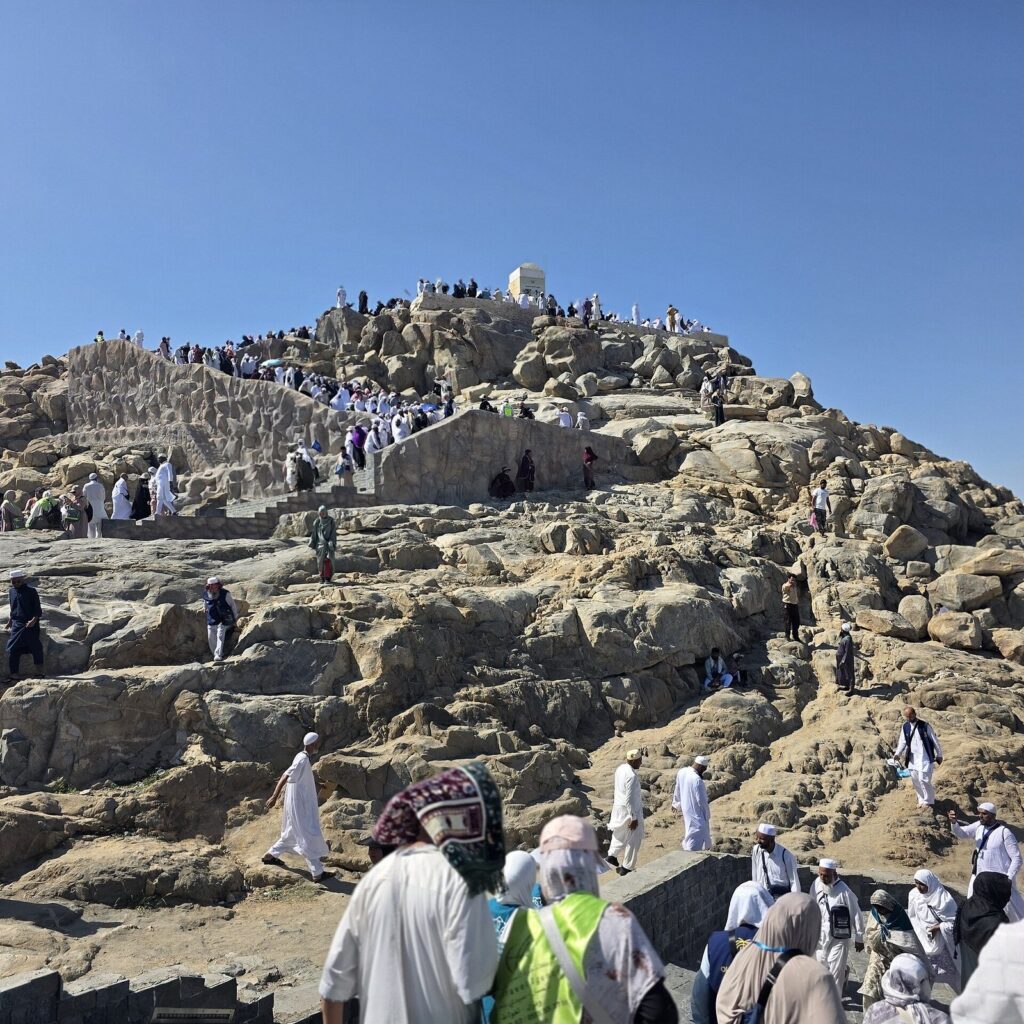
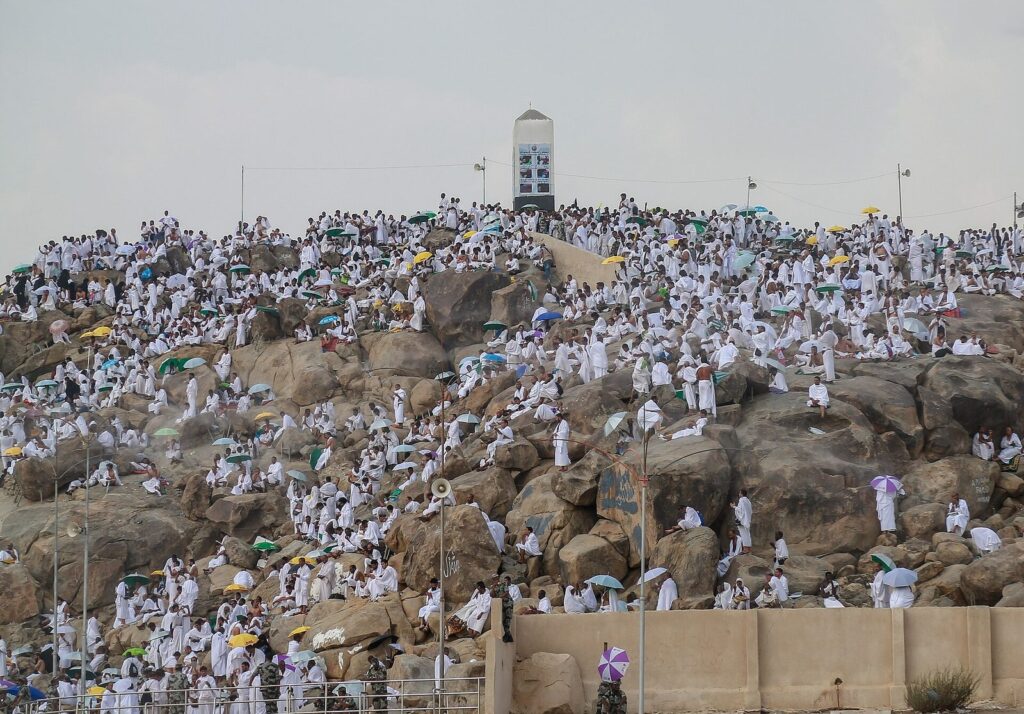
The busiest days of Hajj run from the eighth day of Dhu al-Hijjah to the last days of Eid. On these days, pilgrims stay in tents in Mina, stand in wuquf at Arafat, spend the night in the open at Muzdalifah and stone the devil at the Jamarat. The form of worship is the same on every package; the difference between packages shows in how rested and safe you are through these days.
On luxury and premium programmes, tents are planned with fewer people and more comfortable facilities, and priority service is provided for transfers between the holy sites. On the economy programme, guidance and organisation are carried out in full within the standard arrangements. Whichever package you choose, preparing comfortable sandals, an umbrella, a water bottle and a small bag for these days makes things much easier. For details of the Hajj rites, you can read our article how to perform Hajj.
Madinah in the Hajj Programme: At the Start or at the End?
Hajj programmes are planned in two ways, depending on when the Madinah visit takes place. On programmes that start in Madinah, the group first spends a few days at the Prophet's Mosque, then enters ihram at the Madinah miqat and travels on to Makkah. This arrangement suits those who want to shake off the initial fatigue of travel in a calm city and prepare spiritually for Hajj. On programmes that start in Makkah, pilgrims travel directly to Makkah and spend their time in worship at the Haram until the days of Hajj; the Madinah visit takes place after Hajj, and the journey is completed at a calmer pace.
Which arrangement applies is determined by the group's flight plan and the official calendar. For elderly guests or those with chronic conditions, having Madinah at the end of the programme is often preferred, as it allows time to rest after the intense days of Hajj. Letting our advisor know your preference on this during your package meeting makes it easier to identify the right group for you.
Group Arrangements, Identification and Communication During Hajj
During the Hajj period, entry to the holy sites is controlled through the official Hajj permit and the identity cards issued to pilgrims; entry for those without a permit is restricted, and penalties are imposed on unauthorised attempts to perform Hajj. For this reason, it is very important not to leave your group and to carry the cards issued to you and your name badge at all times. In case anyone gets lost in the crowds, your guide announces the meeting points and times before every visit.
- Keep the numbers of your guide and the group staff saved on your phone, and carry a small power bank for charging.
- Carry the location details of your hotel and of your tent in Mina with you in writing.
- Keep to the group departure times; do not leave the group, especially during the move from Arafat to Muzdalifah.
- Tell your guide in advance about any health problems and the medicines you take.
Preparing for the Heat and Crowds of the Hajj Season
As the 2027 Hajj is expected to fall in mid-May, the days of Hajj will once again coincide with a hot time of year. The wuquf at Arafat, spent in the open during daylight hours, the move to Muzdalifah and the journey to the Jamarat make precautions against the heat essential. Light-coloured, breathable clothing, a UV-protective umbrella, unscented sunscreen and a water bottle you can carry with you are the most basic needs. Planning your programme to avoid the midday heat and keeping to the times your guide recommends both protects your health and increases the energy you can devote to worship. You can find heat protection products in our heat protection category.
Payment, Contract and Cancellation Terms
On Hajj packages, the terms are shared with you in writing once the price and scope have been finalised with our advisor. No online payment is taken: after you send your request, our advisor contacts you, confirms availability and guides you through the payment steps. Because Hajj organisations depend on the official calendar and registration results, change and cancellation terms vary according to how long before the departure date the request is made. Before booking, we recommend reading our cancellation and refund terms and clarifying any questions with your advisor.
Family and Work Planning for a Long Journey
Hajj means being away from home for much longer than Umrah. That is why preparation is not limited to your suitcase. Plan the leave you will take from work early, in line with the Hajj calendar; arrange your regular bills and banking so that nothing is disrupted while you are away. If you have a relative who needs care or young children, decide in advance who will look after them in your absence. Leaving your house keys with someone you trust, naming an emergency contact and passing that person's details on to the group staff will also help you set off with peace of mind.
Returning from Hajj and Preparing the Welcome
Welcoming a returning Hajji is a deep-rooted tradition in which visitors are offered Zamzam water and dates and gifts are shared. So that your return luggage complies with airline rules, confirm the rules for carrying Zamzam water and the baggage conditions before you travel. Ordering the prayer beads (tasbih), prayer mats, muslin scarves and refreshment sets prepared for the welcome before your Hajj journey makes things easier on your return; you can browse these products in our Hajji gifts category.
What the Price Includes and Items to Budget for Separately
The scope of our Hajj packages is set out in detail on the package pages. In general, the price includes:
- Return flight tickets
- Accommodation in Makkah and Madinah
- Tent and accommodation arrangements in Arafat, Muzdalifah and Mina
- All in-city and intercity transfers
- Guidance from experienced religious guides, and visit programmes
When preparing your budget, you should also allow separately for the following items:
- The sacrifice (hady) fee
- Passport fees
- Personal expenses and gift shopping
- Hajj items: for ihram, unscented care products, a Muzdalifah night set and heat protection products, take a look at our Hajj items page
Why Is the Sacrifice Fee Kept Separate?
According to the Hanafi school, offering the hady sacrifice is wajib (necessary) for those performing tamattu and qiran Hajj; for those performing ifrad Hajj, this sacrifice is not required. Because a large proportion of pilgrims perform tamattu Hajj, the sacrifice is planned as a separate item in the Hajj budget. The method by which the sacrifice will be carried out and its current fee are announced separately during the Hajj period. You can find the differences between the types of Hajj in our article types of Hajj; on any matter you are unsure about, we recommend referring to Diyanet's current fatwas.
Which Hajj Package Suits Whom?
- Young, healthy Hajj candidates going for the first time: Economy Hajj is a sufficient and budget-friendly option for performing all of the Hajj rites in full.
- Middle-aged Hajj candidates travelling with their spouse: Luxury Hajj combines the chance to rest during the long programme with more comfortable tent arrangements.
- Elderly Hajj candidates or those with chronic conditions: Premium Hajj keeps fatigue to a minimum with accommodation close to the Haram, priority procedures and extra comfort measures.
- Those travelling with a companion: Having the companion and the Hajj candidate on the same package and with the same arrangements is the key to daily care and to moving together in the crowds. Follow Diyanet's announcements for the rules on registering a companion.
- Female Hajj candidates: The rules on mahram and age requirements may be updated from time to time by Saudi Arabia and Diyanet; be sure to confirm the current requirements before registering.
A Short Checklist for Health and Physical Preparation
- Have a general health check-up months before the Hajj season; get a written report from your doctor for any chronic conditions.
- Ask your family doctor or the Ministry of Health's travel health centres about the vaccinations required for Hajj and their timing.
- Prepare enough of the medicines you take regularly to last the whole programme, together with their prescriptions.
- Build up your fitness with daily walks; remember that you will be walking long distances throughout Hajj.
- Get used to keeping the time you spend working and waiting in the heat short; make drinking plenty of water a habit.
Common Mistakes in Hajj Registration and Package Choice
- Missing the registration period: If you do not follow Diyanet's registration announcements, you may have to wait for the next period.
- Trusting promises of Hajj outside the lottery: A Hajj place cannot be provided outside the registration and lottery process; such promises can leave people seriously wronged.
- Registering separately from your relatives: If your registration details do not match those of the people you want to travel with, you may end up in different groups.
- Looking only at the price: Failing to take into account the difference that accommodation and tent arrangements make on a long and tiring programme.
- Putting off health preparations: Leaving vaccinations and medical reports until the final weeks.
Questions to Ask Your Advisor
To go into your package meeting well prepared, we recommend noting down these questions: In which area will we stay in Makkah and Madinah, and how far is the hotel from the Haram? What will the tent arrangements be like in Mina and Arafat? How many people will be in the group, and who will the guide and the religious guide be? Will the programme start or end in Madinah? What measures are taken for elderly and vulnerable pilgrims? How are the sacrifice fee and other additional costs planned? The answers to these questions will help you see the real difference between the packages.
Hajj by Proxy and Special Circumstances
When Hajj is obligatory for a person who cannot go in person because of their health, someone else performing Hajj on their behalf is known in Islamic jurisprudence as Hajj by proxy (badal Hajj). The conditions and practice of Hajj by proxy are a separate topic; you can find the details in our article what is Hajj by proxy. For the answer to the question of who Hajj is obligatory for, you can read our article who is Hajj obligatory for.
Useful Pages for Your Preparation
For package prices, a sample programme and the complete Hajj rites, see our Hajj tours page. If you are wondering how Hajj and Umrah differ, our article the differences between Hajj and Umrah will guide you. For any question on your mind, you can reach our advisors 24/7 through our WhatsApp line and our contact page.
FAQ
Hajj costs become clear as the season approaches, once flight, accommodation and official fees are announced. For this reason, the cards show a well-founded estimated price; the final price is confirmed to you in writing after your meeting with our advisor.
No. Hajj dates depend on the Hijri calendar and official announcements. The booking card states that the date will be set with our advisor; you will be informed once the departure and return dates are confirmed.
The 2027 Hajj is expected to fall in mid-May 2027. The exact days are confirmed by the Hijri calendar, moon sighting and official announcements; group departure dates are then planned ahead of these days according to the Hajj programme.
In Türkiye, participation in Hajj groups is subject to the registration and lottery process of Diyanet (Türkiye's Presidency of Religious Affairs); this rule also covers private Hajj programmes. Registration itself is made through Diyanet, and our advisors review the registration process and your package options together with you.
The worship programme is the same on every package. The difference lies in the location and class of the hotels in Makkah and Madinah, the tent arrangements in Mina and Arafat, the group size and the priority services. Premium Hajj also includes extra comfort measures for elderly and vulnerable pilgrims.
No. The sacrifice (hady) fee is not included in the package price and is planned separately. A sacrifice is required for those performing tamattu and qiran Hajj; the current fee and the method of sacrifice are announced separately during the Hajj period.
The length depends on whether the Madinah visit takes place before or after Hajj and on the type of programme. The exact length is confirmed together with the departure dates and is included in your package details.
Yes. Before departure, a briefing is given on the Hajj rites and the travel arrangements; in Makkah, Arafat, Muzdalifah and Mina, our religious guides accompany your group at every stage of worship.
Yes. For elderly Hajj candidates, packages that offer accommodation close to the Haram and priority service are more suitable. Their health should be assessed by a doctor, and the current age and companion rules must be confirmed before registration.
In general, you need a valid passport, passport-size photos, health and vaccination documents and the paperwork requested at registration. The current list of documents is set by official announcements; our advisor will send you a complete list.
Yes. Our Hajj packages cover days in Madinah that include visits to the Prophet's Mosque and the Rawdah. Whether Madinah comes at the start or the end of the programme is determined by the group's departure plan.
No online payment is taken. Once the package and price have been finalised with our advisor, our advisor contacts you, confirms availability and guides you through the payment steps. The payment plan and contract terms are explained to you in detail during your meeting; for cancellation and refund terms, please see our related page.