







 BAMBOO -19%
 Hajj Ihram & Spare Sets
At least two sets for Hajj: cotton towel, bamboo and muslin ihrams, spare set bundles and zipped ihram belts, with a guide to choosing, wearing and caring for them.
Showing all 5 results
Hajj Ihram & Spare Sets: A Guide to Choosing, Wearing and Caring for Your Ihram
The Hajj ihram is the visible face of the greatest act of worship in the holy lands. Millions of people, whatever their position, profession or homeland, wrapping themselves in the same white cloths expresses, above all else, the spirit of equality and submission at the heart of Hajj. Unlike Umrah, Hajj is a journey that lasts for days and is spent in the heat, in crowds and often in the open air. That is why, when choosing a Hajj ihram, you need to decide in advance not only on the fabric but also on how many sets you will take, how you will wash them and how you will secure the ihram at the waist.
On this page you will find what the Hajj ihram is, why at least two sets are recommended, the differences between towel, bamboo and muslin fabrics, the right size and weight, how to put on the ihram and how to care for it throughout Hajj. If you have any questions, you can message us via our 24/7 WhatsApp support line.
What Is the Hajj Ihram and Who Wears It?
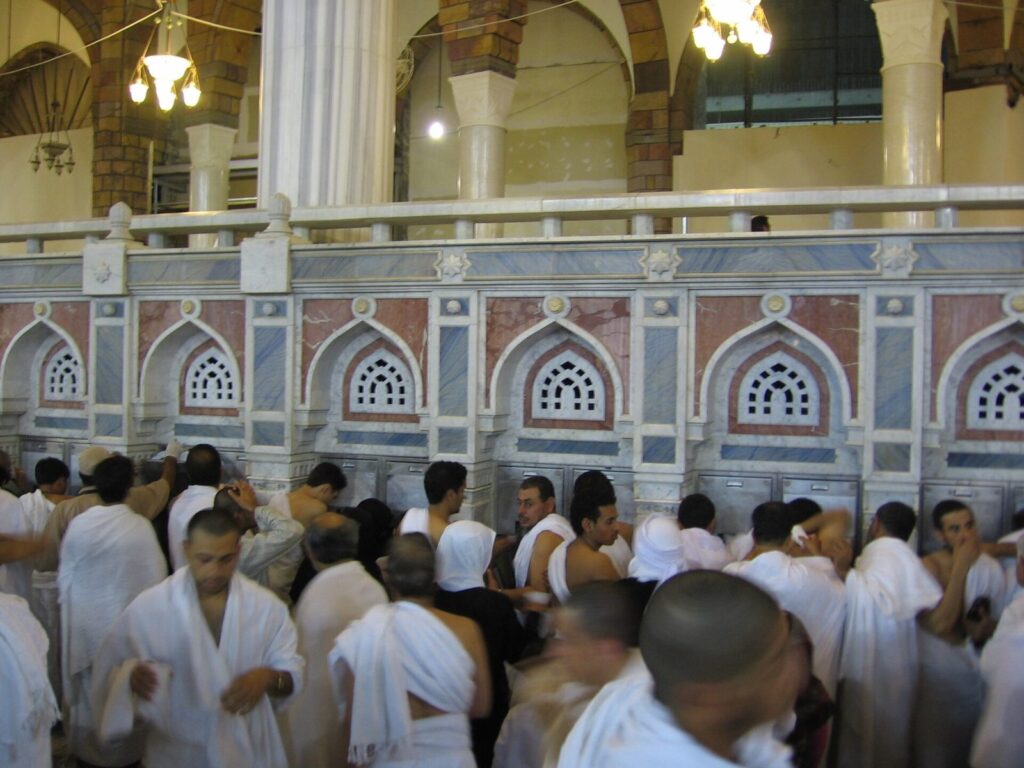
In the language of Islamic jurisprudence (fiqh), ihram means making the intention for Hajj or Umrah and reciting the talbiyah, thereby forbidding oneself certain otherwise permissible acts. In everyday language, however, the word ihram brings to mind the two unstitched pieces of cloth that men wear during this period. The piece that covers the body from the waist down is called the izar, and the piece that covers the shoulders and back is called the rida. According to the guidance of Diyanet (Türkiye's Presidency of Religious Affairs), men in ihram do not wear clothing tailored to the shape of the body, shoes, a prayer cap or a hat. Women, on the other hand, wear their normal modest clothing in ihram and keep their faces and hands uncovered. For this reason, the ihram cloth is a product made for adult men.
The boundaries set for entering ihram are called the miqat. Prospective pilgrims travelling from Türkiye usually fly to Jeddah or first to Madinah; group officials announce when and where ihram is to be entered. Putting on the cloths does not by itself mean entering ihram; ihram begins with the intention and the talbiyah.
How Long You Stay in Ihram on Hajj: Why at Least Two Sets?
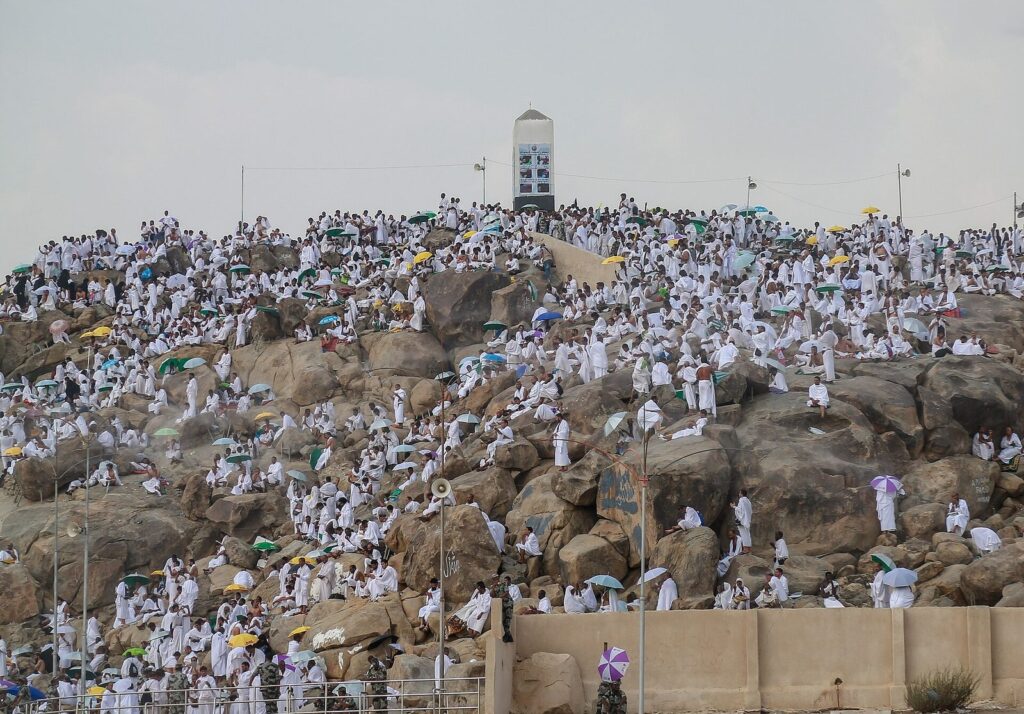
Hajj is performed in three ways. In Hajj tamattu, you first enter ihram for Umrah, come out of ihram by shaving the head once the Umrah is complete, and enter ihram again for Hajj on the Day of Tarwiyah, the eighth day of Dhul-Hijjah. In Hajj qiran, Umrah and Hajj are performed with the same ihram, while in Hajj ifrad the intention is made for Hajj alone; in these two forms, the time spent in ihram is longer. Whichever form you perform, the standing at Arafat, the night at Muzdalifah and the stoning of the large Jamrah on the first day of Eid are all spent in ihram.
These days are often spent in hot weather, in crowds and with long walks. Your ihram may get sweaty, dusty or stained during meals. Changing and washing the ihram cloths is not counted among the ihram prohibitions, which is why experienced pilgrims and group officials recommend taking at least two sets. With two sets, you gain the following:
- A clean spare: You can wear one set while the other is being washed and dried.
- Separate sets for Umrah and Hajj: In Hajj tamattu, you can wash and put away the set you wore for Umrah and enter ihram for Hajj in a clean set.
- The unexpected: If a set tears, goes missing or gets stained, you will not have to look for an ihram in the middle of your journey.
- Comfort: By choosing two sets in different fabrics, you can pick one to suit the hotter or cooler hours.
The Hajj Days and Your Ihram: A Day-by-Day Plan
The table below summarises how a prospective pilgrim performing Hajj tamattu can plan the use of their ihram sets on each day. The order of the days and the locations may vary according to your group programme; for the definitive programme, follow the announcements of your group officials.
| Day | Place and worship | Ihram status | Ihram tip |
|---|---|---|---|
| Days before Hajj | Makkah or Madinah | Out of ihram after Umrah | Wash and dry your Umrah set and set aside your Hajj set |
| 8 Dhul-Hijjah (Tarwiyah) | Entering ihram for Hajj, moving to Mina or Arafat | In ihram | Enter ihram in a clean set and bag up your spare |
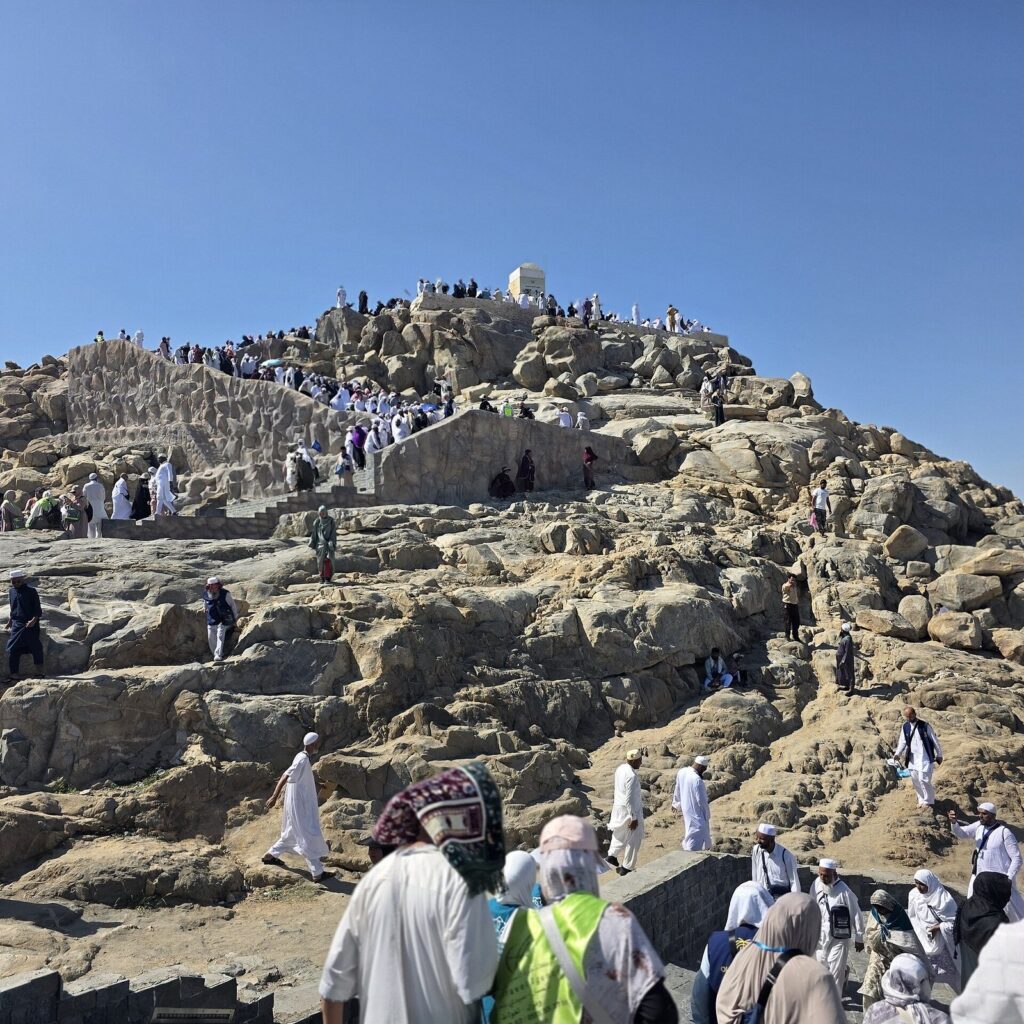
| 9 Dhul-Hijjah | Standing at Arafat | In ihram | Keep your documents in your belt, and shade and water with you |
| Night of 10 Dhul-Hijjah | Muzdalifah | In ihram | Wet wipes and a thin cover come in handy in the open air |
| 10 Dhul-Hijjah (Eid) | Stoning of the large Jamrah, sacrifice, shaving | Out of ihram after shaving | Put the soiled set in a separate bag |
| 11–13 Dhul-Hijjah | Days of Tashriq, stoning of the Jamarat | Out of ihram | Wash, dry and store your ihram sets |
According to the Hanafi school, on the first day of Eid the large Jamrah is stoned first, those performing Hajj tamattu or qiran offer their sacrifice, and pilgrims then come out of ihram by shaving the head. The prohibition on intimacy between spouses, however, remains in place until the visiting tawaf (Tawaf al-Ifadah) has been performed.
Choosing the Fabric: Towel, Bamboo and Muslin
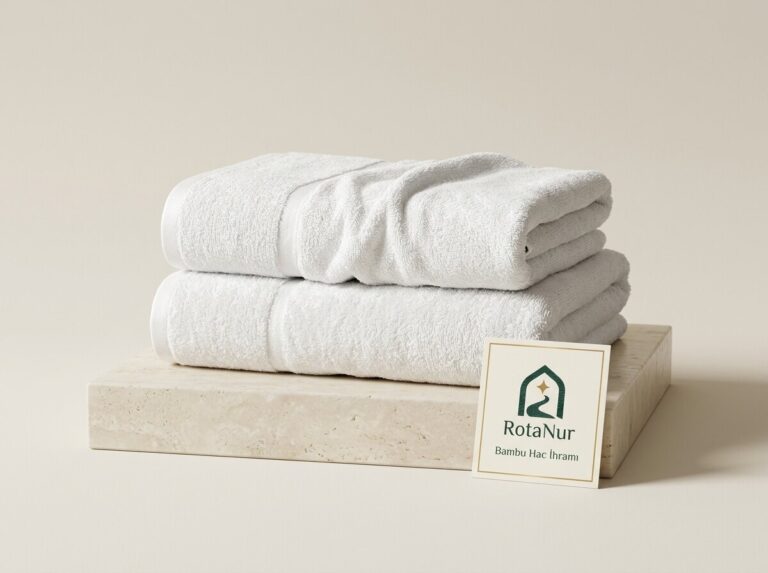
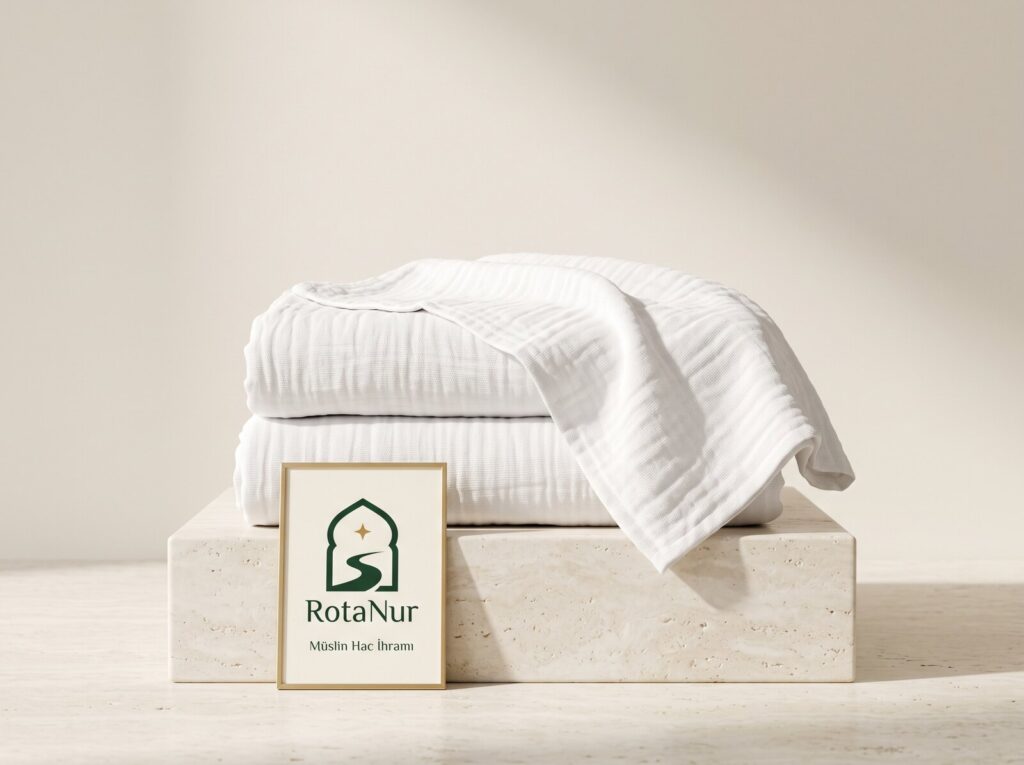
Most of the ihrams on the market are made in three types of fabric. Cotton towel is the full-bodied, classic ihram fabric whose looped surface absorbs sweat well. Bamboo fibre towel offers the same looped structure with a silkier, softer handle and feels smoother as it moves against the skin. Muslin is an airy, quick-drying fabric made by weaving several layers of fine cotton gauze together; it naturally has a slightly crinkled look. Which is best varies from person to person; many prospective pilgrims take one towel or bamboo set and one muslin set to combine the advantages of both fabrics.
| Fabric | Feel | Sweat absorption | Drying | Who is it for? |
|---|---|---|---|---|
| Cotton towel | Full-bodied, classic | High | Medium | First-time pilgrims, those who like a classic ihram |
| Bamboo fibre towel | Silky, very soft | High | Medium | Sensitive skin, those looking for a soft texture |
| Cotton muslin | Airy, slightly crinkled | Medium | Fast | Those sensitive to heat, those who will wash by hand |
The Right Size and Weight
The most common size for adult ihrams is 110x220 cm for each piece. This size is enough for the izar to wrap twice around the waist and for the rida to cover the shoulders and back comfortably. For towel ihrams, a set usually weighs between 1,200 and 1,400 g. The heavier the fabric, the fuller it is and the better it covers the body; on the other hand, it takes up a little more room in your suitcase. Very light, thin towels, meanwhile, can cling to the body when wet. For tall or broadly built prospective pilgrims, securing the izar with a belt reduces the need to adjust the cloth throughout the day. Shorter prospective pilgrims can adjust the length by folding the top edge of the izar over a few times; an izar long enough not to cover the heels or tangle around the feet when walking is important for a comfortable tawaf and sa'i.
Ihram Belts and Complementary Items
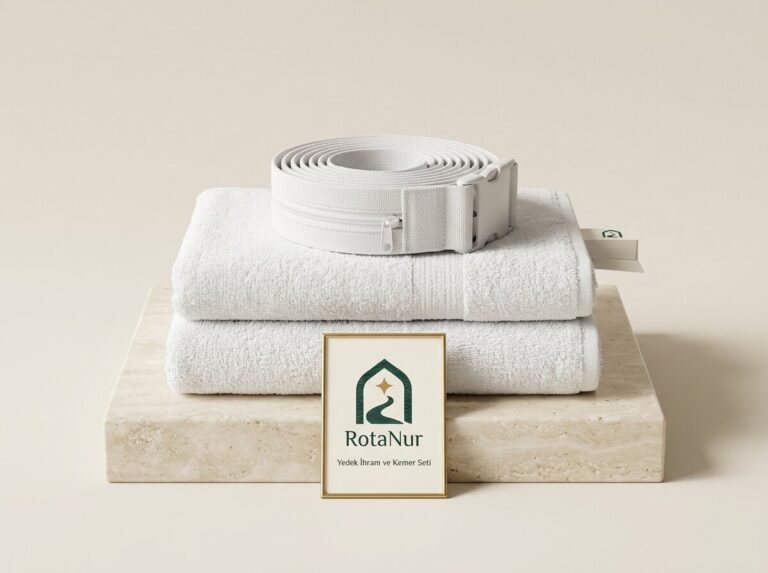
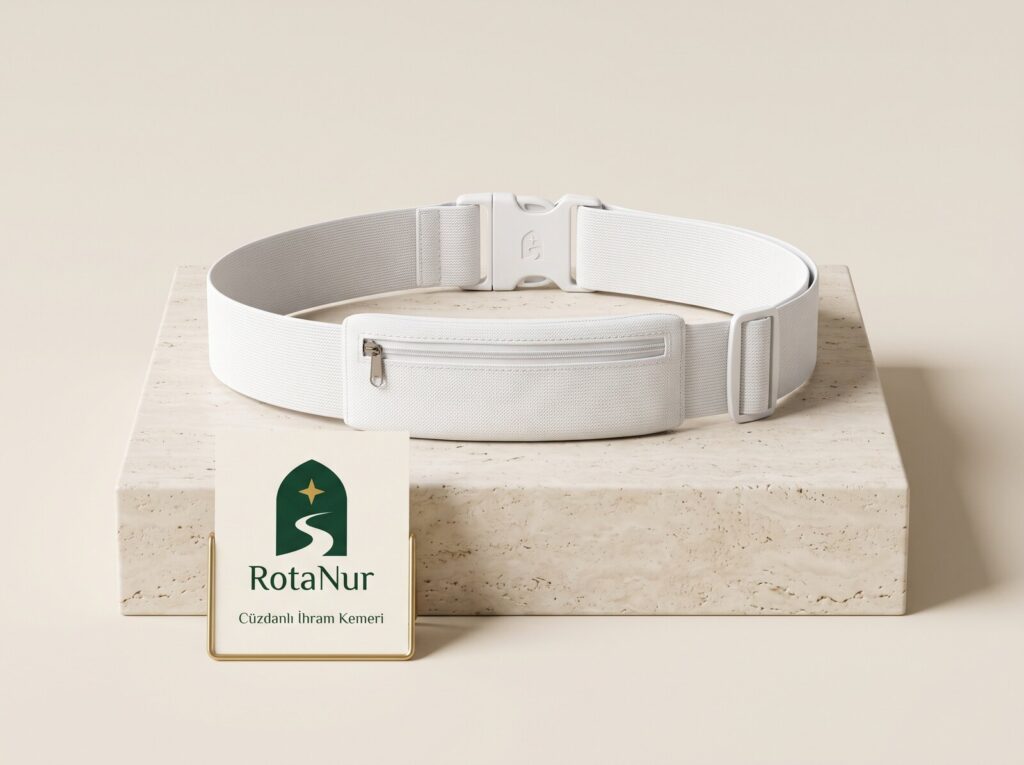
Since the ihram has no pockets, the most practical way to carry items such as your passport, cards and money is an ihram belt with zipped compartments. According to Diyanet's guidance, tying a belt or sash around the waist while in ihram does not require a penalty. Under Hanafi jurisprudence, however, tying the ends of the ihram cloth together or fastening them with a pin is considered makruh (disliked); so a belt, rather than a pin or a peg, should be used to secure the cloth. For your phone and small items, take a look at our Mina and Jamarat day bags, and for the days in the tents, our Arafat and Muzdalifah products.
How to Put On the Ihram
- Cleanliness: Cut your nails, carry out the necessary cleansing and take a ghusl (full ritual bath) or perform ablution (wudu). Using unscented products for this makes it easier to prepare for the period in ihram.
- Take off stitched clothing: Men take off all clothing tailored to the shape of the body, including underwear.
- Wrap the izar: Wrap the cloth around your waist, overlapping it so that the right end is underneath and the left end on top, and tuck the top edge in; you can secure it with a belt if you wish.
- Put on the rida: Drape the second cloth over yourself so that it covers both shoulders and your back.
- Prayer, intention and talbiyah: If it is not a disliked (makruh) prayer time, pray two rak'ahs of the ihram prayer, make your intention and recite the talbiyah; your ihram begins from this moment.
For tawafs that are followed by sa'i, such as the arrival tawaf (Tawaf al-Qudum) and the Umrah tawaf, one end of the rida is passed under the right armpit and thrown over the left shoulder, leaving the right shoulder uncovered; this is called idtiba. Once the tawaf is over, the rida is rearranged to cover both shoulders again. For a detailed explanation, see our Hajj Guide.
Ihram Prohibitions: A Brief Reminder
The main ihram prohibitions, and the acts that are not prohibited, as set out in Diyanet's guidance can be summarised as follows:
- For men: Wearing clothing tailored to the shape of the body, covering the head, and wearing shoes that cover the heels and the bone on the top of the foot are prohibited.
- For everyone, women and men: Covering the face, applying fragrance, cutting or plucking hair, cutting nails, hunting land animals and intimacy between spouses are prohibited.
- Not prohibited: Washing, using unscented soap, changing and washing the ihram cloths, tying a belt around the waist, carrying a bag on the shoulder, shading yourself with an umbrella, wearing a watch or a ring, and brushing your teeth.
For this reason, men must wear slippers or sandals that leave the heel and the top of the foot uncovered while in ihram; women, however, can wear their normal shoes. On any point you are unsure about, we recommend consulting your group's religious guide.
Caring for and Washing Your Ihram During Hajj
You can wash your ihram cloths by hand at the hotel or in a laundry. Since you cannot be sure of the scent of the detergent used in hotel laundries, it is safer to wash your ihrams with your own unscented detergent. Soaking them in lukewarm water for 10–15 minutes, rubbing gently and rinsing thoroughly is enough for most stains. Bleach should not be used, as it can wear out the fabric. Shaking out the washed ihram and hanging it in the shade keeps the fabric soft. You can complete your cleaning products from our Long-Lasting Unscented Care range.
Washing facilities in the Mina tents may be more limited than at the hotel. Before entering ihram on the Day of Tarwiyah, make sure your spare set is clean, dry and bagged; on the days in the tents, putting the soiled set in a bag and washing it when you return to the hotel makes things easier.
Planning Your Ihram in Your Hajj Suitcase
- Two ihram sets: One on you, one bagged in your suitcase.
- Ihram belt: A model with zipped compartments for your documents.
- Unscented care: Large-size soap and shampoo, unscented detergent, chafing cream and wet wipes.
- For your feet: Slippers or sandals that leave the heel and the bone on the top of the foot uncovered.
- Against the heat: An umbrella, a water spray and unscented sun protection.
- Washing and drying: A separate bag for your soiled ihram and a few clothes pegs.
Common Ihram Mistakes
- Setting off with only one set: On washing days, you end up either without an ihram or wearing a wet one.
- Wearing a new ihram without washing it: New towelling can feel stiff and shed lint the first time it is used; washing it once before the journey reduces this problem.
- Fastening the cloth with a pin or a peg: This is considered makruh under Hanafi jurisprudence; use a belt to secure the izar.
- Keeping the idtiba all day: Leaving the right shoulder uncovered is done only in tawafs that are followed by sa'i; during prayer and at other times, both shoulders are covered.
- Carrying documents in the fold of the izar: The risk of losing them in the crowd is high; choose a belt with zipped compartments.
- Washing the ihram with scented detergent: To leave no room for doubt, use unscented detergent.
Tips for Elderly Prospective Pilgrims and Those with Limited Mobility
For elderly prospective pilgrims and those with limited mobility, securing the izar with a belt reduces the need to adjust the cloth during the day and helps prevent falls. Putting on the ihram while seated and getting help from a relative makes things easier. During tawaf and sa'i in a wheelchair, do not leave the cloth loose, so that the ends of the ihram do not get caught in the wheels. For these prospective pilgrims, soft-textured bamboo or airy muslin sets may be more comfortable.
Which Product Is Right for You?
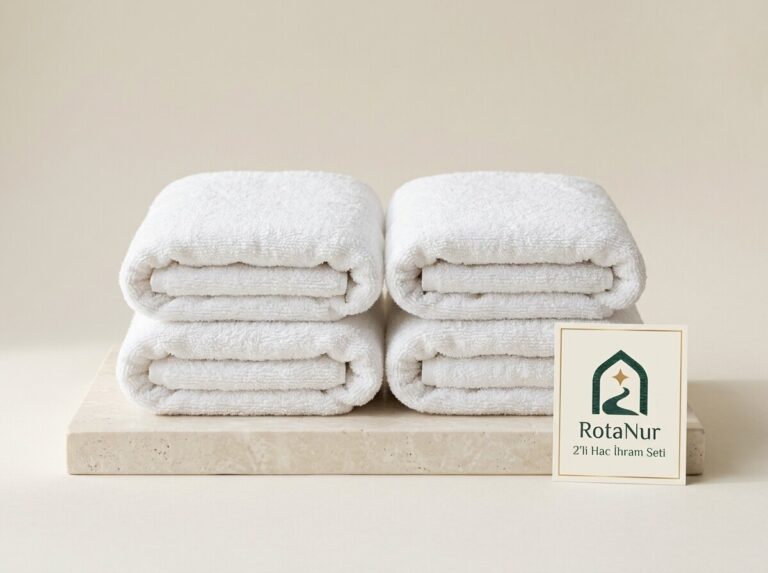
- Hajj Ihram Set of 2: Two sets of cotton towel ihram for those who have no ihram yet and want to complete their preparations in one go.
- Bamboo Hajj Ihram: A single set for those who like a soft, silky texture.
- Muslin Hajj Ihram: For those looking for an airy, quick-drying second set.
- Spare Ihram and Belt Set: A second set and a belt together, for those who already have a set left from Umrah.
- Zipped Wallet Ihram Belt: For anyone who wants to secure their ihram and carry their documents on them.
If you are looking for an ihram for Umrah, you can also explore our range of Umrah ihrams and belts.
How to Tell a Good-Quality Ihram
- Size and weight information: The size of each piece and the weight of the set should be clearly stated on the label.
- Edge finish: The edges should be neatly hemmed so that they do not unravel, and the loops should not be pulled.
- Coverage: The fabric should not be overly see-through when held up to the light.
- Feel: It should not prickle or itch when it rubs against the skin.
- Realistic descriptions: Be wary of health claims that come without evidence.
Keeping Your Ihram After Hajj
In Anatolia, the tradition of keeping the Hajj ihram as a keepsake is widespread. Before putting your ihram away, wash it with unscented detergent and let it dry completely, then keep it in a box that does not hold moisture or in a cotton bag, in a wardrobe out of direct sunlight. Leaving it in a plastic bag for a long time can increase the risk of damp and yellowing. You can use the same set again on your next Umrah or Hajj journey, or give it to a relative who needs it.
Giving an Ihram as a Gift to Loved Ones Setting Off for Hajj
Giving an ihram as a gift to a loved one who is going on Hajj is a lovely farewell tradition often seen in Anatolia. When choosing the gift, it helps to find out whether the person has been on Umrah before: for someone who has no ihram, a two-set bundle is the better choice, and for someone who has a set left from Umrah, a spare set and belt. Our lidded boxes can be presented without the need for gift wrapping. For bulk ihram orders for a group, an association or a family, you can send us the quantity and the delivery date via our WhatsApp line.
Why RotaNur?
- A selection built around the needs of Hajj: Two-set bundles, spare sets and belt options all in one place.
- Clear product information: Size, fabric and weight are stated on every product page.
- Accurate information: Summaries of the ihram rules, in line with Diyanet's guidance.
- Easy ordering: No online payment is taken; after you send your order request, our advisor contacts you, confirms availability and guides you through the payment steps. Fast shipping, a 14-day return right and 24/7 WhatsApp support.
RotaNur is a travel organisation that stands by you at every stage of your Hajj and Umrah journey. By exploring our Hajj tours, you can plan both your journey and your preparations in one place.
FAQ
At least two sets are recommended. Since changing and washing the ihram cloths is permitted, a second set gives you a clean spare on washing days. If you will be performing Hajj qiran or ifrad, with a longer period in ihram, you may also consider a third set.
Yes. As long as it is clean and not worn out, you can also wear the ihram you used for Umrah on Hajj. In that case, buying just one spare set is enough.
No. In ihram, women wear their normal modest clothing, with the face and hands left uncovered. The ihram cloths are for men.
For adults, sets in which each piece measures 110x220 cm are the standard and are enough for most heights.
You can choose cotton towel for a classic, full-bodied texture, bamboo for a softer feel and muslin for an airy, quick-drying fabric.
What is prohibited is wearing clothing tailored to the shape of the body. The hemming that stops the edges of the ihram cloths from unravelling is not considered to fall into this category.
According to Diyanet's guidance, carrying a bag on the shoulder, using an umbrella and shading yourself are not ihram prohibitions; you should simply not cover your head directly.
You can, but you may not be able to be sure of the scent of the detergent used. It is safer to wash your ihram by hand with your own unscented detergent.
Orders are sent by fast shipping. Ordering at least a few weeks before your group's travel date also leaves you time to wash and prepare the products before the journey.
No online payment is taken. After you send your order request, our advisor contacts you, confirms availability and guides you through the payment steps. Unopened and unused products can be returned within 14 days of delivery.