












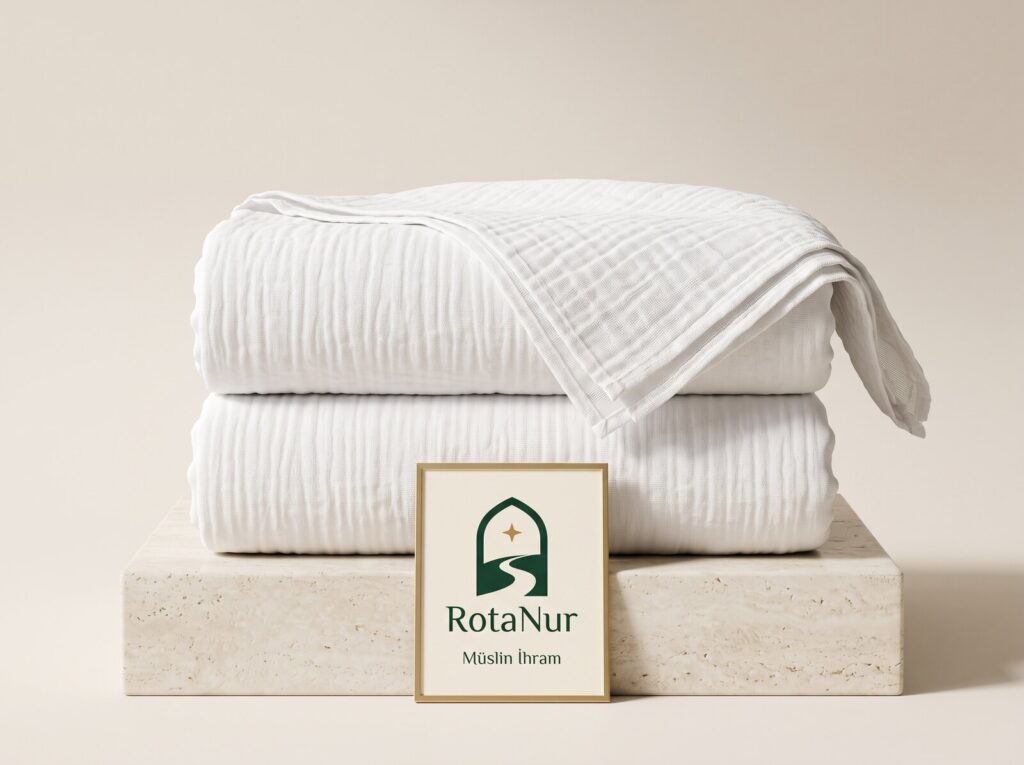
 LIGHT MUSLIN -24%
 Ihram & Ihram Belts
Seamless two-piece white ihrams and ihram belts that hold the wrap securely in place. With cotton, muslin and bamboo options, the foundation of your Umrah preparation is here.
Showing all 8 results
-
LIGHT MUSLIN -24%
-
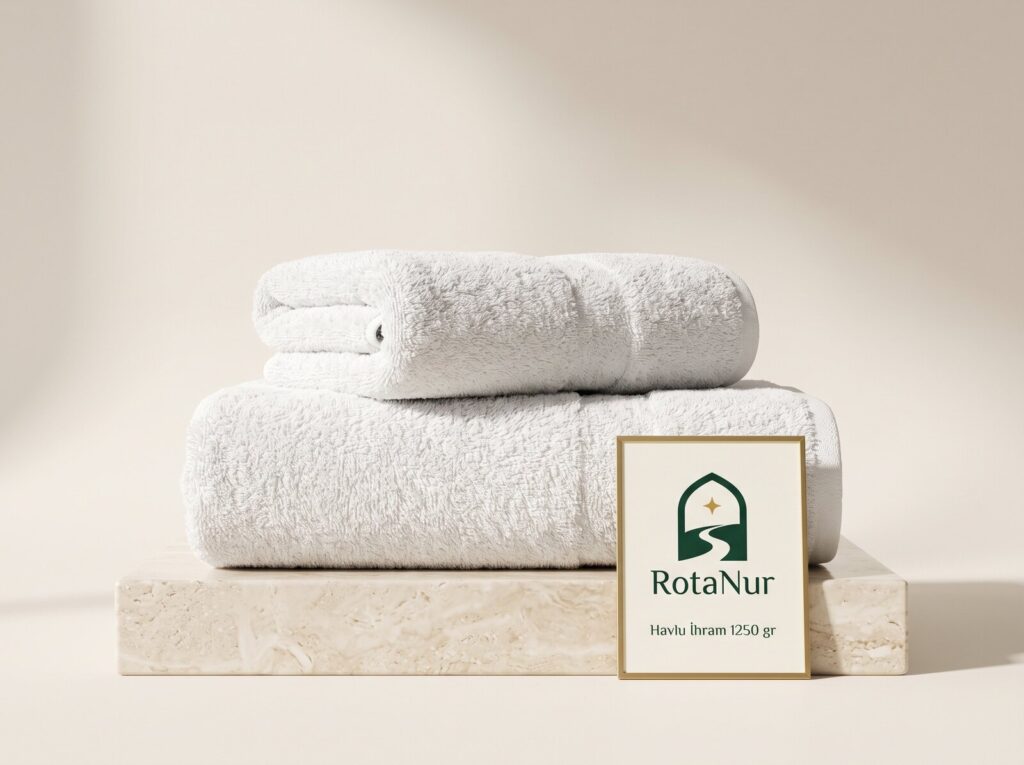 MOST POPULAR -24%
 -
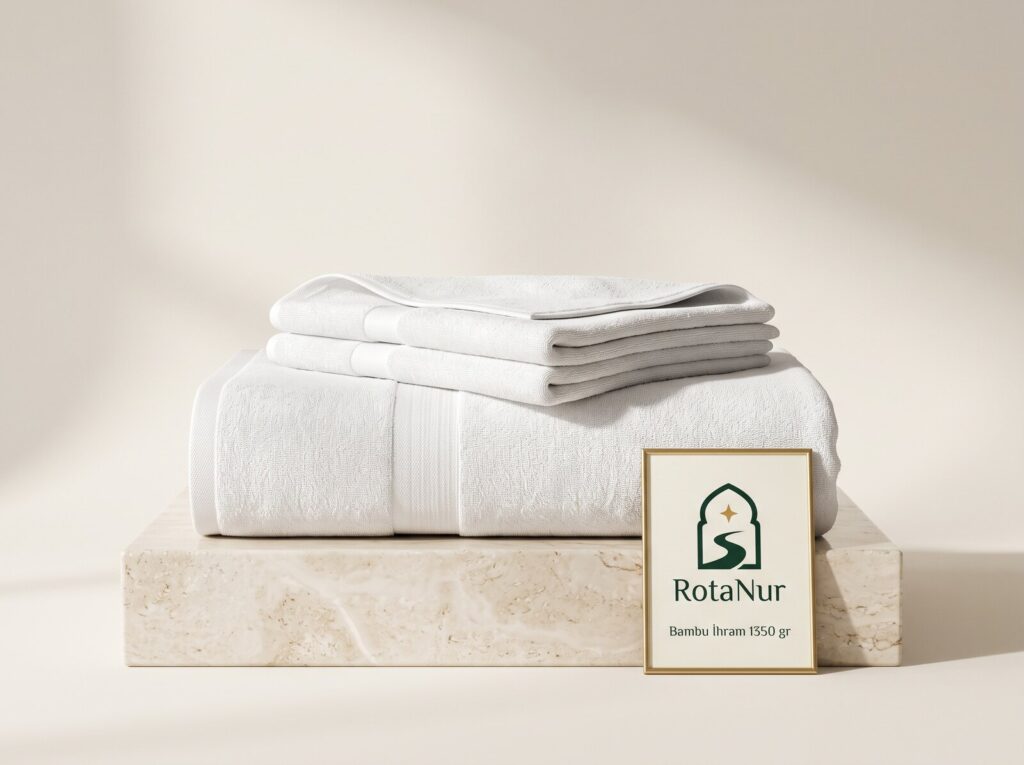 BAMBOO BLEND -23%
 -
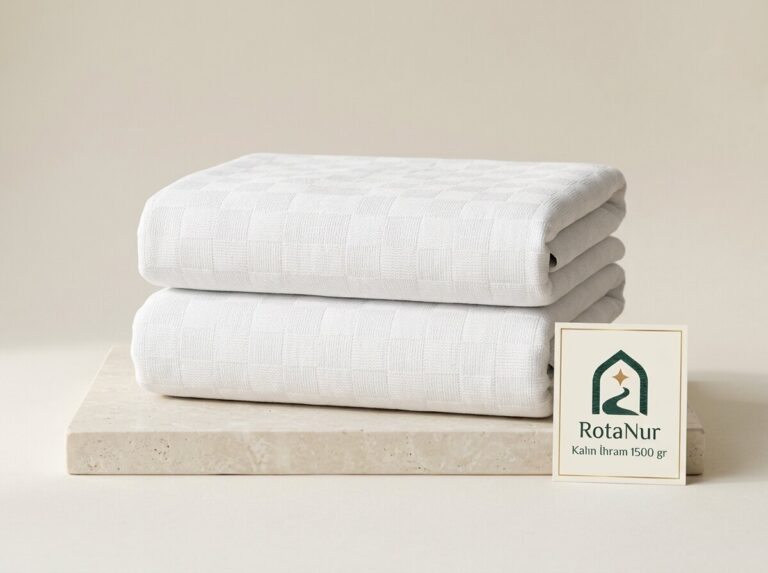 1500 G -22%
 -
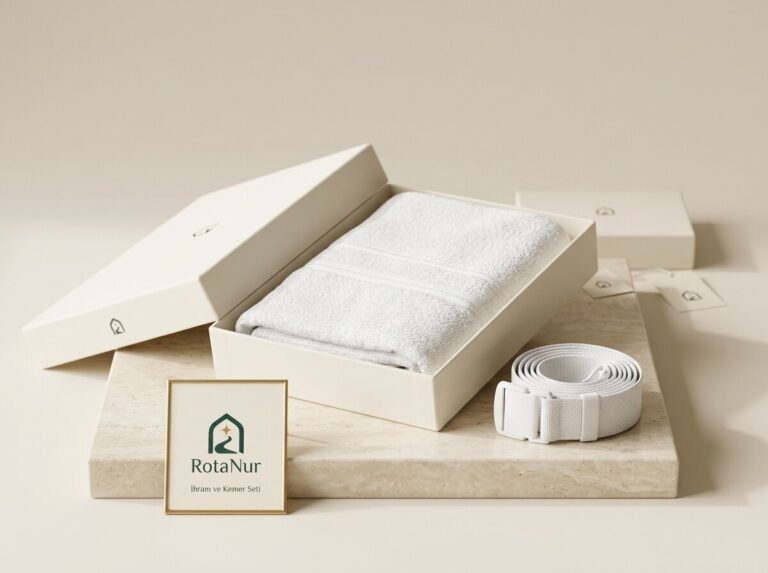 GIFT BOXED -24%
 -
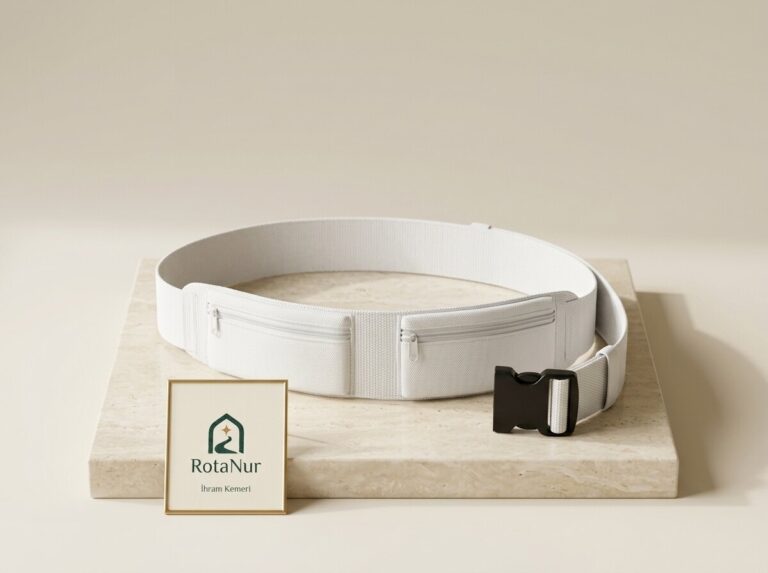 ADJUSTABLE -24%
 -
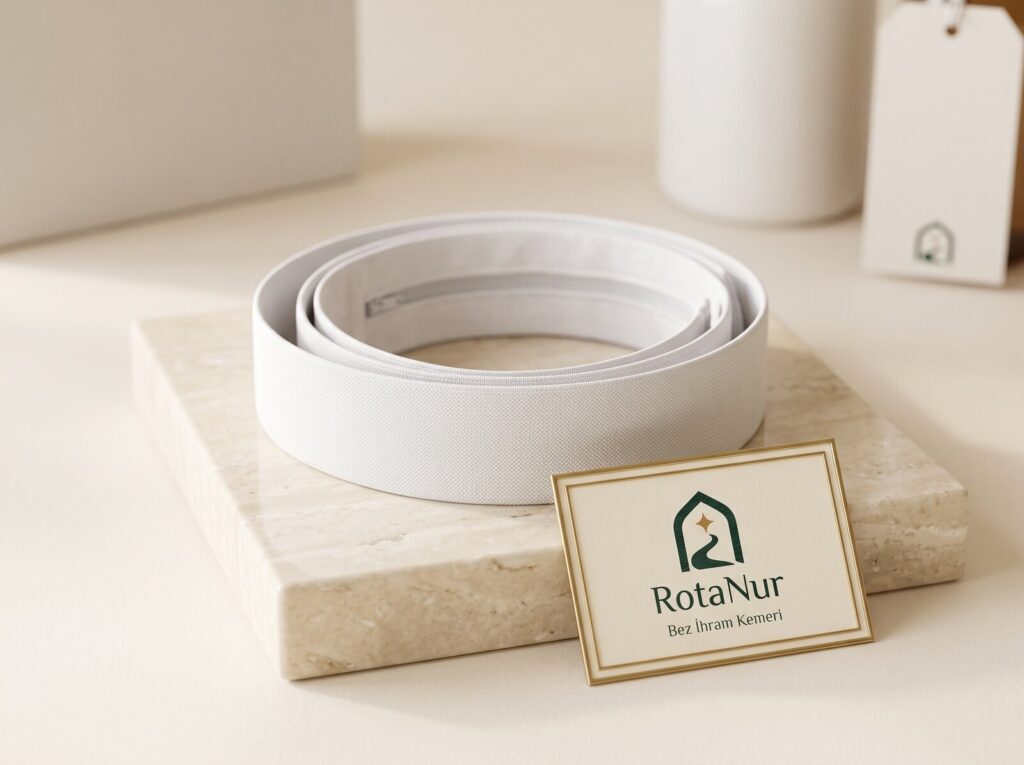 LIGHTWEIGHT -25%
 -
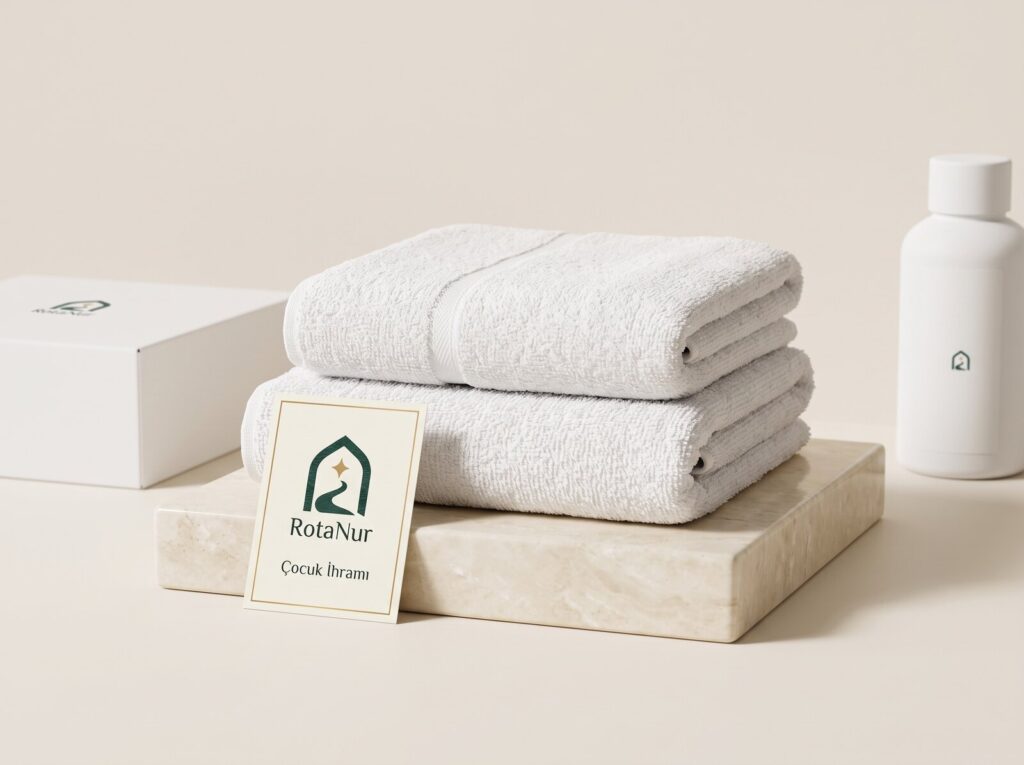 KIDS -23%
Ihram and Ihram Belt Buying Guide
The ihram, the most distinctive symbol of the Umrah and Hajj journey, consists for men of two seamless white cloths: the izar, wrapped around the waist, and the rida, draped over the shoulders. It may look like a simple piece of fabric, but a well-chosen ihram directly determines your comfort in the heat of Makkah, during the long walks of tawaf and sa'i, and on your trips back and forth between the hotel and the Masjid al-Haram. On this page you will find RotaNur-branded ihram and ihram belt options, the differences between the fabrics, what the gram weight means and the key points to keep in mind while in ihram, all in one place. Our aim is to make it easy both for someone going on Umrah for the first time and for someone who has been making this journey for years to choose the product that suits their needs.
What is ihram, and what do men wear in ihram?
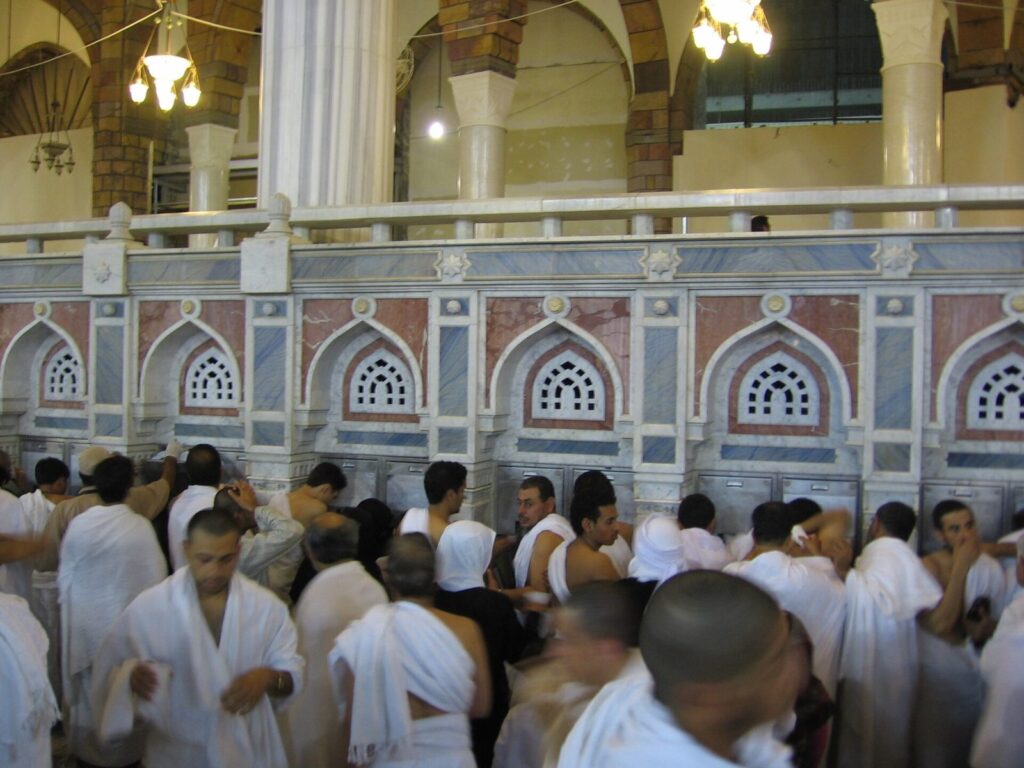
Ihram is the name of the spiritual state, entered with the intention of Hajj or Umrah, in which certain otherwise permissible actions become temporarily forbidden; in everyday language, the cloth worn in this state is also called ihram. According to the guidance of Diyanet (Türkiye's Presidency of Religious Affairs), men in ihram do not wear sewn clothing, shoes, prayer caps or similar head coverings. Instead, they use two seamless cloths, one wrapped from the waist down and the other draped over the shoulders. White, clean cloths are preferred. For women, there is no special ihram garment as there is for men; modest, simple and loose everyday clothing serves as their ihram clothing. For abayas, two-piece outfits and prayer dresses for women, take a look at our Umrah Clothing page.
Six criteria to consider when choosing an ihram
- Fabric type: Cotton towelling absorbs moisture well and offers a familiar feel. Muslin is light and airy. A bamboo and cotton blend gives a softer, smoother feel.
- Gram weight: The gram value on the packaging is usually the combined weight of the two pieces. Between 1,000 and 1,250 g indicates a light to medium fabric, while 1,350 to 1,500 g indicates a fuller, more opaque one.
- Size: The common size for adults is 110x220 cm per piece. For tall or broad-built wearers, it is important that the cloth wraps comfortably around the waist; in that case, choose the larger-size models.
- Opacity: Very thin, loosely woven fabrics can become see-through when wet or in strong light. Holding the fabric up to the light to check it is a good habit.
- Edge finishing: The edge finish applied to stop the edges from fraying does not turn the ihram into a garment tailored to the shape of the body; this is also the widely accepted view. If you are in any doubt, you can consult your group's religious guide.
- Carrying and storage: Packaging in a box or a zipped bag keeps the ihram clean and neat in your suitcase, and it can be used again and again throughout the journey.
Fabric comparison
| Feature | Cotton towel (1,250 g) | Heavy cotton (1,500 g) | Muslin | Bamboo and cotton (1,350 g) |
|---|---|---|---|---|
| Feel | Classic towelling, soft | Full and substantial | Light, layered gauze | Smooth and soft |
| Moisture absorption | High | High | Medium to high | High |
| Drying time | Medium | Longer | Short | Medium |
| Breathability | Good | Medium | Very good | Good |
| Opacity | Good | Very good | Good (double layer) | Good |
| Who it is for | First-time Umrah travellers | Cooler seasons, those who want more opacity | Summer months, those sensitive to heat | Those who love a soft texture |
The assessments in the table are based on the general characteristics of each fabric type and may vary with personal experience. Between November and February, evenings in Makkah are relatively cool, while in the summer months daytime temperatures can climb above 40 degrees. That is why choosing your fabric according to your travel date is the most important step in determining your comfort. If you are undecided, a classic cotton towel ihram is a balanced starting point for most seasons.
Why do you need an ihram belt?
The izar can easily work loose, especially when you are walking, climbing stairs or in a crowd. An ihram belt holds the cloth in place at waist level so that you can move comfortably; it also helps you carry small items such as your passport, bank cards, phone and hotel key card safely on you. In Diyanet's guidance on the restrictions of ihram, wearing a belt and carrying a bag while in ihram are not listed among the actions that require a penalty. On the other hand, knotting the ends of the ihram cloth or fastening them with a pin is mentioned in the sources among the disliked (makruh) actions. That is why using a belt is the more appropriate way to secure the cloth.
- Utility belt: A model with a wide strap, an adjustable buckle and several zipped pockets. Ideal for bulkier items such as a phone and a passport.
- Fabric belt: Thin, light and elasticated. It does not show under the cloth and is suitable for flat items such as cash and cards.
How to put on the ihram: step by step
- Before reaching the miqat boundary, trim your nails and hair and see to your personal hygiene; perform ghusl if possible, or otherwise wudu. At this stage, choose unscented soap and shampoo.
- Take off your sewn clothes and wrap the izar around your waist, overlapping the ends. Fold the top edge inwards once or twice.
- Pass the ihram belt just below the top edge of the izar and adjust it to a comfortable tightness, with the pockets positioned at your side.
- Drape the rida so that it covers both shoulders. For details such as idtiba, practised during tawaf, follow your group official's instructions.
- Wear slippers or sandals that leave the heel and the top of the foot uncovered. For suitable models, see our Tawaf Socks and Slippers page.
- Make your intention and recite the talbiyah to enter ihram. From this moment on, observe the restrictions of ihram.
Choosing an ihram by season
As Umrah can be performed all year round, it is important to take your travel date into account when choosing an ihram. Between June and September, the daytime hours are very hot; during this period, a light muslin ihram or a 1,250 g cotton towel ihram is more comfortable. In October, November, March and April, the weather is milder and a classic cotton towel ihram is enough for most people. Between December and February, the evenings can turn cool, and you may feel colder in the air-conditioned areas of the mosques. During this period, a 1,500 g heavy cotton ihram or a full bamboo-blend ihram is a more comfortable option. In busy periods such as Umrah during Ramadan, having a quick-drying, lightweight spare set with you is especially useful.
The main restrictions to observe while in ihram
According to the information published by Diyanet, the restrictions that a person in ihram must observe include the following: men wearing sewn clothing or covering their heads, women covering their faces, applying fragrance to the body or the ihram, cutting the hair, beard or body hair, cutting nails, hunting land animals, picking plants within the Haram boundaries, intimacy between spouses, and quarrelling and arguing. Violating some of these restrictions may require a penalty. The information here is intended as a general reminder; for details and special circumstances, we recommend consulting your group's religious guide or Diyanet's official sources. We also cover these topics step by step on our Umrah Guide page.
Ihram belt or neck pouch?
Both products are used to carry belongings while in ihram. An ihram belt serves a dual purpose, as it keeps your belongings at waist level and holds the izar in place; it also does not swing during prostration the way a bag hung around the neck does. A neck pouch, on the other hand, offers easy access for those who use their phone often, but it calls for caution in crowds. Many people prefer to carry their valuables in the belt and only small, frequently used items in the neck pouch.
Ihram checklist before setting off
- Make sure your two-piece ihram is clean, dry and in its bag.
- Check the belt's buckle and zips, and adjust it to your waist size in advance.
- Practise wrapping and unwrapping the ihram at home at least once.
- If you are thinking of taking a spare set, choose a lightweight model for the summer months.
- Put your unscented soap, shampoo and wet wipes in your hand luggage.
- Pack your slippers or sandals, which leave the heel and the top of the foot uncovered, somewhere easy to reach.
- If you will be entering ihram on the plane, carry your ihram in your hand luggage.
Fragrance and cleanliness while in ihram
According to Diyanet's guidance, applying fragrance to the body and the ihram cloth while in ihram is forbidden, whereas using unscented soap is permissible. So if you need to wash your ihram during the journey, use an unscented soap or detergent and avoid scented fabric softener. Unscented soap, shampoo and wet wipe options can be found on our Unscented Care Products page. Musk, oud and attars, meanwhile, are listed in the Musk, Oud and Attars section, for use after you come out of ihram.
Care and storage tips
- Washing the ihram once before first use usually helps to soften the fabric and reduce any surface lint.
- Wash at 30 to 40 degrees without bleach; for bamboo-blend products, choose a lower temperature.
- Dry it in a shaded, airy spot rather than in direct, prolonged sunlight.
- Do not seal a damp ihram in its bag; fold and store it only once it is completely dry.
- Close the belt's zips before washing, and clean the belt by hand in lukewarm water.
How many ihrams should I buy?
On Umrah programmes, a single set is often enough. However, having a second set gives great peace of mind in case your ihram gets dirty or wet, or in case you wish to perform more than one Umrah during your journey. Especially in the summer months, a spare muslin ihram is a lightweight option you can change into on days when you sweat. As the Hajj journey is longer, at least two sets are recommended; if you are planning a Hajj programme, you can find the details on our Hajj Tours page. For families travelling with their children, a smaller-size children's ihram is also available in this category.
Common mistakes
- Leaving the ihram until the last day: Trying it on once at home before your journey and learning how to wrap it saves you from rushing at the miqat.
- Choosing very thin, single-layer fabric: Cheap, loosely woven products can lose their opacity when wet.
- Washing with scented detergent: As applying fragrance to the cloth is forbidden while in ihram, unscented products should be used.
- Fastening the cloth with a pin: Using an ihram belt instead is more appropriate.
- Fastening the belt more tightly than necessary: This causes discomfort on long walks; leaving a finger's width of space is enough.
- Buying an adult ihram for a child: A cloth that is too long can make the child trip while walking.
Which ihram suits whom?
- First-time Umrah travellers: A 1,250 g cotton towel ihram with an adjustable utility belt offers a trouble-free, balanced start. Those who want to buy everything in one go can choose the boxed set.
- Those travelling in the summer months: A lightweight muslin ihram keeps you feeling fresh during the daytime; adding a cotton towel set as a spare strikes a good balance.
- Those looking for a soft texture: The bamboo and cotton blend ihram, with its smooth, flowing drape, feels gentle on the skin.
- Tall or broad-built wearers: The larger-size 1,500 g heavy cotton ihram wraps comfortably around the waist.
- Families travelling with children: A smaller-size children's ihram and a thin fabric belt help young travellers move comfortably.
- Those buying a gift: The boxed ihram and belt set and the bamboo ihram in a gift box can be given without any extra wrapping.
Why RotaNur?
- RotaNur-branded products, selected in line with field feedback from our customers, as an organisation that runs Umrah and Hajj tours.
- Fabric, gram weight and size information clearly stated on every product page.
- Fast shipping, with free delivery on orders over a certain amount.
- Returns within 14 days on unopened products; details on the Cancellation and Returns Policy page.
- No online payment is taken: after you send your order request, our advisor contacts you, confirms availability and guides you through the payment steps.
- 24/7 WhatsApp support on product choice and sizing; you can reach us via the Contact page.
Once you have chosen your ihram, if you would like to gather the other essentials for your journey in a single package, take a look at our Umrah Kits page; if you would like to buy gifts for your loved ones for your return, browse the Umrah Gifts section. Our Umrah Guide, which explains step by step how to prepare for Umrah, and our Umrah Tours page, featuring our current programmes, will also make your preparations easier. May Allah make your journey easy and accept your worship.
FAQ
There is no single right answer; it depends on your travel date and your personal comfort. A cotton towel ihram is a balanced choice for most people, as it absorbs moisture well and has a familiar feel. Light, airy muslin stands out in the summer months, the bamboo and cotton blend for those who want a soft texture, and the 1,500 g heavy cotton models for those who put opacity first.
The gram weight shows the total weight of the ihram set and gives you an idea of how full the fabric is. Between 1,000 and 1,250 g indicates a light to medium fabric, while 1,350 to 1,500 g indicates a thicker, more opaque one. As the gram weight increases, moisture absorption and opacity increase too, but the drying time also becomes longer.
In Diyanet's guidance, wearing a belt and carrying a bag while in ihram are not listed among the actions that require a penalty. An ihram belt is widely used to secure the cloth and to carry small items. If your situation is a particular one, it is best to consult your group's religious guide.
In the sources, knotting the ends of the ihram cloth or fastening them with a pin is mentioned among the disliked actions. For this reason, we recommend using an ihram belt rather than a pin to keep the cloth from falling. To stop the rida from slipping, folding the cloth broadly over the shoulders is usually enough.
Adult ihrams do not come in clothing sizes; the common size is 110x220 cm per piece. Tall or broad-built wearers can opt for our larger-size heavy cotton model. For children, we offer a shorter, narrower-cut children's ihram.
For women, there is no special seamless two-piece ihram as there is for men. Modest, simple and loose clothing is women's ihram clothing. According to Diyanet's guidance, a woman in ihram should leave her face uncovered. For abayas and outfits suitable for women, see our Umrah Clothing page.
We recommend washing it at 30 to 40 degrees without bleach and drying it in the shade. As applying fragrance to the cloth is forbidden while in ihram, use an unscented soap or detergent during the journey and avoid scented fabric softener. For bamboo-blend products, a lower temperature extends the life of the fabric.
Children who have not yet reached puberty may also enter ihram under the supervision of their parents. In that case, boys use a two-piece seamless ihram in a size that fits them. To choose the right product for your child's height, you can check the size information on our children's ihram page, and if you are unsure, contact us via our WhatsApp line.
Because the miqat boundary is crossed during the flight, on some programmes ihram is entered at the airport or on the plane. In that case, you need to carry your ihram, belt and slippers in your hand luggage. We recommend following your group's announcements and trying on the ihram at home before your journey.
Orders are sent by fast shipping, and shipping is free on purchases over a certain amount. You have the right to return unopened products within 14 days. If your travel date is close, we recommend ordering early and trying on the ihram at home before you leave. No online payment is taken: after you send your order request, our advisor contacts you, confirms availability and guides you through the payment steps.