



Contents 14 sections
- Where Is Prizren?
- A Brief History of Prizren
- The Sinan Pasha Mosque
- The Stone Bridge and Shadervan Square
- Prizren Fortress (Kaljaja)
- How do you get up to Prizren Fortress?
- The League of Prizren House and the Ottoman Quarters
- Mosques, the Tekke and the Hamam
- How many mosques are there in Prizren?
- Churches and the Multicultural Heritage
- Food and Shopping in Prizren
- Around Prizren: The Şar Mountains, Mamuşa and Gjakova
- How and When to Go to Prizren
- Frequently Asked Questions
A list of Prizren places to visit describes one of the best-preserved Ottoman towns in the Balkans: Prizren, built on both banks of the Bistrica river at the foot of the Şar Mountains, with its mosques, stone bridge, fortress, tekke and a bazaar where Turkish is spoken. This city in the south of Kosovo is, together with Üsküp (Skopje) and Ohrid, one of the best-loved stops on Balkan tours; halal food is easy to find, there are many mosques and the atmosphere of the town recalls the old towns of Anatolia. In this article we have brought together where Prizren is and its brief history, the places to see from the Sinan Pasha Mosque to Prizren Fortress, its multicultural heritage, its food, excursions in the surrounding area and transport, all in the form of a route.
In Short
Prizren is a city in the south-west of Kosovo, close to the borders with Albania and North Macedonia. It is Kosovo’s second most populous city after Pristina, and Turkish is an official language in the municipality.
Where Is Prizren?
Prizren is a city in the south-west of Kosovo, close to the borders with Albania and North Macedonia, built on the northern foot of the Şar Mountains. It is about an hour by motorway from the capital Pristina, two to three hours from Üsküp and about three hours by motorway from Tirana, the capital of Albania. The Bistrica river (Lumbardhi in Albanian), which runs through the middle of the city, divides the old town in two, and the Stone Bridge joins the two banks. Prizren is Kosovo’s second most populous city after Pristina; its municipality is multilingual, with Albanians, Turks, Bosniaks and other communities, and Turkish has the status of an official language in the municipality of Prizren. This is why Turkish is spoken in the bazaar, in the restaurants and in the mosques of Prizren; it is also the cultural centre of the Kosovo Turks. For the other stops on the regional route see our articles on places to visit in Üsküp and places to visit in Ohrid.
A Brief History of Prizren
On the site of Prizren there was a settlement called Theranda in the Roman period; in the Byzantine period the city came to be known by its present name, and in the 14th century it became one of the important centres of the Serbian kingdom. The Ottomans conquered Prizren in 1455, and the city remained under Ottoman rule until 1912, for about four and a half centuries; during this period it gained its present skyline with mosques, hamams, madrasas, tekkes and bazaars. In 1878 the Albanian leaders under Ottoman rule founded the League of Prizren here to defend the integrity of the Albanian lands against the Congress of Berlin; for this reason Prizren also holds a central place in the Albanian historical narrative. After the Balkan Wars the city was attached to Serbia and then to Yugoslavia; after the war of 1999 a period of international administration began, and Kosovo declared its independence in 2008. This layered past explains why a mosque, a church, a tekke and a hamam stand side by side within a few hundred metres of one another in the city. Prizren is today regarded as the cultural capital of Kosovo; the Dokufest documentary and short film festival held every August turns the city into an international meeting place.
The Sinan Pasha Mosque
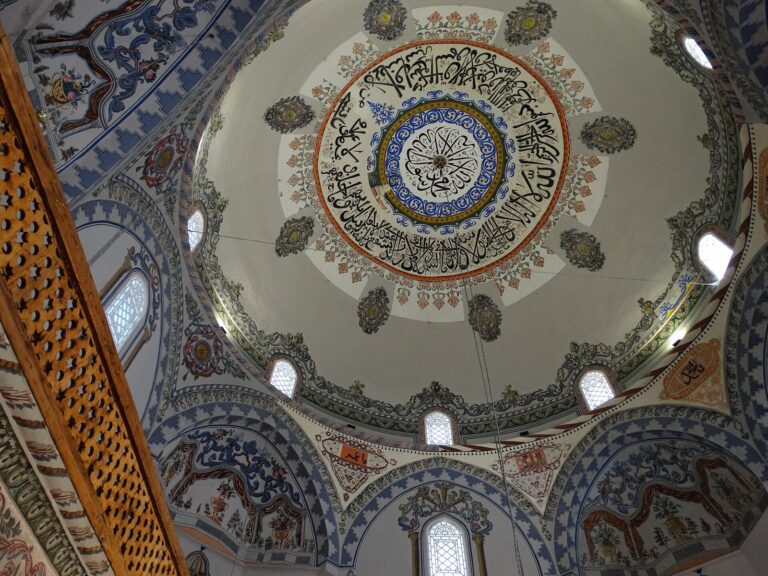
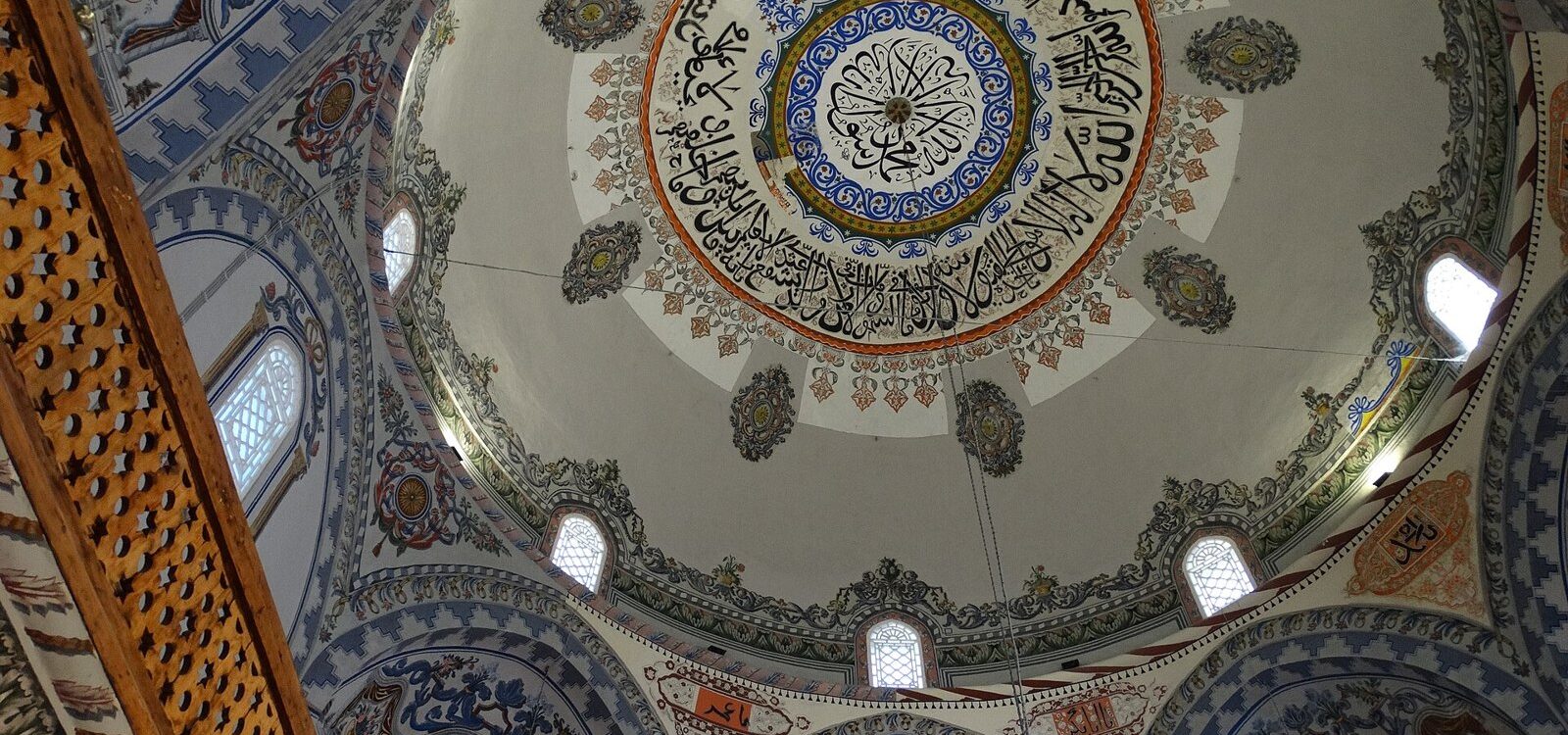
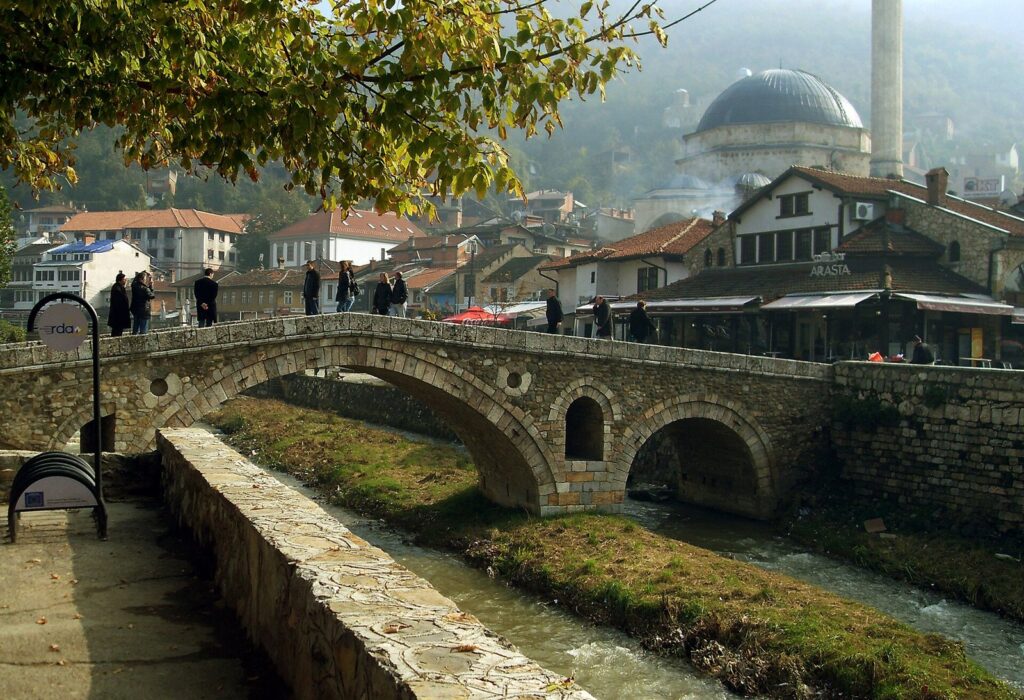
The Sinan Pasha Mosque, the symbol of Prizren, was built in 1615 by Sofu Sinan Pasha on the bank of the Bistrica river, right at the head of the Stone Bridge. With its high dome, slender minaret and position overlooking the river, it can be seen from every part of the city; the painted decoration and calligraphy of its interior are among the finest examples of the Ottoman classical style in the Balkans. The mosque is still open for worship today; performing the daily prayers here and sitting in its courtyard in the late afternoon to watch the bazaar on the river bank are among the most memorable moments of a visit to Prizren. For a visit outside prayer times it is enough to ask the attendant at the door and to dress modestly. With the restoration the mosque has undergone in recent years the painted decoration has been uncovered again and the inscriptions inside the dome have been cleaned; photography is allowed, but those praying should not be disturbed. The square in front of the mosque is the city’s meeting point in the evenings, and the lights of the Stone Bridge are reflected in the river here.
The Stone Bridge and Shadervan Square
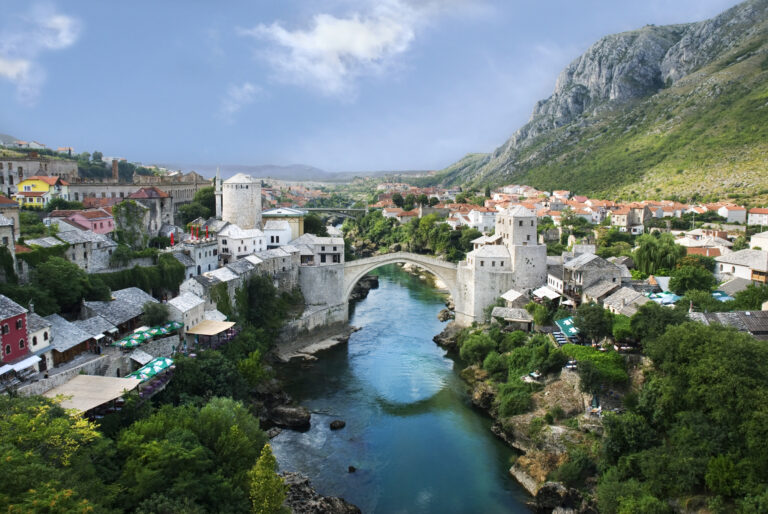
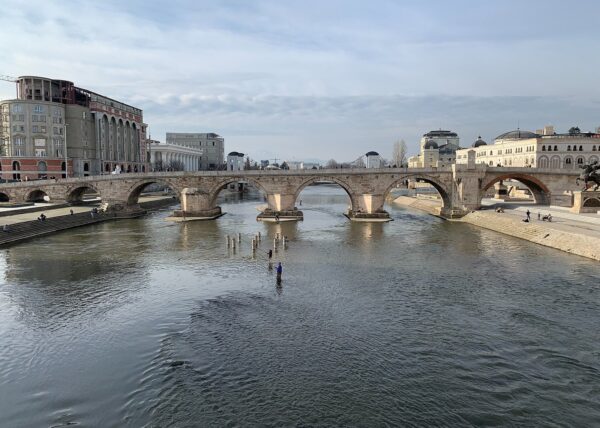
The Stone Bridge over the Bistrica river is a three-arched bridge built in the Ottoman period in the 16th century. Destroyed in the great flood of 1979, the bridge was rebuilt faithfully to the original in 1982 and has continued to be the symbol of the city. At the southern end of the bridge lies Shadervan Square, which takes its name from the fountain at its centre; around the square are the shops, coffee houses and restaurants surviving from the Ottoman bazaar. Shopping in Turkish in Shadervan, eating “Prizren tavası” and watching the city lights from the top of the bridge in the evening is the classic Prizren programme. On the slope leading up from the square to the fortress and along the Maraş walkway that runs beside the river, old Ottoman houses, wooden bay windows and courtyards can be seen.
Prizren Fortress (Kaljaja)
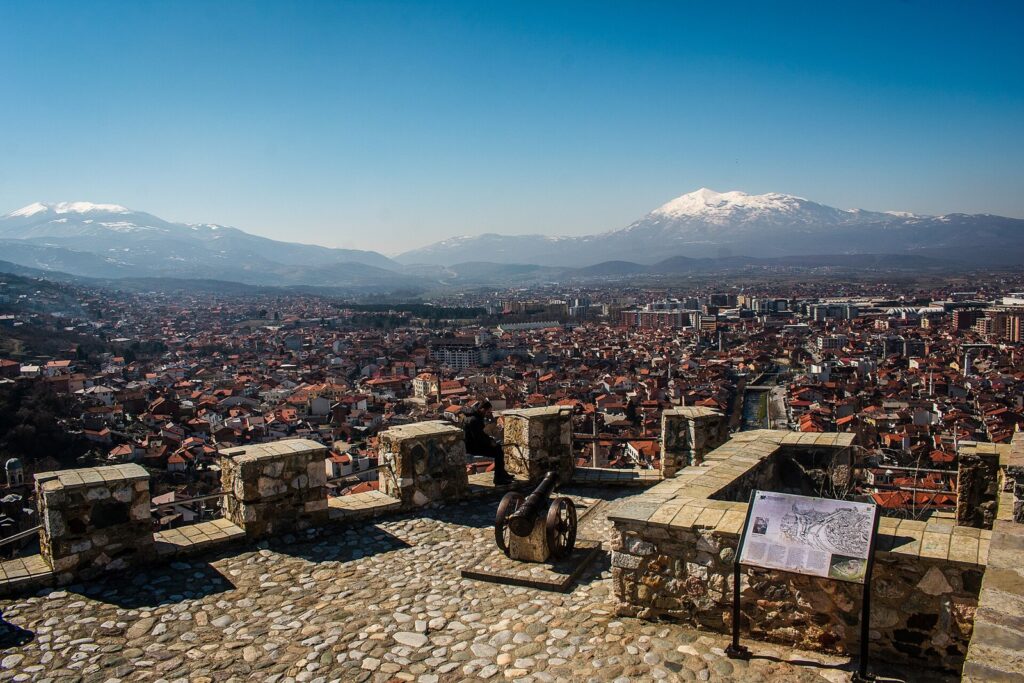
Prizren Fortress, on the hill that commands the city, consists of walls built one on top of another in the Byzantine, Serbian and Ottoman periods; it was used as a military garrison in the Ottoman period and abandoned in the 20th century. The walk from Shadervan to the fortress takes about twenty minutes, and along the way the city gradually spreads out below. From the fortress the dome of the Sinan Pasha Mosque, the red-tiled roofs, the minarets, the church towers and the Şar Mountains behind all fit into a single frame; this is the best spot in Prizren for the sunset. Because excavation and restoration work inside the fortress is ongoing, some sections may be closed; comfortable shoes and water are needed.
How do you get up to Prizren Fortress?
From Shadervan Square you climb to the fortress by the stone path that passes beside the Church of the Holy Saviour (Sveti Spas) through the narrow streets on the eastern bank of the river. The path is steep but short; for elderly visitors there is also a road that goes up by car to near the fortress. Visiting the fortress is free, and the best light is in the late afternoon; in spring flowers bloom among the walls, while in summer it is more comfortable to avoid the midday heat and go up towards evening. If you come down by the streets on the river side rather than the path beside the church, you reach Shadervan through the old houses.
The League of Prizren House and the Ottoman Quarters
The League of Prizren House, near the Bayraklı Mosque, is a museum complex established on the site of the building where the Albanian leaders gathered in 1878; the buildings destroyed in the war of 1999 were later rebuilt. The museum displays the documents of the League and the weapons and clothing of the period; for those wishing to understand the history of Kosovo and of the Albanians it is a short but instructive stop. The quarters around the museum are the area where the residential architecture of the Ottoman period is best preserved: houses on stone foundations with wooden bay windows, courtyard gates and narrow streets recall Safranbolu or Beypazarı. In the historic bazaar of Prizren there are still jewellers, filigree masters and ironmongers’ shops; Prizren’s silver wire work (filigree) is a craft continued since the Ottoman period and the most meaningful choice for a souvenir.
Mosques, the Tekke and the Hamam
Apart from the Sinan Pasha Mosque, there are several more Ottoman buildings in Prizren that should be seen. The Gazi Mehmet Pasha Mosque, also known as the Bayraklı Mosque, was built in 1573; it takes its name from the tradition of announcing the start of the daily prayers to the surrounding mosques with a flag, and there is also a library beside it. The Gazi Mehmet Pasha Hamam, built by the same pasha, is a double bath dating from the 16th century; today it is used as an exhibition and events venue, and its domed cold room is worth seeing. The Emin Pasha Mosque, built in the first half of the 19th century, is known for its painted decoration. The Halveti Tekke, founded at the end of the 17th century, is one of the places where the Sufi tradition still lives on in Kosovo; the tekke is opened to visitors on certain days. The city’s archaeological museum also operates in a hamam building of the Ottoman period. Most of these buildings are within walking distance of one another; all of them can be seen in half a day.
How many mosques are there in Prizren?
In the municipality of Prizren there are dozens of mosques surviving from the Ottoman period and built later; the historic mosques in the city centre that can be reached on foot are the Sinan Pasha, Bayraklı (Gazi Mehmet Pasha), Emin Pasha, Kukli Bey, Suzi Çelebi and Mehmet Pasha mosques. The daily prayers are performed in all of these mosques; there are also mosques where the sermon is delivered in Turkish.
Churches and the Multicultural Heritage
Prizren is not only an Ottoman city; the Church of the Holy Saviour (Sveti Spas) on the slope of the fortress dates from the 14th century, and the Church of Bogorodica Ljeviška (Our Lady of Ljeviš) in the city centre from the beginning of the 14th century, and it is among the Medieval Monuments in Kosovo on the UNESCO World Heritage List. The Orthodox Cathedral of St George was built at the end of the 19th century, and the Catholic cathedral in the same period. The visiting arrangements for these buildings vary; some can only be seen from outside, others are opened in the company of an attendant. For Muslim visitors these places are meaningful as a way of seeing that the city has been a place where different faiths have lived side by side for centuries. How halal tourism regards visits of this kind is explained in our article on what halal tourism is.
Important: Citizens of Türkiye enter Kosovo with a passport and without a visa; the currency is the euro. For those planning to cross by road from Kosovo into Serbia the border arrangements are different: because Serbia does not treat Kosovo’s border crossings as its own points of entry, entering Serbia via Kosovo can cause problems; on routes that also include Serbia it is safer to enter Serbia first and cross into Kosovo afterwards. Clarify your route in advance with the guide on your tour programme.
Food and Shopping in Prizren
The cuisine of Prizren is a blend of the Ottoman and Balkan traditions, and finding halal food is no problem. Prizren tavası, the dish named after the city, is an oven-baked dish of minced meat and vegetables; it is eaten with rice and ayran. For breakfast there is börek and pite (Balkan pastry with filo), for lunch and dinner kebab, meatballs and stuffed vine leaves, and for dessert tulumba, baklava and Balkan-style milk puddings. The restaurants around Shadervan Square and the coffee houses along the river are frequented by the townspeople as well as by tourists. For shopping, the filigree silver jewellery, handmade lace, copper coffee sets and Kosovo’s local honey and jams in the historic bazaar stand out; bargaining is possible, and the fact that Turkish is spoken makes it easier.
- Prizren tavası: an oven-baked dish of minced meat and vegetables; the city’s signature.
- Pite and börek: on every street for breakfast and snacks.
- Filigree silver: wire work peculiar to Prizren; its making can be watched in the bazaar workshops.
- Coffee: the Turkish coffee tradition continues; the coffee houses on the river bank fill up in the late afternoon.
Around Prizren: The Şar Mountains, Mamuşa and Gjakova
Several places in the surrounding area can be seen on half-day trips from Prizren. The Prevalla plateau in the Şar Mountains is a cool escape in summer, and the Brezovica ski resort is the region’s best-known winter stop. Mamuşa, near Prizren, is the only municipality in Kosovo where the Turkish population is in the majority; in the town you see Turkish signs, an Ottoman-period tower and tomato fields. Gjakova to the north keeps the Ottoman tradition of the craftsmen alive with the Hadum Mosque from the end of the 16th century and the Grand Bazaar, one of the longest bazaars in the Balkans. On the road to Pristina, the Fatih Mosque built in 1461 by Sultan Mehmed the Conqueror and the Tomb of Sultan Murad Hüdavendigâr on the plain where the Battle of Kosovo was fought tie the Prizren trip into the Ottoman history of Kosovo.
How and When to Go to Prizren
Prizren has no airport; the Istanbul–Pristina flight from Türkiye takes about two hours, and from Pristina’s Adem Jashari Airport Prizren is reached in one to one and a half hours by motorway. On Balkan tours Prizren is usually a stop on a route entered from Üsküp or Pristina and continuing towards Albania and Ohrid; RotaNur’s Bosnia and Balkan tours combine these cities in a single programme, and our articles on Bosnia and Herzegovina, Sarajevo and Mostar describe the Bosnian section of the route. The best seasons are spring and autumn; the summers are hot but the Şar Mountains are cool, and in August accommodation should be arranged in advance because of Dokufest. In winter snow and fog can lengthen the journey. The city centre is explored on foot; comfortable shoes are needed for the climb to the fortress and modest dress for the mosques. A one-day Prizren route can be put together like this:
- Morning: the Sinan Pasha Mosque, the Stone Bridge and breakfast in Shadervan Square.
- Late morning: the Bayraklı Mosque, the Gazi Mehmet Pasha Hamam, the League of Prizren House and the Ottoman quarters.
- Midday: Prizren tavası in Shadervan; the filigree workshops in the bazaar.
- Afternoon: the Emin Pasha Mosque, the Halveti Tekke, the climb to the fortress by the path past the Church of the Holy Saviour.
- Evening: sunset at the fortress, the bridge lights, coffee on the river bank.
If time remains, the second day is given to Mamuşa and the Şar Mountains. For other cultural tours see our cultural tours page, and for your questions our contact page.
| # | Stop | Period | Note |
|---|---|---|---|
| 1 | Sinan Pasha Mosque | 1615, Ottoman | Symbol of the city; open at prayer times |
| 2 | Stone Bridge | 16th century; rebuilt in 1982 | For the evening lights |
| 3 | Shadervan Square | Ottoman bazaar | Food, coffee, shopping |
| 4 | Prizren Fortress | Byzantine–Ottoman | Sunset view; a 20-minute climb |
| 5 | League of Prizren House | Museum commemorating 1878 | A short stop for Kosovo’s history |
| 6 | Bayraklı Mosque and Gazi Mehmet Pasha Hamam | 16th century | Library and exhibition venue |
| 7 | Emin Pasha Mosque | 19th century | Painted decoration |
| 8 | Halveti Tekke | End of the 17th century | Open on certain days |
| 9 | Ottoman quarters and the filigree bazaar | Ottoman | Souvenirs and photographs |
| 10 | Churches of the Holy Saviour and Bogorodica Ljeviška | 14th century; UNESCO | Visiting arrangements vary |
| 11 | Mamuşa | Turkish town | Half-day excursion |
| 12 | Şar Mountains: Prevalla and Brezovica | Nature | Plateau in summer, skiing in winter |
Frequently Asked Questions
Which country is Prizren in?
Prizren is a city in the south-west of Kosovo, close to the borders with Albania and North Macedonia. It is Kosovo’s second most populous city after Pristina, and Turkish is an official language in the municipality.
Is Turkish spoken in Prizren?
Yes. Prizren is the centre of the Kosovo Turks; Turkish is spoken in the bazaar, in the restaurants and in the mosques, and there are Turkish signs and mosques where the sermon is delivered in Turkish.
How many days does it take to see Prizren?
The city centre can be explored on foot in a day; two days are enough with excursions to the surrounding area such as Mamuşa, the Şar Mountains and Gjakova. On Balkan tours a single day is usually given to Prizren.
How do you get to Prizren?
The flight from Istanbul to Pristina takes about two hours, and from the airport to Prizren it is one to one and a half hours by motorway. It is reached from Üsküp by road in two to three hours and from Tirana by motorway in about three hours.
Is halal food available in Prizren?
Yes; Prizren is a city with a Muslim majority, and the great majority of its restaurants serve halal food. Prizren tavası, pite, kebab and Balkan desserts are the best-known dishes.
Do you need a visa to go to Prizren?
Citizens of Türkiye enter Kosovo with a passport and without a visa. The currency is the euro; since the border arrangements for crossing into Serbia via Kosovo are different, the route should be planned in advance.

Cihat Murat Yüksel is the editor of the RotaNur blog and the founder of Markention. Drawing on the sources of Türkiye's Presidency of Religious Affairs (Diyanet), he turns the questions travellers ask most about preparing for Umrah, Hajj and halal travel into clear, practical guides.
Questions answered in this article
Where Is Prizren?
Prizren is a city in the south-west of Kosovo, close to the borders with Albania and North Macedonia, built on the northern foot of the Şar Mountains. It is about an hour by motorway from the capital Pristina, two to three hours from Üsküp and about three hours by motorway from Tirana, the capital of Albania. The Bistrica river (Lumbardhi in Albanian), which runs through the middle of the city, divides the old town in two, and the Stone Bridge joins the two banks. Prizren is Kosovo’s second most populous city after Pristina; its municipality is multilingual, with Albanians, Turks, Bosniaks and other communities, and Turkish has the status of an official language in the municipality of Prizren. This is why Turkish is spoken in the bazaar, in the restaurants and in the mosques of Prizren; it is also the cultural centre of the Kosovo Turks. For the other stops on the regional route see our articles on places to visit in Üsküp and places to visit in Ohrid.
How do you get up to Prizren Fortress?
From Shadervan Square you climb to the fortress by the stone path that passes beside the Church of the Holy Saviour (Sveti Spas) through the narrow streets on the eastern bank of the river. The path is steep but short; for elderly visitors there is also a road that goes up by car to near the fortress. Visiting the fortress is free, and the best light is in the late afternoon; in spring flowers bloom among the walls, while in summer it is more comfortable to avoid the midday heat and go up towards evening. If you come down by the streets on the river side rather than the path beside the church, you reach Shadervan through the old houses.
How many mosques are there in Prizren?
In the municipality of Prizren there are dozens of mosques surviving from the Ottoman period and built later; the historic mosques in the city centre that can be reached on foot are the Sinan Pasha, Bayraklı (Gazi Mehmet Pasha), Emin Pasha, Kukli Bey, Suzi Çelebi and Mehmet Pasha mosques. The daily prayers are performed in all of these mosques; there are also mosques where the sermon is delivered in Turkish.