




Contents 20 sections
- Where Is Ohrid, and Why Is It So Special?
- Where is Ohrid, and in which country?
- The Shore of Lake Ohrid and the Lakeside Walk
- The Church of St John at Kaneo
- Samuel’s Fortress and the Ancient Theatre
- How do you get up to Ohrid Fortress?
- Plaošnik, St Clement and St Sophia
- Ottoman Ohrid: Mosques, the Bazaar and the Nine-Hundred-Year-Old Plane Tree
- Are there mosques and places to pray in Ohrid?
- The Ohrid Pearl
- What is the Ohrid pearl?
- Shopping and Souvenirs in Ohrid
- Accommodation in Ohrid: Where to Stay?
- Should you stay in the old town or by the lake in Ohrid?
- The Monastery of St Naum and the Southern End of the Lake
- Halal Travel Notes: Food, Money and Accommodation
- Is halal food available in Ohrid?
- Getting to Ohrid from Skopje, and a Sample Route
- How do you get from Skopje to Ohrid, and how many kilometres is it?
- Frequently Asked Questions
The list of places to visit in Ohrid describes one of the few towns on the UNESCO World Heritage List as both a natural and a cultural site, on the shore of the oldest lake in the Balkans. The Church of Kaneo on a rocky headland, Samuel’s Fortress on the hill, the Ottoman bazaar and mosques, the nine-hundred-year-old plane tree, the Ohrid pearl and the springs of St Naum at the southern end of the lake make this town, reached by a three-hour journey from Skopje, the best-loved stop of Balkan tours. In this guide, we at RotaNur have gathered where Ohrid is, the places to see, halal travel notes, how to get there from Skopje and a sample route; because opening hours and entrance fees can change, confirm this information from up-to-date sources before you travel.
Where Is Ohrid, and Why Is It So Special?
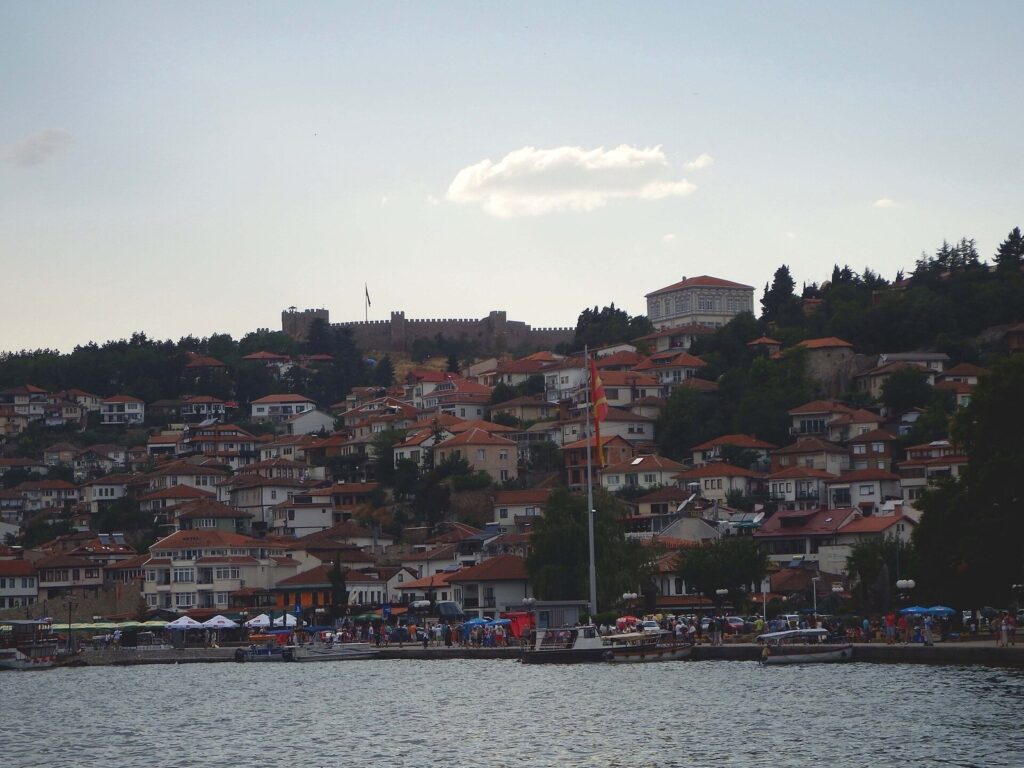
Ohrid is a town built on the north-eastern shore of Lake Ohrid, on the border with Albania, in the south-west of North Macedonia; it is about a hundred and seventy kilometres from Skopje. The lake, with a history of several million years, is one of the oldest and deepest lakes in Europe; with its clear water and creatures found only here, it was placed on the UNESCO list as a natural site in 1979 and as a cultural site the following year. Because the town was one of the centres where the Slavic written language and the Cyrillic alphabet developed in the Middle Ages, it is called the “Jerusalem of the Balkans”; the five hundred Ottoman years also live on in its bazaar, its mosques and its houses.
Where is Ohrid, and in which country?
Ohrid lies in the south-west of North Macedonia, on the shore of Lake Ohrid; the lake is shared between North Macedonia and Albania. It is about three hours from Skopje by road and two and a half hours from the Albanian city of Tirana. The town has its own airport, and seasonal flights from Istanbul operate in the summer months.
The Shore of Lake Ohrid and the Lakeside Walk
A trip to Ohrid begins from the shore of the lake. The harbour in the town centre, the promenade along the shore and the wooden boardwalk clinging to the cliffs are ideal for watching the colour of the lake and the Albanian mountains on the far shore. In the summer months people swim from the beaches and the boat trips pass beneath Kaneo; in autumn the shore grows quiet and the misty mornings are a favourite of photographers. At the outlet of the lake at Struga the Black Drin River is born; Struga’s bridges over the river and its bazaar are an additional half-day stop.
The Church of St John at Kaneo
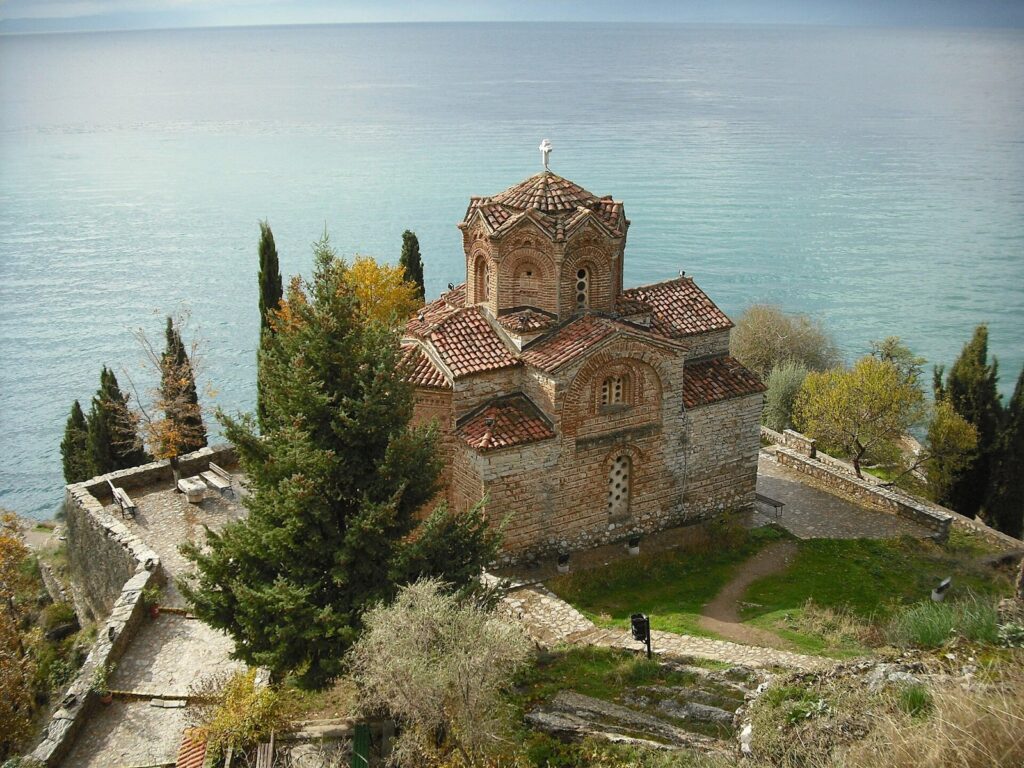
The symbol of Ohrid is the 13th-century Church of St John at Kaneo, standing on a rocky headland stretching out over the lake. The small church, with the lake and mountains behind it, is one of the most photographed buildings in the Balkans; it is reached in fifteen minutes from the old town by the wooden bridge and path running along the shore. The rocks in front of the church are the town’s favourite spot for watching the sunset; Byzantine frescoes can be seen inside. The small cove beneath Kaneo is suitable for swimming in summer and the boat trips pause here; drinking tea overlooking the lake at the café on the shore is one of the classic moments of a visit to Ohrid.
Samuel’s Fortress and the Ancient Theatre
Samuel’s Fortress on the hill of the old town, with walls that took their present form in the reign of Tsar Samuel in the 10th century, commands the whole of the lake and the town; you can walk along the walls. The Ancient Theatre at the foot of the fortress dates from the Hellenistic period and is the only ancient theatre in North Macedonia; in the summer months the concerts and performances of the Ohrid Summer Festival are held here. The road down from the fortress to Plaošnik packs the town’s Byzantine and Slavic past into a few hundred metres.
How do you get up to Ohrid Fortress?
Samuel’s Fortress is reached on foot in twenty minutes through the narrow streets of the old town; although the way is steep, it is paved with stone and passes beside the Ancient Theatre and Plaošnik. There is an entrance fee for the fortress, and walking on the walls is free. Going up in the early morning is both cool and quiet; at sunset the Kaneo side is more popular.
Plaošnik, St Clement and St Sophia
The Plaošnik area below the fortress is the site of the Ohrid Literary School, founded by St Clement in the 9th century and regarded as the first institution of higher education in the Slavic world; it is one of the centres where the Cyrillic alphabet was developed and spread. The Church of St Panteleimon in the area has been rebuilt, and the mosaics of early Christian basilicas can be seen around it. The Cathedral of St Sophia in the town centre, with its 11th-century frescoes, is one of the most important Byzantine buildings in the Balkans; it was used as a mosque in the Ottoman period, and its frescoes survived because they were preserved under lime. The mansion of the Robevi family also houses Ohrid’s 19th-century civil architecture and the town museum.
Ottoman Ohrid: Mosques, the Bazaar and the Nine-Hundred-Year-Old Plane Tree
The Ottoman face of Ohrid begins at Plane Tree Square, at the entrance to the old town. The plane tree in the square is believed to be nine hundred years old, and its trunk has at times been used as a shop. The bazaar street around the plane tree, with its coppersmiths and jewellers, is a small version of Skopje’s Old Bazaar. The Ali Pasha Mosque right beside the bazaar is the largest mosque in the town; the 17th-century Zeynel Abidin Pasha Mosque and the Halveti Tekke beside it are the centre of Ohrid’s Turkish quarter, and the tekke is still open to visitors today. The clock tower, the Hacı Turgut Mosque and the town’s Turkish-speaking shopkeepers make five hundred years of Ottoman history part of daily life.
Are there mosques and places to pray in Ohrid?
Yes, in Ohrid several mosques, above all the Ali Pasha Mosque, the Zeynel Abidin Pasha Mosque and the Hacı Turgut Mosque, are open for worship and the daily prayers are performed in congregation; for the Friday prayer the Ali Pasha Mosque is preferred. The Muslim population of the town is mainly Turkish and Albanian; the mosques are on the bazaar side of the old town, within walking distance.
The Ohrid Pearl
Ohrid’s best-known souvenir is the Ohrid pearl, produced for over a century by the same families from the scales of the plašica fish that lives in the lake. Made by coating the scales layer by layer in a special process, the pearls are lighter than sea pearls and have a matt lustre; the secret of their making is passed from master to apprentice. Production can be watched in the workshops of the old town, and the pearls can be bought as necklaces, earrings or prayer beads; to tell them from imitations, buy only from the known workshops.
What is the Ohrid pearl?
The Ohrid pearl is a handmade pearl produced by coating a glass or mother-of-pearl core layer by layer with a mixture obtained from the scales of the plašica fish that lives in Lake Ohrid; the secret of its production has belonged to a few families for over a century. It is lighter and more durable than a sea pearl, has a matt lustre, and is the most popular souvenir of Ohrid.
Shopping and Souvenirs in Ohrid
Ohrid’s bazaar is small but full of character; half an hour is enough to choose souvenirs. The most popular purchases are these:
- The Ohrid pearl: It should be bought only from the known workshops, with its certificate; necklaces and prayer beads are the most common forms.
- Handmade paper: Paper and engravings printed on a Gutenberg-type press in Ohrid’s traditional printing workshop.
- Copper and filigree silver: The coffee pots, trays and silverwork of the bazaar’s craftsmen.
- Local foods: Ajvar, mountain tea, honey and the chestnuts of the Ohrid area; liquids go in checked luggage.
- Woodcarvings: Small examples of Macedonian woodcarving; the work of the craftsmen of Debar and Ohrid.
Important: The Ohrid trout is a protected species and fishing for it is forbidden; in places where “Ohrid trout” appears on the menu, ask whether the fish is farmed, and do not support the sale of the protected species. When visiting monasteries and churches, shoulders and knees should be covered, and permission should be asked before taking photographs inside.
Accommodation in Ohrid: Where to Stay?
Accommodation in Ohrid is concentrated in three areas. The stone mansions and boutique hotels of the old town offer the lake view and the historic fabric together; because its streets are steep and narrow, carrying luggage is hard, but Kaneo and the fortress are within walking distance. The area around the harbour on the lakeshore is practical for families, being close to the restaurants and the boat pier. The hotels in the coastal areas to the south of the town, such as Gradište and Peštani, suit those who want a beach holiday, but a vehicle is needed to reach the centre. On Balkan tours, groups usually stay in hotels close to the centre; because accommodation fills early in the summer season and on festival days, the Ohrid night should be booked in advance. Struga, fifteen minutes away, is a more affordable alternative.
Should you stay in the old town or by the lake in Ohrid?
Those who want the view and the historic fabric should stay in the old town, and those who want easy access and family comfort in the harbour area on the lakeshore. The streets of the old town are steep and vehicle access is restricted; the harbour area is more comfortable for elderly travellers and those with heavy luggage. The two areas are ten minutes’ walk from each other.
The Monastery of St Naum and the Southern End of the Lake
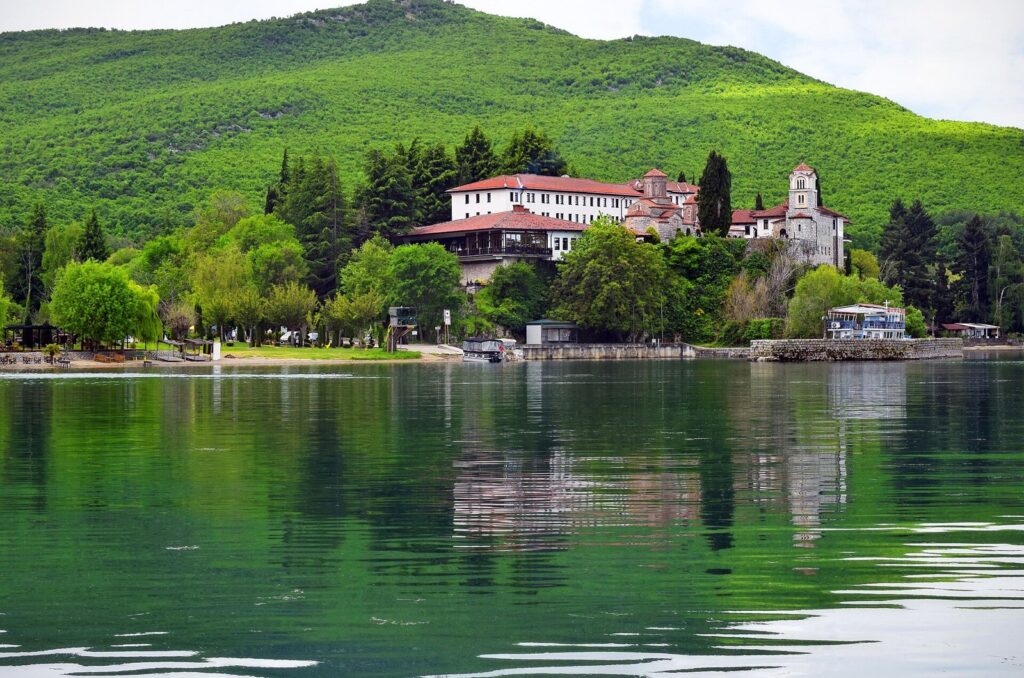
The Monastery of St Naum, thirty kilometres south of Ohrid and right beside the Albanian border, was founded in the 10th century and stands on one of the most beautiful points of the lake. Around the monastery, the springs that feed the Black Drin form a clear pool; rowing boats glide over the springs, and the peacocks wandering in the courtyard are the emblem of the visit. On the way, the scenery of the Galičica National Park and the Bay of Bones (Zaliv na Koskite), the museum of the pile-dwelling village on the lake, are seen. St Naum takes up half a day of an Ohrid trip and can also be reached by boat in the summer months.
The coastal road to the monastery passes beside the most beautiful beaches of the lake and the foothills of the Galičica National Park; from the heights of Galičica both Ohrid and Lake Prespa on the far slope are seen at the same time, and paragliding enthusiasts launch from here. The pile-dwelling village at the Bay of Bones is a reconstruction of a Bronze Age settlement built on the lake, and is visited together with its underwater museum. For lunch at St Naum, the restaurants beside the monastery and the tea gardens by the springs are used; for a halal option, lake fish and vegetable dishes are preferred.
Halal Travel Notes: Food, Money and Accommodation
Finding halal food in Ohrid is not difficult; the restaurants on the bazaar side of the old town and the kebab shops in the Turkish quarter use halal meat. Because the lake’s endemic trout is protected, farmed trout and lake carp are mostly what appear on the tables; ćevapi, burek, ajvar and Macedonian salad are the fixtures of the menus. For accommodation, the stone mansions in the old town offer views, while the hotels on the lakeshore are more comfortable for families; on Balkan tours one or two nights are spent in Ohrid. We explained our halal travel criteria in our article on what halal tourism is.
- The currency is the Macedonian denar; the euro is accepted in the bazaar but change is given in denars, and cards are accepted in hotels and restaurants.
- Turkish citizens can enter without a visa for short visits; confirm the current conditions with the Turkish Ministry of Foreign Affairs.
- Turkish is spoken among the bazaar shopkeepers and in the Turkish quarter; English is sufficient at the tourist sites.
- Clothing covering the shoulders and knees is expected when visiting churches and monasteries, and covering the head and silence in the tekke.
Is halal food available in Ohrid?
Yes, a good proportion of the restaurants in Ohrid’s old town and the kebab shops in the Turkish quarter use halal meat; it is enough to ask where in doubt. Lake fish, burek and ćevapi are the most popular dishes. In Ramadan the daytime routine of the restaurants can change; on tour programmes the guide identifies the halal restaurants in advance.
Getting to Ohrid from Skopje, and a Sample Route
The distance between Skopje and Ohrid is about a hundred and seventy kilometres and the bus takes three hours; the road passes through Tetovo and Gostivar along the edge of the Mavrovo National Park, reaches Struga and comes down to Ohrid along the lakeshore. On Balkan tours this route is combined with a stop at the Coloured Mosque in Tetovo; in programmes connected with Albania, the journey continues from Ohrid to Tirana. We gathered the stops in Skopje in our article on places to visit in Skopje. The plan below shows the common pattern of a two-day Ohrid programme.
| Day | Area | Stops |
|---|---|---|
| 1 | The old town | Plane Tree Square and the bazaar, the Ali Pasha Mosque, St Sophia, Plaošnik, Samuel’s Fortress, the Ancient Theatre, Kaneo at sunset |
| 2 | The south of the lake | The Bay of Bones museum, the Monastery of St Naum and the springs, lunch by the lake on the way back, optional Struga |
How do you get from Skopje to Ohrid, and how many kilometres is it?
From Skopje to Ohrid is about a hundred and seventy kilometres by road and three hours by bus; buses run regularly throughout the day, and on tour programmes the journey is made with a stop in Tetovo. There is no rail link. In the summer months there are also seasonal direct flights from Istanbul to Ohrid Airport, which is fifteen minutes from the town.
With its lake views, its Ottoman bazaar and its halal cuisine, Ohrid is the most restful stop of Balkan tours. At RotaNur we organise our programmes combining Ohrid with Skopje, Sarajevo and Mostar with an expert guide; you can see the options on our Bosnia and Balkans tours page, other routes on our culture tours page, and for your questions write to us 24/7 from our contact page or the WhatsApp button on this page.
Frequently Asked Questions
Can you swim in the lake at Ohrid?
Yes, Lake Ohrid is suitable for swimming in the summer months; the beaches in the town centre, the rocky coves beneath Kaneo and the beaches to the south of the lake at Gradište and around St Naum are the most popular. The water is warm from June to September; thanks to its clarity, several metres of depth can be seen. The quiet coves are suitable for swimming in modest dress.
How many days are enough for Ohrid?
A full day is enough for the old town, the fortress and Kaneo, and a second day for St Naum and the south of the lake; those who want to rest can stay three days. On Balkan tours Ohrid is usually visited with one or two overnight stays and connected to Skopje or Tirana.
When is the best time to visit Ohrid?
May to October is the most suitable period for both the town and the lake; in July and August the crowds increase because of the summer festival and the beach season. September is the most balanced month, when the temperature drops and the lake is still warm. In winter the town is quiet and some boat trips do not run.
Is Turkish spoken in Ohrid?
In Ohrid, Turkish is spoken in the Turkish quarter and among the bazaar shopkeepers; although not as widespread as in Skopje, it is normal to meet Turkish-speaking guides and shopkeepers. The official language is Macedonian, and Albanian is also widespread; English is sufficient at the tourist sites.
Can you cross from Ohrid into Albania?
Yes, the border crossing right beside St Naum leads into Albania, and Tirana is reached in two and a half hours; some Balkan tours continue from Ohrid into Albania. Turkish citizens can also enter Albania without a visa; confirm the current conditions with the Ministry of Foreign Affairs and keep your passport with you.

Cihat Murat Yüksel is the editor of the RotaNur blog and the founder of Markention. Drawing on the sources of Türkiye's Presidency of Religious Affairs (Diyanet), he turns the questions travellers ask most about preparing for Umrah, Hajj and halal travel into clear, practical guides.
Questions answered in this article
Where Is Ohrid, and Why Is It So Special?
Ohrid is a town built on the north-eastern shore of Lake Ohrid, on the border with Albania, in the south-west of North Macedonia; it is about a hundred and seventy kilometres from Skopje. The lake, with a history of several million years, is one of the oldest and deepest lakes in Europe; with its clear water and creatures found only here, it was placed on the UNESCO list as a natural site in 1979 and as a cultural site the following year. Because the town was one of the centres where the Slavic written language and the Cyrillic alphabet developed in the Middle Ages, it is called the “Jerusalem of the Balkans”; the five hundred Ottoman years also live on in its bazaar, its mosques and its houses.
Where is Ohrid, and in which country?
Ohrid lies in the south-west of North Macedonia, on the shore of Lake Ohrid; the lake is shared between North Macedonia and Albania. It is about three hours from Skopje by road and two and a half hours from the Albanian city of Tirana. The town has its own airport, and seasonal flights from Istanbul operate in the summer months.
How do you get up to Ohrid Fortress?
Samuel’s Fortress is reached on foot in twenty minutes through the narrow streets of the old town; although the way is steep, it is paved with stone and passes beside the Ancient Theatre and Plaošnik. There is an entrance fee for the fortress, and walking on the walls is free. Going up in the early morning is both cool and quiet; at sunset the Kaneo side is more popular.
Are there mosques and places to pray in Ohrid?
Yes, in Ohrid several mosques, above all the Ali Pasha Mosque, the Zeynel Abidin Pasha Mosque and the Hacı Turgut Mosque, are open for worship and the daily prayers are performed in congregation; for the Friday prayer the Ali Pasha Mosque is preferred. The Muslim population of the town is mainly Turkish and Albanian; the mosques are on the bazaar side of the old town, within walking distance.
What is the Ohrid pearl?
The Ohrid pearl is a handmade pearl produced by coating a glass or mother-of-pearl core layer by layer with a mixture obtained from the scales of the plašica fish that lives in Lake Ohrid; the secret of its production has belonged to a few families for over a century. It is lighter and more durable than a sea pearl, has a matt lustre, and is the most popular souvenir of Ohrid.
Accommodation in Ohrid: Where to Stay?
Accommodation in Ohrid is concentrated in three areas. The stone mansions and boutique hotels of the old town offer the lake view and the historic fabric together; because its streets are steep and narrow, carrying luggage is hard, but Kaneo and the fortress are within walking distance. The area around the harbour on the lakeshore is practical for families, being close to the restaurants and the boat pier. The hotels in the coastal areas to the south of the town, such as Gradište and Peštani, suit those who want a beach holiday, but a vehicle is needed to reach the centre. On Balkan tours, groups usually stay in hotels close to the centre; because accommodation fills early in the summer season and on festival days, the Ohrid night should be booked in advance. Struga, fifteen minutes away, is a more affordable alternative.