





 PREMIUM SERIES -23%
 Umrah Clothing
Abayas, two-piece sets, prayer dresses and instant hijabs for women; muslin sets, long tunics and thobes for men. Modest Umrah clothing suited to a hot climate.
Showing all 8 results
-
PREMIUM SERIES -23%
-
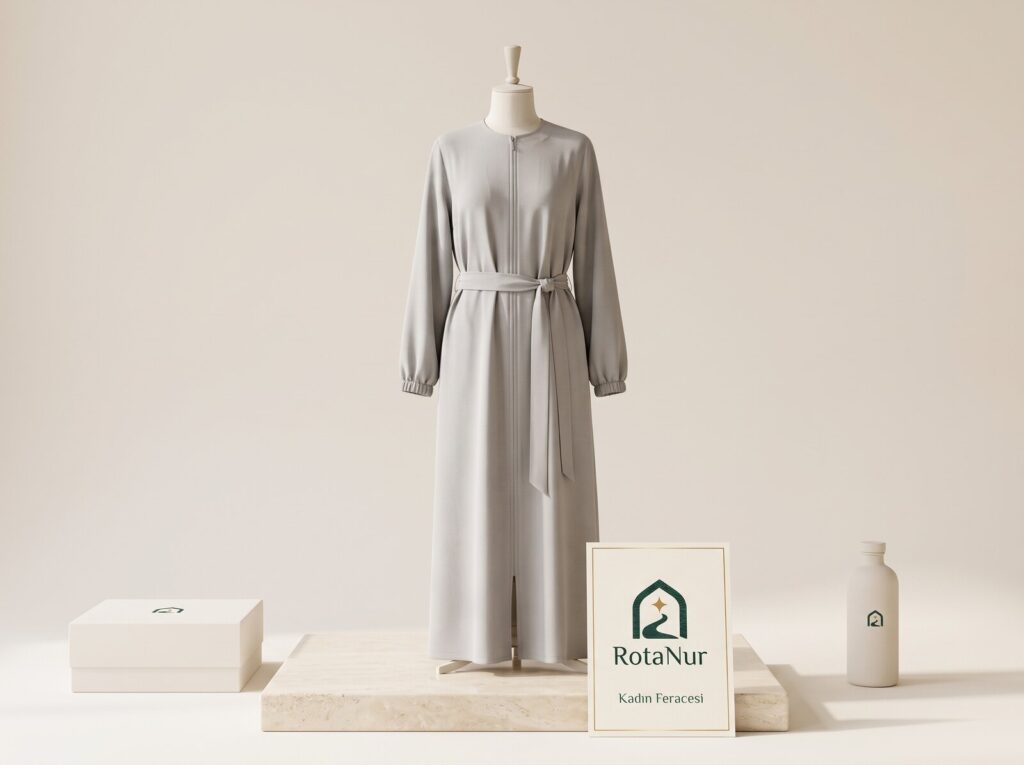 MOST POPULAR -25%
 -
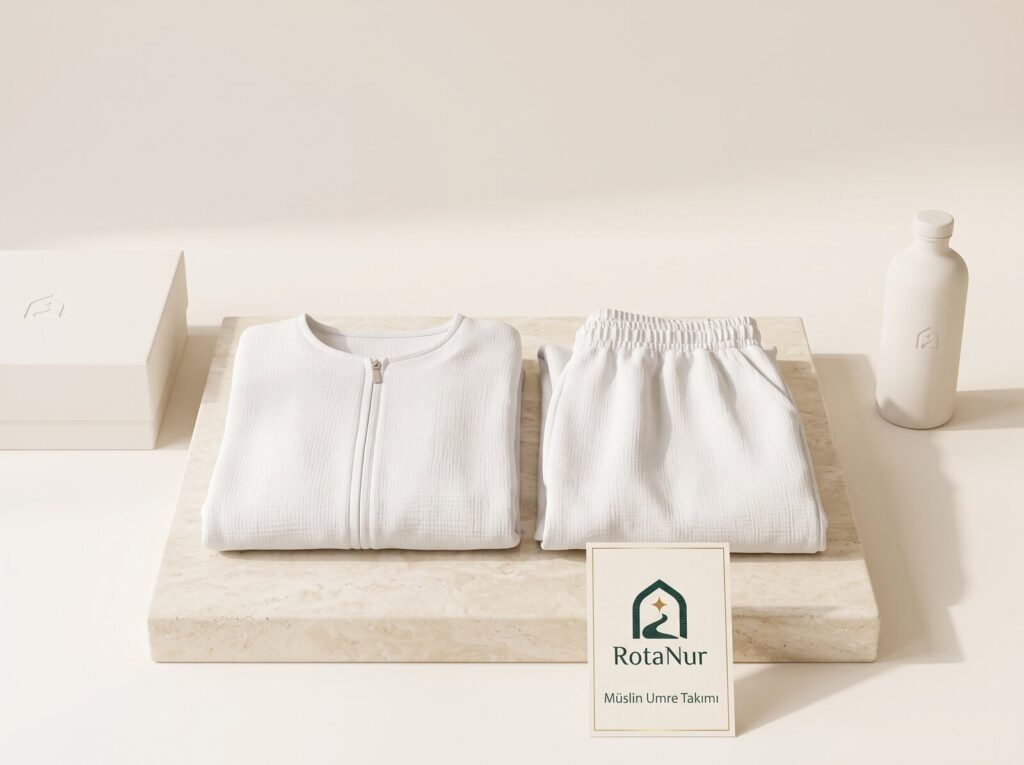 100% COTTON -23%
 -
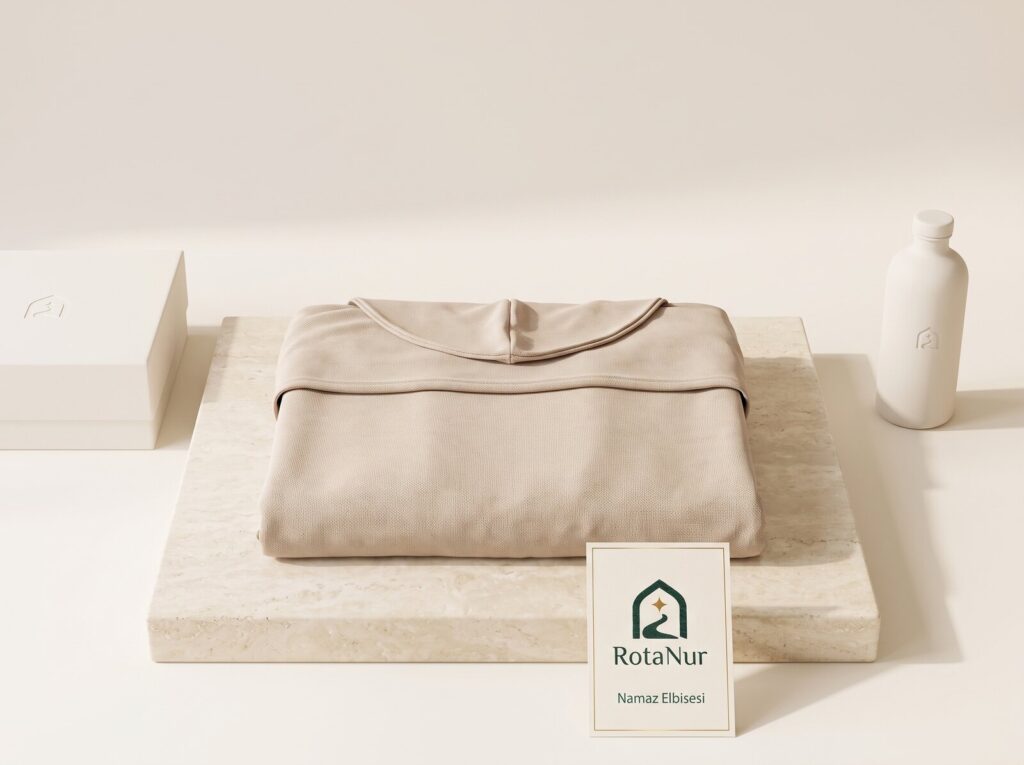 PRACTICAL -23%
 -
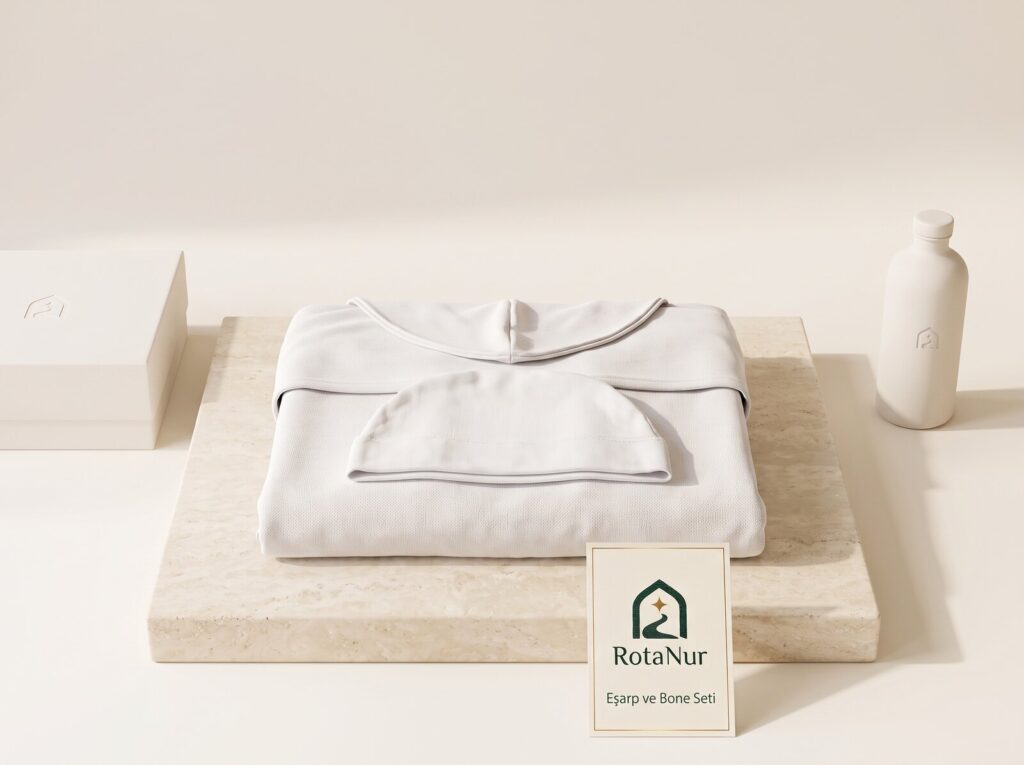 SET OF 2 -24%
 -
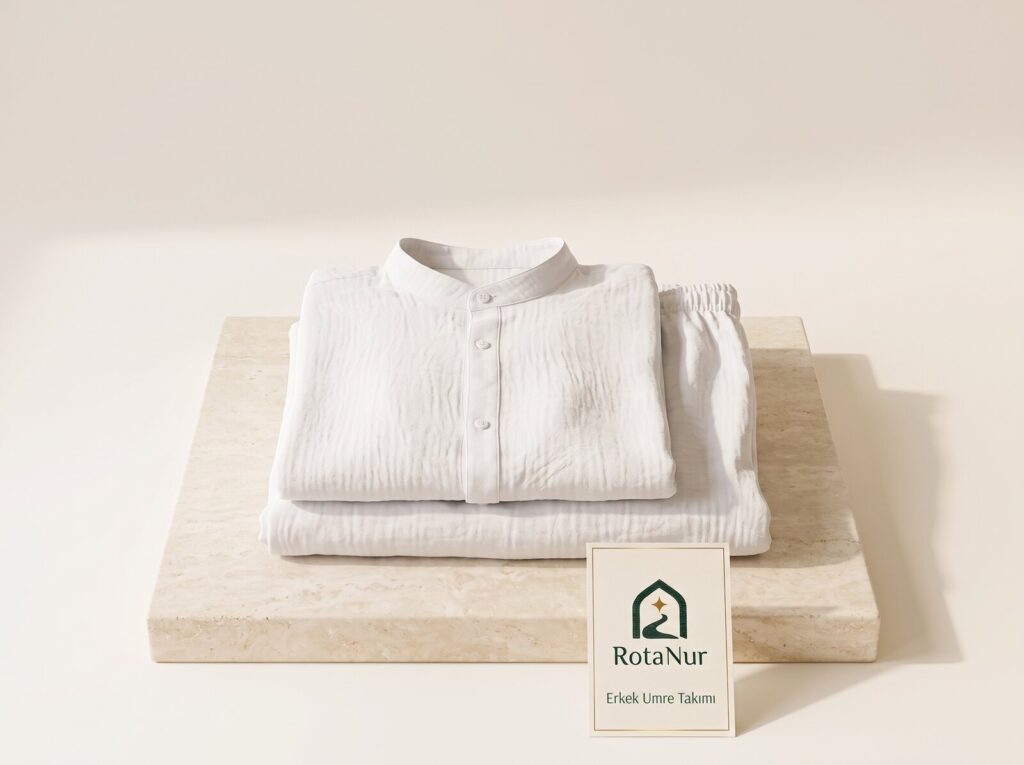 MUSLIN -24%
 -
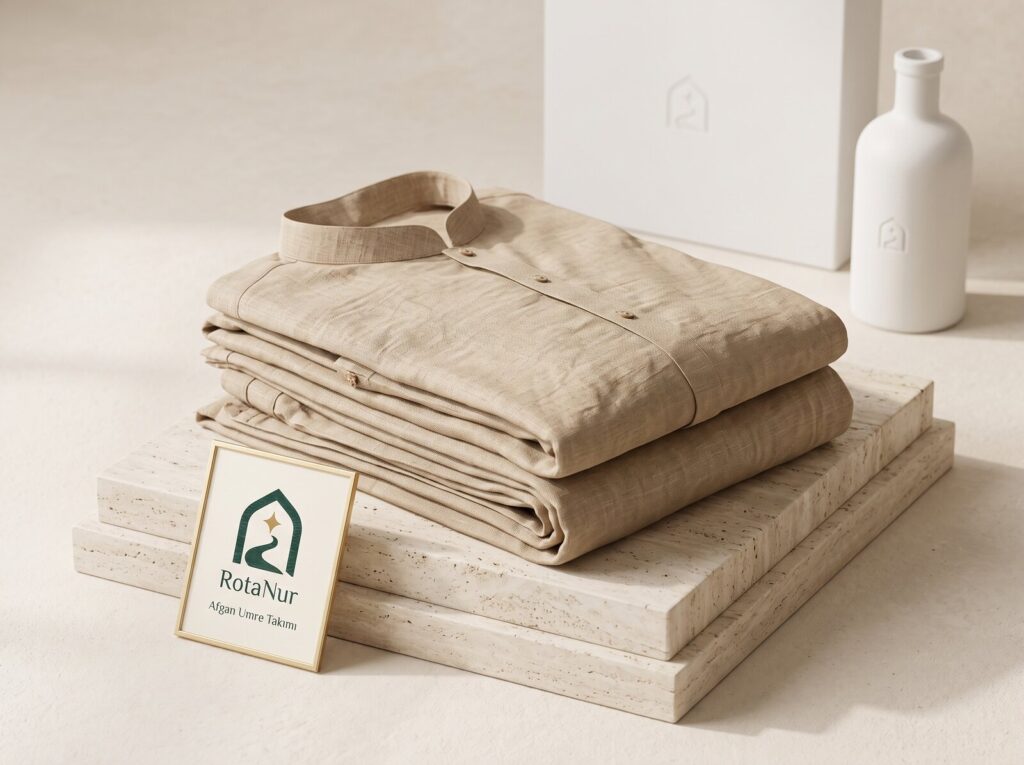 LONG TUNIC -23%
 -
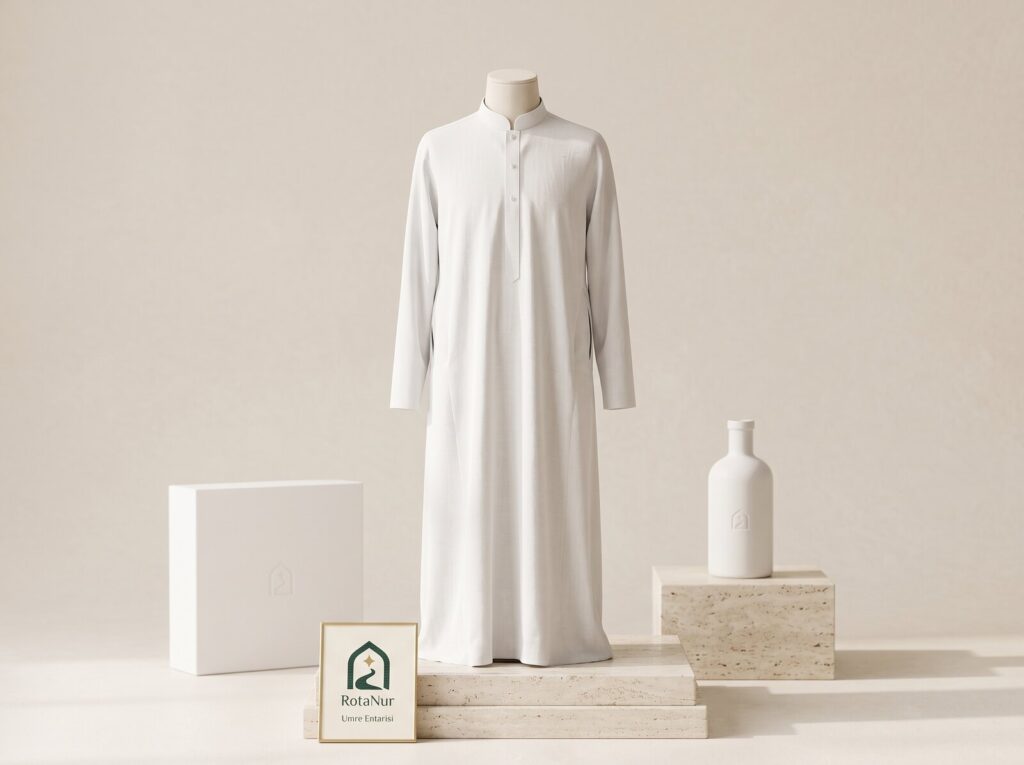 FULL LENGTH -23%
A Guide to Choosing Umrah Clothing
On an Umrah journey, clothing is not just a matter of what to wear; it is part of performing your worship in peace, staying comfortable on long walks and feeling secure in the crowds. The hot climate of Makkah and Madinah, going to and from the mosque for the five daily prayers, and lengthy acts of worship such as tawaf and sa'i all call for clothing that breathes, is easy to care for and respects the principles of modest dress. On this page you will find RotaNur-branded Umrah clothing for women and men, the differences between fabrics, how to choose your size and practical tips that will come in handy throughout your journey.
What do women wear for Umrah?
Unlike men, women do not have a special ihram garment made of two unstitched pieces. Simple, loose, modest everyday clothing that does not reveal the shape of the body is the ihram clothing for women. There is no requirement regarding colour; calm tones such as white, cream, beige, grey, navy or black are often preferred. According to the guidance of Diyanet (Türkiye's Presidency of Religious Affairs), a woman in ihram covering her face is counted among the ihram prohibitions; for this reason, models with a face veil or that cover the face are not suitable for ihram. According to a statement by Diyanet's High Council of Religious Affairs, there is no objection to women in ihram taking off or changing their clothes; so you can rotate more than one abaya or set throughout your journey. Women may wear shoes and socks while in ihram.
What do men wear for Umrah?
Men do not wear stitched clothing while in ihram; during this time, two unstitched ihram cloths are used. For ihram options, take a look at our Ihram and Ihram Belt page. Men's Umrah sets, on the other hand, are designed for the times outside ihram: the journey itself, the visit to Madinah before entering ihram, the days after completing Umrah and coming out of ihram, and time at the hotel, in the markets and on trips around the city. During these times, muslin sets consisting of a band-collar shirt and shalwar trousers, Afghan-style sets with a long tunic, and full-length thobes are options that are both comfortable and in keeping with mosque etiquette.
Seven criteria for choosing Umrah clothing
- Fit and cut: Choosing one size larger is often the right decision, so that your clothing does not pull tight during bowing (ruku) and prostration (sajdah), does not reveal the shape of your body and lets you move comfortably as you sit down and stand up.
- Fabric: Cotton, muslin and linen breathe; weaves such as aerobin and Madinah silk, on the other hand, resist creasing and are easy to care for.
- Colour: Light shades generally heat up less in the sun, while dark shades show stains less. Many customers prefer to buy one piece in each.
- Zips and pockets: A concealed zip makes it easier to put on and take off; side pockets are handy for your phone and tissues.
- Care: Fabrics that can be hand-washed at the hotel, dry quickly and need no ironing make travelling much easier.
- Season: In the summer months, thin, open-weave fabrics keep you comfortable; in the winter months, denser weaves and a light cardigan to hand do the same.
- Quantity: For a trip of ten to fifteen days, two outer garments and one prayer dress for women, and two sets and one thobe for men, are usually enough.
Fabric comparison
| Fabric | Breathability | Creasing | Drying | Recommended use |
|---|---|---|---|---|
| Muslin (100% cotton) | Very good | Natural crinkled look, no ironing needed | Fast | Summer months, women's and men's sets |
| Linen and linen blends | Very good | Creases | Fast | Hot days, men's tunic sets |
| Viscose | Good | Moderate | Moderate | Flowing tunics and sets |
| Aerobin | Moderate | Creases little | Fast | Abayas, daily wear to the mosque |
| Madinah silk (polyester-based) | Moderate | Creases little | Fast | Elegant, flowing abayas |
| Combed cotton jersey | Good | Creases little | Moderate | Prayer dresses, headscarves and under-scarf caps |
The ratings in the table reflect the general properties of each type of fabric and may vary with the thickness of the fabric and the density of the weave. Fabrics sold under the name Madinah silk are not real silk; they are a polyester-based fabric with a fluid texture. We clearly state the composition of every fabric on our product pages.
Abaya, two-piece set or prayer dress?
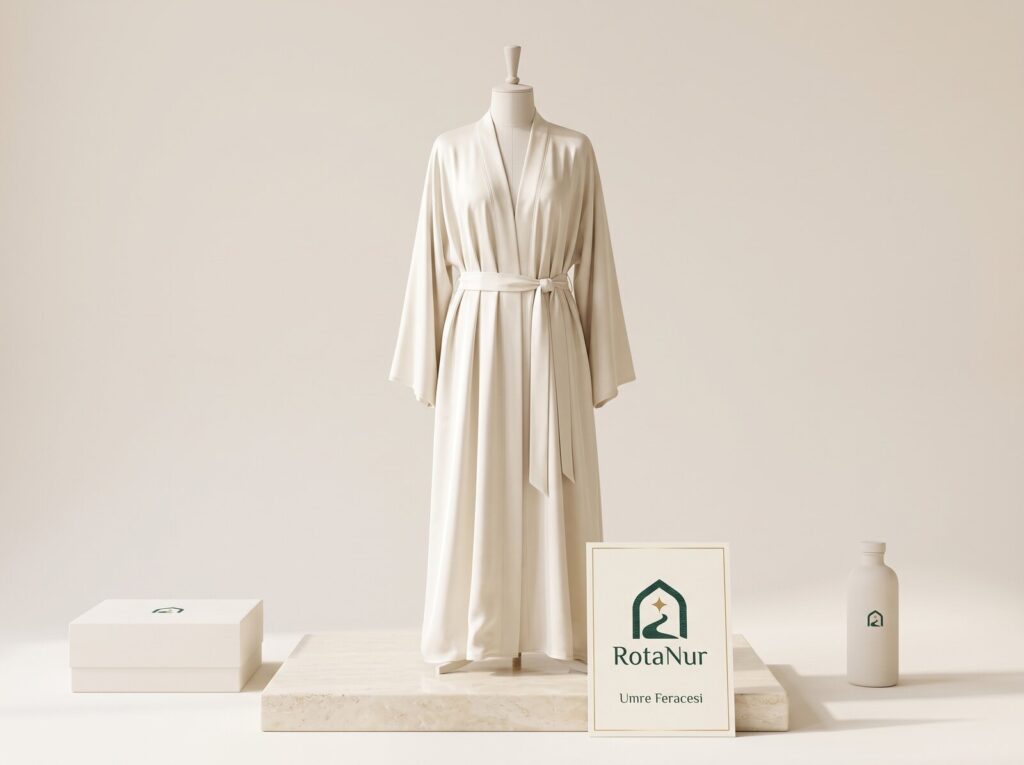
An abaya is a full-length, loose-cut outer garment worn over your everyday clothes. Because it completes modest dress in a single piece as you go between the hotel and the mosque, it is the Umrah garment most often chosen by our female customers. A two-piece set, on the other hand, consists of a long tunic and trousers or a skirt; it feels airy, especially for those who want to wear fewer layers on hot days. A prayer dress is a practical outer cover that is worn as a single piece together with a headscarf and can be slipped on quickly over your clothes. It makes things easier when praying in your hotel room, at the airport or at rest stops.
- For those who want modest dress in a single piece: An abaya with a concealed zip
- For those looking for elegance and drape: A Madinah silk abaya
- For those who want to stay cool in the heat: A muslin two-piece set
- For those looking for practicality: A one-piece prayer dress with an attached headscarf
Clothing tips by season
Summers in Makkah and Madinah are very hot; between June and September, daytime temperatures can rise above 40°C. During this period, breathable fabrics such as muslin and linen, light colours and single-layer outfits keep you comfortable. In October, November, March and April the weather is milder; aerobin abayas or viscose sets can be worn comfortably all day during this period. Between December and February, the evenings turn cool and you may feel colder in the air-conditioned areas of the mosques. For winter trips, adding a thin jumper or a long-sleeved T-shirt under the abaya, or, for men, a light waistcoat or cardigan over the set, is a good solution. In busy periods such as Umrah during Ramadan, quick-drying fabrics are especially important so that washing does not become a problem.
The visit to Madinah and preparing for ihram
Many Umrah programmes begin with a visit to Madinah, and ihram is entered at the miqat on the way from Madinah to Makkah. For this reason, male customers need to prepare at least one set for the days in Madinah and a separate ihram set for the ihram. Female customers, on the other hand, can enter ihram in the abayas or sets they wore in Madinah; it is recommended that the clothes are clean and have not been washed with scented products before entering ihram. You can check which city your programme starts in on our Umrah Tours page and pack your suitcase accordingly.
Tips for older customers and those with limited mobility
For our older customers, the most important criterion is that the clothing is easy to put on and take off. Abayas that fasten at the front with a zip or buttons, trousers and shalwars with elasticated waists, and slip-on headscarves make things much easier in this respect. For customers who use a wheelchair, choosing clothing that is not too long and will not get caught in the wheels improves safety. Models with elasticated cuffs, so that the sleeves can easily be pushed up for ablution (wudu), are also a practical choice. If you are shopping for your mother or father, you can send us their measurements so that we can determine the right size.
Which clothing for which customer?
- Women going on Umrah for the first time: An aerobin abaya with a concealed zip, a one-piece prayer dress and an instant hijab set make a well-balanced start.
- Those looking for elegance and care: The Premium Series Madinah silk abaya gives a graceful look on visits to the mosque thanks to its flowing drape.
- Those travelling in the summer months: A muslin two-piece set for women and a muslin band-collar set for men keep you cool.
- Men who want long, covering clothing: An Afghan-style set with a long tunic or a full-length thobe is a good choice.
- Those who want to buy a gift: A prayer dress and a headscarf set are useful gifts suitable for women of all ages.
Choosing your size
In Umrah clothing, a tight fit affects both comfort and modesty. If you are unsure, we recommend choosing one size up. For abayas and tunics, a length close to the ankle makes walking and climbing stairs more comfortable. In men's sets, the elasticated waists of the shalwars and trousers fit a wide range of sizes, while for shirts and tunics, shoulder width and chest measurement are decisive. We share the size ranges on every product page. If you are not sure, simply send your height and weight to our WhatsApp line, and we can work out the right size together.
Packing list: how many items of clothing are enough?
- For women: Two abayas, or one abaya and one two-piece set, one prayer dress, three to four headscarves, two under-scarf caps, a comfortable cardigan and socks to wear with your shoes.
- For men: One or two ihram sets, two Umrah sets, one thobe, a comfortable cardigan and open-heeled slippers.
- For everyone: A small laundry bag, a folding hanger, unscented detergent and wet wipes.
In busy periods, hotel laundries can get very crowded, so quick-drying fabrics offer an extra advantage. For open-heeled slippers and tawaf socks, see our Tawaf Socks and Slippers page.
Care, washing and sensitivity to scent
According to Diyanet's guidance, applying fragrance to the body or clothing is prohibited while in ihram; this rule applies to women too. So if you need to wash your clothes on the days you are in ihram, use unscented soap or detergent and avoid scented fabric softener. Unscented soap, shampoo and wet wipes can be found on our Unscented Care Products page. Those who wish to use musk and attars can do so after coming out of ihram; you will find the options in our Musk, Oud and Attars section. For general care, we recommend washing clothes inside out at 30°C, drying them in the shade and ironing synthetic-based fabrics such as Madinah silk and aerobin on a low heat.
Choosing colours and putting outfits together
Simple, calm tones in Umrah clothing both suit the atmosphere of the mosque and make it easy to match different pieces with each other. For women, a mink, beige or grey abaya goes well with headscarves in cream, white or mink tones. Navy and black abayas, meanwhile, create a balanced look with light-coloured headscarves. If you are buying two outer garments, choosing one in a light shade and the other in a dark shade gives you flexibility both on hot days and against the risk of stains while travelling. For men, cream and white tones feel fresh in hot weather, while grey and beige show dirt less. Choosing complementary pieces such as a prayer cap, cardigan and slippers from the same colour family also simplifies your suitcase and makes it easier to put an outfit together quickly each day.
Common mistakes
- Choosing tight, short clothing: Clothing that pulls tight during prostration or leaves the ankles exposed when walking is uncomfortable.
- Buying a model with a face veil: Since the face must remain uncovered in ihram, sets with a face veil cannot be used during the period in ihram.
- Setting off with only one outfit: Not having a spare piece while washing and drying causes problems.
- Choosing heavy, thick fabric: In the summer months, thick fabrics add to fatigue.
- Wearing an outfit for the first time on the journey: Trying on the size and cut at home avoids surprises.
- Washing with scented detergent: On the days in ihram, unscented products should be used.
Mosque etiquette and clothing
The Masjid al-Haram and the Prophet's Mosque bring together millions of Muslims from all over the world. In these places, simple, clean and unobtrusive clothing both adds to the peace of worship and makes it easier to move around comfortably in the crowds. Avoiding accessories that are studded, shiny or noisy also helps you avoid problems as you sit down and stand up over long periods. It is common practice for men to choose tunics that reach below the knee or loose trousers outside the time in ihram, and for women to choose loose clothing that reaches the ankles. If you will be spending a long time in the air-conditioned areas of the mosques, we recommend keeping a thin cardigan or shawl with you.
Why RotaNur?
- RotaNur-branded clothing, selected with feedback from our customers by an organisation that runs Umrah and Hajj tours.
- Fabric composition, size range and care information shared clearly on every product page.
- Fast shipping, and free delivery on orders above a certain amount.
- Returns within 14 days for unopened products; details on the Cancellation and Returns Policy page.
- No online payment is taken: after you send your order request, our advisor contacts you, confirms availability and guides you through the payment steps.
- 24/7 WhatsApp support with choosing sizes and products; you can reach us via our Contact page.
Once you have chosen your clothing, take a look at our Umrah Sets page to find your other travel essentials in one place, and at our Umrah Gifts section for presents for your loved ones on your return. Our Umrah Guide, which explains travel preparations step by step, and our Umrah Tours page, which features our current programmes, will make your planning easier. Customers preparing for Hajj can explore our Hajj Tours page. May Allah make your journey easy and accept your worship.
FAQ
No. Unlike men, women do not have a special ihram made of two unstitched pieces. Simple, loose, modest clothing is the ihram clothing for women. Abayas, two-piece sets or outfits with a long tunic can easily be used for this purpose.
There is no requirement regarding colour. Although white is often preferred, calm, understated tones such as cream, beige, grey, navy or black are also suitable. What matters is that the clothing is modest, simple and loose.
According to Diyanet's guidance, a woman in ihram covering her face is among the ihram prohibitions. The face must therefore be left uncovered throughout the period in ihram. For special circumstances, we recommend consulting your group's religious guide.
No. Men do not wear stitched clothing while in ihram; during this time, two ihram cloths are used. Our men's sets are designed for the journey, the visit to Madinah and the days after completing Umrah and coming out of ihram.
According to a statement by Diyanet's High Council of Religious Affairs, there is no objection to women in ihram taking off or changing their clothes. Men can also replace an ihram that has become dirty or wet with a clean one.
Fabrics made from natural fibres such as muslin, cotton and linen breathe, so they are generally found to be more comfortable in hot weather. Fabrics such as aerobin and Madinah silk, on the other hand, stand out for their resistance to creasing and quick drying.
If you are unsure, we recommend choosing one size up so that your clothing does not pull tight during bowing (ruku) and prostration (sajdah). If you send your height and weight to our WhatsApp line, we can work out the right size together.
We recommend hand-washing them in lukewarm water with unscented soap or detergent and drying them in the shade. Do not use scented fabric softener on the days you are in ihram. Fabrics such as muslin and aerobin dry quickly, so they are well suited to washing at the hotel.
Modest, loose-cut trousers worn with a tunic or abaya that reaches below the knee are a common choice. What matters is that the outfit as a whole is simple and does not reveal the shape of the body.
According to Diyanet's guidance, men are prohibited from covering their heads while in ihram, so a prayer cap is not worn during the period in ihram. A prayer cap can be worn after coming out of ihram and on the days outside ihram.
Since they do not require size information, a standard-size prayer dress and an instant hijab and under-scarf cap set are the easiest products to choose as gifts. If you would like to give an abaya or a set, simply contact us with the person's height and weight.
Orders are sent by fast shipping, and delivery is free on orders above a certain amount. Unopened products can be returned within 14 days. Details are on our Cancellation and Returns Policy page. No online payment is taken: after you send your order request, our advisor contacts you, confirms availability and guides you through the payment steps.