




Contents 13 sections
- Where Is the Kaaba? The Short Answer
- In Which Country and Which City Is the Kaaba?
- How Do You Get to the Kaaba from Türkiye?
- The Direction of the Kaaba: How Is the Qibla Found?
- Which directions do the corners of the Kaaba face?
- Who Built the Kaaba, and When?
- What Is Inside the Kaaba?
- Who may enter the Kaaba?
- What Is the Cover of the Kaaba and How Is It Changed?
- Why is the cover of the Kaaba black?
- The Parts of the Kaaba in Brief
- Visiting the Kaaba: The Kaaba on Umrah and Hajj
- Frequently Asked Questions
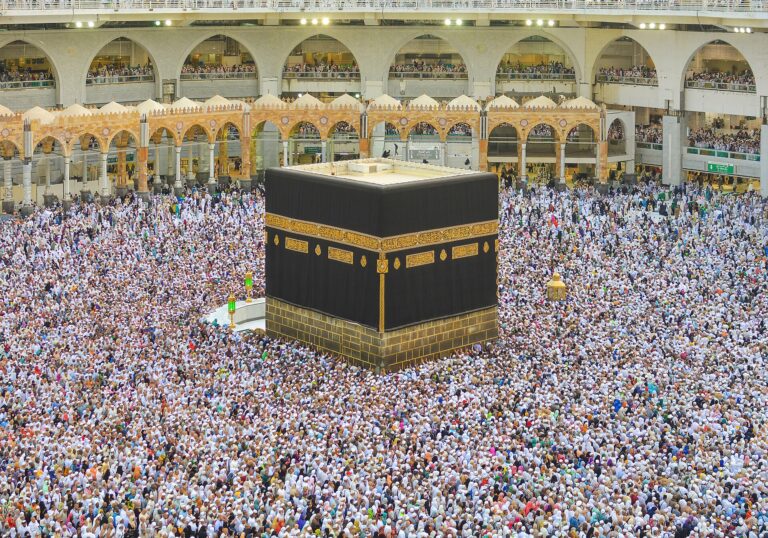
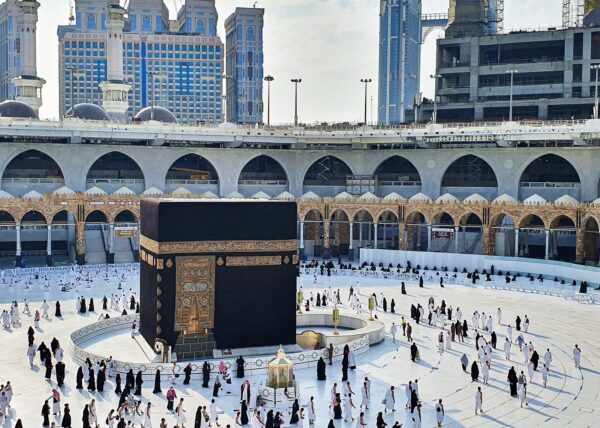
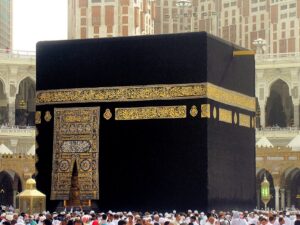
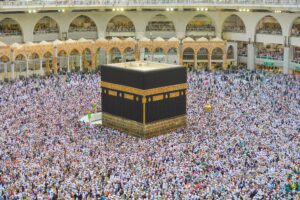
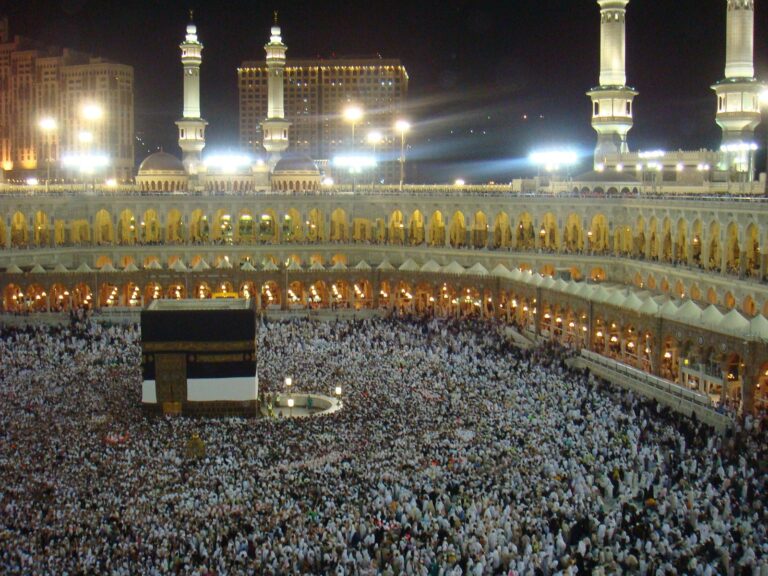
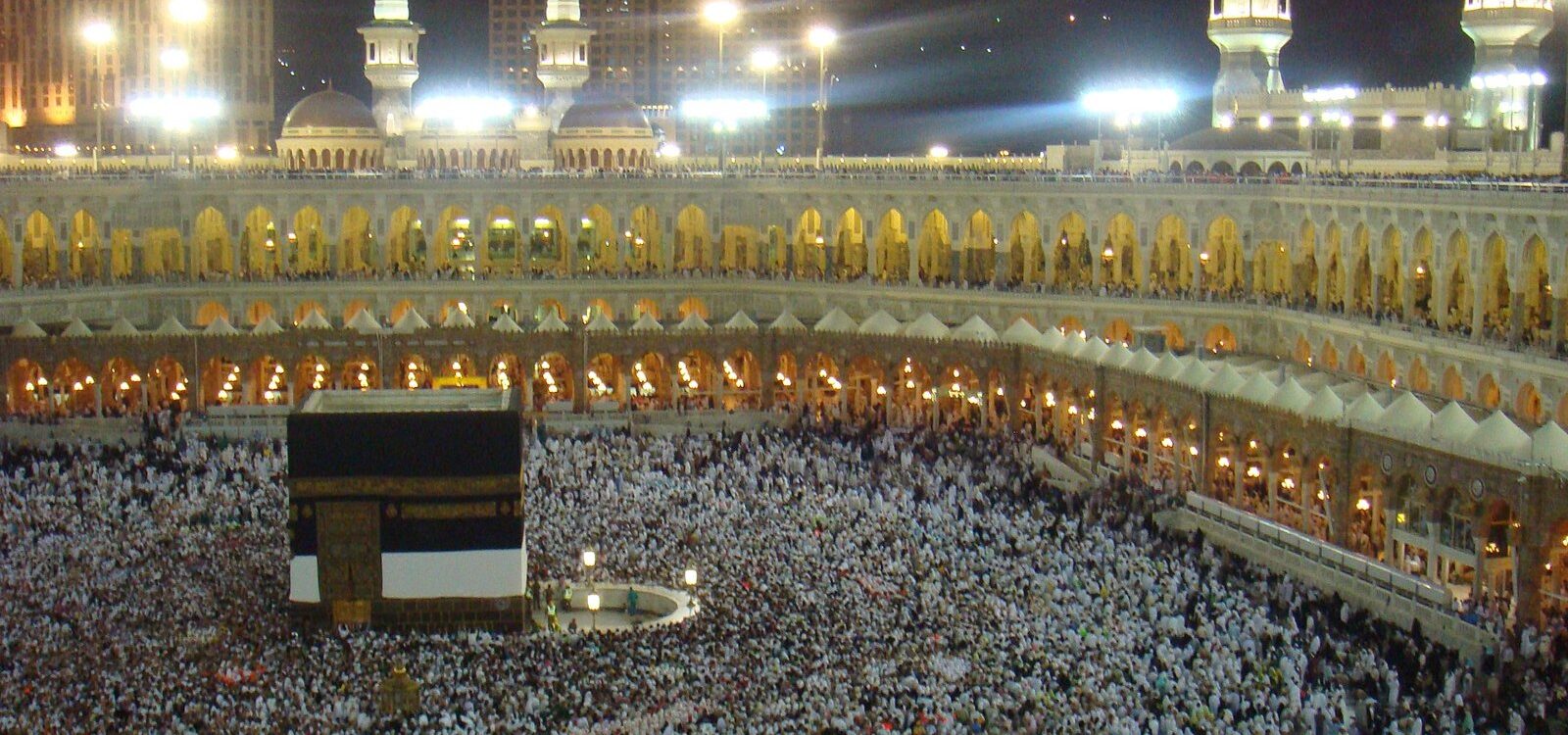
The short answer to where is the Kaaba is the city of Makkah in Saudi Arabia: the Kaaba stands in the exact centre of Masjid al-Haram in the heart of Makkah, at the centre of the tawaf area, and it is the qibla towards which all Muslims in the world turn in prayer. Yet most people who search for “where is the Kaaba” want to know more than the name of the country and city: which region it lies in, how one travels there from Türkiye, how the direction of the qibla is found, who built the Kaaba and when, what is inside it, who may enter it and what the black cover over it means. In this article we have gathered all of these questions with historical and current information and with sources; the corners of the Kaaba and sections such as the Hatim and the Multazam are explained separately in our article on the parts of the Kaaba.
Where Is the Kaaba? The Short Answer
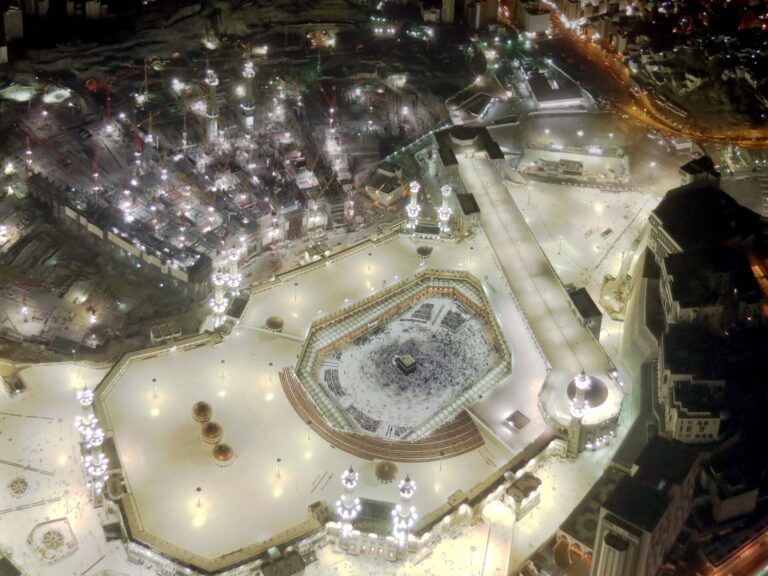
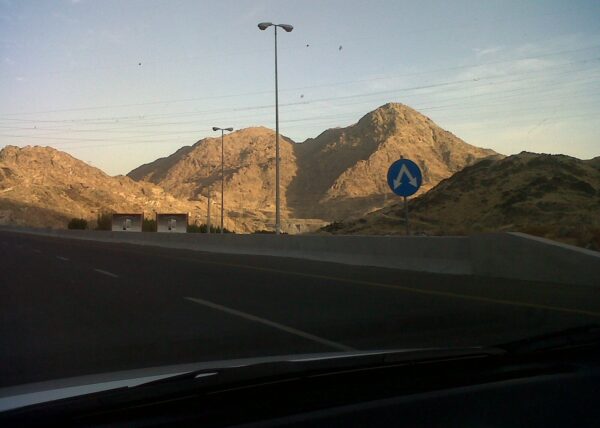
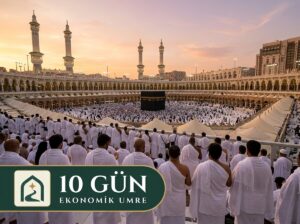
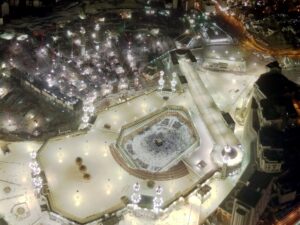
The Kaaba is in the city of Makkah (Makkah al-Mukarramah), in the Hijaz region in the west of the Kingdom of Saudi Arabia. The city lies about seventy kilometres east of Jeddah on the Red Sea coast, at an altitude of roughly two hundred and eighty metres, in a valley ringed by mountains. Masjid al-Haram, where the Kaaba stands, is in the city centre on the floor of this valley between the mountains of Abu Qubays and Qu’ayqi’an. Its geographical coordinates are approximately 21° 25′ north and 39° 49′ east; the qibla is calculated from every point on earth towards this spot. Makkah is the administrative centre of the Makkah Region of the same name, and it is closed to non-Muslims; the only way to see the Kaaba is to travel to Makkah for Umrah or Hajj. The sections of Masjid al-Haram and the history of its expansions are explained in our article on Masjid al-Haram.
In Which Country and Which City Is the Kaaba?
By today’s political borders the Kaaba is in Saudi Arabia; but the history of Makkah is far older than that state. The city grew up where the Prophet Ibrahim left his wife Hajar and his son Ismail in a waterless valley and Zamzam sprang forth; it became a centre of trade and pilgrimage under the rule of Quraysh and was the place where the Prophet Muhammad was born and where the first thirteen years of Islam unfolded. Although the administration of the Hijaz changed through the Umayyad, Abbasid, Mamluk and Ottoman periods, the location of the Kaaba never changed; the Ottoman sultans served Makkah and Madinah under the title “Servant of the Two Holy Sanctuaries”, and the arcades of Masjid al-Haram and the present structure of the Kaaba took shape largely in the Ottoman period. With a population of more than two million, Makkah is today one of Saudi Arabia’s most populous cities, and that number multiplies for most of the year with Umrah and Hajj visitors. For places to see in Makkah apart from the Kaaba, see our article on places to visit in Makkah.
How Do You Get to the Kaaba from Türkiye?
The way to the Kaaba from Türkiye runs through the airports of Jeddah or Madinah. The flight from Istanbul to Jeddah takes about four hours; from Jeddah’s King Abdulaziz Airport it is an hour to Makkah by road and around half an hour on the Haramain high-speed train. From Madinah to Makkah, the road of roughly four hundred and fifty kilometres takes five hours by car and a little over two hours by high-speed train. Umrah travellers mostly land in Jeddah and go first to Makkah and then to Madinah, or do the reverse; those who land in Madinah enter ihram at the miqat on the way to Makkah. The visa, vaccination and passport requirements for travelling to Umrah from Türkiye, together with the miqat points, are explained in our article on where Umrah is performed; for programmes departing from Istanbul, Ankara and the cities of Anatolia, see our Umrah departure cities page.
- Via Jeddah: the Istanbul–Jeddah flight takes about four hours; from the airport to Makkah about an hour by bus or half an hour on the Haramain train.
- Via Madinah: the Istanbul–Madinah flight takes about three and a half to four hours; after the Madinah visit, a little over two hours to Makkah by train or about five hours by road.
- Within Makkah: most hotels are within walking distance of Masjid al-Haram; shuttle buses run to the mosque from the more distant hotels.
The Direction of the Kaaba: How Is the Qibla Found?
Knowing where the Kaaba is also determines where we turn in prayer; the qibla is the name of the shortest direction from where one stands to the Kaaba. Seen from Türkiye, the Kaaba lies to the south-south-east; the qibla angle is about 151 degrees in Istanbul and about 155 degrees in Ankara. Today the qibla apps on phones and compasses give this angle; inside Masjid al-Haram, wherever one stands, the qibla is the Kaaba itself, and the rows around the tawaf area are formed in circles. The qibla was turned from Masjid al-Aqsa to the Kaaba by the 144th verse of Surah al-Baqarah about sixteen or seventeen months after the Prophet’s migration to Madinah. The changing of the qibla shows that the Kaaba is not merely a building but the shared centre towards which the whole community turns; the Mosque of the Two Qiblas, where this change took place, is one of the sites described in our article on places to visit in Madinah.
Which directions do the corners of the Kaaba face?
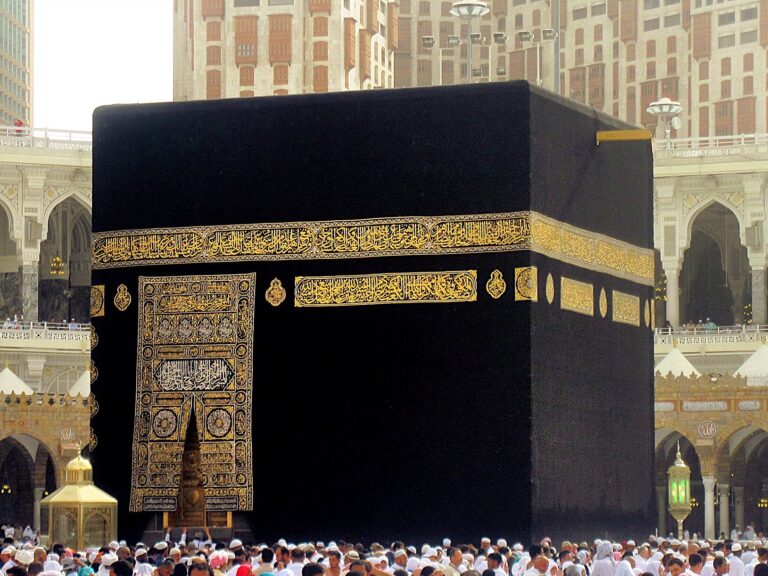
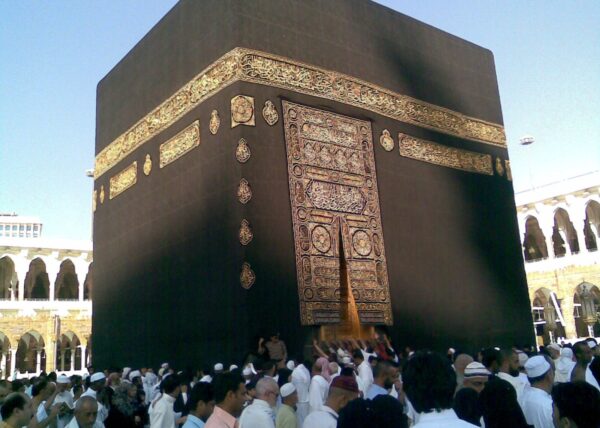
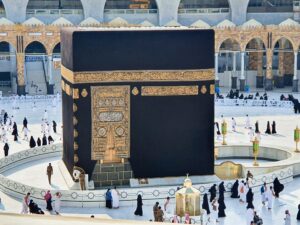
The four corners of the Kaaba face roughly the four cardinal directions: the corner holding the Black Stone faces east, the Iraqi Corner north, the Syrian Corner west and the Yemeni Corner south. The door is in the north-eastern wall between the Black Stone corner and the Iraqi Corner; the Hijr (Hatim) lies in front of the north-western wall. Tawaf begins in line with the Black Stone and goes round seven times with the Kaaba kept on the left.
Who Built the Kaaba, and When?
The Quran states that the foundations of the Kaaba were raised by the Prophet Ibrahim together with his son the Prophet Ismail: “And when Ibrahim was raising the foundations of the House, together with Ismail” (al-Baqarah, 2/127). The founding of Makkah also begins with this construction; in the words of the Quran the Kaaba is the first house of worship established for mankind (Al Imran, 3/96). Throughout history the Kaaba has been repaired and rebuilt many times because of floods, fire and wars. In the Prophet’s youth, about eighteen years before the migration, Quraysh rebuilt the Kaaba, and the Prophet settled their dispute over who should set the Black Stone in place; that event is told in our article on the Black Stone. Abdullah ibn al-Zubayr, in 684, enlarged the Kaaba, damaged during the Umayyad siege, on the foundations of Ibrahim so as to include the Hijr, while al-Hajjaj returned it to the Quraysh plan in 693. After the great flood of 1630 the Ottoman sultan Murad IV had the Kaaba rebuilt; today’s walls are the work of that construction. In 1996 the Saudi authorities comprehensively renewed the roof and interior surfaces and strengthened the wall stones without moving them from their places. What has remained unchanged through this long history is the site of the Kaaba and the foundations of Ibrahim.
| Topic | Information |
|---|---|
| Country and city | Saudi Arabia, Makkah (Hijaz region, centre of the Makkah Region) |
| Location | The centre of Masjid al-Haram, the middle of the tawaf area |
| Coordinates and altitude | Approximately 21° 25′ N, 39° 49′ E; about 280 m |
| Height and sides | About 13 metres; sides about 11–13 metres |
| Door | In the north-eastern wall, about two metres above the ground; the present gold-plated door was fitted in 1979 |
| First construction | The Prophets Ibrahim and Ismail (al-Baqarah, 2/127) |
| Major reconstructions | Quraysh (the Prophet’s youth), Abdullah ibn al-Zubayr (684), al-Hajjaj (693), Murad IV (1630), Saudi renovation (1996) |
| Cover (kiswa) | Black silk, gold and silver thread; changed once a year on 1 Muharram |
What Is Inside the Kaaba?
The interior of the Kaaba, contrary to what onlookers may suppose, is an empty chamber of worship; there is no statue, grave or sacred object inside. The floor and the lower part of the walls are clad in marble; the upper part of the walls is covered with a green cloth embroidered with verses of the Quran. The ceiling is carried by three wooden pillars arranged in a row; from the beams between the pillars hang lamps presented in various periods. Near the northern corner, in front of the staircase leading to the roof, there is a small door called “Bab al-Tawbah” (the Door of Repentance). Inside there are also inscriptions set along the walls and a small table used for perfuming the interior of the Kaaba. At the conquest of Makkah the Prophet entered the Kaaba, had the idols inside removed and prayed two rak’ahs between two of the pillars (Bukhari, Salat 30; Muslim, Hajj 388). The top of the Kaaba is a flat roof; the Golden Spout on the side facing the Hijr channels the rainwater falling on the roof into the Hijr.
Who may enter the Kaaba?
The door of the Kaaba is closed to visitors; only the people invited by the Saudi authorities enter, during the washing ceremony held once a year. The key of the Kaaba has remained with the Shaybah family since the day the Prophet returned it to Uthman ibn Talhah at the conquest of Makkah, and the door is opened with the key held by that family. It is related that when Aisha wished to enter the Kaaba, the Prophet told her, “Pray in the Hijr, for it is part of the Kaaba” (Tirmidhi, Hajj 48); for this reason a prayer performed inside the Hatim is regarded as having been performed inside the Kaaba.
Important: Entering the Kaaba is not part of Umrah or Hajj; not being able to enter does not diminish the worship. Those who wish to pray in the Hijr (Hatim) may do so without blocking the path of those performing tawaf and by avoiding the hours of crowding; a tawaf performed by passing through the Hijr, however, is not valid, because the Hijr is counted as part of the Kaaba.
What Is the Cover of the Kaaba and How Is It Changed?
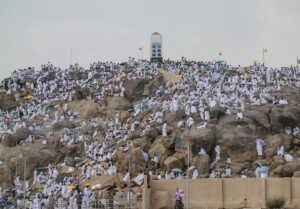
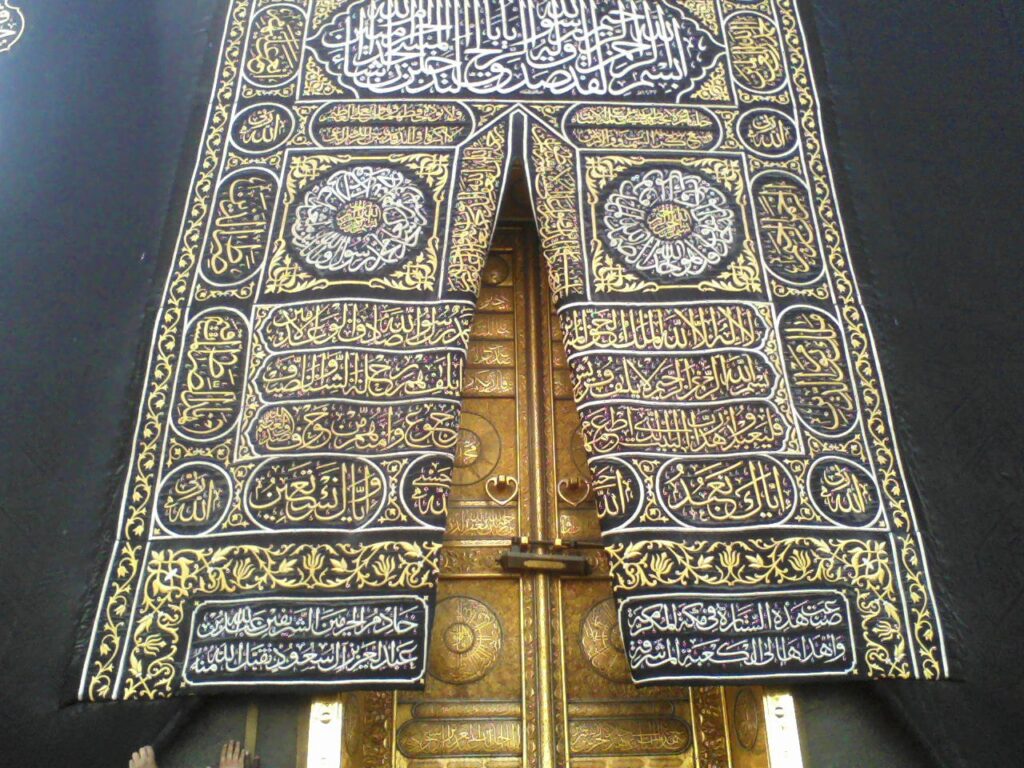
The black cover draped over the outside of the Kaaba is called the “kiswa” in Arabic and the “Kaaba cover” or “sitara” in Turkish. The cover is woven from pure black silk; on the band (hizam) that runs round its upper part and on the door curtain, verses of the Quran and the names of Allah are embroidered in gold and silver thread. Today’s kiswa is woven in Makkah, in the kiswa factory founded by the Saudi authorities in 1927 and later expanded; about six hundred and seventy kilograms of silk and more than a hundred kilograms of gold and silver thread go into one cover. The cover is changed once a year, on 1 Muharram, the first day of the Hijri year; until 2022 this change was made on the Day of Arafah (9 Dhul Hijjah). During the days of Hajj the lower part of the cover is raised a few metres and covered with white cloth so that it is not damaged by the crowds. The old cover is cut into pieces and presented to heads of state, institutions and museums; pieces of kiswa surviving from the Ottoman period are exhibited at the Topkapı Palace in Istanbul. In the Ottoman period the cover was woven in Egypt and carried to Makkah in the mahmal with the Surre procession; the sending of the cover from Egypt ended in 1962.
Why is the cover of the Kaaba black?
The cover of the Kaaba has not been black in every period; the sources record that white, red, green and black covers were used in the Umayyad and Abbasid periods. Black silk became the tradition from the Abbasid period onwards and was continued in the Mamluk and Ottoman periods. Durability and the fact that the colour does not fade easily played a part in the choice of black; it is not a religious requirement.
The Parts of the Kaaba in Brief
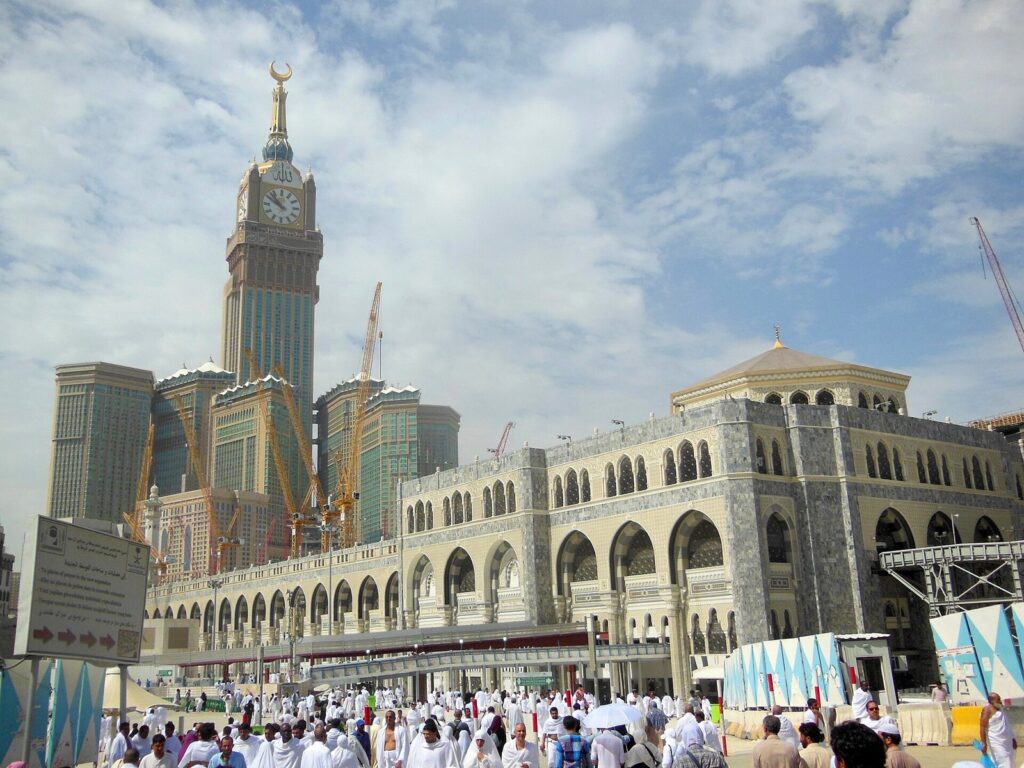
There are a few names that visitors to the Kaaba should know. The Black Stone (Hajar al-Aswad) is the black stone at the eastern corner where tawaf begins; the Yemeni Corner is the southern corner greeted with the hand during tawaf; the Multazam is the section of wall between the Black Stone and the door where supplications are made; the Hijr (Hatim) is the area in front of the north-western wall enclosed by a semicircular wall; the Station of Ibrahim is the stone opposite the door, kept in a glass case, bearing the footprint of the Prophet Ibrahim; and the well of Zamzam lies beneath the tawaf area, its water available everywhere in Masjid al-Haram. The history of each of these parts and the etiquette of visiting them are told in our articles on the parts of the Kaaba and the well of Zamzam. With the latest expansions of Masjid al-Haram, the marble floor and tawaf area around the Kaaba now extend over several storeys; tawaf can also be performed from the upper floors and the roof.
Visiting the Kaaba: The Kaaba on Umrah and Hajj
To see the Kaaba one travels to Makkah on an Umrah or Hajj visa; since the city is closed to non-Muslims, a tourist visit is not possible. Umrah travellers make a supplication when they enter Masjid al-Haram and first see the Kaaba; the dua of that moment is explained in our article on the dua to recite on seeing the Kaaba. Then tawaf and sa’y are performed; our article on how tawaf is performed shows step by step how to go round the Kaaba. For those who want to see the Kaaba at its quietest, the hours after midnight and before the dawn prayer are best; in the last ten days of Ramadan and in the Hajj season every floor of Masjid al-Haram fills up. Those who cannot travel to Makkah can watch the Kaaba on the uninterrupted live broadcasts from Masjid al-Haram; but no screen replaces standing before the Kaaba. For Umrah programmes see our Umrah tours page. A few practical notes for those seeing the Kaaba for the first time:
- When entering Masjid al-Haram, choose one of the large gates such as Bab as-Salam or the King Abdulaziz Gate, and note the gate number so you can find the same gate on the way out.
- Stop and make your supplication where you first see the Kaaba; but stand at the edge of the tawaf area so as not to block the way.
- Begin tawaf from the green light in line with the Black Stone; in the crowds do not push to kiss the stone, greeting it from a distance is enough.
- In busy hours the upper floors and the roof are more comfortable for tawaf; the tawaf is valid even though the distance is longer.
- You may drink Zamzam facing the qibla, standing or sitting; the open areas on every floor of the mosque are suitable for making supplication while looking at the Kaaba.
Frequently Asked Questions
In which country and which city is the Kaaba?
The Kaaba is in the city of Makkah in Saudi Arabia, in the centre of Masjid al-Haram. Makkah lies in the Hijaz region, about seventy kilometres east of Jeddah on the Red Sea coast.
What is inside the Kaaba?
The interior of the Kaaba is an empty chamber with a marble floor; three wooden pillars carry the ceiling, lamps hang from the beams, the upper walls are covered with a green cloth embroidered with verses, and in front of the staircase to the roof stands the Door of Repentance. There is no statue, grave or sacred object inside.
Can one enter the Kaaba?
No; the door of the Kaaba is closed to visitors, and only invited guests enter during the annual washing ceremony. According to the hadith, a prayer performed in the Hijr (Hatim) is regarded as performed inside the Kaaba.
When is the cover of the Kaaba changed?
The cover of the Kaaba is changed once a year, on 1 Muharram, the Hijri New Year. Until 2022 the change was made on the Day of Arafah; during the days of Hajj the lower part of the cover is raised.
How many hours does it take to reach the Kaaba from Türkiye?
The flight from Istanbul to Jeddah takes about four hours; from Jeddah to Makkah it is about an hour by road and around half an hour on the Haramain high-speed train. The train from Madinah to Makkah takes about two hours.
Who built the Kaaba?
According to the Quran, the foundations of the Kaaba were raised by the Prophet Ibrahim together with the Prophet Ismail. Over the course of history the building was rebuilt by Quraysh, Abdullah ibn al-Zubayr, al-Hajjaj and the Ottoman sultan Murad IV, and was comprehensively renovated in 1996.

Cihat Murat Yüksel is the editor of the RotaNur blog and the founder of Markention. Drawing on the sources of Türkiye's Presidency of Religious Affairs (Diyanet), he turns the questions travellers ask most about preparing for Umrah, Hajj and halal travel into clear, practical guides.
Questions answered in this article
In Which Country and Which City Is the Kaaba?
By today’s political borders the Kaaba is in Saudi Arabia; but the history of Makkah is far older than that state. The city grew up where the Prophet Ibrahim left his wife Hajar and his son Ismail in a waterless valley and Zamzam sprang forth; it became a centre of trade and pilgrimage under the rule of Quraysh and was the place where the Prophet Muhammad was born and where the first thirteen years of Islam unfolded. Although the administration of the Hijaz changed through the Umayyad, Abbasid, Mamluk and Ottoman periods, the location of the Kaaba never changed; the Ottoman sultans served Makkah and Madinah under the title “Servant of the Two Holy Sanctuaries”, and the arcades of Masjid al-Haram and the present structure of the Kaaba took shape largely in the Ottoman period. With a population of more than two million, Makkah is today one of Saudi Arabia’s most populous cities, and that number multiplies for most of the year with Umrah and Hajj visitors. For places to see in Makkah apart from the Kaaba, see our article on places to visit in Makkah.
How Do You Get to the Kaaba from Türkiye?
The way to the Kaaba from Türkiye runs through the airports of Jeddah or Madinah. The flight from Istanbul to Jeddah takes about four hours; from Jeddah’s King Abdulaziz Airport it is an hour to Makkah by road and around half an hour on the Haramain high-speed train. From Madinah to Makkah, the road of roughly four hundred and fifty kilometres takes five hours by car and a little over two hours by high-speed train. Umrah travellers mostly land in Jeddah and go first to Makkah and then to Madinah, or do the reverse; those who land in Madinah enter ihram at the miqat on the way to Makkah. The visa, vaccination and passport requirements for travelling to Umrah from Türkiye, together with the miqat points, are explained in our article on where Umrah is performed; for programmes departing from Istanbul, Ankara and the cities of Anatolia, see our Umrah departure cities page.
The Direction of the Kaaba: How Is the Qibla Found?
Knowing where the Kaaba is also determines where we turn in prayer; the qibla is the name of the shortest direction from where one stands to the Kaaba. Seen from Türkiye, the Kaaba lies to the south-south-east; the qibla angle is about 151 degrees in Istanbul and about 155 degrees in Ankara. Today the qibla apps on phones and compasses give this angle; inside Masjid al-Haram, wherever one stands, the qibla is the Kaaba itself, and the rows around the tawaf area are formed in circles. The qibla was turned from Masjid al-Aqsa to the Kaaba by the 144th verse of Surah al-Baqarah about sixteen or seventeen months after the Prophet’s migration to Madinah. The changing of the qibla shows that the Kaaba is not merely a building but the shared centre towards which the whole community turns; the Mosque of the Two Qiblas, where this change took place, is one of the sites described in our article on places to visit in Madinah.
Which directions do the corners of the Kaaba face?
The four corners of the Kaaba face roughly the four cardinal directions: the corner holding the Black Stone faces east, the Iraqi Corner north, the Syrian Corner west and the Yemeni Corner south. The door is in the north-eastern wall between the Black Stone corner and the Iraqi Corner; the Hijr (Hatim) lies in front of the north-western wall. Tawaf begins in line with the Black Stone and goes round seven times with the Kaaba kept on the left.
Who Built the Kaaba, and When?
The Quran states that the foundations of the Kaaba were raised by the Prophet Ibrahim together with his son the Prophet Ismail: “And when Ibrahim was raising the foundations of the House, together with Ismail” (al-Baqarah, 2/127). The founding of Makkah also begins with this construction; in the words of the Quran the Kaaba is the first house of worship established for mankind (Al Imran, 3/96). Throughout history the Kaaba has been repaired and rebuilt many times because of floods, fire and wars. In the Prophet’s youth, about eighteen years before the migration, Quraysh rebuilt the Kaaba, and the Prophet settled their dispute over who should set the Black Stone in place; that event is told in our article on the Black Stone. Abdullah ibn al-Zubayr, in 684, enlarged the Kaaba, damaged during the Umayyad siege, on the foundations of Ibrahim so as to include the Hijr, while al-Hajjaj returned it to the Quraysh plan in 693. After the great flood of 1630 the Ottoman sultan Murad IV had the Kaaba rebuilt; today’s walls are the work of that construction. In 1996 the Saudi authorities comprehensively renewed the roof and interior surfaces and strengthened the wall stones without moving them from their places. What has remained unchanged through this long history is the site of the Kaaba and the foundations of Ibrahim.
What Is Inside the Kaaba?
The interior of the Kaaba, contrary to what onlookers may suppose, is an empty chamber of worship; there is no statue, grave or sacred object inside. The floor and the lower part of the walls are clad in marble; the upper part of the walls is covered with a green cloth embroidered with verses of the Quran. The ceiling is carried by three wooden pillars arranged in a row; from the beams between the pillars hang lamps presented in various periods. Near the northern corner, in front of the staircase leading to the roof, there is a small door called “Bab al-Tawbah” (the Door of Repentance). Inside there are also inscriptions set along the walls and a small table used for perfuming the interior of the Kaaba. At the conquest of Makkah the Prophet entered the Kaaba, had the idols inside removed and prayed two rak’ahs between two of the pillars (Bukhari, Salat 30; Muslim, Hajj 388). The top of the Kaaba is a flat roof; the Golden Spout on the side facing the Hijr channels the rainwater falling on the roof into the Hijr.