






Contents 18 sections
- Where Is the Cave of Thawr?
- How far is the Cave of Thawr from Makkah?
- The Name and Geography of Mount Thawr
- Where does the name of Mount Thawr come from?
- The Place of Thawr in the Journey of the Hijrah
- How many days were spent in the Cave of Thawr?
- Three Days in the Cave: Who Did What?
- The Story of the Spider’s Web and the Dove’s Nest
- Is the story of the spider’s web and the doves true?
- From the Cave to Madinah: The Rest of the Journey
- How Do You Climb to the Cave of Thawr?
- How long does it take to climb to the Cave of Thawr?
- Visiting Etiquette: What Do You Do at Thawr?
- Is a visit to the Cave of Thawr part of Umrah?
- The Differences Between the Cave of Hira and the Cave of Thawr
- Are Hira and Thawr on the same mountain?
- How Do You Fit a Visit to Thawr into Your Programme?
- Frequently Asked Questions
The Cave of Thawr is the place where the Prophet (peace be upon him) hid for three days with Abu Bakr during the Hijrah from Makkah to Madinah; it is referred to in the Qur’an as “the cave” and witnessed one of the turning points of Islamic history. This small cave near the summit of Mount Thawr, to the south of Makkah, is one of the most meaningful stops of the Makkah visits in Umrah and Hajj programmes. In this article we explain where the Cave of Thawr is, its place in the Hijrah, what the climb to the cave is like, the etiquette of the visit and how it differs from the Cave of Hira, drawing on the sources of Diyanet (Türkiye’s Presidency of Religious Affairs) and works of Islamic history.
Where Is the Cave of Thawr?
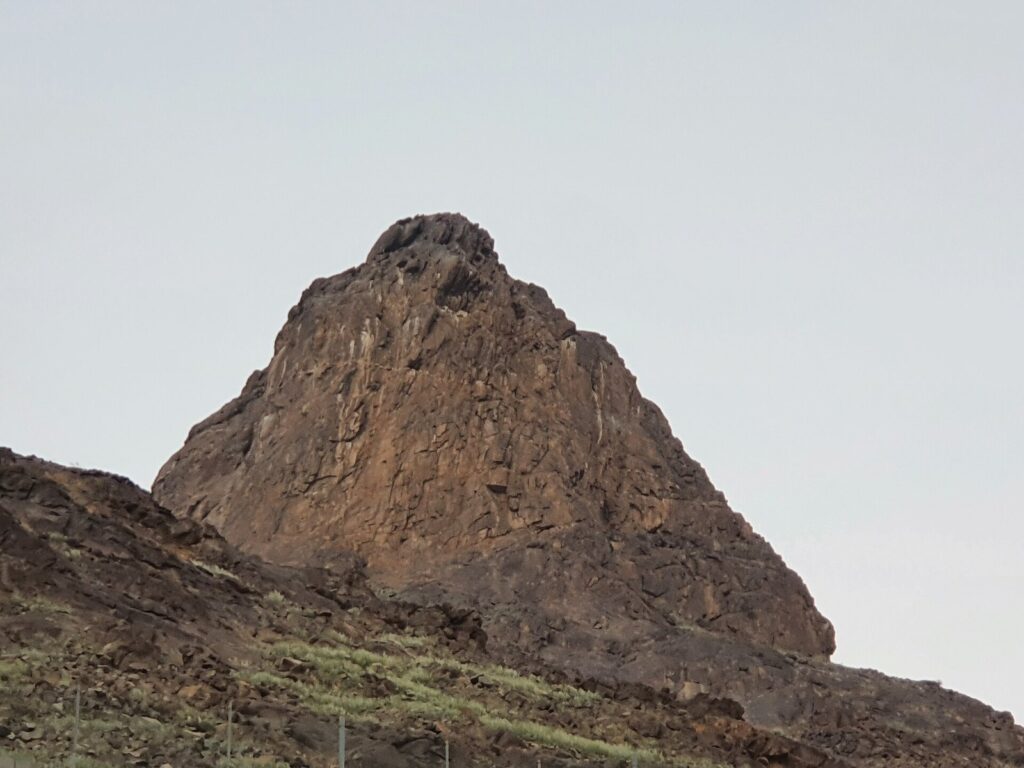
The Cave of Thawr lies close to the summit of Mount Thawr (Jabal Thawr), which rises on the southern side of Makkah. The mountain is a few kilometres from Masjid al-Haram as the crow flies and stands about 750 metres above sea level; it is one of the highest of the mountains that surround Makkah. The cave is a low, narrow-mouthed hollow among the rock masses at the end of the path to the summit; it can be entered only by bending or crawling. This feature also played a part in its escaping the eyes of the pursuers during the Hijrah.
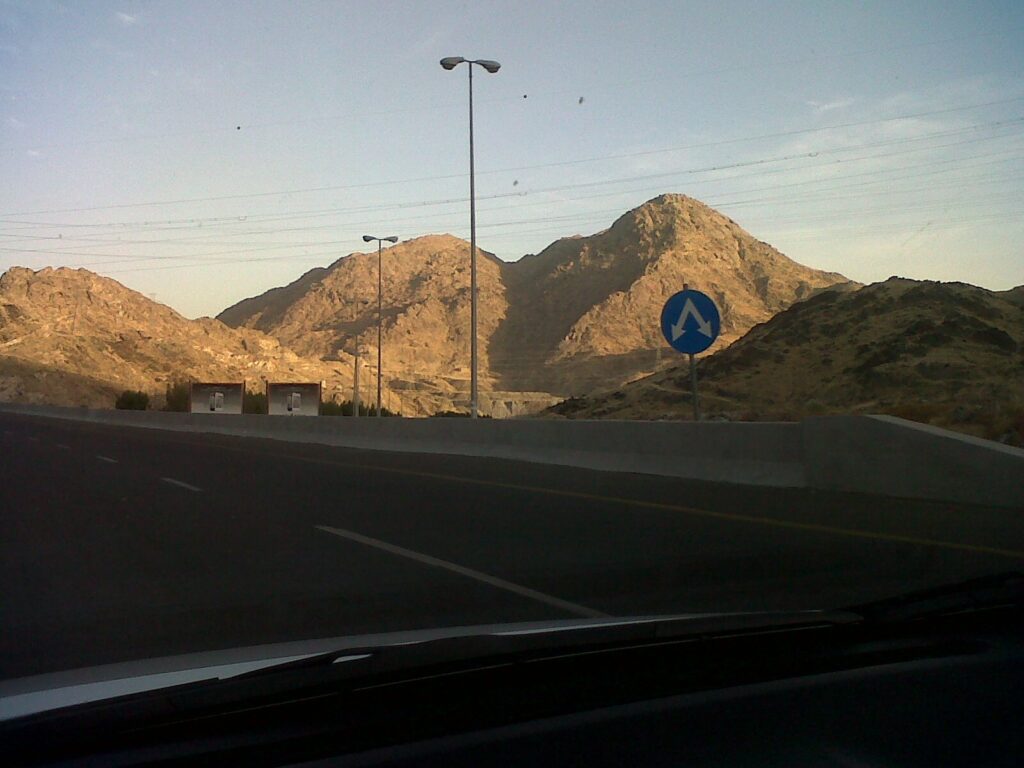
Today Mount Thawr stands right at the edge of Makkah’s built-up area and can be seen from the motorway. Makkah visits in Umrah programmes generally cover Arafat, Muzdalifah, Mina, Jabal al-Nour and Mount Thawr; most groups stop at the foot of the mountain and listen to the guide’s account of the Hijrah, while those who wish to climb do so at a separate time. We collected the other places to visit in Makkah in our article on places to visit in Makkah.
How far is the Cave of Thawr from Makkah?
Mount Thawr is to the south of Masjid al-Haram, about four kilometres away as the crow flies; the foot of the mountain is reached by car in about fifteen minutes. Jabal al-Nour and the Cave of Hira, on the other hand, lie to the north-east of the city; the two mountains are on two different sides of the Haram. For this reason, programmes usually visit one in the morning and the other in the afternoon.
The Name and Geography of Mount Thawr
The word “thawr” means “bull” in Arabic; the mountain is said to owe its name either to the resemblance of its mass, seen from afar, to the back of a bull, or to the name of an elder of a tribe that once lived in the area. In the sources the mountain is also called “Jabal Thawr” or “Thawr Atbal”. Rising beside the old caravan road that led south from Makkah towards Yemen, the mountain consists of hard granite rock; there is almost no vegetation, and its slopes are covered with large boulders. This appearance still confirms the description in the Hijrah narratives of “a cave hidden among the rocks”.
Thawr is not remembered only for the Hijrah among the mountains around Makkah; it is also one of the mountains that mark direction in the definition of the boundaries of the Haram. Today there is a car park, small shops and information boards for visitors at the foot of the mountain; the climbing path starts from this point.
Where does the name of Mount Thawr come from?
“Thawr” means “bull” in Arabic, and the mountain’s name is explained either by the resemblance of its mass, seen from afar, to the back of a bull, or by the name of an elder of a tribe that lived in the area. Islamic historical sources mostly refer to the mountain as “Jabal Thawr”; in Turkish sources, the name “Cave of Thawr” (Sevr Mağarası) is more common because of the reference to the Hijrah.
The Place of Thawr in the Journey of the Hijrah
After the Muslims had emigrated to Madinah, the polytheists of Makkah decided to kill the Prophet (peace be upon him) in his house. When this decision was revealed to him, the Prophet had Ali lie down in his bed, charged him with returning the entrusted goods to their owners, and went at night to the house of Abu Bakr, leaving Makkah together with him. Knowing that they would be pursued, they headed not north, where Madinah lay, but in the opposite direction, towards Mount Thawr, and took refuge in the cave at its summit.
According to the narration, Abu Bakr entered the cave first, checked and cleaned the inside, stuffed the holes with pieces of his clothing, and only then let the Prophet in. This detail is the source of Abu Bakr being remembered as “yar-i ghar”, the companion of the cave. The two travellers stayed here for three days; during this time the Makkans combed the surroundings of the city and promised a great reward to whoever caught them.
How many days were spent in the Cave of Thawr?
The Prophet (peace be upon him) and Abu Bakr stayed in the Cave of Thawr for three days and three nights. This was enough time for the Makkans to slacken their search; on the fourth day their guide came to the foot of the mountain with the camels, and the journey continued not by the usual caravan road but by a detour along the coast. At the end of the journey, they first reached Quba at the entrance to Madinah.
Three Days in the Cave: Who Did What?
The three days at Thawr passed not only through the patience of two men, but with a small network of help. This network shows how carefully planned a journey the Hijrah was:
- Abdullah ibn Abu Bakr: He walked around Makkah by day listening to the talk of the polytheists, came to the cave by night to pass on the news, and returned to the city before dawn.
- Asma bint Abu Bakr: She carried food to the cave. When she could not find a cord to tie the food bag, she tore her waistband in two, and so she was known as “Dhat an-Nitaqayn” (she of the two waistbands).
- Amir ibn Fuhayrah: As Abu Bakr’s shepherd he grazed the sheep around the cave, brought milk in the evenings, and drove the flock over Abdullah’s footprints to wipe out the tracks.
- Abdullah ibn Urayqit: Although not yet a Muslim, he was hired as a trustworthy guide; on the agreed day he brought the camels to the foot of the cave and led the party to Madinah by the coastal road.
The Story of the Spider’s Web and the Dove’s Nest
The scene that first comes to mind at the mention of Thawr is the spider’s web covering the mouth of the cave and the doves nesting at its entrance. According to the story, the pursuers came right up to the cave, but when they saw the undisturbed web at the entrance they concluded that no one could be inside and turned back. Meanwhile, when Abu Bakr worried, “If one of them looked down at his feet he would see us,” the Prophet (peace be upon him) consoled him with the words, “What do you think of two whose third is Allah?” This last exchange appears in Bukhari and Muslim; the detail of the spider and the doves appears in the books of the Prophet’s biography but has been assessed in varying degrees by the scholars of hadith.
Diyanet’s publications draw attention to the essence of the event at this point: the real miracle at Thawr is not a spider’s web, but the protection of Allah and the trust of the two travellers. The Qur’an recalls this moment in Surah at-Tawbah:
Meaning: “When the two of them were in the cave, he said to his companion, ‘Do not grieve; Allah is with us.'” (at-Tawbah, 9:40)
Is the story of the spider’s web and the doves true?
The story of the spider’s web and the dove’s nest appears in the classical sources of the Prophet’s biography; however, the narrations that convey this detail have been considered weak or disputed by hadith scholars. What is certain is the event of the cave mentioned in the Qur’an and the Prophet’s (peace be upon him) words to his companion, “Do not grieve; Allah is with us.” Our advice to visitors is to hear the story as a historical narration and to look for the lesson in the message of the verse.
From the Cave to Madinah: The Rest of the Journey
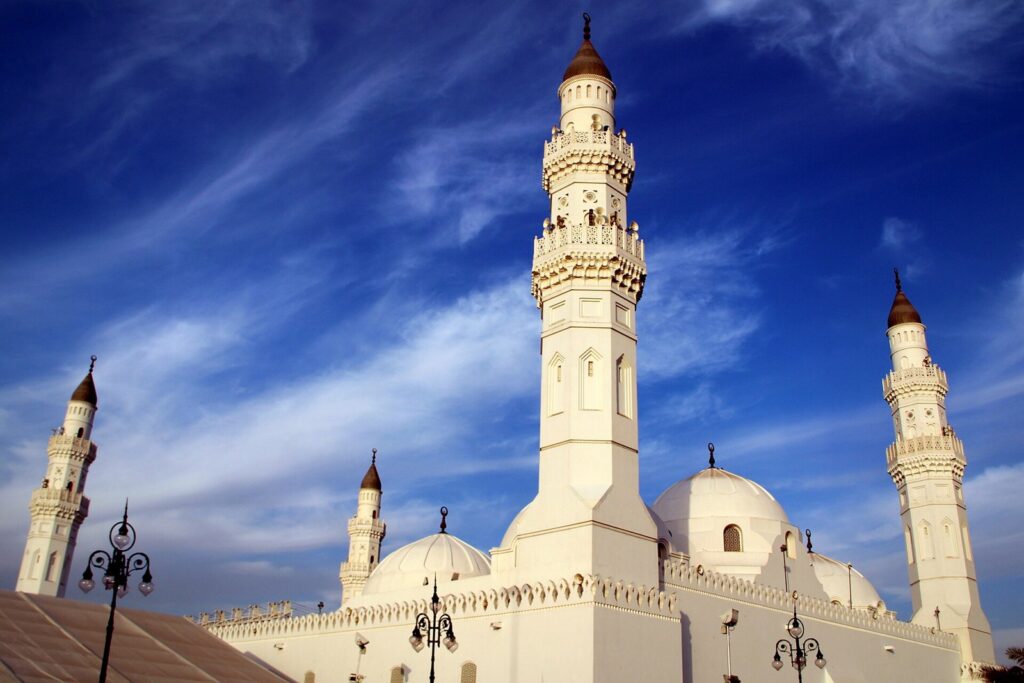
Setting out on the camels on the fourth day, the party travelled along the coast to the west of Makkah. The pursuit by Suraqah ibn Malik on the way, the sinking of his horse into the sand, and Suraqah’s asking for safety and turning back are among the best-known scenes of the Hijrah; Suraqah became a Muslim years later. The journey ended at Quba, at the entrance to Madinah, in September of the year 622. The Prophet stayed there for a few days and had the first mosque of Islam built; you can read the story of this mosque in our article on Quba Mosque, and the steps that followed in Madinah in our article on the Prophet’s Mosque.
What makes Thawr meaningful is that the Hijrah was not merely an escape but a planned and patient journey. The three days spent in the cave are the most critical moment of the Hijrah, which Muslims regard as the beginning of their calendar; for this reason Thawr, together with Jabal al-Nour, is one of the two most visited mountains of Makkah.
How Do You Climb to the Cave of Thawr?
The climb up Mount Thawr is considered longer and steeper than that of Jabal al-Nour. The path is stony, with rocks arranged like steps in places, but there is no proper staircase; the ascent takes on average one and a half to two hours and the descent about an hour. At the top there are small vendors and resting points, and the front of the cave is a narrow area that visitors enter in turn. A few suggestions for those considering the climb:
- Choose the early hours of the morning; once the sun is up the rocks heat up and the climb becomes harder.
- Wear non-slip walking shoes that support the foot; slippers and tawaf socks are not suitable for this path.
- Take at least a litre of water, a light snack such as dates or nuts, and a head covering for the sun.
- Those with heart, blood pressure or joint problems should not climb; they should be content to visit and make dua from the foot of the mountain.
- Do not leave your group and do not hurry on the way down; most accidents happen on tired legs during the descent.
How long does it take to climb to the Cave of Thawr?
For an average walker the ascent takes one and a half to two hours and the descent about an hour; with breaks, three to four hours should be set aside for the whole visit. Because this time is not available in the group visits of Umrah programmes, the climb is usually left to free time. Those who do not wish to climb can see the cave from the foot of the mountain and listen to the guide’s account.
Visiting Etiquette: What Do You Do at Thawr?
A visit to the Cave of Thawr is not an act of worship; it is not part of Umrah or Hajj, and no Sunnah has been reported of praying in the cave or reciting a particular dua there. Diyanet recommends that such places be visited with the intention of learning the Prophet’s biography on the spot, feeling the hardship of the Hijrah and taking a lesson from it. Breaking off pieces of rock, writing on the cave walls, staying at the top for a long time and blocking the path, and treating the cave as a place for making wishes are not appropriate.
Taking a short text on the Hijrah or the meaning of the relevant verses with you enriches the visit. Standing at the top or at the foot of the mountain, reading verse 40 of Surah at-Tawbah, sending blessings on the Prophet and making dua in your own language is enough; there is no special dua that needs to be memorised for this.
Is a visit to the Cave of Thawr part of Umrah?
No, a visit to the Cave of Thawr is not among the pillars, necessary acts or Sunnahs of Umrah or Hajj; it is an entirely optional historical visit. Not visiting does not diminish the Umrah, and visiting does not add anything to its reward. Even so, seeing the place where the Hijrah happened becomes one of the most unforgettable moments of the journey for many visitors.
The Differences Between the Cave of Hira and the Cave of Thawr
Makkah’s two famous caves are often confused with each other. Hira is the place where the first revelation came and where the Prophet (peace be upon him) withdrew in seclusion before his prophethood; Thawr is the refuge of the Hijrah. The table below compares the two; for the detailed story of Hira, see our article on the Cave of Hira.
| Feature | Cave of Thawr | Cave of Hira |
|---|---|---|
| Mountain | Mount Thawr (Jabal Thawr) | Jabal al-Nour |
| Direction | South of Makkah | North-east of Makkah |
| Event | Three days of hiding during the Hijrah | The first revelation and seclusion |
| In the Qur’an | Surah at-Tawbah, verse 40 (“the cave”) | The first verses of Surah al-Alaq were revealed here |
| Climb | Longer and steeper, about two hours | Shorter, about an hour |
| Visiting pattern | Mostly from the foot, optional climb | Visit from the foot; the Hira Cultural District and exhibition area |
Are Hira and Thawr on the same mountain?
No, the Cave of Hira is on Jabal al-Nour and the Cave of Thawr is on Mount Thawr, and the two mountains lie in opposite directions from Makkah. Hira is to the north-east of the city, Thawr to the south; by car there is close to half an hour between them. In programmes the two are usually visited on the same day at different times.
How Do You Fit a Visit to Thawr into Your Programme?
In most Umrah programmes the visit to Mount Thawr is included in the day of the Makkah visits and takes place at the foot of the mountain. For those who wish to climb, the most suitable time is a free morning after completing the rites of Umrah; climbing the mountain on top of the fatigue of tawaf and sa’i is not recommended. In the summer months the climb is made harder by the heat; the period from October to March is more suitable. If your accommodation is close to the Haram, a taxi or the group vehicle is enough for transport; we described the options around the Haram on our Makkah hotels page.
At RotaNur we organise the Makkah visits in our Umrah programmes with a guide and tell the story of the Hijrah at the foot of Thawr. You can compare programme options on our Umrah tours page, and for questions such as the days of the visits and the possibility of climbing, you can write to us 24/7 from our contact page or the WhatsApp button on this page.
Frequently Asked Questions
Can women climb to the Cave of Thawr?
Yes, there is no distinction between women and men in the climb, and no special permission is needed to go up the mountain. Because the path is steep and stony, comfortable walking shoes, long and loose clothing, water and a head covering are enough. As there may be waiting at the cave entrance at busy times, setting out early in the morning is more comfortable.
Do you need a guide to climb Mount Thawr?
It is not compulsory; the path is clear and those who climb generally follow the same route. Still, first-timers are advised to walk in a group, to keep their phones charged and to inform their guides. In Umrah groups the guide may not accompany the climb; in that case the ascent is made in free time after the account at the foot of the mountain.
Is it possible to go inside the cave?
The entrance to the cave is low and narrow; visitors go in one at a time, bending or crawling, and stay for a few minutes. On busy days a long queue can form. Because there is no Sunnah of praying or reciting a particular dua inside, a short reflection and dua are enough; leaving your turn to the visitors behind you is a matter of courtesy.
In which season is it better to visit the Cave of Thawr?
The cool months between October and March are the most suitable for the climb; in the summer months the rocks become extremely hot and the risk of sunstroke increases. Whatever season you go, make the climb early in the morning. You can find a comparison of the Umrah seasons in terms of climate and crowds in our article on when to go on Umrah.
Is there a special dua to recite when visiting Thawr?
No, there is no dua reported specifically for the Cave of Thawr. During the visit, reading the meaning of verse 40 of Surah at-Tawbah, sending blessings on the Prophet (peace be upon him) and making dua in your own language is enough. The idea that reciting a particular dua is part of worship is not correct; the purpose of the visit is to remember the Hijrah on the spot and to take a lesson from it.

Cihat Murat Yüksel is the editor of the RotaNur blog and the founder of Markention. Drawing on the sources of Türkiye's Presidency of Religious Affairs (Diyanet), he turns the questions travellers ask most about preparing for Umrah, Hajj and halal travel into clear, practical guides.
Questions answered in this article
Where Is the Cave of Thawr?
The Cave of Thawr lies close to the summit of Mount Thawr (Jabal Thawr), which rises on the southern side of Makkah. The mountain is a few kilometres from Masjid al-Haram as the crow flies and stands about 750 metres above sea level; it is one of the highest of the mountains that surround Makkah. The cave is a low, narrow-mouthed hollow among the rock masses at the end of the path to the summit; it can be entered only by bending or crawling. This feature also played a part in its escaping the eyes of the pursuers during the Hijrah.
How far is the Cave of Thawr from Makkah?
Mount Thawr is to the south of Masjid al-Haram, about four kilometres away as the crow flies; the foot of the mountain is reached by car in about fifteen minutes. Jabal al-Nour and the Cave of Hira, on the other hand, lie to the north-east of the city; the two mountains are on two different sides of the Haram. For this reason, programmes usually visit one in the morning and the other in the afternoon.
Where does the name of Mount Thawr come from?
“Thawr” means “bull” in Arabic, and the mountain’s name is explained either by the resemblance of its mass, seen from afar, to the back of a bull, or by the name of an elder of a tribe that lived in the area. Islamic historical sources mostly refer to the mountain as “Jabal Thawr”; in Turkish sources, the name “Cave of Thawr” (Sevr Mağarası) is more common because of the reference to the Hijrah.
How many days were spent in the Cave of Thawr?
The Prophet (peace be upon him) and Abu Bakr stayed in the Cave of Thawr for three days and three nights. This was enough time for the Makkans to slacken their search; on the fourth day their guide came to the foot of the mountain with the camels, and the journey continued not by the usual caravan road but by a detour along the coast. At the end of the journey, they first reached Quba at the entrance to Madinah.
Three Days in the Cave: Who Did What?
The three days at Thawr passed not only through the patience of two men, but with a small network of help. This network shows how carefully planned a journey the Hijrah was:
Is the story of the spider’s web and the doves true?
The story of the spider’s web and the dove’s nest appears in the classical sources of the Prophet’s biography; however, the narrations that convey this detail have been considered weak or disputed by hadith scholars. What is certain is the event of the cave mentioned in the Qur’an and the Prophet’s (peace be upon him) words to his companion, “Do not grieve; Allah is with us.” Our advice to visitors is to hear the story as a historical narration and to look for the lesson in the message of the verse.