



Contents 24 sections
- Where Is the Cave of Hira, and on Which Mountain?
- Which mountain is the Cave of Hira on?
- What is the inside of the Cave of Hira like?
- Contemplation at Hira Before the Prophethood
- What Happened in the Cave of Hira? The Story of the First Revelation
- On which night did the first revelation come down?
- Khadijah’s words of comfort
- The meeting with Waraqah ibn Nawfal
- The pause in revelation and its resumption
- Lessons to Take from Hira
- The Differences Between Hira and Thawr
- Climbing to the Cave of Hira: Before You Decide
- Can everyone climb up to the Cave of Hira?
- What time of day is best for the climb?
- How do you get to the Cave of Hira?
- What is there at the foot of the mountain?
- Etiquette for Visiting the Cave of Hira
- Common Questions About the Cave of Hira
- Can you see the Kaaba from the Cave of Hira?
- Is the Cave of Hira visited on Umrah tours?
- Can female visitors climb up to Hira?
- Should you go to Hira before or after Umrah?
- A Journey in the Footsteps of the First Revelation
- Frequently Asked Questions
The Cave of Hira is a small cave in one of the mountains of Makkah. It is where the Prophet (peace be upon him) used to retreat for contemplation before his prophethood, and where the first revelation, regarded as the starting point of Islamic history, came down. In this article, we take a detailed look at which mountain Hira is on and where it is, the story of the first revelation as framed in the authentic sources, the present condition of the cave, what you need to know before deciding to climb, and the etiquette of visiting.
Where Is the Cave of Hira, and on Which Mountain?
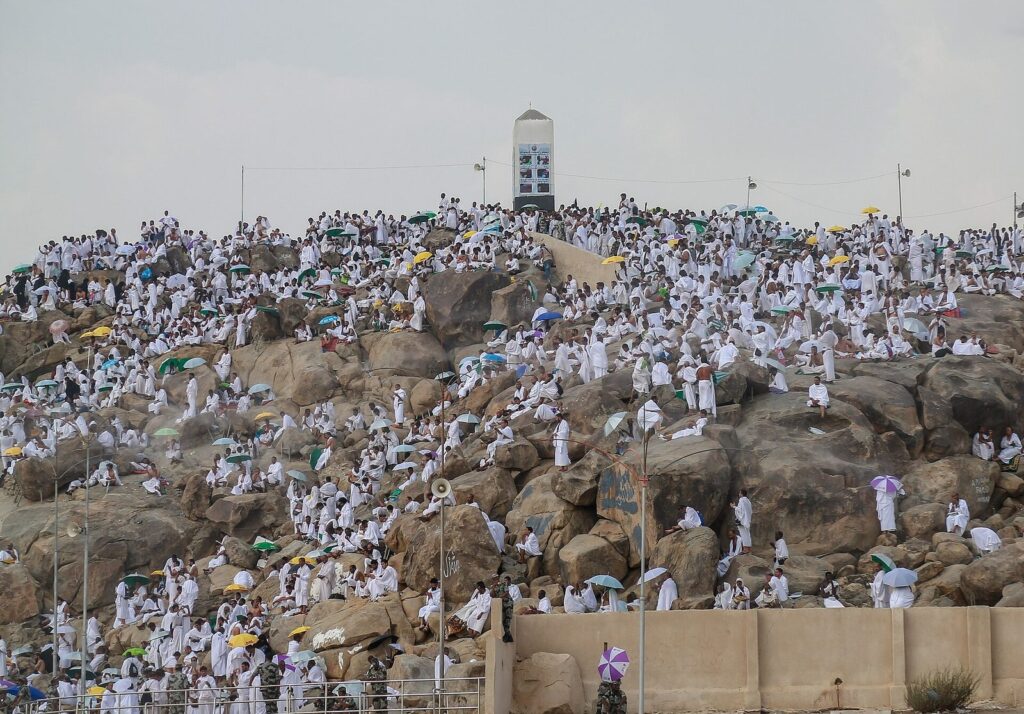
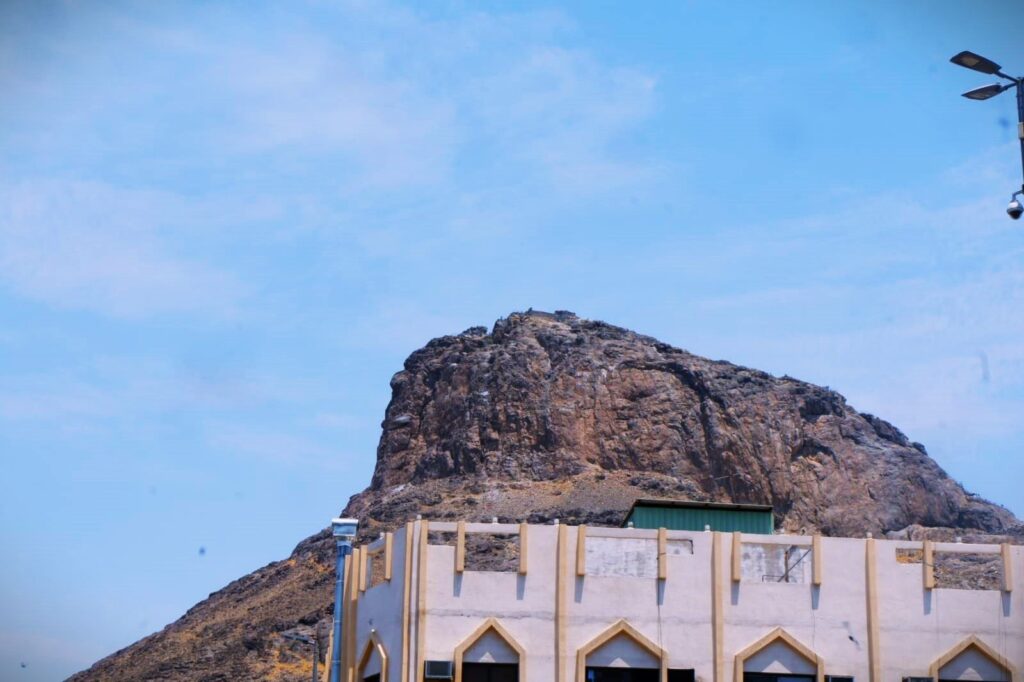
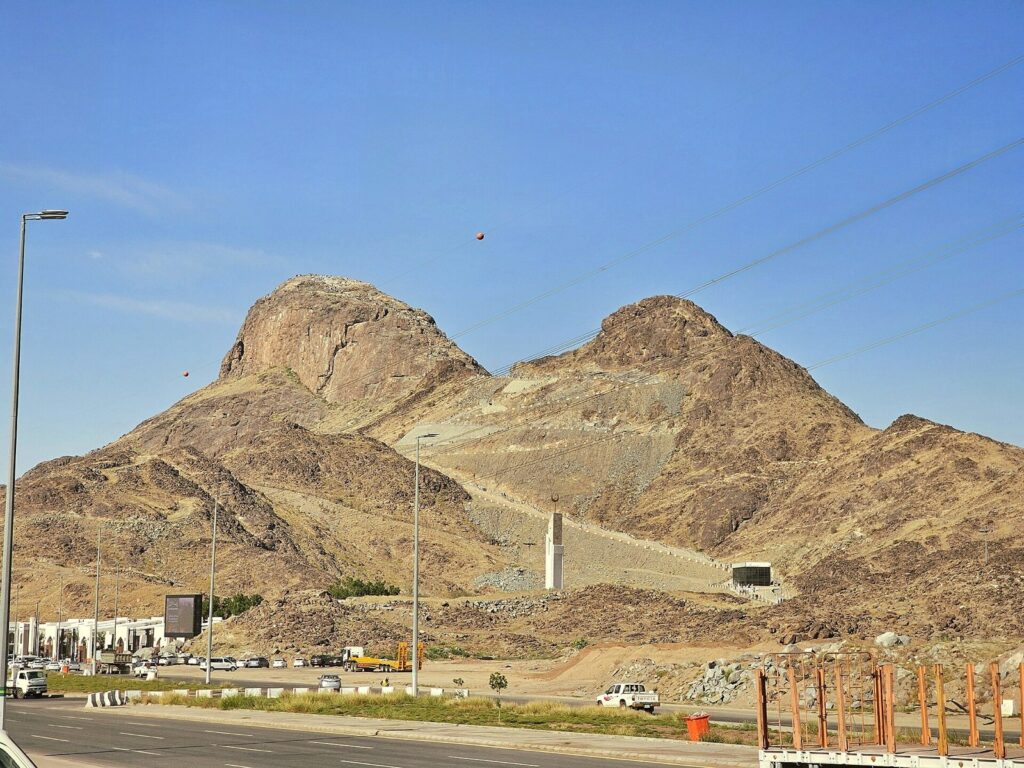
The Cave of Hira is located on Jabal an-Nour, the “Mountain of Light”, which rises to the north-east of Makkah. The mountain is known by this name because the first revelation came down here; in older sources, the mountain itself is also called Hira. The cave lies close to the summit, and the foot of the mountain can be reached from Masjid al-Haram with a short drive.
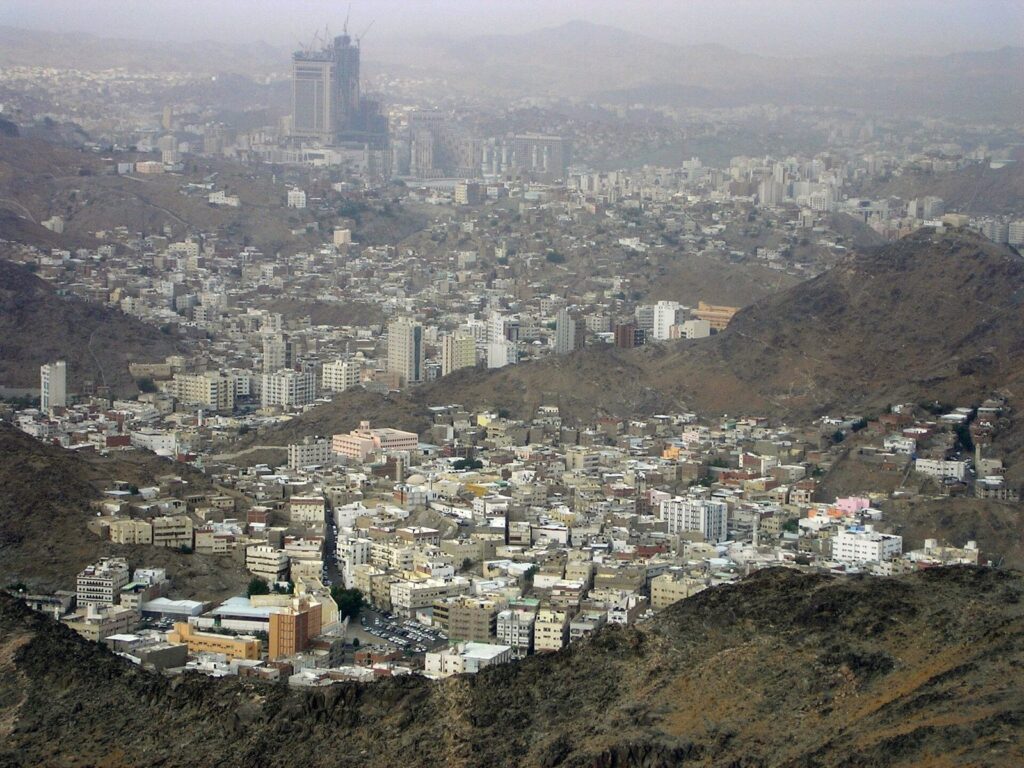
Makkah is a city built in a valley surrounded by rocky mountains. With its sharp-edged summit, Jabal an-Nour is easy to pick out among these mountains, and it can be seen from a distance when travelling along the roads in the north-east of the city. As the city has grown, the foothills of the mountain have become surrounded by residential areas. For this reason, the route to Hira today looks less like a remote mountain track and more like a footpath that starts between neighbourhoods. Even so, once the climb begins, the noise of the city is left behind, and visitors can sense to some extent the atmosphere of the seclusion that took place here centuries ago.
Which mountain is the Cave of Hira on?
The Cave of Hira is on Jabal an-Nour in Makkah. This mountain is often confused with Mount Thawr, where the Prophet (peace be upon him) and Abu Bakr hid during the Hijrah; Thawr is a different mountain, located on the southern side of the city.
What is the inside of the Cave of Hira like?
The cave is a narrow, plain hollow in the rock, with barely enough room for a few people. There is no structure or decoration of any kind inside. To reach the cave, you pass through a narrow gap between the rocks on the final stretch; at busy times, there can be long waits at this point.
Contemplation at Hira Before the Prophethood
In the years before the prophethood came, the Prophet (peace be upon him) kept away from the idolatry and moral corruption of Makkan society and would retreat to Hira from time to time. This seclusion, referred to in the sources of the sirah as “tahannuth”, consisted of periods of contemplation and worship that lasted for days. He would take provisions with him, and when they ran out he would return home, prepare again and go back up to the cave.
The well-known hadith narrated by Aisha reports that, before the revelation began, the dreams the Prophet saw came true just like the brightness of daybreak, and that he then turned towards solitude (Bukhari, Muslim). This period is regarded as the quiet years of preparation for a great responsibility.
What Happened in the Cave of Hira? The Story of the First Revelation
When the Prophet (peace be upon him) was forty years old, while he was at Hira during the month of Ramadan, the angel Jibril (Gabriel) came to him and said, “Read!” (Iqra). The Prophet replied, “I am not one who can read.” According to the narration of Aisha, this exchange was repeated three times; each time the angel embraced him tightly and then released him. After that, the first five verses of Surah al-Alaq were revealed (Bukhari, Muslim).
The meaning of the revealed verses is as follows: “Read in the name of your Lord who created! He created man from a clinging clot (alaq). Read! Your Lord is the Most Generous. It is He who taught writing by the pen. It is He who taught man what he did not know.” (al-Alaq 96:1-5). The fact that these verses begin with reading, knowledge and the pen is often recalled as the first sign of the value Islam places on knowledge.
On which night did the first revelation come down?
The Holy Quran states that the Quran began to be revealed in the month of Ramadan (al-Baqarah 2:185) and that it was sent down on the Night of Power (al-Qadr 97:1). For this reason, most scholars accept that the first revelation at Hira took place on the Night of Power in the month of Ramadan. As it has not been stated with certainty which night the Night of Power (Laylat al-Qadr) is, it is not possible to determine the exact date of this event; in Türkiye, the Night of Power is traditionally observed with worship on the twenty-seventh night of Ramadan.
Khadijah’s words of comfort
Returning home trembling under the effect of what he had experienced, the Prophet (peace be upon him) said to his wife Khadijah, “Cover me!” and told her what had happened to him. Khadijah told him that Allah would never disgrace him; she reminded him that he upheld the ties of kinship, helped those in need, honoured his guests and supported people in the hardships they faced on the path of truth (Bukhari, Muslim). These words are among the strongest testimonies both to Khadijah’s loyalty and to the fine character of the Prophet before his prophethood.
The meeting with Waraqah ibn Nawfal
Khadijah took the Prophet (peace be upon him) to her cousin Waraqah ibn Nawfal, who was familiar with the earlier scriptures. After listening to the account, Waraqah said that the angel who had come was the angel of revelation who had also been sent to Musa (Moses), and he expressed his wish to be alive in the days when the Prophet’s people would drive him out of his homeland (Bukhari, Muslim). Some time after the first revelation, the revelation paused for a while; it then resumed with the opening verses of Surah al-Muddaththir.
The pause in revelation and its resumption
This period of waiting after the first revelation, known as the “fatrah” (pause), was a time of longing and contemplation for the Prophet (peace be upon him). The hadith narrated by Jabir ibn Abdullah describes the moment the revelation resumed; this time the opening verses of Surah al-Muddaththir were revealed (Bukhari, Muslim). The meaning of the verses is as follows: “O you who are wrapped in your cloak! Arise and warn. Magnify your Lord. Keep your garments pure. And keep away from all that is foul.” (al-Muddaththir 74:1-5). In this way, the process that began at Hira turned into the mission of inviting people to the truth.
Lessons to Take from Hira
The Cave of Hira is not only a historic site but also the place where messages that touch the life of every Muslim began. Visitors who can stand in front of the cave for a few minutes, or who view the mountain from its foot, can make their visit more meaningful by remembering these lessons:
- Contemplation: The way the Prophet (peace be upon him) withdrew from the crowd and set aside time for reflection reminds us of the value of the quiet moments we set aside for ourselves amid the daily rush.
- Knowledge and reading: The fact that the first command was “Read!” shows the central place of knowledge and learning in Islam.
- Good character: Khadijah’s words of comfort show how honesty, generosity and helpfulness earned trust even before the prophethood.
- Standing by others: Khadijah, who stood by her husband at a difficult moment, is one of the finest examples of loyalty and solidarity within the family.
- Patience: The pause in revelation for a period teaches that waiting and being patient are also part of the test.
The Differences Between Hira and Thawr
The two caves in Makkah are often confused with each other, both because of their names and because of how difficult they are to climb. The table below will help you tell them apart when planning your visits.
| Feature | Cave of Hira | Cave of Thawr |
|---|---|---|
| Mountain | Jabal an-Nour | Mount Thawr |
| Direction from Makkah | North-east | South |
| Related event | The years of contemplation and the first revelation | Hiding during the Hijrah |
| Related verse | al-Alaq 96:1-5 | at-Tawbah 9:40 |
| The climb | Steep, stepped and tiring | Longer and more difficult |
| What visitors usually do | Those whose health allows climb it; others see it from the foot of the mountain | Most visitors content themselves with seeing the mountain from its foot |
If you would like to see the other blessed places in Makkah together, take a look at our article on places to visit in Makkah.
Climbing to the Cave of Hira: Before You Decide
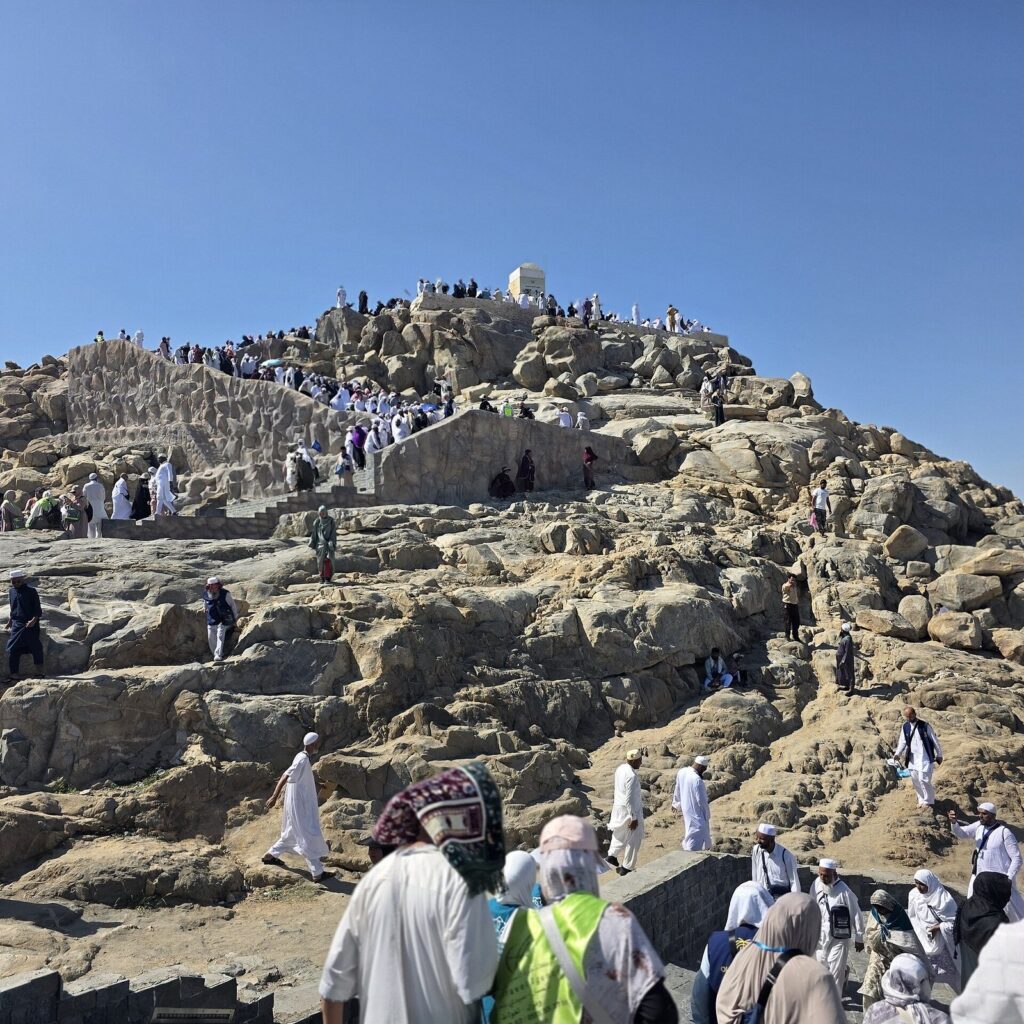
The path up Jabal an-Nour is a steep track, most of which consists of uneven steps built between the rocks. How long the climb takes varies greatly depending on a person’s fitness, the heat and the crowds on the path. For this reason, rather than planning around an exact time or distance, you should base your decision on your own state of health.
Can everyone climb up to the Cave of Hira?
No, the climb is not suitable for everyone. It is advised that elderly people, those with heart, blood pressure or respiratory conditions, those with knee problems and pregnant women should not make the climb. If you have a chronic condition, consult your doctor before you travel. Climbing to Hira is not part of Umrah or Hajj; there is no need to put your health at risk for it.
What time of day is best for the climb?
To reduce the risk of heatstroke, the cool hours after the Fajr prayer are regarded as the most suitable time. You should avoid climbing in the midday heat, especially in the summer months. On climbs made in the dark, on the other hand, the ground is harder to see, so the risk of falling increases.
How do you get to the Cave of Hira?
The foot of Jabal an-Nour can be reached from the area around Masjid al-Haram by taxi or in the vehicles of guided city tours. On the city tours included in Umrah programmes, a short stop is made at the foot of the mountain; those who wish to climb usually need to plan separate time for it. If you are going by taxi, it is important to agree in advance on where you can find a vehicle for the return journey and on the fare, and to stay in contact with your group.
A short preparation list for those who decide to climb:
- Wear comfortable shoes with non-slip soles that hold the foot securely; do not climb in slippers.
- Take enough water and a light snack with you.
- Have a hat or an umbrella with you for the sun, and choose loose, breathable clothing.
- Do not get separated from your group; agree on the return time and the meeting point in advance.
- When you get tired, take a break without putting it off; do not push yourself to reach the summit.
What is there at the foot of the mountain?
It is known that in recent years arrangements have been made for visitors at the foot of Jabal an-Nour, and that a cultural area telling the story of the beginning of the revelation has been opened. As the days this area is open and the conditions for visiting can change, get up-to-date information from your guide before adding it to your programme.
Etiquette for Visiting the Cave of Hira
As the area in front of the cave is narrow, waiting for a long time to take photographs takes up both your own time and that of the visitors queuing behind you. It is a better choice to take your photographs from a suitable flat spot on the mountain and to devote the few minutes in front of the cave to contemplation alone.
Visiting Hira is a fine opportunity to reflect at the place where the first revelation came down and to renew our bond with the Quran. However, as Diyanet (Türkiye’s Presidency of Religious Affairs) also reminds us, it is necessary to stay away from practices that have no place in the religion at such sites.
Important: Visiting the Cave of Hira is not a pillar (rukn), a necessary act (wajib) or a Sunnah of Hajj or Umrah. There is no authentic report of any special virtue in praying or making supplication in the cave. Avoid behaviour such as writing on the walls of the cave, taking away stones or soil, tying pieces of cloth and rubbing your face on the rocks; keep your visit within the bounds of contemplation and good manners.
Staying for a long time in the narrow area in front of the cave lengthens the wait for those coming behind you. Making way for others after a short period of reflection is part of the etiquette of the visit. For those who wish to make supplication, we have gathered the places known to be a means for supplications to be accepted, above all Masjid al-Haram, in our article on places where supplications are accepted.
Common Questions About the Cave of Hira
Can you see the Kaaba from the Cave of Hira?
Visitors’ accounts on this point differ, and today the high-rise development in Makkah has greatly changed the view. For this reason, we recommend that you do not plan your visit around such an expectation, and that you visit the cave with the intention of reflecting on it as the place where the first revelation came down.
Is the Cave of Hira visited on Umrah tours?
On guided city tours in Makkah, Jabal an-Nour is usually among the places visited. In most programmes it is seen from the foot of the mountain; separate time needs to be planned for those who wish to climb. Find out from your travel agency how this visit is included in your programme.
Can female visitors climb up to Hira?
Yes, female visitors whose health allows can also climb Jabal an-Nour. It is important to choose clothing that complies with Islamic dress, makes it easy to move during the climb and is not so long that it catches under your feet. On the narrow and crowded parts of the path, moving together with a mahram or with a group increases both safety and comfort.
Should you go to Hira before or after Umrah?
Anyone who arrives in Makkah in ihram should complete their Umrah first; city visits are left until after Umrah. As the climb is tiring, it is better to schedule it for a day and a cool hour that will not disrupt your worship in the Haram. You can find the steps of Umrah in our article on how to perform Umrah.
A Journey in the Footsteps of the First Revelation
The Cave of Hira is the first address of a call that began with the command “Read!”. Those who can climb up to it and those who cannot carry the same message: the bond formed with the Quran is far more lasting than seeing a place. During your days in Makkah, even gazing at Jabal an-Nour from a distance can be reason enough to reflect on what happened that night. For another ancient memory of Makkah, you can also read our article on the Zamzam Well.
At RotaNur, in our Umrah tours programmes, we help you visit the blessed places in Makkah and Madinah with a guide and with a plan that looks after your health. You can send us anything you would like to know about our programmes through our contact page. May Allah accept your visits.
Frequently Asked Questions
Why is Jabal an-Nour called the Mountain of Light?
Jabal an-Nour is known by this name, which means “Mountain of Light”, because the first verses of the Holy Quran were revealed in the Cave of Hira on this mountain. In older sources, the mountain itself is also called Hira. Located to the north-east of Makkah and easy to distinguish from the surrounding mountains by its sharp-edged summit, Jabal an-Nour is today among the stops on guided city tours, even if only seen from its foot.
Is there a special virtue in climbing up to the Cave of Hira?
No, there is no authentic report stating a special virtue in climbing up to the Cave of Hira or in praying there. A visit to Hira is not part of Hajj or Umrah either. Nevertheless, seeing the place where the first revelation came down is a fine occasion to reflect on the command “Read!” and to renew one’s bond with the Quran. The visit should be made with this intention and while staying away from practices that have no place in the religion.
Can you climb up to the Cave of Hira with children?
It is possible to climb Jabal an-Nour with children who are fit and used to walking; however, the path is steep, its steps are uneven and some sections are narrow. Carrying young children in your arms can be both tiring and dangerous because of the risk of falling. If you are going to climb with children, choose the cool hours, take enough water, keep hold of the children’s hands and do not hesitate to end the climb when they get tired. If you have any concerns about your child’s health, consult your doctor before you travel.
Do you need to be in ihram to visit Hira?
No, there is no need to enter ihram to visit the Cave of Hira; this visit is not one of the rites (manasik) of Hajj or Umrah. A person who comes to Makkah in ihram for Umrah should first complete their Umrah and leave ihram, and only then take part in city visits. During any visit made while in ihram, the ihram restrictions must be observed; we have explained these restrictions in detail in our article on ihram restrictions.
Can you also climb up to the Cave of Thawr?
It is possible to climb Mount Thawr; however, the climb is longer and more difficult than the climb to Hira, so most visitors content themselves with seeing the mountain from its foot. Thawr is the mountain with the cave where the Prophet (peace be upon him) and Abu Bakr hid during the Hijrah, and it is located to the south of Makkah. For the other places to visit in Makkah, see our article on places to visit in Makkah.

Cihat Murat Yüksel is the editor of the RotaNur blog and the founder of Markention. Drawing on the sources of Türkiye's Presidency of Religious Affairs (Diyanet), he turns the questions travellers ask most about preparing for Umrah, Hajj and halal travel into clear, practical guides.
Questions answered in this article
Where Is the Cave of Hira, and on Which Mountain?
The Cave of Hira is located on Jabal an-Nour, the “Mountain of Light”, which rises to the north-east of Makkah. The mountain is known by this name because the first revelation came down here; in older sources, the mountain itself is also called Hira. The cave lies close to the summit, and the foot of the mountain can be reached from Masjid al-Haram with a short drive.
Which mountain is the Cave of Hira on?
The Cave of Hira is on Jabal an-Nour in Makkah. This mountain is often confused with Mount Thawr, where the Prophet (peace be upon him) and Abu Bakr hid during the Hijrah; Thawr is a different mountain, located on the southern side of the city.
What is the inside of the Cave of Hira like?
The cave is a narrow, plain hollow in the rock, with barely enough room for a few people. There is no structure or decoration of any kind inside. To reach the cave, you pass through a narrow gap between the rocks on the final stretch; at busy times, there can be long waits at this point.
On which night did the first revelation come down?
The Holy Quran states that the Quran began to be revealed in the month of Ramadan (al-Baqarah 2:185) and that it was sent down on the Night of Power (al-Qadr 97:1). For this reason, most scholars accept that the first revelation at Hira took place on the Night of Power in the month of Ramadan. As it has not been stated with certainty which night the Night of Power (Laylat al-Qadr) is, it is not possible to determine the exact date of this event; in Türkiye, the Night of Power is traditionally observed with worship on the twenty-seventh night of Ramadan.
Can everyone climb up to the Cave of Hira?
No, the climb is not suitable for everyone. It is advised that elderly people, those with heart, blood pressure or respiratory conditions, those with knee problems and pregnant women should not make the climb. If you have a chronic condition, consult your doctor before you travel. Climbing to Hira is not part of Umrah or Hajj; there is no need to put your health at risk for it.
What time of day is best for the climb?
To reduce the risk of heatstroke, the cool hours after the Fajr prayer are regarded as the most suitable time. You should avoid climbing in the midday heat, especially in the summer months. On climbs made in the dark, on the other hand, the ground is harder to see, so the risk of falling increases.