









Contents 23 sections
- When Do the Ihram Restrictions Begin and End?
- When do the ihram restrictions begin?
- When do the ihram restrictions end?
- Why Are There Ihram Restrictions?
- Restrictions Relating to the Body
- Can you take a shower while in ihram?
- Can you comb your hair or scratch while in ihram?
- Can you brush your teeth while in ihram?
- Restrictions Relating to Clothing
- Are the ihram restrictions different for women?
- Restrictions Relating to Hunting and the Haram Area
- Is it forbidden to kill insects or pests while in ihram?
- Restrictions Relating to Relations Between Spouses and Behaviour
- Is it forbidden to argue while in ihram?
- Can a marriage contract be concluded while in ihram?
- Penalties for Violating the Ihram Restrictions
- Where is the ihram penalty sacrifice offered?
- What happens if a restriction is violated because of a valid excuse?
- Are children responsible for the ihram restrictions?
- Does violating a restriction by forgetfulness cancel the penalty?
- Acts That Remain Permitted While in Ihram
- Practical Tips for Avoiding Violations
- Frequently Asked Questions
Ihram restrictions are the rules, covering certain acts that are permissible (halal) at other times, that a person who has made the intention for Hajj or Umrah must observe until they leave ihram. In this article, you will find in one place when the restrictions begin and end, the restrictions relating to the body, clothing, hunting and behaviour, the penalty sacrifice (dam) and charity (sadaqah) required if they are violated, and the acts that remain permitted while in ihram. On the rulings, we have followed the approach of Diyanet (Türkiye’s Presidency of Religious Affairs) and the Hanafi school; for questions about your personal situation, we recommend that you consult Diyanet’s current fatwas.
When Do the Ihram Restrictions Begin and End?
Knowing exactly when the restrictions begin prevents unnecessary worry. Putting on the ihram garments does not by itself start the restrictions; they begin the moment the intention for Hajj or Umrah is made and the talbiyah is recited. For this reason, a person who puts on the garments at home or at the airport may still apply fragrance or cut their nails as long as they have not made the intention.
This distinction is even more important for passengers flying directly to Jeddah. The garments are put on at the departure airport, while the intention is made as the plane approaches the level of the miqat. In this way, the restrictions have not yet begun during the first hours of the journey. However, since missing the moment of intention and crossing the miqat boundary without ihram creates a separate problem, you need to follow the reminders of the cabin crew and your guide carefully. Let us also remind you that a person who crosses the miqat without ihram must either go back and enter ihram or offer a penalty sacrifice.
When do the ihram restrictions begin?
According to the Hanafi school, the ihram restrictions begin the moment a person makes the intention (niyyah) for Hajj or Umrah and recites the talbiyah or a form of remembrance (dhikr) that takes its place. We have covered how to make the intention and the words of the talbiyah in detail in our article on the intention for ihram.
When do the ihram restrictions end?
In Umrah, the restrictions come to a complete end with shaving or trimming the hair (halq/taqsir) after tawaf and sa’i. In Hajj, however, leaving ihram happens in two stages: with the shaving or trimming done on the first day of Eid al-Adha, all restrictions except intimacy between spouses are lifted, and this last restriction is also lifted once the Tawaf al-Ziyarah has been performed. You can find the other differences between Hajj and Umrah in our article on the differences between Hajj and Umrah.
Why Are There Ihram Restrictions?
Ihram is a state in which a person sets aside worldly concerns and turns to Allah with their whole being. Keeping away temporarily from adornment, fragrance and certain habits brings the rich and the poor together in the same simple clothing, and teaches a person to master their ego (nafs) and to be more considerate towards those around them. The Quran states that for those who undertake Hajj in its months, there is to be no sexual relations, no straying into sin and no quarrelling (Surah al-Baqarah, verse 197).
In this respect, the restrictions are not merely a “list of things not to do”. Not hurting others, being patient and paying attention to small things are part of the discipline that forms the spirit of ihram. Not pushing in crowds and not losing patience and arguing are the most visible side of this discipline.
Restrictions Relating to the Body
The restrictions in this group apply to everyone in ihram, women and men alike. The basic aim is for the person to refrain from adorning and perfuming their body for the duration of ihram.
- Hair: Cutting, plucking or shaving hair from the head or from any part of the body is forbidden.
- Nails: Cutting fingernails and toenails is forbidden; removing the hanging part of a broken nail, however, does not require a penalty.
- Fragrance: Applying perfume, essential oils, scented cream or oil to the body, the hair or the ihram garments is forbidden.
- Scented cleaning products: Using scented soap, shampoo, wet wipes and deodorant also falls under the restriction on fragrance.
- Henna and adornment: As applying henna is regarded as having the ruling of fragrance, it is not considered appropriate while in ihram.
Can you take a shower while in ihram?
Yes, a person in ihram may wash to cool down or to get clean; unscented soap and shampoo should be used for this. As rubbing the hair hard and using a comb while washing can cause hairs to fall out, it is advisable to wash the head with gentle movements and to dry it by patting it with a towel.
Can you comb your hair or scratch while in ihram?
Combing the hair is not advisable while in ihram, as it can cause hairs to fall out. Scratching is not forbidden; however, it should be done lightly with the fingertips so as not to pull out any hairs. For the few strands that fall out while performing wudu or washing, it is enough not to worry, while not neglecting to take care.
Can you brush your teeth while in ihram?
Brushing your teeth and using a miswak are permissible while in ihram. However, as there are differing views on using noticeably scented toothpastes, choosing an unscented or lightly flavoured toothpaste and rinsing your mouth thoroughly is the more cautious course.
Restrictions Relating to Clothing
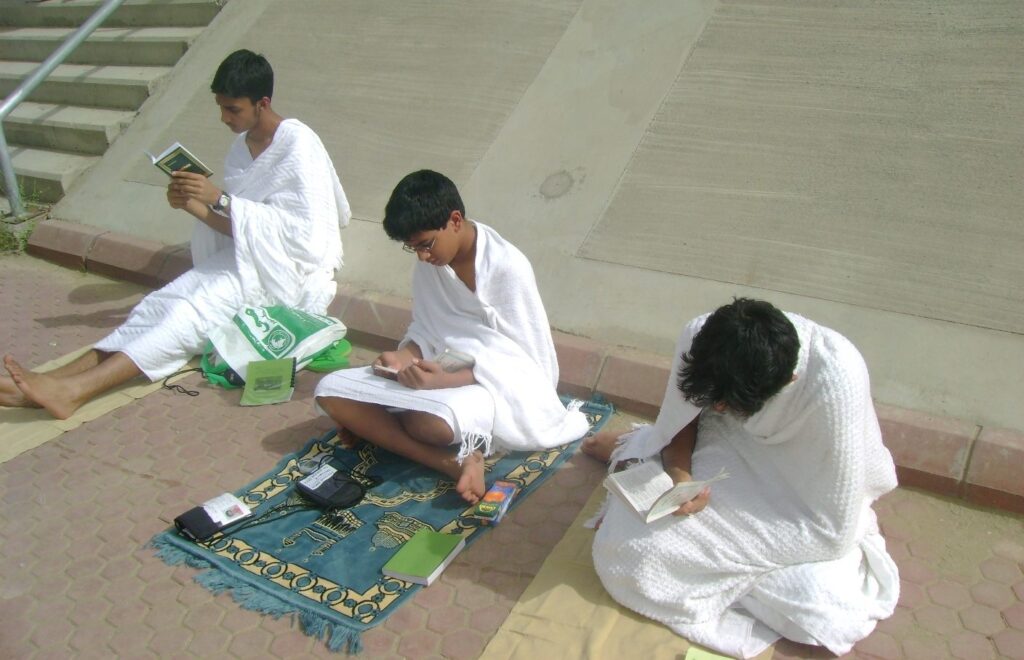
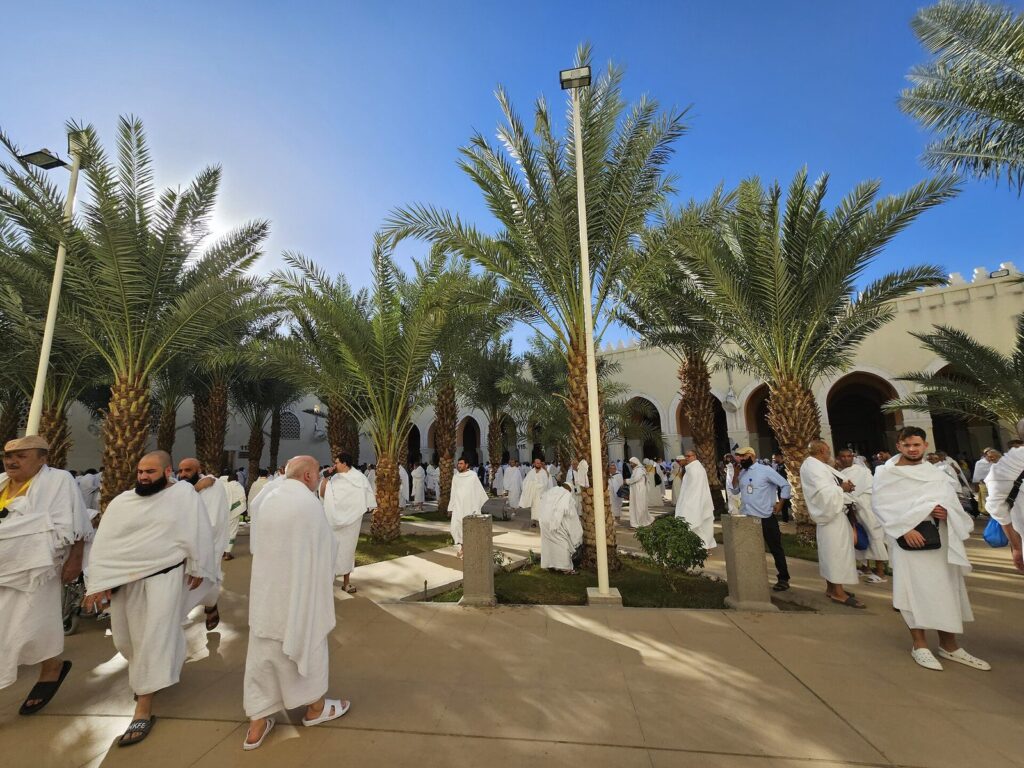
The clothing restrictions are different for men and women. Men may not wear clothing cut and sewn to fit the body, such as shirts, trousers, underwear, jackets and socks, and they may not cover their heads or faces. According to the Hanafi school, shoes that cover the protruding bone on the top of the foot are also forbidden for men. We have explained step by step how to put on the ihram garments correctly in our article on how to wear ihram.
Situations such as pulling the blanket over the head while sleeping, covering the face with a towel for a long time, or wearing a hat to protect oneself from the heat are also regarded, for men, as falling under the restriction on covering the head. An umbrella, canopy or tent that does not touch the head, however, is not forbidden.
Are the ihram restrictions different for women?
Women are largely exempt from the clothing restrictions: they may wear stitched clothing, socks and shoes, and they keep their heads covered. For women, the main clothing restriction is covering the face in such a way that the cloth comes into direct contact with it. The restrictions on fragrance, cutting hair, cutting nails, hunting and intimacy between spouses, on the other hand, are the same for women and men.
Restrictions Relating to Hunting and the Haram Area
It is forbidden for a person in ihram to hunt wild land animals, to show a hunter where game is and to startle game animals. The Quran clearly commands that game should not be killed while in ihram and states the penalty for doing so (Surah al-Ma’idah, verse 95). Fishing and hunting at sea, however, do not fall within the scope of this restriction.
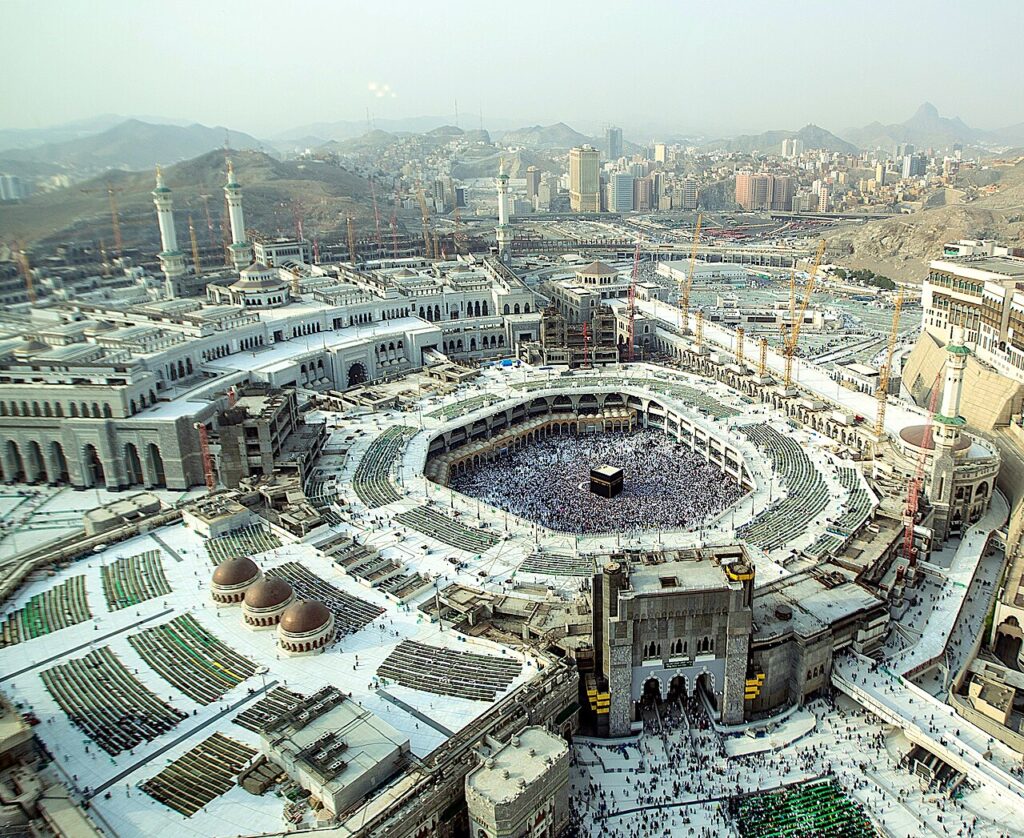
Separately from this restriction, within the Haram area surrounding Makkah it is forbidden for everyone, whether in ihram or not, to pick trees and plants that grow naturally and to interfere with game animals. In other words, a person who has left ihram also observes this rule within the boundaries of the Haram. You need to keep this sensitivity in mind when visiting the sites in Makkah.
Is it forbidden to kill insects or pests while in ihram?
It is narrated from the Prophet (peace be upon him) that animals that harm people, such as scorpions, snakes, mice and vicious dogs, may be killed even while in ihram (Bukhari, Muslim). Killing bothersome pests such as mosquitoes, ants and flies does not require a penalty either. This ruling shows that the restriction on hunting concerns wild animals that do no harm.
Restrictions Relating to Relations Between Spouses and Behaviour
The most serious restriction of ihram is sexual relations between spouses and forms of intimacy that can lead to them, such as touching or kissing with desire. In addition to this restriction, which the Quran refers to as rafath, fusuq, meaning straying into sin, and jidal, meaning quarrelling and arguing, are also forms of behaviour unbecoming of a person in ihram.
According to the Hanafi school, in Umrah, if a person has sexual relations with their spouse before four circuits (shawt) of tawaf have been completed, their Umrah is invalidated; they must complete the Umrah, also make it up (qada) and offer a penalty sacrifice. If the relations take place after the four circuits have been completed but before shaving or trimming the hair, the Umrah is not invalidated, but a penalty sacrifice is required. In such situations, the best course is to consult Diyanet’s current fatwas.
Is it forbidden to argue while in ihram?
Fighting, speaking rudely and hurting others are forms of behaviour that go against the spirit of ihram, and committing them in this state is regarded as a greater fault. No separate penalty sacrifice is prescribed for this behaviour; however, since it damages the spiritual value of the worship, it needs to be made good through repentance (tawbah) and seeking forgiveness (istighfar).
Can a marriage contract be concluded while in ihram?
The schools of thought differ on this matter. According to the Hanafi school, it is considered permissible for a person in ihram to conclude a marriage contract (nikah), whereas in the Shafi’i, Maliki and Hanbali schools this contract is not regarded as valid. As it is a step that can be postponed until after ihram, the cautious course is to conclude the marriage after leaving ihram.
Penalties for Violating the Ihram Restrictions
Violating the restrictions without a valid excuse requires different penalties depending on the type and extent of the violation. Dam is a sheep or goat sacrificed within the Haram area. Sadaqah is a donation equal to the amount of sadaqat al-fitr (fitrah); this amount is announced every year by Diyanet. The table below summarises the general framework according to the Hanafi school:
| Situation | General ruling |
|---|---|
| Applying fragrance to the whole or most of a limb | Dam |
| Applying fragrance to a small part of a limb | Sadaqah |
| Wearing stitched clothing or covering the head for a full day or a full night | Dam |
| The same situation lasting for a shorter time | Sadaqah |
| Shaving at least a quarter of the head or the beard | Dam |
| Cutting a smaller amount of hair | Sadaqah |
| Cutting all five nails of one hand or one foot at once | Dam |
| Cutting fewer than five nails | Sadaqah for each nail |
| Killing a wild land animal | A penalty equal to the value of the animal |
| In Umrah, having sexual relations with one’s spouse before completing most of the tawaf | The Umrah is invalidated; dam and a make-up (qada) are required |
The table is for general information; the ruling may change in situations such as several restrictions being violated together or the same restriction being repeated at different times.
Where is the ihram penalty sacrifice offered?
The dam, which is a penalty sacrifice, must be offered within the boundaries of the Haram area; a sacrifice made in Türkiye or outside the Haram does not take the place of this penalty. In practice, penalty sacrifices can be arranged through official sacrifice services authorised by the Saudi authorities.
What happens if a restriction is violated because of a valid excuse?
A person who violates a restriction because of an excuse, such as illness, severe cold or an ailment of the head, gives a ransom (fidyah), as stated in verse 196 of Surah al-Baqarah. According to the Hanafi school, in a situation that requires a dam, this person may choose between offering a sacrifice, fasting for three days or giving charity (sadaqah) to six poor people.
Are children responsible for the ihram restrictions?
According to the Hanafi school, even if children who have not yet reached puberty enter ihram, they are not legally accountable, so no penalty is required of them or of their guardians if they violate the restrictions. Even so, keeping children away from fragrance, cutting their nails and picking the plants of the Haram, in a way suited to their age, is a good way of teaching them the finer points of this act of worship.
Does violating a restriction by forgetfulness cancel the penalty?
According to the Hanafi school, forgetfulness, ignorance or being asleep does not cancel the penalty for violating the ihram restrictions; even though the person is not sinful, they must still fulfil the required penalty. For this reason, learning the restrictions before setting off is the best form of protection, both spiritually and financially.
Acts That Remain Permitted While in Ihram
Although the list of restrictions may look long, many acts that allow a person in ihram to carry on with daily life remain permitted. According to the Hanafi school, the following may be done while in ihram:
- Washing with unscented soap and changing the ihram garments
- Using a watch, glasses, a ring, a belt and a waist bag
- Using an umbrella that does not touch the head, and sitting in the shade
- Having a tooth extracted, having an injection, and dressing a wound with unscented dressings
- Using unscented sun cream and unscented moisturiser
- Killing pests that harm people
- Everyday conversation with one’s spouse and helping one another, without desire
You can find ihram-friendly products such as unscented soap, shampoo and creams on our Umrah essentials page.
Practical Tips for Avoiding Violations
Most restrictions are violated through carelessness or lack of preparation. A few small precautions will help you spend your time in ihram in peace. Finish cutting your nails and your personal grooming before making the intention; pack only unscented products in your ihram bag, and avoid using the scented soaps in your hotel room. Knowing the flow of Umrah and how long it will be until you shave or trim your hair also makes it easier to foresee how long the restrictions will last; for this, take a look at our guide on how to perform Umrah.
Unintentional and very minor incidents, such as picking up fragrance by brushing against others in the crowd or accidentally pulling out a hair, often cause people excessive worry. At such moments, the healthiest approach is to consult your guide without panicking and to find out the ruling.
Important: The penalty information in this article provides a general framework according to the Hanafi school. If you think you have violated a restriction, describe the situation exactly as it happened and consult Diyanet’s current fatwas or the Diyanet Communication Centre (Alo 190); and have any penalty sacrifice offered only through official channels.
Although the ihram restrictions may seem demanding at first glance, with the right information and a little preparation they are rules that are easy to observe and that add depth to your worship. At RotaNur, on our Umrah tours we provide training on the rites (manasik) before departure and answer our travellers’ questions throughout their time in ihram. For anything on your mind, you can reach us through our contact page.
Frequently Asked Questions
Can women wear gloves in ihram?
According to the Hanafi school, it is permissible for women to wear gloves while in ihram; for women, the main clothing restriction is covering the face directly with cloth. In the other schools of thought, however, the prevailing view is that a woman in ihram should not wear gloves. Because of this difference of opinion, not using gloves unless there is a real need is a cautious choice. If you are unsure in situations such as cold weather or sensitive skin, you can consult your guide and Diyanet’s current fatwas.
Can you use a pillow and a blanket while in ihram?
Yes, a person in ihram may use a pillow and cover themselves with a blanket while sleeping; resting the head on a pillow does not count as covering it. The point men need to watch is not to pull the blanket over their head or face, as this falls under the restriction on covering the head and face. Women may cover their heads with the blanket but should not cover their faces. If you feel cold at the hotel or on the plane, keeping the blanket at shoulder level is the most practical solution.
Can you use medicines and ointments while in ihram?
Yes, a person in ihram may use the medicines recommended by their doctor; tablets, syrups, injections and unscented dressing materials do not fall under the ihram restrictions. The point to watch is ointments, oils and creams with a noticeable scent, as these may fall under the restriction on fragrance. For those who have no choice but to use a scented product for treatment, the rulings on valid excuses apply. To get unscented products before you set off, take a look at our Umrah essentials page.
Can you cut a broken nail while in ihram?
Yes, while in ihram, removing the detached part of a nail that has broken and is hanging off does not require a penalty; what is forbidden is cutting or shortening healthy nails. If a broken nail is catching on your clothes or hurting you, it is enough to carefully remove only the detached piece. The most practical precaution to avoid dealing with such minor problems is to cut your fingernails and toenails before making the intention. Whenever you are unsure, you can consult your guide.
Can you apply sun cream while in ihram?
Yes, unscented sun cream can be used while in ihram; what is forbidden is applying creams that contain perfume or a noticeable scent. When buying sun cream, looking for the words “unscented” or “fragrance-free” on the packaging and trying the product before making the intention will make things easier for you. Let us also remind you that men may not cover their heads with a hat to protect themselves from the sun, but may use an umbrella that does not touch the head instead. For any particular health conditions, consult your doctor.

Cihat Murat Yüksel is the editor of the RotaNur blog and the founder of Markention. Drawing on the sources of Türkiye's Presidency of Religious Affairs (Diyanet), he turns the questions travellers ask most about preparing for Umrah, Hajj and halal travel into clear, practical guides.
Questions answered in this article
When Do the Ihram Restrictions Begin and End?
Knowing exactly when the restrictions begin prevents unnecessary worry. Putting on the ihram garments does not by itself start the restrictions; they begin the moment the intention for Hajj or Umrah is made and the talbiyah is recited. For this reason, a person who puts on the garments at home or at the airport may still apply fragrance or cut their nails as long as they have not made the intention.
When do the ihram restrictions begin?
According to the Hanafi school, the ihram restrictions begin the moment a person makes the intention (niyyah) for Hajj or Umrah and recites the talbiyah or a form of remembrance (dhikr) that takes its place. We have covered how to make the intention and the words of the talbiyah in detail in our article on the intention for ihram.
When do the ihram restrictions end?
In Umrah, the restrictions come to a complete end with shaving or trimming the hair (halq/taqsir) after tawaf and sa’i. In Hajj, however, leaving ihram happens in two stages: with the shaving or trimming done on the first day of Eid al-Adha, all restrictions except intimacy between spouses are lifted, and this last restriction is also lifted once the Tawaf al-Ziyarah has been performed. You can find the other differences between Hajj and Umrah in our article on the differences between Hajj and Umrah.
Why Are There Ihram Restrictions?
Ihram is a state in which a person sets aside worldly concerns and turns to Allah with their whole being. Keeping away temporarily from adornment, fragrance and certain habits brings the rich and the poor together in the same simple clothing, and teaches a person to master their ego (nafs) and to be more considerate towards those around them. The Quran states that for those who undertake Hajj in its months, there is to be no sexual relations, no straying into sin and no quarrelling (Surah al-Baqarah, verse 197).
Can you take a shower while in ihram?
Yes, a person in ihram may wash to cool down or to get clean; unscented soap and shampoo should be used for this. As rubbing the hair hard and using a comb while washing can cause hairs to fall out, it is advisable to wash the head with gentle movements and to dry it by patting it with a towel.
Can you comb your hair or scratch while in ihram?
Combing the hair is not advisable while in ihram, as it can cause hairs to fall out. Scratching is not forbidden; however, it should be done lightly with the fingertips so as not to pull out any hairs. For the few strands that fall out while performing wudu or washing, it is enough not to worry, while not neglecting to take care.