















Contents 24 sections
- What Are Ihram and Intention?
- How is the intention for ihram made?
- Does putting on the ihram garments count as the intention?
- What to Do Before Entering Ihram
- How is the ihram prayer performed?
- Intention Formulas for Umrah, Hajj and Qiran
- Intention for Umrah
- Intention for Hajj
- Intention for qiran
- Making the intention on behalf of someone else
- Can the intention for ihram be made in your own language?
- The Talbiyah After the Intention
- When and Where Is the Intention for Ihram Made?
- When is the intention for ihram made?
- Where is the intention for ihram made?
- Making the Intention for Ihram on a Plane: A Practical Plan
- What should someone who crosses the miqat without making the intention do?
- Women and Special Situations
- Can women make the intention for ihram during menstruation?
- The intention for ihram for children
- Making a condition in case of an obstacle
- Common Mistakes in the Intention for Ihram
- The Steps of Umrah After the Intention
- Frequently Asked Questions
Umrah and Hajj begin with entering ihram, and the heart of entering ihram is the intention. In this article, we look at the intention for ihram step by step: you will find when and where the intention is made, the transliterations and meanings of the intention formulas for Umrah, Hajj and qiran found in books of basic religious knowledge (ilmihal), the ihram prayer, the talbiyah, situations specific to women, and how to plan the intention on a flight. We present the information in line with the approach of Diyanet (Türkiye’s Presidency of Religious Affairs), which is based on the Hanafi school.
What Are Ihram and Intention?
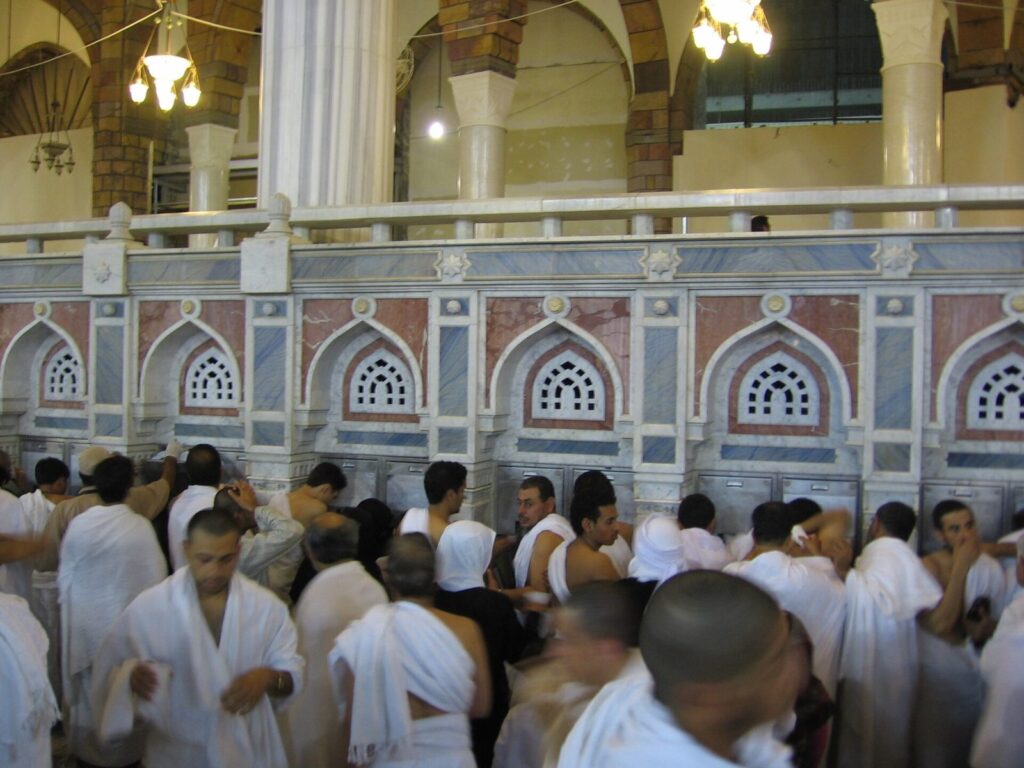
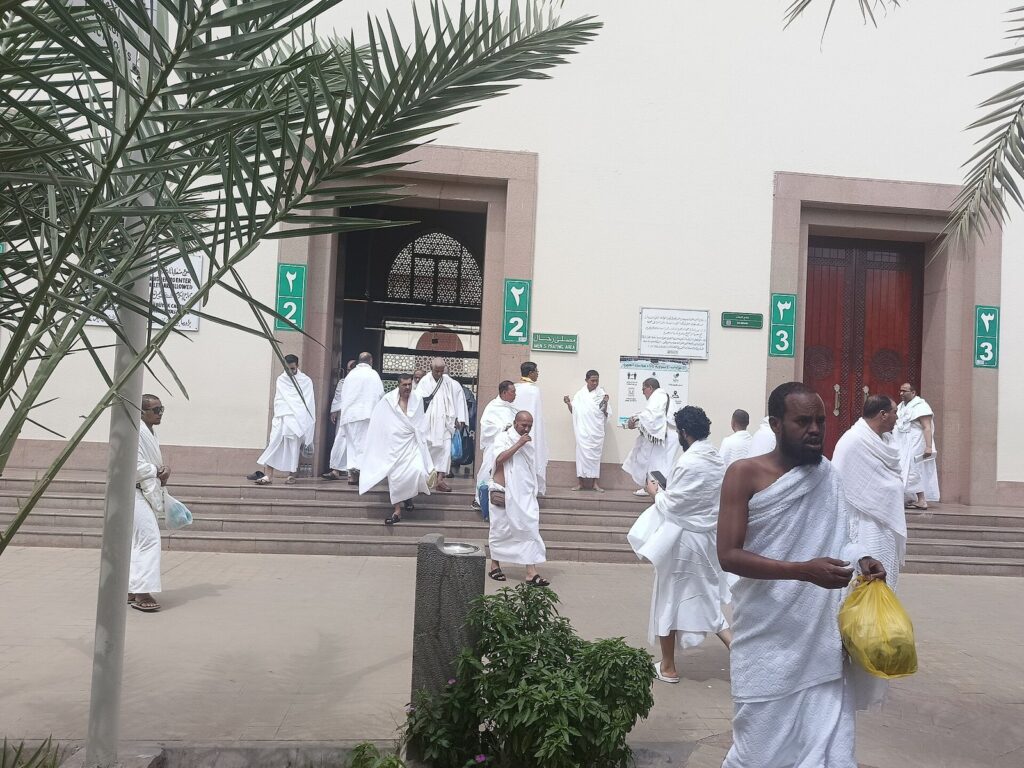
Ihram is the state in which a person who wishes to perform Hajj or Umrah, by making the intention and reciting the talbiyah, temporarily forbids themselves certain things that are otherwise lawful. In everyday language, the two white pieces of cloth worn by men are also called ihram; in the jurisprudential sense, however, ihram is not wearing these garments but a spiritual state that begins with the intention and the talbiyah. For this reason, a person who has put on the ihram garments but has not yet made the intention is not considered to have entered ihram.
The intention (niyyah) is a person determining in their heart which act of worship they will perform. The Prophet (peace be upon him) stated that deeds are judged by intentions (Bukhari, Muslim). In ihram, the intention determines whether the act of worship to be performed is Umrah, Hajj or both together, and it shapes all the steps that follow. We have also explained how to wear the ihram garments in our article How to Wear Ihram?
How is the intention for ihram made?
The intention is made in the heart; what matters is that the person knows which act of worship they are intending. It is also good to say it with the tongue. According to the Hanafi school, one enters ihram by reciting the talbiyah at least once after the intention. In other words, the intention for ihram consists of the decision in the heart being expressed with the tongue and completed with the talbiyah. Knowing which act of worship you are entering at the moment of intention also ensures that later steps such as tawaf, sa’i and shaving or trimming the hair are carried out in the correct order.
Does putting on the ihram garments count as the intention?
No, putting on the ihram garments does not on its own mean entering ihram. Even if a person has wrapped themselves in the ihram cloths, the ihram restrictions do not begin until they make the intention and recite the talbiyah. For this reason, it is possible to put on the garments at home or at the airport and make the intention later, before reaching the level of the miqat.
What to Do Before Entering Ihram
It is Sunnah to make certain preparations before the intention, and books of basic religious knowledge describe them in the following order:
- Cleanliness: Trimming the nails, tidying the moustache, and removing underarm and pubic hair.
- Ghusl or wudu: It is Sunnah to take a full ritual bath (ghusl) with the intention of cleanliness; if this is not possible, performing wudu is sufficient.
- Fragrance: It is Sunnah to apply fragrance to the body before entering ihram; fragrance is not applied to the ihram cloth.
- Ihram garments: Men take off their stitched clothing and wrap themselves in the ihram cloths; women remain in their normal clothing that complies with Islamic dress.
- Ihram prayer: If it is not a disliked (makruh) time, two rak’ahs of ihram prayer are performed.
- Intention and talbiyah: After the prayer, the intention is made and the talbiyah is recited.
How is the ihram prayer performed?
The ihram prayer is a two-rak’ah Sunnah prayer performed before entering ihram, and it is performed like other voluntary (nafl) prayers. Books of basic religious knowledge recommend reciting Surah al-Kafirun after al-Fatihah in the first rak’ah and Surah al-Ikhlas in the second; however, reciting other surahs is also permissible. If it coincides with a disliked (makruh) time, this prayer is not performed and one enters ihram with the intention and the talbiyah; making the intention after an obligatory prayer is also sufficient.
Intention Formulas for Umrah, Hajj and Qiran
The formulas below are not hadith texts but intention wordings taught in books of Islamic jurisprudence (fiqh) and basic religious knowledge. Saying the same meaning in your own language is also sufficient. Which formula you use depends on the type of worship you will perform. We have explained the types of Hajj in detail in our article Types of Hajj.
Intention for Umrah
Those who will perform Umrah only, and those who will perform tamattu Hajj, first make the intention for Umrah:
Transliteration: Allâhümme innî urîdü’l-umrete fe yessirhâ lî ve tekabbelhâ minnî. (Common English spelling: Allahumma inni uridul-‘umrata fa yassirha li wa taqabbalha minni.)
Meaning: O Allah! I intend to perform Umrah; make it easy for me and accept it from me.
Intention for Hajj
Those performing ifrad Hajj make the intention for Hajj at the miqat, while those performing tamattu Hajj make it in Makkah on the Day of Tarwiyah (the 8th of Dhul Hijjah), after completing their Umrah and leaving ihram:
Transliteration: Allâhümme innî urîdü’l-hacce fe yessirhü lî ve tekabbelhü minnî. (Common English spelling: Allahumma inni uridul-hajja fa yassirhu li wa taqabbalhu minni.)
Meaning: O Allah! I intend to perform Hajj; make it easy for me and accept it from me.
Intention for qiran
Those who wish to perform Umrah and Hajj with the same ihram make the intention for both together at the miqat:
Transliteration: Allâhümme innî urîdü’l-umrete ve’l-hacce fe yessirhümâ lî ve tekabbelhümâ minnî. (Common English spelling: Allahumma inni uridul-‘umrata wal-hajja fa yassirhuma li wa taqabbalhuma minni.)
Meaning: O Allah! I intend to perform Umrah and Hajj; make them both easy for me and accept them from me.
Making the intention on behalf of someone else
In proxy Hajj (hajj badal), a person going on Hajj as a proxy makes the intention not on their own behalf but on behalf of the person who sent them. In your own language, the intention can be made with words such as: “O Allah, I intend to perform Hajj on behalf of such-and-such a person; make it easy for me and accept it.” As there are detailed rulings on matters such as the conditions of proxy Hajj and which type of Hajj the proxy may perform, it is necessary to consult the explanations of Diyanet in this case.
Can the intention for ihram be made in your own language?
Yes, the intention for ihram can be made in your own language. As the essence of the intention lies in the heart, it is sufficient to say, “O Allah, I intend to perform Umrah for Your sake; make it easy for me and accept it.” For those who wish to recite the Arabic formula, reciting it with an understanding of its meaning helps to make the intention consciously.
The Talbiyah After the Intention
The talbiyah is recited immediately after the intention. The talbiyah that the Prophet recited while in ihram consists of the following words, narrated by Bukhari and Muslim:
Transliteration: Lebbeyk Allâhümme lebbeyk, lebbeyke lâ şerîke leke lebbeyk, inne’l-hamde ve’n-ni’mete leke ve’l-mülk, lâ şerîke lek. (Common English spelling: Labbayk Allahumma labbayk, labbayka la sharika laka labbayk, innal-hamda wan-ni’mata laka wal-mulk, la sharika lak.)
Meaning: Here I am at Your service, O Allah, here I am! Here I am, You have no partner, here I am! Surely all praise belongs to You; the blessings and the dominion are also Yours. You have no partner.
According to the Hanafi school, saying the talbiyah at least once is a condition of ihram, while repeating it throughout the period of ihram is Sunnah. For when the talbiyah is stopped and the other supplications that can be recited during ihram, you can look at our article Umrah Duas.
When and Where Is the Intention for Ihram Made?
A person coming to the Haram area from outside with the intention of Hajj or Umrah may not cross the boundaries called the miqat without being in ihram. For this reason, the intention must be made before the miqat boundary is crossed. Which miqat applies depends on where the person is coming from. Authentic narrations report that the Prophet set separate miqat points for those coming from the directions of Madinah, the Levant (Sham), Najd and Yemen (Bukhari, Muslim). Al-Juhfah, the miqat for those coming from the direction of the Levant, is located near present-day Rabigh, and this level is usually taken as the reference point on flights from Türkiye.
When is the intention for ihram made?
A person coming from outside for Umrah or Hajj makes their intention before reaching the miqat boundary. The intention may be made before the miqat; however, as the ihram restrictions begin with the intention, making the intention very early means having to observe the restrictions for a long time. Those performing tamattu Hajj, meanwhile, make the intention for Hajj in Makkah on the Day of Tarwiyah.
Where is the intention for ihram made?
For Umrah travellers flying directly from Türkiye to Jeddah, the level of the miqat is crossed during the flight; for this reason, the intention is made on the plane, before the level of the miqat is reached. Those who go to Madinah first and travel on to Makkah from there enter ihram at Dhul Hulayfah (known today as Abyar Ali), the miqat of the people of Madinah. Those who are in Makkah and wish to perform an additional Umrah make the intention after going outside the Haram boundary, for example to Tan’im or Ji’ranah.
| Situation | Where the intention is made | Type of intention |
|---|---|---|
| Direct flight from Türkiye to Jeddah | On the plane, before the level of the miqat | Umrah (also Umrah for tamattu) |
| Travelling from Madinah to Makkah | Dhul Hulayfah (Abyar Ali) | Umrah, ifrad or qiran |
| A new Umrah while in Makkah | Outside the Haram boundary (Tan’im, Ji’ranah) | Umrah |
| Hajj ihram in tamattu Hajj | In Makkah, at the place where one is staying | Hajj (Day of Tarwiyah) |
As flight schedules and miqat practices can differ from group to group, confirm the timing of ihram and the intention in advance with your travel agency’s guide.
Making the Intention for Ihram on a Plane: A Practical Plan
As it is difficult to put on the ihram cloth and perform the prayer on a plane, many groups follow this routine:
- Get ready at home or at the airport: Take a ghusl or perform wudu; men put on the ihram garments before the flight.
- Perform the ihram prayer on the ground: If it is not a disliked (makruh) time, perform the two rak’ahs in the airport prayer room.
- Make the intention on the plane: Make the intention and recite the talbiyah before the announcement by your guide or the cabin crew that the level of the miqat is approaching.
- Observe the restrictions from the moment of intention: After the intention and talbiyah, take care to avoid what is forbidden, such as fragrance, shaving and stitched clothing.
- Make sure you do not sleep through it: Stay in touch with your guide so that you are awake in the hours close to the level of the miqat.
You can find the restrictions that begin with the intention in detail in our article Ihram Restrictions.
What should someone who crosses the miqat without making the intention do?
According to the Hanafi school, a person who comes with the intention of Hajj or Umrah and crosses the miqat without ihram must, if possible, return to the miqat and enter ihram there. If they enter ihram without returning, a penalty sacrifice (dam) is required. As what should be done in this situation may vary according to the person’s circumstances, consult your guide and Diyanet’s ilmihal on Hajj and Umrah.
Women and Special Situations
Women, like men, make the intention and recite the talbiyah; the intention formulas are the same. There is no special ihram garment for women; they enter ihram in their normal clothing that complies with Islamic dress. They recite the talbiyah quietly, only loud enough for themselves to hear.
Can women make the intention for ihram during menstruation?
Yes, women who are menstruating or experiencing postnatal bleeding (nifas) may also enter ihram. The Prophet instructed Asma bint Umays, who had given birth at Dhul Hulayfah, to bathe and enter ihram (Muslim). These women take a ghusl for the purpose of cleanliness, make the intention and recite the talbiyah without performing the prayer, and carry out all the rites other than tawaf; they perform tawaf after they have become pure. For details, consult the explanations of Diyanet.
The intention for ihram for children
Children may also enter ihram together with their families. An authentic narration reports that a woman lifted up her small child and asked the Prophet, “Is there Hajj for this one too?”, and he replied, “Yes, and you will have a reward” (Muslim). According to the Hanafi school, the guardian makes the intention on behalf of a child who has not yet reached the age of discernment, while a child who has reached the age of discernment makes the intention themselves. Ask your guide what to do if children find it difficult to observe the ihram restrictions.
Making a condition in case of an obstacle
The Prophet told Duba’ah bint al-Zubayr, who was worried that she would not be able to complete Hajj because she was ill, to make a condition when making the intention by saying, “O Allah, wherever You detain me, that is my place of leaving ihram” (Bukhari, Muslim):
Transliteration: Allâhümme mahillî haysü habestenî. (Common English spelling: Allahumma mahilli haythu habastani.)
Meaning: O Allah! Wherever You detain me, that is my place of leaving ihram.
The ruling on this condition is assessed differently by the schools of thought; in the Hanafi school, the rulings of ihsar (being prevented from completing the rites) apply in the event of being prevented. It would be advisable for people with health problems to consult Diyanet’s current fatwas on this matter.
Important: The transliterations are given in Latin letters and do not fully represent some of the sounds in Arabic; it is recommended that they be learnt from a qualified teacher for correct pronunciation. For detailed matters of Islamic jurisprudence, such as the miqat, penalties and ihsar, consult the publications of Diyanet and religious guides.
Common Mistakes in the Intention for Ihram
The mistakes most commonly made regarding the intention by those going on Umrah or Hajj for the first time are as follows:
- Forgetting the intention: Putting on the ihram garments but crossing the miqat after forgetting to make the intention and recite the talbiyah.
- Making the intention too early: Making the intention before even setting off for the airport, then having to observe the restrictions for hours and unknowingly violating them in the meantime.
- Leaving the type of worship unclear: Making the intention without knowing whether tamattu, ifrad or qiran will be performed.
- Using fragrance after the intention: Using scented soap, wet wipes or cream after the intention.
- Never saying the talbiyah: Not knowing that, according to the Hanafi school, the talbiyah must be said at least once together with the intention.
The easiest way to avoid these mistakes is to clarify the moment of intention and the type of worship you will perform with your guide before the journey, and to learn the intention formula and the talbiyah in advance.
The Steps of Umrah After the Intention
Umrah, which begins with the intention and the talbiyah, is completed with tawaf, sa’i and shaving or trimming the hair. You can find all the steps in order in our guide How to Perform Umrah? For those who will perform Hajj, our article How to Perform Hajj? will serve as a guide.
At RotaNur, we clarify the timing of ihram and the intention in advance according to your flight plan, and our guides are by your side at every step. You can choose the programme that suits you from among our Umrah tours, and reach us through our contact page with any questions. May our Lord lead your intentions to goodness and your acts of worship to acceptance.
Frequently Asked Questions
Can you abandon the intention after entering ihram?
No, a person who has entered ihram by making the intention and reciting the talbiyah cannot leave ihram of their own accord without completing the Umrah or Hajj they have begun. The Holy Qur’an says, “Complete the Hajj and the Umrah for Allah” (al-Baqarah 2:196). If the act of worship cannot be completed for reasons such as illness or an obstacle on the way, the rulings of ihsar apply. If you encounter such a situation, inform your guide immediately and consult the explanations of Diyanet.
Can you enter ihram without wudu?
Yes. It is Sunnah to take a ghusl or perform wudu before entering ihram; a person who makes the intention and recites the talbiyah without wudu has also entered ihram. However, the ihram prayer cannot be performed without wudu, and being in a state of wudu is also required for tawaf. As renewing wudu can be difficult on a flight, performing wudu before setting off for the airport and, if possible, performing the ihram prayer before boarding the plane will make things easier for you.
Is it a problem if fragrance applied before ihram remains after the intention?
According to the Hanafi school, fragrance applied to the body before entering ihram that can still be noticed after the intention does not require a penalty. Aisha related that she saw the glisten of fragrance in the Prophet’s hair while he was in ihram (Bukhari, Muslim). However, applying fragrance again, or using scented soap or cream, after the intention and talbiyah is an ihram restriction. You can find all the restrictions in our article on the ihram restrictions.
Can the ihram cloth be changed after the intention?
Yes, a person in ihram may take off an ihram cloth that has become dirty or wet and replace it with a clean one; this does not invalidate the ihram. What matters is not the cloth itself but the continuation of the state of ihram that began with the intention and the talbiyah. Washing the cloth is also permissible; however, scented detergent or soap should not be used. For this reason, it is useful to carry a spare ihram set. We have explained how to tie the cloth in our article on how to wear ihram.
Does the intention for ihram have to be made collectively with the guide?
No, the intention is a personal act of worship that each traveller makes in their own heart. When the guide recites the intention formula collectively as the level of the miqat approaches, this is to alert the travellers and make things easier for them. Each traveller says the formula themselves, knowing which act of worship they are intending, and recites the talbiyah. Those who miss the guide’s announcement can also make the intention and recite the talbiyah on their own before crossing the miqat.

Cihat Murat Yüksel is the editor of the RotaNur blog and the founder of Markention. Drawing on the sources of Türkiye's Presidency of Religious Affairs (Diyanet), he turns the questions travellers ask most about preparing for Umrah, Hajj and halal travel into clear, practical guides.
Questions answered in this article
What Are Ihram and Intention?
Ihram is the state in which a person who wishes to perform Hajj or Umrah, by making the intention and reciting the talbiyah, temporarily forbids themselves certain things that are otherwise lawful. In everyday language, the two white pieces of cloth worn by men are also called ihram; in the jurisprudential sense, however, ihram is not wearing these garments but a spiritual state that begins with the intention and the talbiyah. For this reason, a person who has put on the ihram garments but has not yet made the intention is not considered to have entered ihram.
How is the intention for ihram made?
The intention is made in the heart; what matters is that the person knows which act of worship they are intending. It is also good to say it with the tongue. According to the Hanafi school, one enters ihram by reciting the talbiyah at least once after the intention. In other words, the intention for ihram consists of the decision in the heart being expressed with the tongue and completed with the talbiyah. Knowing which act of worship you are entering at the moment of intention also ensures that later steps such as tawaf, sa’i and shaving or trimming the hair are carried out in the correct order.
Does putting on the ihram garments count as the intention?
No, putting on the ihram garments does not on its own mean entering ihram. Even if a person has wrapped themselves in the ihram cloths, the ihram restrictions do not begin until they make the intention and recite the talbiyah. For this reason, it is possible to put on the garments at home or at the airport and make the intention later, before reaching the level of the miqat.
How is the ihram prayer performed?
The ihram prayer is a two-rak’ah Sunnah prayer performed before entering ihram, and it is performed like other voluntary (nafl) prayers. Books of basic religious knowledge recommend reciting Surah al-Kafirun after al-Fatihah in the first rak’ah and Surah al-Ikhlas in the second; however, reciting other surahs is also permissible. If it coincides with a disliked (makruh) time, this prayer is not performed and one enters ihram with the intention and the talbiyah; making the intention after an obligatory prayer is also sufficient.
Can the intention for ihram be made in your own language?
Yes, the intention for ihram can be made in your own language. As the essence of the intention lies in the heart, it is sufficient to say, “O Allah, I intend to perform Umrah for Your sake; make it easy for me and accept it.” For those who wish to recite the Arabic formula, reciting it with an understanding of its meaning helps to make the intention consciously.
When and Where Is the Intention for Ihram Made?
A person coming to the Haram area from outside with the intention of Hajj or Umrah may not cross the boundaries called the miqat without being in ihram. For this reason, the intention must be made before the miqat boundary is crossed. Which miqat applies depends on where the person is coming from. Authentic narrations report that the Prophet set separate miqat points for those coming from the directions of Madinah, the Levant (Sham), Najd and Yemen (Bukhari, Muslim). Al-Juhfah, the miqat for those coming from the direction of the Levant, is located near present-day Rabigh, and this level is usually taken as the reference point on flights from Türkiye.