







Contents 19 sections
- What Is the Day of Arafah, and When Is It?
- When is the Day of Arafah in 2027?
- The Virtue of the Day of Arafah: Arafah in the Hadiths
- Why is the Day of Arafah important?
- The Dua of the Day of Arafah: Words and Meaning
- Which dua is recited on the Day of Arafah?
- The Fast of the Day of Arafah
- Do you fast on the Day of Arafah?
- The Takbirs of Tashriq
- When do the takbirs of Tashriq begin and end?
- The Tradition of a Thousand Ikhlas and Reading the Qur’an
- Is reciting a thousand Ikhlas on the Day of Arafah a Sunnah?
- The Acts of Worship of the Day of Arafah
- A Day’s Programme for the Day of Arafah
- How can those who work make the most of the Day of Arafah?
- What Do the Pilgrims Do on the Day of Arafah?
- What can you do to join the pilgrims’ dua on the Day of Arafah?
- Living the Day of Arafah as a Family
- Frequently Asked Questions
The dua of the Day of Arafah is the declaration of the oneness of Allah that the Prophet (peace be upon him) described as “the best of duas”, the one he and the prophets before him said on the Day of Arafah. Arafah, the ninth day of Dhul Hijjah, is one of the most precious days of the year: pilgrims stand at Arafat, while those who cannot go on Hajj spend it in fasting, dua, takbir and repentance. In this article we have gathered what the Day of Arafah is and when it will fall in 2027, the words and meaning of the dua of Arafah, the fast of Arafah, the takbirs of Tashriq, the tradition of a thousand Ikhlas and the acts of worship to perform on the Day of Arafah, following the explanations of Diyanet (Türkiye’s Presidency of Religious Affairs). You will find what pilgrims do at Arafat that day in a separate guide.
What Is the Day of Arafah, and When Is It?
Arafah is the ninth day of Dhul Hijjah, the twelfth month of the Hijri calendar, the day before Eid al-Adha. It takes its name from Arafat, because the standing at Arafat, the pillar of Hajj, is performed on this day. In Turkish the day before Eid al-Fitr is also called “arife”; but in the religious literature the Day of Arafah means the ninth of Dhul Hijjah, and the rulings in this article belong to that day. The Day of Arafah is also the day on which verse 3 of Surah al-Ma’idah, “Today I have perfected your religion for you”, was revealed to the Prophet (peace be upon him) at Arafat during the Farewell Hajj.
The 2026 Hajj was completed at the end of May 2026; Eid al-Adha in 2027, and with it the Day of Arafah, is expected to fall in the middle of May 2027. The exact date is settled by the calendar of Diyanet and the announcement of the new moon by the Saudi authorities; we summarised the expectations for the Hajj calendar in our article on when Hajj is performed.
When is the Day of Arafah in 2027?
In 2027 the Day of Arafah is the day before the first day of Eid al-Adha and is expected to fall in the middle of May 2027; the exact day is determined by the calendar of religious days published by Diyanet. Because the Hijri calendar follows the lunar year, Arafah comes about eleven days earlier in the Gregorian calendar each year; in the coming years the Day of Arafah will therefore move from spring towards winter.
The Virtue of the Day of Arafah: Arafah in the Hadiths
The value of the Day of Arafah is described in the hadiths in clear terms. In the hadith narrated by Muslim, the Prophet (peace be upon him) reports that the day on which Allah frees the most of His servants from the Fire is the Day of Arafah, and that on that day Allah draws near to His servants and boasts of them before the angels. In another hadith in Bukhari, it is said that the righteous deeds done in the first ten days of Dhul Hijjah are more beloved to Allah than on other days; Arafah is the last and most virtuous of these ten days. That verse 3 of Surah al-Ma’idah, “Today I have perfected your religion”, was revealed at Arafat on the Day of Arafah also gives this day a special place in Islamic history.
These narrations show that the Day of Arafah does not belong to the pilgrims alone. While the pilgrims stand at Arafat, Muslims everywhere in the world share in the same day with fasting, dua and takbir. Diyanet too reminds people of fasting and dua for the Day of Arafah every year; knowing the virtue of the day lifts it out of being an ordinary day of preparation before Eid.
Why is the Day of Arafah important?
The Day of Arafah is the day on which the standing at Arafat, the pillar of Hajj, is performed, the day mentioned in the hadith as the one on which Allah frees the most servants from the Fire, and the day on which verse 3 of Surah al-Ma’idah was revealed. For those who cannot go on Hajj, the fast of Arafah is counted as an expiation for the sins of two years; for this reason it is regarded as one of the most virtuous days of the year.
The Dua of the Day of Arafah: Words and Meaning
In the hadith narrated by Tirmidhi, the Prophet (peace be upon him) says: “The best of duas is the dua made on the Day of Arafah. The best of what I and the prophets before me have said is this.” These words are the declaration of the oneness of Allah known as the dua of the Day of Arafah; its words and meaning are below.
Words: Lâ ilâhe illallâhu vahdehû lâ şerîke leh, lehü’l-mülkü ve lehü’l-hamdü ve hüve alâ külli şey’in kadîr. (La ilaha illallahu wahdahu la sharika lah, lahu l-mulku wa lahu l-hamdu wa huwa ‘ala kulli shay’in qadir.)
Meaning: There is no god but Allah; He is One, He has no partner. His is the sovereignty and His is the praise, and He has power over all things.
This sentence is not a dua of request, but a declaration of the oneness and greatness of Allah; it prepares the ground for the acceptance of dua. Repeating this remembrance often on the Day of Arafah, then reciting the dua from the Qur’an “Rabbenâ âtinâ fi’d-dünyâ haseneten ve fi’l-âhireti haseneten ve kınâ azâbe’n-nâr” (al-Baqarah, 2:201) and presenting your needs to Allah in your own language is closest to the practice of the Prophet. We collected the duas the pilgrims recite at Arafat in our article on Hajj duas.
Which dua is recited on the Day of Arafah?
The words the Prophet (peace be upon him) recommended for the Day of Arafah are the declaration of oneness “La ilaha illallahu wahdahu la sharika lah, lahu l-mulku wa lahu l-hamdu wa huwa ‘ala kulli shay’in qadir”. Alongside this, repentance and seeking forgiveness, blessings on the Prophet, the dua in verse 201 of Surah al-Baqarah and the person’s own duas in their own language are recited. It is not obligatory to recite a particular dua; what matters is to spend the day in dua and remembrance.
The Fast of the Day of Arafah
The fast of the Day of Arafah is one of the most recommended voluntary fasts for those not on Hajj. In the hadith narrated by Muslim, the Prophet (peace be upon him) said that he hoped from Allah that the fast of the Day of Arafah would be an expiation for the sins of the past year and the year to come. For this reason Diyanet recommends the fast of Arafah to Muslims who are not on Hajj; the intention for the fast is made the night before, the sick and travellers need not fast, and a fast of Arafah that could not be kept need not be made up, because it is voluntary. For pilgrims standing at Arafat, however, not fasting is the Sunnah; the Prophet did not fast at Arafat during the Farewell Hajj and wished the standing to be spent in dua and remembrance.
Do you fast on the Day of Arafah?
Yes, for those not on Hajj it is recommended to fast on the Day of Arafah, and the hadith mentions it as an expiation for two years of sins. For the pilgrims at Arafat, on the other hand, not fasting is the Sunnah; it is more virtuous for them to spend the day of the standing in dua. Fasting on the first day of Eid is forbidden; the fast of Arafah is limited to the day before Eid.
The Takbirs of Tashriq
The Day of Arafah is also the day on which the takbirs of Tashriq begin. Starting from the morning prayer of the Day of Arafah and continuing until the afternoon prayer of the fourth day of Eid al-Adha, the takbir of Tashriq is recited after twenty-three obligatory prayers. According to the Hanafi school these takbirs are necessary (wajib) for everyone, women and men; they are said immediately after every obligatory prayer, whether performed in congregation or alone, as soon as the salutation is given.
Words: Allâhü ekber, Allâhü ekber, lâ ilâhe illallâhu vallâhü ekber, Allâhü ekber ve lillâhi’l-hamd. (Allahu akbar, Allahu akbar, la ilaha illallahu wallahu akbar, Allahu akbar wa lillahi l-hamd.)
Meaning: Allah is the Greatest, Allah is the Greatest. There is no god but Allah. Allah is the Greatest, Allah is the Greatest, and to Allah belongs all praise.
When do the takbirs of Tashriq begin and end?
The takbirs of Tashriq begin with the morning prayer of the Day of Arafah and end with the afternoon prayer of the fourth day of Eid al-Adha; they are said after a total of twenty-three obligatory prayers. According to the Hanafi school they are necessary; if forgotten, they are said as soon as one remembers, provided one has not spoken after the prayer. The takbir is also recited after prayers made up later.
The Tradition of a Thousand Ikhlas and Reading the Qur’an
In Türkiye, reciting Surah al-Ikhlas a thousand times on the Day of Arafah is a widespread tradition; accounts of the reward of this practice circulate among the people. However, as Diyanet also states, there is no narration in the authentic hadith sources about reciting a particular number of Ikhlas on the Day of Arafah. This does not mean that reading the Qur’an is without value: Surah al-Ikhlas is the surah that expresses the oneness of Allah most concisely, and every recitation of it is rewarded. The right approach is to read the Qur’an as much as you can without treating the number as a condition, to repeat Surah al-Ikhlas with its meaning in mind, and to dedicate the reward of what you read to your departed relatives.
Is reciting a thousand Ikhlas on the Day of Arafah a Sunnah?
No, reciting a thousand Ikhlas on the Day of Arafah is not an act of worship transmitted as a Sunnah; it is a tradition particular to Türkiye, and there is no narration about this number in the authentic hadith sources. Nevertheless, reciting Surah al-Ikhlas and the Qur’an is always rewarded; reciting without treating the number as a condition, and dedicating the reward to your loved ones, is a good practice.
The Acts of Worship of the Day of Arafah
According to the hadith in Bukhari, the first ten days of Dhul Hijjah are the days on which righteous deeds are most beloved to Allah; Arafah is the summit of these ten days. For those who cannot go on Hajj, the ways of making the most of the Day of Arafah are these:
- Keeping the fast of Arafah and breaking it together with the family.
- Beginning the takbirs of Tashriq from the morning prayer.
- Repeating the dua of the Day of Arafah and seeking forgiveness throughout the day, and making dua in your own language.
- Reading the Qur’an; repeating Surah al-Ikhlas with its meaning in mind.
- Making peace with those you have fallen out with, and repenting.
- Giving charity and looking after those in need before Eid.
- Completing the preparations for the sacrifice; in Türkiye the afternoon of the Day of Arafah is a public holiday, so setting aside time for the preparations for Eid.
- Visiting the graves; this visit is not an act of worship particular to Arafah, but remembering relatives before Eid is a good tradition.
| Worship | Ruling | For whom | Source |
|---|---|---|---|
| The fast of Arafah | Recommended | Those not on Hajj | Muslim, Siyam 196 |
| The dua of the Day of Arafah | Sunnah | Everyone | Tirmidhi, Da’awat 122 |
| The takbirs of Tashriq | Necessary (Hanafi) | Everyone | The Diyanet catechism |
| The standing at Arafat | Obligatory (the pillar of Hajj) | Pilgrims | Surah al-Hajj and the hadiths |
| A thousand Ikhlas | Tradition, no authentic narration | Optional | — |
A Day’s Programme for the Day of Arafah
A simple routine from morning to evening is enough to make the most of the Day of Arafah. The order below has been prepared for a fasting Muslim who is at home; those who work can fit the same steps into the hours of the afternoon holiday.
- Suhoor and intention: Rise for suhoor for the fast of Arafah, and recite the first takbir of Tashriq after the morning prayer.
- Mid-morning: The quietest hours for reading the Qur’an and repeating Surah al-Ikhlas with its meaning in mind; the reward of what is read is dedicated to departed relatives.
- Afternoon: Because these are the hours when the pilgrims stand at Arafat, dua and seeking forgiveness are concentrated in these hours; the dua of the Day of Arafah is repeated often.
- After the afternoon prayer: Making peace with those you have fallen out with, giving charity, supporting neighbours and those in need in their preparations for Eid.
- Evening: Iftar is opened with the family, the takbirs continue after the evening and night prayers, and preparations are made for the morning of Eid.
How can those who work make the most of the Day of Arafah?
Because the afternoon of the Day of Arafah is a public holiday in Türkiye, those who work can devote the second half of the day to dua, the Qur’an and making peace; in the morning hours the day begins with the fast and the takbirs after the prayer. Quietly repeating the dua of the Day of Arafah on the way or at work, seeking forgiveness throughout the day and opening the iftar with the family in the evening are practical ways of spending the day in worship.
What Do the Pilgrims Do on the Day of Arafah?
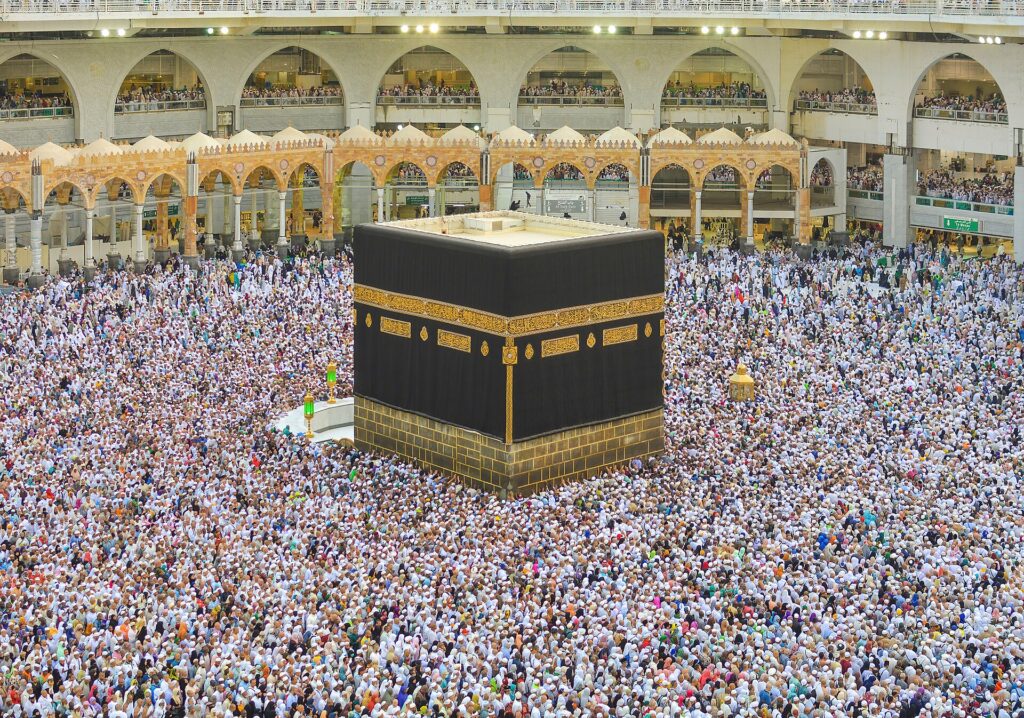
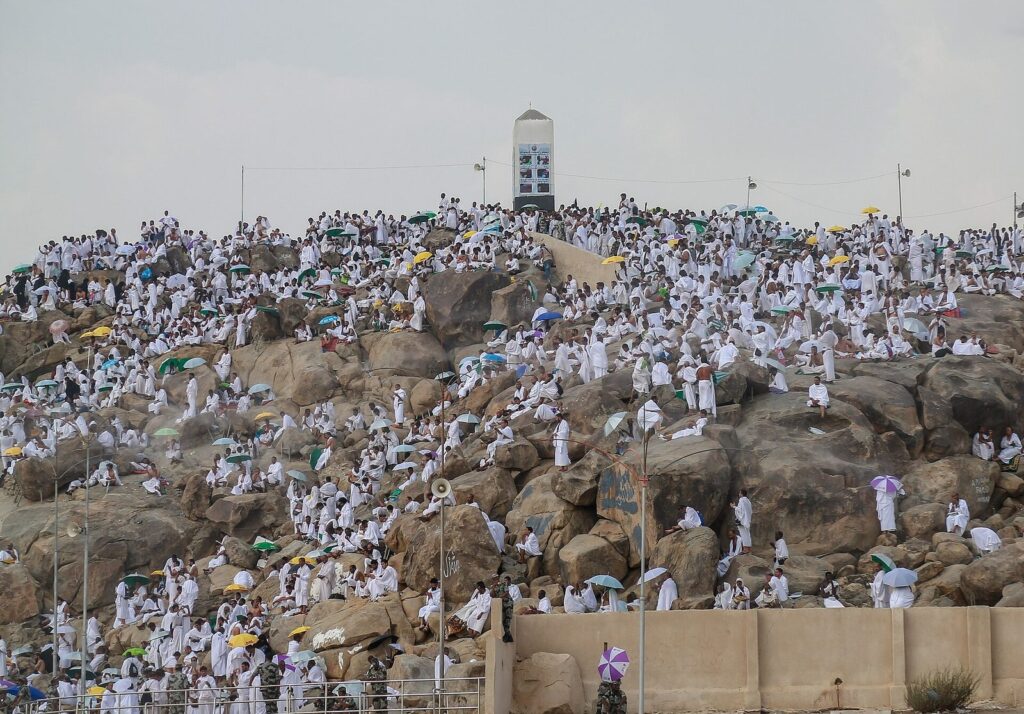
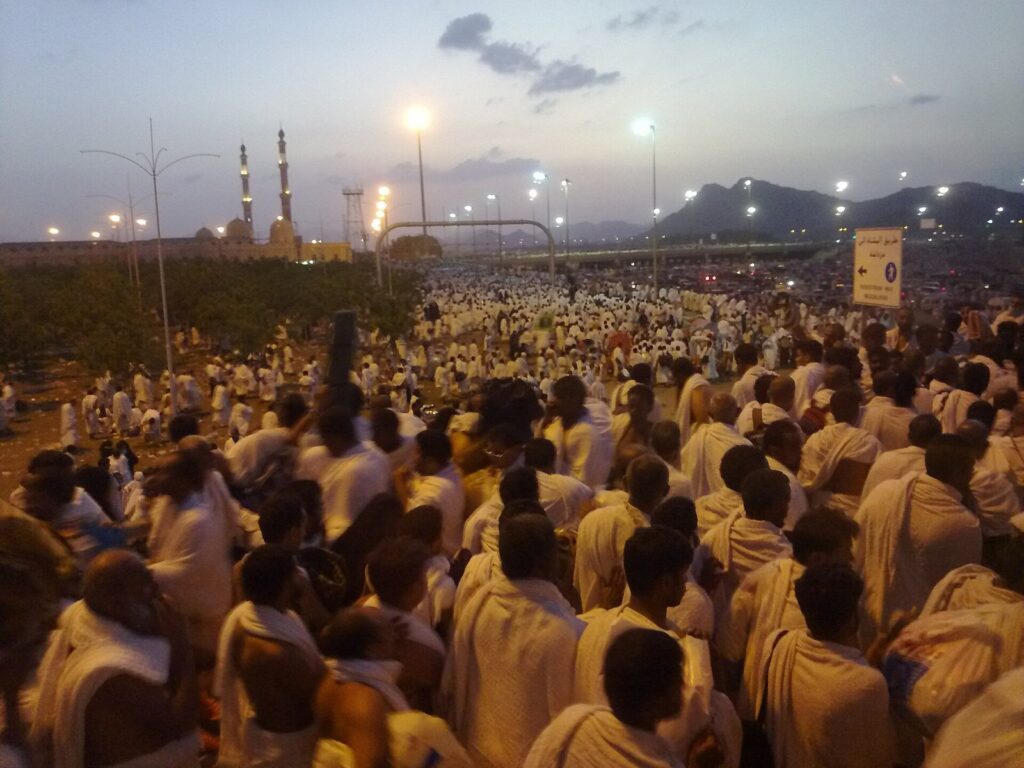
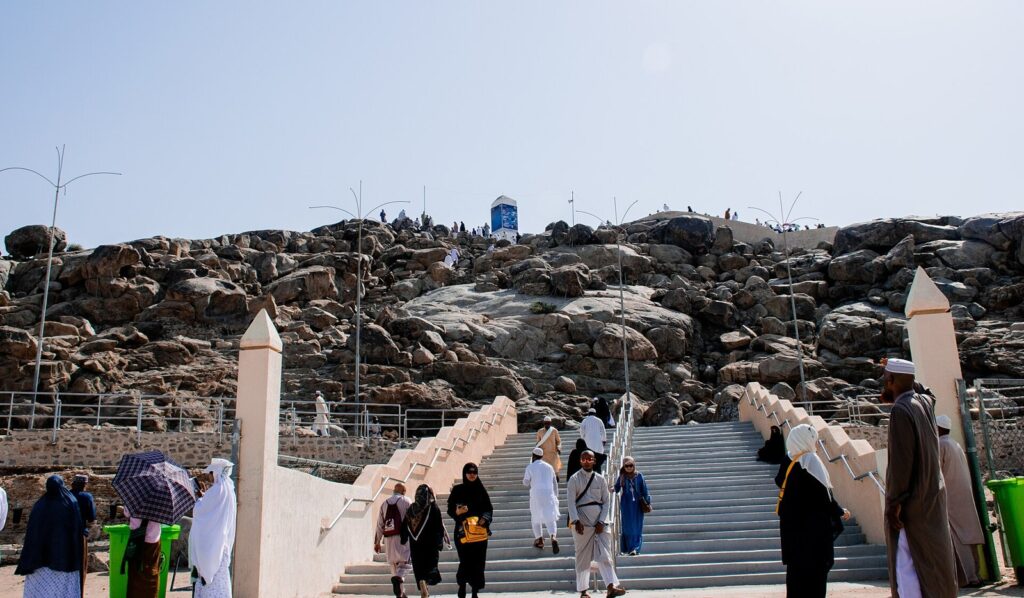
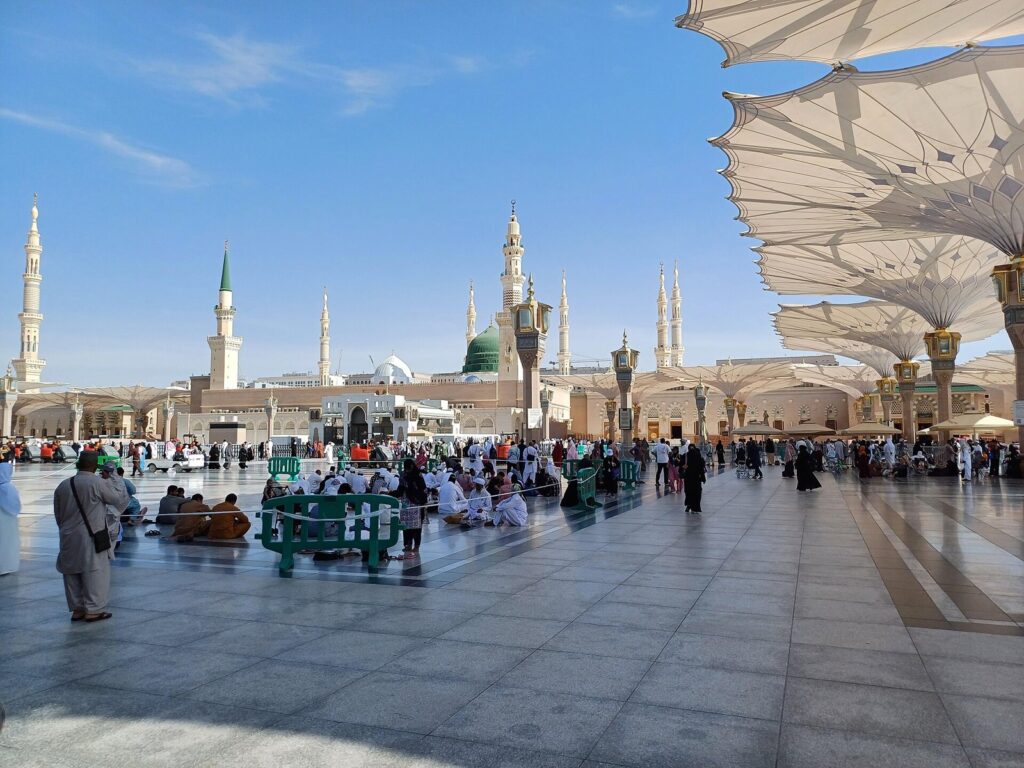
For the pilgrims, the Day of Arafah is the most important day of Hajj. In the morning they move from Mina to Arafat, the noon and afternoon prayers are performed together at Arafat, and dua is made standing or sitting until sunset; without this standing, Hajj does not take place. The sermon delivered in the Namirah Mosque and the duas at the foot of the Mount of Mercy are the emblematic scenes of the Day of Arafah. In the evening they come down from Arafat to Muzdalifah. We explained the ruling of the standing in our article on standing at Arafat, and the visiting information for the mountain in our article on Mount Arafat and the Mount of Mercy.
What can you do to join the pilgrims’ dua on the Day of Arafah?
Those who cannot go on Hajj can share in this spiritual atmosphere by making dua from noon until evening on the Day of Arafah, at the same hours as the pilgrims at Arafat; Diyanet also recommends making dua at these hours. Asking your relatives on Hajj to pray for you, praying for them yourself, and making peace with the pilgrims when they return are the continuation of this togetherness.
Living the Day of Arafah as a Family
The Day of Arafah is a day on which the family comes together before the bustle of Eid begins, grievances are settled and dua is made. Explaining the meaning of the fast of Arafah to children, reciting the dua of Arafah together at the iftar table and preparing for the morning of Eid fill the day with worship and family bonds. For those who cannot go on Hajj, remembering Arafat on this day keeps the intention of Hajj alive; we explained the Hajj registration and lottery process in our article on how to apply for Hajj.
At RotaNur we bring the Day of Arafah to life at Arafat in our Hajj programmes, with a guide and with the order of dua and the standing; for the programmes see our Hajj tours page, and for your questions write to us 24/7 from our contact page or the WhatsApp button on this page.
Frequently Asked Questions
Are graves visited on the Day of Arafah?
Yes, graves may be visited at any time, and the Day of Arafah is no exception; but it is not a ruling or Sunnah particular to Arafah. In Türkiye, visiting graves before Eid is a deep-rooted tradition. Reciting al-Fatihah and al-Ikhlas during the visit, dedicating the reward and praying for the dead is enough; practices such as lighting candles at graves have no religious basis.
Are the eve of Ramadan and the Day of Arafah the same thing?
No, in the religious sense the Day of Arafah is the ninth day of Dhul Hijjah, the day before Eid al-Adha. Although the day before Eid al-Fitr is popularly called “arife” in Turkish, rulings such as the fast of Arafah, the dua of Arafah and the takbirs of Tashriq belong only to the eve of Eid al-Adha. The last day of Ramadan is already spent fasting.
Are the fast of Arafah and the fast of Dhul Hijjah the same?
Fasting on the first nine days of Dhul Hijjah is recommended; the fast of Arafah is the last and most virtuous of these nine days. Those who cannot fast all nine days may fast only on the Day of Arafah. There is no fasting on the first day of Eid; fasting on the days of Tashriq, the second, third and fourth days of Eid, is also disliked.
Is there such a thing as the prayer of the Day of Arafah?
There is no particular prayer for the Day of Arafah in the Sunnah; the takbir of Tashriq is recited after the obligatory prayers, and voluntary prayers may be performed if one wishes. The special Arafah prayers mentioned in some sources have no authentic basis. Spending the day in dua, fasting, the Qur’an and repentance is enough.
Do you need to face the qiblah when making dua on the Day of Arafah?
Facing the qiblah is not a condition of dua, but it is good and in keeping with the practice of the Prophet; at Arafat the pilgrims also make dua facing the qiblah. Raising the hands, making dua in a low voice and with persistence, and beginning and ending the dua with praise and blessings on the Prophet are part of the etiquette of dua. We explained the other places and times at which duas are accepted in our article on the places where duas are accepted.

Cihat Murat Yüksel is the editor of the RotaNur blog and the founder of Markention. Drawing on the sources of Türkiye's Presidency of Religious Affairs (Diyanet), he turns the questions travellers ask most about preparing for Umrah, Hajj and halal travel into clear, practical guides.
Questions answered in this article
What Is the Day of Arafah, and When Is It?
Arafah is the ninth day of Dhul Hijjah, the twelfth month of the Hijri calendar, the day before Eid al-Adha. It takes its name from Arafat, because the standing at Arafat, the pillar of Hajj, is performed on this day. In Turkish the day before Eid al-Fitr is also called “arife”; but in the religious literature the Day of Arafah means the ninth of Dhul Hijjah, and the rulings in this article belong to that day. The Day of Arafah is also the day on which verse 3 of Surah al-Ma’idah, “Today I have perfected your religion for you”, was revealed to the Prophet (peace be upon him) at Arafat during the Farewell Hajj.
When is the Day of Arafah in 2027?
In 2027 the Day of Arafah is the day before the first day of Eid al-Adha and is expected to fall in the middle of May 2027; the exact day is determined by the calendar of religious days published by Diyanet. Because the Hijri calendar follows the lunar year, Arafah comes about eleven days earlier in the Gregorian calendar each year; in the coming years the Day of Arafah will therefore move from spring towards winter.
Why is the Day of Arafah important?
The Day of Arafah is the day on which the standing at Arafat, the pillar of Hajj, is performed, the day mentioned in the hadith as the one on which Allah frees the most servants from the Fire, and the day on which verse 3 of Surah al-Ma’idah was revealed. For those who cannot go on Hajj, the fast of Arafah is counted as an expiation for the sins of two years; for this reason it is regarded as one of the most virtuous days of the year.
Which dua is recited on the Day of Arafah?
The words the Prophet (peace be upon him) recommended for the Day of Arafah are the declaration of oneness “La ilaha illallahu wahdahu la sharika lah, lahu l-mulku wa lahu l-hamdu wa huwa ‘ala kulli shay’in qadir”. Alongside this, repentance and seeking forgiveness, blessings on the Prophet, the dua in verse 201 of Surah al-Baqarah and the person’s own duas in their own language are recited. It is not obligatory to recite a particular dua; what matters is to spend the day in dua and remembrance.
Do you fast on the Day of Arafah?
Yes, for those not on Hajj it is recommended to fast on the Day of Arafah, and the hadith mentions it as an expiation for two years of sins. For the pilgrims at Arafat, on the other hand, not fasting is the Sunnah; it is more virtuous for them to spend the day of the standing in dua. Fasting on the first day of Eid is forbidden; the fast of Arafah is limited to the day before Eid.
When do the takbirs of Tashriq begin and end?
The takbirs of Tashriq begin with the morning prayer of the Day of Arafah and end with the afternoon prayer of the fourth day of Eid al-Adha; they are said after a total of twenty-three obligatory prayers. According to the Hanafi school they are necessary; if forgotten, they are said as soon as one remembers, provided one has not spoken after the prayer. The takbir is also recited after prayers made up later.