







Contents 17 sections
- What Is the Black Stone, and Where Is It?
- What does Hajar al-Aswad mean?
- The Narration That It Came from Paradise
- Why is the Black Stone black?
- The Arbitration of the Prophet
- The Qarmatian Raid and the Stone’s Twenty-Two Years
- How many pieces is the Black Stone in?
- The Black Stone Through History: A Summary Table
- Istilam: How Is the Black Stone Greeted?
- Is kissing the Black Stone obligatory?
- Narrations About the Black Stone and Its Virtue
- Does touching the Black Stone wipe away sins?
- In the Sources: What Is Authentic and What Is Not
- Does the Black Stone grant wishes?
- Practical Notes for Visitors
- Performing Tawaf with an Understanding of the Black Stone
- Frequently Asked Questions
The Black Stone, known in Arabic as Hajar al-Aswad (also written hajarul aswad or Hajarul Aswad), is the black stone set into the eastern corner of the Kaaba, protected within a silver frame, which marks the starting point of tawaf. This name, meaning “black stone”, belongs to one of the most talked-about objects in Islamic history: the narration that it was sent down from Paradise, the arbitration the Prophet (peace be upon him) showed as a young man when placing the stone, the Qarmatians carrying it away from Makkah, and its preservation today in fragments make it both a sign for worship and a witness to history. In this article we explain what the Black Stone is, where it is, how it is described in the sources, what happened to it through history, the etiquette of istilam and its ruling, following the approach of Diyanet (Türkiye’s Presidency of Religious Affairs) and the sources of Islamic history.
What Is the Black Stone, and Where Is It?
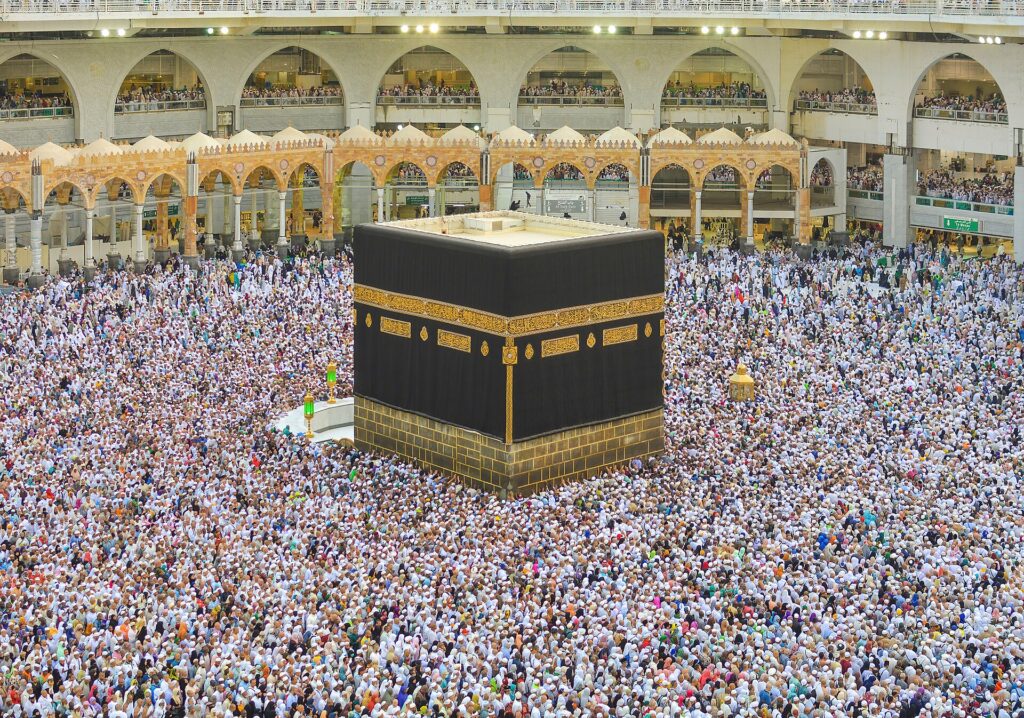
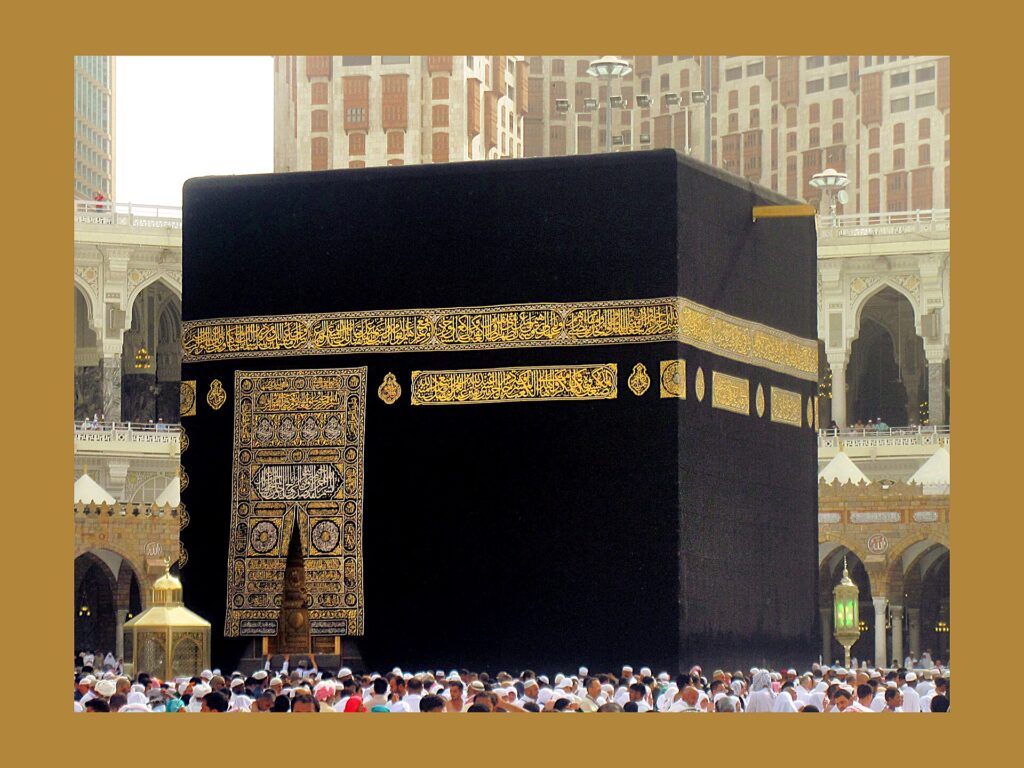
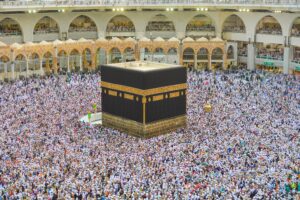
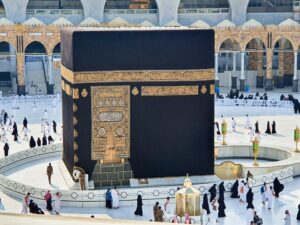
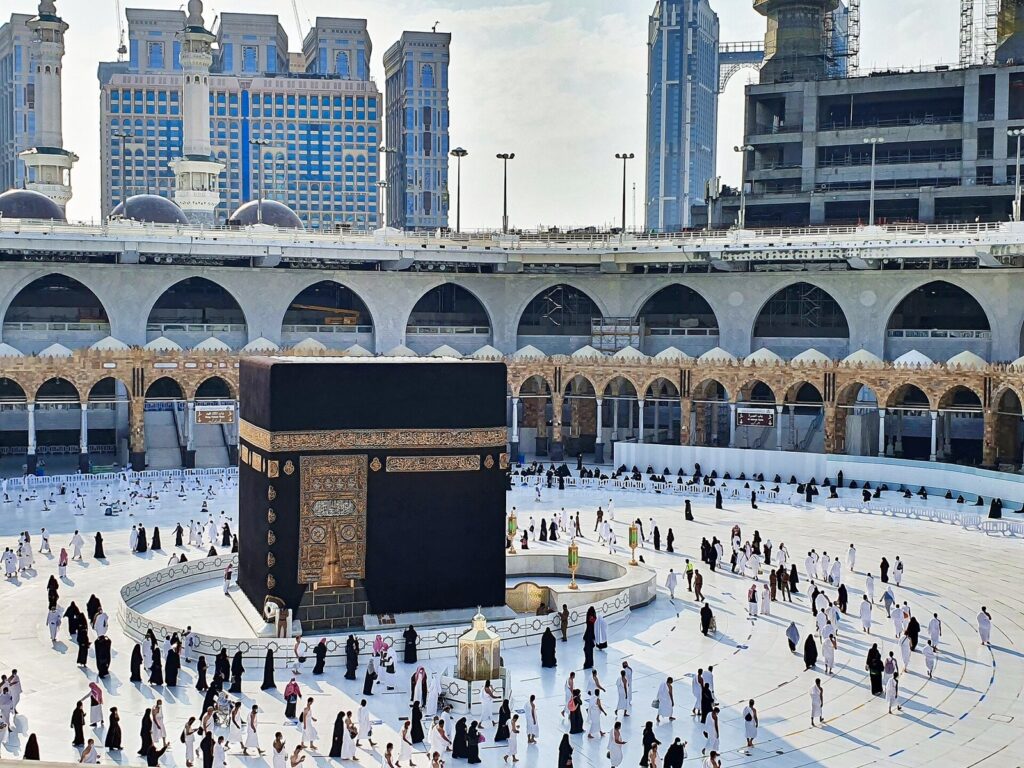
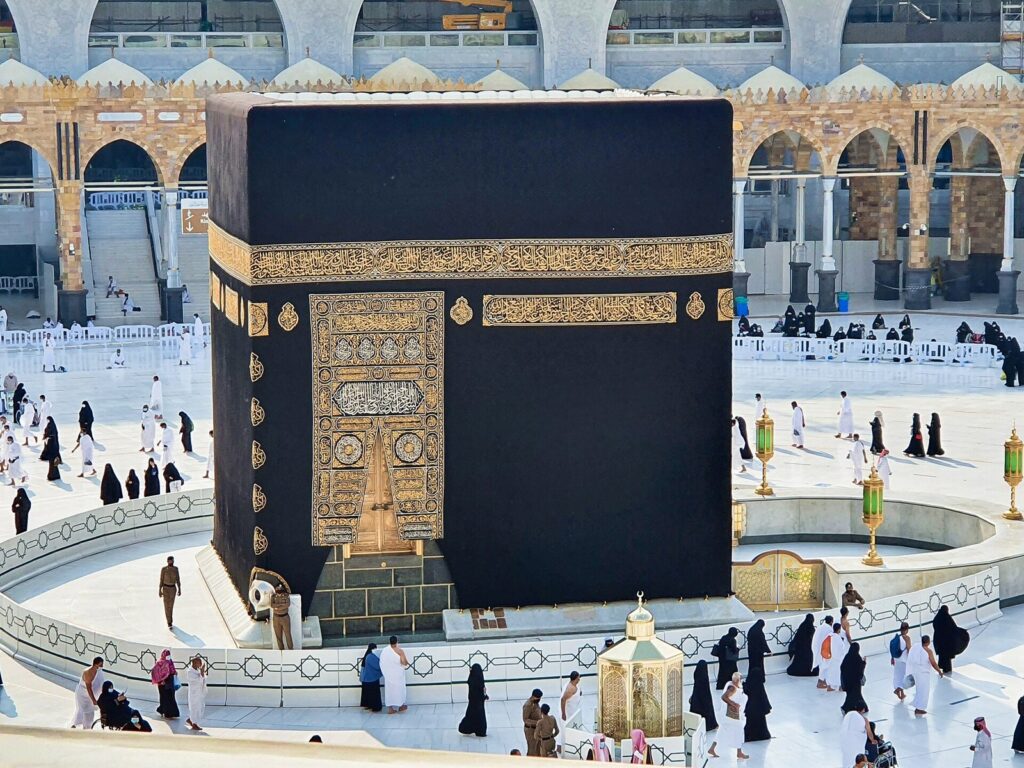
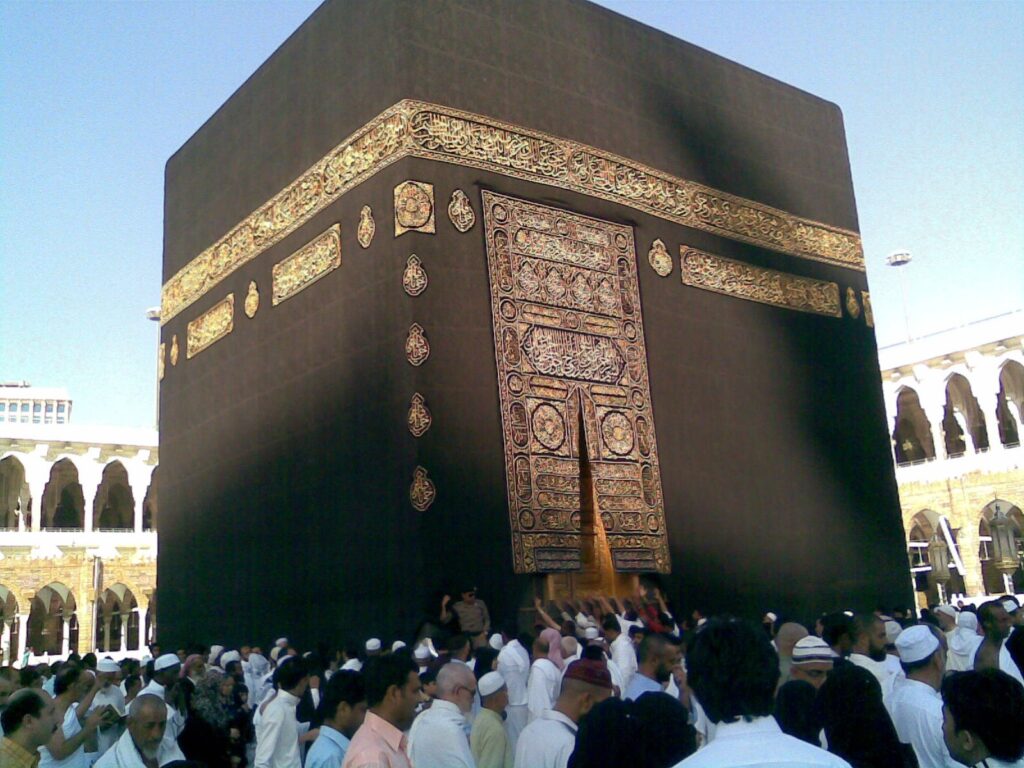
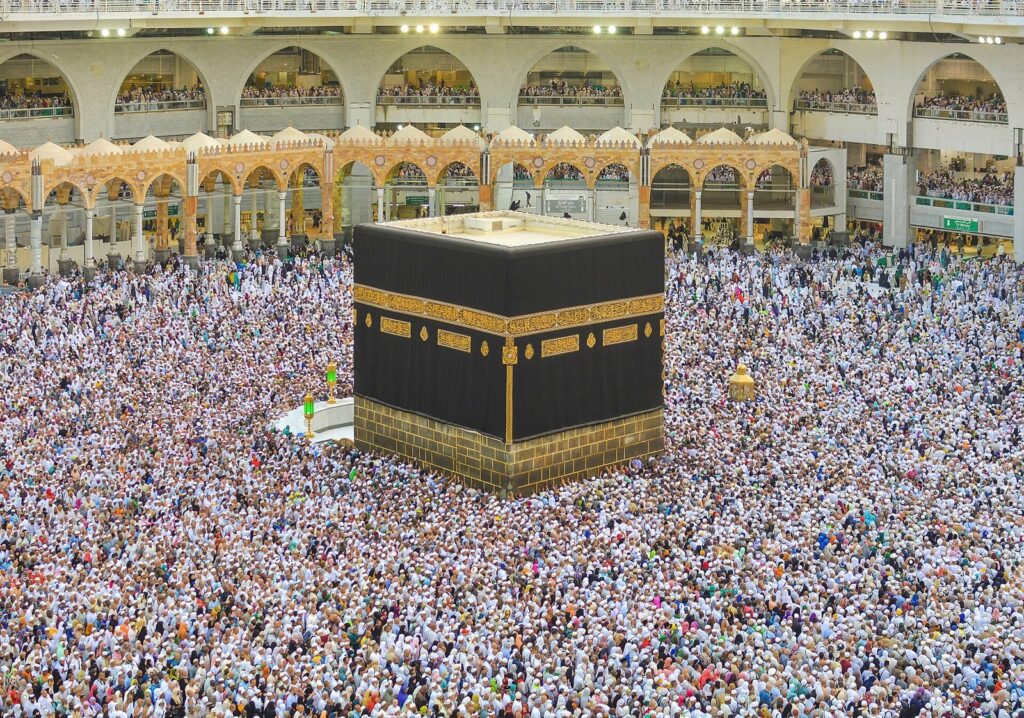
The Black Stone is a stone of a dark reddish-black colour set about one and a half metres above the ground into the corner of the Kaaba that faces east, the Rukn al-Aswad. Its visible surface is about thirty centimetres across; the silver frame surrounding the stone both protects it and shows those performing tawaf where its line lies. Tawaf begins at this corner and ends here again after seven rounds. The section of wall between the corner of the Black Stone and the door of the Kaaba is the Multazam; for details of this place, where dua is hoped to be accepted, see our article on the parts of the Kaaba.
What does Hajar al-Aswad mean?
Hajar al-Aswad means “black stone” in Arabic; “hajar” means stone and “aswad” means black. The same meaning is expressed by “the Black Stone” in English. As a term it refers to the blessed stone at the eastern corner of the Kaaba that marks the beginning and end of tawaf; the other corners of the Kaaba are known as the Rukn al-Iraqi, the Rukn al-Shami and the Rukn al-Yamani.
The Narration That It Came from Paradise
The best-known narration about the origin of the Black Stone appears in Tirmidhi: the Prophet (peace be upon him) reported that the stone was sent down from Paradise, that it was whiter than milk when it came down, and that the sins of people blackened it. Islamic historians relate that while the Prophet Ibrahim and his son Ismail were building the Kaaba, the angel Jibril brought the stone and Ibrahim set it in the corner where it stands today. The account that it was preserved on Mount Abu Qubays during the flood of Nuh also appears in the classical sources.
Some of these narrations are assessed by hadith scholars as “hasan” (sound), while others are accounts that remain in the books of biography and history. Diyanet’s publications emphasise the spiritual value the Black Stone carries as part of the Kaaba; no power to benefit or harm is attributed to the stone itself. This measure is set out most clearly in the words of Umar.
The words of Umar: “I know that you are a stone; you neither benefit nor harm. Had I not seen the Messenger of Allah kiss you, I would not have kissed you.” (Bukhari, Hajj 50; Muslim, Hajj 248)
Why is the Black Stone black?
The hadith reports that the stone was at first whiter than milk and was blackened by the sins of people; scholars have interpreted this expression both literally and figuratively. Fires, touching and perfumes applied over the centuries have darkened the surface of the stone. Views such as a meteorite or volcanic rock have been put forward about the material of the stone, but as no scientific examination has been carried out on it, no definite conclusion has been reached.
The Arbitration of the Prophet
When the Prophet (peace be upon him) was thirty-five years old, the Quraysh rebuilt the Kaaba, which had been damaged by a flood. When it came to putting the Black Stone back in its place, the tribes could not agree on who would carry this honour, and the dispute reached the point of armed conflict. In the end it was decided that the first person to enter the Mosque would be the arbiter; the one who entered was Muhammad, known as “al-Amin”, the trustworthy. The Prophet spread his cloak on the ground, placed the stone on it, asked the chief of each tribe to hold a corner of the cloak, and when the stone reached the corner he set it in place with his own hands. This event tells of the trust the Makkans placed in him even before his prophethood, and of a crisis resolved with justice.
The story of the arbitration still carries two lessons today. The first is that a sacred task can be shared, and that honour does not belong to a single tribe or person; the second is that the value of the Black Stone comes not from the one who carries it, but from obedience to the command of Allah. Guides make a particular point of this event in their explanations before tawaf; because every round of tawaf begins at this corner, and the visitor performs istilam remembering the hands that placed the stone.
The Qarmatian Raid and the Stone’s Twenty-Two Years
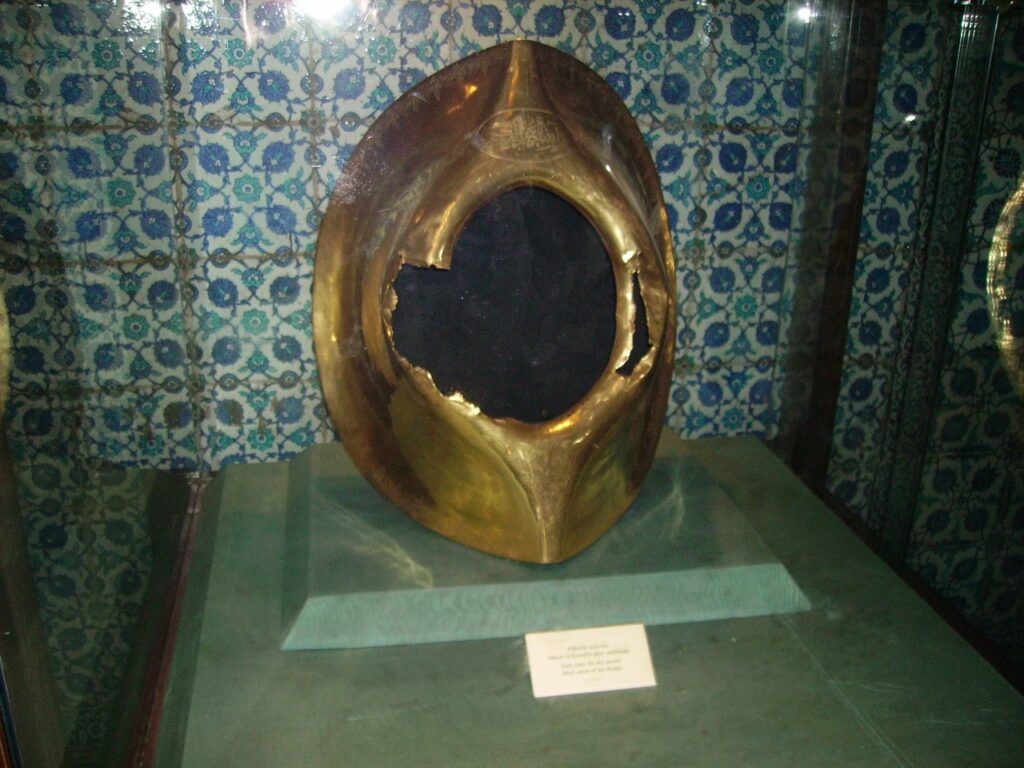
In the year 317 of the Hijrah (930 CE), the Qarmatian leader Abu Tahir al-Jannabi raided Makkah during the Hajj season, massacred the pilgrims, tore the Black Stone from its place and carried it to Hajar in the Bahrain region. The stone remained away from Makkah for twenty-two years and was brought back and set in its place in the year 339 of the Hijrah (951 CE). The stone was damaged in this period; in the following centuries small pieces also broke off because of attacks and accidents. Today the Black Stone is not a single piece; it is fixed within the silver frame in several fragments, and the frame has been renewed several times through history in the Abbasid, Ottoman and Saudi periods. One of the old frames renewed in the Ottoman period is today displayed in the Sacred Relics section of Topkapı Palace in Istanbul; together with the old door coverings, the waterspout and the keys of the Kaaba, this frame is a record of the care the Ottomans devoted to the two holy cities.
How many pieces is the Black Stone in?
The Black Stone is not a single piece today; because of the Qarmatian raid and later damage it has broken into several fragments, which are fixed within the silver frame with a special mortar. The sources give the number of pieces differently; those apart from the fragments visible within the frame are hidden beneath the mortar. The dark surface seen by visitors is made up of these fragments together.
The Black Stone Through History: A Summary Table
| Period | Event | Outcome |
|---|---|---|
| The Prophet Ibrahim | The stone set in the corner during the building of the Kaaba | The starting point of tawaf established |
| Around 605 CE | The Quraysh’s repair of the Kaaba and the arbitration of Muhammad | The stone carried on a cloak and set in place |
| 930 CE | The Qarmatian raid on Makkah | The stone carried off to Hajar |
| 951 CE | The return of the stone to Makkah | Set in place in damaged condition |
| The Abbasid and Ottoman periods | Renewal of the frame in silver | The fragments secured, the frame approached its present form |
| Today | Care and protection by the Saudi authorities | The silver frame renewed regularly |
Istilam: How Is the Black Stone Greeted?
Greeting the Black Stone at the beginning of tawaf and at the end of each round is called istilam. The Prophet kissed the stone, touched it with his hand, and when it was crowded pointed to it with the staff in his hand from on his camel; for this reason istilam has three forms. According to the Hanafi school istilam is Sunnah, not obligatory or necessary; trying to reach the stone by harming others in the crowd is not correct. We explained all the steps of tawaf in our guide on how to perform tawaf.
- Kissing (taqbil): If possible, the stone is touched and kissed; this is the practice of the Prophet.
- Touching with the hand: If kissing is not possible, the hand or an object held in the hand is placed on the stone, and then the hand is kissed.
- Pointing from a distance: In a crowd, on coming in line with the stone, one points towards it with the right hand or both hands and says “Bismillahi Allahu akbar”; the hand is not kissed.
Is kissing the Black Stone obligatory?
No, kissing the Black Stone is neither obligatory nor necessary; according to the Hanafi school istilam is Sunnah, and in a crowd it is fulfilled by pointing from a distance. Pushing, hurting others and disrupting the order of tawaf in order to reach the stone is not considered permissible. Diyanet recommends that in crowded periods istilam be done by pointing, and that women do not enter the crush.
Narrations About the Black Stone and Its Virtue
Several narrations about the virtue of the Black Stone appear in the sources. A hadith narrated by Tirmidhi reports that touching the Black Stone and the Rukn al-Yamani wipes away sins, and another narration that the stone will bear witness on the Day of Judgement for those who greeted it rightly. These narrations have been accepted as hasan by the scholars of hadith. Istilam is Sunnah for the Rukn al-Yamani too; but that corner is not kissed, only touched with the hand or pointed to.
It is also Sunnah to recite the dua “Rabbenâ âtinâ fi’d-dünyâ haseneten ve fi’l-âhireti haseneten ve kınâ azâbe’n-nâr” (Our Lord, give us good in this world and good in the Hereafter, and protect us from the punishment of the Fire) in the section between the Rukn al-Yamani and the Black Stone; Abu Dawud narrates that the Prophet recited this dua in this part of tawaf. Thus the last section of each round reaches the Black Stone with this dua recited between the two corners, and the new round begins with istilam.
To understand these narrations correctly, one must remember the words of Umar: the virtue comes not from the stone itself, but from following the Sunnah of the Prophet and from devotion to the command of Allah. For this reason nothing is asked of the stone when performing istilam; one turns to Allah and says “Bismillahi Allahu akbar”. For what to recite on first seeing the Kaaba, see our article on the dua on seeing the Kaaba.
Does touching the Black Stone wipe away sins?
The hadith in Tirmidhi reports that touching the Black Stone and the Rukn al-Yamani wipes away sins; scholars accept this narration as hasan. This does not mean that the stone has a power of its own; the reward comes from worshipping in accordance with the Sunnah of the Prophet. A person who cannot touch it in the crowd fulfils the same Sunnah by pointing from a distance.
In the Sources: What Is Authentic and What Is Not
Some of what is said about the Black Stone rests on authentic hadiths, some on weak narrations, and some on popular tales; distinguishing between them preserves the awareness of the visit. The narrations accepted as authentic or sound are these: that the Prophet kissed the stone and performed istilam (Bukhari, Muslim); the words of Umar, “you are a stone” (Bukhari, Muslim); that the stone came down from Paradise and was whiter than milk (Tirmidhi, hasan sahih); that touching it wipes away sins and that it will bear witness on the Day of Judgement (Tirmidhi, hasan). The Quraysh’s repair of the Kaaba and the arbitration of the Prophet, meanwhile, is a historical event widely related in the sources of the Prophet’s biography.
By contrast, the accounts that the stone came from Paradise together with Adam, that it was hidden on Abu Qubays during the flood, that it grants wishes or heals illness either rest on weak narrations or have no source at all. Diyanet’s approach is clear: respect for the Black Stone consists of following the Sunnah of the Prophet; asking something of the stone, making vows to it or carrying a piece of it as a charm is not religiously correct.
Does the Black Stone grant wishes?
No, there is no authentic narration that the Black Stone grants wishes or heals; the words of Umar, “you are a stone, you neither benefit nor harm”, clearly reject this belief. Dua is made to Allah alone; the duas made beside the Black Stone or at the Multazam are also directed to Allah. The virtue of the stone is the reward of performing istilam in accordance with the Sunnah.
Practical Notes for Visitors
Reaching the Black Stone is almost impossible in busy periods such as Ramadan and Hajj; in quiet periods an opportunity may be found after midnight and before the morning prayer. The Saudi authorities make arrangements around the corner in some periods and restrict access. In Umrah programmes, guides generally recommend that istilam be done by pointing during the first tawaf, and that any attempt to approach the stone be left to a quiet night of the programme; when approaching the corner one must not walk against the flow of tawaf, and must follow the directions of the staff. Signs showing the line of the Black Stone are found on the floor and walls of the mosque; on reaching the line, istilam is performed and the round begins.
- Elderly and sick travellers and those with children should not attempt to approach the stone, and should be content with pointing from a distance.
- It is not appropriate for women to enter the crush; istilam by pointing fulfils the Sunnah completely.
- Applying perfume to the stone, trying to take a piece of it or leaving anything on it is forbidden and disrespectful.
- Stopping at the corner to take photographs with your phone during tawaf disrupts the flow of the thousands behind you.
Important: Being unable to reach the Black Stone does not diminish tawaf. Because it is narrated that the Prophet (peace be upon him) pointed to it from a distance in the crowd, istilam by pointing is the full equivalent of the Sunnah. What matters for the validity of tawaf is to start in line with the Black Stone and to complete seven rounds.
Performing Tawaf with an Understanding of the Black Stone
To perform tawaf knowing the story of the Black Stone is to find a reminder in every round of the worship: the building by Ibrahim, the justice of the Prophet, the consciousness of monotheism in Umar, and the millions of circuits that have begun at the same corner across the centuries. When you first approach the Kaaba on your Umrah journey, your eye will first look for the silver frame; remember at that moment that you are turning not to the stone, but to the command the stone points to. For all the steps of Umrah, see our guide on how to perform Umrah.
At RotaNur we explain the etiquette of tawaf, how istilam is performed and the parts of the Kaaba on the spot, with a guide, in our Umrah programmes. For programme options see our Umrah tours page, and for your questions write to us 24/7 from our contact page or the WhatsApp button on this page.
Frequently Asked Questions
Who may touch the Black Stone?
Every Muslim, woman or man, may touch and kiss the Black Stone; there is no religious restriction. The restriction comes from the crowd and from safety: the Saudi authorities regulate access to the corner in busy periods, and women and the elderly are advised not to enter the crush. Everyone who cannot touch it performs istilam by pointing from a distance.
Why is the frame of the Black Stone silver?
To hold the fragmented stone together and prevent its wear, the stone has been surrounded by a silver frame since the Abbasid period; silver was preferred because it is durable and does not tend to ostentation like gold. The frame has been renewed several times by the Ottoman sultans and the Saudi authorities, and the old frame has been preserved at each renewal.
Is it necessary to start tawaf from the Black Stone?
Yes, tawaf begins in line with the Black Stone and each round is completed on this line; according to the Hanafi school, a first round begun before the line is not counted as complete and must be completed. The signs on the floor and wall of the mosque show the line. It is not necessary to touch the Kaaba or reach the corner; being in line is enough.
What is the difference between the Rukn al-Yamani and the Black Stone?
The Black Stone is at the eastern corner and is kissed, touched with the hand or pointed to; the Rukn al-Yamani is the southern corner, and is only touched with the hand or pointed to, not kissed. The Prophet performed istilam at both corners and did not touch the other two. It is Sunnah to recite the dua “Rabbena atina” between the two corners.
How is the Black Stone maintained today?
The stone and its frame are cleaned regularly by the administration of Masjid al-Haram; the frame is renewed as it wears, and the stone is protected with a special mortar. During the ceremonies of washing the Kaaba, the area around the frame is also cleaned. Visitors applying perfume or sticking anything to the stone makes this maintenance harder, and is therefore forbidden.

Cihat Murat Yüksel is the editor of the RotaNur blog and the founder of Markention. Drawing on the sources of Türkiye's Presidency of Religious Affairs (Diyanet), he turns the questions travellers ask most about preparing for Umrah, Hajj and halal travel into clear, practical guides.
Questions answered in this article
What Is the Black Stone, and Where Is It?
The Black Stone is a stone of a dark reddish-black colour set about one and a half metres above the ground into the corner of the Kaaba that faces east, the Rukn al-Aswad. Its visible surface is about thirty centimetres across; the silver frame surrounding the stone both protects it and shows those performing tawaf where its line lies. Tawaf begins at this corner and ends here again after seven rounds. The section of wall between the corner of the Black Stone and the door of the Kaaba is the Multazam; for details of this place, where dua is hoped to be accepted, see our article on the parts of the Kaaba.
What does Hajar al-Aswad mean?
Hajar al-Aswad means “black stone” in Arabic; “hajar” means stone and “aswad” means black. The same meaning is expressed by “the Black Stone” in English. As a term it refers to the blessed stone at the eastern corner of the Kaaba that marks the beginning and end of tawaf; the other corners of the Kaaba are known as the Rukn al-Iraqi, the Rukn al-Shami and the Rukn al-Yamani.
Why is the Black Stone black?
The hadith reports that the stone was at first whiter than milk and was blackened by the sins of people; scholars have interpreted this expression both literally and figuratively. Fires, touching and perfumes applied over the centuries have darkened the surface of the stone. Views such as a meteorite or volcanic rock have been put forward about the material of the stone, but as no scientific examination has been carried out on it, no definite conclusion has been reached.
How many pieces is the Black Stone in?
The Black Stone is not a single piece today; because of the Qarmatian raid and later damage it has broken into several fragments, which are fixed within the silver frame with a special mortar. The sources give the number of pieces differently; those apart from the fragments visible within the frame are hidden beneath the mortar. The dark surface seen by visitors is made up of these fragments together.
Istilam: How Is the Black Stone Greeted?
Greeting the Black Stone at the beginning of tawaf and at the end of each round is called istilam. The Prophet kissed the stone, touched it with his hand, and when it was crowded pointed to it with the staff in his hand from on his camel; for this reason istilam has three forms. According to the Hanafi school istilam is Sunnah, not obligatory or necessary; trying to reach the stone by harming others in the crowd is not correct. We explained all the steps of tawaf in our guide on how to perform tawaf.
Is kissing the Black Stone obligatory?
No, kissing the Black Stone is neither obligatory nor necessary; according to the Hanafi school istilam is Sunnah, and in a crowd it is fulfilled by pointing from a distance. Pushing, hurting others and disrupting the order of tawaf in order to reach the stone is not considered permissible. Diyanet recommends that in crowded periods istilam be done by pointing, and that women do not enter the crush.