






Contents 18 sections
- In Which Country and City Is Hajj Performed?
- In which country is Hajj performed?
- The Pilgrims’ Route: From Jeddah and Madinah to Makkah
- How do you get from Jeddah to Makkah?
- Makkah and Masjid al-Haram: The Centre of Hajj
- Where Is Arafat? The Plain That Is the Pillar of Hajj
- Where is Arafat, and how many kilometres is it from Makkah?
- Where Is Muzdalifah, and What Does It Mean?
- What is done at Muzdalifah?
- Where Is Mina? The Tent City and the Jamarat
- Where is Mina, and how many kilometres is it from Makkah?
- Which Day, Where? Distances and Transport
- Where Is the Hajj Sacrifice Slaughtered?
- Can the Hajj sacrifice be slaughtered in Türkiye?
- Is Madinah Required for Hajj?
- Do you go to Makkah or Madinah first for Hajj?
- Why Is It Important to Know the Hajj Areas?
- Frequently Asked Questions
The short answer to where is Hajj performed is the city of Makkah in Saudi Arabia; but Hajj is not an act of worship completed only around the Kaaba. For five days, pilgrims move between Makkah and the three areas to the east of the city, Mina, Muzdalifah and Arafat; each area has its own role, its own day and its own ruling within the Hajj. In this article we explain in which country and city Hajj is performed, where Arafat, Muzdalifah and Mina are, the distances between them, where pilgrims are on each day and how they are transported between these areas, following the Hajj guide of Diyanet (Türkiye’s Presidency of Religious Affairs). You will find how the rites are performed in a separate guide.
In Which Country and City Is Hajj Performed?
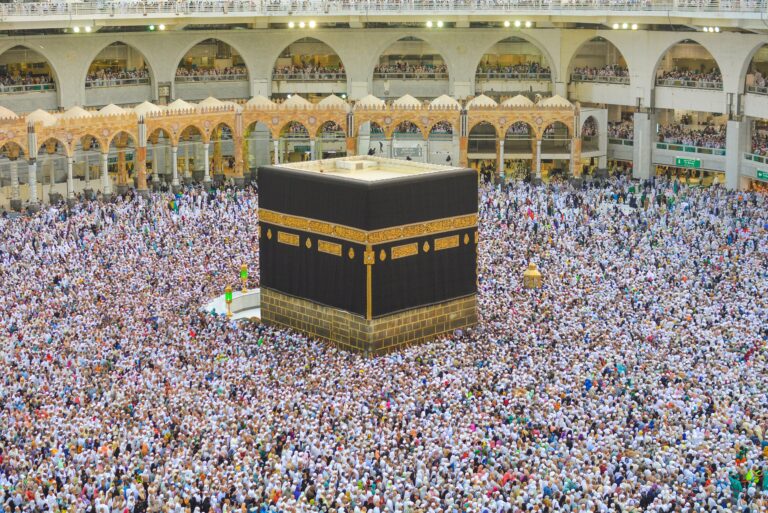
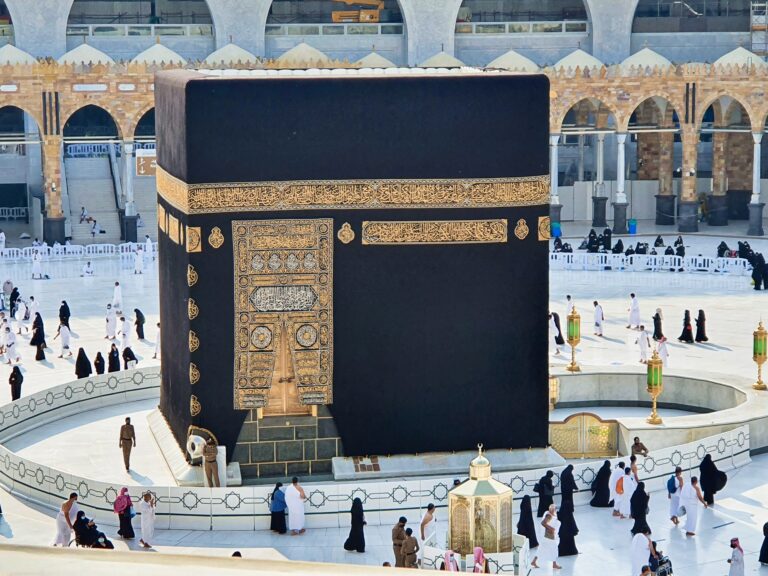
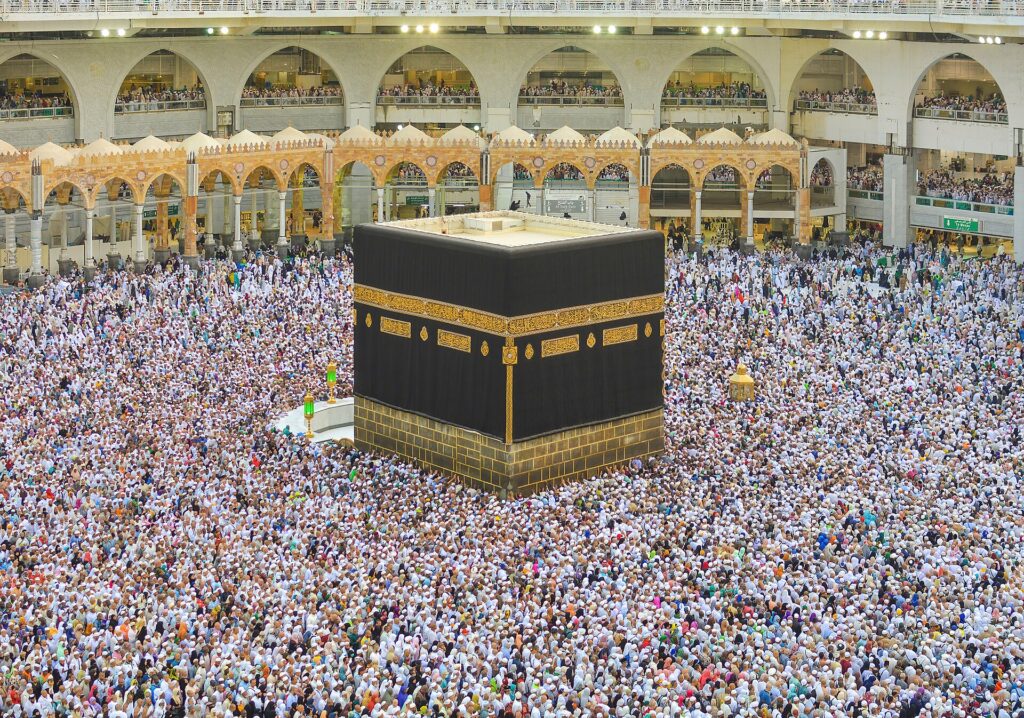
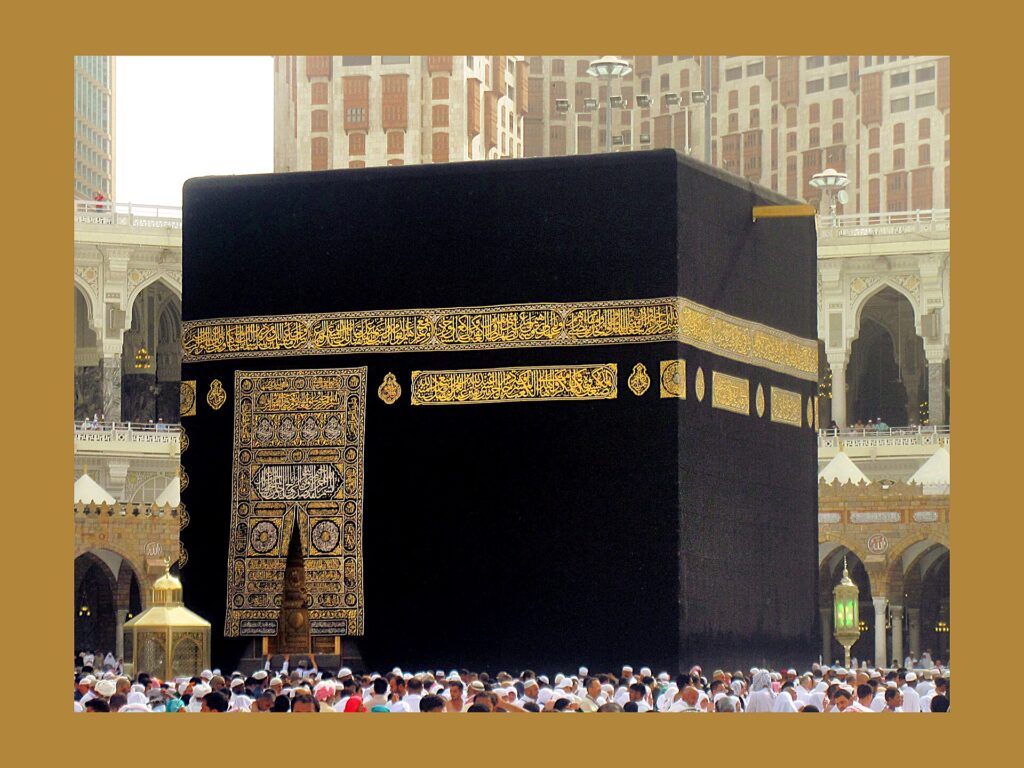
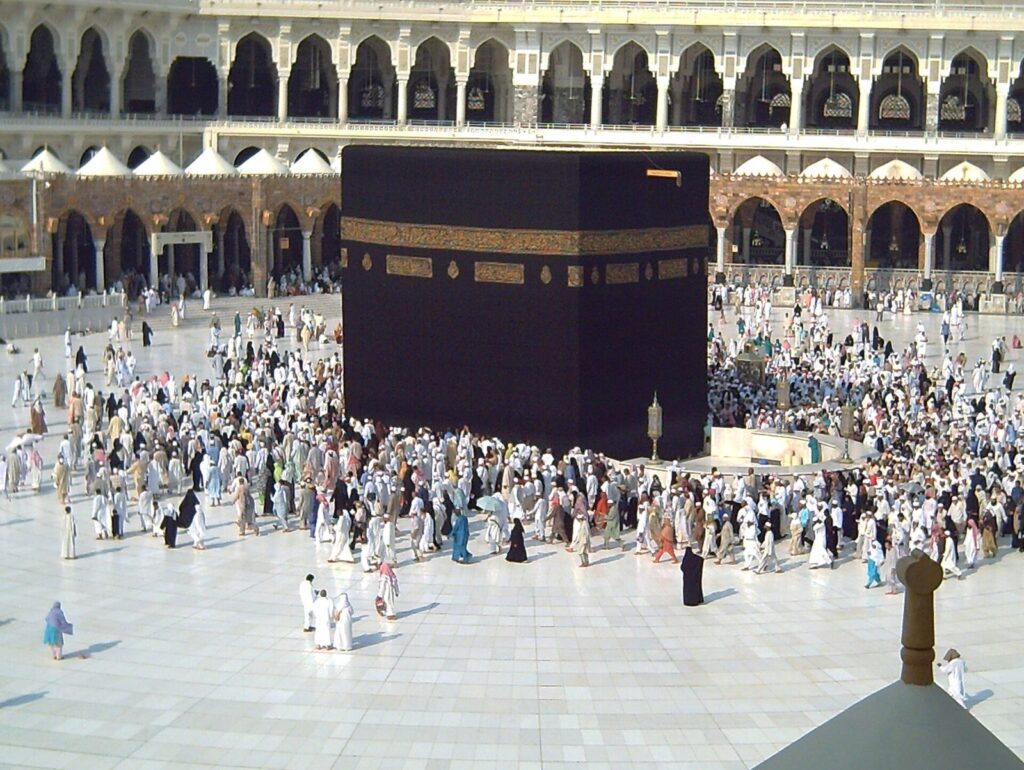
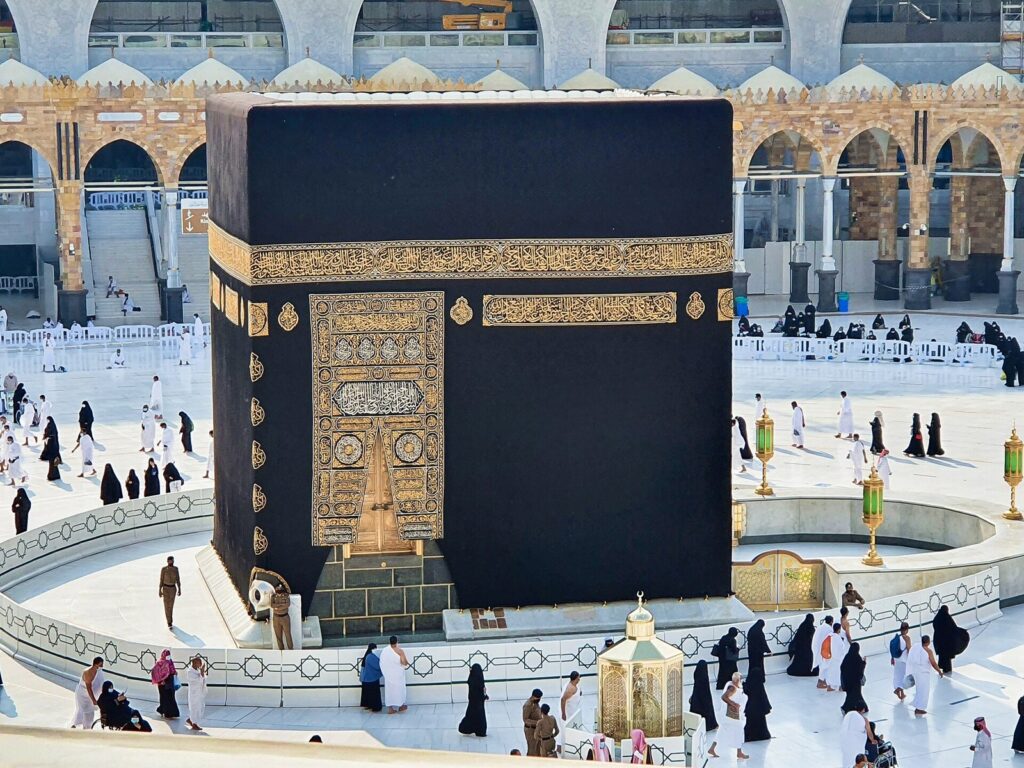
Hajj is performed in the Hijaz region in the west of the Kingdom of Saudi Arabia, in the city of Makkah al-Mukarramah and in three areas known as the Mashair immediately to the east of the city. Masjid al-Haram, where the Kaaba stands, is the centre where the tawaf and sa’i parts of Hajj are performed; the standing at Arafat, the standing at Muzdalifah, the stoning of the Jamarat and the sacrifice take place outside Makkah, at Arafat, Muzdalifah and Mina. Hajj cannot be performed anywhere else in the world, because the standing at Arafat, which is the pillar of Hajj, is valid only within the boundaries of Arafat.
Pilgrims from Türkiye land at the Hajj terminal of King Abdulaziz Airport in Jeddah or at Madinah Airport. Jeddah is about an hour and a half from Makkah by road; groups landing in Madinah make the Madinah visit first and then move on to Makkah. Although Madinah is not part of the worship of Hajj, it is included in almost every programme for the visit to the grave of the Prophet (peace be upon him).
In which country is Hajj performed?
Hajj is performed only in Saudi Arabia, in the city of Makkah and in the areas of Arafat, Muzdalifah and Mina to the east of Makkah. Because the Kaaba is in Makkah and the standing at Arafat is counted as the pillar of Hajj, it is not possible to perform the worship in another country or city. The visit to Madinah is not part of Hajj; it is made by virtue of the Sunnah and its merit.
The Pilgrims’ Route: From Jeddah and Madinah to Makkah
For pilgrims from Türkiye, the geography of Hajj begins at the airport. The Hajj terminal of King Abdulaziz Airport in Jeddah is a giant tent structure used only in the Hajj season, where groups from the four corners of the world are received; from here they travel to Makkah by bus. Groups landing at Madinah Airport first visit the Prophet’s Mosque and then come to Makkah by road or by the Haramain high-speed train. Which airport is used depends on Diyanet’s group plan; in both arrangements pilgrims have entered ihram before arriving in Makkah.
- Those landing in Jeddah: Because Jeddah lies within the miqat boundaries, ihram is entered on the plane before passing the miqat line; the journey from the airport to Makkah takes about an hour and a half by bus.
- Those landing in Madinah: When moving on to Makkah after the Madinah days, ihram is entered at the miqat of Dhul Hulaifah (Abyar Ali); the train journey takes two and a half hours and the road journey four to five hours.
- Arrival in Makkah: After checking in at the hotel, the Umrah or the arrival tawaf is performed according to the type of Hajj, and pilgrims stay in Makkah until the Day of Tarwiyah.
How do you get from Jeddah to Makkah?
Diyanet and agency groups travel from Jeddah Airport to Makkah by bus; the road is about eighty kilometres and takes an hour and a half. The Haramain high-speed train also runs from the Jeddah Airport station to Makkah, but Hajj groups mostly use the bus because of the luggage arrangements. Since Jeddah lies within the miqat, pilgrims set out on this journey in ihram.
Makkah and Masjid al-Haram: The Centre of Hajj
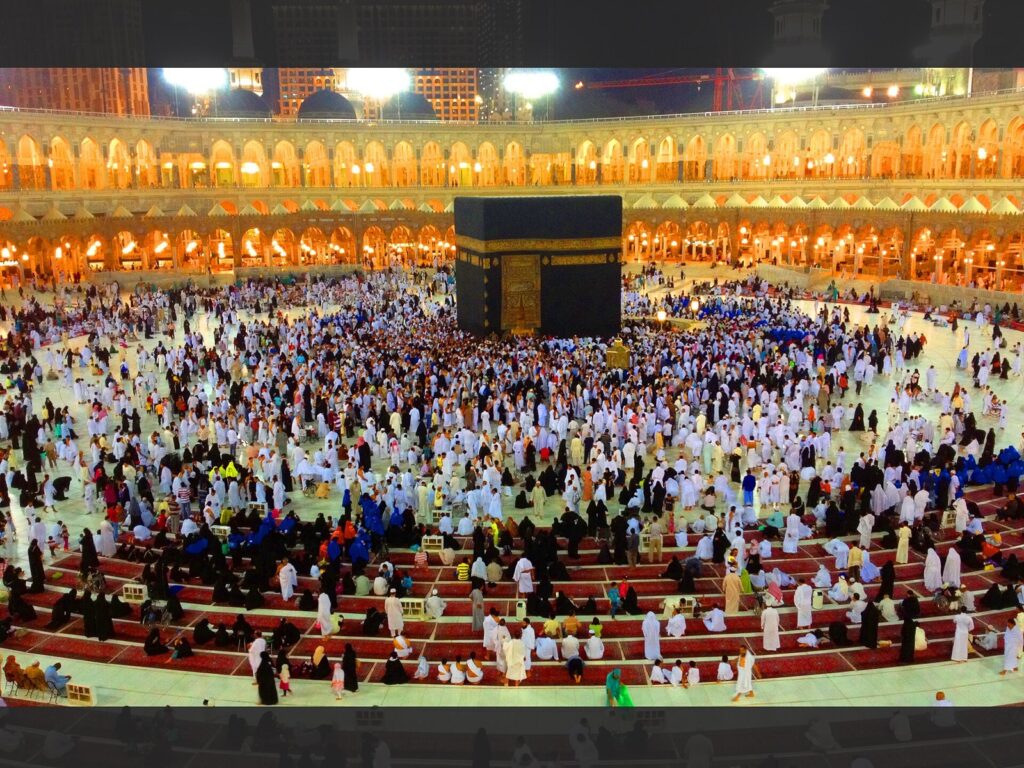
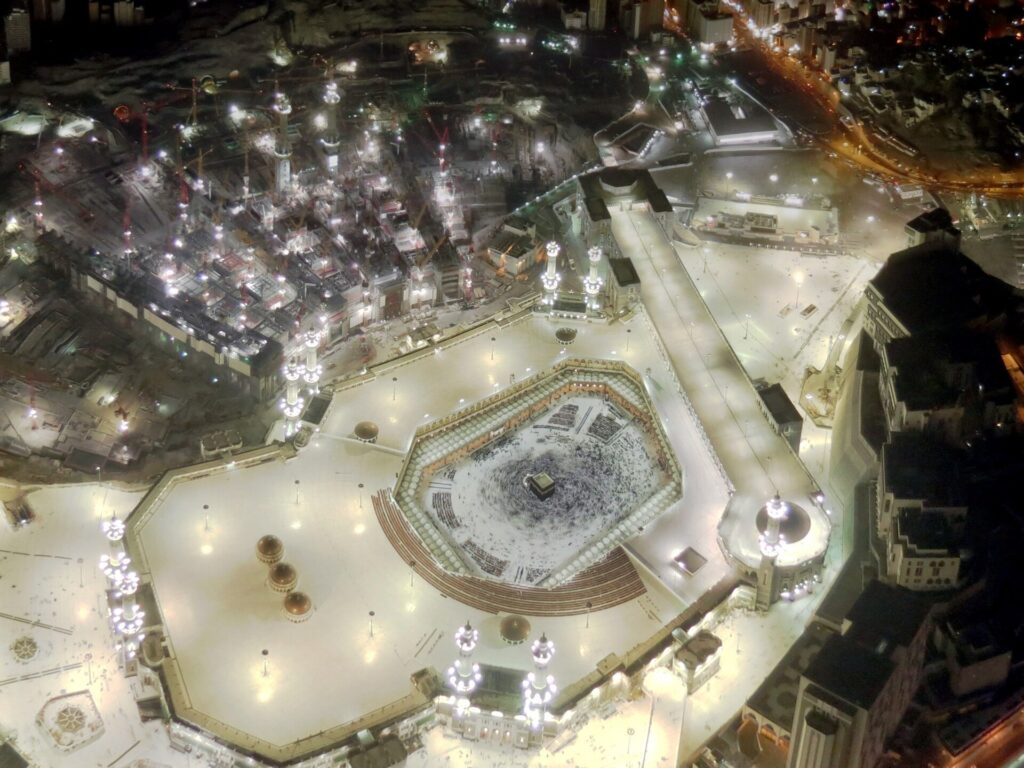
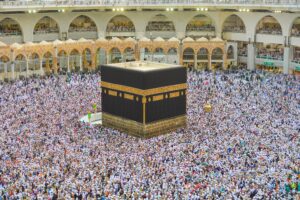
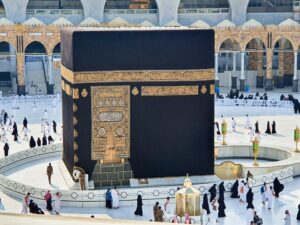
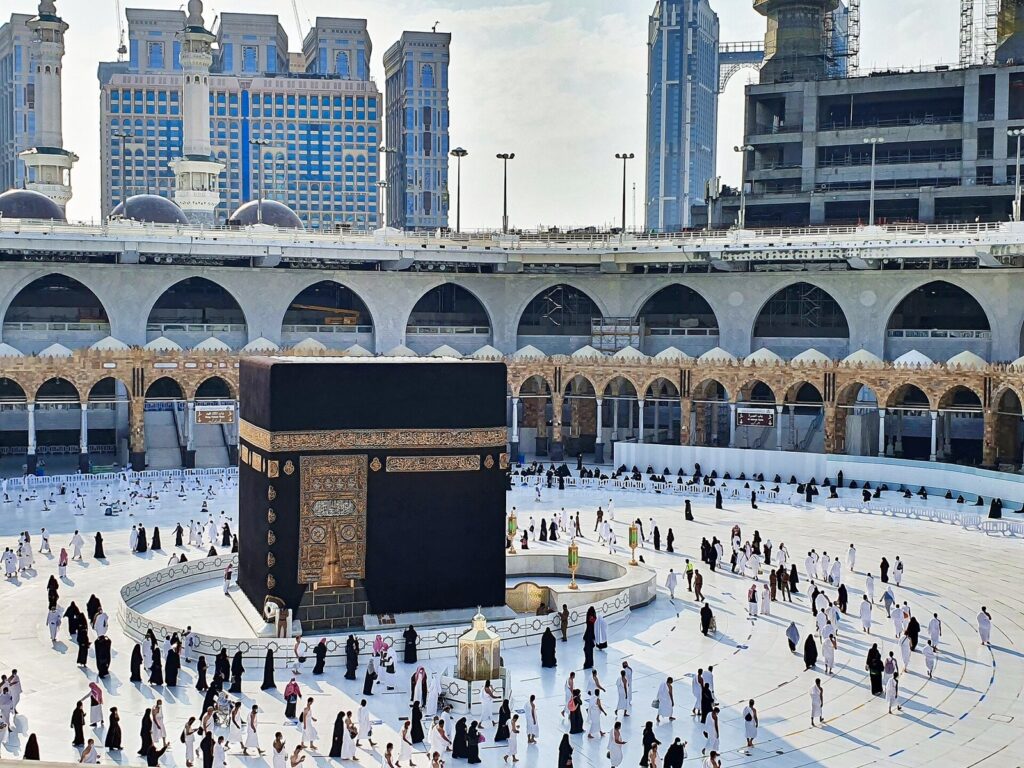
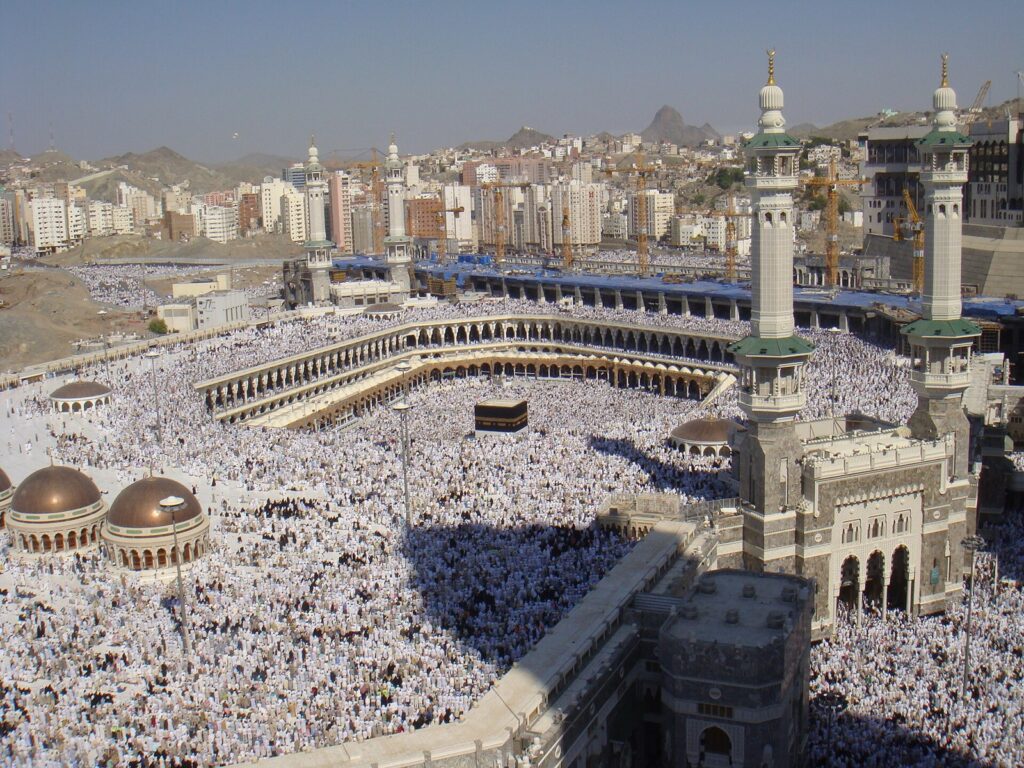
Makkah is a city built in a valley surrounded by mountains, about seventy kilometres from the Red Sea. Masjid al-Haram, the heart of the city, is the structure surrounding the Kaaba which, through its expansions, has become the largest mosque in the world. Pilgrims perform the Umrah or the arrival tawaf, the tawaf of Hajj (tawaf al-ziyarah), the sa’i and the farewell tawaf here. Accommodation is also in Makkah: Diyanet’s organisation and the agency programmes host pilgrims in hotels within walking distance of Masjid al-Haram or served by shuttles; we described the options on our Makkah hotels page.
A certain area around Makkah is counted as the Haram region; in this region hunting, uprooting plants and shedding blood are forbidden. Mina and Muzdalifah lie within the boundaries of the Haram, while Arafat lies outside it. This distinction explains why it matters which area one is in during the days of Hajj: the standing at Arafat is the pillar of Hajj, and the standing at Muzdalifah is a necessary act. We collected the places to visit in Makkah in our article on places to visit in Makkah.
Where Is Arafat? The Plain That Is the Pillar of Hajj
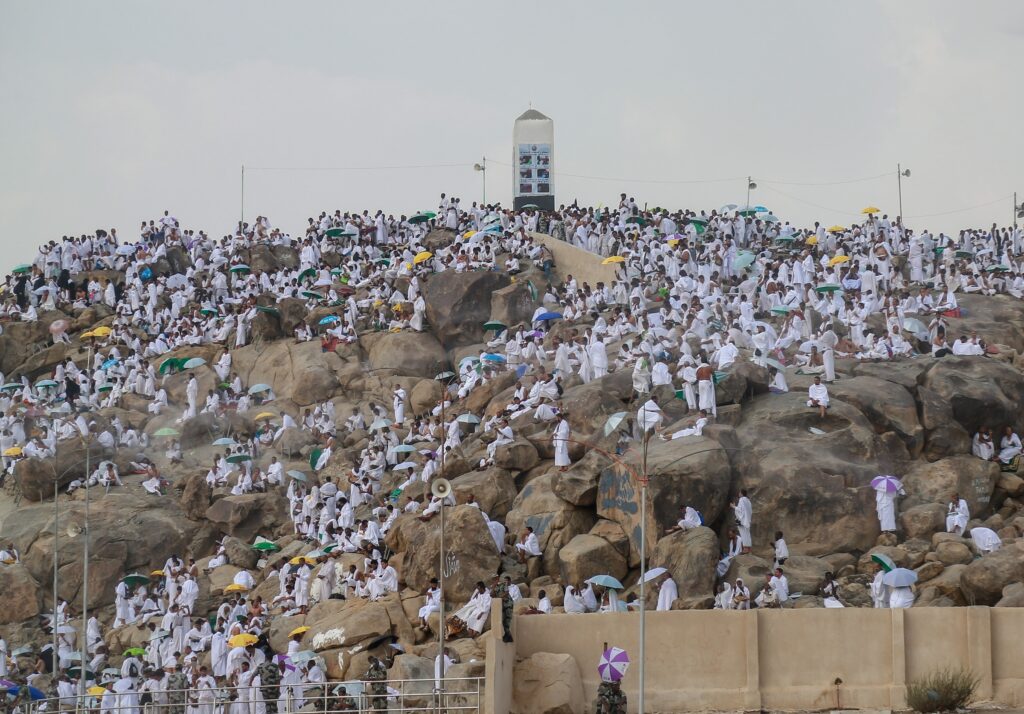
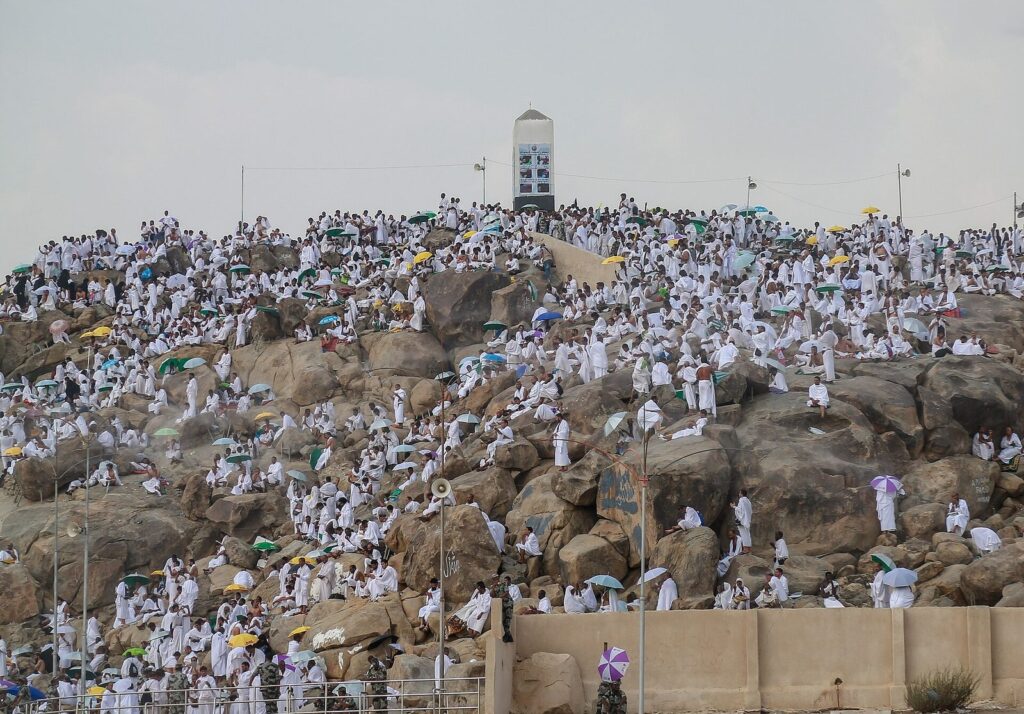
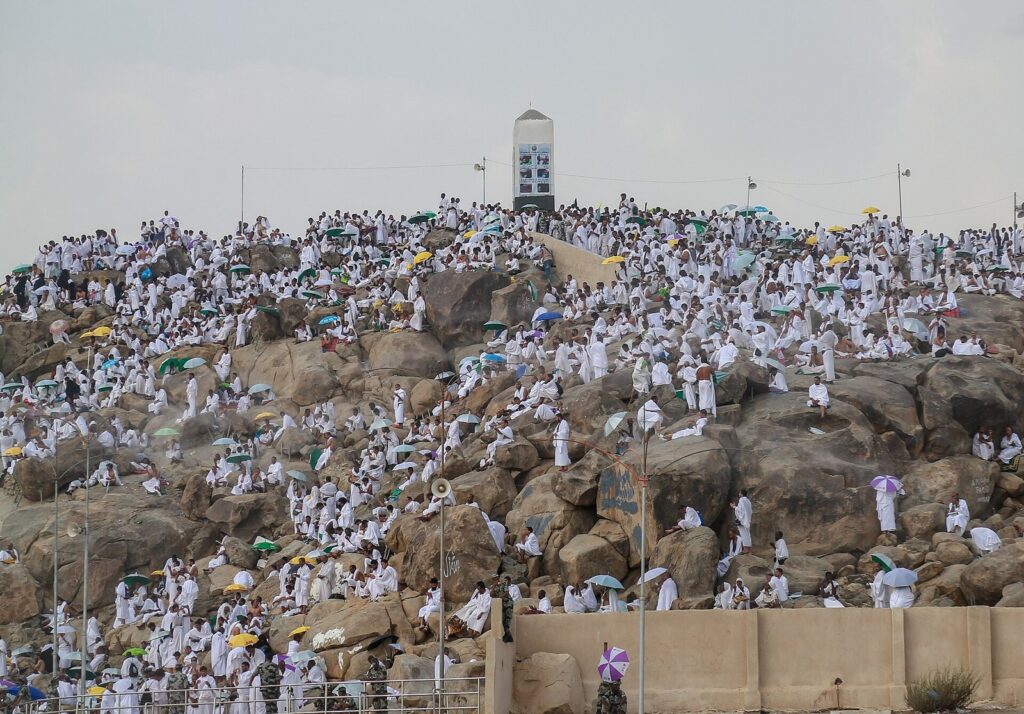
Arafat is a wide plain surrounded by mountains, about twenty kilometres to the east of Makkah. In the middle of the plain is the Mount of Mercy (Jabal al-Rahmah), which pilgrims try to climb, and at its edge the Namirah Mosque, where the sermon is delivered. On the ninth day of Dhul Hijjah, the Day of Arafah, pilgrims stand here from noon until evening; without this standing, Hajj does not take place. This is also where the Prophet (peace be upon him) delivered the Farewell Sermon. We explained the ruling and practice of the standing in our article on standing at Arafat, and the mountain itself in our article on Mount Arafat and the Mount of Mercy.
Where is Arafat, and how many kilometres is it from Makkah?
Arafat is a plain to the east of Makkah, about twenty kilometres from Masjid al-Haram; the distance to Mina is about fourteen kilometres. During the days of Hajj it is reached by bus and by the Mashair metro, and there are also pilgrims who prefer to walk. Because Arafat lies outside the boundaries of the Haram, the limits of the standing are marked by signs; remaining outside the boundary invalidates the standing.
Where Is Muzdalifah, and What Does It Mean?
Muzdalifah is the flat area between Mina and Arafat, within the boundaries of the Haram. The word comes from a root meaning “to draw near”; it expresses the pilgrims returning from Arafat drawing near to Mina and spending the night here. The place mentioned in the Qur’an as al-Mash’ar al-Haram is also here. On the evening of the Day of Arafah, pilgrims come down from Arafat to Muzdalifah, perform the evening and night prayers together here, spend the night in the open air and, after the morning prayer, perform the standing at Muzdalifah and set off for Mina. The stones to be used for stoning the Jamarat are also mostly gathered at Muzdalifah.
What is done at Muzdalifah?
At Muzdalifah pilgrims spend the night of Arafah, perform the evening and night prayers together at the time of the night prayer, perform the standing at Muzdalifah after the morning prayer until sunrise, and gather the stones to be thrown at Mina. According to the Hanafi school, the standing at Muzdalifah is necessary (wajib); omitting it without an excuse requires a penalty. For elderly, sick and women pilgrims, an early transfer to Mina after midnight may be arranged to protect them from the crush.
Where Is Mina? The Tent City and the Jamarat
Mina is a narrow valley about seven kilometres to the east of Makkah, between Muzdalifah and Masjid al-Haram. Empty for most of the year, the valley fills with white tents housing hundreds of thousands of pilgrims during the days of Hajj; for this reason it is known as the “tent city”. Mina has three pillars: the small, the middle and the great (Aqabah) Jamarat. Pilgrims throw stones at the Jamrat al-Aqabah on the first day of Eid and at all three pillars on the following days; the multi-storey Jamarat Bridge brings order to this rite. The sacrifices are also slaughtered in the abattoirs near Mina. See our guide on stoning the devil for the details of the stoning.
- The Day of Tarwiyah (8 Dhul Hijjah): Pilgrims move from Makkah to Mina and spend the night there; this is Sunnah.
- The Day of Arafah (9 Dhul Hijjah): Departure for Arafat in the morning, standing from noon to evening, descent to Muzdalifah in the evening.
- The first day of Eid (10 Dhul Hijjah): Transfer from Muzdalifah to Mina, the Jamrat al-Aqabah, sacrifice, shaving, going down to Makkah for the tawaf of visitation, return to Mina.
- The days of Tashriq (11–13 Dhul Hijjah): Staying at Mina, throwing stones at the three pillars every day; those in a hurry return to Makkah on the twelfth day.
Where is Mina, and how many kilometres is it from Makkah?
Mina is a valley to the east of Makkah, about seven kilometres from Masjid al-Haram; it is three to four kilometres from Muzdalifah and about fourteen kilometres from Arafat. During the days of Hajj it is reached by bus, the Mashair metro and pedestrian routes. Because Mina lies within the boundaries of the Haram, pilgrims are subject to the rulings of the Haram here even while in ihram.
Which Day, Where? Distances and Transport
The table below summarises where pilgrims are during the days of Hajj, the approximate distances and the means of transport. The distances are approximate; which group is carried by which vehicle is determined by Diyanet’s organisation and the agency programme.
| Day | Place | Distance from Makkah | What is done | Transport |
|---|---|---|---|---|
| Before Hajj | Makkah, Masjid al-Haram | — | Umrah or arrival tawaf, sa’i, accommodation | Hotel shuttle, walking |
| 8 Dhul Hijjah | Mina | About 7 km | Settling into the tents, night at Mina | Bus, metro |
| 9 Dhul Hijjah | Arafat | About 20 km | Standing, dua, sermon | Bus, metro |
| Night of 9 Dhul Hijjah | Muzdalifah | About 10–12 km | Evening and night prayers, overnight stay, morning standing | Bus, metro, walking |
| 10 Dhul Hijjah | Mina and Makkah | 7 km and the centre | Jamrat al-Aqabah, sacrifice, shaving, tawaf of visitation | Metro, bus, walking |
| 11–13 Dhul Hijjah | Mina | About 7 km | Stoning the three pillars | Walking, metro |
| Before departure | Makkah | — | Farewell tawaf | Hotel shuttle |
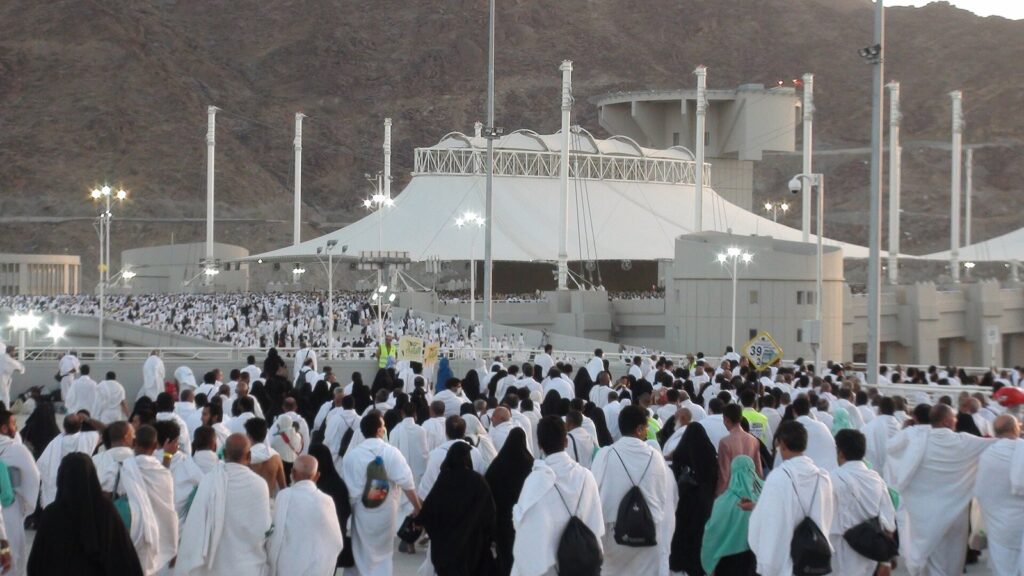
The distances in the table are close to the actual road lengths pilgrims cover, not distances as the crow flies; because of the crowds, an hour’s journey can take two or three hours during the days of Hajj, which is why guides bring the departure times forward. The Mashair metro runs between Mina, Muzdalifah and Arafat during the days of Hajj; some of Diyanet’s pilgrims are carried by metro and some by bus. There are also shaded, ventilated pedestrian tunnels through the mountains between Masjid al-Haram and Mina; pilgrims in good health prefer this route, especially on the days of stoning. The Haramain high-speed train between Makkah and Madinah is used for the intercity transfer before and after Hajj.
Where Is the Hajj Sacrifice Slaughtered?
The Hajj sacrifice (hady) must be slaughtered within the boundaries of the Haram region; today the slaughter takes place in modern abattoirs near Mina. Pilgrims in Diyanet’s organisation mostly have their sacrifices slaughtered by proxy; the pilgrim is informed that the sacrifice has been made, and the meat is distributed to those in need. The sacrifice is necessary (wajib) for those performing Tamattu’ and Qiran Hajj and Sunnah in Ifrad Hajj; for the order of the sacrifice within the days of Hajj, see our guide on how to perform Hajj.
Can the Hajj sacrifice be slaughtered in Türkiye?
No, the hady sacrifice of Hajj must be slaughtered within the Haram region; a sacrifice slaughtered in Türkiye does not take the place of the Hajj sacrifice. The Eid sacrifice, however, is a separate act of worship; family members not on Hajj slaughter their Eid sacrifices where they are. Pilgrims generally have the Hajj sacrifice slaughtered by proxy through Diyanet or the agency.
Important: During the days of Hajj, only those with a Hajj permit are admitted to Makkah and the Mashair area; it is not possible to enter Mina, Muzdalifah and Arafat without a permit. Keep your programme’s identity card and your Nusuk registration with you at all times, and learn your group’s assembly points.
Is Madinah Required for Hajj?
The visit to Madinah is not part of Hajj; praying in the Prophet’s Mosque and visiting the grave of the Prophet (peace be upon him) are done by virtue of the Sunnah and its merit. Almost all programmes from Türkiye include a visit of a few days to Madinah before or after Hajj; because Hajj is long and tiring, the Madinah days are a calm section in which pilgrims rest and see places such as Quba, Uhud and Baqi. You can find the duration and accommodation arrangements of the Hajj programmes on our Hajj tours page, and the Hajj calendar in our article on when Hajj is performed.
Do you go to Makkah or Madinah first for Hajj?
Both are possible; the order is determined by the flight schedule and Diyanet’s group plan. Pilgrims who go to Madinah first enter ihram at the miqat of Dhul Hulaifah on the way to Makkah; those who go to Makkah first enter ihram on the plane to Jeddah and visit Madinah after Hajj. The rites of Hajj are the same in both arrangements.
Why Is It Important to Know the Hajj Areas?
What pilgrims find hardest is moving between four different areas within five days, together with hundreds of thousands of people. Learning in advance the boundaries of Arafat, where one waits at Muzdalifah, the number of one’s tent at Mina and the entrances and exits of the Jamarat Bridge makes a difference for both the validity of the worship and safety. Diyanet’s Hajj training seminars and the guides’ explanations provide this knowledge; looking at a map before you set out and keeping the distances in this article in mind also helps.
At RotaNur we organise our Hajj programmes with a guide for our guests whose names have been drawn in the Diyanet lottery; we explained the registration and lottery process in our article on how to apply for Hajj. For programme options see our Hajj tours page, and for your questions write to us 24/7 from our contact page or the WhatsApp button on this page.
Frequently Asked Questions
Is Hajj performed inside the Kaaba?
No, Hajj is performed not inside the Kaaba but around it and at Arafat, Muzdalifah and Mina to the east of Makkah. Tawaf around the Kaaba, sa’i between Safa and Marwah, the standing at Arafat, the night at Muzdalifah and the stoning at Mina are the parts of Hajj; entering the Kaaba is not part of the worship of Hajj.
Are Arafat, Muzdalifah and Mina inside Makkah?
All three are in the Mashair area to the east of the city of Makkah, outside the city centre; Mina is about seven, Muzdalifah about twelve and Arafat about twenty kilometres away. Mina and Muzdalifah lie within the boundaries of the Haram, while Arafat lies outside. Because the city has grown in this direction, Mina today is almost like a suburb of Makkah.
Where do pilgrims stay at Mina?
At Mina pilgrims stay in fire-resistant white tents allocated by country; Türkiye’s tent zone is determined by Diyanet and distributed according to group number. The tents have air conditioning, beds and shared bathrooms. In some programmes daily trips are also made from the Makkah hotels closest to Mina; this arrangement changes according to that year’s practice.
Is Hajj valid without going to Arafat?
No, the Hajj of a person who does not stand within the boundaries of Arafat on the Day of Arafah does not take place; this standing is the pillar of Hajj and no other act of worship can replace it. For sick and elderly pilgrims, entry to Arafat is arranged by ambulance and stretcher; being within the boundary of Arafat for even a moment is enough for the standing.
Why is Jeddah important for Hajj?
Jeddah is the port city with the large airport closest to Makkah; most pilgrims from Türkiye land at the Hajj terminal in Jeddah and travel on to Makkah by road. Because Jeddah lies within the miqat boundaries, those flying to Jeddah enter ihram on the plane, before passing the miqat line. The city itself is not part of the worship of Hajj.

Cihat Murat Yüksel is the editor of the RotaNur blog and the founder of Markention. Drawing on the sources of Türkiye's Presidency of Religious Affairs (Diyanet), he turns the questions travellers ask most about preparing for Umrah, Hajj and halal travel into clear, practical guides.
Questions answered in this article
In Which Country and City Is Hajj Performed?
Hajj is performed in the Hijaz region in the west of the Kingdom of Saudi Arabia, in the city of Makkah al-Mukarramah and in three areas known as the Mashair immediately to the east of the city. Masjid al-Haram, where the Kaaba stands, is the centre where the tawaf and sa’i parts of Hajj are performed; the standing at Arafat, the standing at Muzdalifah, the stoning of the Jamarat and the sacrifice take place outside Makkah, at Arafat, Muzdalifah and Mina. Hajj cannot be performed anywhere else in the world, because the standing at Arafat, which is the pillar of Hajj, is valid only within the boundaries of Arafat.
In which country is Hajj performed?
Hajj is performed only in Saudi Arabia, in the city of Makkah and in the areas of Arafat, Muzdalifah and Mina to the east of Makkah. Because the Kaaba is in Makkah and the standing at Arafat is counted as the pillar of Hajj, it is not possible to perform the worship in another country or city. The visit to Madinah is not part of Hajj; it is made by virtue of the Sunnah and its merit.
How do you get from Jeddah to Makkah?
Diyanet and agency groups travel from Jeddah Airport to Makkah by bus; the road is about eighty kilometres and takes an hour and a half. The Haramain high-speed train also runs from the Jeddah Airport station to Makkah, but Hajj groups mostly use the bus because of the luggage arrangements. Since Jeddah lies within the miqat, pilgrims set out on this journey in ihram.
Where is Arafat, and how many kilometres is it from Makkah?
Arafat is a plain to the east of Makkah, about twenty kilometres from Masjid al-Haram; the distance to Mina is about fourteen kilometres. During the days of Hajj it is reached by bus and by the Mashair metro, and there are also pilgrims who prefer to walk. Because Arafat lies outside the boundaries of the Haram, the limits of the standing are marked by signs; remaining outside the boundary invalidates the standing.
Where Is Muzdalifah, and What Does It Mean?
Muzdalifah is the flat area between Mina and Arafat, within the boundaries of the Haram. The word comes from a root meaning “to draw near”; it expresses the pilgrims returning from Arafat drawing near to Mina and spending the night here. The place mentioned in the Qur’an as al-Mash’ar al-Haram is also here. On the evening of the Day of Arafah, pilgrims come down from Arafat to Muzdalifah, perform the evening and night prayers together here, spend the night in the open air and, after the morning prayer, perform the standing at Muzdalifah and set off for Mina. The stones to be used for stoning the Jamarat are also mostly gathered at Muzdalifah.
What is done at Muzdalifah?
At Muzdalifah pilgrims spend the night of Arafah, perform the evening and night prayers together at the time of the night prayer, perform the standing at Muzdalifah after the morning prayer until sunrise, and gather the stones to be thrown at Mina. According to the Hanafi school, the standing at Muzdalifah is necessary (wajib); omitting it without an excuse requires a penalty. For elderly, sick and women pilgrims, an early transfer to Mina after midnight may be arranged to protect them from the crush.