










Contents 22 sections
- What Is Stoning the Devil?
- Why is stoning the devil performed?
- The Ruling on Stoning the Devil
- Is stoning the devil obligatory (fard)?
- What penalty is required if the stoning is not performed?
- Where the Stoning Takes Place: Mina and the Jamarat
- Where does the stoning of the devil take place?
- From which level are the pebbles thrown at the pillars?
- How Many Pebbles Are Thrown on Which Day?
- Is there any leniency regarding the stoning times?
- How Is Stoning the Devil Performed?
- Where are the pebbles collected?
- When does the talbiyah stop?
- The Order of Stoning and the First Day of Eid
- Proxies, Women and Special Circumstances
- What should a person who cannot perform the stoning do?
- Can a woman who is menstruating perform the stoning?
- Do you have to pay to stone the devil?
- Practical Tips to Prepare for the Stoning Day
- How many pebbles should be collected?
- Common Mistakes When Stoning the Devil
- Frequently Asked Questions
Stoning the devil is a necessary (wajib) act of Hajj in which pilgrims throw a set number of small pebbles at three points in Mina called the jamarat during the days of Eid al-Adha; in the language of Islamic jurisprudence it is called “ramy al-jimar”. As one of the busiest rites of Hajj and one that requires the most care, this act of worship must be performed on the right day, at the right time and in the right order. In this article, in line with the Hanafi school and the explanations of Diyanet (Türkiye’s Presidency of Religious Affairs), you will find what stoning the devil is, its ruling, where the jamarat are located, how many pebbles are thrown on which day, how the stoning is performed, the rulings on appointing a proxy and on penalties, and what to pay attention to for a safe stoning.
What Is Stoning the Devil?
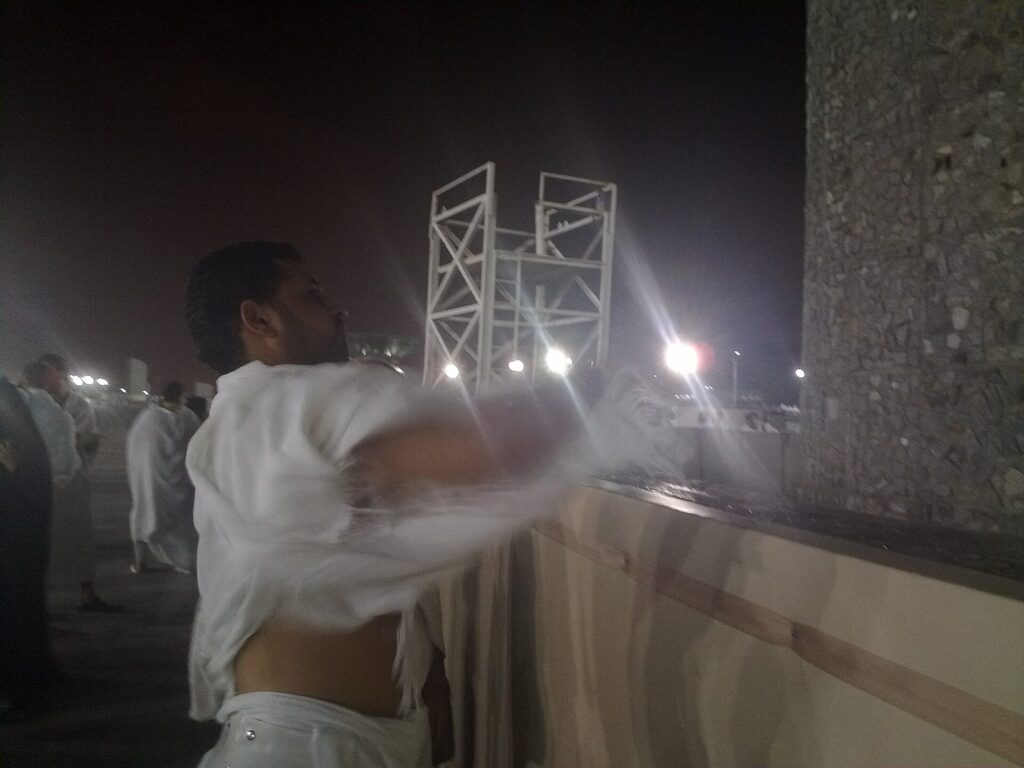
Stoning the devil is the throwing, in a specific manner, of pebbles the size of a chickpea or a broad bean at the small pillar (al-Jamrat al-Ula), the middle pillar (al-Jamrat al-Wusta) and the large pillar (Jamrat al-Aqabah) in Mina. In its dictionary meaning, the word “jamrah” means a small pebble; this is why the places where the pebbles are thrown are also called jamrah. The whole area where the pillars stand is known as “the Jamarat”.
Although it is popularly known as “stoning the devil”, the essence of this act of worship is to express submission to Allah’s command and to remember Him. By throwing each pebble with a takbir, the pilgrim voices their resolve against evil, the desires of the ego and the whisperings of Satan.
Why is stoning the devil performed?
Above all, stoning the devil is an act of worship that the Prophet (peace be upon him) performed himself during the Farewell Pilgrimage and taught to his community; pilgrims fulfil it by following this practice. It is widely related that this act of worship recalls the resolve Prophet Ibrahim showed against the whisperings of Satan. The true meaning of the stoning, however, is that the servant submits to Allah’s command and demonstrates, through a concrete action, the will to keep away from evil.
The Ruling on Stoning the Devil
According to the Hanafi school, stoning the devil is one of the necessary (wajib) acts of Hajj. Because it is not obligatory (fard), leaving it out does not invalidate the Hajj; however, leaving it out or performing it incompletely without a valid excuse requires a penalty. You can find the obligatory and other necessary acts of Hajj all together in our how to perform Hajj guide.
Is stoning the devil obligatory (fard)?
No, stoning the devil is not obligatory (fard) but necessary (wajib). According to the Hanafi school, the obligatory acts of Hajj are ihram, the standing at Arafat (wuquf) and the tawaf of visitation (tawaf al-ziyarah). Leaving out the stoning does not remove the validity of the Hajj; however, depending on the number of pebbles left out, a penalty of a sacrifice or of charity (sadaqah) is required.
What penalty is required if the stoning is not performed?
According to the Hanafi school, if the stoning is left out on all of the stoning days, or if all or most of the pebbles of a single day are left out, a sacrifice (dam) is required as a penalty. If fewer than half of the pebbles of a day are left out, charity (sadaqah) equal to the amount of the fitrah (sadaqat al-fitr) is given for each pebble. Consult Diyanet officials on which situations count as a valid excuse and how the penalty is to be paid.
Where the Stoning Takes Place: Mina and the Jamarat
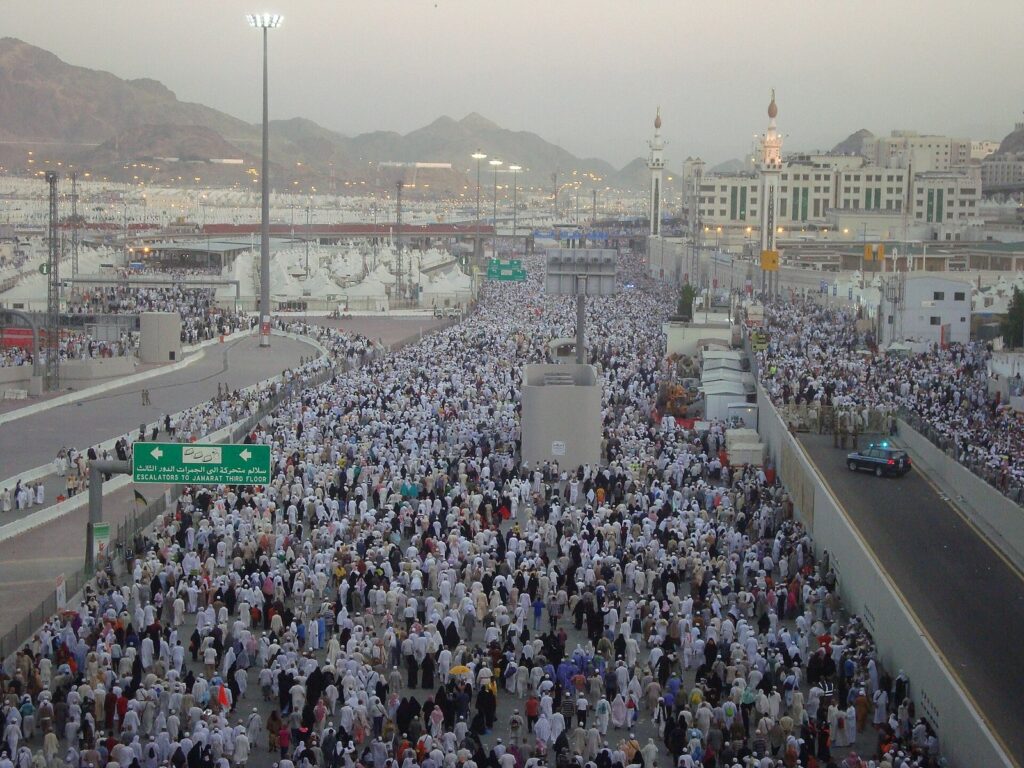
The pillars are located in the Mina area, which lies between Makkah and Muzdalifah. The large pillar is close to the boundary of Mina on the Makkah side, while the middle and small pillars are lined up at short distances from one another in the direction of Muzdalifah. On the days of Eid, pilgrims reach the pillars on foot from their tents in Mina.
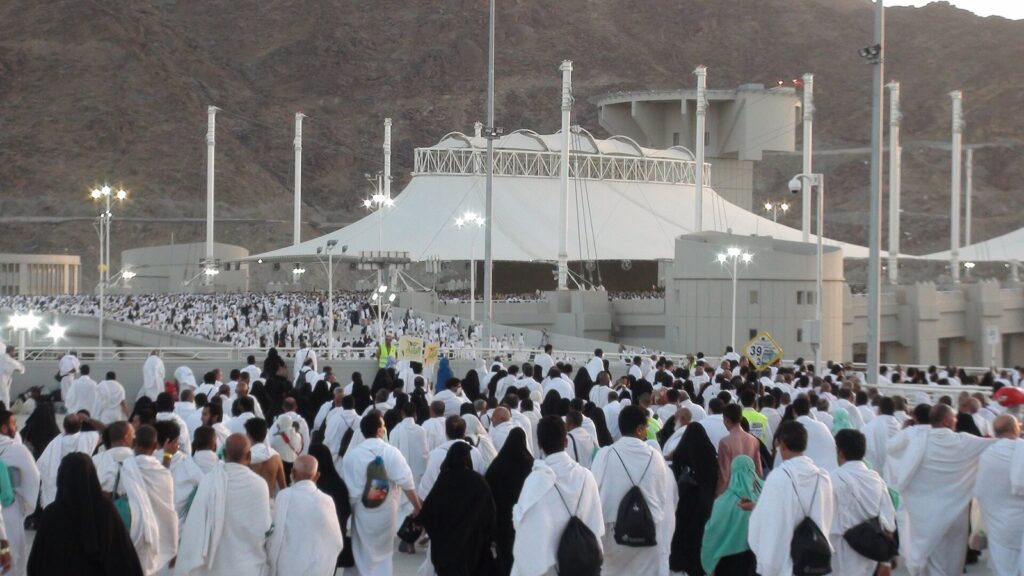
Today, the pillars stand inside a multi-storey bridge structure so that millions of pilgrims can perform the stoning safely. Around each pillar there are basins into which the pebbles fall, and in the middle of these basins there are columns in the form of long walls that mark the position of the pillar. Being able to perform the stoning from different levels and the one-way flow of pedestrians are arrangements developed to reduce overcrowding.
Where does the stoning of the devil take place?
The stoning of the devil takes place in the Jamarat area in the Mina district, which lies to the east of Makkah. The small, middle and large pillars are lined up in this area, and pilgrims throw their pebbles into the basins around the pillars. It is not a condition for the pebbles to hit the column; it is sufficient for them to fall inside the basin.
From which level are the pebbles thrown at the pillars?
The level of the Jamarat Bridge from which the stoning is performed depends on the route plan that the Saudi authorities set for groups and countries. Whichever level the pebble is thrown from, it is sufficient for it to fall into the basin of the pillar, and the stoning is valid. Not straying from the route your group gives you is important both for your own safety and for the orderly flow of pedestrians. We have explained where the stoning days fall in the Hijri calendar in our article on when Hajj takes place.
How Many Pebbles Are Thrown on Which Day?
Stoning the devil is performed over three or four days, starting from the first day of Eid. On the first day of Eid pebbles are thrown only at the large pillar, while on the following days all three pillars are stoned in order. The table below summarises the stoning days and the number of pebbles according to the Hanafi school.
| Day | Pillar(s) stoned | Number of pebbles | Main time according to the Hanafi school |
|---|---|---|---|
| 1st day of Eid (10 Dhu al-Hijjah) | The large pillar only | 7 | The Sunnah is to throw them after sunrise and before zawal (the sun passing its zenith) |
| 2nd day of Eid (11 Dhu al-Hijjah) | The small, middle and large pillars | 21 (7 at each) | After zawal (the start of the Dhuhr prayer time) |
| 3rd day of Eid (12 Dhu al-Hijjah) | The small, middle and large pillars | 21 (7 at each) | After zawal |
| 4th day of Eid (13 Dhu al-Hijjah) | The small, middle and large pillars (for those staying in Mina) | 21 (7 at each) | For those who are still in Mina when the dawn of this day breaks |
| Total | 49 pebbles for those who leave on the 3rd day of Eid, and 70 pebbles for those who also perform the stoning on the 4th day | – | |
A pilgrim who has thrown their pebbles on the third day of Eid may leave Mina before the dawn (fajr) of 13 Dhu al-Hijjah breaks. A pilgrim who stays in Mina and is still there at dawn on the fourth day, however, must also throw the pebbles of that day.
Is there any leniency regarding the stoning times?
In the Hanafi school, the main times for the stoning are as set out above. However, because of today’s very large crowds, Diyanet officials make explanations that provide leniency on matters such as performing the stoning at night for the safety of elderly, sick and women pilgrims. Stoning times are also arranged according to the schedule that the Saudi authorities set for groups. For this reason, on every matter related to timing, take Diyanet’s current explanations and your group’s programme as the basis.
How Is Stoning the Devil Performed?
Although it looks simple, the stoning is an act of worship with certain procedures that must be followed. The steps below summarise, in order, how a pillar is stoned:
- Prepare the pebbles: Carry pebbles the size of a chickpea or a broad bean in a small pouch, in the number to be thrown that day plus a few spares.
- Approach the pillar: Move calmly towards the edge of the basin until you are close enough for the pebble to fall into it.
- Throw the pebbles one by one: Throw each pebble separately with your right hand. According to the Hanafi school, several pebbles thrown at once count as a single pebble.
- Say the takbir with each pebble: Remember Allah with each throw by saying “Bismillâhi Allâhu ekber” (Bismillahi Allahu akbar).
- Make sure the pebble falls into the basin: A pebble that lands outside the basin does not count; a spare pebble is thrown in its place.
- Make supplication or leave: After the small and middle pillars, move to a spot where you will not obstruct the crowd, turn towards the qiblah and make supplication; after the large pillar, leave without waiting.
You can find details of the takbir said during the stoning and the supplications made after the pillars, together with their pronunciations and meanings, in our article on Hajj supplications.
Where are the pebbles collected?
It is recommended (mustahab) to collect the pebbles to be thrown on the first day of Eid in Muzdalifah; however, the pebbles may also be collected in Mina or elsewhere. Taking pebbles that have already been thrown from the basins around the pillars, on the other hand, is considered disliked (makruh). Care should be taken that the pebbles are clean, and very large or sharp stones should not be chosen. We have covered the journey from Arafat to Muzdalifah and the standing in our article on the standing at Arafat.
When does the talbiyah stop?
A person who has entered ihram for Hajj stops reciting the talbiyah as soon as they throw the first pebble at the large pillar on the first day of Eid. From this moment on, the takbir and other forms of remembrance (dhikr) take the place of the talbiyah. After the stoning, pilgrims move on to the other rites of the day, namely the sacrifice, shaving or trimming the hair and the tawaf of visitation.
The Order of Stoning and the First Day of Eid
On the second and subsequent days of Eid, the pillars are stoned from the smallest to the largest, that is, in the order of the small pillar, the middle pillar and the large pillar. According to the Hanafi school, following this order is Sunnah; since some other schools regard it as a condition, however, the order should be observed with great care. It is appropriate for a person who has mixed up the order to throw the pebbles again in the correct order; in such a case, consult your group’s religious guide.
On the first day of Eid, on the other hand, the stoning is the first step in the order of the day’s rites. According to the Hanafi school, it is necessary (wajib) for those performing tamattu and qiran Hajj to follow the order of stoning the large pillar, offering the sacrifice of thanksgiving and then shaving or trimming the hair. For those performing ifrad Hajj, since the sacrifice is not necessary (wajib), they may shave or trim their hair after the stoning. We have explained how the types of Hajj affect this order in our article on the types of Hajj.
Proxies, Women and Special Circumstances
Since the stoning is an act of worship that involves crowds and requires physical strength, it is important to know the rulings on special circumstances. The questions most often asked in groups are gathered under this heading.
What should a person who cannot perform the stoning do?
A pilgrim with a valid excuse, such as illness, advanced age or being unable to stand, may have their pebbles thrown by someone else as a proxy. At each pillar, the proxy first throws their own pebbles and then the pebbles of the person who appointed them. It is not right to appoint a proxy for reasons that do not count as a valid excuse, such as simply being wary of the crowd; follow the guidance of Diyanet officials on this matter.
Can a woman who is menstruating perform the stoning?
Yes. Being in a state of wudu is not a condition for the stoning; women who are menstruating can also throw pebbles at the pillars. For safety reasons, women are advised to avoid the crowded hours and to perform the stoning at the calmer times set by the group officials.
Do you have to pay to stone the devil?
No, no separate fee is paid to throw pebbles at the pillars. The stoning is an act of worship, and transport to the Jamarat area, accommodation in Mina and guidance services are planned within the scope of the Hajj organisation.
Important: In the Jamarat area, always follow the directions, levels and times set by the Saudi authorities. Do not leave your group, do not try to return by the same way after the stoning, and do not stop in the crowd to pick up belongings that have fallen to the ground. Your safety is more important than performing the stoning at the earliest possible time.
Practical Tips to Prepare for the Stoning Day
Going to and returning from the pillars can involve long walks, especially on the first days of Eid. The distance of your tent in Mina from the pillars, the time slot allocated to your group and the weather conditions directly affect how the stoning day goes. A few simple preparations make this day both safer and more peaceful.
- Find out the stoning time and the meeting point from the group officials a day in advance.
- Keep your pebble pouch, water, umbrella and group ID card ready in a small bag.
- Wear comfortable, non-slip shoes; avoid slippers that could come off in the crowd.
- Agree in advance on where you will meet if you get separated from the group, and check your phone’s battery.
- If you have an elderly or unwell relative, settle the question of appointing a proxy before the stoning day.
- Take care not to prolong your walk during the hours when the sun is strongest, and take breaks in the shade.
How many pebbles should be collected?
A pilgrim who will stay in Mina until the fourth day of Eid throws seventy pebbles in total, while a pilgrim who will leave on the third day throws forty-nine pebbles. It is useful to take a few spares for pebbles that may land outside the basin. Those who will throw pebbles as a proxy need to collect them taking into account the pebbles of the person who appointed them as well.
Common Mistakes When Stoning the Devil
Some mistakes related to the stoning affect the validity of the act of worship, while others put safety at risk. The most common mistakes are as follows:
- Gathering the seven pebbles in one hand and throwing them all at once,
- Not checking whether the pebble has fallen into the basin,
- Throwing objects other than pebbles, such as slippers, umbrellas or large stones,
- Throwing in anger and while shouting, or moving in a way that harms those nearby,
- Not following the order of the pillars on the second and third days of Eid,
- On the second and third days of Eid, performing the stoning before its main time without a valid excuse,
- Leaving the group to go to the pillars during crowded hours.
You can find in detail at which stage the ihram restrictions are lifted on the first day of Eid in our article on ihram restrictions.
Stoning the devil is a meaningful act of worship through which the pilgrim demonstrates their submission and resolve; when it is performed with accurate information and a safe plan, it is completed in peace. At RotaNur, we are happy to answer your questions about your Hajj preparations, including how the Mina and Jamarat programme is planned. You can take a look at our Hajj tours page and reach us through our contact page or our WhatsApp line. May Allah grant all prospective pilgrims an accepted Hajj (Hajj mabrur).
Frequently Asked Questions
Is there stoning of the devil in Umrah?
No, stoning the devil is an act of worship specific to Hajj and is not among the rites of Umrah. Umrah consists of ihram, tawaf, sa’i and shaving or trimming the hair (halq/taqsir), and it can be performed at almost any time of the year. The stoning, on the other hand, is carried out at the pillars in Mina during the days of Eid al-Adha, as part of the rites of Hajj. Umrah visitors may see Mina on city tours, but they do not throw pebbles. We have explained the differences between the two acts of worship in our article on the differences between Hajj and Umrah.
Is it necessary to spend the nights in Mina during the stoning days?
According to the Hanafi school, spending the nights of the stoning days in Mina is Sunnah; in the Shafi’i, Maliki and Hanbali schools, however, it is regarded as necessary (wajib). For this reason, the general rule is for pilgrims to stay in Mina during the stoning days, and groups plan their accommodation accordingly. If you need to leave your tent in Mina for a valid reason, or if you have a special circumstance regarding the overnight stay, consult the group officials and Diyanet officials before making a decision.
How do you get to the Jamarat, and is there a train?
Pilgrims mostly go to the Jamarat on foot from their tents in Mina, using the pedestrian routes designated for their groups. The Mashaaer train operates between Mina, Muzdalifah and Arafat during the days of Hajj; however, which groups can use this train and at what times is determined according to the organisation plan. For your safety, it is important to find out your route, your meeting point and your return route from the group officials before the stoning day.
Is stoning the devil dangerous today?
In past years, tragic incidents caused by overcrowding took place around the Jamarat; today, however, thanks to the multi-storey bridge structure, the one-way flow of pedestrians and the time slots allocated to groups, the stoning is carried out in a far more orderly way. The risks increase when the rules are not followed and during the busiest hours. Not leaving your group, keeping to the time you are given and not stopping in the crowd to pick up belongings are the basic conditions for completing the stoning safely.
What is said while stoning the devil?
As each pebble is thrown, Allah is remembered by saying “Bismillâhi Allâhu ekber”; this takbir is the essence of the stoning. On the second and subsequent days of Eid, after the small and middle pillars, you can move away from the crowd to a suitable spot, turn towards the qiblah and make supplication as you wish; after the large pillar, you leave without waiting. There is no special supplication that must be recited. You can find details of the takbir and the supplications in our article on Hajj supplications.

Cihat Murat Yüksel is the editor of the RotaNur blog and the founder of Markention. Drawing on the sources of Türkiye's Presidency of Religious Affairs (Diyanet), he turns the questions travellers ask most about preparing for Umrah, Hajj and halal travel into clear, practical guides.
Questions answered in this article
What Is Stoning the Devil?
Stoning the devil is the throwing, in a specific manner, of pebbles the size of a chickpea or a broad bean at the small pillar (al-Jamrat al-Ula), the middle pillar (al-Jamrat al-Wusta) and the large pillar (Jamrat al-Aqabah) in Mina. In its dictionary meaning, the word “jamrah” means a small pebble; this is why the places where the pebbles are thrown are also called jamrah. The whole area where the pillars stand is known as “the Jamarat”.
Why is stoning the devil performed?
Above all, stoning the devil is an act of worship that the Prophet (peace be upon him) performed himself during the Farewell Pilgrimage and taught to his community; pilgrims fulfil it by following this practice. It is widely related that this act of worship recalls the resolve Prophet Ibrahim showed against the whisperings of Satan. The true meaning of the stoning, however, is that the servant submits to Allah’s command and demonstrates, through a concrete action, the will to keep away from evil.
Is stoning the devil obligatory (fard)?
No, stoning the devil is not obligatory (fard) but necessary (wajib). According to the Hanafi school, the obligatory acts of Hajj are ihram, the standing at Arafat (wuquf) and the tawaf of visitation (tawaf al-ziyarah). Leaving out the stoning does not remove the validity of the Hajj; however, depending on the number of pebbles left out, a penalty of a sacrifice or of charity (sadaqah) is required.
What penalty is required if the stoning is not performed?
According to the Hanafi school, if the stoning is left out on all of the stoning days, or if all or most of the pebbles of a single day are left out, a sacrifice (dam) is required as a penalty. If fewer than half of the pebbles of a day are left out, charity (sadaqah) equal to the amount of the fitrah (sadaqat al-fitr) is given for each pebble. Consult Diyanet officials on which situations count as a valid excuse and how the penalty is to be paid.
Where does the stoning of the devil take place?
The stoning of the devil takes place in the Jamarat area in the Mina district, which lies to the east of Makkah. The small, middle and large pillars are lined up in this area, and pilgrims throw their pebbles into the basins around the pillars. It is not a condition for the pebbles to hit the column; it is sufficient for them to fall inside the basin.
From which level are the pebbles thrown at the pillars?
The level of the Jamarat Bridge from which the stoning is performed depends on the route plan that the Saudi authorities set for groups and countries. Whichever level the pebble is thrown from, it is sufficient for it to fall into the basin of the pillar, and the stoning is valid. Not straying from the route your group gives you is important both for your own safety and for the orderly flow of pedestrians. We have explained where the stoning days fall in the Hijri calendar in our article on when Hajj takes place.