





Contents 25 sections
- Getting to Know Sarajevo: A Brief History
- Baščaršija and the Sebilj: The Heart of the City
- The Sebilj
- The Gazi Husrev-beg Bezistan and Morića Han
- What are the historic places to visit in Sarajevo?
- The Gazi Husrev-beg Mosque and Its Complex
- Where can you pray the Friday prayer in Sarajevo?
- The Ferhadija and Emperor’s Mosques
- The Austrian Period and the Miljacka Riverside
- Vijećnica
- The Latin Bridge
- The Yellow Fortress and the Kovači Martyrs’ Cemetery
- The Yellow Fortress
- The Kovači Martyrs’ Cemetery
- Museums in Sarajevo and Stops Outside the City
- Which museums should you visit in Sarajevo?
- The Tunnel of Hope
- The Srebrenica-Potočari Memorial and Cemetery
- Vrelo Bosne and Trebević
- Halal Food, Clothing and Practical Information
- Can Turkish citizens travel to Bosnia and Herzegovina without a visa?
- Season, Length and Route for a Trip to Sarajevo
- When is the best time to go to Sarajevo?
- How many days are enough for Sarajevo?
- Frequently Asked Questions
Sarajevo, one of the cities in the Balkans where the Ottoman heritage lives on most vividly, feels familiar even on a first visit, with its valley ringed by mountains, its minarets and its stone streets. In this article we have covered a list of places to visit in Sarajevo section by section, from the historic bazaar to the mosques and from the museums to the viewpoints; we have also brought together practical information such as halal food, the Friday prayer, choosing the right season and a sample two- to three-day route.
Getting to Know Sarajevo: A Brief History
Sarajevo began to take shape as a city after coming under Ottoman rule in the mid-15th century. A common explanation links its name to the government house built here, the “saray” (palace), and the “ova” (plain) around it. The core of the city grew around charitable foundation (waqf) complexes made up of mosques, madrasas, inns, bathhouses and bazaars. For this reason, as you wander around Baščaršija and its surroundings today, you will easily notice the traces of a classic Ottoman urban fabric.
After 1878, when the city passed to Austro-Hungarian rule, Central European-style streets and buildings rose right next to the Ottoman bazaar. The assassination of the heir to the Austro-Hungarian throne here in 1914 is associated with the outbreak of the First World War. In the first half of the 1990s, the city endured a long and harsh siege. As you explore Sarajevo, reading these three layers together, namely the Ottoman, the Austrian and the recent history, makes it easier to make sense of the buildings you see.
Baščaršija and the Sebilj: The Heart of the City
Baščaršija is the natural starting point for a trip to Sarajevo. Coppersmiths, goldsmiths, carpet sellers and coffee houses line its narrow lanes. The old bazaar layout, in which each street was associated with a particular craft, still lives on in some street names. In the late afternoon, the bustle of the bazaar and the call to prayer are the moments when you will best feel the soul of the city.
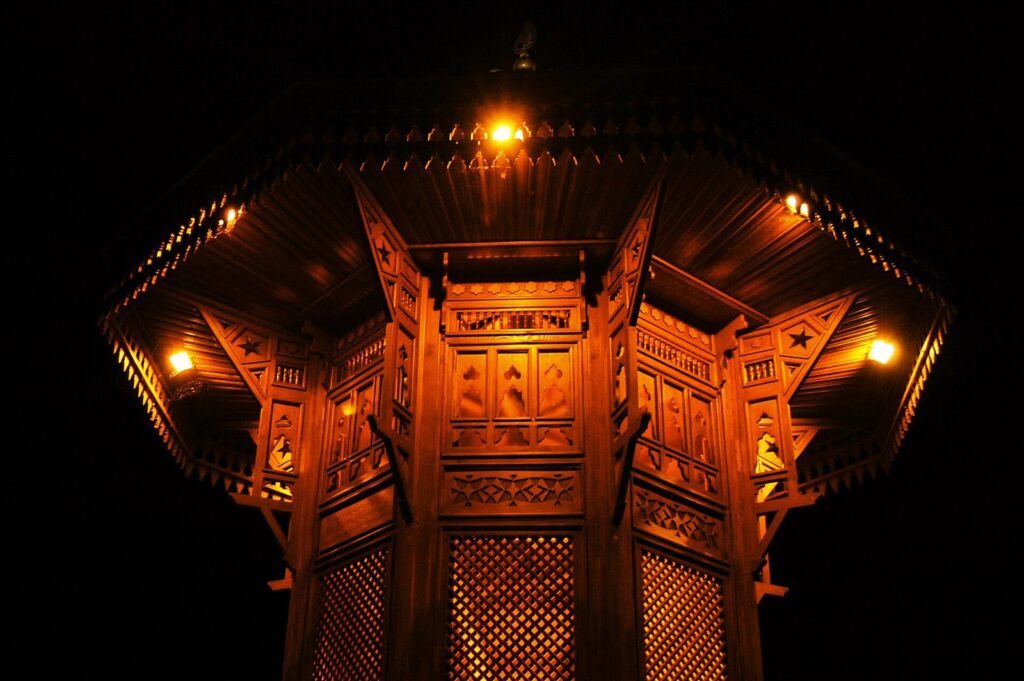
The Sebilj
The fountain in the shape of a wooden kiosk in Baščaršija Square is the most photographed symbol of Sarajevo. The first sebil (public fountain) in the square was built in the Ottoman period, while the structure you see today was built at the end of the 19th century in a form similar to the earlier one. This square, full of pigeons, is also used as a meeting point.
The Gazi Husrev-beg Bezistan and Morića Han
The Gazi Husrev-beg Bezistan, a long covered market, is a place where trade has continued since the 16th century. Nearby Morića Han is one of the historic inns where caravans stopped; with its courtyard and wooden galleries, it offers the chance to see Ottoman inn architecture up close. In Baščaršija you can also see the building known as the Brusa Bezistan, which is used today as the city museum.
You may want to keep the following tips in mind when shopping in Baščaršija:
- Copperware: Coffee pots (cezve), trays and coffee sets hand-beaten by the craftsmen of Kazandžiluk street are the most popular souvenirs.
- Kilims and handicrafts: Kilims with patterns typical of Bosnia and embroidered covers are among the bazaar’s traditional products.
- Turkish delight and sweets: Packaged Turkish delight (lokum) and dried fruit are gifts that are easy to carry on your journey.
- Bargaining and care: Asking the price and finding out whether an item is handmade is normal; a polite manner always meets with a warm response.
During the bazaar’s busy hours, keeping an eye on your bag and valuables is a sensible precaution here, as it is in any tourist centre. As many shops are also open between the noon and afternoon prayers, you can easily fit your shopping in between the prayer times.
What are the historic places to visit in Sarajevo?
Most of Sarajevo’s historic sites are clustered in and around Baščaršija: the Gazi Husrev-beg Mosque, the Kuršumlija Madrasa, the Clock Tower, the Ferhadija Mosque, the Emperor’s Mosque, the Latin Bridge, Vijećnica and the Yellow Fortress top the list. A little outside the city centre are the Tunnel of Hope and the source of the River Bosna. Most of the sites in the centre can be linked together on foot.
The Gazi Husrev-beg Mosque and Its Complex
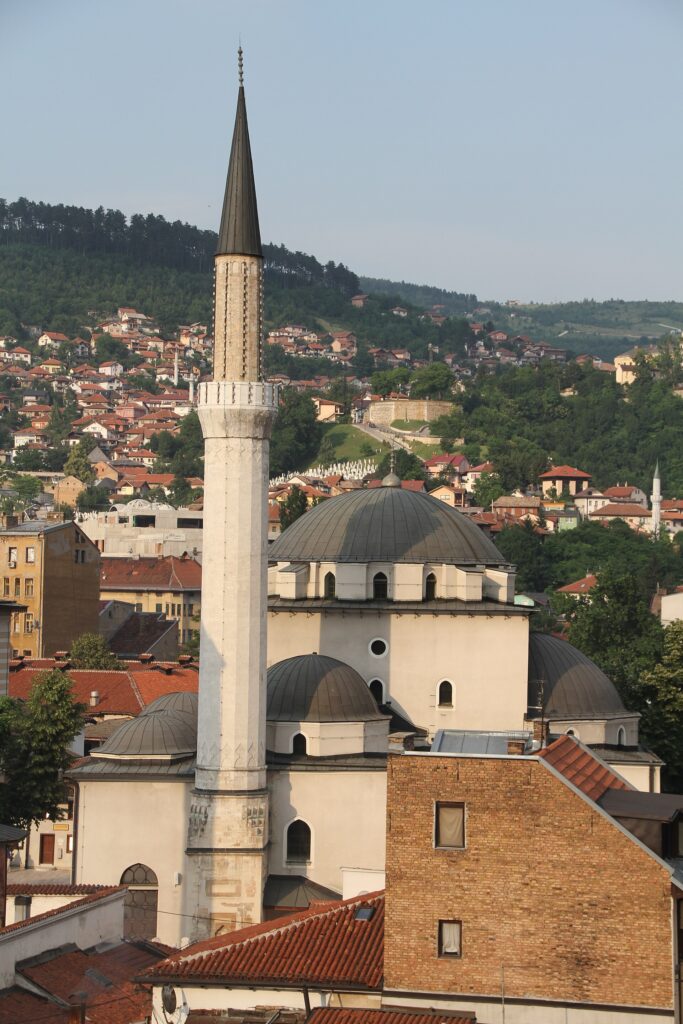
Sarajevo’s most important mosque is the Gazi Husrev-beg Mosque, built in the first half of the 16th century by Gazi Husrev-beg, the sanjak-bey (governor) of Bosnia. A grandson of Bayezid II on his mother’s side, Husrev-beg left the city a large endowment made up of a mosque, a madrasa, a khanaqah, a bathhouse and a bazaar. With its domed prayer hall, its courtyard with an ablution fountain and the mausoleum in the courtyard, the mosque is one of the finest examples of classical Ottoman mosques in the Balkans.
The Kuršumlija Madrasa, directly opposite the mosque, takes its name from its lead-covered domes and is a symbol of the endowment’s educational tradition. The nearby Gazi Husrev-beg Library is a long-established institution that has preserved manuscripts for centuries. The Clock Tower adjoining the mosque is also noteworthy; this tower is known for its “alla turca” timekeeping, in which the time is set according to the prayer times.
Where can you pray the Friday prayer in Sarajevo?
The Friday prayer is held in many mosques in Sarajevo; the place most favoured by visitors, however, is the Gazi Husrev-beg Mosque, thanks to its central location and historic atmosphere. As the courtyard can fill up early on Fridays, it is advisable to arrive before the prayer time. Arranging your programme so that you are close to this mosque on Friday allows you to experience one of the most meaningful moments of your trip.
The Ferhadija and Emperor’s Mosques
The Ferhadija Mosque, which you come across as you pass from Baščaršija into the Austrian-era streets, dates to the second half of the 16th century and stands out for its elegant single dome. The Emperor’s Mosque on the opposite bank of the Miljacka River is associated with the name of Sultan Mehmed the Conqueror as one of the city’s first mosques; its present structure was rebuilt in the 16th century. The graveyard (hazire) around the Emperor’s Mosque offers a peaceful place to visit.
The Austrian Period and the Miljacka Riverside
As you walk west from Baščaršija, you reach Ferhadija Street, where a marker on the ground shows the point where East meets West. Here the architecture changes suddenly: the Ottoman shops give way to late 19th-century European facades. This transition is one of the places that most clearly shows Sarajevo’s multi-layered identity.
Vijećnica
Vijećnica, with its striped facade on the banks of the Miljacka, was built as the city hall during the Austrian period and is known for its Andalusian-inspired decoration. Used for many years as the national library, the building was badly damaged in a fire in 1992, and thousands of works were lost. Reopened after an extensive restoration, the building is visited today both as the memory of the city and as a cultural venue.
The Latin Bridge
The stone-arched Latin Bridge, dating from the Ottoman period, is known as the bridge right beside which the 1914 assassination took place. The small museum on the corner by the bridge explains the historical context of the event. By walking along the Miljacka, you can see the Latin Bridge, Vijećnica and the Emperor’s Mosque on a single route.
The Yellow Fortress and the Kovači Martyrs’ Cemetery
When you climb up to the hilly Vratnik neighbourhood to the north of Baščaršija, you reach points that look down over the city. With the remains of its Ottoman-era walls and its quiet streets, this area has an atmosphere all of its own.
The Yellow Fortress
The Yellow Fortress (Žuta Tabija), one of the bastions of the city walls built in the Ottoman period, is Sarajevo’s favourite viewpoint. The city’s minaret-filled skyline is watched from here, especially at sunset. The firing of the cannon from here to announce the time of iftar during the month of Ramadan is one of the city’s living traditions.
The Kovači Martyrs’ Cemetery
The Kovači Martyrs’ Cemetery, on the road up to the Yellow Fortress, is a cemetery where those who lost their lives in the war of the 1990s are buried. The grave of Alija Izetbegović, the first president of Bosnia and Herzegovina in the period of independence, is also here. When visiting this area, which holds a deep silence with its white gravestones, it is important to recite al-Fatiha for the deceased and to behave in keeping with the dignity of the place.
Museums in Sarajevo and Stops Outside the City
For those who want to understand the city’s recent history, the museums and memorial sites form the most instructive part of the trip. Some are in the centre, while others are a short drive away.
Which museums should you visit in Sarajevo?
At the top of the list in Sarajevo are the Tunnel of Hope Museum, the city museum in the Brusa Bezistan, the museum beside the Latin Bridge that tells the story of the 1914 assassination, and Gallery 11/07/95, which tells the story of the Srebrenica genocide. The National Museum introduces the archaeological and ethnographic heritage of the region. As visiting days and opening arrangements can change, confirm the latest information before making your plans.
The Tunnel of Hope
Dug beneath the airport runway during the years of the siege, the Tunnel of Hope was one of the only routes through which food, medicine and aid reached the city. Part of the tunnel and the house where its entrance is located are visited as a museum today. As it lies outside the centre, you need to plan how to get there in advance.
The Srebrenica-Potočari Memorial and Cemetery
The Potočari Memorial and Cemetery, a few hours’ drive from Sarajevo, keeps alive the memory of those who lost their lives in the 1995 Srebrenica genocide. As it involves a long journey, it should be planned as a separate day. During the visit, observing silence, offering prayers and following the rules of the site is the right approach.
Vrelo Bosne and Trebević
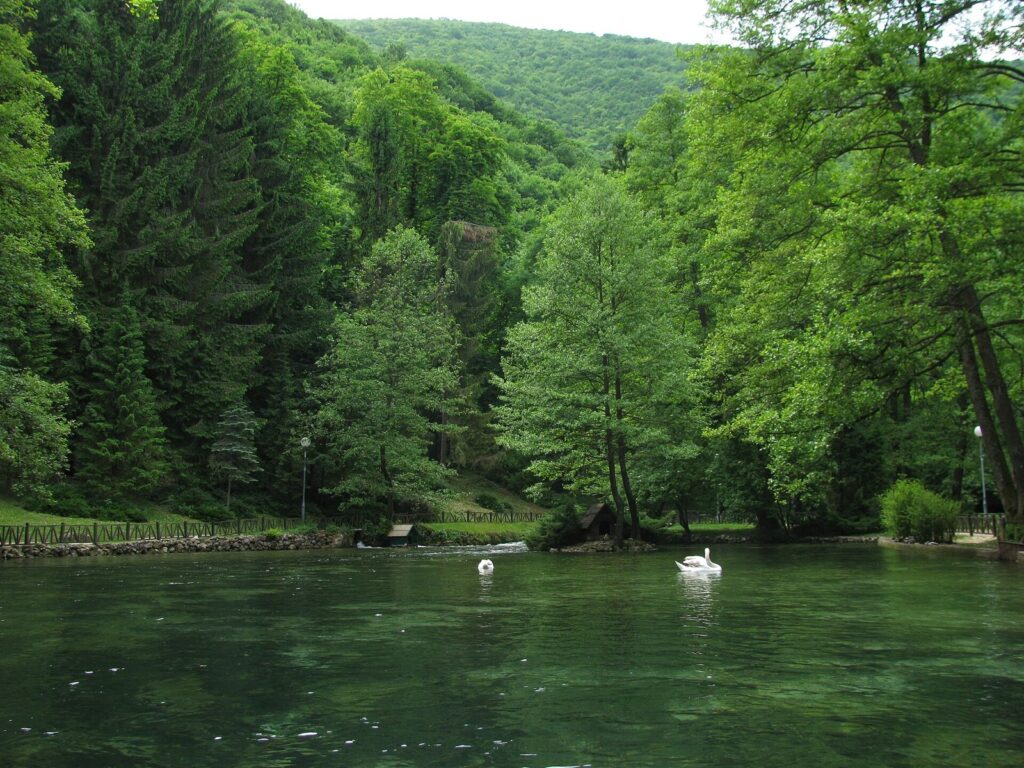
Vrelo Bosne, near Ilidža to the south-west of the city, is a green park where the source of the River Bosna emerges; with its tree-lined avenue and streams, it is a peaceful place for families to take a break. The cable car up Mount Trebević, meanwhile, offers the chance to look at the city from a different angle.
Halal Food, Clothing and Practical Information
Sarajevo, where a significant part of the population is Muslim, is one of the most comfortable cities in the Balkans for travellers who are mindful of halal requirements. Even so, knowing about a few matters will make things easier:
- Local dishes: Ćevapi (ćevapčići), burek, Bey’s soup (begova čorba), sarma and the desserts are close to Turkish tastes. Most of the traditional restaurants in Baščaršija serve these dishes.
- Checking the menu: Some restaurants and cafés in the centre may serve alcoholic drinks; do not hesitate to ask in order to choose places that suit your sensitivities.
- Bosnian coffee: Bosnian coffee, served in a copper coffee pot (cezve) with Turkish delight, is an integral part of bazaar culture.
- Clothing: When visiting mosques, choose clothing that covers the shoulders and knees; it is practical for women to carry a headscarf.
- Walking: The road to Vratnik and the Yellow Fortress is uphill; comfortable shoes are essential.
- Prayer: As there are many mosques in the centre, it is easy to keep track of the prayer times; even so, we recommend using a reliable prayer-time app.
Important: It is reported that there may be areas in the countryside around Sarajevo with a risk of landmines left over from the war. Outside the city, do not stray from marked paths, and go on nature walks with a local guide.
Can Turkish citizens travel to Bosnia and Herzegovina without a visa?
The entry requirements for Turkish citizens travelling to Bosnia and Herzegovina depend on bilateral agreements and may change over time. Different rules may apply to matters such as the length of stay, the validity period of the passport and entry with an identity card. For this reason, we recommend that you confirm the current requirements with official sources and your travel agency before setting off.
Season, Length and Route for a Trip to Sarajevo
Sarajevo is a city that experiences four distinct seasons. In the city that hosted the 1984 Winter Olympics, winters are snowy and cold, while summers are generally mild.
When is the best time to go to Sarajevo?
The best times for Sarajevo are late spring and early autumn; in these months the weather is well suited to walking. The summer months are also fine for sightseeing, but the crowds grow. Although the snow-covered city looks impressive in the winter months, walking on the hilly streets can become difficult. Those who visit during Ramadan have the chance to experience the special atmosphere of the city’s iftar tables.
How many days are enough for Sarajevo?
Two days are generally enough to see the city centre and the main sights. If you would also like to add stops outside the city such as the Tunnel of Hope, Vrelo Bosne and Trebević, it is advisable to set aside a third day. For a Bosnia programme combined with Mostar and its surroundings, four to five days is a balanced length of time.
The table below offers a sample three-day route for Sarajevo:
| Day | Area | Suggested stops |
|---|---|---|
| Day 1 | Baščaršija and its surroundings | The Sebilj, the Gazi Husrev-beg Mosque and the Kuršumlija Madrasa, the Clock Tower, the Bezistan, Morića Han, the Ferhadija Mosque |
| Day 2 | The Miljacka riverside and Vratnik | The Latin Bridge, Vijećnica, the Emperor’s Mosque, the Kovači Martyrs’ Cemetery, the Yellow Fortress at sunset |
| Day 3 | Outside the city and the museums | The Tunnel of Hope, Vrelo Bosne, Gallery 11/07/95, optionally the Trebević cable car |
If you arrange your programme around a Friday, you can pray the Friday prayer at the Gazi Husrev-beg Mosque and spend the afternoon in the bazaar. The road heading south from Sarajevo reaches Mostar along the Neretva valley; for this route, you can take a look at our article on places to visit in Mostar. For a general framework for travel that takes halal sensitivities into account, our article what is halal tourism will also be a helpful guide. Before setting off, do not forget to read our article on the supplication for travelling.
Sarajevo is a unique destination for those who want to see the traces of the Ottomans in the Balkans not only in buildings but also in people’s everyday lives. For information about the Bosnia and Balkan tours and other halal cultural tours we plan at RotaNur, you can reach us through our contact page. We will be happy to answer your questions about dates and programme options.
Frequently Asked Questions
Which currency is used in Sarajevo?
The official currency of Bosnia and Herzegovina is the convertible mark, and purchases in Sarajevo are made in this currency. Bank cards are widely accepted in hotels, restaurants and shops in the city centre; however, cash may be needed in the small shops of Baščaršija, in bakeries and in some taxis. When changing money, it is advisable to choose banks and official exchange offices and to check the conditions for paying by card with your bank in advance.
How do you get up to the Yellow Fortress from Baščaršija?
You reach the Yellow Fortress from Baščaršija by walking uphill towards the Vratnik neighbourhood; on the way, you can also visit the Kovači Martyrs’ Cemetery. Although the walk is short, the slope is steep, so a taxi is a more comfortable option for elderly visitors and families with young children. As it can get crowded at sunset, it is advisable to go up a little early and to plan so that you can pray the evening (maghrib) prayer at a nearby mosque.
How do you get around Sarajevo?
Getting around Sarajevo is done by tram, bus and taxi; the tram line running along the Miljacka River connects Baščaršija with the districts in the west of the city. As central points such as Baščaršija, Ferhadija Street and the Latin Bridge are close to one another, exploring this area on foot is the most enjoyable option. For stops outside the city, such as the Tunnel of Hope and Vrelo Bosne, tours by vehicle with an expert guide save time.
Can you make a day trip from Sarajevo to Srebrenica?
Yes, you can make a day trip from Sarajevo to the Srebrenica-Potočari Memorial and Cemetery; however, as the journey takes a few hours, this visit needs a day of its own. Setting off early in the morning allows you to spend time at the memorial site without rushing. Going with an expert guide is helpful for properly understanding the historical background of the visit. Bear in mind that during the commemoration days in July, there may be crowds and special arrangements in the area.
Is Bosnian coffee different from Turkish coffee?
Bosnian coffee is very similar to Turkish coffee; the difference lies mostly in the way it is prepared and served. According to the common account, in Bosnia the water is first heated in the coffee pot (cezve), and then the coffee is added. The coffee is served in a small copper pot with a cup, accompanied by Turkish delight and sugar cubes; drinking it slowly while chatting, without rushing, is part of the tradition. To experience this culture on the spot, you can explore our Bosnia and Balkan tours.

Cihat Murat Yüksel is the editor of the RotaNur blog and the founder of Markention. Drawing on the sources of Türkiye's Presidency of Religious Affairs (Diyanet), he turns the questions travellers ask most about preparing for Umrah, Hajj and halal travel into clear, practical guides.
Questions answered in this article
What are the historic places to visit in Sarajevo?
Most of Sarajevo’s historic sites are clustered in and around Baščaršija: the Gazi Husrev-beg Mosque, the Kuršumlija Madrasa, the Clock Tower, the Ferhadija Mosque, the Emperor’s Mosque, the Latin Bridge, Vijećnica and the Yellow Fortress top the list. A little outside the city centre are the Tunnel of Hope and the source of the River Bosna. Most of the sites in the centre can be linked together on foot.
Where can you pray the Friday prayer in Sarajevo?
The Friday prayer is held in many mosques in Sarajevo; the place most favoured by visitors, however, is the Gazi Husrev-beg Mosque, thanks to its central location and historic atmosphere. As the courtyard can fill up early on Fridays, it is advisable to arrive before the prayer time. Arranging your programme so that you are close to this mosque on Friday allows you to experience one of the most meaningful moments of your trip.
Which museums should you visit in Sarajevo?
At the top of the list in Sarajevo are the Tunnel of Hope Museum, the city museum in the Brusa Bezistan, the museum beside the Latin Bridge that tells the story of the 1914 assassination, and Gallery 11/07/95, which tells the story of the Srebrenica genocide. The National Museum introduces the archaeological and ethnographic heritage of the region. As visiting days and opening arrangements can change, confirm the latest information before making your plans.
Can Turkish citizens travel to Bosnia and Herzegovina without a visa?
The entry requirements for Turkish citizens travelling to Bosnia and Herzegovina depend on bilateral agreements and may change over time. Different rules may apply to matters such as the length of stay, the validity period of the passport and entry with an identity card. For this reason, we recommend that you confirm the current requirements with official sources and your travel agency before setting off.
When is the best time to go to Sarajevo?
The best times for Sarajevo are late spring and early autumn; in these months the weather is well suited to walking. The summer months are also fine for sightseeing, but the crowds grow. Although the snow-covered city looks impressive in the winter months, walking on the hilly streets can become difficult. Those who visit during Ramadan have the chance to experience the special atmosphere of the city’s iftar tables.
How many days are enough for Sarajevo?
Two days are generally enough to see the city centre and the main sights. If you would also like to add stops outside the city such as the Tunnel of Hope, Vrelo Bosne and Trebević, it is advisable to set aside a third day. For a Bosnia programme combined with Mostar and its surroundings, four to five days is a balanced length of time.