





Contents 26 sections
- Getting to Know Mostar: The City of the Bridge
- The Old Bridge of Mostar (Stari Most)
- Why is the Mostar Bridge so important?
- The Bridge Jumps
- The Old Bazaar and the Old Town
- Kriva Ćuprija (the Crooked Bridge)
- Historic Mostar Houses
- The Mosques of Mostar
- Koski Mehmed Pasha Mosque
- Karađoz Mehmed Bey Mosque
- How do you plan prayers and the Friday prayer in Mostar?
- Places to Visit Around Mostar
- The Blagaj Tekke
- What should you keep in mind when visiting the Blagaj Tekke?
- Počitelj
- Kravica Waterfall and Stolac
- Stops on the Sarajevo–Mostar Road
- Konjic and Its Historic Stone Bridge
- Jablanica
- Transport, Halal Food and Practical Information
- How do you get from Sarajevo to Mostar?
- Is it easy to find halal food in Mostar?
- Season, Length and Route for a Trip to Mostar
- When is the best time to go to Mostar?
- Is one day enough for Mostar?
- Frequently Asked Questions
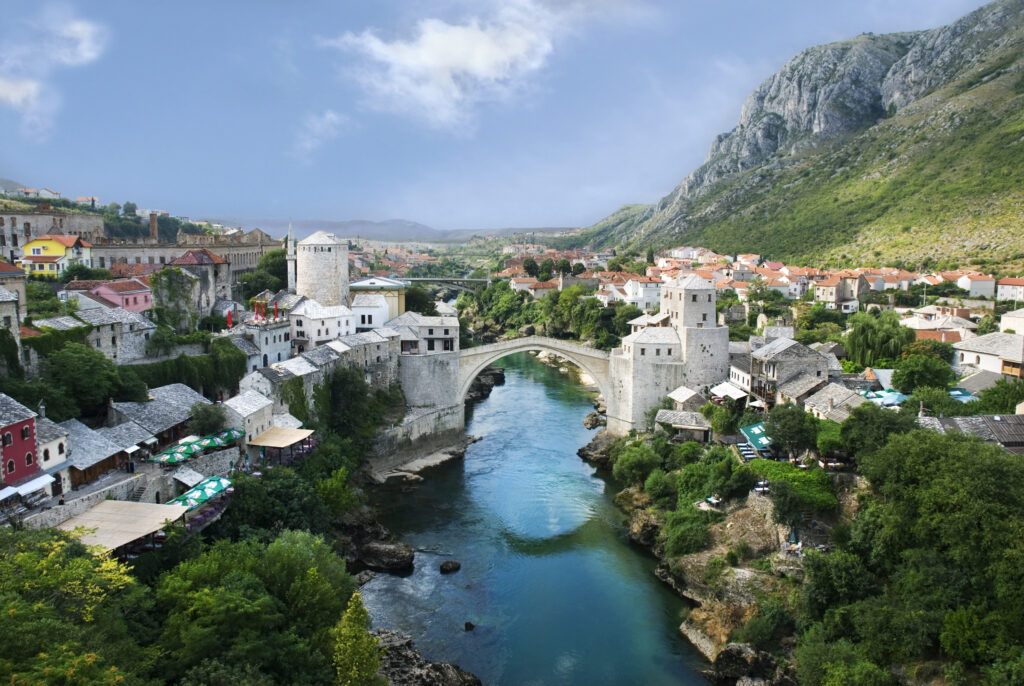
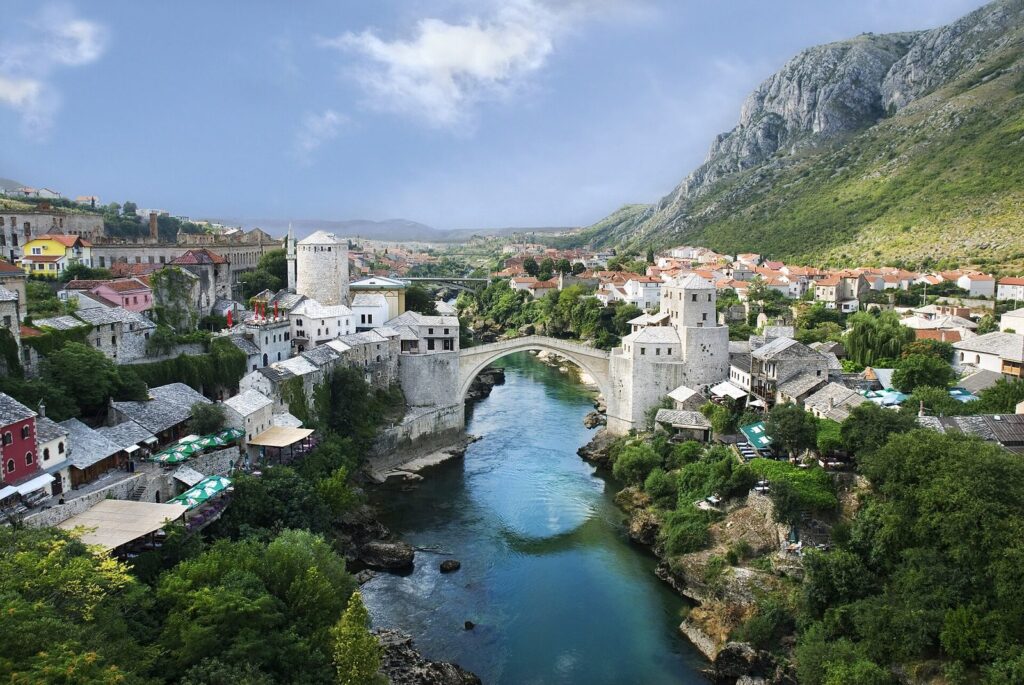
Mostar, the main city of the Herzegovina region, is one of the best-known cities in the Balkans, thanks to its single-arched bridge spanning the green waters of the Neretva River. In this guide we have compiled a list of places to visit in Mostar, starting from the city centre and extending to nearby stops such as the Blagaj Tekke, Počitelj and Kravica; together with practical tips on transport, halal food, prayer and the best season, we also share one-day and two-day route options.
Getting to Know Mostar: The City of the Bridge
The name Mostar is associated with the word “mostari” (bridge keepers), used for the guards who protected the two ends of the bridge. Having grown up in the Ottoman period around the crossing point that connected the two banks of the Neretva, the city in time became the commercial and administrative centre of Herzegovina. With its stone-roofed houses, its minarets and its narrow lanes running down towards the river, Mostar offers a history that is small in scale but remarkably rich.
The city was badly damaged during the war of the 1990s, and the historic bridge was destroyed in 1993. After meticulous work carried out with international support, the bridge was rebuilt in keeping with the original technique and reopened in 2004. Today the bridge and the old town around it are included on the UNESCO World Heritage List. This story gives every stone you see while exploring Mostar a meaning of its own.
The Old Bridge of Mostar (Stari Most)
Completed in the second half of the 16th century, during the reign of Sultan Suleiman the Magnificent, the Mostar Bridge is attributed to Mimar Hayruddin, who is known as a student of Mimar Sinan. Its single, graceful arch, passing high above the river, is regarded as a bold example of the engineering thinking of its time. The Tara and Halebija towers at either end of the bridge are defensive structures that protected the crossing.
Why is the Mostar Bridge so important?
The Mostar Bridge is important both because it is one of the masterpieces of Ottoman engineering and because, having been destroyed and rebuilt, it has become a symbol of peace and reunification. In the reconstruction of the bridge, some of the original stones recovered from the river were reused, and efforts were made to source the new stones from the same area. In this respect, the bridge is less a monument than the shared memory of the city.
The Bridge Jumps
In Mostar, local divers jumping from the bridge into the Neretva is known as a tradition that has continued for centuries. In the summer months, crowds gather around the bridge to watch these jumps. As the river’s water is cold and the current strong, simply watching this spectacle is the right choice for visitors.
As the stone surface of the bridge has become slippery over time, you need to walk carefully, especially in wet weather. The early morning hours are the most comfortable time to take photographs on the bridge, both for the light and for the crowds.
The Old Bazaar and the Old Town
The Old Bazaar (Kujundžiluk), which stretches uphill from the eastern side of the bridge, is Mostar’s liveliest street. Named after the goldsmiths who once worked here, the bazaar today sells copperware, handmade jewellery, kilims and souvenirs. The stone-paved street also offers some of the finest views of the bridge.
A few tips to keep in mind when shopping in the bazaar:
- Copperware: Plates, coffee pots (cezve) and cup sets decorated with patterns typical of Mostar are among the most popular keepsakes.
- Is it handmade? Asking whether an item was made by a local craftsman helps you choose an authentic piece.
- Timing: Choosing the morning or late afternoon rather than the midday hours, when day-trip tour groups are at their busiest, makes for calmer shopping.
- Slippery surfaces: The polished stones of the bazaar become slippery in the rain; choose comfortable, non-slip shoes.
Kriva Ćuprija (the Crooked Bridge)
The small Crooked Bridge over the Radobolja stream is an elegant structure that is believed to have been built before the great bridge and is described as a kind of trial run for it. With the remains of mills around it and the restaurants along the stream, it is a quiet corner.
Historic Mostar Houses
To see Ottoman-period domestic architecture in Mostar, you can visit historic houses such as the Muslibegović House and the Bišćević House. With their private family quarters (haremlik) and reception quarters (selamlik), wooden ceilings, built-in divans and courtyards, these houses show how daily life was organised. We recommend that you confirm the visiting conditions in advance.
The Mosques of Mostar
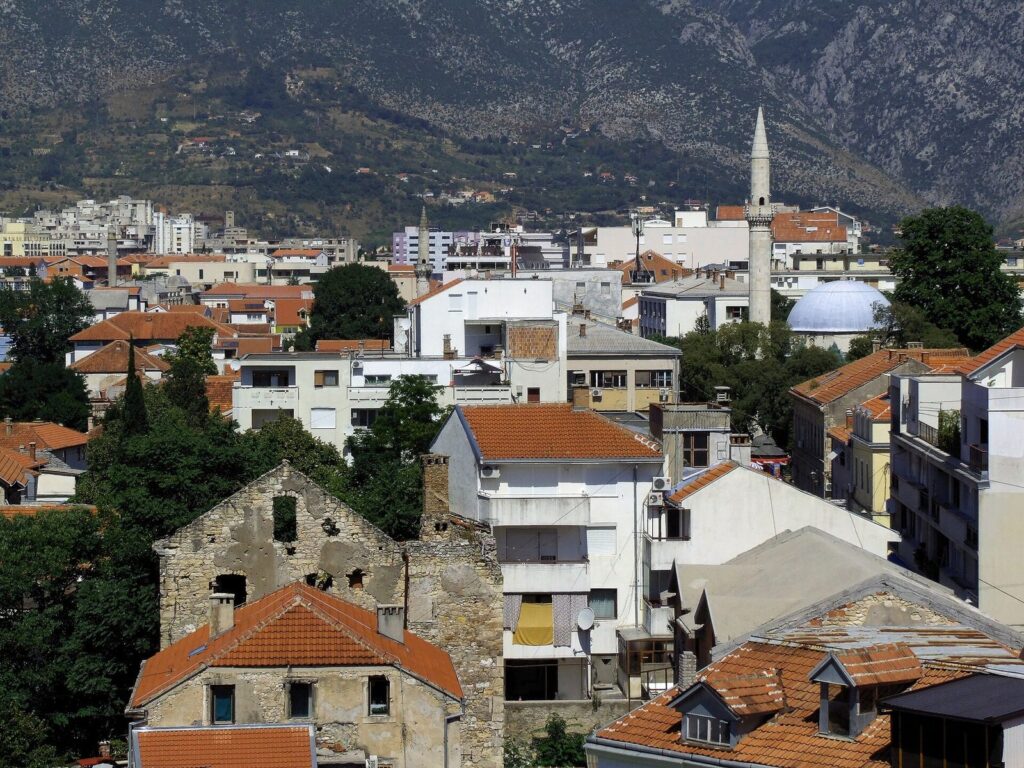
Mostar’s skyline is known as much for its minarets as for its bridge. Many of the city’s mosques were damaged in the war and restored afterwards. Today many of these mosques are both open for worship and can be visited in suitable clothing.
Koski Mehmed Pasha Mosque
Dating to the early 17th century, Koski Mehmed Pasha Mosque, with its position on the banks of the Neretva, is the most visited mosque in the city. The classic view of the bridge can be seen from its courtyard, and if you climb its minaret, you can look down over the old town. As the minaret stairs are narrow and steep, families with children and those with walking difficulties need to take care.
Karađoz Mehmed Bey Mosque
Built in the mid-16th century, the Karađoz Mehmed Bey Mosque is regarded as the largest and architecturally most important mosque in Mostar. With its dome in the classical Ottoman style, its portico and its courtyard with an ablution fountain (shadirvan), it bears the traces of the school of Mimar Sinan. Visitors often find it quieter than Koski Mehmed Pasha Mosque.
How do you plan prayers and the Friday prayer in Mostar?
As there are many mosques within walking distance of one another on the eastern side of Mostar, it is easy to pray the daily prayers in congregation. If you are coming on a Friday, the Karađoz Mehmed Bey Mosque or Koski Mehmed Pasha Mosque are both good options. As tourist visiting hours and prayer times may overlap, telling the attendant that you have come to the mosque to pray will make things easier.
Places to Visit Around Mostar
Another thing that makes Mostar special is its surroundings, which offer very different kinds of beauty within short distances. It is possible to see most of these stops on a one-day tour by vehicle.
The Blagaj Tekke
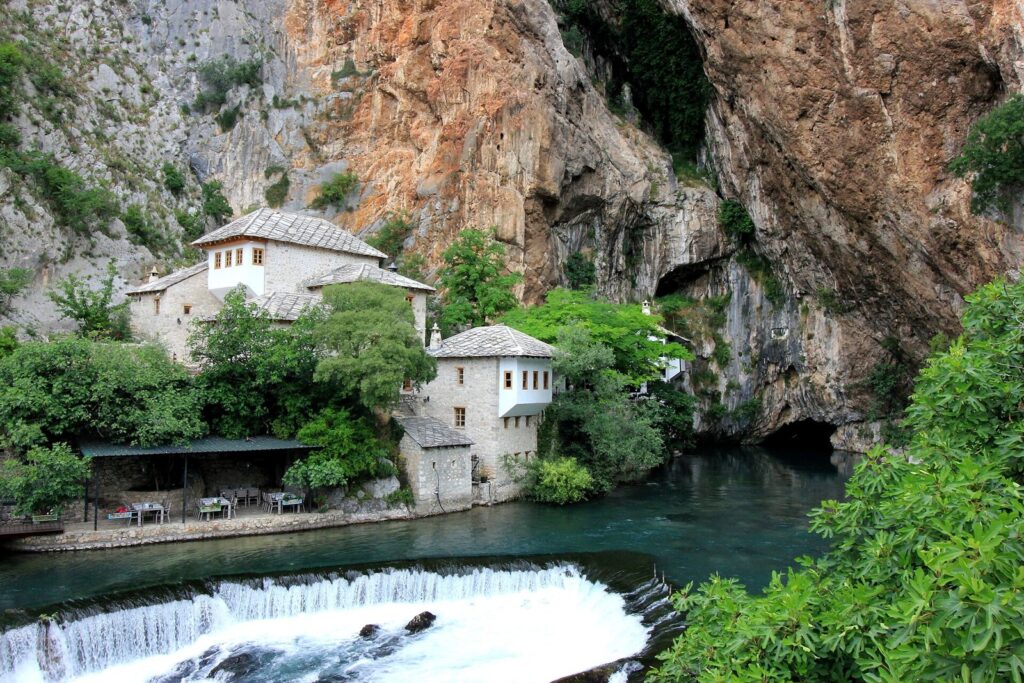
Built in the town of Blagaj, south of Mostar, at the point where the Buna River emerges from a cave at the foot of a steep cliff, the Blagaj Tekke is one of the most impressive spiritual sites in Bosnia and Herzegovina. Used as a dervish lodge in the Ottoman period, the building, with its white facade and bay windows right at the edge of the spring, looks almost as if it were standing on the water. The rooms inside, the sama hall (semahane) and the mausoleum section offer a good opportunity to understand life in a dervish lodge.
What should you keep in mind when visiting the Blagaj Tekke?
As the Blagaj Tekke is both a historic building and a place that still has spiritual value, the etiquette of a place of worship should be observed during your visit. Shoes are removed on entering, and care is taken that clothing is modest; although a cover may be provided for women at the entrance, it is advisable to carry a headscarf with you. As crowds can grow in summer, going in the morning makes for a more peaceful visit.
Počitelj
Built on a hillside on the banks of the Neretva, Počitelj is one of the preserved small towns of the Ottoman period, with its walls, its clock tower and the 16th-century Hajji Alija Mosque. Although the stone steps leading up to the top of the fortress are a little tiring, the view over the valley is worth the effort.
Kravica Waterfall and Stolac
Kravica Waterfall, to the south-west of Mostar, is a natural stop that attracts visitors especially in the summer months with its semicircular cascades. Stolac, known for its historic fabric, can be added to the programme by those looking for a quieter Herzegovinian town experience.
Stops on the Sarajevo–Mostar Road
The road from Sarajevo to Mostar follows the deep valley carved by the Neretva River. Taking a few short breaks along this route, which passes turquoise lakes, steep mountain slopes and small towns, turns the journey itself into an enjoyable part of the trip.
Konjic and Its Historic Stone Bridge
Konjic, built on both banks of the Neretva, is known for its stone bridge from the Ottoman period. Destroyed during the Second World War, the bridge was rebuilt in later years in keeping with its original form. The area around the bridge is well suited to a short walk and a tea break. Konjic is also known for its tradition of woodcarving; those interested in woodwork can take a look at the local workshops.
Jablanica
Jablanica is known for the railway bridge associated with the Battle of the Neretva in the Second World War, which is preserved over the river in its ruined state. The town is also famous for the spit-roasted lamb cooked in its roadside restaurants. If you are mindful of halal requirements, it is advisable to choose the restaurant where you will stop by consulting your guide.
When planning breaks along this road, you may want to keep the following points in mind:
- Prayer breaks: As there are mosques in Konjic and Jablanica, it is easy to fit the noon (dhuhr) or afternoon (asr) prayer around the journey.
- Photo spots: The roadside viewpoints around Jablanica Lake are the best places to see the valley.
- Journey time: As breaks will extend the total time, calculate your arrival time in Mostar accordingly.
- Weather: In the mountainous stretches, the weather may differ from that in Sarajevo and Mostar; keep a light outer layer with you.
Transport, Halal Food and Practical Information
When planned together with Sarajevo, Mostar forms the most rewarding pairing of a trip to Bosnia and Herzegovina. As the city centre is small, getting around is largely done on foot.
How do you get from Sarajevo to Mostar?
There are road and rail connections between Sarajevo and Mostar, and the journey between the two cities takes a few hours. The route, which runs along the Neretva valley, passes through towns such as Konjic and Jablanica and turns the journey itself into a sightseeing trip. As train and bus timetables can change from season to season, we recommend that you base your plans on the current schedules.
Is it easy to find halal food in Mostar?
It is generally easy to find local restaurants that meet halal requirements, especially on the eastern side of Mostar and around the old town. Ćevapi, Herzegovinian stuffed vegetables, dishes cooked under the sač and desserts are the dishes you will come across most often. As some restaurants serve alcoholic drinks, it is enough to ask and check the menu when choosing a place to eat.
The main dishes you may come across at a Mostar table are the following:
- Ćevapi: Small grilled meat rolls served in somun bread with onions; the best-known dish of the Balkans.
- Japrak and dolmas: Stuffed vine leaves and stuffed peppers are often cooked in Herzegovinian cuisine.
- Dishes cooked under the sač: A traditional method in which lamb, beef or vegetables are cooked slowly under embers.
- Tufahija and baklava: Tufahija, a dessert of poached apple filled with walnuts, stands out among the sweets inherited from the Ottoman period.
Important: In the summer months, Mostar can be one of the hottest cities in Bosnia and Herzegovina. Avoid long walks outdoors at midday, carry water with you, and when visiting the mosques and the tekke, choose light, loose clothing that suits both the heat and the requirements of modest dress.
Season, Length and Route for a Trip to Mostar
Mostar has a climate close to that of the Mediterranean; its winters are relatively mild and its summers hot. For this reason, the choice of season also has a direct effect on which hours of the day you spend sightseeing.
When is the best time to go to Mostar?
The best times for Mostar are spring and autumn. In these months the weather is well suited to walking, and nearby stops such as Blagaj and Počitelj can also be explored comfortably. In the summer months the city is lively and crowded, but because of the heat the programme needs to be spread over the morning and evening hours.
Is one day enough for Mostar?
One day may be enough to see Mostar’s old town, the bridge and its mosques. However, if you would also like to see nearby places such as the Blagaj Tekke, Počitelj and Kravica and experience the evening atmosphere of the city, staying overnight and setting aside two days makes for a far more enjoyable programme.
In the table below, we compare two different route options:
| Route | Morning | Afternoon | Who is it suitable for? |
|---|---|---|---|
| Day trip (from Sarajevo) | Breaks in Konjic and Jablanica on the way, the Mostar Bridge | The Old Bazaar, Koski Mehmed Pasha Mosque, the Blagaj Tekke on the way back | Those short on time |
| Two days – Day 1 | The Blagaj Tekke (early) | The Mostar Bridge, the Old Bazaar, the Karađoz Mehmed Bey Mosque, the riverside in the evening | Those who want to enjoy the city at a relaxed pace |
| Two days – Day 2 | Počitelj | Kravica Waterfall, optionally Stolac | Families and nature lovers |
If you would like to combine this route with Sarajevo, our guide to places to visit in Sarajevo will round off your programme. For a general framework on how to plan your prayer, food and accommodation preferences on your travels, you can read our article what is halal tourism. If you are curious about the traces of Ottoman and Islamic heritage in other regions, you can also take a look at our Uzbekistan travel guide.
Mostar is a small but unforgettable stop that shows how a bridge can become the identity of a city. The Bosnia and Balkan tours we prepare at RotaNur bring together Sarajevo and Mostar with spiritual stops such as the Blagaj Tekke. For other halal cultural tours and programme details, you can reach us through our contact page.
Frequently Asked Questions
Can you climb the minaret of Koski Mehmed Pasha Mosque?
Yes, visitors can climb the minaret of Koski Mehmed Pasha Mosque, and from here the old town, the bridge and the Neretva valley can be seen from above. As the minaret stairs are narrow, steep and winding, families with children, elderly people and those with walking difficulties need to take care. Bearing in mind that visits may be suspended for a short while at prayer times and that visiting conditions may change, it is advisable to plan your programme around the intervals between prayers.
How do you get to the Blagaj Tekke from Mostar?
The Blagaj Tekke is located to the south of Mostar and can be reached by a short drive from the city centre. The most practical options are a private vehicle, a taxi or an organised tour with an expert guide; there are also local buses, but their timetables may be limited. From the car park to the tekke, there is a short walk along the river. For programmes that combine Blagaj with Počitelj and Kravica, you can take a look at our Bosnia and Balkan tours.
When can you watch the jumps from the Mostar Bridge?
The jumps from the Mostar Bridge can be watched mostly in the summer months, during the daytime hours when visitor numbers rise. As the local divers usually jump once a large enough crowd has gathered around the bridge, it is hard to give a specific time. Traditional diving competitions are also held in the summer. You can comfortably watch the show from the viewpoints on both banks of the river. Visitors jumping into the cold, fast-flowing water, however, is strongly discouraged.
How much time should you set aside to explore Počitelj?
A few hours are generally enough to explore Počitelj; in this time, the Hajji Alija Mosque, the clock tower and the walls can be seen comfortably. As the stone steps up to the top of the fortress are steep, you need to walk at a slow pace and take water with you. As Počitelj easily fits into the same day as Blagaj and Kravica, exploring the town in the cool of the morning and devoting the afternoon to the waterfall makes for a balanced plan.
Where is the most practical place to stay in Mostar?
The most practical area to stay in Mostar is the old town and its surroundings, within walking distance of the bridge and the Old Bazaar. Those who stay in this area can see the bridge in the morning and evening hours away from the crowds and can easily reach the mosques. As the streets of the old town are stone-paved and sloping, it is advisable to ask in advance about access with luggage. To combine the programme with Sarajevo, you can refer to our guide to places to visit in Sarajevo.

Cihat Murat Yüksel is the editor of the RotaNur blog and the founder of Markention. Drawing on the sources of Türkiye's Presidency of Religious Affairs (Diyanet), he turns the questions travellers ask most about preparing for Umrah, Hajj and halal travel into clear, practical guides.
Questions answered in this article
Why is the Mostar Bridge so important?
The Mostar Bridge is important both because it is one of the masterpieces of Ottoman engineering and because, having been destroyed and rebuilt, it has become a symbol of peace and reunification. In the reconstruction of the bridge, some of the original stones recovered from the river were reused, and efforts were made to source the new stones from the same area. In this respect, the bridge is less a monument than the shared memory of the city.
How do you plan prayers and the Friday prayer in Mostar?
As there are many mosques within walking distance of one another on the eastern side of Mostar, it is easy to pray the daily prayers in congregation. If you are coming on a Friday, the Karađoz Mehmed Bey Mosque or Koski Mehmed Pasha Mosque are both good options. As tourist visiting hours and prayer times may overlap, telling the attendant that you have come to the mosque to pray will make things easier.
What should you keep in mind when visiting the Blagaj Tekke?
As the Blagaj Tekke is both a historic building and a place that still has spiritual value, the etiquette of a place of worship should be observed during your visit. Shoes are removed on entering, and care is taken that clothing is modest; although a cover may be provided for women at the entrance, it is advisable to carry a headscarf with you. As crowds can grow in summer, going in the morning makes for a more peaceful visit.
How do you get from Sarajevo to Mostar?
There are road and rail connections between Sarajevo and Mostar, and the journey between the two cities takes a few hours. The route, which runs along the Neretva valley, passes through towns such as Konjic and Jablanica and turns the journey itself into a sightseeing trip. As train and bus timetables can change from season to season, we recommend that you base your plans on the current schedules.
Is it easy to find halal food in Mostar?
It is generally easy to find local restaurants that meet halal requirements, especially on the eastern side of Mostar and around the old town. Ćevapi, Herzegovinian stuffed vegetables, dishes cooked under the sač and desserts are the dishes you will come across most often. As some restaurants serve alcoholic drinks, it is enough to ask and check the menu when choosing a place to eat.
When is the best time to go to Mostar?
The best times for Mostar are spring and autumn. In these months the weather is well suited to walking, and nearby stops such as Blagaj and Počitelj can also be explored comfortably. In the summer months the city is lively and crowded, but because of the heat the programme needs to be spread over the morning and evening hours.