





Contents 30 sections
- Transoxiana: One of the Centres of Islamic Scholarship
- Where is the grave of Imam al-Bukhari?
- Imam al-Maturidi and Samarkand
- Baha-ud-Din Naqshband and Bukhara
- Places to See in Samarkand
- Registan Square
- Gur-e-Amir
- Bibi-Khanym Mosque
- Shah-i-Zinda
- Ulugh Beg Observatory
- Places to See in Bukhara
- The Po-i-Kalyan Complex
- The Ark Fortress
- The Samanid Mausoleum
- Lyab-i Hauz and Chor Minor
- Tashkent: The Hazrati Imam Complex
- Where is the manuscript known as the Uthman Quran?
- Khiva: The Open-Air Museum of Khwarazm
- Transport, Entry Requirements and Halal Food
- Can Turkish citizens travel to Uzbekistan without a visa?
- How do you travel between cities?
- Is it easy to find halal food in Uzbekistan?
- Planning the Season and Length of Your Trip to Uzbekistan
- When is the best time to go to Uzbekistan?
- How many days are enough for a trip to Uzbekistan?
- Up-to-Date Planning Notes for a Trip to Uzbekistan in the 2026–2027 Season
- Checklist Before You Set Off
- Travel Calendar by Period
- Keep reading
- Frequently Asked Questions
Uzbekistan is one of the richest regions of Central Asia in terms of Islamic civilisation. A trip to Uzbekistan offers the chance to see at first hand a heritage of scholarship and art stretching from Imam al-Bukhari to Ulugh Beg in cities such as Samarkand, Bukhara and Tashkent. In this guide we have gathered the historical significance of the region, the places you should see in each city, and practical matters such as transport, entry requirements, halal food and the best season to travel.
Transoxiana: One of the Centres of Islamic Scholarship
In Islamic sources, the region between the Jayhun (Amu Darya) and Sayhun (Syr Darya) rivers is called “Mawarannahr” (Transoxiana), meaning “what lies beyond the river”. Covering most of present-day Uzbekistan, this region produced leading scholars in hadith, jurisprudence (fiqh), theology (kalam), astronomy and mathematics over the centuries. Cities such as Bukhara and Samarkand became centres of learning that drew students from every corner of the Islamic world. The hadith scholar Imam al-Tirmidhi, al-Khwarizmi, who holds an important place in the history of mathematics, and Ibn Sina (Avicenna), known for his works in medicine, are also among the names connected with this region.
Where is the grave of Imam al-Bukhari?
Imam al-Bukhari, the author of Sahih al-Bukhari, one of the most important works in the science of hadith, was born in Bukhara and passed away in the village of Khartank near Samarkand. Today a large complex stands at the site of his grave. A significant number of visitors who come to Samarkand also add this complex to their programme.
Imam al-Maturidi and Samarkand
Abu Mansur al-Maturidi, one of the two great imams of Ahl al-Sunnah theology, lived and passed away in Samarkand. The Maturidi school of creed, which is widespread in the Turkic world, bears his name. His mausoleum in Samarkand is a meaningful stop, especially for visitors with an interest in theology.
Baha-ud-Din Naqshband and Bukhara
Baha-ud-Din Naqshband, who lived in the 14th century and gave his name to the Naqshbandi order, is buried in Qasr-i Arifan near Bukhara. The complex that houses his mausoleum, with its mosque, courtyard and surrounding buildings, is one of the spiritual sites that visitors frequently call at.
Places to See in Samarkand
Samarkand, the capital of Timur (Tamerlane), is the best-known city in Uzbekistan, famous for its blue domes and tilework. As many of the historic buildings are close to one another, the city centre can be explored on foot or with short vehicle transfers.
Registan Square
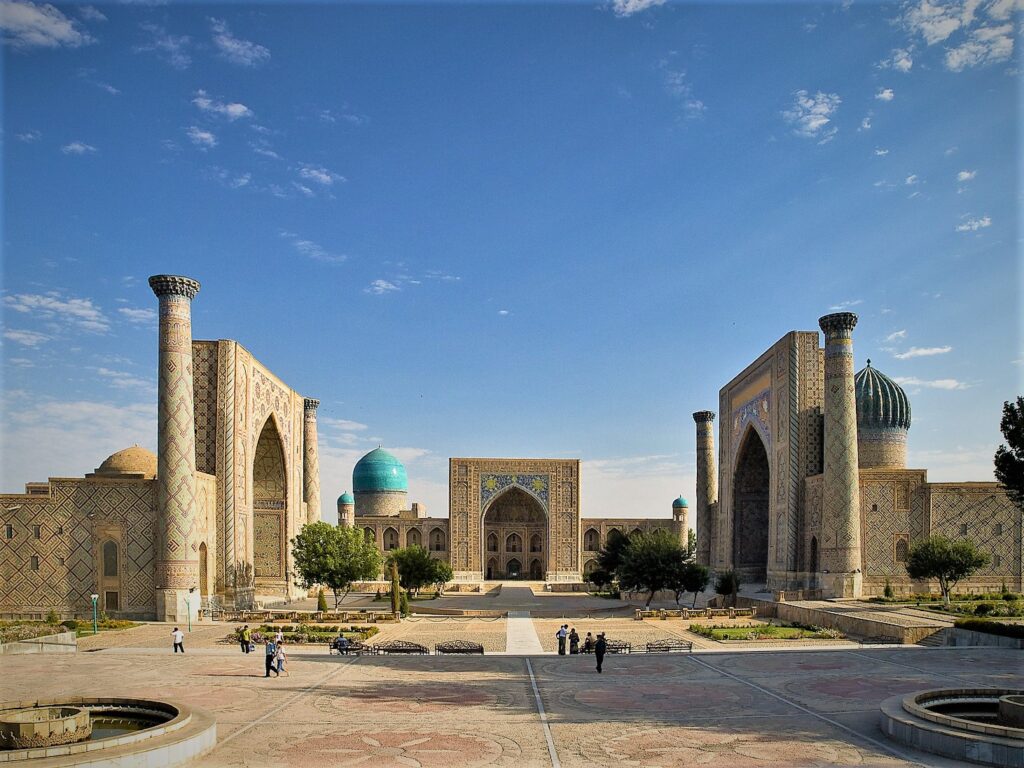
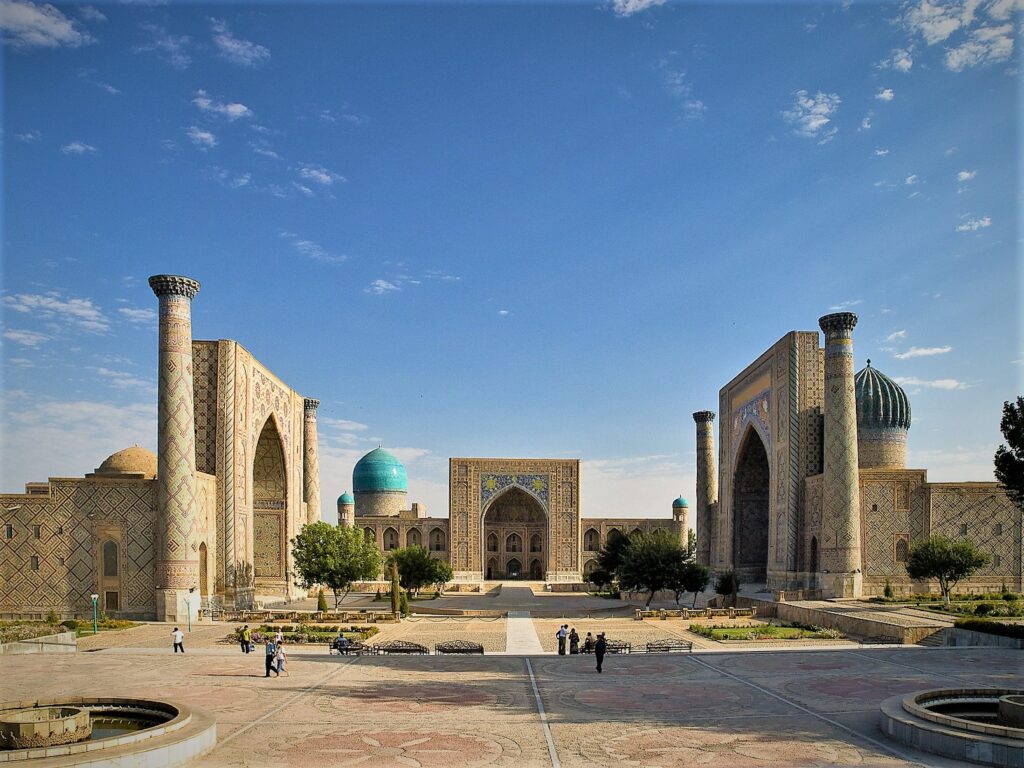
Registan, regarded as the heart of Samarkand, is a square framed by three large madrasas. The Ulugh Beg Madrasa, built by Ulugh Beg in the 15th century, was one of the important educational institutions of its time. The Sher-Dor Madrasa, built opposite it in the 17th century, stands out for the animal figures on its monumental portal. The Tilya-Kori Madrasa, located between the two, was used both as a madrasa and as a mosque and is known for its gilded interior.
Gur-e-Amir
Gur-e-Amir, where Timur and some members of the Timurid dynasty are buried, is one of the landmarks of Samarkand with its ribbed blue dome. The grave of Ulugh Beg is also in this mausoleum. The decoration of the interior offers a refined example of Timurid art.
Bibi-Khanym Mosque
The Bibi-Khanym Mosque, which Timur began to build at the end of the 14th century, was designed as one of the largest mosques of its era. Badly damaged over time by earthquakes and neglect, the building underwent extensive restorations in later periods. At the Siab Bazaar right next to the mosque, you can also see local produce.
Shah-i-Zinda
Shah-i-Zinda, which grew up around the grave attributed to Qusam ibn Abbas, the cousin of the Prophet (peace be upon him), is a necropolis made up of mausoleums lined up along a narrow path. The tilework in the mausoleums from the Timurid period in particular is cited among the most impressive examples in Central Asia.
Ulugh Beg Observatory
Of the observatory founded in the 15th century by Ulugh Beg, who attached great importance to astronomy, what can be seen today are the remains of the giant measuring instrument that extends below ground and a small museum. The later move to Istanbul of Ali Qushji, who was trained in Ulugh Beg’s circle, also carried this heritage into Ottoman scholarly life.
Places to See in Bukhara
Bukhara, also known as “Bukhara-i Sharif” (Noble Bukhara), is a city that has largely preserved its historic fabric. With its madrasas, mosques and domed bazaars standing close together, the old centre of the city looks almost like an open-air museum.
The Po-i-Kalyan Complex
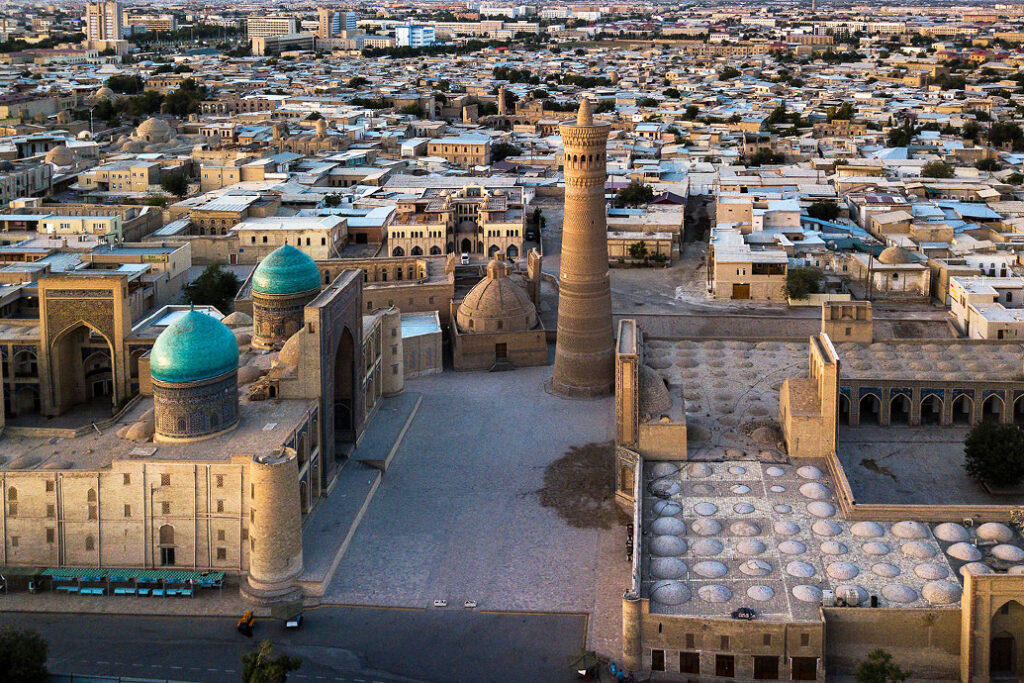
Po-i-Kalyan (Poi Kalon), meaning “the foot of the great one”, is Bukhara’s best-known group of buildings. The Kalyan Minaret, built in the 12th century during the Karakhanid period, is the symbol of the city with its brick decoration. The Kalyan Mosque next to the minaret stands out for its vast courtyard, and the Mir-i-Arab Madrasa opposite it for its blue domes. The Mir-i-Arab Madrasa is also known as an institution that has been providing education for a long time.
The Ark Fortress
The Ark Fortress, used for centuries as the seat of government by the rulers of Bukhara, dominates the city’s historic centre with its high walls. Exhibitions on the history of the city are housed in sections inside the fortress.
The Samanid Mausoleum
Dated to the 10th century and accepted as belonging to the Samanid dynasty, this mausoleum is one of the oldest surviving buildings of the Islamic period in Central Asia. The decoration, created through different arrangements of fired bricks, gives an extraordinary richness to a simple mass.
Lyab-i Hauz and Chor Minor
Lyab-i Hauz, which grew up around a pool surrounded by madrasas and khanaqahs (Sufi lodges), is Bukhara’s liveliest square and ideal for a walk in the evening hours. The statue of Nasreddin Hodja, depicted riding his donkey, also attracts visitors’ attention in the square. Chor Minor, which lies a little outside the old centre, is a madrasa gatehouse with four small towers, built at the beginning of the 19th century.
Tashkent: The Hazrati Imam Complex
Tashkent, the capital of Uzbekistan, is the point of entry into the country for most visitors. The historical and spiritual centre of Tashkent, which has the look of a modern city, is the Hazrati Imam (Khast Imam) Complex. The complex takes its name from the scholar al-Qaffal al-Shashi, who lived in the 10th century, and spreads over a large area made up of a mosque, madrasas and mausoleums.
Where is the manuscript known as the Uthman Quran?
In the library building within the Hazrati Imam Complex, a historic copy of the Holy Quran popularly known as the “Uthman Quran” (Mushaf of Uthman) is on display. This copy is believed to be one of the mushafs reproduced in the time of Caliph Uthman; however, researchers hold differing views on its dating. It is advisable to confirm the visiting conditions and opening hours before you travel.
Khiva: The Open-Air Museum of Khwarazm
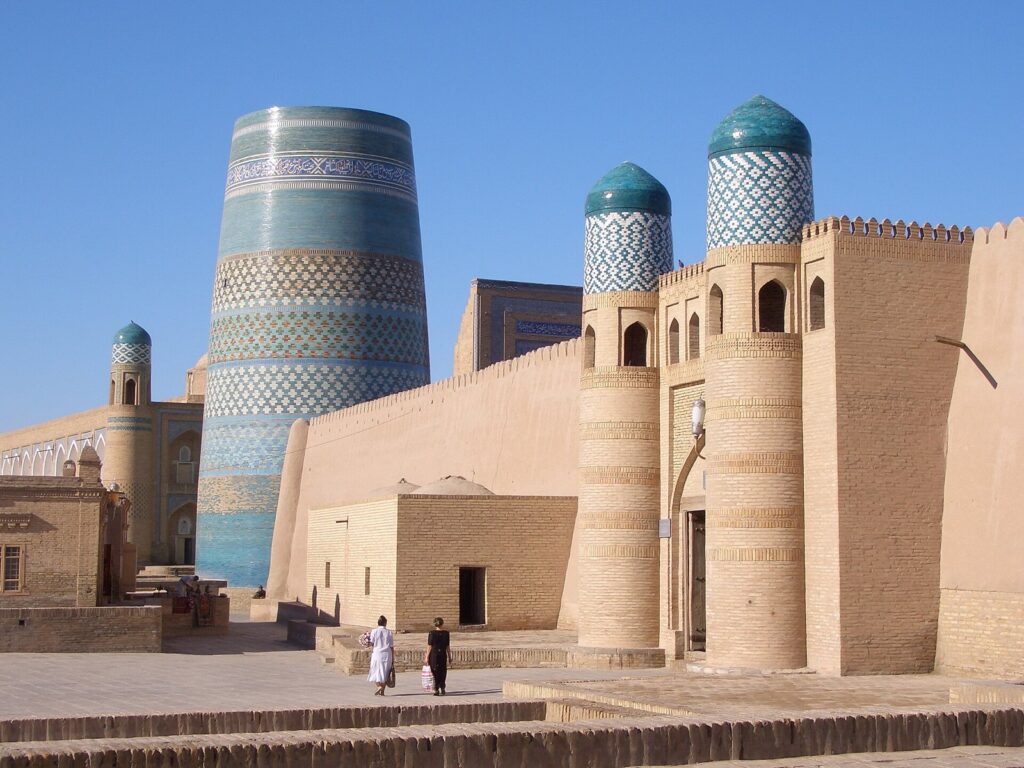
Khiva, located in the Khwarazm region in the west of the country, is known for its walled inner city, Itchan Kala. The madrasas, mosques and palaces lined up along its narrow streets turn the city into something like an open-air museum. The tiled Kalta Minor minaret, striking in its unfinished state, is one of the most photographed buildings in Khiva. As it is far from the other cities, transport needs to be planned separately if it is to be added to the programme.
Transport, Entry Requirements and Halal Food
For visitors, Uzbekistan is a relatively easy country when it comes to transport and food. Even so, knowing about a few matters in advance will make your journey easier.
Can Turkish citizens travel to Uzbekistan without a visa?
The entry requirements for Turkish citizens travelling to Uzbekistan may change over time depending on the arrangements between the two countries. Different rules may apply to matters such as the length of stay, the validity period of the passport and registration of accommodation. For this reason, we recommend that you confirm the current requirements with official sources and your travel agency before making travel plans.
How do you travel between cities?
There are high-speed train services between Tashkent, Samarkand and Bukhara, and this line offers a comfortable journey between the cities. To reach Khiva, a domestic flight to the nearby city of Urgench or an overland journey is usually preferred. As timetables and ticket availability change from season to season, base your planning on up-to-date information.
Is it easy to find halal food in Uzbekistan?
In Uzbekistan, where the great majority of the population is Muslim, finding halal food is generally easy. Dishes such as pilaf (plov), somsa, lagman and shish kebab are quite close to Turkish tastes. It is enough to be aware that some restaurants serve alcoholic drinks and to choose places that suit your sensitivities.
Planning the Season and Length of Your Trip to Uzbekistan
Most of the places to visit in Uzbekistan are outdoors, and there are long distances between the cities. For this reason, your choice of season and trip length has a direct effect on how much you get out of the journey.
When is the best time to go to Uzbekistan?
The best times for Uzbekistan are spring and autumn. In the summer months the weather can be very hot and dry, while in winter the cold is noticeably felt, especially in the mornings and evenings. On a trip dominated by outdoor walking, the mild seasons allow for a more comfortable programme.
How many days are enough for a trip to Uzbekistan?
Six to eight days are generally enough for a programme covering Tashkent, Samarkand and Bukhara. If you would also like to add Khiva to the programme, you will need to set aside a day or two more. With these lengths, you can both see the sites without rushing and settle into a balanced pace that fits around the prayer times.
A sample breakdown could look like this:
- Tashkent (1 day): The Hazrati Imam Complex and the city centre.
- Samarkand (2-3 days): Registan, Gur-e-Amir, the Bibi-Khanym Mosque, Shah-i-Zinda, the Ulugh Beg Observatory and the Imam al-Bukhari Complex.
- Bukhara (2-3 days): Po-i-Kalyan, the Ark Fortress, the Samanid Mausoleum, Lyab-i Hauz, Chor Minor and the Baha-ud-Din Naqshband Complex.
- Khiva (1-2 days, optional): Itchan Kala and its surroundings.
Before setting off, you can take a look at our article on the supplication for travelling. If you are also curious about the heritage of Islamic civilisation in the West, our Andalusia travel guide will show you the way.
Up-to-Date Planning Notes for a Trip to Uzbekistan in the 2026–2027 Season
If you are planning to see Samarkand and Bukhara in the coming months, clarifying a few matters in advance, from the country’s entry requirements to train tickets and weather conditions that vary by period, will make your journey easier. At RotaNur, we have gathered the key points for the 2026–2027 period. These notes will help you assess the city and duration suggestions above together with the current calendar.
Checklist Before You Set Off
- Entry requirements: Turkish citizens can currently enter Uzbekistan without a visa for short visits. Confirm details such as the length of stay and passport requirements with the Ministry of Foreign Affairs before you travel.
- Train tickets: The Afrosiyob high-speed train runs on the Tashkent–Samarkand–Bukhara line. As tickets can sell out early at busy times, plan your journeys between cities as soon as your travel dates are fixed; passport details may be requested when buying tickets.
- Health preparation: Those with chronic conditions and those who take regular medication are advised to consult their family doctor or the travel health centres of the Ministry of Health before setting off.
- Clothing and footwear: As there will be long walks in the historic centres, choose comfortable shoes and modest clothing that can be layered according to the season.
- Guiding: The historical and scholarly background of many buildings, from Registan to Po-i-Kalyan, becomes far more meaningful when you tour them with an expert guide.
Travel Calendar by Period
| Period | Calendar note | Planning tip |
|---|---|---|
| October–November 2026 | The mild days of autumn | Suitable for programmes focused on outdoor sightseeing |
| December 2026–January 2027 | The three sacred months and the blessed nights (kandil); the mid-year school holiday in Türkiye falls in the second half of January | Clothing suited to cold weather, and a pace adjusted to the short daylight hours |
| February–March 2027 | Ramadan is expected to begin in the first half of February and end in early March | Plan visits around the time of iftar |
| April–May 2027 | The spring months; the Eid al-Adha holiday is expected to fall in mid-May, and visitor numbers rise | Book train tickets and hotels early |
Spending the blessed nights (kandil) of the winter period in Samarkand or Bukhara can carry a special meaning for those who wish to visit the complexes of Imam al-Bukhari and Baha-ud-Din Naqshband; however, the cold weather and short days of these months must be factored into the programme. During this period, adding a thick coat, gloves and waterproof shoes to your packing list and grouping outdoor visits into the daylight hours will reduce fatigue.
As entry rules, timetables and visiting conditions can change, we recommend that you confirm the latest information with official sources and your travel agency before you travel. For programmes prepared according to the season, you can explore our Uzbekistan tours page, and for the general principles of halal-conscious travel, our halal tourism guide.
Keep reading
- Places to Visit in Baku: From Icherisheher to the Flame Towers
- Places to Visit in Dubai: Mosques, Souks and Modern Landmarks
- What Is Halal Tourism? What to Look For on a Halal Holiday
This journey, stretching from the domes of Samarkand to the madrasas of Bukhara, is an unforgettable experience for those who want to get to know the roots of the Islamic scholarly tradition on the spot. For information about the Uzbekistan tours and other halal cultural tours we plan at RotaNur, you can reach us through our contact page or our WhatsApp line. We will be happy to answer your questions.
Frequently Asked Questions
Which currency is used in Uzbekistan?
The official currency of Uzbekistan is the som. Although bank cards are accepted in some hotels and restaurants in the big cities, cash payment is more common in the bazaars and small businesses. Choosing banks and official exchange points when changing money and keeping small amounts of cash with you will make things easier. Do not forget to confirm with your bank before setting off that your card is enabled for use abroad.
What should you keep in mind when visiting mosques in Uzbekistan?
When visiting mosques and mausoleums in Uzbekistan, it is enough to wear modest clothing and to respect the etiquette of the place. Women are advised to carry a headscarf with them, and men to wear long trousers rather than shorts. Visitor access may be restricted during prayer times. As some of the historic buildings serve as museums, the rules on entry and photography may vary from place to place; when in doubt, it is best to ask the staff.
Can you get by speaking Turkish in Uzbekistan?
Because Uzbek belongs to the Turkic language family, many words sound familiar to Turkish speakers, and it is often possible to communicate for simple needs. Even so, differences in pronunciation and vocabulary mean that not every conversation will be easy; Russian is also widely used in the cities. Touring with a Turkish-speaking expert guide makes it much easier to hear the stories of the historic sites in detail.
Can you visit Uzbekistan during Ramadan?
Yes, it is possible to visit Uzbekistan during the month of Ramadan, and this period offers a special spiritual atmosphere. Ramadan in 2027 is expected to fall in February and March; the weather may be cold, but because the days are short, sightseeing while fasting is easier than in the summer months. For programmes suited to this period, you can take a look at our Uzbekistan tours page.
Which souvenirs can you buy in Uzbekistan?
Popular souvenirs from Uzbekistan include hand-embroidered suzanis, silk and cotton fabrics, ceramic plates, carved wooden items, and dried fruit and spices. The domed bazaars of Bukhara and the Siab Bazaar in Samarkand are popular places for shopping. As the quality of handmade items can vary, it is worth examining the item carefully and keeping in mind the bargaining culture of the bazaars.

Cihat Murat Yüksel is the editor of the RotaNur blog and the founder of Markention. Drawing on the sources of Türkiye's Presidency of Religious Affairs (Diyanet), he turns the questions travellers ask most about preparing for Umrah, Hajj and halal travel into clear, practical guides.
Questions answered in this article
Where is the grave of Imam al-Bukhari?
Imam al-Bukhari, the author of Sahih al-Bukhari, one of the most important works in the science of hadith, was born in Bukhara and passed away in the village of Khartank near Samarkand. Today a large complex stands at the site of his grave. A significant number of visitors who come to Samarkand also add this complex to their programme.
Where is the manuscript known as the Uthman Quran?
In the library building within the Hazrati Imam Complex, a historic copy of the Holy Quran popularly known as the “Uthman Quran” (Mushaf of Uthman) is on display. This copy is believed to be one of the mushafs reproduced in the time of Caliph Uthman; however, researchers hold differing views on its dating. It is advisable to confirm the visiting conditions and opening hours before you travel.
Can Turkish citizens travel to Uzbekistan without a visa?
The entry requirements for Turkish citizens travelling to Uzbekistan may change over time depending on the arrangements between the two countries. Different rules may apply to matters such as the length of stay, the validity period of the passport and registration of accommodation. For this reason, we recommend that you confirm the current requirements with official sources and your travel agency before making travel plans.
How do you travel between cities?
There are high-speed train services between Tashkent, Samarkand and Bukhara, and this line offers a comfortable journey between the cities. To reach Khiva, a domestic flight to the nearby city of Urgench or an overland journey is usually preferred. As timetables and ticket availability change from season to season, base your planning on up-to-date information.
Is it easy to find halal food in Uzbekistan?
In Uzbekistan, where the great majority of the population is Muslim, finding halal food is generally easy. Dishes such as pilaf (plov), somsa, lagman and shish kebab are quite close to Turkish tastes. It is enough to be aware that some restaurants serve alcoholic drinks and to choose places that suit your sensitivities.
When is the best time to go to Uzbekistan?
The best times for Uzbekistan are spring and autumn. In the summer months the weather can be very hot and dry, while in winter the cold is noticeably felt, especially in the mornings and evenings. On a trip dominated by outdoor walking, the mild seasons allow for a more comfortable programme.