




Contents 29 sections
- Why Is Al-Aqsa Mosque So Important?
- The first qiblah
- Al-Isra and al-Mi’raj
- The hadith of the three mosques
- What Is There in the al-Haram ash-Sharif Compound?
- The Qibli Mosque
- The Dome of the Rock
- Are the Dome of the Rock and Al-Aqsa Mosque the same building?
- The Marwani Mosque
- The Buraq Wall
- Ottoman Heritage in Jerusalem
- The walls from the time of Suleiman the Magnificent
- Damascus Gate
- The Four Quarters of the Old City
- Adding Hebron (Al-Khalil) and Bethlehem to Your Route
- The Ibrahimi Mosque (Hebron)
- Bethlehem
- Etiquette, Clothing and Safety When Visiting Al-Aqsa Mosque
- What should you keep in mind when entering Al-Aqsa Mosque?
- Why should safety and entry conditions be confirmed in advance?
- Duration, Season and Route Suggestions for a Jerusalem Trip
- How many days are enough for Jerusalem?
- What is the best season to visit Jerusalem?
- Which routes can a Jerusalem tour be combined with?
- Up-to-Date Notes for Those Planning a Journey to Jerusalem in 2026–2027
- Programmes Organised with an Overland Crossing via Jordan
- Planning Notes by Season
- Keep reading
- Frequently Asked Questions
Jerusalem is a blessed city that carries deep meaning for followers of different faiths; for Muslims, it is the first qiblah and a stop on the journey of the Mi’raj. If you are planning a trip to Jerusalem, knowing about the significance of the site, the structures within al-Haram ash-Sharif and the etiquette of the visit before visiting Al-Aqsa Mosque will make your journey far more meaningful. In this guide we have gathered the essential topics you need to know, from Al-Aqsa Mosque to the streets of the Old City and from the Ottoman heritage to Hebron (Al-Khalil) and Bethlehem. If you are considering a guided programme, you can also take a look at our Jerusalem tours page.
Why Is Al-Aqsa Mosque So Important?
Al-Aqsa Mosque is the first qiblah of Muslims, the stopping point of the journey of al-Isra and al-Mi’raj, and one of the three mosques to which the Prophet (peace be upon him) recommended travelling for a visit. This site, which is mentioned in the Holy Quran and whose surroundings are described there as blessed, is regarded as the third holiest site in Islam after Masjid al-Haram and the Prophet’s Mosque (Masjid an-Nabawi).
The first qiblah
For sixteen or seventeen months after the Hijrah, Muslims performed their prayers facing Jerusalem (al-Bukhari, Muslim). Later, with verse 144 of Surah al-Baqarah, the qiblah was turned towards the Kaaba. For this reason, Al-Aqsa Mosque is also referred to as “the first qiblah”. Masjid al-Qiblatayn, which is visited in Madinah, also carries the memory of this change.
Al-Isra and al-Mi’raj
The first verse of Surah al-Isra states that the Prophet (peace be upon him) was taken by night from Masjid al-Haram to Al-Aqsa Mosque, whose surroundings have been blessed. In the Islamic tradition, it is accepted that the journey of the Mi’raj (the Ascension) also began from here. It is also narrated that on this night the Prophet led the prophets in prayer as their imam at Al-Aqsa Mosque (Muslim).
The hadith of the three mosques
The Prophet (peace be upon him) said: “Journeys are to be made only to three mosques: Masjid al-Haram, this mosque of mine and Al-Aqsa Mosque.” (al-Bukhari, Muslim). In a narration from Abu Dharr, it is also stated that the second mosque built on earth after Masjid al-Haram was Al-Aqsa Mosque (al-Bukhari, Muslim).
What Is There in the al-Haram ash-Sharif Compound?
The name Al-Aqsa Mosque refers not only to a single building but to the entire walled compound of al-Haram ash-Sharif. This wide courtyard contains mosques, domes, sabils (public fountains), madrasas and minarets. Every place within the compound where prayer is performed is regarded, in the broad sense, as part of Al-Aqsa Mosque.
The Qibli Mosque
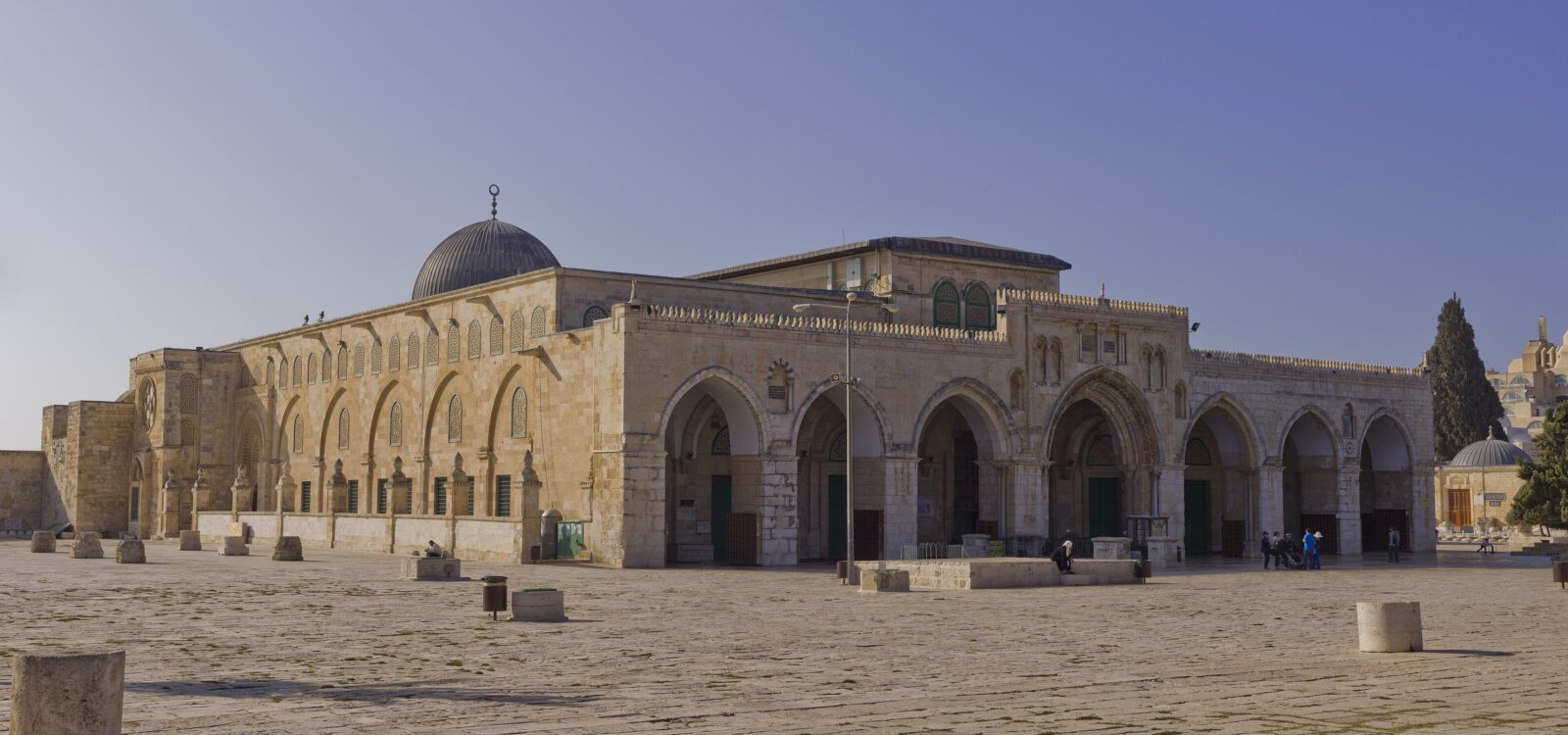
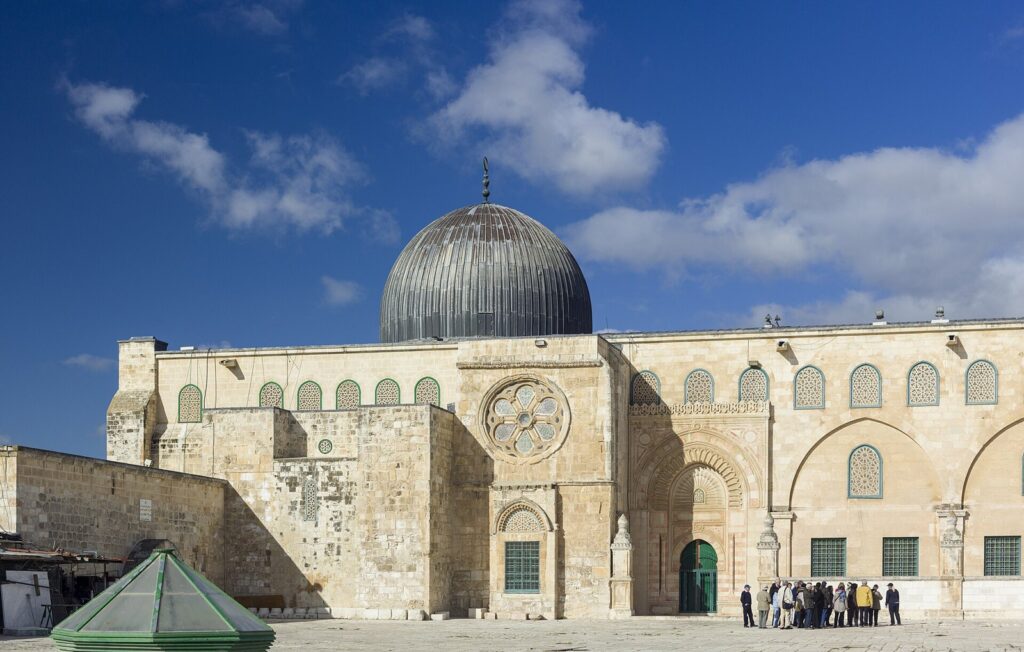
The Qibli Mosque (al-Masjid al-Qibli), located at the southern end of al-Haram ash-Sharif and known for its lead-covered dome, is the main mosque where Friday prayers are held. When the name “Al-Aqsa Mosque” is used in the narrow sense, it is mostly this building that is meant. Built during the Umayyad period, the building took on its present form through earthquakes and repairs carried out in different periods.
The Dome of the Rock
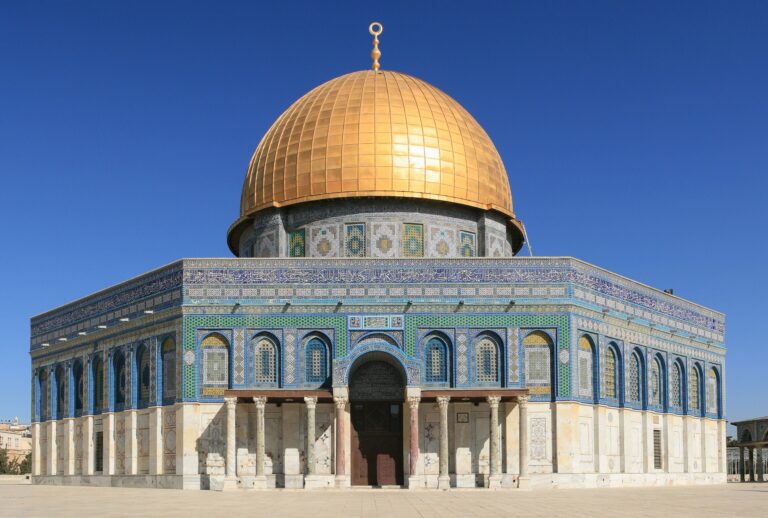
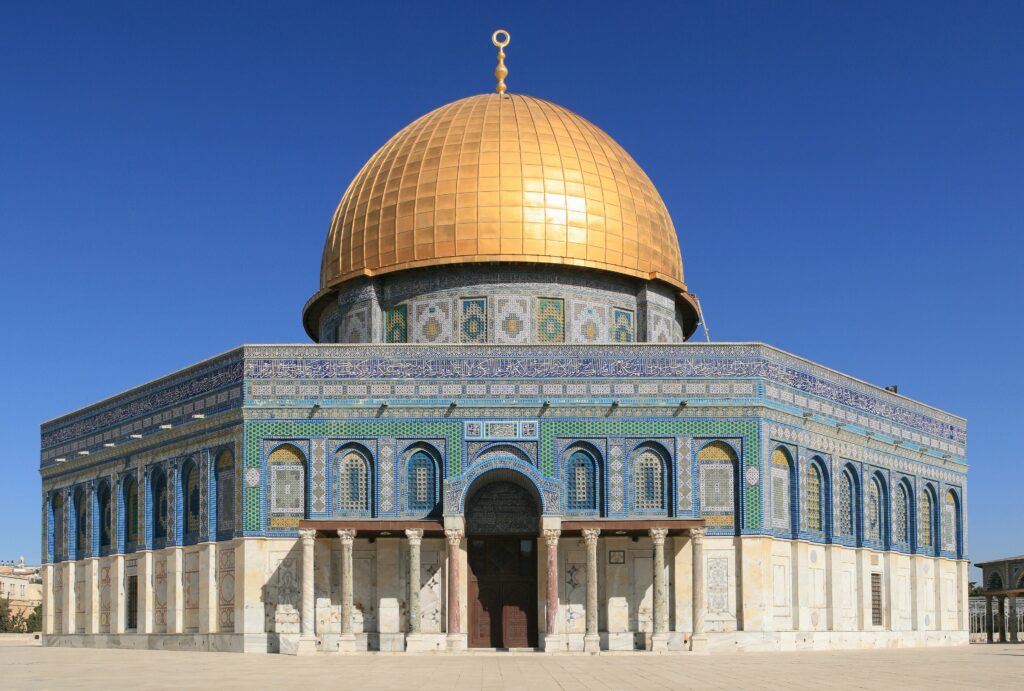
The Dome of the Rock, which has become the symbol of Jerusalem with its golden dome, was built during the reign of the Umayyad caliph Abd al-Malik ibn Marwan over the rock (as-Sakhrah) from which the Mi’raj is believed to have begun. The octagonal building is one of the oldest surviving monuments of Islamic architecture. Its exterior was covered with tiles in the time of Sultan Suleiman the Magnificent (Kanuni), and this decoration has been preserved and renewed in later restorations.
Are the Dome of the Rock and Al-Aqsa Mosque the same building?
No, these two buildings are often confused, but they are different from each other. The octagonal building with the golden dome is the Dome of the Rock, while the grey-domed building where Friday prayers are held is the Qibli Mosque. Both are located within the compound of al-Haram ash-Sharif, known as Al-Aqsa Mosque.
The Marwani Mosque
The Marwani Mosque, located in the south-eastern corner of al-Haram ash-Sharif below the level of the courtyard, is a large underground space built with stone pillars and arches. This vaulted structure, which dates back to the Umayyad period, was reopened for worship through recent works and is one of the important areas where prayers are performed at busy times.
The Buraq Wall
Part of the western wall of al-Haram ash-Sharif is known as the Buraq Wall because, in the Islamic tradition, it is accepted as the place where the Prophet (peace be upon him) tied the Buraq, which he rode on the night of the Mi’raj. On the inner side of the wall, within the boundaries of al-Haram ash-Sharif, there is a small Buraq Mosque. Since access to the outer face of the wall is arranged separately, it is useful to find out about the visiting options from your guide.
Ottoman Heritage in Jerusalem
Jerusalem remained under Ottoman rule for about four centuries, and traces of this period are clearly visible in the city’s present-day fabric. For visitors from Türkiye, walking through the Old City is like turning the pages of a shared history.
The walls from the time of Suleiman the Magnificent
The walls surrounding the Old City were largely rebuilt in the 16th century, during the reign of Sultan Suleiman the Magnificent. The gates set along the walls provide access to the different quarters of the city. Some of the sabils (public fountains) built in the Old City in the same period can still be seen.
Damascus Gate
Damascus Gate, known in Arabic as Bab al-Amud, is one of the most magnificent gates in the walls and reflects the architectural taste of Suleiman’s era. Entering through the gate, you reach the lively markets of the Muslim Quarter; from here you can walk to the gates of al-Haram ash-Sharif.
The Four Quarters of the Old City
The Old City within the walls is traditionally divided into four quarters. Each quarter has its own distinctive character and places to visit.
- The Muslim Quarter: The largest quarter of the Old City; it is known for its historic markets, caravanserais and the gates that open onto al-Haram ash-Sharif.
- The Christian Quarter: The Church of the Resurrection (the Church of the Holy Sepulchre) is in this quarter. It is narrated that when Umar came to Jerusalem, he prayed outside the church rather than inside it, so that Muslims would not later turn it into a mosque; the nearby Mosque of Umar keeps this memory alive.
- The Armenian Quarter: Located in the south-west of the Old City; it has a quiet character with its historic churches and monasteries.
- The Jewish Quarter: Located in the southern part of the Old City, close to the western wall of al-Haram ash-Sharif.
Because finding your way through the narrow and similar-looking streets of the Old City can be difficult, it is recommended that you tour it with a guide, especially on your first day.
Adding Hebron (Al-Khalil) and Bethlehem to Your Route
The Ibrahimi Mosque (Hebron)
The Ibrahimi Mosque, located in the city of Hebron (Al-Khalil) to the south of Jerusalem, stands over the cave that is accepted as containing the graves of the Prophets Ibrahim (Abraham), Ishaq (Isaac) and Yaqub (Jacob) and their wives. The city takes its name from Ibrahim, who is known by the title “Khalilullah” (the Friend of Allah). As visiting options and entry arrangements can change depending on the conditions in the area, the programme needs to be confirmed according to the current situation before setting off.
Bethlehem
Bethlehem, accepted as the birthplace of Jesus (Isa), is a city that is also mentioned together with Mary (Maryam) and Jesus in the Islamic tradition. Opposite the Church of the Nativity in the city centre, there is a mosque bearing the name of Umar. Like Hebron, Bethlehem is usually added to the route as a day trip from Jerusalem.
Etiquette, Clothing and Safety When Visiting Al-Aqsa Mosque
What should you keep in mind when entering Al-Aqsa Mosque?
Al-Aqsa Mosque should be entered with the same good manners shown when entering any mosque: being in a state of wudu if possible, moving calmly and not raising your voice are the basic rules. Clothing should be loose and covering, and women need to wear a headscarf. As identity checks may be carried out at the entrances, always keep your passport with you.
- Take off your shoes when entering the Qibli Mosque and the Dome of the Rock; keep a shoe bag with you.
- When taking photos, do not disturb those who are praying or other visitors.
- Do not neglect to pray tahiyyat al-masjid (the prayer greeting the mosque) and to make supplication.
- As the gates of al-Haram ash-Sharif and its opening hours can change, plan your visit together with your guide.
Why should safety and entry conditions be confirmed in advance?
Conditions for entering Jerusalem and its surroundings, security procedures and the arrangements for access to al-Haram ash-Sharif can change from period to period. For this reason, information should be obtained only from official sources and from the current travel warnings of the Ministry of Foreign Affairs. Rely on the same sources for requirements such as passport validity and a visa or travel permit. Checking the conditions again close to your travel date and staying in touch with your tour company is the soundest approach.
Duration, Season and Route Suggestions for a Jerusalem Trip
How many days are enough for Jerusalem?
Three to four days are usually enough to pray several prayers at Al-Aqsa Mosque and to explore al-Haram ash-Sharif and the Old City without rushing. If you would also like to add Hebron and Bethlehem to your programme, setting aside a day or two more allows for a comfortable pace. Those who wish to pray the Friday prayer at Al-Aqsa Mosque can plan their programme so that it includes a Friday.
What is the best season to visit Jerusalem?
Thanks to their mild weather, the spring and autumn months are generally considered the most comfortable time for a trip to Jerusalem. In the summer months the daytime heat can be tiring, while in the winter months the weather is cool and rainy. Although the month of Ramadan has a special beauty with its spiritual atmosphere, crowds increase during this period and the visiting arrangements may differ.
Which routes can a Jerusalem tour be combined with?
In some programmes, a visit to Jerusalem can be planned together with historical and spiritual stops in Jordan. The sites accepted as containing the graves of the Companions martyred in the Battle of Mu’tah and of great Companions such as Abu Ubaydah ibn al-Jarrah are the highlights of such routes. However, since border crossings and itineraries depend on the conditions of the time, combined routes need to be assessed according to the current situation at the planning stage.
For those who wish to trace the heritage of Islamic civilisation in different parts of the world, cultural tours are also a lovely option. If you are planning a journey to Makkah and Madinah, you can also explore our Umrah tours page.
Up-to-Date Notes for Those Planning a Journey to Jerusalem in 2026–2027
The most important preparation for a journey to Jerusalem is finding out about the current conditions before setting a date. Because the security situation and transport options in the region change frequently, at RotaNur we recommend planning Jerusalem programmes in the 2026–2027 period with a flexible schedule and by regularly following the travel warnings of the Ministry of Foreign Affairs of the Republic of Türkiye. Checking these warnings again at the booking stage and a few days before the journey is the soundest approach.
Programmes Organised with an Overland Crossing via Jordan
Some Jerusalem programmes are organised with a flight to Jordan followed by an overland crossing via the King Hussein (Allenby) Bridge. On this route, procedures at the border crossing can take time, and the crossing’s operating arrangements can change from period to period. For this reason, you should not squeeze another visit into the day of the crossing, you should also confirm the entry requirements for Jordan separately, and you should leave spare time for the return journey. In programmes that include accommodation on the Jordanian side, clarifying hotel and transfer details in advance also makes the journey easier. When conditions allow, the same route also makes it possible to visit the graves of the Companions in Jordan.
Planning Notes by Season
- September–November 2026: The mild autumn weather is well suited to walking in the Old City; however, in this period too, you should check the travel warnings again before setting off.
- December 2026–January 2027: The three sacred months begin; the blessed nights (kandil) of Raghaib, Mi’raj and Bara’ah fall in this period. Those who wish to spend a blessed night at Al-Aqsa Mosque, which carries the memory of the Mi’raj, should take into account the growing crowds and possible changes to the entry arrangements.
- Second half of January 2027: The mid-year school holiday in Türkiye offers a convenient window for families. As Jerusalem is cool and rainy in the winter months, take clothing suitable for layering and waterproof shoes.
- February–March 2027: The month of Ramadan is expected to begin in the first half of February and end in early March. During this period, the crowds at Al-Aqsa Mosque increase and entry conditions may differ.
- April–May 2027: The mild weather provides a comfortable setting for sightseeing and is also well suited to adding day trips such as Hebron and Bethlehem. Again, finalise the programme according to the current situation.
As the conditions for entering Al-Aqsa Mosque can change from period to period, the visit to al-Haram ash-Sharif should not be tied to a single day or a single prayer time. Spreading your visits over several days gives you the chance to make up for it on another day if entry is not possible on one day. For those aiming to pray the Friday prayer at Al-Aqsa Mosque, having a spare visiting day in the programme in addition to the Friday is also part of this flexibility. On guided programmes, our expert guides update the daily schedule according to the situation on the ground.
You can follow the current programme options on our Jerusalem tours page and, when conditions are suitable, reach us 24/7 through our contact page to plan your journey together.
Keep reading
- What Is Halal Tourism? What to Look For on a Halal Holiday
- Places to Visit in Sarajevo: From Baščaršija to the Gazi Husrev-beg Mosque
- Places to Visit in Cairo: Mosques, Bazaars and the Pyramids
A journey to Jerusalem goes far more peacefully with good preparation and accurate information. At RotaNur, we are happy to answer your questions about Jerusalem and our cultural routes; for information, you can reach us via our WhatsApp line or our contact page.
Frequently Asked Questions
What is the religious ruling on visiting Al-Aqsa Mosque?
Visiting Al-Aqsa Mosque is not obligatory (fard); however, since it is one of the three mosques to which the Prophet (peace be upon him) recommended travelling for a visit, it is regarded as a virtuous visit (al-Bukhari, Muslim). This visit is not part of Hajj or Umrah and does not take their place. For those who have the means and suitable conditions, praying and making supplication at Al-Aqsa Mosque is a beautiful expression of their attachment to the first qiblah.
Can you go inside the Dome of the Rock?
Muslim visitors can enter the Dome of the Rock, pray and make supplication at times when the entry arrangements allow. In the centre of the building is the rock from which the Mi’raj is believed to have begun; beneath the rock there is a small cave reached by a flight of steps. Shoes are removed on entering, and calm is maintained inside. As the opening hours of the doors and the entry conditions can change from period to period, plan your visit together with your expert guide.
How do you travel from Türkiye to Jerusalem?
Travel from Türkiye to Jerusalem is provided via different routes depending on the conditions of the time; some programmes are organised with a flight to Jordan followed by an overland crossing via the King Hussein (Allenby) Bridge. Since transport options change frequently, you should not regard any single route as fixed, and you should check the travel warnings of the Ministry of Foreign Affairs of the Republic of Türkiye before making plans. For the current programme options, take a look at our Jerusalem tours page.
Is a trip to Jerusalem suitable for elderly travellers?
When its pace is set correctly, a trip to Jerusalem is also suitable for elderly visitors. However, the stone-paved, sloping and stepped streets of the Old City can make long walks tiring, and reaching the gates of al-Haram ash-Sharif also often requires walking. Comfortable shoes, frequent breaks and a simple programme reduce this fatigue. Those with chronic conditions are advised to consult their family doctor before setting off.
Which currency is used in Jerusalem?
The shekel is widely used for everyday shopping in Jerusalem, and the situation is generally the same in nearby cities such as Hebron and Bethlehem. Do not forget that on programmes organised via Jordan, the dinar is used in Jordan. Although cards are accepted in large shops, cash is more practical in the small shops of the Old City. When exchanging money, choose authorised exchange offices and take care not to carry more cash than you need.

Cihat Murat Yüksel is the editor of the RotaNur blog and the founder of Markention. Drawing on the sources of Türkiye's Presidency of Religious Affairs (Diyanet), he turns the questions travellers ask most about preparing for Umrah, Hajj and halal travel into clear, practical guides.
Questions answered in this article
Why Is Al-Aqsa Mosque So Important?
Al-Aqsa Mosque is the first qiblah of Muslims, the stopping point of the journey of al-Isra and al-Mi’raj, and one of the three mosques to which the Prophet (peace be upon him) recommended travelling for a visit. This site, which is mentioned in the Holy Quran and whose surroundings are described there as blessed, is regarded as the third holiest site in Islam after Masjid al-Haram and the Prophet’s Mosque (Masjid an-Nabawi).
What Is There in the al-Haram ash-Sharif Compound?
The name Al-Aqsa Mosque refers not only to a single building but to the entire walled compound of al-Haram ash-Sharif. This wide courtyard contains mosques, domes, sabils (public fountains), madrasas and minarets. Every place within the compound where prayer is performed is regarded, in the broad sense, as part of Al-Aqsa Mosque.
Are the Dome of the Rock and Al-Aqsa Mosque the same building?
No, these two buildings are often confused, but they are different from each other. The octagonal building with the golden dome is the Dome of the Rock, while the grey-domed building where Friday prayers are held is the Qibli Mosque. Both are located within the compound of al-Haram ash-Sharif, known as Al-Aqsa Mosque.
What should you keep in mind when entering Al-Aqsa Mosque?
Al-Aqsa Mosque should be entered with the same good manners shown when entering any mosque: being in a state of wudu if possible, moving calmly and not raising your voice are the basic rules. Clothing should be loose and covering, and women need to wear a headscarf. As identity checks may be carried out at the entrances, always keep your passport with you.
Why should safety and entry conditions be confirmed in advance?
Conditions for entering Jerusalem and its surroundings, security procedures and the arrangements for access to al-Haram ash-Sharif can change from period to period. For this reason, information should be obtained only from official sources and from the current travel warnings of the Ministry of Foreign Affairs. Rely on the same sources for requirements such as passport validity and a visa or travel permit. Checking the conditions again close to your travel date and staying in touch with your tour company is the soundest approach.
How many days are enough for Jerusalem?
Three to four days are usually enough to pray several prayers at Al-Aqsa Mosque and to explore al-Haram ash-Sharif and the Old City without rushing. If you would also like to add Hebron and Bethlehem to your programme, setting aside a day or two more allows for a comfortable pace. Those who wish to pray the Friday prayer at Al-Aqsa Mosque can plan their programme so that it includes a Friday.