



Contents 26 sections
- The Prophet’s Mosque and Its Surroundings
- 1. The Prophet’s Mosque (Masjid an-Nabawi)
- 2. The Rawdah and the Blessed Grave
- 3. Jannat al-Baqi
- Mosques with an Important Place in the Prophet’s Biography
- 4. Quba Mosque
- 5. Masjid al-Qiblatayn
- 6. Masjid al-Jumu’ah (the Friday Mosque)
- 7. Masjid al-Ghamamah
- In the Footsteps of the Sirah: Uhud and the Trench
- 8. Mount Uhud and the Martyrs’ Cemetery of Uhud
- 9. The Archers’ Hill (Jabal ar-Rumah)
- 10. The Trench (Khandaq) Area and the Seven Mosques
- The Gardens of Madinah and the Ottoman Heritage
- 11. Date Palm Gardens
- 12. The Hejaz Railway Station
- Visiting Etiquette and Clothing in Madinah
- How do you greet the Prophet (peace be upon him)?
- How should you dress when visiting the mosques?
- What Are the Best Times for Visits in Madinah?
- How Many Days Should You Stay in Madinah?
- An Up-to-Date Guide to Your Madinah Programme for the 2026–2027 Season
- Travelling Between Makkah and Madinah
- How Busy Madinah Is in Different Periods
- Keep reading
- Frequently Asked Questions
One of the most peaceful stops on the Umrah journey is Madinah, the City of the Prophet. The list of places to visit in Madinah includes many sites of both spiritual and historical importance, from the Prophet’s Mosque (Masjid an-Nabawi) to Quba Mosque and from the Martyrs’ Cemetery of Uhud to the Hejaz Railway Station. In this guide we cover 12 blessed places to visit in Madinah in groups and share practical tips on visiting etiquette, clothing and timing. With Umrah tours that include Madinah, it is possible to see a large number of these places accompanied by a guide.
The Prophet’s Mosque and Its Surroundings
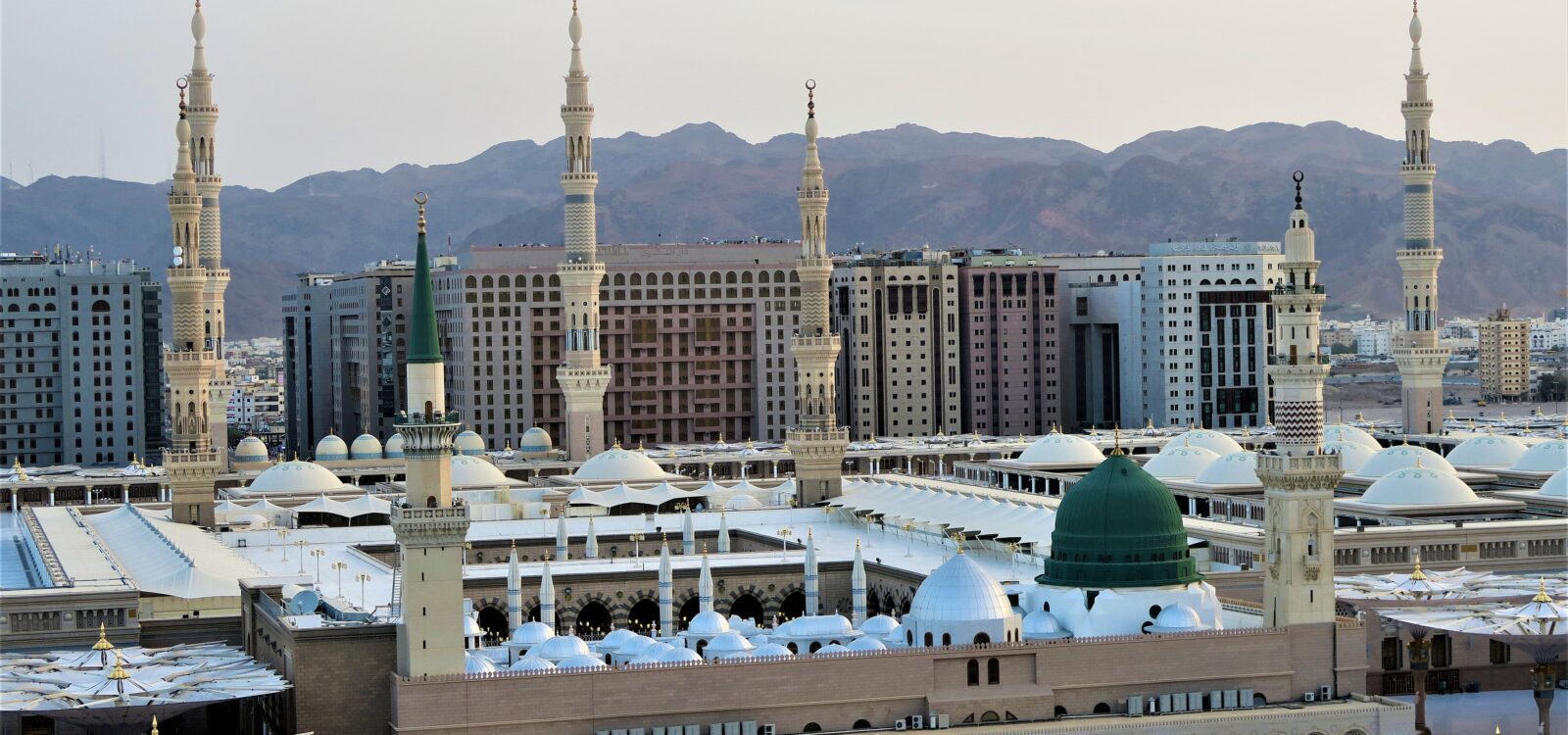
The Prophet’s Mosque is at the centre of any visit to Madinah. Since a large share of the hotels are located around the mosque, the places in this section can easily be visited on foot.
1. The Prophet’s Mosque (Masjid an-Nabawi)
The Prophet’s Mosque, which the Prophet (peace be upon him) built together with his Companions after the Hijrah, is the second most virtuous mosque in Islam after Masjid al-Haram. The Prophet said: “A prayer in this mosque of mine is better than a thousand prayers in other mosques, except Masjid al-Haram.” (al-Bukhari, Muslim). The mosque has been expanded many times throughout history. The domed section rebuilt in the Ottoman period and the Green Dome, which is known to have taken on its present colour in the Ottoman period, are especially meaningful for visitors from Türkiye.
2. The Rawdah and the Blessed Grave
The area between the Prophet’s house and his minbar is known as the Rawdah (ar-Rawdah al-Mutahharah). The Prophet (peace be upon him) said of this area: “What is between my house and my minbar is one of the gardens of Paradise.” (al-Bukhari, Muslim). Visitors who wish to pray and make supplication in the Rawdah currently book an appointment through the Nusuk app. Appointment times are arranged separately for women and men; as the way the app works and its rules may change, confirm the current conditions before you travel.
Right next to the Rawdah lies the Blessed Grave, where the Prophet (peace be upon him) is buried. Abu Bakr and Umar are also buried here, beside the Prophet. We cover the etiquette of offering greetings separately in the visiting etiquette section below.
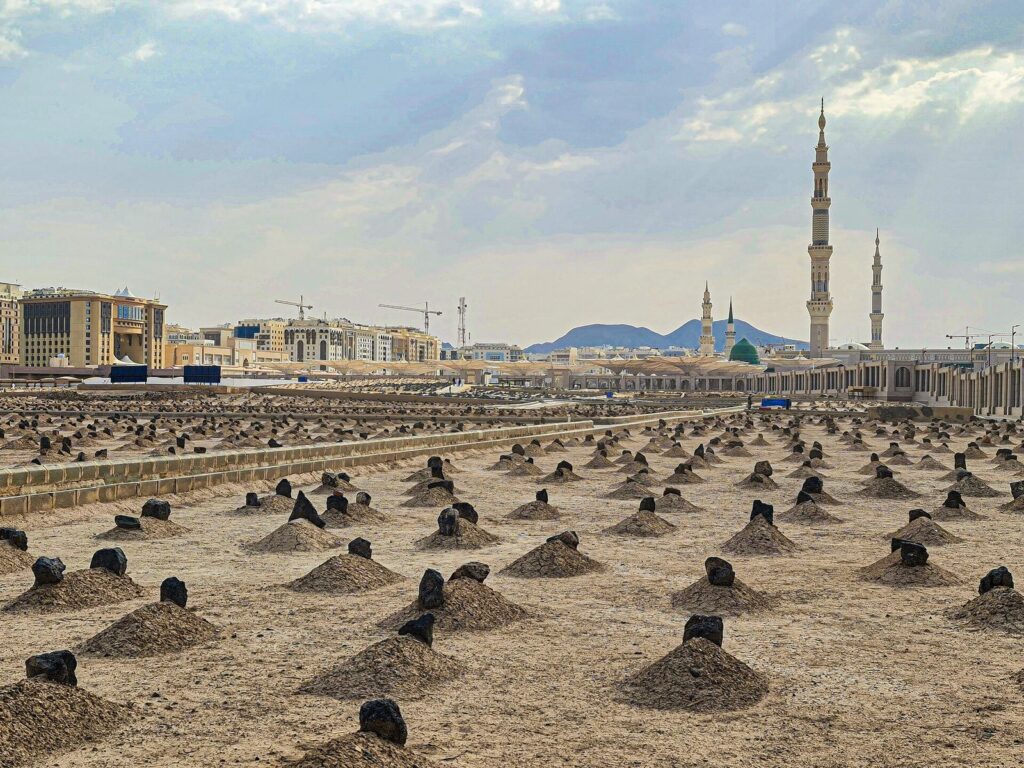
3. Jannat al-Baqi
Jannat al-Baqi, located to the east of the Prophet’s Mosque, is the historic cemetery of Madinah. Many Companions, first among them Uthman, as well as members of the Ahl al-Bayt (the Prophet’s household), the Prophet’s son Ibrahim and some of his wives are buried here. It is narrated that the Prophet (peace be upon him) visited al-Baqi and prayed for those resting there (Muslim). As visiting hours and the rules on women visitors entering the cemetery area can change, get up-to-date information from your guide.
Mosques with an Important Place in the Prophet’s Biography
The mosques other than the Prophet’s Mosque are usually visited on guided city tours, by vehicle and within a few hours.
4. Quba Mosque
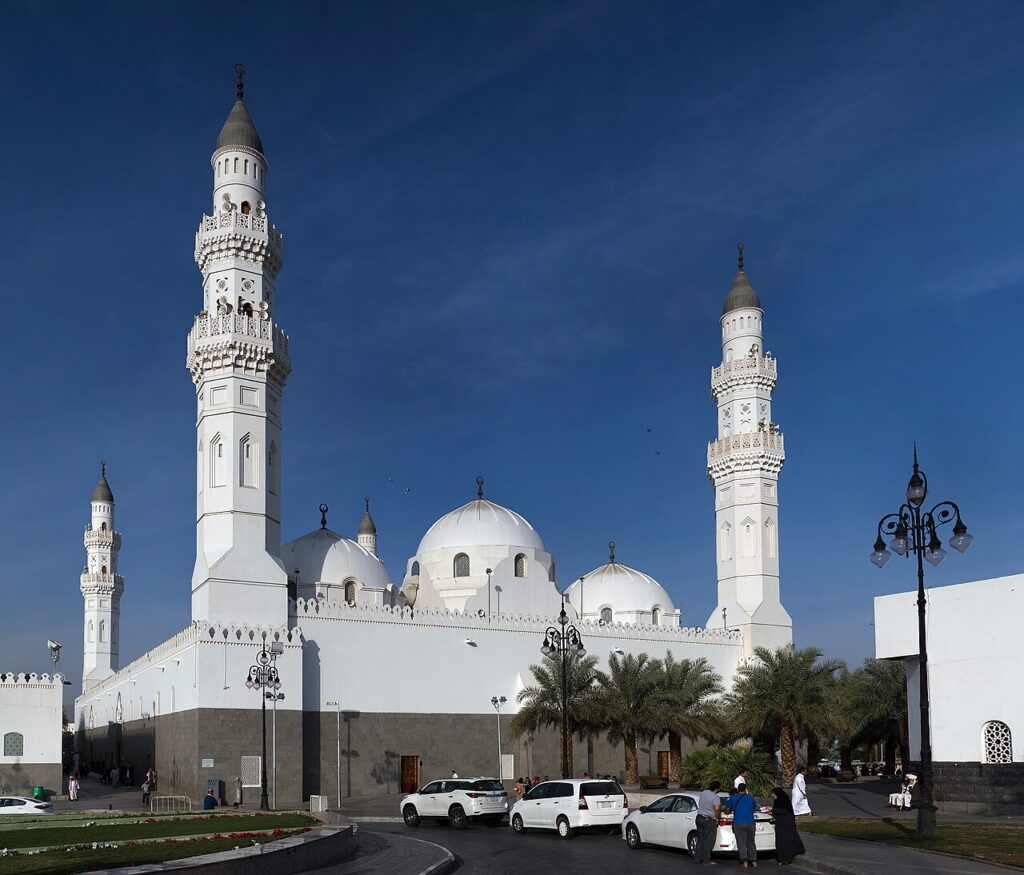
Quba Mosque was built in Quba, where the Prophet (peace be upon him) stayed during the Hijrah before arriving in Madinah, and it is known as the first mosque in the history of Islam. The Prophet said: “Prayer in Quba Mosque is like Umrah.” (at-Tirmidhi, Salat; Ibn Majah, Iqamat as-Salat). In the narration of Ibn Majah, it is stated that a person who purifies himself at home and then comes to Quba Mosque and prays receives a reward like the reward of Umrah. It is also narrated that the Prophet used to go to Quba every Saturday, walking or riding, and pray there (al-Bukhari, Muslim); following this Sunnah, you can arrange your visit to fall on a Saturday.
5. Masjid al-Qiblatayn
Masjid al-Qiblatayn, whose name means “the mosque of the two qiblahs”, is known, according to narrations, as the place where the qiblah was turned from Al-Aqsa Mosque to the Kaaba while the prayer was being performed. The change of the qiblah was announced in verse 144 of Surah al-Baqarah. For more information about the first qiblah, you can take a look at our Al-Aqsa Mosque visit guide.
6. Masjid al-Jumu’ah (the Friday Mosque)
This is the mosque located at the place where the Prophet (peace be upon him) led the first Friday prayer while travelling from Quba towards Madinah during the Hijrah. Because it lies in the territory of the Banu Salim ibn Awf, it is also known by that name. As it is close to Quba Mosque, it is usually seen as part of the same visiting programme.
7. Masjid al-Ghamamah
Masjid al-Ghamamah, a short walk to the west of the Prophet’s Mosque, stands on the musalla (open prayer ground) where the Prophet (peace be upon him) led the Eid prayers. Its name, which means “cloud”, is reported to be associated with narrations about clouds arriving after the prayer for rain performed here. Because the times when the building is open for worship can vary, many visitors see the mosque from the outside.
In the Footsteps of the Sirah: Uhud and the Trench
These areas in the north of Madinah witnessed turning points in the history of Islam and offer visitors important lessons.
8. Mount Uhud and the Martyrs’ Cemetery of Uhud
Mount Uhud, rising to the north of Madinah, is where the Battle of Uhud took place in the third year of the Hijrah. The Prophet (peace be upon him) said of this mountain: “Uhud is a mountain that loves us and that we love.” (al-Bukhari, Muslim). In the martyrs’ cemetery at the foot of the mountain are buried the Companions who were martyred at Uhud, first among them the Prophet’s uncle Hamzah, known as “Sayyid ash-Shuhada” (the Master of the Martyrs), and Mus’ab ibn Umair. When visiting the cemetery, it is sufficient to offer greetings, make supplication and recite the Quran; practices that are not in keeping with the Sunnah should be avoided.
9. The Archers’ Hill (Jabal ar-Rumah)
This small hill directly opposite the Martyrs’ Cemetery of Uhud, also known as Mount Aynayn, is where the Prophet (peace be upon him) positioned the archers before the battle and ordered them not to leave their posts. Some of the archers leaving their positions during the course of the battle led to the Muslims suffering heavy losses. From the hill, which is a reminder of the importance of obedience and patience, Mount Uhud and the cemetery can be seen clearly.
10. The Trench (Khandaq) Area and the Seven Mosques
In the fifth year of the Hijrah, against the allied forces advancing on Madinah, a trench was dug on the northern side of the city on the suggestion of Salman al-Farisi. In the area where this defence took place there are small mosques known as as-Sab’a Masajid (the Seven Mosques). The best known of these is Masjid al-Fath, where the Prophet (peace be upon him) is narrated to have made supplication during the days of the Trench; the mosques named after Salman al-Farisi, Abu Bakr, Umar, Ali and Fatimah are also counted within this group. Some of the buildings in the area have been renovated and a large mosque has been built nearby; confirm with your guide which buildings are open to visitors.
The Gardens of Madinah and the Ottoman Heritage
11. Date Palm Gardens
Madinah is an oasis city that has been known throughout history for its date palm gardens. Touring the gardens around the city is a wonderful opportunity to get to know Madinah’s natural character and to see different varieties of dates on the spot, first among them Ajwa. Narrations about the virtue of Ajwa dates are found in the hadith sources (al-Bukhari, Muslim). Do not forget that the dates you buy will take up space in your luggage on the way home.
12. The Hejaz Railway Station
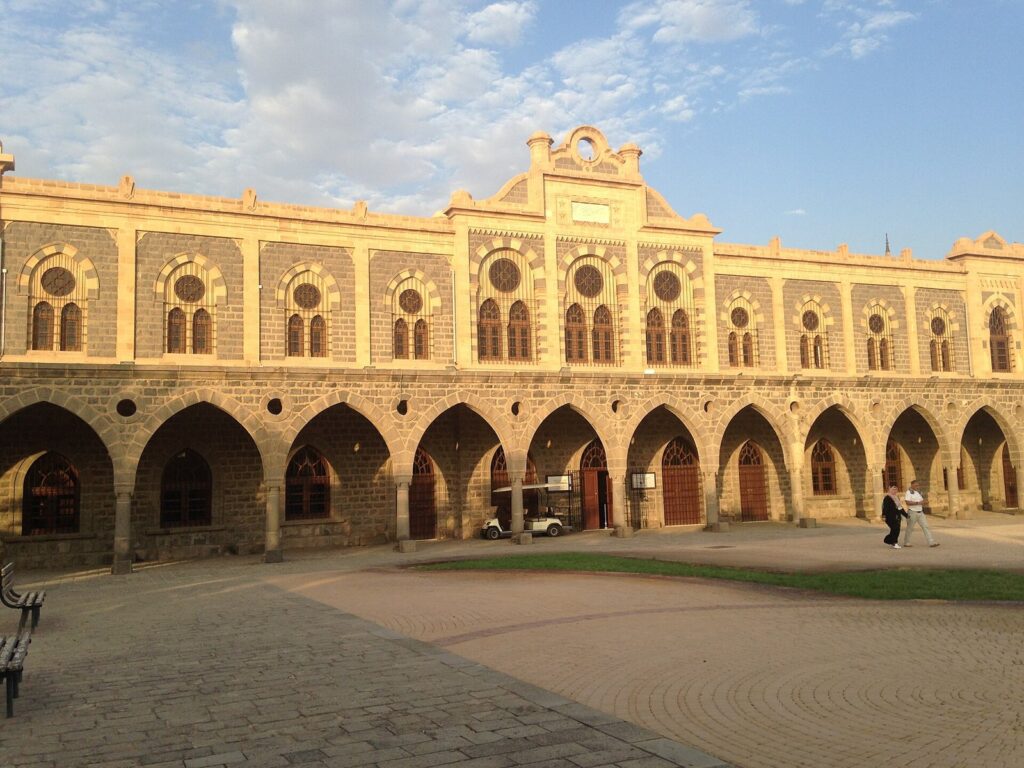
The Hejaz Railway, built between Damascus and Madinah during the reign of Sultan Abdulhamid II, was constructed to make the Hajj journey easier and reached Madinah in 1908. The line’s station building in Madinah is one of the most prominent Ottoman traces in the city and has now been arranged as a museum. The Anbariyya Mosque, from the same period, is located nearby. As the museum’s visiting hours can change, check the latest information before you go.
Visiting Etiquette and Clothing in Madinah
Madinah is known as “al-Madinah al-Munawwarah”, the Radiant City, and it expects special manners from its visitors. Moving calmly through the city, not raising your voice and not disturbing anyone in the crowds are the foundations of this etiquette. You can find the steps of the act of Umrah itself in our article on how to perform Umrah.
How do you greet the Prophet (peace be upon him)?
On reaching the Blessed Grave, you stand quietly and respectfully and offer your greeting by saying “Esselâmü aleyke yâ Rasûlallah” (Peace be upon you, O Messenger of Allah). Then greetings are offered to Abu Bakr and to Umar, blessings (salawat) are sent upon the Prophet and supplication is made. Since the Quran commands the believers not to raise their voices in the presence of the Prophet (al-Hujurat, 2), at these moments it is necessary to make supplication in a low voice and to make room for those coming behind you.
How should you dress when visiting the mosques?
It is appropriate for men to choose long, loose and simple clothing, and for women to choose loose-fitting garments that comply with Islamic dress (hijab). Since the Quran recommends dressing well whenever going to a mosque (al-A’raf, 31), choosing clean and neat clothing is part of good manners. Also bring comfortable shoes for long walks and an umbrella for protection from the sun.
What Are the Best Times for Visits in Madinah?
As a general recommendation, the relatively calm times at the Prophet’s Mosque are the hours after the Fajr prayer and late at night. For the city tour stops such as Quba, Uhud and the Trench, the morning hours, before the heat sets in, are more comfortable. On Fridays and in busy periods the crowds grow noticeably; keep your programme flexible accordingly.
- Add a visit to Quba Mosque on Saturday morning to your programme.
- See the Martyrs’ Cemetery of Uhud and the Archers’ Hill on the same visit.
- Plan the rest of your day around the time of your Rawdah appointment.
- In the hot months, avoid visiting open areas around midday.
How Many Days Should You Stay in Madinah?
To see the main sites without rushing and to be able to spend time in the Prophet’s Mosque, between three and five days is generally considered sufficient. Those who stay longer can devote more time to worship and reflection. The length of your stay is determined by the total duration of the Umrah programme you choose and by how the days are divided between Makkah and Madinah.
The visit to Madinah is not part of Umrah; however, visiting the Prophet’s mosque is regarded as a great virtue. It is known that some visitors take care to pray forty prayers in the Prophet’s Mosque; this practice is not a condition of Umrah. If you are looking for a longer Madinah programme, take a look at our 14-day Umrah options, and for accommodation close to the mosque, see our Madinah hotels page.
An Up-to-Date Guide to Your Madinah Programme for the 2026–2027 Season
Making your visits in Madinah fruitful depends on a few preparations made before you arrive in the city. At RotaNur, we have gathered here the up-to-date notes we share with our guests travelling for Umrah in the 2026–2027 period. These notes are intended to help you adapt the list of places above to your own calendar and transport plan.
Travelling Between Makkah and Madinah
The Haramain High-Speed Railway runs between Makkah and Madinah via Jeddah and makes the journey between the two cities more comfortable than travelling by road. Some programmes, however, prefer travel by coach. Since the train station in Madinah is not within walking distance of the Prophet’s Mosque, a separate transfer is made from the station to the hotel. As the rules on carrying luggage and Zamzam water on the train can change, clarify these matters with your guide before the journey. It is wise for those travelling outside a group to plan their train tickets in advance, bearing in mind that tickets can sell out early in busy periods.
How Busy Madinah Is in Different Periods
- September–November 2026: While the post-Hajj Umrah season continues, the heat in Madinah begins to ease somewhat; even so, the morning hours are more comfortable for visiting Quba, Uhud and the Trench.
- December 2026–January 2027: The three sacred months begin; the blessed nights (kandil) of Raghaib, Mi’raj and Bara’ah fall in this period. With the mid-year school holiday in Türkiye in the second half of January, the number of families also increases.
- February–March 2027: The month of Ramadan is expected to begin in the first half of February and end in early March. The mosque fills completely at the times of Tarawih and the Friday prayer, and finding a Rawdah appointment may become difficult.
- From mid-Shawwal onwards: In previous years, the issuing of new Umrah visas was temporarily suspended before Hajj; a similar practice can be expected for 2027.
- May 2027 and after: Hajj is expected to fall in mid-May. Because of pilgrims’ visits to Madinah before and after Hajj, the city remains busy.
Since visits to the Rawdah are made with an appointment obtained through the Nusuk app, installing the app on your phone and setting up your account before you set off will save you time in Madinah. As limits may be placed on how often appointments can be booked, plan your city tours and other arrangements around your appointment time; being at the mosque before your appointment time and following the directions of the staff will help the visit go peacefully. If you would like to make use of the school holiday for your family, it is worth looking early at our mid-year school holiday Umrah programmes.
Prepare in a way that suits your state of health for long walks and hot weather; consult your family doctor or the travel health centres of the Ministry of Health in Türkiye about vaccinations and medication. As practices such as visa types and Nusuk permits can change, confirm the current conditions with official sources and your travel agency before you travel. We have explained the application process in detail in our Umrah visa guide.
Keep reading
- Masjid an-Nabawi: History, Gates and Visiting the Prophet's Mosque
- Quba Mosque: The History and Virtue of Islam's First Mosque
- Where Is Mount Uhud? The Battle of Uhud and a Visiting Guide
Planning your programme in advance makes it much easier for every moment you spend in Madinah to be blessed. If you would like to plan your Umrah route and your visits in Madinah together with RotaNur, you can write to us via our WhatsApp line or our contact page. We wish you a blessed visit in advance.
Frequently Asked Questions
Can you walk to Quba Mosque?
Yes, the distance of a few kilometres between the Prophet’s Mosque and Quba Mosque can also be covered on foot at times when the weather is suitable. Since it is narrated that the Prophet (peace be upon him) went to Quba walking or riding, some visitors prefer to make this walk. In the hot months, however, it is safer to go by taxi or tour vehicle. For the history and virtue of the mosque, take a look at our article on Quba Mosque.
Which places are visited on a Madinah ziyarat tour?
Guided ziyarat (visiting) tours in Madinah usually cover Quba Mosque, Masjid al-Qiblatayn, Mount Uhud and the Martyrs’ Cemetery of Uhud, and the Archers’ Hill. Some programmes also add the Seven Mosques in the Trench area and date palm gardens. Because these places are far from one another, they are visited by vehicle, mostly as a half-day programme. The scope of the tour may vary depending on the tour company and the visiting arrangements of the season.
Where can you buy Ajwa dates in Madinah?
Ajwa dates can be bought from the date shops around the Prophet’s Mosque and from the date markets in the city. At the date palm gardens visited on guided tours, there may also be the opportunity to see different varieties up close and buy them. When shopping, pay attention to sturdy packaging and the expiry date. Bearing in mind that dates take up space in your luggage and that airline baggage rules can change, plan your shopping for a day close to your departure.
Where do those who start their Umrah from Madinah enter ihram?
Those whose Umrah programme starts in Madinah enter ihram at Dhul-Hulayfah, the miqat of Madinah, on their way to Makkah. At this place, also known today as Abyar Ali, there is a large mosque where preparations for ihram can be made. Those travelling by high-speed train should complete their preparations before setting off so as not to pass the miqat boundary without ihram, and should clarify the procedure with their guide. For the intention and the talbiyah, see our article on the intention for ihram.
Is it obligatory to pray forty prayers in Madinah?
No, praying forty prayers in the Prophet’s Mosque is not a condition of Umrah or Hajj. For those whose programme allows it, continuing to attend the congregational prayers is a fine effort; however, those with a short stay in Madinah should not treat it as an obligation. It is enough to know that every prayer performed in the Prophet’s Mosque is virtuous and to make good use of the prayer times. For a detailed assessment, you can refer to the current fatwas of Diyanet (Türkiye’s Presidency of Religious Affairs).

Cihat Murat Yüksel is the editor of the RotaNur blog and the founder of Markention. Drawing on the sources of Türkiye's Presidency of Religious Affairs (Diyanet), he turns the questions travellers ask most about preparing for Umrah, Hajj and halal travel into clear, practical guides.
Questions answered in this article
How do you greet the Prophet (peace be upon him)?
On reaching the Blessed Grave, you stand quietly and respectfully and offer your greeting by saying “Esselâmü aleyke yâ Rasûlallah” (Peace be upon you, O Messenger of Allah). Then greetings are offered to Abu Bakr and to Umar, blessings (salawat) are sent upon the Prophet and supplication is made. Since the Quran commands the believers not to raise their voices in the presence of the Prophet (al-Hujurat, 2), at these moments it is necessary to make supplication in a low voice and to make room for those coming behind you.
How should you dress when visiting the mosques?
It is appropriate for men to choose long, loose and simple clothing, and for women to choose loose-fitting garments that comply with Islamic dress (hijab). Since the Quran recommends dressing well whenever going to a mosque (al-A’raf, 31), choosing clean and neat clothing is part of good manners. Also bring comfortable shoes for long walks and an umbrella for protection from the sun.
What Are the Best Times for Visits in Madinah?
As a general recommendation, the relatively calm times at the Prophet’s Mosque are the hours after the Fajr prayer and late at night. For the city tour stops such as Quba, Uhud and the Trench, the morning hours, before the heat sets in, are more comfortable. On Fridays and in busy periods the crowds grow noticeably; keep your programme flexible accordingly.
How Many Days Should You Stay in Madinah?
To see the main sites without rushing and to be able to spend time in the Prophet’s Mosque, between three and five days is generally considered sufficient. Those who stay longer can devote more time to worship and reflection. The length of your stay is determined by the total duration of the Umrah programme you choose and by how the days are divided between Makkah and Madinah.