





Contents 23 sections
- Where Is Mount Uhud?
- Why is Mount Uhud important?
- Why Was the Battle of Uhud Fought?
- The withdrawal of Abdullah ibn Ubayy
- The Archers’ Hill and the Course of the Battle
- How did the story of Mount Uhud end?
- Hamzah and Mus’ab ibn Umayr
- After the battle: Hamra al-Asad
- The Companions Who Stood Out for Their Self-Sacrifice at Uhud
- A Summary of the Battle of Uhud
- Lessons to Take from Uhud
- How to Visit Uhud
- What is there next to the Uhud Martyrs’ Cemetery?
- Can you climb Mount Uhud?
- What time of day is best for going to Uhud?
- Can Uhud and the Trench area be visited on the same day?
- Common Questions About Mount Uhud
- Where does the name of Mount Uhud come from?
- What do the hymns about Mount Uhud describe?
- How long does a visit to Uhud take?
- Is the visit to Uhud part of Umrah?
- Reflection in the Shadow of Uhud
- Frequently Asked Questions
Mount Uhud is the reddish, rocky massif stretching to the north of Madinah that, with the Battle of Uhud in the third year of the Hijrah, became the scene of one of the most instructive pages of Islamic history. This mountain, which the Prophet (peace be upon him) spoke of with love, is one of the essential stops on a visit to Madinah. In this article, we explain step by step where Mount Uhud is, the causes and course of the battle, the story of the Archers’ Hill, the lessons the battle left behind and what you should pay attention to when visiting the area today.
Where Is Mount Uhud?
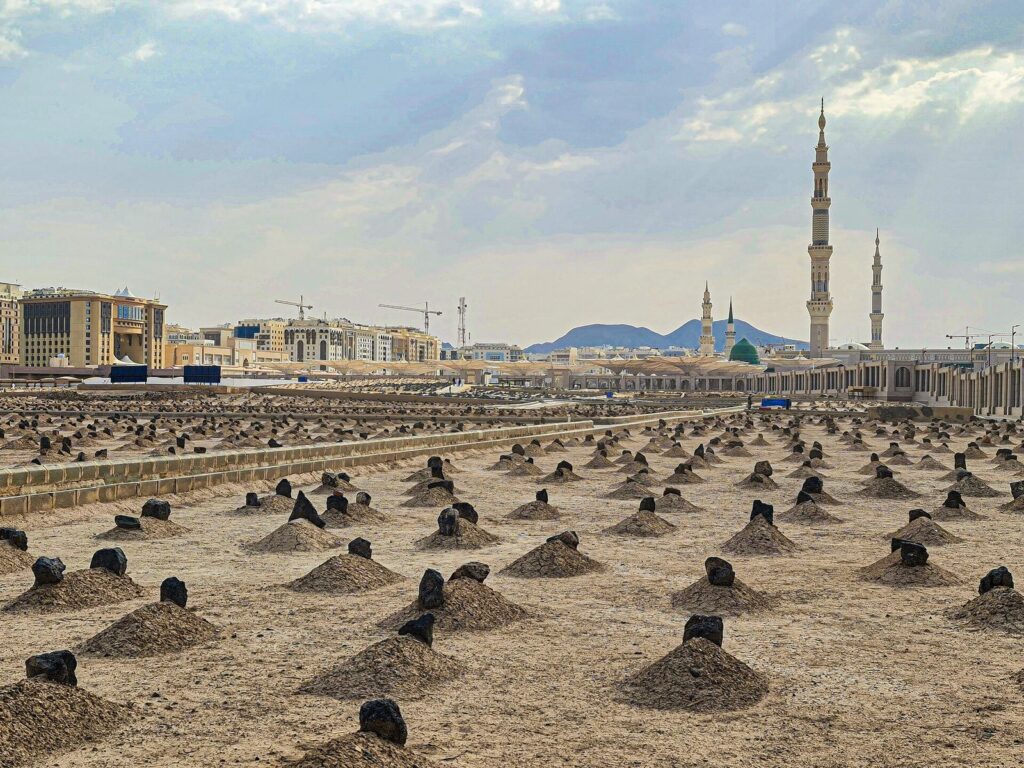
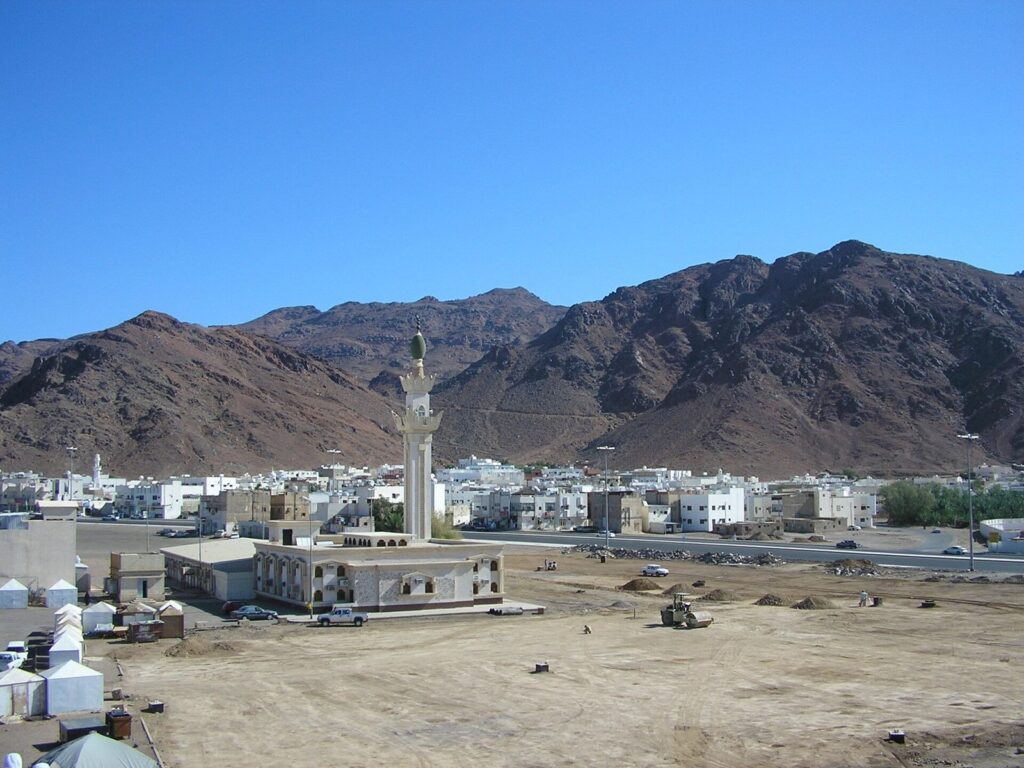
Mount Uhud is located on the northern side of Madinah, within a short drive of the Prophet’s Mosque (Masjid an-Nabawi). The mountain is a broad massif stretching from east to west and can be seen from many points in the city. In the time of the Prophet (peace be upon him), there was an open plain between the settled area of Madinah and the mountain; the battle took place on this plain and on the foothills of the mountain.
Today the city has grown to reach the foot of the mountain. As the Uhud Martyrs’ Cemetery, the mosque beside it and the Archers’ Hill opposite are all in the same area, they can be seen together in a single visit.
Why is Mount Uhud important?
The importance of Mount Uhud stems both from its being the scene of the Battle of Uhud and from what the Prophet (peace be upon him) said about this mountain. On seeing Uhud, the Prophet said: “This is a mountain that loves us and that we love.” (Bukhari, Muslim). The fact that the martyrs of Uhud, foremost among them Hamzah, are buried at the foot of the mountain also gives the area a special spiritual value.
Why Was the Battle of Uhud Fought?
Having suffered a heavy defeat at the Battle of Badr in the second year of the Hijrah, the Makkan polytheists made extensive preparations to take revenge for this defeat and to prevent the Muslims from growing stronger. The army prepared in the month of Shawwal in the third year of the Hijrah set out towards Madinah and made camp near Mount Uhud.
When the news reached Madinah, the Prophet (peace be upon him) consulted his Companions. The Prophet and some experienced Companions were of the view that they should stay in the city and defend it. Many Companions, however, especially the young men who had not been able to take part in Badr and who longed for martyrdom, wanted to meet the enemy outside the city. Following the view of the majority, the Prophet put on his armour and the army went out of the city. This decision is remembered as an important example of the place of consultation (shura) in Muslim society.
The withdrawal of Abdullah ibn Ubayy
As the army was advancing towards Uhud, Abdullah ibn Ubayy, the leading figure among the hypocrites, turned back with those loyal to him, using as a pretext the fact that the view in favour of staying in the city had not been followed. This withdrawal reduced the Muslims’ numbers even further; however, the army continued on its way and took up position at the foot of Uhud, with the mountain at its back.
The Archers’ Hill and the Course of the Battle
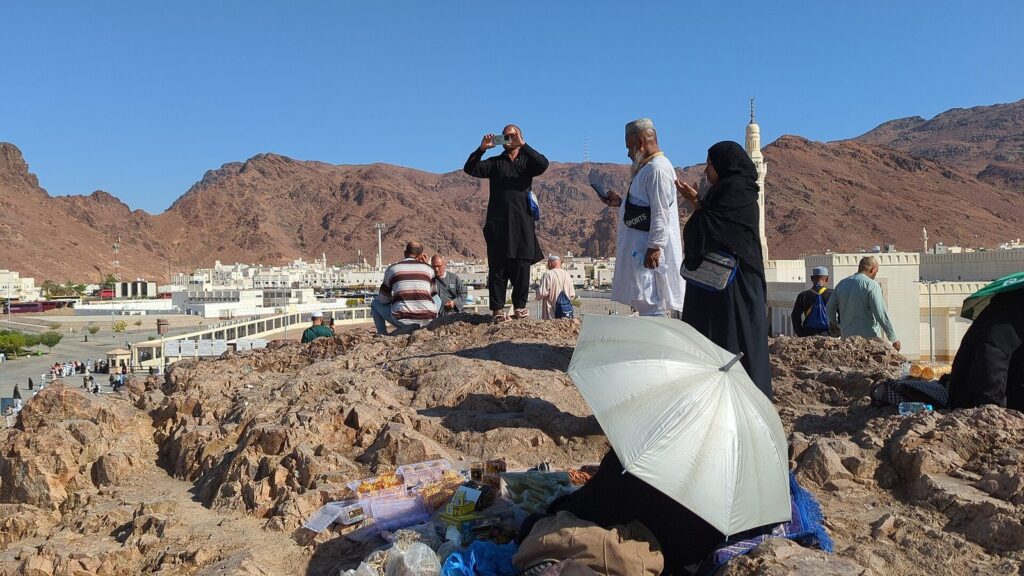
To prevent the rear of the army from being surrounded, the Prophet (peace be upon him) stationed a group of archers on the small hill known today as the Archers’ Hill (Jabal ar-Rumat) or Mount Aynayn. He appointed Abdullah ibn Jubayr as their commander and ordered them in no uncertain terms not to leave their positions, whatever the outcome of the battle, unless word came from him.
How did the story of Mount Uhud end?
At the start of the battle, the Muslims gained the upper hand and the polytheist army began to retreat. Seeing this, a significant number of the archers came down from the hill, thinking the battle was over, despite their commander’s warning. At that moment, the cavalry under the command of Khalid ibn al-Walid, who had not yet become Muslim, went around behind the abandoned hill and attacked the Muslims. This unexpected attack changed the course of the battle, and the Muslims suffered heavy losses.
In the most difficult moments of the battle, the Prophet (peace be upon him) was wounded; it is known that his blessed face was injured and one of his teeth was broken (Bukhari, Muslim). The false rumour that spread claiming the Prophet had been martyred also caused great turmoil among the Muslims. The Companions who closed ranks around the Prophet put their lives on the line to protect him, and the Muslims regrouped by withdrawing to the slopes of the mountain.
Hamzah and Mus’ab ibn Umayr
Among those martyred at Uhud was Hamzah, the Prophet’s uncle. Martyred by a spear thrown by a Makkan slave, Hamzah is remembered as “Sayyid ash-Shuhada”, that is, the master of the martyrs. Mus’ab ibn Umayr, known as the first teacher of Islam in Madinah and the one who carried the banner in the battle, was also martyred at Uhud. We have explained who the martyrs of Uhud were and the etiquette of visiting their cemetery in detail in our article on visiting the Martyrs of Uhud.
After the battle: Hamra al-Asad
On the day after Uhud, the Prophet (peace be upon him), together with the Companions who had taken part in Uhud despite being wounded, set out in pursuit of the polytheist army and advanced as far as a place outside Madinah called Hamra al-Asad. The aim of this expedition was to show that the Muslims’ morale had not been broken and to prevent the polytheists from thinking of attacking Madinah again. The Holy Quran praises those who responded to the call of Allah and His Messenger even after they had been wounded (Al Imran 3:172). This event shows that Uhud ended not with a defeat but with recovery and steadfastness.
The Companions Who Stood Out for Their Self-Sacrifice at Uhud
The self-sacrifice of the Companions who closed ranks around the Prophet (peace be upon him) in the most difficult moments of the battle is described in detail in the books of sirah. Knowing these names helps you picture what happened more vividly as you look out over the battlefield from the Archers’ Hill.
Talhah ibn Ubaydullah shielded the Prophet with his hand against the blows aimed at him, and his hand was left paralysed as a result (Bukhari). Sa’d ibn Abi Waqqas protected the Prophet by shooting arrows at his side, and the Prophet prayed for him, saying, “Shoot! May my father and mother be ransomed for you.” (Bukhari, Muslim). Anas ibn al-Nadr, for his part, rushed forward at a moment when the ranks had scattered, saying that he could smell the fragrance of Paradise from beyond Uhud, and fought until he was martyred (Bukhari). The sources of the sirah also relate that Nusaybah bint Ka’b, known as Umm Umarah, was among the women who fought to protect the Prophet and was wounded.
These examples show that Uhud is not only a story of loss; they also show how faith, loyalty and courage come to the fore at the most difficult moment. Hearing from your guide during the visit where these events took place turns Uhud from a story in books into a far more vivid memory.
A Summary of the Battle of Uhud
The table below offers a brief summary of the generally accepted information about the Battle of Uhud.
| Topic | Details |
|---|---|
| Time | The third year of the Hijrah, the month of Shawwal |
| Place | North of Madinah, at the foot of Mount Uhud |
| Sides | The Muslims and the Makkan polytheists |
| Cause | The polytheists’ desire to take revenge for their defeat at Badr |
| Critical moment | Some of the archers leaving the hill, and the cavalry attack from the rear |
| Prominent martyrs | Hamzah, Mus’ab ibn Umayr, Abdullah ibn Jubayr |
| Related verses | The section of Surah Al Imran that assesses the battle |
Lessons to Take from Uhud
In Surah Al Imran, the Holy Quran assesses what happened at Uhud. One verse recalls that Allah fulfilled His promise, but that the situation changed at the moment the Muslims disputed over the order and disobeyed (Al Imran 3:152). Another verse says: “Never think of those who have been killed in the way of Allah as dead. Rather, they are alive with their Lord, receiving provision.” (Al Imran 3:169).
After the suffering that took place, the verses call the believers not to despair but to patience and to self-examination. What happened at Uhud occupies a large place in the books of sirah as a lasting lesson showing that success comes not only through numbers and resources, but through obedience, unity and sincerity.
The main lessons that visitors to Uhud reflect on are as follows:
- Obedience: The abandonment of the order given to the archers shows the importance of discipline and loyalty to leadership.
- Consultation: Although his own view was different, the Prophet (peace be upon him) followed the outcome of the consultation and stood behind the decision.
- Patience and steadfastness: The Companions who closed ranks around the Prophet at a difficult moment set the finest example of loyalty.
- Attitude towards worldly wealth: Turning towards the spoils of war caused an advantage that had been gained to be lost within a short time.
- Victory and defeat as a test: The verses remind us that both success and hardship are a test for the believers.
How to Visit Uhud
Uhud is a stop that almost always features on guided city tours in Madinah. The visit is usually planned as greetings and supplication at the martyrs’ cemetery, followed by viewing the area from the Archers’ Hill.
- When you arrive in front of the cemetery, offer greetings and pray for the martyrs of Uhud.
- You can recite the surahs of the Quran that you know and dedicate their reward to the martyrs.
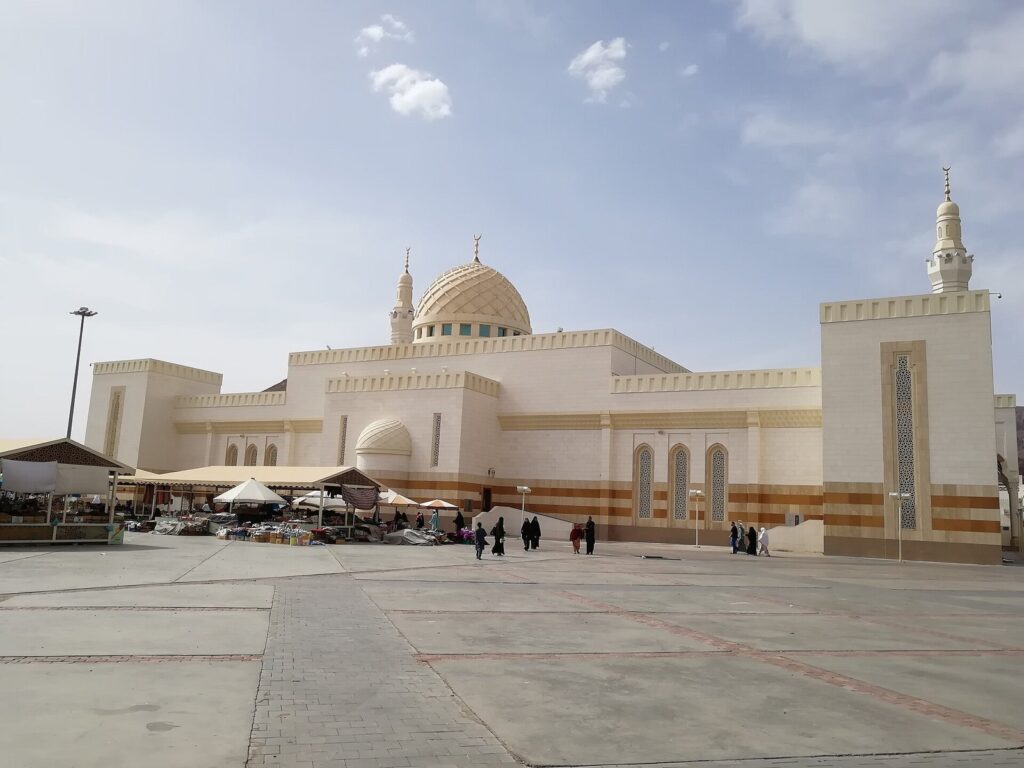
- If the prayer time has come in, perform your prayer at the mosque beside the cemetery.
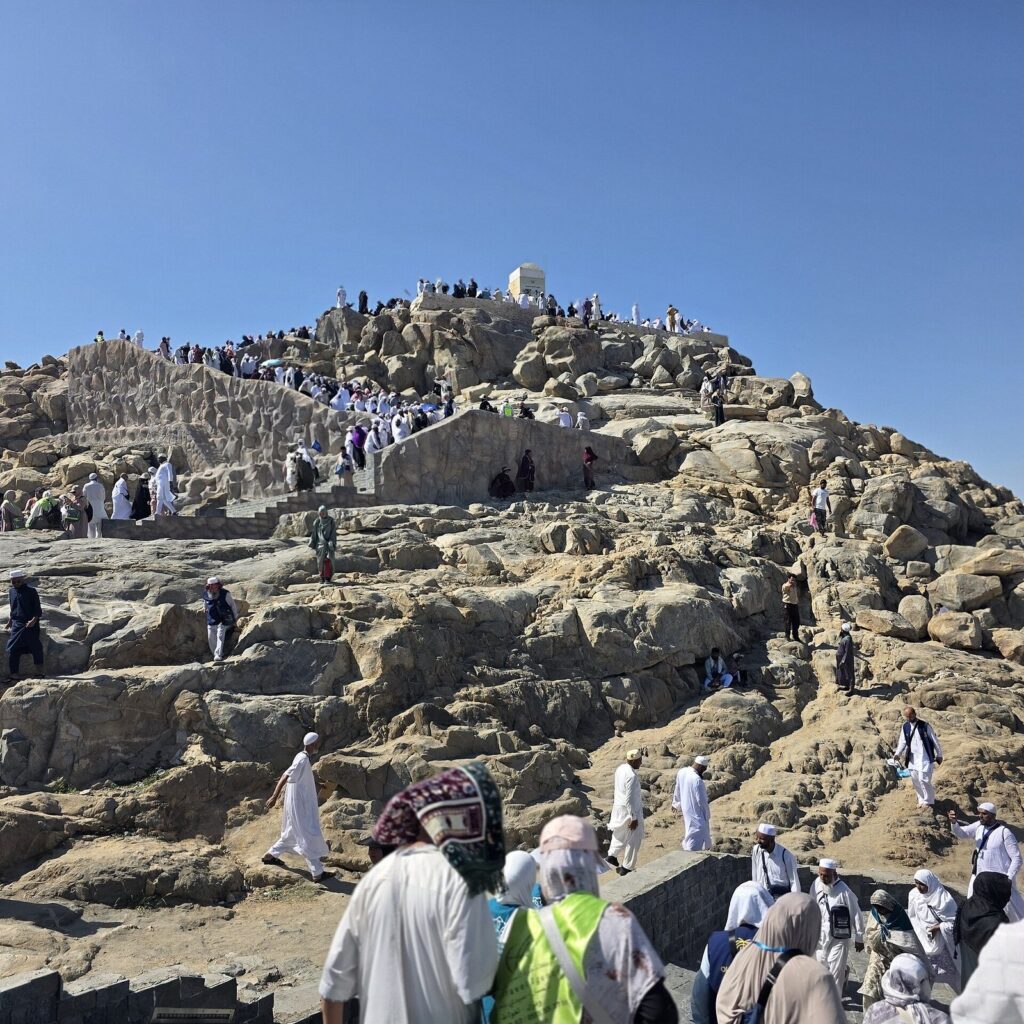
- Climb the Archers’ Hill and look out over the plain where the battle took place and over Mount Uhud; listen to your guide explain where the events took place.
- Avoid behaviour such as tying pieces of cloth to the cemetery railings, throwing in pieces of paper or taking soil.
Important: The entry arrangements for the Uhud Martyrs’ Cemetery and the areas near it can change from time to time, especially for female visitors. When visiting graves, it is sufficient to offer greetings, make supplication and recite the Quran; seeking help from the graves or praying facing the graves is behaviour that has no place in the religion. Ask your guide about visiting hours and the current rules.
What is there next to the Uhud Martyrs’ Cemetery?
Right next to the cemetery there is a large mosque known as the Sayyid ash-Shuhada Mosque, named after Hamzah. Visitors can pray in this mosque at prayer times. The area also has car parks, ablution areas and stalls selling products such as dates and souvenirs. Care should be taken that the time set aside for shopping does not take precedence over the visit to the cemetery and over reflection.
Can you climb Mount Uhud?
The great majority of visitors climb not the mountain itself but the low Archers’ Hill opposite it. Although this hill is low enough to be climbed with a short walk, the ground is loose and rocky in places; it is necessary to wear comfortable shoes and to accompany elderly visitors. Climbing the rocky slopes of Mount Uhud itself is not recommended for safety reasons.
What time of day is best for going to Uhud?
As the area is in the open, the cool hours after the Fajr prayer are the most suitable time. Climbing the Archers’ Hill in the midday heat can be tiring. In programmes that combine the visit to Uhud with mosques such as Quba and Masjid al-Qiblatayn on the same day, your guide decides the order.
Can Uhud and the Trench area be visited on the same day?
Yes, on guided city tours in Madinah, Uhud, the Seven Mosques in the area of the Trench (Khandaq) and Masjid al-Qiblatayn are often visited in the same programme. Seeing the traces of the Battle of the Trench, which took place in the fifth year of the Hijrah, after Uhud makes it easier to understand the period between the two events and how the Muslims grew stronger during it.
Common Questions About Mount Uhud
Where does the name of Mount Uhud come from?
It is reported that the word “Uhud” is associated with the mountain being a massif that stands alone, apart from the surrounding mountains. This is why a connection is made with the Arabic root meaning “one, single”; with its appearance of rising alone on the plain of Madinah, the mountain lives up to this name.
What do the hymns about Mount Uhud describe?
The hymns (ilahi) about Uhud are a literary expression of the love that the Turkish people feel for the Prophet (peace be upon him) and for the martyrs of Uhud, foremost among them Hamzah. These works voice the sorrow of the battle and the reverence felt for the martyrs; many of those who visit the area experience the emotion of seeing in person the place these hymns describe.
How long does a visit to Uhud take?
The length of a visit to Uhud depends on how busy the programme is, the crowds in the area and the pace of the group. On guided city tours, Uhud is usually planned as one of several stops; greetings and supplication at the cemetery, a short talk on the Archers’ Hill and, if it is prayer time, a break at the mosque make up most of this time. Those who wish to stay longer and reflect on the events on the spot should let their guide know in advance.
Is the visit to Uhud part of Umrah?
No, the visit to Uhud is not part of Umrah or Hajj; it is a visit made in Madinah that strengthens one’s awareness of history. For the steps of the act of worship of Umrah, take a look at our article on how to perform Umrah.
Reflection in the Shadow of Uhud
Mount Uhud shows how much even a defeat can teach a community when it is understood correctly. Standing on the Archers’ Hill and looking out over the plain where the battle took place lets you feel the value of obedience, patience and loyalty far more deeply than reading about them in books. For the other blessed places in Madinah, you can also take a look at our guide to Quba Mosque and our article on places to visit in Madinah.
At RotaNur, in our Umrah tours programmes, we carry out the visit to Uhud accompanied by our guides, who tell the story of the battle on the spot. You can write to us with your questions about the Madinah programme through our contact page or our WhatsApp line. May Allah be pleased with the martyrs of Uhud and accept your visits.
Frequently Asked Questions
In which year of the Gregorian calendar was the Battle of Uhud fought?
The Battle of Uhud was fought in the month of Shawwal in the third year of the Hijrah, which corresponds to the year 625 in the Gregorian calendar. The battle began when the Makkan polytheists marched on Madinah to take revenge after the Battle of Badr, which had taken place a year earlier. The sources of the sirah report that around seventy Companions were martyred in this battle, foremost among them Hamzah and Mus’ab ibn Umayr. Despite this heavy loss, the Muslims managed to recover within a short time.
Where is the grave of Hamzah?
The grave of Hamzah is in the Uhud Martyrs’ Cemetery, at the foot of Mount Uhud in the north of Madinah. The cemetery lies directly opposite the Archers’ Hill, and the other Companions martyred at Uhud are also buried there. The large mosque beside the cemetery is known as the Sayyid ash-Shuhada Mosque, named after Hamzah. We have explained the etiquette of the visit and the supplication of greeting in our article on visiting the Martyrs of Uhud.
Can women visit the Uhud Martyrs’ Cemetery?
Diyanet (Türkiye’s Presidency of Religious Affairs) considers it permissible for women to visit graves, on condition that proper etiquette is observed. At the Uhud Martyrs’ Cemetery, visitors usually greet the martyrs from in front of the railings that surround the cemetery; the arrangements for female visitors, however, can change from period to period. Before your visit, find out the current practice and the permitted spots from your guide. We have discussed a similar topic concerning women visiting graves in Madinah in our article on Jannat al-Baqi.
How do you get to Uhud from the Prophet’s Mosque?
Uhud lies to the north of the Prophet’s Mosque, and people usually go there by vehicle. Guided Madinah city tours in Umrah programmes include Uhud among the stops visited by coach; those who wish to go independently can choose a taxi or app-based ride services. Walking there is not recommended because of the distance and the hot weather. It is helpful to agree in advance on where and when your vehicle will wait for the return journey.
Did Khalid ibn al-Walid become Muslim after Uhud?
Yes. According to the sources of the sirah, Khalid ibn al-Walid, who commanded the polytheist cavalry at Uhud, came to Madinah and became Muslim in the eighth year of the Hijrah, before the conquest of Makkah. In the years that followed, he became one of the leading commanders of the Muslim armies and was known by the title “Sayfullah”, that is, the Sword of Allah. His life is a meaningful example showing that even the hostility of Uhud could in time turn into guidance.

Cihat Murat Yüksel is the editor of the RotaNur blog and the founder of Markention. Drawing on the sources of Türkiye's Presidency of Religious Affairs (Diyanet), he turns the questions travellers ask most about preparing for Umrah, Hajj and halal travel into clear, practical guides.
Questions answered in this article
Where Is Mount Uhud?
Mount Uhud is located on the northern side of Madinah, within a short drive of the Prophet’s Mosque (Masjid an-Nabawi). The mountain is a broad massif stretching from east to west and can be seen from many points in the city. In the time of the Prophet (peace be upon him), there was an open plain between the settled area of Madinah and the mountain; the battle took place on this plain and on the foothills of the mountain.
Why is Mount Uhud important?
The importance of Mount Uhud stems both from its being the scene of the Battle of Uhud and from what the Prophet (peace be upon him) said about this mountain. On seeing Uhud, the Prophet said: “This is a mountain that loves us and that we love.” (Bukhari, Muslim). The fact that the martyrs of Uhud, foremost among them Hamzah, are buried at the foot of the mountain also gives the area a special spiritual value.
Why Was the Battle of Uhud Fought?
Having suffered a heavy defeat at the Battle of Badr in the second year of the Hijrah, the Makkan polytheists made extensive preparations to take revenge for this defeat and to prevent the Muslims from growing stronger. The army prepared in the month of Shawwal in the third year of the Hijrah set out towards Madinah and made camp near Mount Uhud.
How did the story of Mount Uhud end?
At the start of the battle, the Muslims gained the upper hand and the polytheist army began to retreat. Seeing this, a significant number of the archers came down from the hill, thinking the battle was over, despite their commander’s warning. At that moment, the cavalry under the command of Khalid ibn al-Walid, who had not yet become Muslim, went around behind the abandoned hill and attacked the Muslims. This unexpected attack changed the course of the battle, and the Muslims suffered heavy losses.
What is there next to the Uhud Martyrs’ Cemetery?
Right next to the cemetery there is a large mosque known as the Sayyid ash-Shuhada Mosque, named after Hamzah. Visitors can pray in this mosque at prayer times. The area also has car parks, ablution areas and stalls selling products such as dates and souvenirs. Care should be taken that the time set aside for shopping does not take precedence over the visit to the cemetery and over reflection.
Can you climb Mount Uhud?
The great majority of visitors climb not the mountain itself but the low Archers’ Hill opposite it. Although this hill is low enough to be climbed with a short walk, the ground is loose and rocky in places; it is necessary to wear comfortable shoes and to accompany elderly visitors. Climbing the rocky slopes of Mount Uhud itself is not recommended for safety reasons.