






Contents 24 sections
- Where Is Jannat al-Baqi?
- What does Jannat al-Baqi mean?
- The History of Jannat al-Baqi
- What did Jannat al-Baqi look like in the past?
- Who Is Buried in Jannat al-Baqi?
- The death of the Prophet’s son Ibrahim
- Which other Companions are buried in al-Baqi?
- Are the Prophet’s daughters also buried in al-Baqi?
- Where is the grave of Uthman?
- Etiquette for Visiting Jannat al-Baqi
- Which supplication is recited at Jannat al-Baqi?
- The Wisdom Behind Visiting Graves
- Can Women Visit Jannat al-Baqi?
- Why is Jannat al-Baqi closed to women?
- What does Diyanet (Türkiye’s Presidency of Religious Affairs) say about women visiting graves?
- Practical Information for Your Visit
- How should you dress for a visit to al-Baqi?
- Should you join the funeral prayers at the Prophet’s Mosque?
- Common Questions About Jannat al-Baqi
- Are Jannat al-Baqi and Jannat al-Mu’alla the same place?
- Are burials still carried out in Jannat al-Baqi today?
- Is there a map of Jannat al-Baqi?
- The Great Legacy of a Simple Cemetery
- Frequently Asked Questions
Jannat al-Baqi is the oldest and most important cemetery in Madinah. It stretches right beside the Prophet’s Mosque (Masjid an-Nabawi), and many figures from the first generations of Islamic history have been laid to their eternal rest there. The pioneering generation of Islam, from Uthman to Ibrahim, the son of the Prophet (peace be upon him), and many Companions from among the members of the Prophet’s family (Ahl al-Bayt), are buried here. In this article, we take a detailed look at where Jannat al-Baqi is, what its name means, who is buried there, how it has changed over the course of history, the etiquette of visiting and the current practice regarding visits by women.
Where Is Jannat al-Baqi?
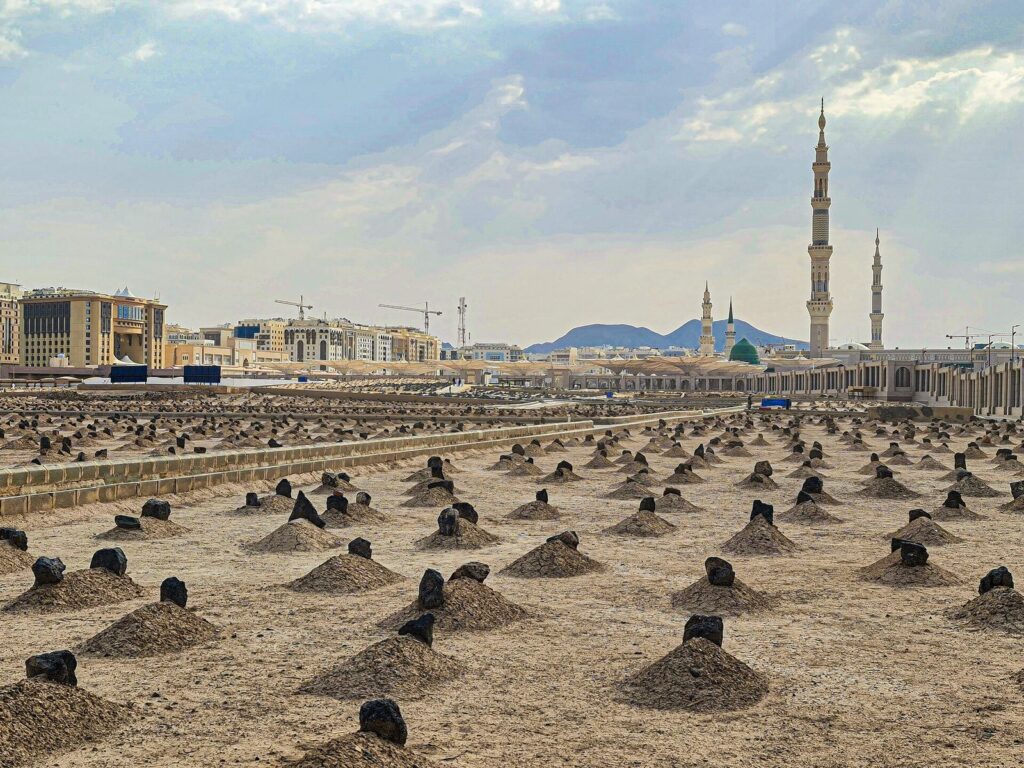
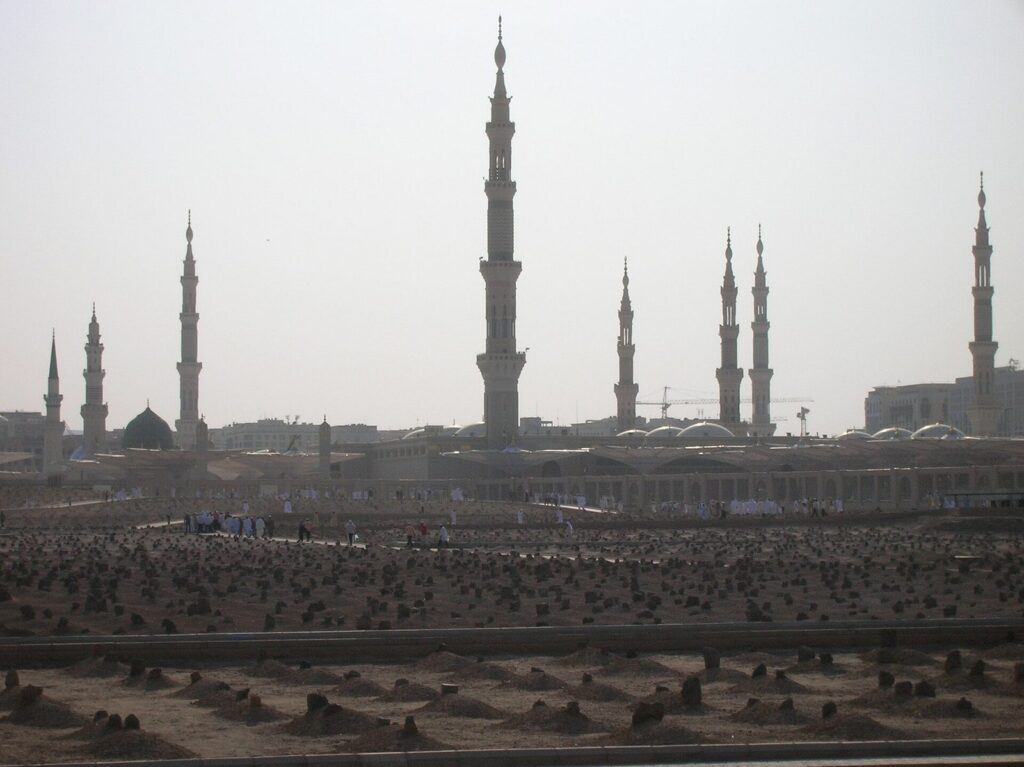
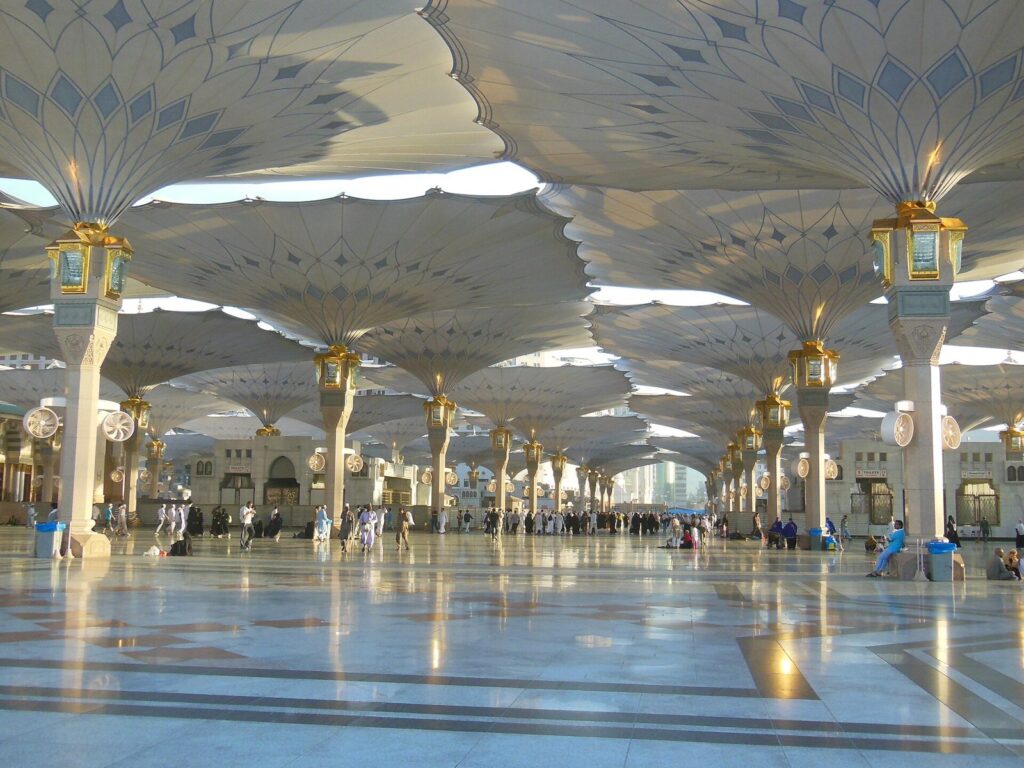
Jannat al-Baqi is located in Madinah on the eastern side of the Prophet’s Mosque, very close to the mosque’s courtyard. When you leave through the gates on the eastern side of the Prophet’s Mosque, the walls of the cemetery come into view after a short walk. With the expansion of the mosque, the distance between the cemetery and the mosque has become very short, and the courtyards now extend almost as far as the cemetery gate.
The cemetery is a large area surrounded by high walls, with walkways running through it. The great majority of the graves are marked with simple stones that bear no names.
Many of the visitors who pray at the Prophet’s Mosque see the walls of al-Baqi every day from the mosque’s eastern courtyard. This closeness allows you to plan your visit to al-Baqi during your days in Madinah not as a separate excursion but as a natural continuation of your worship at the mosque. The signs and the staff along the route to the cemetery entrance direct visitors to the gate that is open. As the entry point can change at busy times, following the directions of the staff is the most practical approach.
What does Jannat al-Baqi mean?
The original name of the cemetery is “Baqi al-Gharqad”. In Arabic, “baqi” refers to a wide piece of land containing various trees and tree roots, while “gharqad” refers to a type of thorny tree that was common in the area. In Türkiye and in many parts of the Islamic world, the cemetery is known as “Jannat al-Baqi” (the Garden of al-Baqi) out of reverence for the blessed people who rest there.
The History of Jannat al-Baqi
After the Prophet’s (peace be upon him) emigration (Hijrah) to Madinah, al-Baqi was designated as the cemetery of the Muslims. It is known that the first of the Emigrants (Muhajirun) to be buried here was Uthman ibn Maz’un, a Companion whom the Prophet loved dearly. The sources of the sirah relate that the Prophet placed a stone at the head of his grave and said that he would bury the members of his own family who passed away beside him.
It is known that the Prophet (peace be upon him) visited al-Baqi frequently. According to Aisha’s account, on some nights the Prophet would go to al-Baqi, greet those buried there and pray for them (Muslim). The same narration reports that the Prophet prayed for those buried in al-Baqi with the words, “O Allah, forgive the people of Baqi al-Gharqad.” This practice shows how important visiting graves is for remembering death and preparing for the Hereafter.
What did Jannat al-Baqi look like in the past?
In different periods, especially in Ottoman times, there were mausoleums and domed structures over some of the graves in al-Baqi. These structures were removed in a later period, and the cemetery took on the plain appearance it has today. The domes seen in old photographs and engravings are a reminder of that era. As most of the graves are unmarked today, information about which grave belongs to whom relies largely on historical sources and on what guides pass on.
Who Is Buried in Jannat al-Baqi?
The exact number of people buried in al-Baqi is not known; however, the sources report that a great many Companions, members of the Prophet’s family and great scholars from later generations rest here. The table below summarises some of the names generally accepted as being buried in al-Baqi.
| Name | Who were they? |
|---|---|
| Uthman | The third caliph, the Companion known by the title “Dhu al-Nurayn” |
| Ibrahim | The Prophet’s son, who passed away at a young age |
| Abbas | The Prophet’s uncle |
| Hasan | The Prophet’s grandson |
| Uthman ibn Maz’un | The first of the Emigrants to be buried in al-Baqi |
| The Prophet’s wives (Azwaj at-Tahirat) | Some of the wives of the Prophet (peace be upon him), foremost among them Aisha and Hafsah |
| Imam Malik | The imam of the Maliki school and the great scholar of Madinah |
The death of the Prophet’s son Ibrahim
When the Prophet’s son Ibrahim passed away at a young age, he was buried in al-Baqi. The Prophet (peace be upon him) shed tears at his son’s death and said: “The eyes shed tears and the heart grieves, but we say only what pleases our Lord. O Ibrahim, we are truly saddened by your parting.” (Bukhari, Muslim). When a solar eclipse occurred that day, some people attributed it to Ibrahim’s death; the Prophet, however, made it clear that the sun and the moon do not eclipse for the death or birth of anyone, and that they are among the signs of Allah (Bukhari, Muslim).
Which other Companions are buried in al-Baqi?
The Companions reported in the sources to be buried in al-Baqi include Safiyyah, the Prophet’s paternal aunt; Sa’d ibn Abi Waqqas and Abd al-Rahman ibn Awf, from among the ten who were promised Paradise (al-Asharah al-Mubashsharah); and As’ad ibn Zurarah, one of the first supporters of Islam in Madinah. From the later generations, Nafi’, the imam of Quranic recitation (qira’at), is also buried in al-Baqi. Since the location of many of the graves is not known for certain, the best course during your visit is to remember these names together and pray for all of them.
Are the Prophet’s daughters also buried in al-Baqi?
The sources report that the Prophet’s daughters Ruqayyah, Umm Kulthum and Zaynab were buried in al-Baqi. There are, however, differing views on the location of Fatimah’s grave; some sources point to al-Baqi, while others point to other places. For this reason, it would not be right to indicate a definite location on this matter.
Where is the grave of Uthman?
After he was martyred, Uthman was buried in a garden known as “Hashsh Kawkab”, which at the time lay outside al-Baqi. This area was later incorporated within the boundaries of the cemetery. Today, the grave of Uthman is located in the inner part of the cemetery, and guides point it out to visitors.
Etiquette for Visiting Jannat al-Baqi
As a visit to al-Baqi is a visit to graves, it is carried out in line with the etiquette of visiting graves taught by the Prophet (peace be upon him). The aim is to greet those who rest here, pray for them, remember death and take a lesson for the Hereafter.
- Greet the people of the graves as you enter the cemetery or when you arrive in front of it.
- Recite the surahs you know, al-Fatihah above all, and dedicate their reward to those buried here.
- Ask for forgiveness for those who rest here and for all the believers.
- Take care not to step on the graves and not to leave the walkways.
- Complete your visit calmly, without raising your voice.
Which supplication is recited at Jannat al-Baqi?
There is no specific supplication that must be recited when visiting graves; you may also pray in your own language. In the hadith narrated from Buraydah, it is reported that the Prophet (peace be upon him) taught his Companions who were going to the graveyard the following greeting (Muslim):
Transliteration: Esselâmü aleyküm ehle’d-diyâri mine’l-mü’minîne ve’l-müslimîn. Ve innâ inşâallâhu biküm le-lâhikûn. Es’elullâhe lenâ ve lekümü’l-âfiyeh. (As-salamu alaykum ahlad-diyari minal-mu’minina wal-muslimin. Wa inna in sha Allahu bikum la-lahiqun. As’alullaha lana wa lakumul-afiyah.)
Meaning: Peace be upon you, O believing and Muslim inhabitants of these dwellings! We too, if Allah wills, shall join you. I ask Allah for well-being for us and for you.
Important: Behaviour such as rubbing your hands and face on graves, asking the graves for something, praying facing the graves, or taking soil or stones has no place in the religion. Limit your visit to offering greetings, making supplication and reciting the Quran. Respect the warnings of the cemetery staff and follow the rules on taking photographs.
The Wisdom Behind Visiting Graves
In the early years of Islam, the Prophet (peace be upon him) forbade visiting graves for a time, and he lifted this prohibition once faith had taken root. In the hadith narrated by Buraydah, the Prophet said: “I had forbidden you to visit graves; now visit them.” (Muslim). Another narration from Abu Hurayrah reports that visiting graves reminds one of death (Muslim).
These hadiths clearly set out the purpose of visiting graves: to remember death, to guard against excessive attachment to this world and to prepare for the Hereafter. The fact that those buried in al-Baqi are from the first generations of Islam adds a special depth to this reflection. While praying for them, the visitor also has the opportunity to think about their own life and what they will leave behind.
Can Women Visit Jannat al-Baqi?
This is among the questions most often asked by visitors travelling from Türkiye. Here it is necessary to distinguish between the religious ruling and the practice in Saudi Arabia.
Why is Jannat al-Baqi closed to women?
Because the Saudi authorities follow a juristic view (ijtihad) that restricts women’s visits to graves, they have for a long time not allowed female visitors to enter the cemetery area. Women can usually offer greetings and make supplication from outside the cemetery, at a suitable spot close to the walls. As this practice can change from time to time, confirm the current situation with your guide and through official announcements before your visit.
What does Diyanet (Türkiye’s Presidency of Religious Affairs) say about women visiting graves?
Diyanet states that it is permissible for women to visit graves, on condition that the general principles and etiquette of Islam are observed. The restriction applied to women at al-Baqi therefore stems from the practice adopted by the country where the visit takes place rather than from a religious prohibition. Female visitors can attain the spiritual benefit of the visit by offering greetings and making supplication from the permitted spot. We have covered other aspects of women’s Umrah journeys in our Umrah guide for women.
Practical Information for Your Visit
The hours when al-Baqi is open to male visitors are usually arranged after certain prayers, and the gates stay open for a limited time. As the hours can change from period to period, find out the current visiting hours from your guide when you arrive in Madinah.
- Plan your visit after the Fajr or Asr prayer at the Prophet’s Mosque; as the cemetery is very close to the mosque, no separate transport is needed.
- As most of the graves are unmarked, going with a guide makes it easier to learn where the important graves are.
- In the hot months, have a hat or an umbrella with you for protection from the sun, and take water with you.
- At busy times, agree on a meeting point with your group using the mosque’s gate numbers.
- Avoid speaking loudly inside the cemetery and taking photographs in a way that disturbs other visitors.
For the mosque’s gates and accommodation suggestions, take a look at our guide to the Prophet’s Mosque (Masjid an-Nabawi), and for the other sites in Madinah, our article on places to visit in Madinah.
How should you dress for a visit to al-Baqi?
As the visit to al-Baqi usually takes place after the prayers at the Prophet’s Mosque, the clean and simple clothes you choose for going to the mosque are also suitable for this visit. As the paths inside the cemetery are in the open air, comfortable shoes with thick soles and a head covering for protection from the sun are advisable. It is in keeping with the etiquette of the visit for men to avoid short clothing such as shorts, and for women to avoid tight or eye-catching garments.
Should you join the funeral prayers at the Prophet’s Mosque?
At the Prophet’s Mosque, funeral prayers are often performed after the obligatory (fard) prayers. Joining a funeral prayer means taking part in an act of worship that is a communal obligation (fard kifayah), and it is a fine example of loyalty fulfilled towards one’s fellow Muslim. Those who do not know how the funeral prayer is performed can ask their guide for a short reminder before the prayer. After the prayer, the deceased are often taken to be buried in al-Baqi.
Common Questions About Jannat al-Baqi
Are Jannat al-Baqi and Jannat al-Mu’alla the same place?
No, they are two separate cemeteries. Jannat al-Baqi is in Madinah, while Jannat al-Mu’alla is in Makkah. Khadijah, the first wife of the Prophet (peace be upon him), is buried in Jannat al-Mu’alla in Makkah. For the cemetery and the other sites in Makkah, see our article on places to visit in Makkah.
Are burials still carried out in Jannat al-Baqi today?
Yes, al-Baqi is still used today as a cemetery where those who pass away in Madinah are buried. It is common to see burials carried out here after the funeral prayers performed at the Prophet’s Mosque. For this reason, if you come across a funeral during your visit, it is appropriate to wait respectfully to one side.
Is there a map of Jannat al-Baqi?
As there are no signs inside the cemetery showing whose graves are whose, visitors mostly make use of the sketch maps in history books and guide publications. These maps show the spots where the important graves are accepted to be; however, it should be remembered that the sources may differ. A visit accompanied by an experienced guide is the most reliable approach in this respect.
The Great Legacy of a Simple Cemetery
Despite its unpretentious appearance, Jannat al-Baqi holds one of the most precious legacies of Islamic history. Those who rest here are people who shared the same table as the Prophet (peace be upon him) and devoted their lives to his mission. A greeting offered in front of al-Baqi is a quiet expression of loyalty to this pioneering generation and of preparation for the Hereafter. Looking one last time at the walls of al-Baqi as you leave Madinah and praying for those buried there can be one of the most precious memories you take away from this blessed city.
At RotaNur, in our Umrah tours that include Madinah, we plan the visit to al-Baqi with a guide and in line with current practice. You can send us your questions about your visiting plan through our contact page and get information from our advisors. May Allah be pleased with those who rest in al-Baqi and accept your visits.
Frequently Asked Questions
Is there an entrance fee for Jannat al-Baqi?
No, no fee is charged for visiting Jannat al-Baqi. The cemetery opens to male visitors at set hours, while female visitors usually offer greetings and make supplication from suitable spots outside the walls. As the visiting arrangements and entry conditions can change from period to period, the most practical approach is to find out the current practice from your guide when you arrive in Madinah and to plan your visit around the prayer times at the mosque.
Can you take photographs in Jannat al-Baqi?
The rules on taking photographs in Jannat al-Baqi can vary depending on how the staff apply them; in particular, close-up filming or photography of the graves may not be permitted. The etiquette of visiting graves calls for keeping photography and video to a minimum during the visit, and for not filming funerals or other visitors. Those who wish to take a souvenir photo may prefer to photograph the general view of the cemetery from the mosque’s courtyard, to the extent that the staff allow.
Is there another cemetery visited in Madinah apart from al-Baqi?
Yes, after al-Baqi, the most visited cemetery in Madinah is the Uhud Martyrs’ Cemetery at the foot of Mount Uhud. The Companions martyred in the Battle of Uhud are buried here, foremost among them Hamzah, the Prophet’s uncle, and Mus’ab ibn Umayr. On guided Madinah city tours, this visit is usually planned together with Quba Mosque and Masjid al-Qiblatayn. We have explained the etiquette of this visit in our article on visiting the Martyrs of Uhud.
Is the visit to al-Baqi included in the Umrah programme?
The visit to al-Baqi is not part of the act of worship of Umrah; however, in Umrah programmes that include Madinah it is easy to plan because of its closeness to the Prophet’s Mosque. The visit is often made after the Fajr or Asr prayer, either with a guide or during free time. The number of days you will stay in Madinah directly affects the time you can set aside for these visits; we have compared programme lengths in our article on how many days Umrah takes.
How long does a visit to al-Baqi take?
The length of a visit to al-Baqi depends on how long the gates stay open, the crowds and the pace of your group. As the cemetery is very close to the mosque, you do not need to set aside extra time for getting there; most of the visit is spent offering greetings, making supplication and having the guide point out the important graves. As the gates stay open for a limited time, it helps to set off without delay after the prayer and to agree on a meeting point with your group in advance.

Cihat Murat Yüksel is the editor of the RotaNur blog and the founder of Markention. Drawing on the sources of Türkiye's Presidency of Religious Affairs (Diyanet), he turns the questions travellers ask most about preparing for Umrah, Hajj and halal travel into clear, practical guides.
Questions answered in this article
Where Is Jannat al-Baqi?
Jannat al-Baqi is located in Madinah on the eastern side of the Prophet’s Mosque, very close to the mosque’s courtyard. When you leave through the gates on the eastern side of the Prophet’s Mosque, the walls of the cemetery come into view after a short walk. With the expansion of the mosque, the distance between the cemetery and the mosque has become very short, and the courtyards now extend almost as far as the cemetery gate.
What does Jannat al-Baqi mean?
The original name of the cemetery is “Baqi al-Gharqad”. In Arabic, “baqi” refers to a wide piece of land containing various trees and tree roots, while “gharqad” refers to a type of thorny tree that was common in the area. In Türkiye and in many parts of the Islamic world, the cemetery is known as “Jannat al-Baqi” (the Garden of al-Baqi) out of reverence for the blessed people who rest there.
What did Jannat al-Baqi look like in the past?
In different periods, especially in Ottoman times, there were mausoleums and domed structures over some of the graves in al-Baqi. These structures were removed in a later period, and the cemetery took on the plain appearance it has today. The domes seen in old photographs and engravings are a reminder of that era. As most of the graves are unmarked today, information about which grave belongs to whom relies largely on historical sources and on what guides pass on.
Who Is Buried in Jannat al-Baqi?
The exact number of people buried in al-Baqi is not known; however, the sources report that a great many Companions, members of the Prophet’s family and great scholars from later generations rest here. The table below summarises some of the names generally accepted as being buried in al-Baqi.
Which other Companions are buried in al-Baqi?
The Companions reported in the sources to be buried in al-Baqi include Safiyyah, the Prophet’s paternal aunt; Sa’d ibn Abi Waqqas and Abd al-Rahman ibn Awf, from among the ten who were promised Paradise (al-Asharah al-Mubashsharah); and As’ad ibn Zurarah, one of the first supporters of Islam in Madinah. From the later generations, Nafi’, the imam of Quranic recitation (qira’at), is also buried in al-Baqi. Since the location of many of the graves is not known for certain, the best course during your visit is to remember these names together and pray for all of them.
Are the Prophet’s daughters also buried in al-Baqi?
The sources report that the Prophet’s daughters Ruqayyah, Umm Kulthum and Zaynab were buried in al-Baqi. There are, however, differing views on the location of Fatimah’s grave; some sources point to al-Baqi, while others point to other places. For this reason, it would not be right to indicate a definite location on this matter.