








Contents 22 sections
- The Etiquette of Supplication During Umrah
- Can you make dua in your own language during Umrah?
- Ihram, Intention and Talbiyah
- How is the intention for Umrah made?
- The talbiyah and its meaning
- When is the talbiyah stopped?
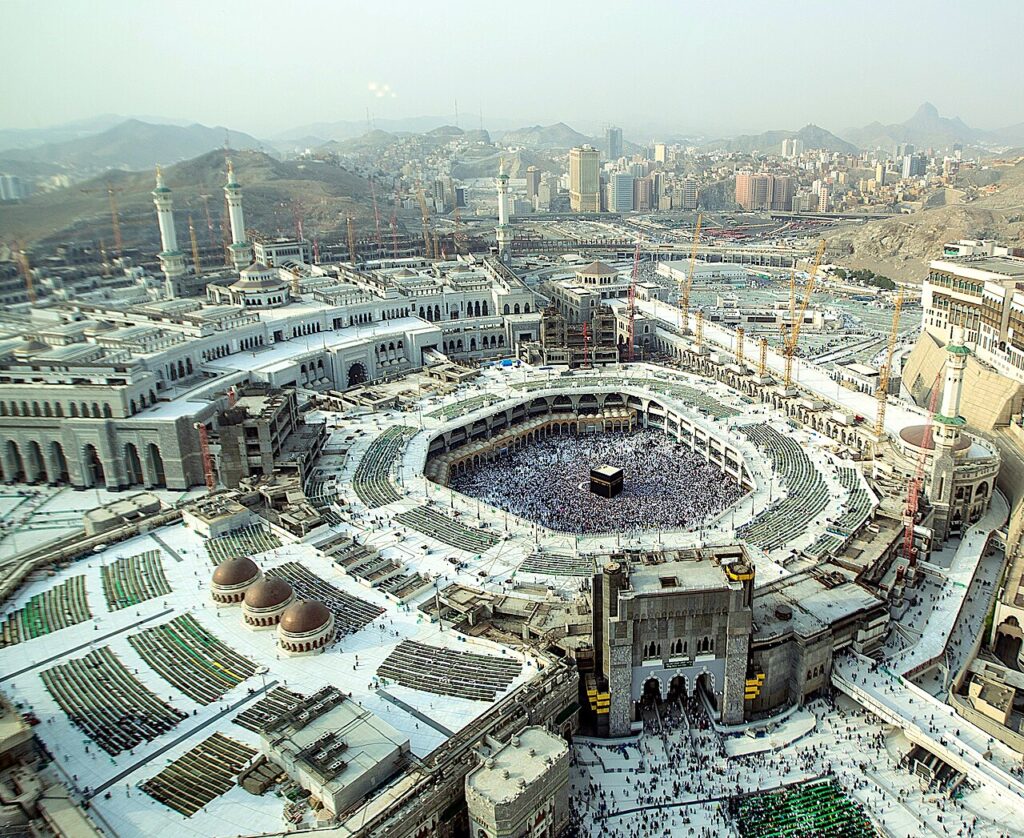
- Entering Masjid al-Haram and Seeing the Kaaba for the First Time
- Which dua is recited on first seeing the Kaaba?
- Tawaf Duas
- Is there a set dua for each circuit of tawaf?
- When saluting the Black Stone
- Between the Yemeni Corner and the Black Stone
- The tawaf prayer and Zamzam
- Sa’i Duas: Safa and Marwah
- What is recited when approaching Safa?
- The remembrance recited at Safa and Marwah
- Points to Keep in Mind When Making Dua
- An Important Reminder on Pronunciation and Matters of Fiqh
- Dua Preparation Notes for Those Going on Umrah in the 2026–2027 Season
- Practical preparation before you set off
- Keep reading
- Frequently Asked Questions
Umrah means visiting the Kaaba through acts of worship such as ihram, tawaf and sa’i, and every step of this journey is also an opportunity for supplication and remembrance (dhikr). In this article on Umrah duas, we have brought together the talbiyah, the supplications for entering and leaving Masjid al-Haram, and the remembrances transmitted from the Prophet (peace be upon him) for tawaf and sa’i, with their transliterations and English meanings. Our aim is not to offer a list to memorise, but to help you experience this blessed act of worship consciously and with peace of mind.
If you would like to learn the steps of Umrah in order, you can also take a look at our article How to Perform Umrah? and our comprehensive Umrah guide.
The Etiquette of Supplication During Umrah
Supplication (dua) is the servant turning to their Lord and presenting their needs to Him. Being in a state of wudu if possible, facing the qiblah, raising the hands, and beginning the supplication with praise of Allah and blessings (salawat) upon the Prophet are all part of the etiquette of supplication. The essence of supplication, however, is for the heart to be present, so that the heart also feels what the tongue says.
The Prophet stated that a servant’s supplication will be answered as long as they do not become hasty and say, “I supplicated, but it was not answered” (Bukhari, Muslim). For this reason, it is good to supplicate with patience, hope and persistence, and to include in our supplications not only ourselves but also our parents, our families and all believers.
Can you make dua in your own language during Umrah?
Yes, supplication can be made in any language, and Allah understands every language. Rather than repeating a text whose pronunciation you do not know or whose meaning you cannot grasp, it may be more beneficial to supplicate sincerely in your own language. Learning the supplications transmitted from the Prophet together with their meanings, on the other hand, is a beauty of its own and deepens one’s awareness in supplication.
Ihram, Intention and Talbiyah
The act of Umrah begins with entering ihram before the miqat boundary is crossed. Men wrap themselves in the ihram garment made of two unstitched pieces, while women enter ihram in their normal clothing that complies with Islamic dress. Before ihram, it is Sunnah to take a full ritual bath (ghusl) or perform wudu and, if it is not a disliked (makruh) time, to perform two rak’ahs of ihram prayer.
How is the intention for Umrah made?
The intention (niyyah) is made in the heart; it is also good to say it with the tongue. In your own language, you can make the intention with words such as: “O Allah, I intend to perform Umrah for Your sake; make it easy for me and accept it.” According to the Hanafi school, one enters ihram by reciting the talbiyah after the intention.
Books of basic religious knowledge (ilmihal) also include the following Arabic formula for this intention:
Transliteration: Allâhümme innî urîdü’l-umrete fe yessirhâ lî ve tekabbelhâ minnî. (Common English spelling: Allahumma inni uridul-‘umrata fa yassirha li wa taqabbalha minni.)
Meaning: O Allah, I intend to perform Umrah; make it easy for me and accept it from me.
This wording is not the text of a hadith but an intention formula taught in books of Islamic jurisprudence (fiqh); saying the same meaning in your own language is also sufficient.
The talbiyah and its meaning
The talbiyah consists of the following words, which the Prophet recited while in ihram and which were narrated by Bukhari and Muslim:
Transliteration: Lebbeyk Allâhümme lebbeyk, lebbeyke lâ şerîke leke lebbeyk, inne’l-hamde ve’n-ni’mete leke ve’l-mülk, lâ şerîke lek. (Common English spelling: Labbayk Allahumma labbayk, labbayka la sharika laka labbayk, innal-hamda wan-ni’mata laka wal-mulk, la sharika lak.)
Meaning: Here I am at Your service, O Allah, here I am! Here I am, You have no partner, here I am! Surely all praise belongs to You; the blessings and the dominion are also Yours. You have no partner.
The talbiyah is repeated frequently throughout the period of ihram, especially when going uphill and downhill, after the daily prayers and when meeting other groups of people. Men raise their voices somewhat, while women recite it quietly, only loud enough for themselves to hear.
When is the talbiyah stopped?
According to the Hanafi school, a person performing Umrah stops the talbiyah when they salute the Black Stone (istilam) at the start of tawaf. From this moment on, throughout tawaf and sa’i, one is occupied with supplication, remembrance and recitation of the Qur’an instead of the talbiyah.
Entering Masjid al-Haram and Seeing the Kaaba for the First Time
It is good manners to enter the mosque with the right foot. The Prophet taught that the following supplication should be recited when entering the mosque (Muslim):
Transliteration: Allâhümme’ftah lî ebvâbe rahmetik. (Common English spelling: Allahummaftah li abwaba rahmatik.)
Meaning: O Allah, open for me the gates of Your mercy.
One leaves the mosque with the left foot and recites the following supplication, which is taught in the same hadith (Muslim):
Transliteration: Allâhümme innî es’elüke min fadlik. (Common English spelling: Allahumma inni as’aluka min fadlik.)
Meaning: O Allah, I ask You for Your favour and bounty.
Which dua is recited on first seeing the Kaaba?
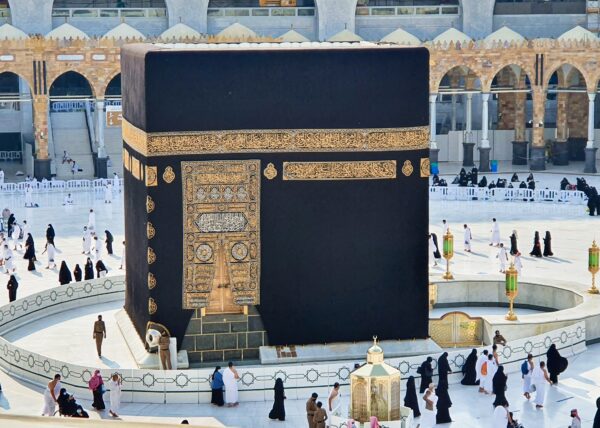
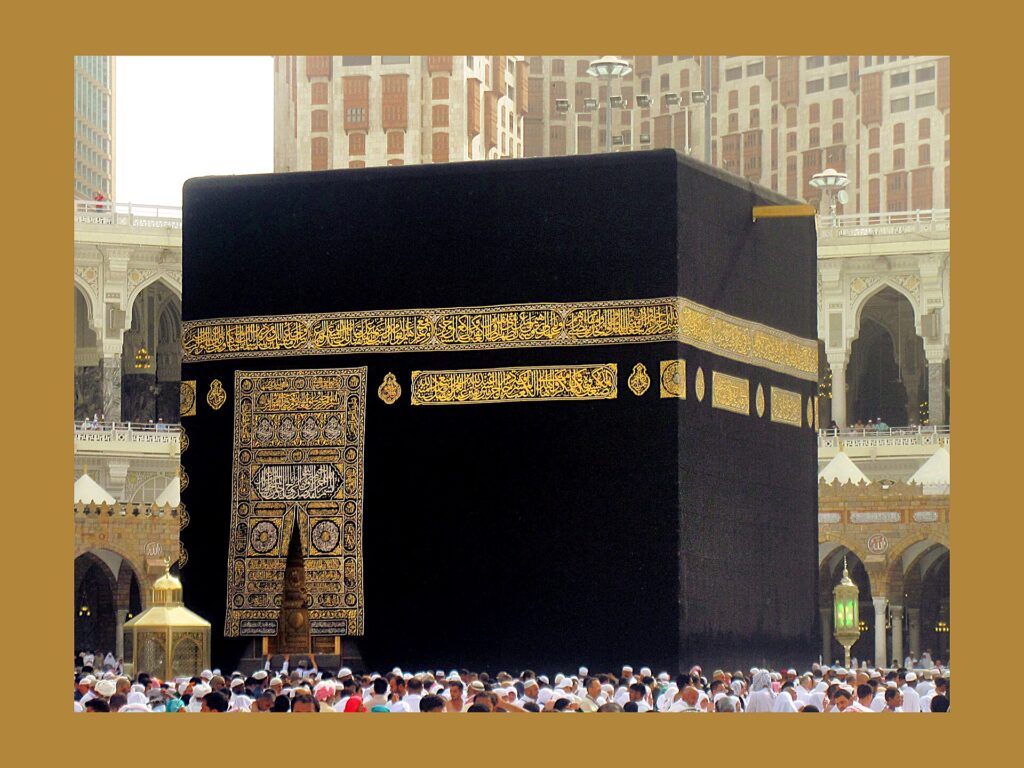
The moment you first see the Kaaba is one of the moments when the heart is at its softest, and it is a beautiful thing to make the most of this moment with supplication. However, no specific text to be recited particularly at this moment is established by an authentic and definitive narration; the chains of transmission of some narrations reported on this subject are considered weak. For this reason, you can recite the takbir and the tahlil and present what is in your heart to your Lord in your own words.
Tawaf Duas
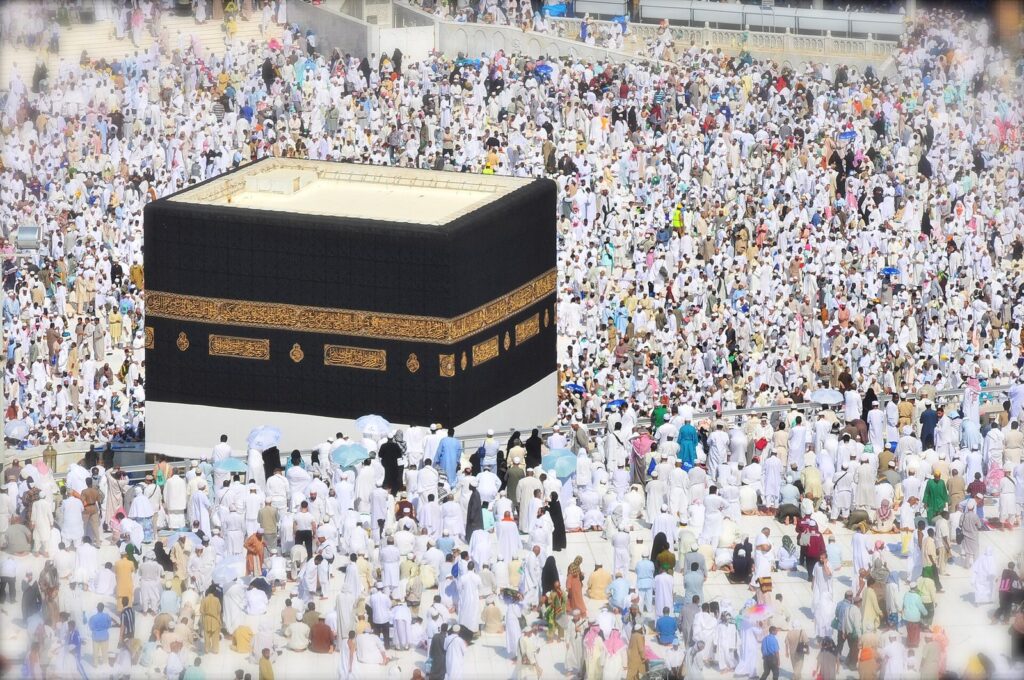
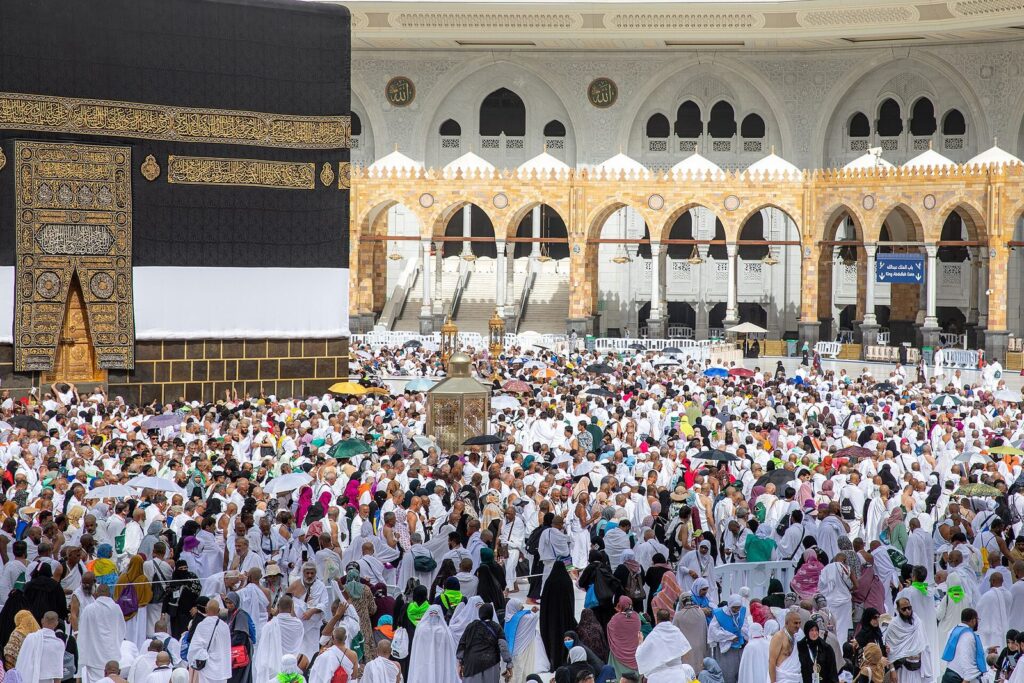
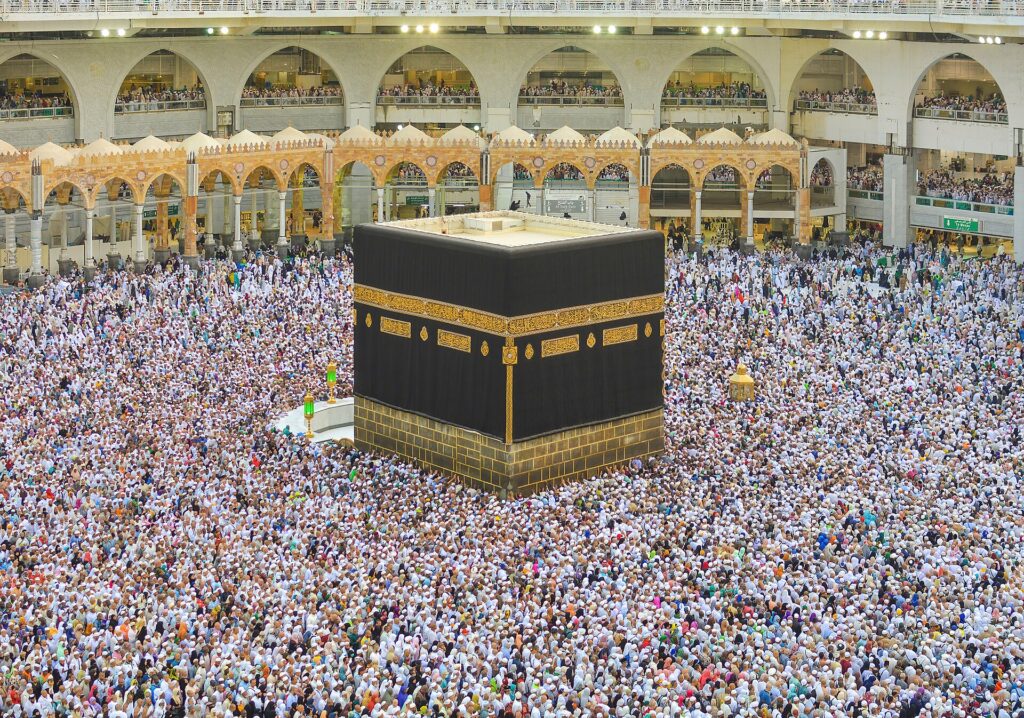
Tawaf means going around the Kaaba in seven circuits (shawt), starting from the line of the Black Stone and keeping the Kaaba on your left-hand side. Not hurting anyone in the crowd, not pushing and shoving, and preserving a sense of calm are also part of this act of worship.
Is there a set dua for each circuit of tawaf?
No, there is no specific supplication transmitted from the Prophet for each circuit of tawaf that must be recited. The circuit-specific lists found in some supplication books are texts compiled by scholars as recommendations, and reciting them is not required. A person may recite the supplications, remembrances and salawat they know, as well as verses from the Qur’an; supplicating in their own language is also entirely appropriate.
When saluting the Black Stone
At the start of each circuit, on reaching the line of the Black Stone, one turns the face and the palms towards it and salutes it. It is narrated that when the Prophet performed tawaf on his camel, he pointed to the Black Stone and said the takbir each time he came level with it (Bukhari). In practice, the following is said:
Transliteration: Bismillâhi Allâhu ekber. (Common English spelling: Bismillahi Allahu akbar.)
Meaning: In the name of Allah. Allah is the Greatest.
As trying to touch or kiss the Black Stone in a crowd may cause harm to others, gesturing with the hand from a distance is sufficient.
Between the Yemeni Corner and the Black Stone
It is narrated that, between the Yemeni Corner (Rukn al-Yamani), which is the corner before the Black Stone in the direction of tawaf, and the Black Stone, the Prophet recited verse 201 of Surah al-Baqarah as a supplication (Abu Dawud):
Transliteration: Rabbenâ âtinâ fi’d-dünyâ haseneten ve fi’l-âhireti haseneten ve kınâ azâbe’n-nâr. (Common English spelling: Rabbana atina fid-dunya hasanatan wa fil-akhirati hasanatan wa qina ‘adhaban-nar.)
Meaning: Our Lord! Give us good in this world and good in the Hereafter, and protect us from the punishment of the Fire.
The tawaf prayer and Zamzam
Once tawaf is complete, in keeping with the command in verse 125 of Surah al-Baqarah, “Take the station of Ibrahim as a place of prayer”, two rak’ahs of tawaf prayer are performed behind the Station of Ibrahim (Maqam Ibrahim) if possible, or at a suitable place in the mosque if it is crowded. It is narrated that the Prophet recited Surah al-Kafirun and Surah al-Ikhlas in this prayer (Muslim). After the prayer, you can raise your hands and supplicate as you wish; no specific text is required for this.
Drinking Zamzam after the tawaf prayer is also a good practice. It is good to drink it with the basmalah, facing the qiblah if possible, and meanwhile to make good wishes for yourself, your family and your loved ones. Reciting a specific text while drinking Zamzam is not required; supplicating in your own words is sufficient.
Sa’i Duas: Safa and Marwah
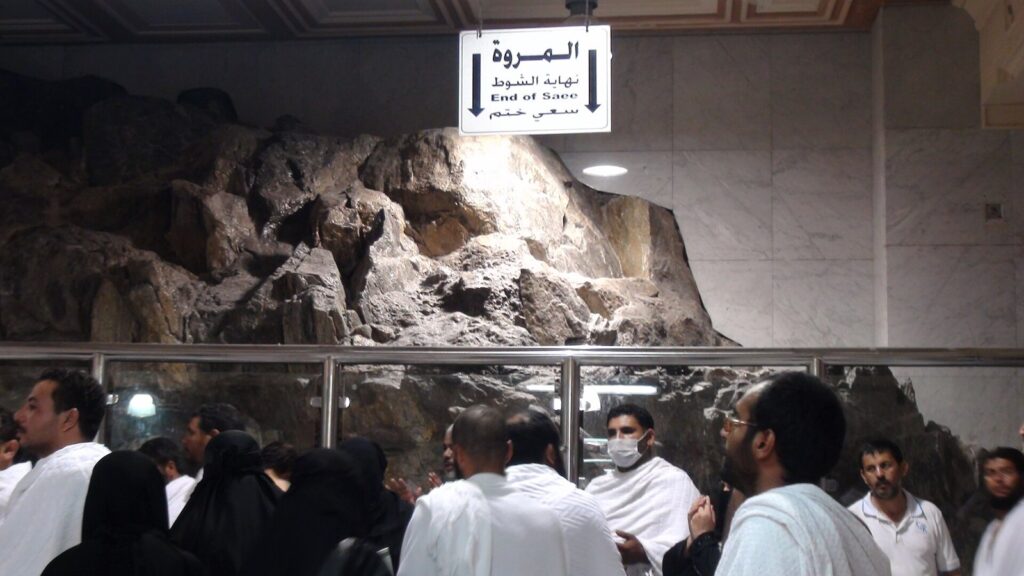
Sa’i means walking seven times between the two hills, starting at the hill of Safa and ending at Marwah; each trip from Safa to Marwah and each return from Marwah to Safa counts as one circuit. In the section marked with green lights, men walk at a brisk pace (harwalah).
What is recited when approaching Safa?
According to the narration of Jabir, when the Prophet approached Safa, he recited the beginning of verse 158 of Surah al-Baqarah and said, “I begin with what Allah began with” (Muslim). For this reason, reciting the verse below when starting sa’i is in keeping with the Sunnah.
Transliteration: İnne’s-Safâ ve’l-Mervete min şeâirillâh. (Common English spelling: Innas-Safa wal-Marwata min sha’a’irillah.)
Meaning: Indeed, Safa and Marwah are among the symbols (of the religion) of Allah.
The remembrance recited at Safa and Marwah
According to the same narration, the Prophet climbed Safa until he could see the Kaaba, turned towards the qiblah, declared the oneness of Allah, said the takbir and then said the following (Muslim):
Transliteration: Lâ ilâhe illallâhu vahdehû lâ şerîke leh, lehü’l-mülkü ve lehü’l-hamdü ve hüve alâ külli şey’in kadîr. Lâ ilâhe illallâhu vahdeh, encaze va’deh, ve nasara abdeh, ve hezeme’l-ahzâbe vahdeh. (Common English spelling: La ilaha illallahu wahdahu la sharika lah, lahul-mulku wa lahul-hamdu wa huwa ‘ala kulli shay’in qadir. La ilaha illallahu wahdah, anjaza wa’dah, wa nasara ‘abdah, wa hazamal-ahzaba wahdah.)
Meaning: There is no god but Allah; He is One and has no partner. His is the dominion, to Him belongs all praise, and He has power over all things. There is no god but Allah, He is One; He fulfilled His promise, helped His servant and defeated the enemy confederates alone.
The Prophet repeated this remembrance three times and supplicated in between. When he reached Marwah, he did the same as he had done at Safa. No specific supplication is required while walking during the circuits; the time can be spent with glorification (tasbih), takbir, seeking forgiveness (istighfar), salawat and personal supplications.
Points to Keep in Mind When Making Dua
- Recite with understanding: Knowing the meaning of the supplication you are reciting allows your heart to accompany it.
- Do not block the flow: Stopping in the middle of the tawaf or sa’i area to make long supplications can block the way; choose a suitable spot at the side for long supplications.
- Keep your voice moderate: Avoid supplicating as a group in a voice so loud that it disturbs the devotion (khushu) of others.
- Do not forget others: The Prophet stated that when a believer supplicates for their brother in his absence, an angel responds, “And for you the same” (Muslim).
- Do not become dependent on the text: Supplication booklets are helpful; however, rather than getting stuck on the text, repeating short remembrances whose meaning you know can bring more peace.
- Prepare in advance: Noting down the people you want to pray for and your own wishes before the journey makes things easier. For the things to take with you, you can look at our Umrah packing list.
An Important Reminder on Pronunciation and Matters of Fiqh
In this article, we have given the transliterations of the supplications in Latin letters. As some sounds in Arabic cannot be fully represented with Latin letters, it is recommended that the supplications be learnt from a qualified teacher for correct pronunciation. For detailed matters of Islamic jurisprudence, such as the ihram restrictions and the conditions of tawaf and sa’i, we recommend that you consult the publications of Diyanet (Türkiye’s Presidency of Religious Affairs) and religious guides.
For the supplications recited during the rites of Hajj, you can read our Hajj Duas article, and for the supplication to recite when setting off, our Travel Dua article.
Dua Preparation Notes for Those Going on Umrah in the 2026–2027 Season
The Hijri year 1448 began in mid-June 2026, and in the coming months the three sacred months, the holy nights and Ramadan will follow one after another. This busy calendar noticeably changes the crowds and the pace of worship at Masjid al-Haram from one period to the next. Taking into account the conditions of the period in which you will travel when planning your supplications and remembrances will help you experience your Umrah more peacefully.
| Period | Key feature | Note for dua preparation |
|---|---|---|
| December 2026 – January 2027 | The start of the three sacred months; the holy nights of Raghaib, Mi’raj and Bara’ah | Those who wish to spend the holy nights at the Haram can prepare their dua list in advance. |
| Second half of January 2027 | School semester break | Families travelling with children can go over the talbiyah and short remembrances together before the journey. |
| February – March 2027 | Expected period of Ramadan | As tawaf and sa’i can be tiring while fasting, give priority to short remembrances whose meaning you know. |
| After Ramadan | Start of Hajj preparations | Keep track in advance of any possible temporary arrangements concerning Umrah visas. |
In previous years, as the Hajj season approached, the issuing of new Umrah visas was temporarily suspended from the middle of Shawwal onwards, and Umrah resumed after Hajj. As a similar practice may be expected for 2027, it is important that those planning Umrah for after Ramadan confirm current conditions with official sources and travel agencies before they travel. To determine the period that suits you, you can take a look at our article on when to go for Umrah.
Practical preparation before you set off
- Prepare a short dua notebook: Note down the talbiyah and the remembrances in this article, with their transliterations and meanings, in a small notebook or on your phone.
- Update your list of names: Before you set off, write down the names of the loved ones who have asked you to pray for them.
- Review your Madinah plan: As visits to the Rawdah (Rawdah al-Mutahharah) are made by appointment through the Nusuk app, arrange the time you set aside for greeting the Prophet and for supplication according to your appointment.
- Practise pronunciation in advance: Listening to the supplications from a qualified teacher and repeating them reduces the need to rely on the text at the Haram.
- Plan your tawaf time: Performing tawaf at hours when the crowds are relatively thinner allows you to recite your supplications without rushing; decide on these hours together with your guide, in line with your group’s programme.
Those thinking of setting off in the blessed month can explore our Ramadan Umrah programmes. Whichever period you set off in, we at RotaNur are by your side with our guides so that you can focus on your supplications and remembrances.
Keep reading
- Dua on Seeing the Kaaba: Transliteration, Meaning and the Etiquette of the First Glance
- Zamzam Dua: How to Drink Zamzam and What to Recite
- How to Make the Intention for Ihram: Intention Duas for Umrah and Hajj
May our Lord accept your supplications and acts of worship. For any questions on your mind about your Umrah preparations, you can reach us through our WhatsApp line or our contact page; we will be glad to help.
Frequently Asked Questions
Which duas should be memorised before going on Umrah?
There is no supplication that must be memorised; however, memorising the talbiyah makes things much easier throughout Umrah. In addition, it is beneficial to learn, together with their meanings, the supplications for entering and leaving the mosque, the “Rabbenâ âtinâ” supplication recited between the Yemeni Corner and the Black Stone, and the remembrance declaring the oneness of Allah (tawhid) at Safa and Marwah. In place of texts you cannot memorise, supplicating in your own language is sufficient. You can find all the steps of Umrah in our Umrah guide.
How many times should the talbiyah be recited?
The talbiyah must be said at least once when entering ihram; after that, there is no set number. According to the Hanafi school, one enters ihram by reciting the talbiyah together with the intention. It is Sunnah to repeat the talbiyah frequently throughout ihram, and in practice it is common to recite it three times on each occasion. What matters is to recite it while reflecting on its meaning, without getting caught up in the number; men raise their voices somewhat, while women recite it quietly.
Is it right to read from a dua booklet during tawaf?
Yes, it is permissible to read from a dua booklet during tawaf; however, care is needed. Walking with your eyes on the booklet in a crowd can lead to collisions, and reciting loudly as a group can disturb the devotion of others. Reciting the circuit-specific texts in the booklets is not required either. For this reason, it is more peaceful to choose short remembrances whose meaning you know and to read longer texts in a suitable corner after tawaf.
Do you have to face the qiblah when making dua during Umrah?
No, facing the qiblah is not a requirement when making dua; however, turning towards the qiblah when possible is part of the etiquette of supplication. A person supplicating while walking during tawaf and sa’i does not need to face the qiblah; stopping to change direction would also block the flow. At Safa and Marwah, however, supplicating while facing the Kaaba is in keeping with the Sunnah. In a crowd, supplicating while continuing to walk is both easier and safer.
Which dua is recited when Umrah is complete?
There is no specific supplication text that must be recited when Umrah is complete. After shaving or trimming the hair and leaving ihram, you can praise Allah and supplicate in your own words for the acceptance of your worship. It is good to include your family, the loved ones who asked for your prayers and all believers in your supplications. For the kind words your loved ones can say on your return, you can take a look at our article on what to say to someone going on Umrah.

Cihat Murat Yüksel is the editor of the RotaNur blog and the founder of Markention. Drawing on the sources of Türkiye's Presidency of Religious Affairs (Diyanet), he turns the questions travellers ask most about preparing for Umrah, Hajj and halal travel into clear, practical guides.
Questions answered in this article
Can you make dua in your own language during Umrah?
Yes, supplication can be made in any language, and Allah understands every language. Rather than repeating a text whose pronunciation you do not know or whose meaning you cannot grasp, it may be more beneficial to supplicate sincerely in your own language. Learning the supplications transmitted from the Prophet together with their meanings, on the other hand, is a beauty of its own and deepens one’s awareness in supplication.
How is the intention for Umrah made?
The intention (niyyah) is made in the heart; it is also good to say it with the tongue. In your own language, you can make the intention with words such as: “O Allah, I intend to perform Umrah for Your sake; make it easy for me and accept it.” According to the Hanafi school, one enters ihram by reciting the talbiyah after the intention.
When is the talbiyah stopped?
According to the Hanafi school, a person performing Umrah stops the talbiyah when they salute the Black Stone (istilam) at the start of tawaf. From this moment on, throughout tawaf and sa’i, one is occupied with supplication, remembrance and recitation of the Qur’an instead of the talbiyah.
Which dua is recited on first seeing the Kaaba?
The moment you first see the Kaaba is one of the moments when the heart is at its softest, and it is a beautiful thing to make the most of this moment with supplication. However, no specific text to be recited particularly at this moment is established by an authentic and definitive narration; the chains of transmission of some narrations reported on this subject are considered weak. For this reason, you can recite the takbir and the tahlil and present what is in your heart to your Lord in your own words.
Is there a set dua for each circuit of tawaf?
No, there is no specific supplication transmitted from the Prophet for each circuit of tawaf that must be recited. The circuit-specific lists found in some supplication books are texts compiled by scholars as recommendations, and reciting them is not required. A person may recite the supplications, remembrances and salawat they know, as well as verses from the Qur’an; supplicating in their own language is also entirely appropriate.
What is recited when approaching Safa?
According to the narration of Jabir, when the Prophet approached Safa, he recited the beginning of verse 158 of Surah al-Baqarah and said, “I begin with what Allah began with” (Muslim). For this reason, reciting the verse below when starting sa’i is in keeping with the Sunnah.