







Contents 19 sections
- What is the travel dua?
- Transliteration and Meaning of the Travel Dua
- Transliteration and English meaning of the dua
- The sentence added on the return journey
- Its Connection with Surah az-Zukhruf
- When is the travel dua recited?
- The short version to recite when boarding a vehicle
- The dua recited when leaving home
- On arriving at your accommodation
- Is the traveller’s dua accepted?
- Practical Tips for Air Travel
- Spiritual Preparation for an Umrah or Hajj Journey
- How is prayer performed while travelling?
- A Note on Pronunciation and Sources
- Current Notes for Those Setting Off on Umrah or Hajj in 2026–2027
- Key periods in the calendar
- Reminders for journeys within the holy lands
- Keep reading
- Frequently Asked Questions
Setting out on a journey requires a person to take both material and spiritual precautions. The travel dua that the Prophet (peace be upon him) recited when setting off on a journey expresses the spiritual side of these precautions in the most beautiful way: glorifying Allah, giving thanks for the means He has provided, asking for the journey to be made easy, and entrusting to Him those left behind. In this article, we look at the transliteration of the travel dua, its English meaning and when it is recited, as well as the spiritual preparations that can be made when setting off on an Umrah or Hajj journey.
What is the travel dua?
The travel dua is the supplication that the Prophet recited when he mounted his riding animal to set off on a journey, as narrated by Abdullah ibn Umar (Muslim, Hajj, 425). The supplication begins with verses from Surah az-Zukhruf and continues with requests for goodness, piety (taqwa), ease and protection on the journey. Today, the same supplication can also be recited when setting off by car, bus, train or plane.
Transliteration and Meaning of the Travel Dua
According to the narration of Ibn Umar, once the Prophet had settled on his riding animal to set off on a journey, he would say the takbir three times and then recite the following supplication.
Transliteration and English meaning of the dua
Transliteration: Allâhu ekber, Allâhu ekber, Allâhu ekber. Sübhânellezî sahhara lenâ hâzâ ve mâ künnâ lehû mukrinîn. Ve innâ ilâ rabbinâ le munkalibûn. Allâhümme innâ nes’elüke fî seferinâ hâze’l-birra ve’t-takvâ ve mine’l-ameli mâ terdâ. Allâhümme hevvin aleynâ seferenâ hâzâ va’tvi annâ bu’deh. Allâhümme ente’s-sâhibu fi’s-sefer ve’l-halîfetu fi’l-ehl. Allâhümme innî eûzü bike min va’sâi’s-sefer ve keâbeti’l-menzar ve sûi’l-munkalebi fi’l-mâli ve’l-ehl. (Common English spelling: Allahu akbar, Allahu akbar, Allahu akbar. Subhanal-ladhi sakhkhara lana hadha wa ma kunna lahu muqrinin. Wa inna ila rabbina lamunqalibun. Allahumma inna nas’aluka fi safarina hadhal-birra wat-taqwa wa minal-‘amali ma tarda. Allahumma hawwin ‘alayna safarana hadha watwi ‘anna bu’dah. Allahumma antas-sahibu fis-safar wal-khalifatu fil-ahl. Allahumma inni a’udhu bika min wa’tha’is-safar wa ka’abatil-manzar wa su’il-munqalabi fil-mali wal-ahl.)
Meaning: Allah is the Greatest, Allah is the Greatest, Allah is the Greatest. Exalted is Allah, who has placed this at our service; otherwise we could not have managed it. And surely to our Lord we shall return. O Allah! On this journey of ours, we ask You for goodness and piety, and for deeds that are pleasing to You. O Allah! Make this journey of ours easy for us and bring its distance near for us. O Allah! You are our Companion on the journey and the Guardian of the family we have left behind. O Allah! I seek refuge in You from the hardships of travel, from coming across distressing sights, and from returning to an unfavourable change in our property and family.
Looking at the content of the supplication, three basic requests stand out: that the journey be spent in goodness and piety, that the way be made easy, and that the family and property left behind be under Allah’s protection. These requests remind us that a journey is not merely going from one place to another, but also a state of servanthood to Allah.
The sentence added on the return journey
According to the same narration, the Prophet would also recite this supplication when returning from a journey, adding the following sentence at the end:
Transliteration: Âyibûne tâibûne âbidûne li-rabbinâ hâmidûn. (Common English spelling: Ayibuna ta’ibuna ‘abiduna li-rabbina hamidun.)
Meaning: We are those who return, those who repent, those who worship and those who praise our Lord.
This short sentence expresses that the traveller returns home not only in body but with an awareness of repentance, worship and gratitude. Saying these words while reflecting on their meaning, especially on returning from Umrah or Hajj, is a beautiful reminder to carry the spiritual state gained on the journey into daily life.
Its Connection with Surah az-Zukhruf
The part of the supplication beginning “Sübhânellezî…” is taken from verses 13 and 14 of Surah az-Zukhruf. In these verses and just before them, Allah reminds people that He has created ships and animals for them to ride, and advises that, once they have settled on them, they should remember their Lord’s blessing and say these words.
The message of the verses is clear: every means of transport that carries people, whether a camel or a plane, is a blessing that Allah has placed at the service of humankind, and people could not have mastered these by their own power. The sentence “And surely to our Lord we shall return” shows that every journey reminds a person of the truly great journey, that is, the return to the Hereafter.
When is the travel dua recited?
The travel dua is recited after getting into the vehicle and settling down to set off. The same supplication is also recited on the return journey, with the sentence “Âyibûne tâibûne…” added at the end. On a long journey with connections, you can recite the supplication again when you board a new vehicle.
The short version to recite when boarding a vehicle
If you have not yet memorised the long supplication, you can at least say the basmalah and recite the verses from Surah az-Zukhruf. Saying the basmalah and reciting these verses when mounting a riding animal is also mentioned in the narration from Ali (Abu Dawud, Tirmidhi).
Transliteration: Bismillâh. Sübhânellezî sahhara lenâ hâzâ ve mâ künnâ lehû mukrinîn. Ve innâ ilâ rabbinâ le munkalibûn. (Common English spelling: Bismillah. Subhanal-ladhi sakhkhara lana hadha wa ma kunna lahu muqrinin. Wa inna ila rabbina lamunqalibun.)
Meaning: In the name of Allah. Exalted is Allah, who has placed this at our service; otherwise we could not have managed it. And surely to our Lord we shall return.
The dua recited when leaving home
A journey begins as you step out of your front door. According to the narration of Anas ibn Malik, the Prophet stated that to a person who says the following words when leaving home, it will be said: “You have been guided, your needs have been taken care of and you have been protected” (Abu Dawud, Tirmidhi):
Transliteration: Bismillâhi tevekkeltü alallâh, lâ havle ve lâ kuvvete illâ billâh. (Common English spelling: Bismillahi tawakkaltu ‘alallah, la hawla wa la quwwata illa billah.)
Meaning: In the name of Allah (I go out). I have put my trust in Allah. There is no might and no power except with the help of Allah.
On arriving at your accommodation
A supplication that can be recited on settling into a place such as a hotel or guesthouse is also found in authentic hadiths. According to the narration of Khawlah bint Hakim, the Prophet stated that nothing will harm a person who stops at a place and says the following words until they leave it (Muslim):
Transliteration: Eûzü bi-kelimâtillâhi’t-tâmmâti min şerri mâ halak. (Common English spelling: A’udhu bi-kalimatillahit-tammati min sharri ma khalaq.)
Meaning: I seek refuge in the perfect words of Allah from the evil of what He has created.
Is the traveller’s dua accepted?
Yes, the traveller’s supplication is among those that the hadiths state will be accepted. The Prophet informed us that there are three supplications whose acceptance is beyond doubt: the supplication of the oppressed, the supplication of the traveller, and the supplication of a father for his child (Abu Dawud, Tirmidhi). For this reason, setting aside part of your travel time for supplication means making the most of this precious opportunity.
On a journey, you can supplicate not only for yourself but also for your family, the loved ones you have left behind, the sick, those in debt and people in hardship. Remember, too, that supplications can be made in your own language; Allah understands every language, and what matters is the sincerity of the supplication.
Practical Tips for Air Travel
As most Umrah and Hajj journeys are made by plane, adapting these Sunnah practices to the routine of a flight makes things easier:
- Recite the dua before take-off: After settling into your seat and fastening your seatbelt, you can recite the travel dua before the plane starts moving.
- Takbir when climbing, tasbih when descending: According to the narration of Jabir, the Companions would say “Allâhu ekber” (Allahu akbar) when going uphill and “Sübhânallâh” (Subhanallah) when going downhill (Bukhari). It is good to remember this practice during take-off and landing.
- Plan prayer times in advance: Before the journey, learn from the explanations of Diyanet (Türkiye’s Presidency of Religious Affairs) how prayer times are determined on long flights and how to perform the prayer on a plane.
- Be clear about when to enter ihram: If you are flying directly to Jeddah for Umrah, the level of the miqat is crossed during the flight; you need to plan your ihram preparations and the timing of your intention accordingly.
- Carry a light dua booklet: A short notebook or booklet will come in handy throughout the flight. When packing your bag, you can make use of our Umrah packing list.
- Be considerate of the passenger next to you: Make your remembrances and supplications quietly enough not to disturb those around you.
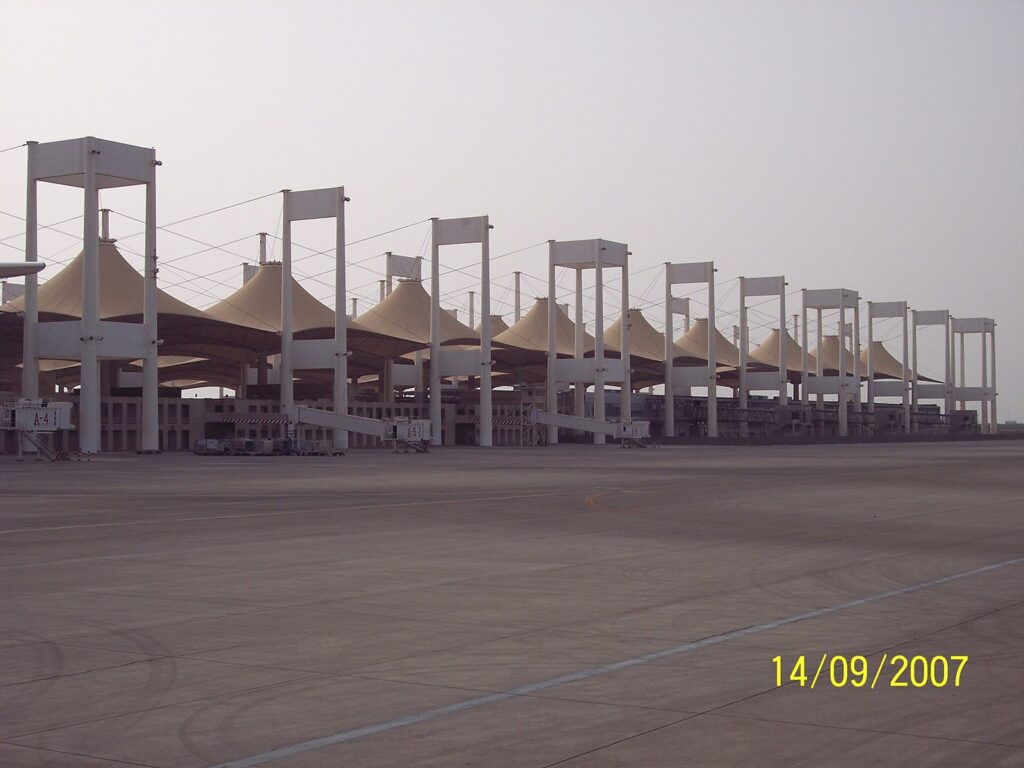
Spiritual Preparation for an Umrah or Hajj Journey
Umrah and Hajj are not ordinary trips but journeys of worship. For this reason, preparing the heart is just as important as packing the suitcase:
- Purifying the intention: Taking care that the journey is made solely for the pleasure of Allah, free from any showing off.
- Seeking mutual forgiveness: Asking family, relatives, neighbours and colleagues for their forgiveness (halal), and resolving any resentments.
- Respecting the rights of others: Paying off debts or putting a repayment plan in writing, and returning items held in trust to their owners.
- Repentance and seeking forgiveness: Setting off with a heart that intends to be cleansed of the burden of the past.
- Learning about the worship: To learn the rites in advance, you can explore our Umrah guide and Hajj guide, and for the supplications to recite during worship, our article Umrah Duas.
How is prayer performed while travelling?
According to the Hanafi school, a person who leaves their place of residence to travel to a place approximately 90 kilometres or more away, and who intends to stay there for less than 15 days, is considered a traveller (musafir). A traveller performs the four-rak’ah obligatory prayers as two rak’ahs; however, when following a resident imam, they perform the prayer in full together with the imam. For details such as when traveller status begins and ends, and the Sunnah prayers, we recommend that you consult the explanations of Diyanet.
A Note on Pronunciation and Sources
The transliterations given in Latin letters do not fully represent some of the sounds in Arabic; it is recommended that the supplications be learnt from a qualified teacher for correct pronunciation. If you have not yet memorised the supplication, you can also supplicate by saying its meaning in your own language. For detailed matters of Islamic jurisprudence, such as the rules for travellers, prayer while travelling and ihram, we recommend that you consult Diyanet.
Current Notes for Those Setting Off on Umrah or Hajj in 2026–2027
The travel dua is the same on every journey; however, the travel calendar, transport options and official practices change from period to period. At RotaNur, we have brought together practical notes on the 2026–2027 period for those planning to travel to the holy lands in the coming months. Considering your spiritual preparation together with this calendar will help you clarify both your intention and your travel plan.
Key periods in the calendar
| Period | Calendar note | Travel preparation |
|---|---|---|
| October–November 2026 | The first months of the Hijri year 1448; the effect of the summer heat begins to ease | A favourable period for those who wish to devote more time to worship |
| December 2026–January 2027 | The three sacred months begin; the holy nights of Raghaib, Mi’raj and Bara’ah fall within this period; the school semester break is in the second half of January | Planning early, as demand rises during the weeks of the holy nights and the holidays |
| February–March 2027 | Ramadan is expected to begin in the first half of February and end in early March | Learning in advance, from Diyanet’s explanations, the rulings on fasting and prayer while travelling |
| April–May 2027 | Hajj 2027 is expected to fall in mid-May; the exact days will become clear with the Diyanet calendar and the announcement of the Saudi authorities | Taking into account that the issuing of new Umrah visas may be temporarily suspended before Hajj |
In previous years, the issuing of new Umrah visas was temporarily suspended before the Hajj season, from the middle of Shawwal onwards, and Umrah resumed after Hajj. As a similar practice may be expected for 2027, it is important that those considering Umrah in the spring months set their dates according to current announcements. To compare the advantages of each period, you can take a look at our article on when to go for Umrah.
A reminder for those thinking of spending Ramadan on Umrah: according to the Hanafi school, a person who is considered a traveller may choose not to fast in Ramadan and make up the fasts later; however, if there is no hardship, fasting is considered more virtuous. Planning your flight day, your iftar and suhur times and your pace of worship with this in mind will make your journey easier. For detailed rulings, consult the explanations of Diyanet.
Reminders for journeys within the holy lands
- The train between Makkah and Madinah: The Haramain High-Speed Railway runs between the two cities via Jeddah. Once you have settled on the train, you can recite the travel dua and spend the journey in remembrance and reflection.
- Visiting the Rawdah: Visits to the Rawdah (Rawdah al-Mutahharah) are made by appointment through the Nusuk app, and limits may be placed on how often appointments can be made. Arranging your Madinah programme and your other visits at the Prophet’s Mosque (Masjid an-Nabawi) around your appointment time saves time.
- The Hira Cultural District: The Hira Cultural District at the foot of Jabal al-Nour is open to visitors, together with its Revelation Exhibition. If you would like to add it to your visiting programme in Makkah, plan your transport in advance.
- Transport during the days of Hajj: The Mashaer Metro serves Mina, Muzdalifah and Arafat during the days of Hajj. Find out from your group officials which transport arrangement will be used. At busy times, take care not to get separated from your group and to agree on meeting points in advance.
- Hajj permit: During the Hajj period, entry to the holy sites is restricted for those without a Nusuk card and a Hajj permit, and sanctions are applied to attempts to perform Hajj without a permit. In Türkiye, both Hajj via the Diyanet lottery and private Hajj are subject to Diyanet’s registration and lottery process.
- Health and luggage: Vaccination requirements and the rules on Zamzam and luggage may change. For your health preparations, consult your family doctor or the travel health centres of Türkiye’s Ministry of Health. It is also important to carry the medicines you use regularly in your hand luggage, in a quantity sufficient for the whole journey.
As practices in Saudi Arabia can change at short notice, we recommend that you confirm current conditions with official sources and your travel agency before you travel. For details on the visa process, you can read our Umrah visa guide. Whichever period you set off in, we hope that this journey of worship, which begins with the travel dua, passes in ease and peace.
Keep reading
- What to Say to Someone Going on Umrah: Farewell and Welcome Words, and Duas
- How to Make the Intention for Ihram: Intention Duas for Umrah and Hajj
- Places Where Duas Are Accepted: Sites in Makkah and Madinah Where the Acceptance of Dua Is Hoped For
May your way be open and your journey blessed. You can send us your questions about preparing for your Umrah or Hajj journey through our WhatsApp line or our contact page; we will be glad to help you.
Frequently Asked Questions
How many times is the travel dua recited?
The travel dua is recited once at the start of the journey, after settling into the vehicle. According to the narration we quoted in this article, the Prophet would begin the supplication by saying the takbir three times; for this reason, the takbirs are said three times and the rest of the supplication once. On a journey with connections or several stages, you can recite the supplication again when you board a new vehicle. The same supplication is also recited on the return, with the return sentence added at the end.
Can the travel dua be recited without wudu?
Yes, the travel dua can also be recited without wudu; wudu is not a requirement for supplication and remembrance. According to the Hanafi school, those in a state of major ritual impurity (junub) and women during their menstrual period may also recite this supplication, on condition that they recite the verses of Surah az-Zukhruf at its beginning with the intention of supplication. Nevertheless, being in a state of wudu is more virtuous if possible. For details on this matter, you can consult the explanations of Diyanet.
Can the travel dua be recited in your own language?
Yes, if you have not yet memorised the Arabic text, you can supplicate by saying the meaning of the travel dua in your own language. Supplication can be made in any language, and what matters is sincerity. Nevertheless, learning over time the wording that has come down from the Prophet is a good goal. As a start, memorising the basmalah and the short passage from Surah az-Zukhruf and saying the rest with its meaning in your own language is a practical way to learn the supplication step by step.
Which dua is recited when returning from Umrah?
On the return from Umrah, the travel dua is also recited, with the sentence “Âyibûne tâibûne âbidûne li-rabbinâ hâmidûn” added at the end. This sentence means “We are those who return, those who repent, those who worship and those who praise our Lord.” Spending the return journey in supplication and gratitude as well helps to preserve the spiritual state gained during Umrah. For words of welcome, you can look at our article on what to say to someone going on Umrah.
Can the travel dua be read from a phone?
Yes, until you have memorised the travel dua, you can read it from your phone, a piece of paper or a dua booklet. What matters is to recite the supplication while reflecting on its meaning and with peace of mind. When using your phone on a plane or a bus, take care not to disturb the passengers around you and to keep your voice low. Also remember to follow the cabin crew’s instructions on the use of electronic devices during the flight.

Cihat Murat Yüksel is the editor of the RotaNur blog and the founder of Markention. Drawing on the sources of Türkiye's Presidency of Religious Affairs (Diyanet), he turns the questions travellers ask most about preparing for Umrah, Hajj and halal travel into clear, practical guides.
Questions answered in this article
What is the travel dua?
The travel dua is the supplication that the Prophet recited when he mounted his riding animal to set off on a journey, as narrated by Abdullah ibn Umar (Muslim, Hajj, 425). The supplication begins with verses from Surah az-Zukhruf and continues with requests for goodness, piety (taqwa), ease and protection on the journey. Today, the same supplication can also be recited when setting off by car, bus, train or plane.
When is the travel dua recited?
The travel dua is recited after getting into the vehicle and settling down to set off. The same supplication is also recited on the return journey, with the sentence “Âyibûne tâibûne…” added at the end. On a long journey with connections, you can recite the supplication again when you board a new vehicle.
Is the traveller’s dua accepted?
Yes, the traveller’s supplication is among those that the hadiths state will be accepted. The Prophet informed us that there are three supplications whose acceptance is beyond doubt: the supplication of the oppressed, the supplication of the traveller, and the supplication of a father for his child (Abu Dawud, Tirmidhi). For this reason, setting aside part of your travel time for supplication means making the most of this precious opportunity.
How is prayer performed while travelling?
According to the Hanafi school, a person who leaves their place of residence to travel to a place approximately 90 kilometres or more away, and who intends to stay there for less than 15 days, is considered a traveller (musafir). A traveller performs the four-rak’ah obligatory prayers as two rak’ahs; however, when following a resident imam, they perform the prayer in full together with the imam. For details such as when traveller status begins and ends, and the Sunnah prayers, we recommend that you consult the explanations of Diyanet.