





Contents 24 sections
- How Is Hajj Organised in Türkiye?
- What Do Hajj via the Diyanet Lottery and Private Hajj Mean?
- Diyanet’s Hajj organisation (Hajj via the Diyanet lottery)
- Private Hajj organisation
- The Main Differences Between Hajj via the Diyanet Lottery and Private Hajj
- Type of accommodation and distance to the Haram
- Room occupancy and group size
- Programme length
- Guidance and additional services
- Why is there a difference in cost?
- Comparison table
- Pre-Registration, Lottery and Priority Rules
- Can you go to Hajj outside the official registration process?
- What to Look for When Choosing an Agency
- Which Option Suits Whom?
- Which is suitable for elderly Hajj candidates and those who find walking difficult?
- Which is more comfortable for families?
- Which makes sense for those whose priority is their budget?
- Ask Yourself Before You Decide
- Preparation Timeline and Current Notes for the 2027 Hajj Season
- Step-by-step preparation, from registration to departure
- Points to note about Saudi practices
- Keep reading
- Frequently Asked Questions
One of the first questions that comes to mind for almost everyone who intends to perform Hajj is whether to go via the Diyanet lottery or with a private Hajj organisation. The difference between Hajj via the Diyanet lottery and private Hajj lies not in the act of worship itself but in accommodation, room arrangements, programme length and the scope of services. In Türkiye, both options are run under the coordination of Diyanet (Türkiye’s Presidency of Religious Affairs). In this article, we compare the two options in plain language and consider together which one may better meet whose needs.
How Is Hajj Organised in Türkiye?
In Türkiye, Hajj is organised under the coordination of Diyanet. Diyanet both runs its own Hajj organisation and supervises the travel agencies it authorises to provide Hajj services. In other words, whichever option you choose, the process moves forward within the same official framework.
Registration and lottery procedures, health requirements, visa processes and the arrangements for the limited number of Hajj places set by Saudi Arabia are also part of this framework. As these rules can be reviewed anew each year, up-to-date information should be followed through the official announcements of Diyanet and the relevant Saudi authorities.
What Do Hajj via the Diyanet Lottery and Private Hajj Mean?
The two terms are often confused in everyday language. Below, we briefly summarise what each one refers to.
Diyanet’s Hajj organisation (Hajj via the Diyanet lottery)
The option popularly known as “Hajj via the Diyanet lottery” is the Hajj organisation run directly by Diyanet. Accommodation, transport, catering and religious guidance services are planned by Diyanet. Offering a standard and predictable service, and generally being more affordable, make this option the first choice for many Hajj candidates. Although this name has become established, the scope of the registration and lottery procedures is determined each year according to the principles announced by Diyanet. For details, take a look at our Hajj via the Diyanet lottery page.
Private Hajj organisation
Private Hajj organisations are arranged through travel agencies that Diyanet has authorised to provide Hajj services. These agencies may offer different accommodation, room and programme options; however, they do not operate independently. Private Hajj organisations are also subject to Diyanet’s regulations; service standards, contract terms and practices on the ground are all under Diyanet’s supervision. You can explore the options on our private Hajj page.
The Main Differences Between Hajj via the Diyanet Lottery and Private Hajj
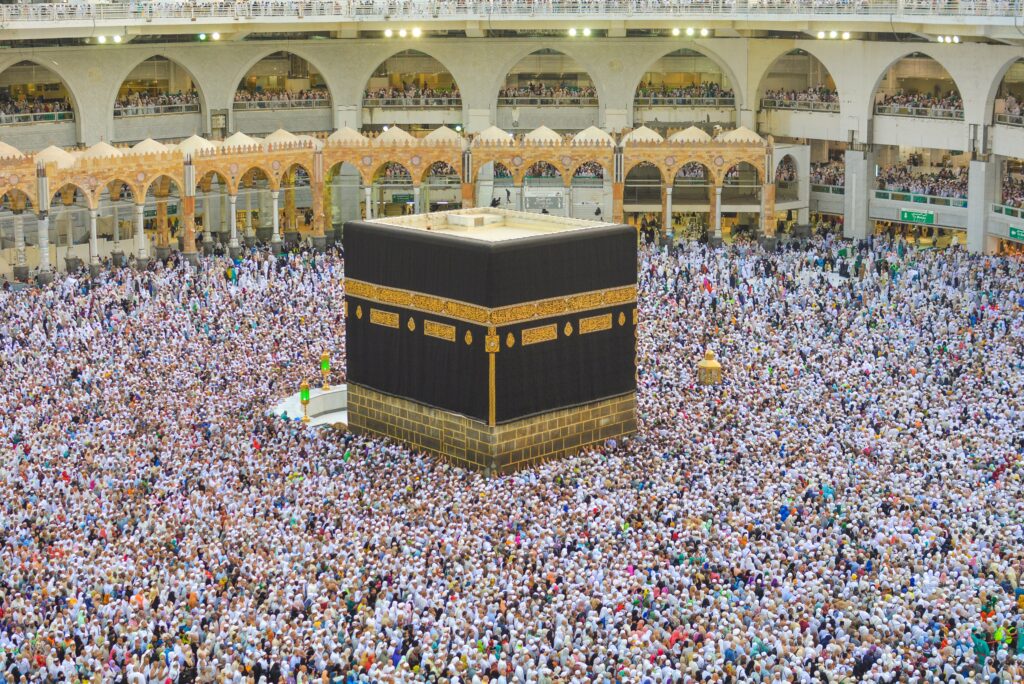
The Hajj rites (manasik) are the same in both options. Ihram, the standing at Arafat, Muzdalifah, Mina, stoning the Jamarat, the tawaf of visitation and sa’i are subject to the same rulings for every Hajj candidate. The differences relate mostly to how the service is provided.
Type of accommodation and distance to the Haram
In Diyanet’s organisation, accommodation may be located at varying distances from the Haram, depending on that year’s planning; shuttle services are commonly arranged for groups staying in more distant areas. In private Hajj organisations, options that include hotels within walking distance of the Haram are more common. The hotel’s location is a decisive criterion, especially for those who want to go to and from Masjid al-Haram several times a day. To get an idea of the area, you can look at our Makkah hotels page.
Room occupancy and group size
In Diyanet’s organisation, rooms are generally shared by more people and the groups are larger. Private Hajj organisations may offer rooms for fewer people and smaller groups. A small group makes communication with the guide easier and makes moving together more comfortable.
Programme length
Diyanet programmes are mostly planned to last longer. This is an advantage for those who want to devote more time to worship and visits. Private organisations may offer a choice of programme lengths; those who cannot take long periods of leave because of their work may turn to these options. Exact dates and durations are set each year according to the organisation’s plan.
Guidance and additional services
In both options, religious guidance is provided, with religious guides accompanying the groups. In addition, private organisations may offer options such as a welcome at the airport, visits to historical sites in Makkah and Madinah, health support, luggage services or different levels of service in Mina and Arafat. Which services are included in the package should always be confirmed in writing.
Why is there a difference in cost?
The difference in cost stems from the hotel’s distance to the Haram and its standard, the number of people per room, the flight plan, the tent location and level of service in Mina and Arafat, the programme length and the additional services included in the package. For this reason, when comparing two packages, you should look not only at the total price but also at which services that price covers. Current fees are announced separately each year.
Comparison table
| Topic | Diyanet organisation | Private Hajj organisation |
|---|---|---|
| Organised by | Diyanet (Presidency of Religious Affairs) | Travel agencies authorised by Diyanet |
| Rules it is subject to | Diyanet regulations | Diyanet regulations and supervision |
| Accommodation | At varying distances from the Haram, mostly with shuttle transport | Hotel options close to the Haram are more common |
| Room arrangement | Generally more people per room | Options for rooms with fewer people |
| Group size | Larger groups | Smaller groups possible |
| Programme length | Mostly longer | A choice of programme lengths |
| Guidance | Accompanied by a religious guide | Accompanied by a religious guide, with additional support depending on the package |
| Additional services | Standard scope of services | Additional services that vary by package |
| Cost | Generally more affordable | Higher, depending on the scope of services |
Pre-Registration, Lottery and Priority Rules
Those who wish to go to Hajj must first register according to the procedure set by Diyanet. Pre-registration dates, the lottery method, priority criteria such as age or waiting time, and the requirements for final registration are announced each year by Diyanet. As these rules can change from year to year, you should not act on information from previous years or on hearsay.
The soundest way is to follow current announcements through Diyanet’s official website and other official channels, as well as through provincial and district mufti offices. You can also find an overview of how the preparation process works on our Hajj guide page.
Can you go to Hajj outside the official registration process?
Offers you often come across online that present Hajj as possible outside the lottery process should be approached with caution. Private Hajj organisations are also subject to Diyanet’s regulations, and their registration processes follow the principles Diyanet announces each year. If you come across such a promise, ask which official regulation the offer is based on, and be sure to verify the information against Diyanet’s current announcements.
What to Look for When Choosing an Agency
If you are going to choose a private Hajj organisation, the first step is to make sure that the agency is authorised to provide Hajj services. Checking its authorisation certificate through official channels, reading the contract carefully and getting all services in writing will help prevent problems that might arise later.
- Authorisation certificate: Check through official channels whether the agency has been authorised by Diyanet to organise Hajj.
- Written contract: The payment schedule, the scope of services and the obligations of both parties should be clearly set out in the contract.
- Cancellation and refund conditions: Find out in advance what procedure will be followed if the journey does not go ahead for reasons such as registration, health or visa issues.
- Accommodation details: The names of the hotels in Makkah and Madinah, their distance to the Haram and the room arrangement should be stated in writing.
- Flight details: The airline, the departure city and whether there is a connecting flight should be made clear.
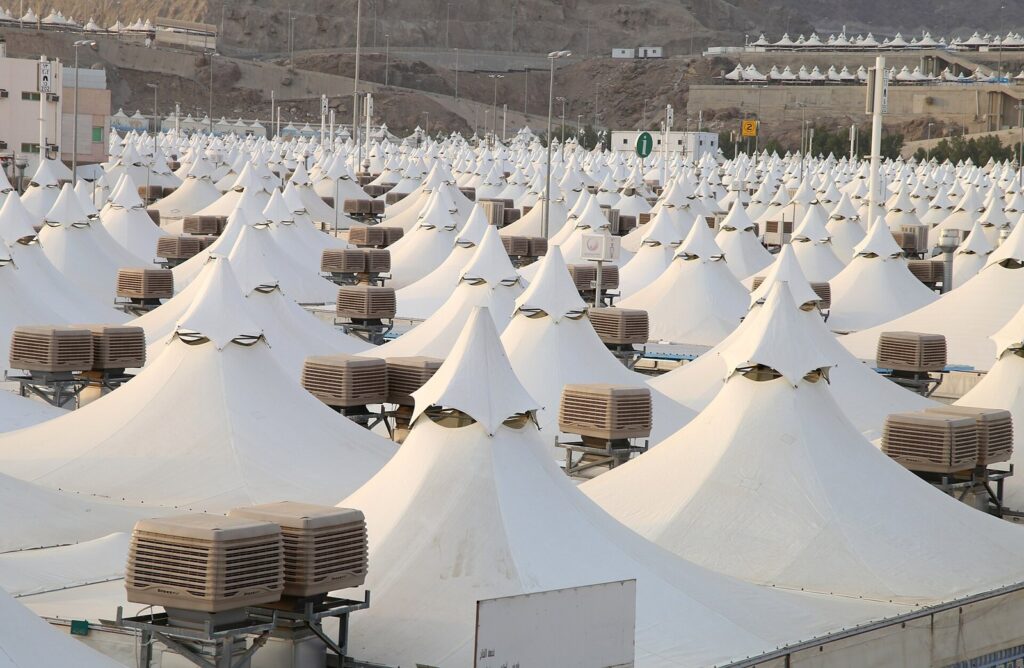
- Services in Mina and Arafat: Ask for information about the tent area, transport and catering arrangements.
- Guidance: Get information about the religious guide and the group leader who will accompany the group.
Which Option Suits Whom?
The right choice depends on age, health, budget and time. The assessments below offer you a general roadmap.
Which is suitable for elderly Hajj candidates and those who find walking difficult?
For those who have difficulty walking long distances, accommodation close to the Haram is a significant convenience. For this reason, the nearby hotel options offered by private Hajj organisations may stand out for this group. Those who choose Diyanet’s organisation can also prepare by finding out in advance about the shuttle arrangements and where they will be staying.
Which is more comfortable for families?
If spouses and family members want to stay together, the room arrangement becomes decisive. Private organisations that offer rooms for fewer people can be practical for families. With Diyanet’s organisation, it is helpful to ask at the registration stage how rooms are allocated.
Which makes sense for those whose priority is their budget?
For Hajj candidates whose priority is their budget, Diyanet’s organisation is generally the more affordable option. The fact that service standards are set officially also reassures those looking for a predictable process. And because the programme is mostly longer, it offers a further benefit to those who want to devote time to worship.
Ask Yourself Before You Decide
The following questions are a good starting point for clarifying your choice:
- How important is it for me to be able to walk to and from the Haram?
- How many days of leave can I take, and will the length of the programme be hard for me?
- Who do I want to stay with, and in what kind of room arrangement?
- Is my health suited to crowds and long walks?
- Which services do I want to spend my budget on?
Whichever option you choose, learning the rites in advance will help you perform your worship more peacefully. For a step-by-step explanation, you can read our article on how to perform Hajj.
Preparation Timeline and Current Notes for the 2027 Hajj Season
The 2026 Hajj was completed at the end of May, and attention has now turned to the 2027 Hajj season. The 2027 Hajj is expected to fall in mid-May 2027; the exact days will be confirmed by the Diyanet calendar and by announcements from the Saudi authorities. Whichever organisation you choose, preparing early and in the right order will make the process much more peaceful. Rather than giving exact dates, the timeline below has been prepared to show the order in which preparations can be made.
First of all, a reminder: in Türkiye, both Hajj via the Diyanet lottery and private Hajj are subject to Diyanet’s registration and lottery process. Announcements on Hajj registration, the lottery and fees are made by Diyanet. For this reason, you should base your decisions about the 2027 season on the current announcements you follow through Diyanet’s official channels and through provincial or district mufti offices.
Step-by-step preparation, from registration to departure
| Period | Preparations you can make |
|---|---|
| September–December 2026 | Following Diyanet’s registration and lottery announcements for the 2027 Hajj season, checking your registration status and checking your passport’s validity |
| After the lottery results | Finalising your choice between Diyanet’s organisation and the private Hajj organisations of authorised agencies, according to the principles announced by Diyanet, and getting the scope of services in writing |
| December 2026–March 2027 | Having your health check-ups, attending training on the Hajj rites, and making use of the three sacred months and Ramadan for spiritual preparation |
| April–May 2027 | Completing the preparation of your documents, ihram and luggage, and attending group briefing meetings |
While you wait for the lottery process, the most productive preparation is to learn the rites and to get your body used to the demands of Hajj. As Hajj involves long walks and crowded settings, it helps to build a regular walking habit; those with chronic conditions are advised to consult their family doctor early. That way, when the registration steps become clear, you will be ready both in knowledge and physically.
Points to note about Saudi practices
- Hajj permit: During the Hajj season, entry to the holy sites is restricted for those without a Nusuk card and a Hajj permit, and sanctions are applied to attempts to perform Hajj without a permit. Carry the Nusuk card issued to you with you at all times during Hajj, and if you lose it, inform your group official immediately. Do not give credence to offers made outside the official process.
- Pause in Umrah visas: In previous years, the issuing of new Umrah visas was temporarily suspended before Hajj, from mid-Shawwal onwards. As a similar practice may be expected for 2027, it is important for those planning Umrah before Hajj to set their dates accordingly.
- Transport in the Mashair area: During the days of Hajj, the Mashair metro runs between Mina, Muzdalifah and Arafat. Find out from your organisation which transport arrangement your group will use.
- Rules that may change: Practices regarding age, mahram, vaccinations, Zamzam and luggage may change from season to season. For your health preparations, consult your family doctor or the travel health centres of Türkiye’s Ministry of Health.
We recommend confirming the current conditions with official sources and your travel agency before you travel. To see the calendar of the days of Hajj in detail, take a look at our article on when Hajj takes place, and for the programmes prepared for the 2027 season, see our Hajj tours page. Weighing the comparison in this article together with current official announcements as you make your decision will make it easier to find the option that suits you best.
Keep reading
- Documents Required for Hajj and a Preparation Checklist
- What Is Hajj by Proxy (Badal Hajj)? Its Conditions and How It Is Performed
- Who Is Hajj Obligatory For? The Conditions That Make Hajj Obligatory
If you are finding it hard to decide which option suits you, we at RotaNur would be glad to hear your questions. You can reach us through our contact page or our WhatsApp line, and we can go through the options that fit your needs together. May Allah grant an accepted Hajj to everyone who intends to perform it.
Frequently Asked Questions
When will the 2027 Hajj take place?
The 2027 Hajj is expected to fall in mid-May 2027. As the Hijri calendar shifts back by about eleven days each year relative to the Gregorian calendar, the days of Hajj also come a little earlier each year. The exact dates of the Day of Arafah and the days of Eid are confirmed by the Diyanet calendar and by announcements from the Saudi authorities. We recommend finalising your plans once these official announcements have been published.
Where can I find out the Hajj lottery results?
Hajj lottery results are announced through Diyanet’s official channels and via provincial or district mufti offices. The date on which and the method by which the results will be announced are declared by Diyanet each year. It is important to follow the announcements regularly so that you do not miss the registration steps and deadlines that follow the lottery. Rely only on official statements, not on unverified information shared on social media.
When are Hajj fees announced?
Hajj fees are announced each year by Diyanet. The fee for Diyanet’s organisation and its payment terms are declared together with that year’s Hajj announcements; private Hajj organisations are also run within the framework set by Diyanet. It is advisable to follow the fees and payment timetable for the 2027 season through Diyanet’s official channels, and not to plan on the basis of amounts from previous years.
What happens if you go to Hajj without a Hajj permit?
Attempting to perform Hajj without a Hajj permit can have serious consequences. During the Hajj season, the Saudi authorities restrict entry to the holy sites for those without a Nusuk card and a Hajj permit, and apply sanctions to attempts to perform Hajj without a permit. Do not give credence to offers suggesting that Hajj can be performed on a tourist or Umrah visa. Those who wish to go to Hajj from Türkiye need to follow Diyanet’s registration and lottery process.
Is there an age requirement for going to Hajj?
The age and health requirements for going to Hajj are determined according to the principles announced by the Saudi authorities and Diyanet in the year concerned, and they may change from season to season. Diyanet may also apply certain priority criteria in the lottery process. For this reason, confirm the current requirements from official announcements before registering. For your preparations, you can also take a look at our article on documents required for Hajj.

Cihat Murat Yüksel is the editor of the RotaNur blog and the founder of Markention. Drawing on the sources of Türkiye's Presidency of Religious Affairs (Diyanet), he turns the questions travellers ask most about preparing for Umrah, Hajj and halal travel into clear, practical guides.
Questions answered in this article
How Is Hajj Organised in Türkiye?
In Türkiye, Hajj is organised under the coordination of Diyanet. Diyanet both runs its own Hajj organisation and supervises the travel agencies it authorises to provide Hajj services. In other words, whichever option you choose, the process moves forward within the same official framework.
What Do Hajj via the Diyanet Lottery and Private Hajj Mean?
The two terms are often confused in everyday language. Below, we briefly summarise what each one refers to.
Why is there a difference in cost?
The difference in cost stems from the hotel’s distance to the Haram and its standard, the number of people per room, the flight plan, the tent location and level of service in Mina and Arafat, the programme length and the additional services included in the package. For this reason, when comparing two packages, you should look not only at the total price but also at which services that price covers. Current fees are announced separately each year.
Can you go to Hajj outside the official registration process?
Offers you often come across online that present Hajj as possible outside the lottery process should be approached with caution. Private Hajj organisations are also subject to Diyanet’s regulations, and their registration processes follow the principles Diyanet announces each year. If you come across such a promise, ask which official regulation the offer is based on, and be sure to verify the information against Diyanet’s current announcements.
Which Option Suits Whom?
The right choice depends on age, health, budget and time. The assessments below offer you a general roadmap.
Which is suitable for elderly Hajj candidates and those who find walking difficult?
For those who have difficulty walking long distances, accommodation close to the Haram is a significant convenience. For this reason, the nearby hotel options offered by private Hajj organisations may stand out for this group. Those who choose Diyanet’s organisation can also prepare by finding out in advance about the shuttle arrangements and where they will be staying.