











Contents 20 sections
- The Basis of the Obligation of Hajj
- How many times in a lifetime is Hajj obligatory?
- Who Is Hajj Obligatory For? The Conditions of Obligation
- Can the conditions for who Hajj is obligatory for be summarised point by point?
- How Is Financial Ability (Istita’ah) Measured?
- What is the measure of the wealth required for Hajj?
- Do you have to sell your home to go to Hajj?
- Conditions of Performance: When You Must Perform Hajj in Person
- Summary Table of the Conditions
- Special Situations and Common Questions
- Is Hajj obligatory for a person who is in debt?
- Is Hajj obligatory for a woman, and who covers the costs?
- Can women go to Hajj without a mahram?
- Does a Hajj performed in childhood count as the obligatory Hajj?
- Is Hajj obligatory for the elderly and the sick?
- Can Hajj Be Postponed Once It Has Become Obligatory?
- What is done for a person who dies without performing Hajj despite it being obligatory for them?
- Can a Person for Whom Hajj Is Not Obligatory Go to Hajj?
- How Should a Person for Whom Hajj Is Obligatory Prepare?
- Frequently Asked Questions
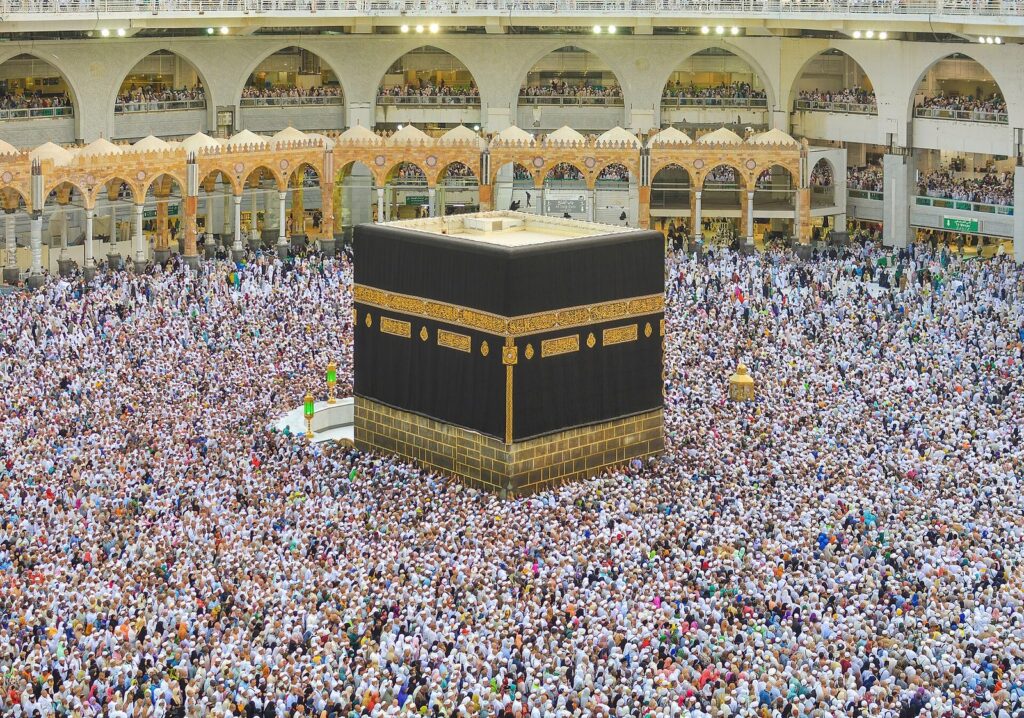
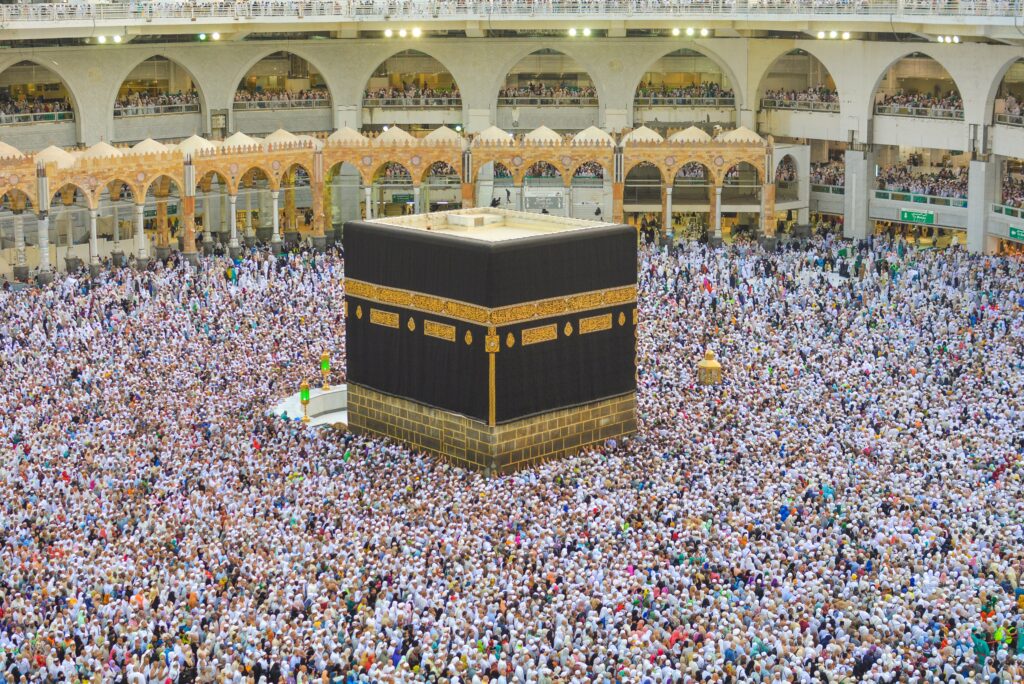
The question who is Hajj obligatory for is the first step towards understanding when, and under what conditions, the act of worship of Hajj becomes a duty for a person. Hajj is one of the five pillars of Islam; however, it is made obligatory (fard) once in a lifetime not for every Muslim, but for those who meet certain conditions. In this article, based on the approach of Diyanet (Türkiye’s Presidency of Religious Affairs) and the Hanafi school, you will find, point by point, the conditions that make Hajj obligatory, the conditions of performance that require a person to perform Hajj in person once those conditions are met, how financial ability is measured, and the rulings on special cases such as women, people in debt, the elderly and children.
The Basis of the Obligation of Hajj
The obligation of Hajj is based on the Holy Qur’an. In Surah Al Imran, it is stated: “Performing Hajj to the House is a right that Allah has over people who are able to find a way to it” (Al Imran 3:97). The expression “able to find a way” in the verse shows that Hajj is obligatory not for everyone, but for those who are able to make the journey. Islamic scholars have explained this ability in terms of elements such as financial means, health, a safe route and time.
The Prophet (peace be upon him), when stating that Islam is built on five foundations, also counted among them performing Hajj to the House of Allah for those who are able (Bukhari, Muslim). For this reason, Hajj is an obligation that must be fulfilled once in a lifetime by a person who meets its conditions; any Hajj performed more than once is voluntary (nafl).
How many times in a lifetime is Hajj obligatory?
Hajj is obligatory only once in a lifetime for a person who meets its conditions. All the Hajj journeys made in later years by a person who has already performed their obligatory Hajj count as voluntary Hajj. Special cases in which a person makes something necessary (wajib) for themselves, such as a vow (nadhr), are assessed separately.
Who Is Hajj Obligatory For? The Conditions of Obligation
According to the Hanafi school, for Hajj to be obligatory for a person, all of the following conditions must be met together. These are called the “conditions of obligation” (wujub); if any one of them is missing, Hajj is not obligatory for that person.
- Being Muslim: Hajj is an act of worship, and being Muslim is required in order to be responsible for acts of worship.
- Being of sound mind: A person who is not of sound mind is not responsible for Hajj.
- Having reached puberty: Hajj is not obligatory for children; a Hajj performed in childhood counts as voluntary.
- Being free: This condition, found in the classical books of Islamic jurisprudence (fiqh), refers to a person having control over their own will.
- Having the financial means: Being able to cover the costs of the Hajj journey over and above one’s basic needs and debts.
- Having enough time to reach the time of Hajj: The conditions must have been met at a time when it is still possible to reach the Hajj season.
In classical sources, for a person who becomes Muslim in a region where Islam is not practised, knowing that Hajj is obligatory is also listed as a condition. Today, with information having become easier to access, this condition is in practice met for most people.
Can the conditions for who Hajj is obligatory for be summarised point by point?
Yes. In short, Hajj is obligatory once in a lifetime for people who are Muslim, of sound mind, have reached puberty, are free, have the financial means to cover the costs of Hajj over and above their basic needs and debts, and are in a position to reach the time of Hajj. Once these conditions are met, the obligation of Hajj becomes a debt that the person owes.
How Is Financial Ability (Istita’ah) Measured?
Of the conditions that make Hajj obligatory, financial ability is the one people most often wonder about. Called “istita’ah” in the language of Islamic jurisprudence, this ability means that a person can cover the costs of the Hajj journey there and back, as well as their accommodation, food and drink in the holy lands. When making this calculation, the living needs of the person and of the family members they are responsible for supporting, for the period until their return, are set aside.
Basic needs include the home the person lives in, household goods, clothing, the tools and equipment of their profession, and the capital of the business from which they earn their living. If savings beyond these are sufficient to cover the costs of Hajj, Hajj becomes obligatory.
What is the measure of the wealth required for Hajj?
For Hajj, unlike zakat, it is not a condition to own a specific nisab amount. The measure is that the person owns enough wealth, over and above their basic needs and debts, to cover that year’s costs of the Hajj journey. As Hajj costs can change every year, this calculation is made by taking into account the organisation costs of the year concerned.
Do you have to sell your home to go to Hajj?
As the home a person lives in counts as one of their basic needs, they do not need to sell it in order to go to Hajj. However, if they own a second home, a plot of land, a field or similar property beyond their needs, and its value is sufficient to cover the costs of Hajj, Hajj becomes obligatory. In such situations, it is wise to get information from Diyanet’s religious advisory services before making a decision.
Conditions of Performance: When You Must Perform Hajj in Person
For a person who meets the conditions of obligation to be able to perform Hajj in person, certain additional conditions are also required. These are called the “conditions of performance” (ada). Even if Hajj has become obligatory for a person who lacks the conditions of performance, they are not responsible for carrying it out themselves; in this case, sending a proxy or leaving a bequest comes into consideration.
- Physical health: The person must not have a permanent illness or impediment that would prevent the Hajj journey and the rites.
- The absence of any obstacle: There must be no situation that makes the journey impossible, such as detention or a ban on travelling abroad.
- A safe route: The journey must be reasonably safe in terms of the security of life and property.
- For women, the rulings concerning a husband or mahram: This topic is discussed separately below.
- For women, not being in a waiting period (iddah): A woman observing the waiting period because of divorce or her husband’s death does not set out on the Hajj journey during this period.
People who meet the conditions of obligation but who cannot go to Hajj because of a permanent illness or old age may send someone else in their place. We explain the details of this in our article on what badal Hajj is.
Summary Table of the Conditions
In books of Islamic jurisprudence, the conditions of Hajj are generally examined in three groups. The table below summarises these groups and what each one determines.
| Group of conditions | Conditions it covers | If they are not met |
|---|---|---|
| Conditions of obligation (wujub) | Being Muslim, of sound mind, having reached puberty and being free; financial means; being able to reach the time of Hajj | Hajj is not obligatory for that person |
| Conditions of performance (ada) | Health, the absence of any obstacle, a safe route; for women, the rulings on a mahram and the waiting period | Even if Hajj is obligatory, there is no duty to perform it in person; a proxy or a bequest comes into consideration |
| Conditions of validity (sihhah) | Being Muslim, ihram, the specific time and the specific place | The Hajj performed is not valid |
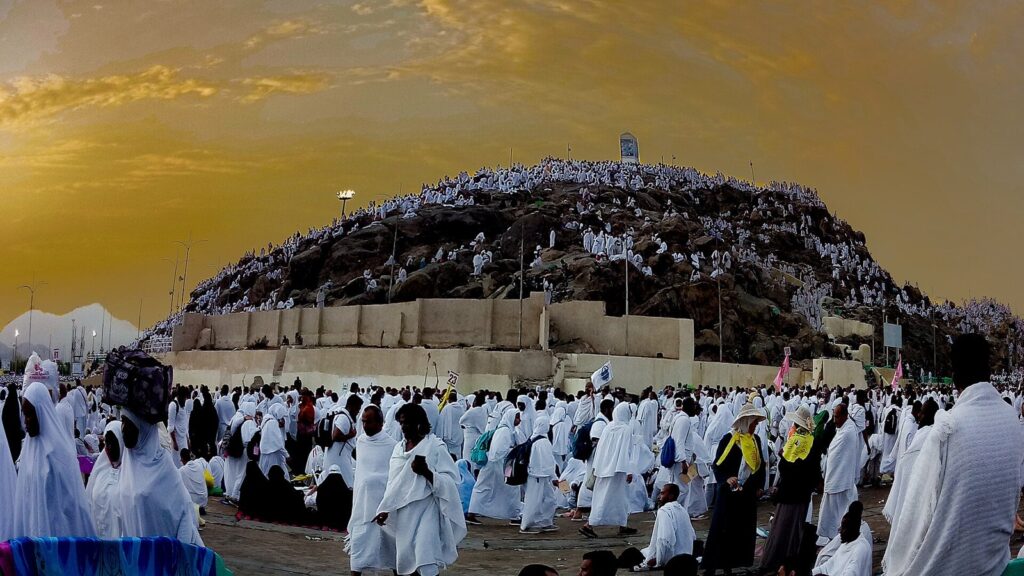
The conditions of validity are those required for Hajj to be valid. For example, performing the standing at Arafat on the specific day and at the specific times, within the specific boundaries, falls into this group. You can find in detail on which days Hajj is performed in our article on when Hajj takes place.
Special Situations and Common Questions
Although the conditions of Hajj are generally clear, many questions arise in daily life about how these conditions apply. Below, we summarise the situations most often encountered, based on Diyanet’s approach. For questions specific to your personal situation, you can contact provincial and district mufti offices or Diyanet’s religious advisory line.
Is Hajj obligatory for a person who is in debt?
A person who has a debt that has fallen due and must be paid needs to pay off that debt first. If the wealth remaining after the debt has been paid is not sufficient for the costs of Hajj, Hajj is not obligatory. For debts that are paid off gradually or over a long term, the person’s ability to pay and the state of the debt are assessed together; in such cases, the soundest course is to refer to Diyanet’s current fatwas.
Is Hajj obligatory for a woman, and who covers the costs?
Hajj is also obligatory for a woman who meets the conditions of obligation. According to the Hanafi school, a husband is not obliged to cover his wife’s Hajj costs; if the woman’s own wealth is sufficient for the costs of Hajj, Hajj becomes obligatory for her. A husband may cover his wife’s costs of his own free will; in that case, too, the woman’s Hajj is valid.
Can women go to Hajj without a mahram?
According to the classical Hanafi view, a woman must be accompanied by her husband or a mahram on the Hajj journey. Diyanet, however, has expressed the view that women may go to Hajj without a mahram in organised groups where travel and accommodation are safe. On this matter, you need to confirm both Diyanet’s current statement and Saudi Arabia’s practice in the year concerned before registering.
Does a Hajj performed in childhood count as the obligatory Hajj?
No. A Hajj performed before puberty is valid and brings reward; however, it counts as a voluntary Hajj. If this person meets the conditions of obligation after reaching puberty, they must perform their obligatory Hajj separately. The age and document requirements for children taking part in the Hajj journey may change every year.
Is Hajj obligatory for the elderly and the sick?
Hajj is obligatory for an elderly or sick person who has the financial means; however, if their state of health does not allow them to travel, there is no duty to perform Hajj in person. If there is no hope of recovery, this person may send a proxy in their place. Those with minor ailments that do not prevent travel are advised to have a medical check-up and prepare accordingly.
Can Hajj Be Postponed Once It Has Become Obligatory?
According to the preferred view in the Hanafi school, Hajj should be performed in the first year in which its conditions are met. A person who delays Hajj despite being able to perform it remains accountable for the delay, even though their Hajj is valid if they perform it later. As no one can know how long their life and means will last, the best course is to take action for Hajj at the first opportunity.
In Türkiye, Hajj registration and lottery processes are run by Diyanet. For questions about the situation of a person who has registered and is waiting for their turn in this process, refer to Diyanet’s current fatwas. We compare the differences between Diyanet’s organisation and private Hajj through authorised agencies in our article on the difference between Hajj via the Diyanet lottery and private Hajj.
What is done for a person who dies without performing Hajj despite it being obligatory for them?
According to the Hanafi school, if a person who dies without performing Hajj despite it being obligatory for them left a bequest for Hajj to be performed on their behalf, this bequest is carried out from one third of the estate. If there is no bequest, it is possible for the heirs, of their own accord, to have Hajj performed on the deceased’s behalf; it is hoped that Allah will accept it. For details, refer to Diyanet’s explanations.
Important: Whether Hajj is obligatory depends on a person’s assets, debts, health and family circumstances. This article provides general information; for a ruling specific to your own situation, consult the mufti offices or Diyanet’s religious advisory services.
Can a Person for Whom Hajj Is Not Obligatory Go to Hajj?
A person who does not meet the conditions of obligation may also go to Hajj if they have the opportunity. For example, the Hajj of a person who goes with the support of a relative, even though their own financial means are not quite sufficient, is valid. According to the Hanafi school, when such a person performs Hajj as an adult Muslim of sound mind with the intention of the obligatory Hajj, they have also fulfilled their obligatory Hajj; even if they later become wealthy, they are not required to perform Hajj again.
Nevertheless, no one is advised to take on debt in a way that would put themselves and their family in hardship simply in order to go to Hajj. Hajj is an act of worship made obligatory for those who are able; a person who is not able keeps their intention alive and takes action when the opportunity arises. Umrah, on the other hand, is a more flexible act of worship in terms of its ruling and timing. We compare the differences between these two acts of worship in our article on the differences between Hajj and Umrah.
How Should a Person for Whom Hajj Is Obligatory Prepare?
A person for whom Hajj has become obligatory should first firm up their intention and follow the registration period announced by Diyanet. Next come learning the rites, having a health check-up and planning their budget. As the Hajj journey can last several weeks, work and family arrangements also need to be organised in advance.
- Learn the pillars and steps of Hajj from our guide on how to perform Hajj.
- Look into which type of Hajj you will perform, and how this affects the sacrifice obligation, in our article on the types of Hajj.
- Settle your debts and plan for the needs of the family you leave behind.
- If you have a chronic condition, get your doctor’s opinion on whether you are fit to travel.
- Attend the Hajj seminars run by mufti offices and organisations.
Not rushing the preparation process, getting information from reliable sources and not acting on hearsay will make the Hajj journey much more peaceful.
Hajj is a great responsibility for everyone who is able to perform it, and at the same time a unique spiritual opportunity. At RotaNur, we are glad to support you with the information you need as you make your decision about Hajj. You can explore our Hajj tours page, and for any questions, reach us through our contact page or our WhatsApp line. May Allah grant Hajj to everyone who is able to perform it.
Frequently Asked Questions
Can a person for whom Hajj is obligatory go for Umrah first?
Yes. From a religious point of view, there is nothing wrong with a person for whom Hajj is obligatory going for Umrah first. Umrah, which according to the Hanafi school is a Sunnah to perform once in a lifetime, does not take the place of the obligatory Hajj. However, if the costs of Umrah would use up the savings that should be set aside for Hajj, care should be taken not to delay Hajj. For questions specific to your own situation, you can get information from the mufti offices or Diyanet’s religious advisory services.
Do you need to borrow money to go to Hajj?
No, you do not. Hajj is obligatory for a person who has the financial means to cover the costs of the journey over and above their basic needs and debts; a person who does not have these means is under no obligation to borrow money in order to go to Hajj. Although a Hajj made with borrowed money is valid, a person who has no means of repaying is not advised to take on debt in a way that would put themselves and their family in hardship. A person who is not able to go can keep their intention alive, ready to take action when their means allow.
Does a Hajj performed through private Hajj count as the obligatory Hajj?
Yes. Hajj via the Diyanet lottery, organised by Diyanet, and private Hajj, arranged through authorised agencies, do not differ from each other as acts of worship; both, when performed in accordance with their conditions, fulfil the obligatory Hajj. In Türkiye, both are subject to Diyanet’s registration and lottery process. The difference between them lies in organisational details such as accommodation, transport and the scope of services.
Is offering a sacrifice during Hajj required of everyone?
No. The ruling on the sacrifice offered during Hajj depends on the type of Hajj being performed. According to the Hanafi school, it is necessary (wajib) for those performing Tamattu’ or Qiran Hajj to offer the sacrifice of thanksgiving (hady); for those performing Ifrad Hajj, who enter ihram for Hajj alone, this sacrifice is not necessary. Penalty sacrifices arising from violations of the ihram restrictions are assessed separately. For details, see our article on the types of Hajj.
When is registration for the 2027 Hajj?
As every year, the dates and application channels for 2027 Hajj registration are announced by Diyanet; for this reason, we do not give a date here. The 2027 Hajj is expected to fall in mid-May 2027; the exact days will be confirmed by the Diyanet calendar and by announcements from the Saudi authorities. For the sequence of the days of Hajj, take a look at our article on when Hajj takes place.

Cihat Murat Yüksel is the editor of the RotaNur blog and the founder of Markention. Drawing on the sources of Türkiye's Presidency of Religious Affairs (Diyanet), he turns the questions travellers ask most about preparing for Umrah, Hajj and halal travel into clear, practical guides.
Questions answered in this article
How many times in a lifetime is Hajj obligatory?
Hajj is obligatory only once in a lifetime for a person who meets its conditions. All the Hajj journeys made in later years by a person who has already performed their obligatory Hajj count as voluntary Hajj. Special cases in which a person makes something necessary (wajib) for themselves, such as a vow (nadhr), are assessed separately.
Can the conditions for who Hajj is obligatory for be summarised point by point?
Yes. In short, Hajj is obligatory once in a lifetime for people who are Muslim, of sound mind, have reached puberty, are free, have the financial means to cover the costs of Hajj over and above their basic needs and debts, and are in a position to reach the time of Hajj. Once these conditions are met, the obligation of Hajj becomes a debt that the person owes.
How Is Financial Ability (Istita’ah) Measured?
Of the conditions that make Hajj obligatory, financial ability is the one people most often wonder about. Called “istita’ah” in the language of Islamic jurisprudence, this ability means that a person can cover the costs of the Hajj journey there and back, as well as their accommodation, food and drink in the holy lands. When making this calculation, the living needs of the person and of the family members they are responsible for supporting, for the period until their return, are set aside.
What is the measure of the wealth required for Hajj?
For Hajj, unlike zakat, it is not a condition to own a specific nisab amount. The measure is that the person owns enough wealth, over and above their basic needs and debts, to cover that year’s costs of the Hajj journey. As Hajj costs can change every year, this calculation is made by taking into account the organisation costs of the year concerned.
Do you have to sell your home to go to Hajj?
As the home a person lives in counts as one of their basic needs, they do not need to sell it in order to go to Hajj. However, if they own a second home, a plot of land, a field or similar property beyond their needs, and its value is sufficient to cover the costs of Hajj, Hajj becomes obligatory. In such situations, it is wise to get information from Diyanet’s religious advisory services before making a decision.
Is Hajj obligatory for a person who is in debt?
A person who has a debt that has fallen due and must be paid needs to pay off that debt first. If the wealth remaining after the debt has been paid is not sufficient for the costs of Hajj, Hajj is not obligatory. For debts that are paid off gradually or over a long term, the person’s ability to pay and the state of the debt are assessed together; in such cases, the soundest course is to refer to Diyanet’s current fatwas.