







Contents 18 sections
- Seeing the Kaaba for the First Time: When the Heart Is at Its Softest
- When and from where will I first see the Kaaba?
- What Can Be Said on Seeing the Kaaba?
- What is the dua to recite on first seeing the Kaaba?
- The Text Found in Dua Books: Transliteration and Meaning
- Does the dua on seeing the Kaaba have to be in Arabic?
- The short supplication attributed to Umar
- The Question of Whether a Dua Made at First Sight Is Accepted
- Is the dua made on first seeing the Kaaba accepted?
- Preparing a Dua List for That Moment
- Is the same dua recited each time you see the Kaaba again?
- What You Can Do at the Moment of First Sight: Summary Table
- After Seeing the Kaaba: Moving On to Tawaf
- Do you start tawaf as soon as you see the Kaaba?
- Points to Keep in Mind
- Is it right to approach the Kaaba walking with your eyes closed?
- Preparing for This Moment
- Frequently Asked Questions
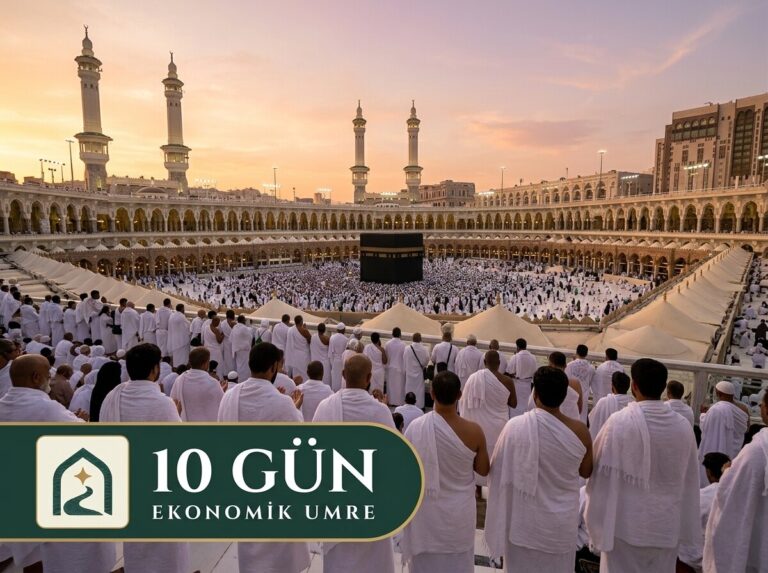
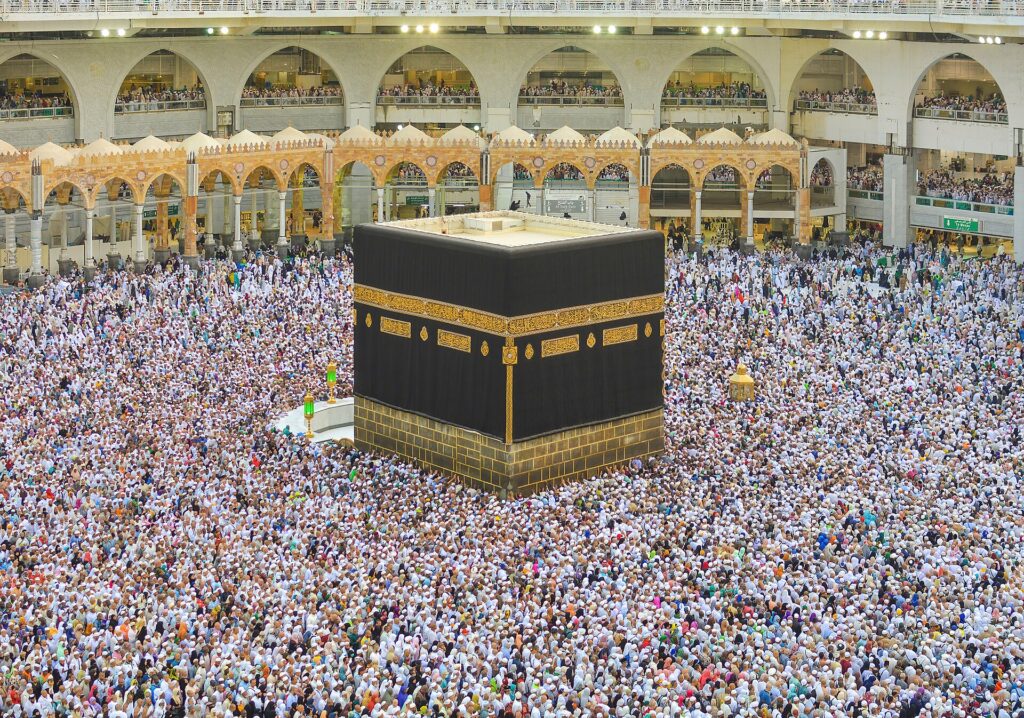
The moment you step into the courtyard of Masjid al-Haram and see the Kaaba for the first time is one that many people never forget for the rest of their lives. In this article, we look at the dua to recite on seeing the Kaaba, explaining in plain language what can be said at this moment, the transliteration and meaning of the text found in dua books, the status of the narrations on which this text is based, and how to move on to tawaf after seeing the Kaaba. Our aim is to help you experience that first glance with peace and awareness, rather than with worry about reciting a text correctly.
Seeing the Kaaba for the First Time: When the Heart Is at Its Softest
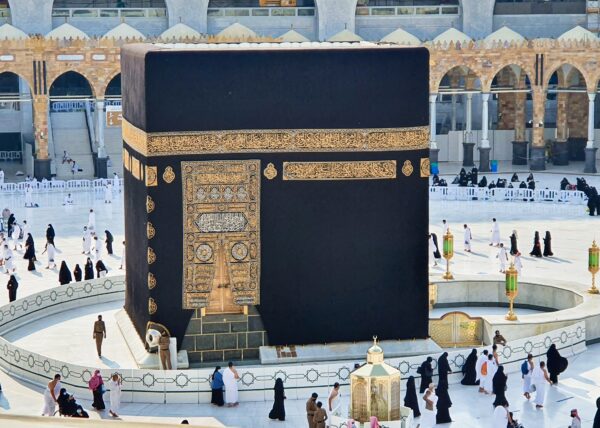
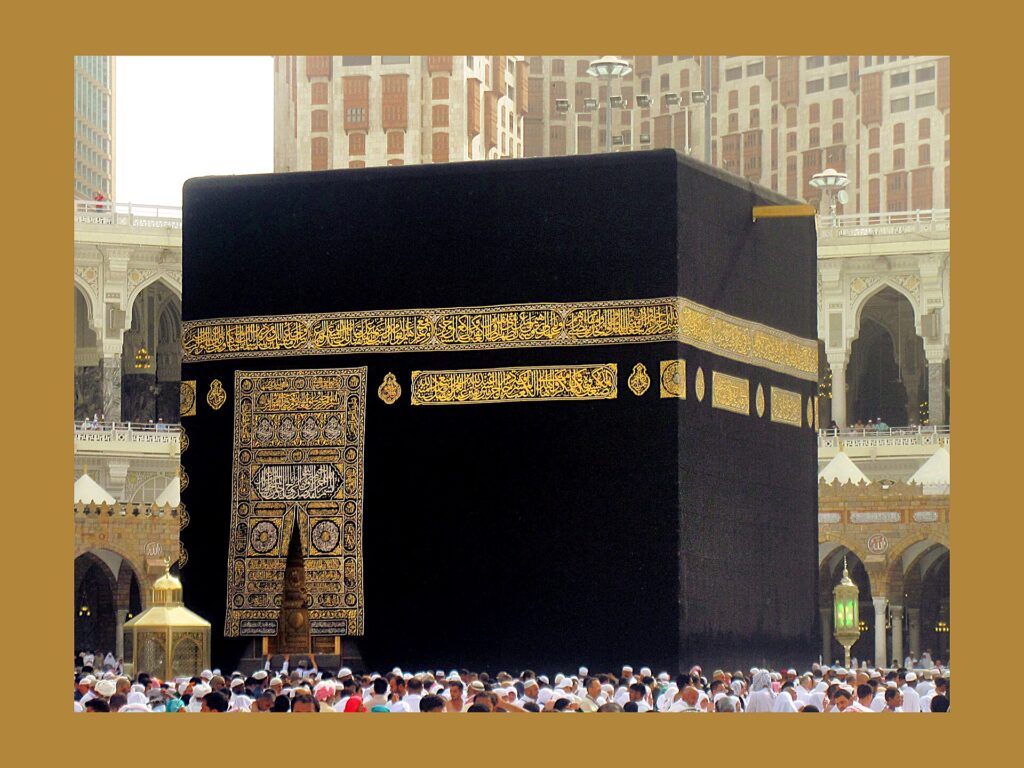
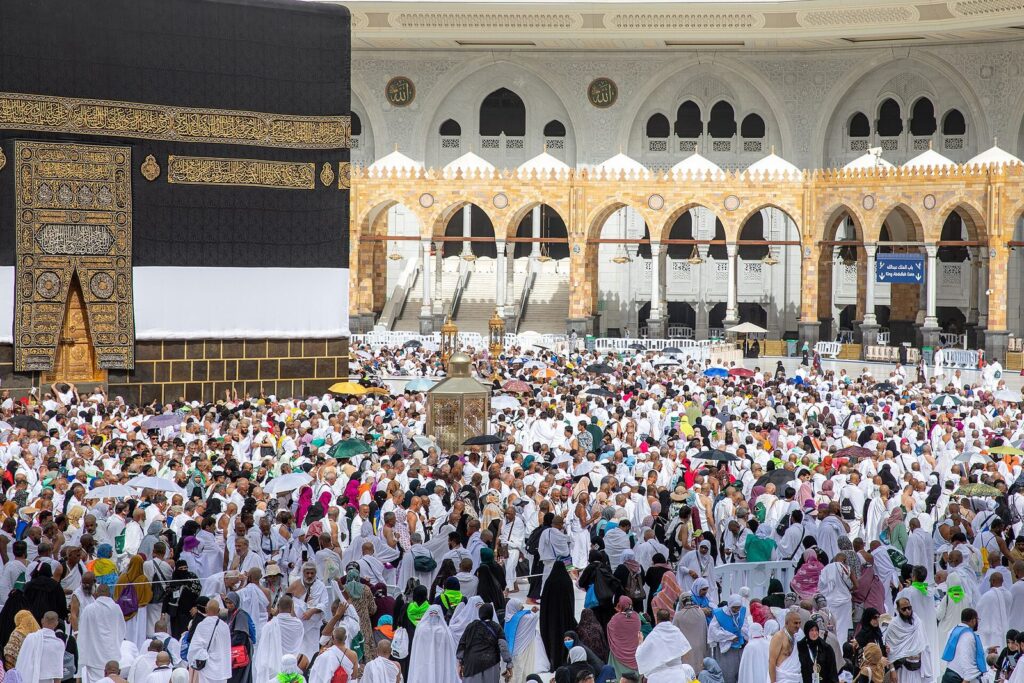
In the Holy Qur’an, the Kaaba is mentioned as the first house established for humankind, and it is stated that clear signs are found there (Al Imran 3:96-97). For a believer who has turned towards it in prayer for years, seeing it right in front of them is a feeling that is hard to put into words. Some cannot hold back their tears, some stand in silence and simply gaze, and others raise their hands straight away.
All of these feelings are natural. What matters is not to forget the crowds, the people around you and the etiquette of the mosque amid the excitement of that moment. Getting to know the history of the Kaaba, its corners and the places around it in advance helps you experience this moment more consciously; for this, you can take a look at our article on the parts of the Kaaba.
When and from where will I first see the Kaaba?
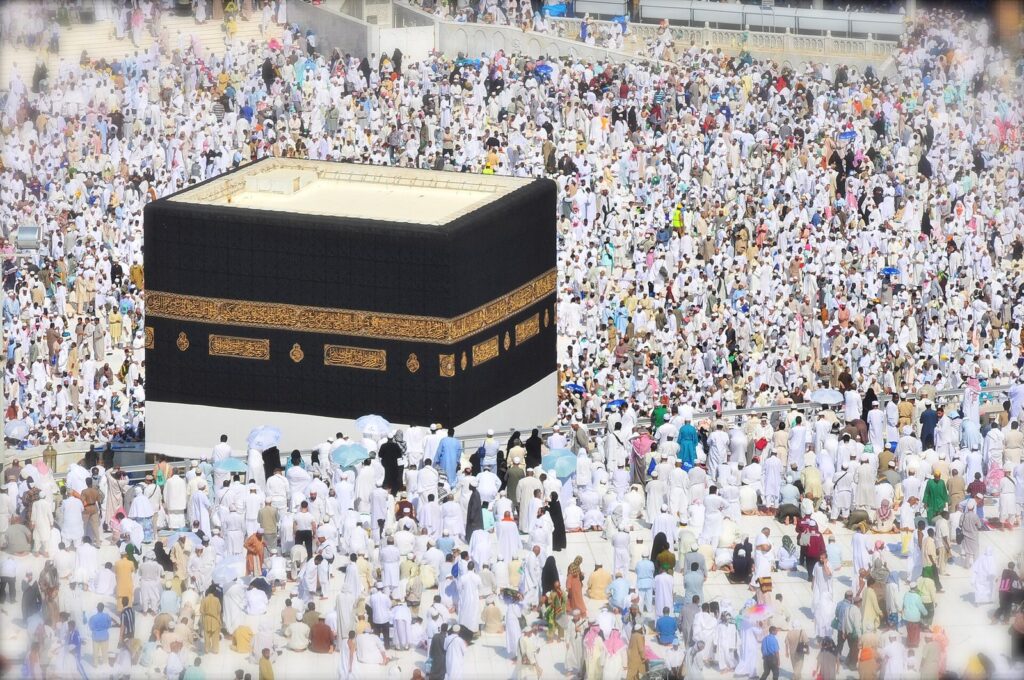
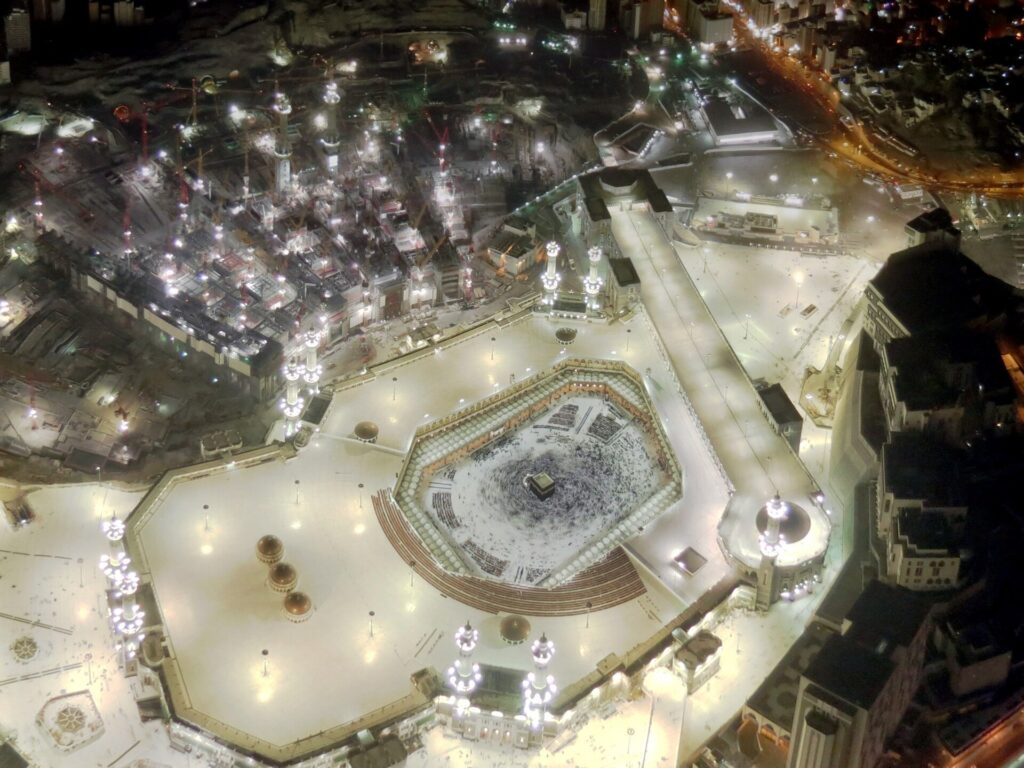
Umrah travellers usually see the Kaaba for the first time when, after arriving in Makkah in ihram and settling into their hotel, they enter Masjid al-Haram to perform the tawaf of Umrah. As the mosque has a great many gates and floors, the point from which the Kaaba is seen varies according to the gate you enter and the crowd arrangements on that day. If you are travelling with a group, your guide will usually take you along a route that leads down to the mataf (the tawaf area).
It is Sunnah to enter the mosque with the right foot and to recite the supplication for entering taught by the Prophet (peace be upon him). You can find the transliterations of the supplications for entering and leaving in our article Umrah Duas.
What Can Be Said on Seeing the Kaaba?
The basic attitude recommended in books of basic religious knowledge (ilmihal) for the moment of first seeing the Kaaba is to glorify Allah, declare His oneness and then supplicate from the heart. The takbir and the tahlil are remembrances known to every Muslim, clear in meaning, and can be said at any moment. For this reason, even if you have not memorised any special text, it is enough to begin with these words:
Transliteration: Allâhu ekber, Allâhu ekber, lâ ilâhe illallâh. (Common English spelling: Allahu akbar, Allahu akbar, la ilaha illallah.)
Meaning: Allah is the Greatest, Allah is the Greatest. There is no god but Allah.
After this, it is good to send blessings (salawat) upon the Prophet and to supplicate. Authentic narrations state that the supplication the Prophet made most often was the one found in verse 201 of Surah al-Baqarah (Bukhari, Muslim). This short supplication, which asks for good in both this world and the Hereafter, is also very fitting for that moment:
Transliteration: Rabbenâ âtinâ fi’d-dünyâ haseneten ve fi’l-âhireti haseneten ve kınâ azâbe’n-nâr. (Common English spelling: Rabbana atina fid-dunya hasanatan wa fil-akhirati hasanatan wa qina ‘adhaban-nar.)
Meaning: Our Lord! Give us good in this world and good in the Hereafter, and protect us from the punishment of the Fire.
What is the dua to recite on first seeing the Kaaba?
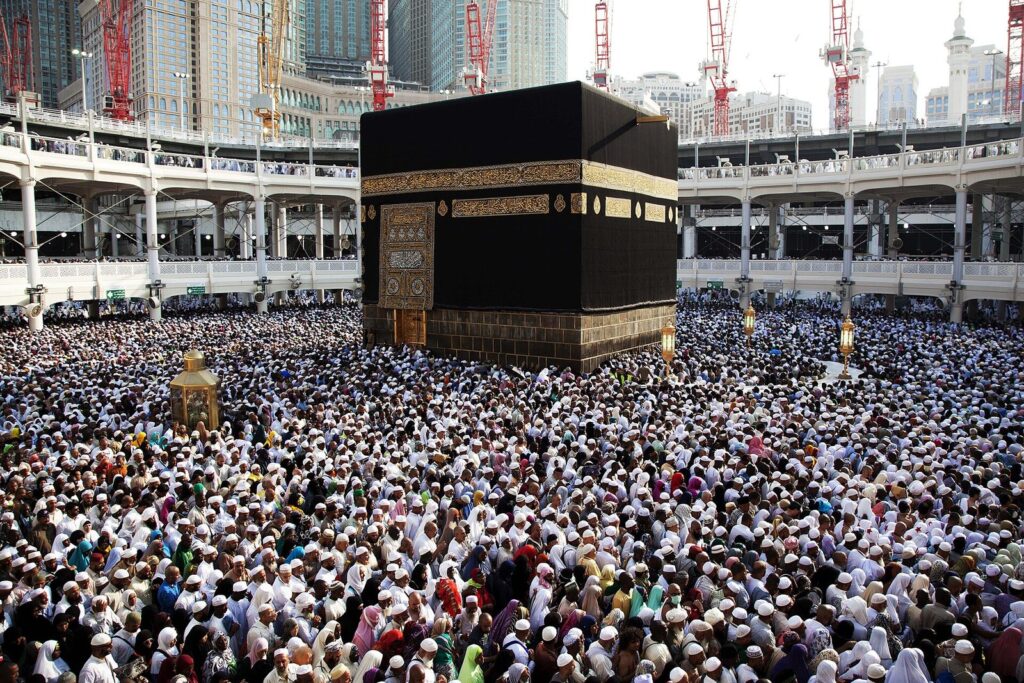
There is no specific supplication text that must be recited particularly at the moment of first seeing the Kaaba and that has been transmitted from the Prophet with an authentic chain of transmission. The takbir, the tahlil, salawat and a sincere supplication in your own words are sufficient and appropriate for this moment. The text found in dua books, which we quote below, is a supplication that is regarded as good to recite but is not obligatory.
The Text Found in Dua Books: Transliteration and Meaning
Many books of basic religious knowledge and supplication include the following supplication, to be recited when the Kaaba is seen. In some sources, this supplication is based on a narration attributed to the Prophet; however, hadith scholars have considered the chain of transmission of this narration to be weak. For this reason, it is possible to recite the text as a supplication with a beautiful meaning, but it should not be presented as a supplication that the Prophet definitely recited.
Transliteration: Allâhümme zid hâze’l-beyte teşrîfen ve ta’zîmen ve tekrîmen ve mehâbeh, ve zid men şerrefehû ve kerramehû mimmen haccehû evi’temerahû teşrîfen ve tekrîmen ve ta’zîmen ve birrâ. (Common English spelling: Allahumma zid hadhal-bayta tashrifan wa ta’ziman wa takriman wa mahabah, wa zid man sharrafahu wa karramahu mimman hajjahu awi’tamarahu tashrifan wa takriman wa ta’ziman wa birra.)
Meaning: O Allah! Increase this House in honour, greatness, esteem and awe. And increase in honour, esteem, greatness and goodness those who honour and exalt it by visiting it for Hajj or Umrah.
The first part of the supplication is a request for the greatness of the Kaaba, and the second part is a request for those who visit it. In other words, the person supplicates for a great community of visitors that includes themselves. In this respect, the supplication reflects an understanding that is free from selfishness and embraces the whole Ummah; reciting it while reflecting on this meaning turns the text from a memorised formula into something more.
Does the dua on seeing the Kaaba have to be in Arabic?
No, reciting an Arabic text at this moment is not a requirement. Allah understands every language, and supplication is a person presenting what is in their heart to their Lord. Rather than struggling to recite a text that you cannot pronounce correctly or whose meaning you do not know, it may be more beneficial to supplicate sincerely in your own language after saying the takbir.
The short supplication attributed to Umar
Some sources report that Umar recited the following short supplication when he saw the Kaaba. These words contain expressions that are also familiar from the remembrances recited after the daily prayers:
Transliteration: Allâhümme ente’s-selâm ve minke’s-selâm, fe hayyinâ rabbenâ bi’s-selâm. (Common English spelling: Allahumma antas-salam wa minkas-salam, fa hayyina rabbana bis-salam.)
Meaning: O Allah! You are as-Salam (free from every imperfection), and peace comes from You. Our Lord, let us live in peace.
This report is not a hadith of the Prophet either; it is transmitted as the practice of a Companion, and reciting it is optional.
The Question of Whether a Dua Made at First Sight Is Accepted
The saying “Whatever you wish for when you first see the Kaaba will be granted” is very widespread among people. This belief is based on narrations found in some books; however, scholars have regarded the chains of transmission of these narrations as weak. For this reason, it is not correct to make a definite promise regarding a supplication made at first sight.
On the other hand, the Qur’an clearly states that supplication can be made at any time and in any place, that Allah is near to His servants and that He responds to the supplication of the one who calls upon Him (al-Baqarah 2:186). Seeing the Kaaba is one of the moments that soften a person’s heart and bring them closest to supplication. For this reason, making the most of that moment should be understood not so much as relying on a promise but as benefiting from this softness of the heart.
Is the dua made on first seeing the Kaaba accepted?
No authentic hadith is known that gives a definitive ruling on this matter; the widespread belief is based on weak narrations. The acceptance of supplication lies within Allah’s decree, and the Prophet stated that a servant’s supplication will be answered as long as they do not become hasty and say, “I supplicated, but it was not accepted” (Bukhari, Muslim). Keep supplicating with hope and persistence, both at the moment you see the Kaaba and afterwards.
For more information on the places and times in which the acceptance of supplication is hoped for, you can read our article on the places in Makkah and Madinah where the acceptance of dua is hoped for.
Preparing a Dua List for That Moment
When you first see the Kaaba, emotions run high and many people forget what they wanted to ask for. For this reason, preparing a short dua list before the journey is very helpful. You can include the following headings in your list:
- For yourself: A life lived in faith, steadfastness in guidance, forgiveness of sins, good health and lawful provision.
- For your family: Forgiveness and a blessed life for your parents, and peace for your spouse and children.
- For your loved ones: The names of the relatives, neighbours and friends who have asked you to pray for them.
- For the sick and those in hardship: Those awaiting healing, those in debt and those in difficulty.
- For those who have passed away: A prayer for mercy and forgiveness.
- For the whole Ummah: Peace, justice, brotherhood and the deliverance of the oppressed.
- For your worship: The completion of your Umrah with ease, and its acceptance.
The Prophet stated that when a believer supplicates for their brother in his absence, an angel responds, “And for you the same” (Muslim). Supplicating for others is a beautiful act that also brings good to the person making the supplication.
Is the same dua recited each time you see the Kaaba again?
Throughout your visit, you will see the Kaaba many times every day, and you do not need to recite a specific text each time. Saying the takbir and making a short supplication, as at the first sight, is a good thing; however, rather than turning this into an obligation, you can treat each sight of the Kaaba as an occasion for gratitude and reflection.
What You Can Do at the Moment of First Sight: Summary Table
The table below summarises what can be done at the moment you first see the Kaaba, together with the basis for each:
| Practice | Status | Note |
|---|---|---|
| Saying the takbir and tahlil | Recommended in books of basic religious knowledge | Short remembrances that can be said in any situation |
| Sending salawat | Part of the etiquette of supplication | It is good to begin a supplication with salawat |
| The “Rabbenâ âtinâ…” supplication | The supplication the Prophet made most often (Bukhari, Muslim) | Not specific to this moment; can be recited at any time |
| The “Allâhümme zid hâze’l-beyte…” supplication | Found in dua books; its narration is considered weak | Reciting it is optional |
| Supplicating in your own language | Always appropriate | A list prepared in advance makes things easier |
After Seeing the Kaaba: Moving On to Tawaf
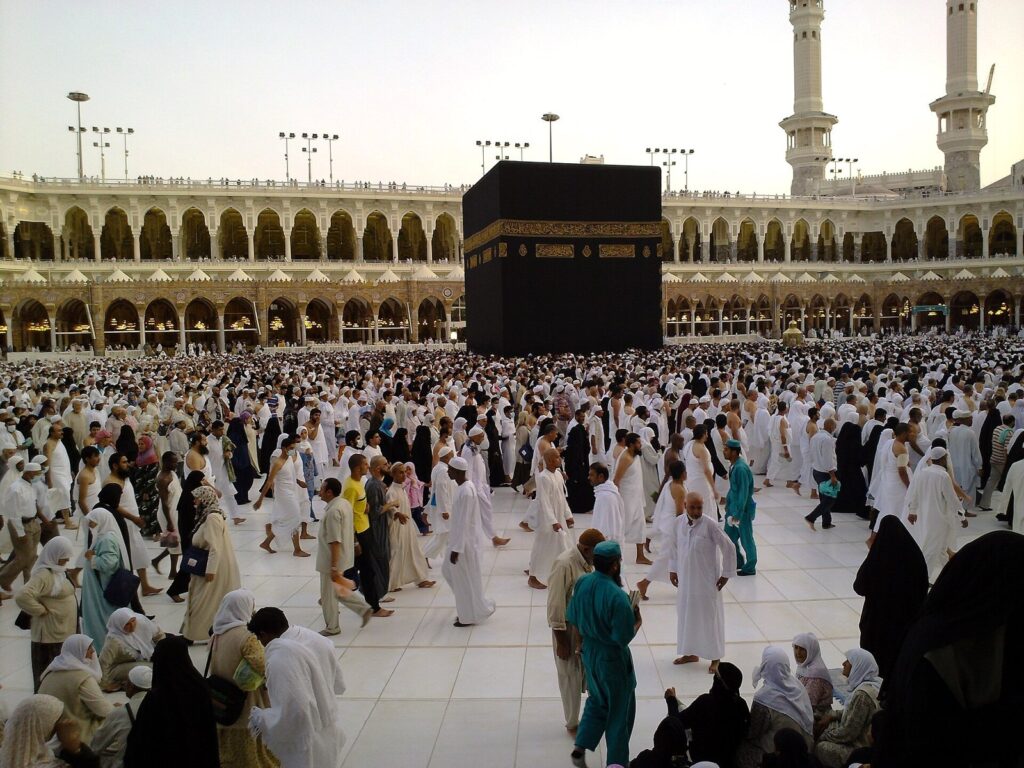
A person who has come for Umrah turns to tawaf without delay after seeing the Kaaba and supplicating. Before beginning tawaf, men in ihram perform idtiba by passing the upper piece of the ihram cloth under the right armpit and throwing it over the left shoulder. Tawaf begins at the line of the Black Stone and is completed in seven circuits (shawt), with the Kaaba kept on the left-hand side.
Do you start tawaf as soon as you see the Kaaba?
It is appropriate for a person who has come in ihram for Umrah to begin the tawaf of Umrah after supplicating; the greeting of the one who enters Masjid al-Haram is tawaf. However, if the time of an obligatory prayer has begun or the congregation is about to start the prayer, the prayer is performed first and tawaf follows. If you are tired or it is extremely crowded, it is also possible to rest for a short while and wait for a suitable time.
You can find the steps of tawaf, how to count the circuits and what to watch out for in the crowds in detail in our article How to Perform Tawaf? If you would like to see all the stages of Umrah in order, our guide How to Perform Umrah? will help.
Points to Keep in Mind
The excitement of the first sight can lead, without your realising it, to behaviour that disturbs others. The following reminders protect both your own peace and that of those around you:
- Do not block the way: Stopping suddenly at the spot where you see the Kaaba can block the flow of the crowd coming from behind. Move to a suitable spot at the side to supplicate.
- Do not lose your group: In emotional moments, it becomes harder to keep track of your group. Learn in advance the meeting point and gate number set by your guide.
- Put off the urge to take photos: Try to experience this moment with your heart before your camera; also follow the current rules on taking photographs in the area of worship.
- Keep your voice moderate: Loud, collective supplications can disturb the devotion (khushu) of others.
- Look after the elderly and children: In crowded areas, give priority to the safety of the elderly people and children with you.
Is it right to approach the Kaaba walking with your eyes closed?
Some visitors enter the mosque with their eyes lowered or closed so that they can see the Kaaba suddenly in front of them. This is a personal, emotional choice, and no authentic basis is known indicating that it is a religious requirement or that it carries any special virtue. In an area with stairs, moving walkways and dense crowds, walking with your eyes closed creates a risk of falling and collisions. If you do make this choice, move forward slowly and carefully, holding the arm of someone close to you; the best course, however, is to walk respectfully with your eyes open.
Important: The transliterations are given in Latin letters and do not fully represent some of the sounds in Arabic. It is recommended that the supplications be learnt from a qualified teacher for correct pronunciation. For the status of the narrations and for the details of Islamic jurisprudence relating to ihram, consult the publications of Diyanet (Türkiye’s Presidency of Religious Affairs) and religious guides.
Preparing for This Moment
Seeing the Kaaba for the first time is one of the most special moments of the journey; however, the real preparation begins long before that moment. Purifying the intention, seeking forgiveness from others, learning the rites and preparing a dua list make this moment more meaningful. If you are going for the first time, looking at photographs of the Kaaba and a plan of Masjid al-Haram in advance reduces disorientation and anxiety at that moment. Carrying a small notebook with you and writing your dua list in it is also a practical solution. You can also read our article Travel Dua for the supplication recited when setting off.
At RotaNur, we are by your side with our guides so that you can experience the moment you first see the Kaaba calmly and peacefully. You can explore the programme that suits you among our Umrah tours, and reach us through our contact page with any questions. May our Lord grant everyone the chance to see that blessed House.
Frequently Asked Questions
Do you have to enter Masjid al-Haram through Bab al-Salam?
No, it is not a requirement. In classical books of Islamic jurisprudence, entering Masjid al-Haram from the direction of Bab al-Salam was regarded as good; however, this is not an obligation. Today, as the mosque has a great many gates and the entry points are regulated from time to time for crowd management, it is sufficient to enter through the gate to which the staff and your guide direct you. What matters is to enter the mosque with the right foot and recite the supplication for entering.
Can a woman during her menstrual period make dua on seeing the Kaaba?
Yes, a woman during her menstrual period may say the takbir, send salawat and supplicate in her own words when she sees the Kaaba; being purified from this state is not a requirement for supplication and remembrance. However, according to the Hanafi school, a woman in this state does not enter the mosque or perform tawaf; seeing the Kaaba from a point outside the mosque, such as a hotel window, does not fall within the scope of this ruling. We have covered in detail what can be done during this period in our Umrah guide for women.
Is a dua recited when you see the Kaaba from your hotel room?
There is no ruling specifically tied to seeing the Kaaba from a hotel window or from a point outside the mosque; this moment, too, is a good occasion to say the takbir and supplicate. Even so, many people prefer to have their first encounter with the Kaaba when they enter the mosque for the tawaf of Umrah. For accommodation options close to the Haram, you can explore our Makkah hotels page.
Is there reward in looking at the Kaaba?
Some narrations in the sources state that looking at the Kaaba with reverence and reflection is rewarded; however, scholars have regarded the chains of transmission of a significant number of these narrations as weak. For this reason, rather than speaking of a definite measure of reward, it is a more accurate approach to treat looking at the Kaaba as an occasion to reflect on the signs of Allah, to give thanks and to supplicate.
Is it appropriate to raise your hands in dua on seeing the Kaaba?
Yes, supplicating with raised hands is part of the general etiquette of supplication, and you may supplicate in this way at the moment you see the Kaaba as well. What matters is to make the supplication facing the qiblah, in a low voice and from the heart. If you are in a crowded spot, move to the side so as not to block the walkway, and take care not to disturb those next to you or lose contact with your group while supplicating. Keeping your supplication short also allows those behind you to experience this moment in comfort.

Cihat Murat Yüksel is the editor of the RotaNur blog and the founder of Markention. Drawing on the sources of Türkiye's Presidency of Religious Affairs (Diyanet), he turns the questions travellers ask most about preparing for Umrah, Hajj and halal travel into clear, practical guides.
Questions answered in this article
When and from where will I first see the Kaaba?
Umrah travellers usually see the Kaaba for the first time when, after arriving in Makkah in ihram and settling into their hotel, they enter Masjid al-Haram to perform the tawaf of Umrah. As the mosque has a great many gates and floors, the point from which the Kaaba is seen varies according to the gate you enter and the crowd arrangements on that day. If you are travelling with a group, your guide will usually take you along a route that leads down to the mataf (the tawaf area).
What Can Be Said on Seeing the Kaaba?
The basic attitude recommended in books of basic religious knowledge (ilmihal) for the moment of first seeing the Kaaba is to glorify Allah, declare His oneness and then supplicate from the heart. The takbir and the tahlil are remembrances known to every Muslim, clear in meaning, and can be said at any moment. For this reason, even if you have not memorised any special text, it is enough to begin with these words:
What is the dua to recite on first seeing the Kaaba?
There is no specific supplication text that must be recited particularly at the moment of first seeing the Kaaba and that has been transmitted from the Prophet with an authentic chain of transmission. The takbir, the tahlil, salawat and a sincere supplication in your own words are sufficient and appropriate for this moment. The text found in dua books, which we quote below, is a supplication that is regarded as good to recite but is not obligatory.
Does the dua on seeing the Kaaba have to be in Arabic?
No, reciting an Arabic text at this moment is not a requirement. Allah understands every language, and supplication is a person presenting what is in their heart to their Lord. Rather than struggling to recite a text that you cannot pronounce correctly or whose meaning you do not know, it may be more beneficial to supplicate sincerely in your own language after saying the takbir.
Is the dua made on first seeing the Kaaba accepted?
No authentic hadith is known that gives a definitive ruling on this matter; the widespread belief is based on weak narrations. The acceptance of supplication lies within Allah’s decree, and the Prophet stated that a servant’s supplication will be answered as long as they do not become hasty and say, “I supplicated, but it was not accepted” (Bukhari, Muslim). Keep supplicating with hope and persistence, both at the moment you see the Kaaba and afterwards.
Is the same dua recited each time you see the Kaaba again?
Throughout your visit, you will see the Kaaba many times every day, and you do not need to recite a specific text each time. Saying the takbir and making a short supplication, as at the first sight, is a good thing; however, rather than turning this into an obligation, you can treat each sight of the Kaaba as an occasion for gratitude and reflection.