


Contents 26 sections
- The Story of the Zamzam Well
- What does the name Zamzam mean?
- Who found the Zamzam Well?
- Hajar’s trust in Allah
- The link between sa’i and Zamzam
- The Well’s Journey Through History
- Where Is the Zamzam Well?
- Where is the Zamzam Well in relation to the Kaaba?
- When was the Zamzam Well closed?
- The Present Condition of the Zamzam Well
- How is Zamzam distributed in the Haram?
- Has the Zamzam Well dried up?
- Is there Zamzam at the Prophet’s Mosque as well?
- Why is Zamzam water so precious?
- How Is Zamzam Drunk?
- Why is Zamzam water drunk standing?
- Common Questions About the Zamzam Well
- Why are the photos of the Zamzam Well old?
- Can Zamzam water be bought anywhere?
- Do popular practices concerning Zamzam have a basis?
- Can you perform wudu with Zamzam?
- Is Zamzam water holy?
- How can the story of Zamzam be told to children?
- Practical Tips for Bringing Zamzam Home
- A Spring Born of a Mother’s Prayer
- Frequently Asked Questions
The Zamzam Well is the blessed well that came into being in the arid valley of Makkah as Hajar searched for water for her son Ismail; it lies right beside the Kaaba and has continued to provide water to millions of people for centuries. In this article we cover in detail the story of Zamzam within the framework given in the authentic sources, the location of the well, the changes it has gone through over history, its present condition and what you need to know when drinking Zamzam or bringing it back home.
The Story of the Zamzam Well
The story of Zamzam begins when the Prophet Ibrahim, by the command of Allah, left his wife Hajar and his son Ismail in Makkah, which at that time was a desolate valley. The Holy Quran relates the supplication the Prophet Ibrahim made at that moment as follows: “Our Lord! I have settled some of my offspring in a valley where no crops grow, beside Your Sacred House. Our Lord, I have done so that they may establish the prayer properly. So make the hearts of some people incline towards them, and provide them with produce so that they may give thanks.” (Ibrahim 14:37).
As related in the long hadith transmitted from Ibn Abbas, when the water and provisions they had with them ran out, Hajar set out to search for water for her son, who was crying with thirst. She climbed the hill of Safa and looked around; when she could see no one, she came down into the valley and ran to Marwah, and she repeated this going back and forth seven times. Then she heard a voice and saw that water had sprung forth, by means of an angel, at the place where Ismail was. Hajar enclosed the water and filled her waterskin (al-Bukhari).
What does the name Zamzam mean?
There are different explanations of the origin of the name “Zamzam”. Some of them link it to words describing water flowing abundantly and gathering together, while others link it to the sounds made at the moment the water sprang forth. These explanations do not amount to certain knowledge; however, all of them point to the water appearing with unexpected abundance in a valley of scarcity.
Who found the Zamzam Well?
Zamzam water first sprang forth as a gift from Allah to Hajar and Ismail. When the location of the well was lost over time, Abd al-Muttalib, the grandfather of the Prophet (peace be upon him), brought the well to light again. For this reason, the question “who found Zamzam?” has two answers: the first appearance of the water goes back to the story of Hajar, while the rediscovery of the well goes back to Abd al-Muttalib.
Hajar’s trust in Allah
The same hadith relates that as the Prophet Ibrahim was leaving, Hajar asked him, “Did Allah command you to do this?”, and when she received the answer “Yes”, she said, “Then Allah will not let us perish” (al-Bukhari). This submission forms the essence of the story of Zamzam: on the one hand Hajar put her trust in Allah, and on the other she made every effort she could, running between the hills to find water. The combination of trust in Allah and striving is the most powerful message this story gives every visitor.
The link between sa’i and Zamzam
Hajar’s search between Safa and Marwah is commemorated today in the act of sa’i performed in Umrah and Hajj. The Holy Quran states that Safa and Marwah are among the symbols of Allah (al-Baqarah 2:158). We have explained step by step how sa’i is performed in our article on how to perform Umrah.
The Well’s Journey Through History
After the water sprang forth, the Jurhum tribe settled in the valley of Makkah, and over time the city began to come to life. The sirah sources relate that when the Jurhum left Makkah they covered over the well, and that its location remained unknown for a long time.
The reappearance of the well is associated with the dreams that Abd al-Muttalib saw. By digging at the place shown to him in his dream, Abd al-Muttalib found the Zamzam Well again. After this event, the siqayah, the duty of providing water to the pilgrims, became an important service carried out by the Banu Hashim, the family of the Prophet (peace be upon him). After the conquest of Makkah, the Prophet left this duty in the hands of his uncle al-Abbas.
In the centuries that followed, the Zamzam service continued to be one of the most deep-rooted traditions of the Haram. It is known that in Makkah there were families who, for generations, made it their profession to offer Zamzam to the pilgrims. The structures built over the well in different periods were intended to ensure that the water was distributed in an orderly and clean way. Although this service is carried out with modern systems today, the spirit of offering water to guests has remained the same.
| Period | Development concerning the Zamzam Well |
|---|---|
| The time of the Prophet Ibrahim | The water springing forth for Hajar and Ismail |
| The Jurhum tribe | Settlement in the valley, followed later by the covering of the well |
| Abd al-Muttalib | The rediscovery of the well, the siqayah service passing to the Banu Hashim |
| The time of the Prophet (peace be upon him) | The siqayah duty remaining with al-Abbas, drinking from Zamzam during the Farewell Hajj |
| Later centuries | Construction of structures over the well, organisation of water distribution |
| Today | The well lying beneath the mataf, modern pumping and distribution systems |
Where Is the Zamzam Well?
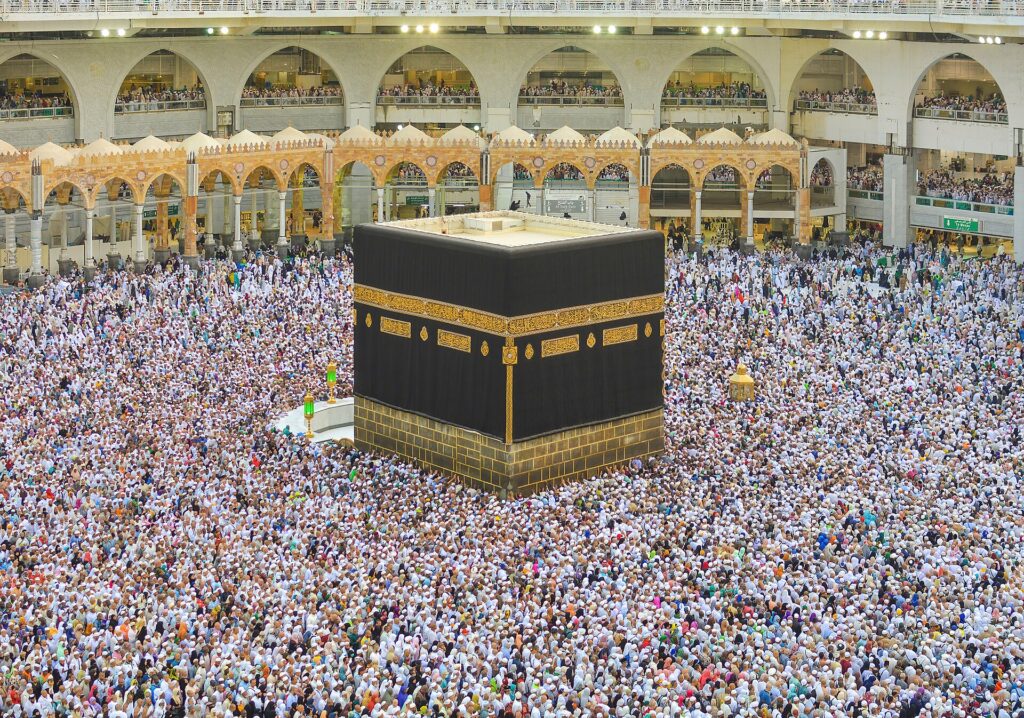
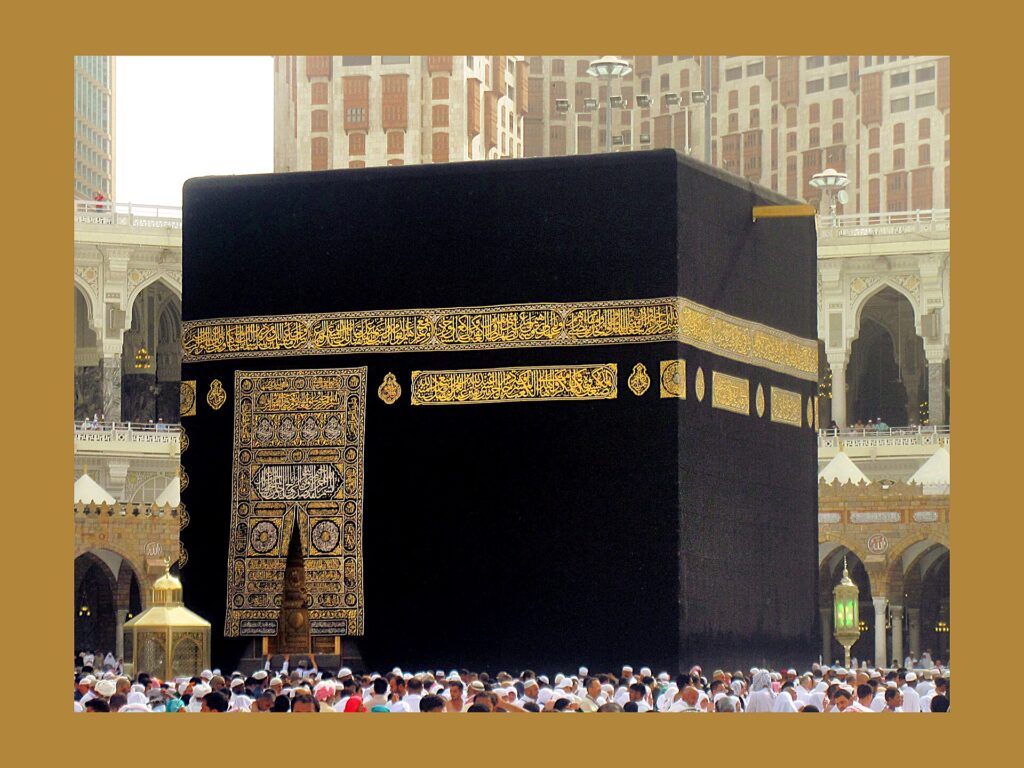
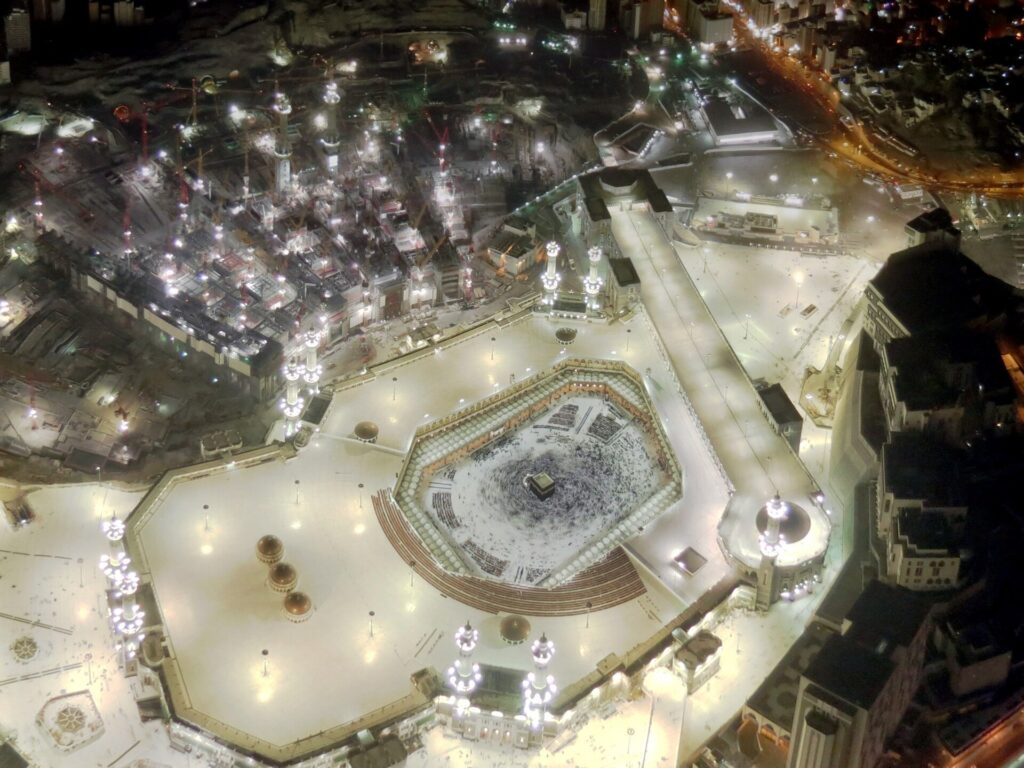
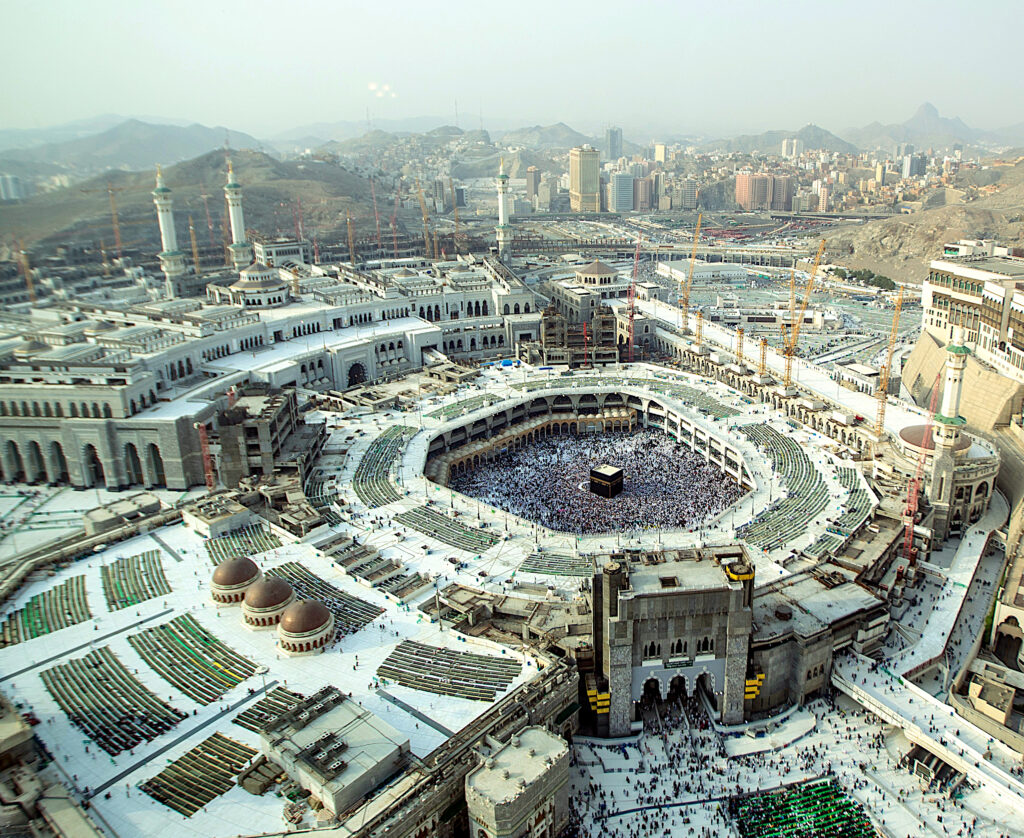
The Zamzam Well is located inside Masjid al-Haram in Makkah, at a point very close to the Kaaba. Throughout history, various structures stood over and around the well; for many years, visitors were able to go down stairs to the area where the well was and drink Zamzam there.
Where is the Zamzam Well in relation to the Kaaba?
The Zamzam Well lies on the eastern side of the Kaaba, beneath the mataf, the area where tawaf is performed. Today the location of the well is not separately marked in the tawaf area; those performing tawaf pass over the well without realising it. We have described the other parts around the Kaaba in our article on the parts of the Kaaba.
When was the Zamzam Well closed?
The entrance section of the well that was open to visitors was closed during the Haram development works of the Saudi period, because of the growing crowds and the expansion of the tawaf area. The well itself was not closed; only visitors going down to the well came to an end. The water is pumped from the well and delivered to distribution points all around the Haram.
The Present Condition of the Zamzam Well
The Zamzam Well is still active today and continues to supply water to Masjid al-Haram and to the Prophet’s Mosque (Masjid an-Nabawi). Inside the Haram and in its courtyards there are containers filled with Zamzam, both cold and at normal temperature; visitors can drink from these containers whenever they wish. Zamzam is also purified and bottled at a special facility in Makkah and distributed.
How is Zamzam distributed in the Haram?
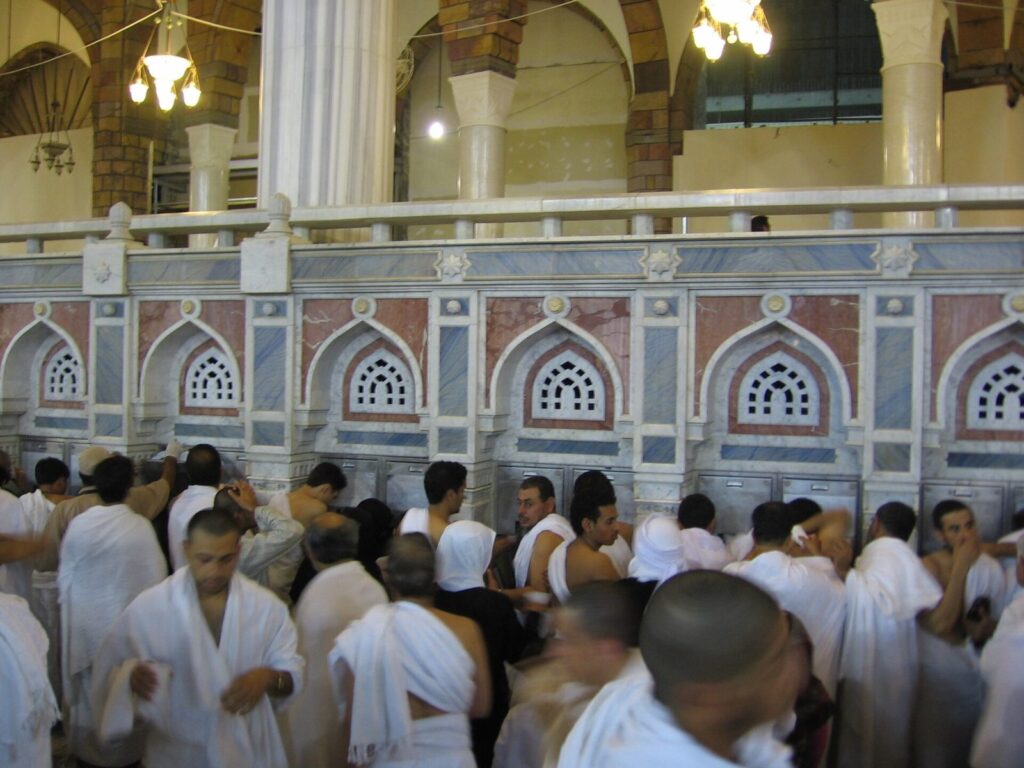
At Masjid al-Haram, Zamzam is offered in large water containers placed between the prayer areas and at the foot of the pillars. Disposable drinking cups are placed next to the containers; used cups are expected to be thrown into a separate compartment. At some points it is also possible to drink Zamzam from taps. The Haram staff refill the containers throughout the day; since queues can form around the containers, especially at busy prayer times, it is necessary to be patient and to make way for others.
Has the Zamzam Well dried up?
No, the Zamzam Well has not dried up; it continues to provide water. From time to time, work is carried out to maintain the well and renew the infrastructure around it. During this work there may be temporary arrangements in some parts of the Haram; however, the distribution of Zamzam continues. Before giving credence to reports that occasionally spread on the internet claiming that the well has dried up, it is necessary to check the official statements.
Is there Zamzam at the Prophet’s Mosque as well?
Yes, Zamzam is also offered to visitors at the Prophet’s Mosque in Madinah. Zamzam can be drunk from the water containers inside the mosque and in its courtyards. In this way, visitors in Madinah also continue to benefit from the blessing of Zamzam. There are signs on the containers showing whether the water is cold or at normal temperature; those with sensitive throats can choose the water at normal temperature.
Why is Zamzam water so precious?
The value of Zamzam comes both from its roots in the story of Hajar and Ismail and from the words of the Prophet (peace be upon him) about this water. In the hadith transmitted from Abu Dharr, the Prophet said of Zamzam: “It is blessed water; it is a food that satisfies.” (Muslim). Another narration reports that he said: “Zamzam is for whatever intention it is drunk for.” (Ibn Majah).
How Is Zamzam Drunk?
No particular way of drinking Zamzam is obligatory (fard); however, based on the practices of the Prophet (peace be upon him) and the general etiquette of drinking, the following steps are recommended:
- Begin by saying the basmalah.
- Face the qiblah if possible.
- Drink the water in several sips, pausing to breathe in between.
- While drinking or after drinking, make supplication, asking for whatever good you wish for in this world and the Hereafter.
- When you have finished, praise Allah by saying “Elhamdülillah” (All praise is due to Allah).
For the transliteration and meaning of the supplications that can be recited while drinking Zamzam, take a look at our article on the Zamzam dua. Reciting a particular supplication is not obligatory; a person may also make supplication in their own language.
Why is Zamzam water drunk standing?
According to the account of Ibn Abbas, the Prophet (peace be upon him) drank Zamzam standing (al-Bukhari, Muslim). For this reason, drinking Zamzam standing is a common practice. However, it is not a requirement; drinking it sitting down is also permissible. In crowds, in old age or when tired, drinking it sitting down carries no objection at all.
Important: Zamzam water can be drunk freely in the Haram; however, the rules on bringing Zamzam back home can vary according to the airline and the practices of the Saudi authorities. Before you travel, confirm the current conditions on the quantity that can be carried in your baggage, the type of packaging and the collection points with official sources and your travel agency. Do not try to carry Zamzam in open containers or in unsuitable packaging.
Common Questions About the Zamzam Well
Why are the photos of the Zamzam Well old?
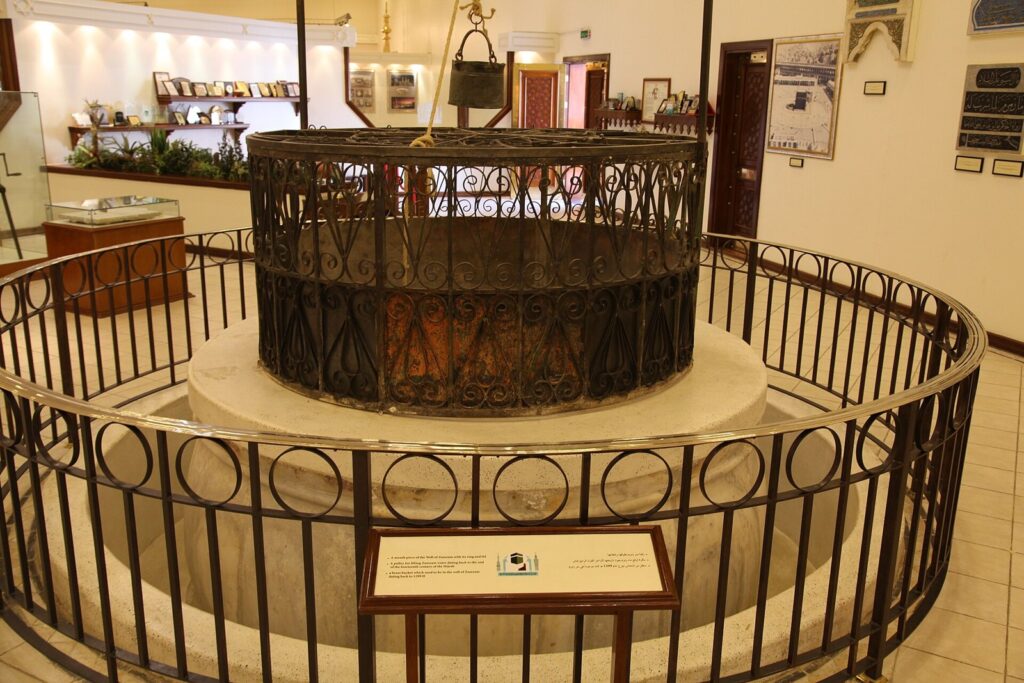
Most of the photos of the Zamzam Well circulating on the internet date from the period when the well was open to visitors, or are images shared by official sources during maintenance work. Since it is no longer possible for visitors to go down to the well, what you will see in the Haram is not the well but the Zamzam distribution points.
Can Zamzam water be bought anywhere?
Zamzam is offered free of charge in the Haram. In Makkah and Madinah, bottled Zamzam can be obtained from official distribution points and reliable sales outlets. We recommend that you do not buy products sold under the name “Zamzam” in your home country without being sure of their source.
Do popular practices concerning Zamzam have a basis?
Giving Zamzam as a gift and offering it to guests is a beautiful tradition. Nevertheless, some practices concerning Zamzam that have spread among people have no religious basis. On matters you are unsure about, the soundest course is to refer to the current fatwas of Diyanet (Türkiye’s Presidency of Religious Affairs).
Can you perform wudu with Zamzam?
According to the Hanafi school, it is permissible to perform wudu and ghusl (the full ritual bath) with Zamzam water. However, it is stated that because Zamzam is a blessed water, it should not be used for cleaning away impurity. Since Zamzam is offered in the Haram in containers intended for drinking, the right thing to do is to use the mosque’s wudu areas for wudu.
Is Zamzam water holy?
Zamzam is a water described in the hadiths as “blessed”, which the Prophet (peace be upon him) drank and praised. For this reason, Muslims show respect for Zamzam and regard it as a means of blessing. Nevertheless, it is not right to regard Zamzam as a talisman or to attribute to it meanings that have no place in the religion; the value of Zamzam comes from its being a gift from Allah.
How can the story of Zamzam be told to children?
The story of Zamzam is a very suitable story for teaching children about trust in Allah and a mother’s love. You can describe in simple language how Hajar went back and forth between the hills seven times while searching for water for her son, her trust in Allah and, finally, the springing forth of the water. Sharing this story while offering the Zamzam you brought back from Umrah helps children see Zamzam not just as water but as a keepsake.
Practical Tips for Bringing Zamzam Home
Offering Zamzam to loved ones on returning from Umrah is one of the keepsakes many visitors care about most. To be able to offer it without any problems, pay attention to the following points:
- Obtain Zamzam only from official distribution points or reliable sales outlets, in sealed packaging.
- Find out your airline’s conditions for carrying Zamzam before your flight.
- When planning your baggage weight, take into account the space Zamzam will take up.
- When carrying Zamzam in the same suitcase as your souvenirs, take precautions against leaks.
- Divide it into small containers for your post-Umrah hospitality only after you arrive home.
To make packing your suitcase easier, you can also take a look at our Umrah packing list article.
A Spring Born of a Mother’s Prayer
The Zamzam Well is a living miracle that reminds us that trust in Allah, patience and supplication do not go unanswered. Thinking of Hajar’s search and the Prophet Ibrahim’s supplication while drinking a sip of Zamzam in the Haram makes that moment far more meaningful than simply drinking water. Joining the millions of people who have drunk from the same spring for centuries is like touching the shared memory of the Ummah. Every bottle you take with you when you return home is also a way of carrying this memory to your loved ones. For another ancient memory of Makkah, you can also read our article on the Cave of Hira.
At RotaNur, in our Umrah tours programmes we help you perform your worship in peace with accommodation options close to Masjid al-Haram. For any questions about preparing for your journey, you can reach our team through our contact page. May my Lord make the Zamzam you drink a source of healing.
Frequently Asked Questions
How old is the Zamzam Well?
The exact age of the Zamzam Well is not known; however, since the water is accepted to have sprung forth in the time of the Prophet Ibrahim, for Hajar and Ismail, it is understood to have a history of thousands of years. The well was lost for a long time after the Jurhum tribe covered it over, and it was rediscovered by Abd al-Muttalib, the grandfather of the Prophet (peace be upon him). In this respect, Zamzam is remembered as the most deep-rooted spring of Makkah, one that still continues to provide water.
When is Zamzam drunk during Umrah?
There is no particular requirement to drink Zamzam during Umrah; however, drinking Zamzam after completing tawaf and the two rak’ahs of the tawaf prayer, before moving on to sa’i, is a commendable practice. It is reported that during the Farewell Hajj the Prophet (peace be upon him) drank from Zamzam after tawaf (Muslim). You can also drink from the Zamzam containers in the Haram at any time you wish. We have explained the steps of tawaf in our article on how to perform tawaf.
How is the cleanliness of Zamzam water ensured?
After being pumped from the well, Zamzam goes through purification and quality control processes at a special facility in Makkah; it is then delivered to the distribution points in the Haram or bottled. The quality of the water is regularly monitored by the Saudi authorities, and periodic maintenance work is carried out around the well. For this reason, Zamzam taken from the containers in the Haram and from official sales outlets is checked water; products of uncertain origin, on the other hand, should be avoided.
How should Zamzam water be stored at home?
It is best to store Zamzam sealed in its original packaging, in a cool place out of direct sunlight. After opening the packaging, take care to transfer the water into clean, covered containers and to use it up within a short time. When dividing it into small bottles to offer to your loved ones, make sure the containers have been thoroughly cleaned and dried. If there is storage information on the packaging, be sure to take it into account as well.
What is said when Zamzam is offered?
When Zamzam is offered, the phrase most often said in our society is “May Allah grant healing”. The person receiving it replies by saying “Amin, may Allah accept your Umrah” or “May Allah be pleased with you”. It is also a thoughtful touch for the person drinking Zamzam to make supplication with the good wishes that come to their heart. We have gathered the other words said to those returning from Umrah in our article on what to say to someone going for Umrah.

Cihat Murat Yüksel is the editor of the RotaNur blog and the founder of Markention. Drawing on the sources of Türkiye's Presidency of Religious Affairs (Diyanet), he turns the questions travellers ask most about preparing for Umrah, Hajj and halal travel into clear, practical guides.
Questions answered in this article
What does the name Zamzam mean?
There are different explanations of the origin of the name “Zamzam”. Some of them link it to words describing water flowing abundantly and gathering together, while others link it to the sounds made at the moment the water sprang forth. These explanations do not amount to certain knowledge; however, all of them point to the water appearing with unexpected abundance in a valley of scarcity.
Who found the Zamzam Well?
Zamzam water first sprang forth as a gift from Allah to Hajar and Ismail. When the location of the well was lost over time, Abd al-Muttalib, the grandfather of the Prophet (peace be upon him), brought the well to light again. For this reason, the question “who found Zamzam?” has two answers: the first appearance of the water goes back to the story of Hajar, while the rediscovery of the well goes back to Abd al-Muttalib.
Where Is the Zamzam Well?
The Zamzam Well is located inside Masjid al-Haram in Makkah, at a point very close to the Kaaba. Throughout history, various structures stood over and around the well; for many years, visitors were able to go down stairs to the area where the well was and drink Zamzam there.
Where is the Zamzam Well in relation to the Kaaba?
The Zamzam Well lies on the eastern side of the Kaaba, beneath the mataf, the area where tawaf is performed. Today the location of the well is not separately marked in the tawaf area; those performing tawaf pass over the well without realising it. We have described the other parts around the Kaaba in our article on the parts of the Kaaba.
When was the Zamzam Well closed?
The entrance section of the well that was open to visitors was closed during the Haram development works of the Saudi period, because of the growing crowds and the expansion of the tawaf area. The well itself was not closed; only visitors going down to the well came to an end. The water is pumped from the well and delivered to distribution points all around the Haram.
How is Zamzam distributed in the Haram?
At Masjid al-Haram, Zamzam is offered in large water containers placed between the prayer areas and at the foot of the pillars. Disposable drinking cups are placed next to the containers; used cups are expected to be thrown into a separate compartment. At some points it is also possible to drink Zamzam from taps. The Haram staff refill the containers throughout the day; since queues can form around the containers, especially at busy prayer times, it is necessary to be patient and to make way for others.