





Contents 13 sections
- What Does Khadim al-Haramayn Mean?
- Hakim al-Haramayn or Khadim al-Haramayn?
- Who Used the Title?
- Did the Ottoman Sultans Go on Hajj?
- Who is the only member of the Ottoman dynasty to have gone on Hajj?
- What Is the Surre Procession?
- When did the Surre procession set out?
- The Ottoman Hajj Routes: The Damascus and Egypt Caravans
- The Hejaz Railway
- The Ottoman Services to the Haramayn
- Service to the Haramayn Today and Hajj from Türkiye
- What Does Knowing the History of Hajj Add to the Journey?
- Frequently Asked Questions
Khadim al-Haramayn (in Turkish, Hâdimü’l-Haremeyn) is a title meaning “Servant of the Two Sanctuaries”; it has been used for rulers who protected and served the Haramayn, that is, Masjid al-Haram in Makkah and the Prophet’s Mosque in Madinah. After the Mamluk sultans the title was taken by Selim I (Yavuz Sultan Selim), and for four centuries the Ottoman sultans served Makkah and Madinah in the capacity of servants of the Haramayn, with water channels, arcades, forts, endowments and the Surre sent every year. In this article we explain the meaning and history of the title Khadim al-Haramayn, the answer to the question “did the Ottoman sultans go on Hajj”, Cem Sultan, the only member of the Ottoman dynasty to perform Hajj, what the Surre procession was, the Ottoman Hajj routes, the Hejaz Railway and the Ottoman traces that can still be seen in Makkah and Madinah today.
In Short
It means “Servant of the Two Sanctuaries”; it is the title of rulers who served Masjid al-Haram in Makkah and the Prophet’s Mosque in Madinah. The Mamluk sultans, the Ottoman sultans from Selim I onwards and, since 1986, the kings of Saudi Arabia have used this title.
What Does Khadim al-Haramayn Mean?
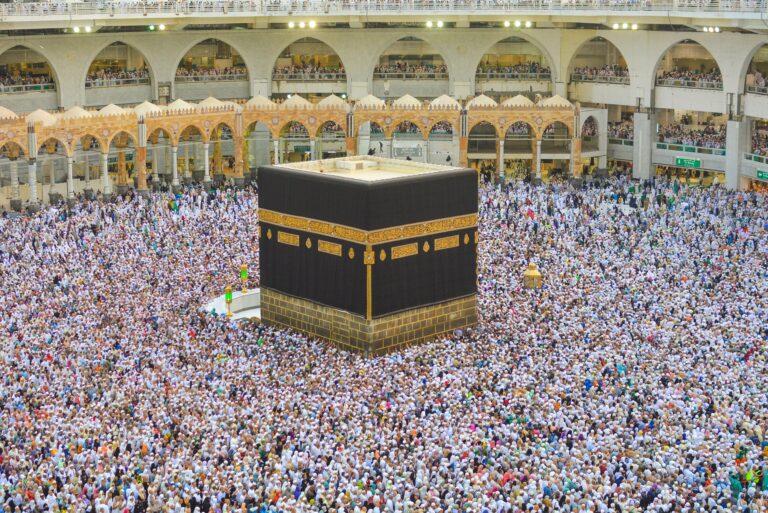
In Arabic “khadim” means one who serves and “haramayn” means “the two sanctuaries”; the Haramayn refers to the sacred precincts of Makkah and Madinah whose boundaries are fixed, and in a narrower sense to Masjid al-Haram and the Prophet’s Mosque. The form “al-Haramayn al-Sharifayn” (the two noble sanctuaries) is also common. Khadim al-Haramayn, or in its full form Khadim al-Haramayn al-Sharifayn, means the servant of these two holy places and stresses that the ruler’s claim over Makkah and Madinah is one of “service”, not of “dominion”. The essence of the title is to secure the Hajj routes, to look after the livelihood of the people of the Haram, to undertake the upkeep of the two mosques and to make the pilgrims’ worship easier. The boundaries of the Haramayn, the rulings of the Haram area and the structure of Masjid al-Haram are described in our article on Masjid al-Haram, and the Haram of Madinah in our article on the Prophet’s Mosque.
Hakim al-Haramayn or Khadim al-Haramayn?
According to a widespread account, when Selim I conquered Egypt in 1517 and took over the administration of the Hijaz, he objected when his name was announced in the Friday sermon as “Hakim al-Haramayn” (ruler of the two sanctuaries) and asked to be called “Khadim al-Haramayn” (servant of the two sanctuaries). Although the details of the account are told differently in the sources, this anecdote best sums up the meaning of the title in the Ottoman world: before Makkah and Madinah the sultan regards himself not as a sovereign but as a servant.
Who Used the Title?
The history of the title is the history of whose protection Makkah and Madinah were under. The claim to serve the Haramayn was a source of legitimacy for every great Islamic state that held control of Makkah and the Hajj routes. The Abbasid caliphs protected the Hajj routes and the Haram, and the Mamluk sultans used the title Khadim al-Haramayn officially from the 13th century onwards. When the administration of the Hijaz passed to the Ottomans with the conquest of Egypt in 1517, the title passed to Selim I and after him to all the Ottoman sultans; in Ottoman documents and Friday sermons the sultan was referred to by this title. After the end of the Ottoman state the title was not used for a time, and the kings of Saudi Arabia officially adopted the title “Khadim al-Haramayn al-Sharifayn” from 1986. Today the king of Saudi Arabia is known by this title, and the expansion projects of Masjid al-Haram and the Prophet’s Mosque are carried out in his name.
Did the Ottoman Sultans Go on Hajj?
The question of “sultans who went on Hajj” is a natural curiosity about a dynasty that served the Haramayn for four centuries. The answer is no; no reigning Ottoman sultan performed the Hajj. Although this may seem surprising at first sight, it is a situation explained by the scholars and statesmen of the period: for the sultan to leave Istanbul for a journey lasting months meant the state being left without a head and the campaign order of the army being disrupted. Hajj is obligatory for every Muslim who is able; but the scholars regarded the endangering of public order in the ruler’s absence as an excuse that postponed the Hajj, and considered it appropriate for the sultans to send a proxy and to fulfil their obligations by serving the Haramayn. Instead of going on Hajj, the sultans secured the Hajj routes, sent the Surre to the Haramayn every year and commissioned great building works in Makkah and Madinah. For whom Hajj is obligatory and the rulings on excuses are explained in our article on what Hajj is.
Who is the only member of the Ottoman dynasty to have gone on Hajj?
Cem Sultan. The son of Mehmed the Conqueror, Cem Sultan, during the period when he had lost the struggle for the throne to his elder brother Bayezid II and taken refuge in Egypt, joined the Hajj caravan from Cairo in 1482 and performed the Hajj. He is recorded in the sources as the only male member of the Ottoman dynasty to have gone on Hajj; on his return from Hajj he entered the struggle for the throne again, took refuge with the Knights of Rhodes and died in captivity in Europe.
What Is the Surre Procession?
“Surre” means “purse of money” in Arabic; the Surre procession was the official caravan that carried the money, gifts and offerings such as the Kaaba cover which the Ottoman sultan sent every year before the Hajj season to be distributed to the people of Makkah and Madinah, the officials of the Haram, the scholars and the poor. It is accepted that the first Surre was sent in the reign of Bayezid I (Yıldırım Bayezid) and that it became a regular annual practice from Mehmed I (Çelebi Mehmed) onwards; after Selim I the Surre became the most visible expression of the title Khadim al-Haramayn. The Surre procession was seen off with ceremony in Istanbul, set out from Üsküdar, reached Damascus by way of Anatolia and there joined the Damascus Hajj caravan to travel to Madinah and Makkah. The procession was led by the “Surre emini” (commissioner of the Surre), the purses of money and chests of gifts were carried on camels, and the pilgrims who joined the procession went on Hajj with the caravan. The tradition of the Surre continued until the years of the First World War; the last Surres were sent by the Hejaz Railway and by sea.
When did the Surre procession set out?
The Surre procession traditionally left Istanbul in the middle of the Hijri month of Rajab, around the night of Raghaib; in this way a journey of about four to five months was made so as to arrive in time for the Hajj season in Dhul Hijjah. At the send-off ceremony in Topkapı Palace the Surre registers were sealed in the presence of the sultan, the procession was ferried across to Üsküdar, and the people saw it off with prayers all along the road. After the Hejaz Railway opened, the Surre was sent by train from Haydarpaşa to Damascus and from there to Madinah. In brief, the journey of the Surre procession was as follows:
- Ceremony at Topkapı Palace: the Surre registers are sealed in the presence of the sultan and the Surre commissioner is appointed.
- Crossing to Üsküdar: the procession is ferried across to Üsküdar by boat, and the people and the dignitaries of state see it off.
- The Anatolian road: from Üsküdar via Konya, Adana and Aleppo to Damascus; in the later period by sea to Beirut and from there to Damascus.
- Joining at Damascus: the Surre joins the Damascus caravan under the command of the Amir al-Hajj.
- Descent into the Hijaz: delivery at the Prophet’s Mosque in Madinah and then at the Haram in Makkah; the money and gifts are distributed according to the registers.
The Ottoman Hajj Routes: The Damascus and Egypt Caravans
In the Ottoman period pilgrims went to Makkah with two great caravans. The Damascus caravan gathered the pilgrims coming from Anatolia, the Balkans, the Caucasus and Iran in Damascus and, under the command of the Amir al-Hajj and escorted by military guards, reached Madinah and Makkah by the desert road; the journey from Damascus to Makkah took about forty days. Along the road, way-station forts, cisterns and wells were built by the Ottomans, and relief units called “jarda” were sent against Bedouin raids. The Egypt caravan set out from Cairo, carried the Kaaba cover and the Egyptian Surre, and reached Makkah following the Sinai and the Red Sea coast. The sea route was also used: pilgrims travelling by ship from Anatolia and Istanbul to Jeddah went on from there to Makkah. In the 19th century the spread of steamships brought the sea route to the fore and reduced the Hajj journey to weeks. For pilgrims from Anatolia the journey mostly took six to eight months; before setting out the prospective pilgrim would write a will, pay off debts and ask forgiveness of others, and the traditions of the “pilgrim’s send-off” and “pilgrim’s welcome” are the memory of this long and arduous journey. The order and durations of today’s Hajj journey are explained in our article on when Hajj takes place.
The Hejaz Railway
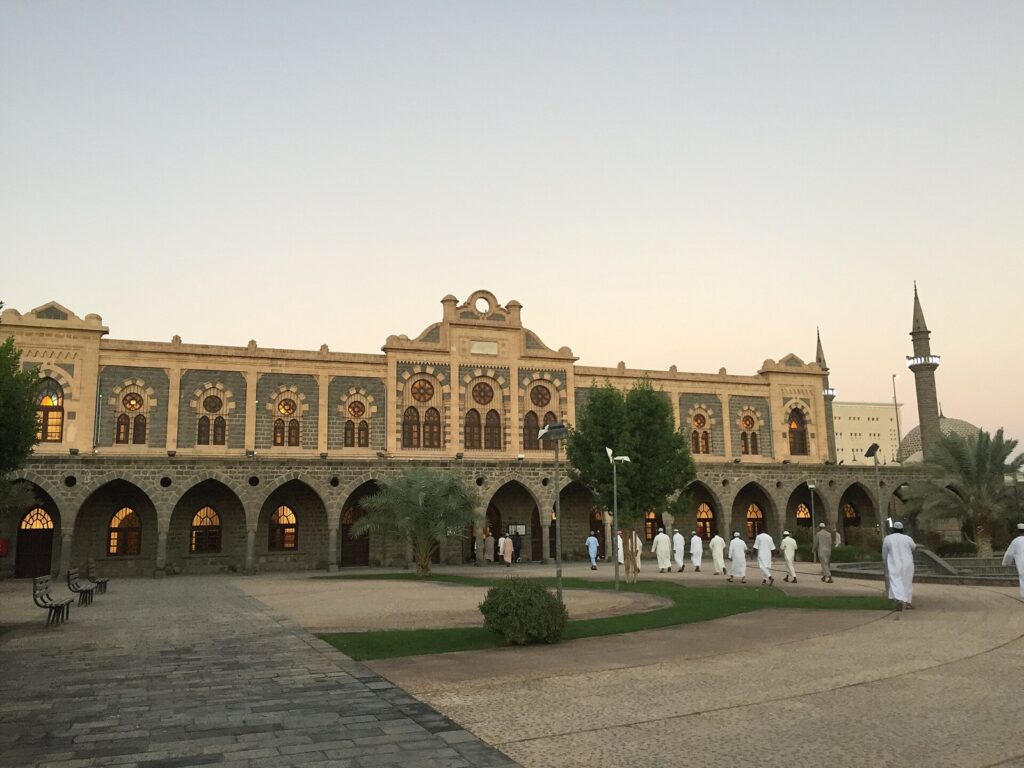
The Ottomans’ last great service to the Haramayn was a railway. The Hejaz Railway, begun by Abdülhamid II in 1900, was built to transform the Hajj journey with its line of about 1,300 kilometres between Damascus and Madinah, was financed by donations sent by Muslims from all over the world, and reached Madinah in 1908, on the anniversary of the sultan’s accession. The forty-day Damascus–Madinah journey came down to a few days by train, and the Surre and the pilgrims began to travel by rail. The extension of the line to Makkah was planned but never carried out because of the First World War and the revolt in the Hijaz; the line was attacked during the war and no train ran to Madinah after 1918. The historic station building and the locomotives in Madinah can be visited today as a museum; some sections of the line still stand in Jordan and Syria. We described the station in Madinah and other Ottoman traces in our article on places to visit in Madinah.
The Ottoman Services to the Haramayn
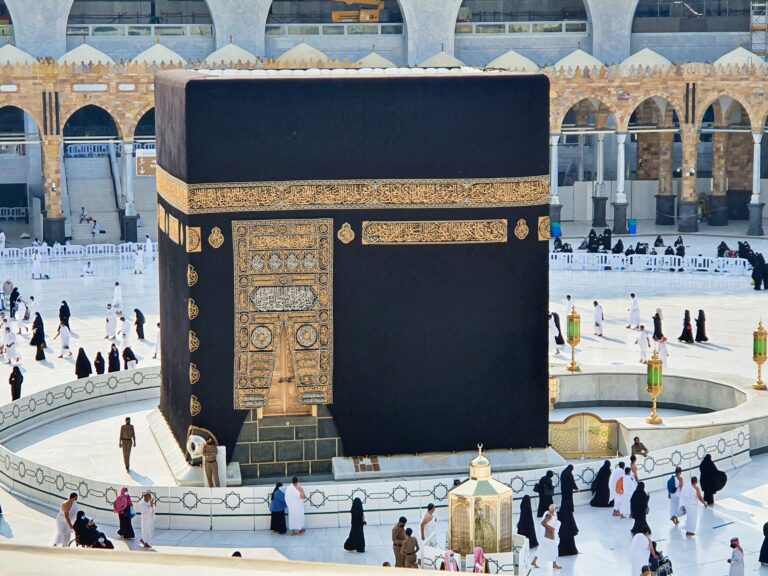
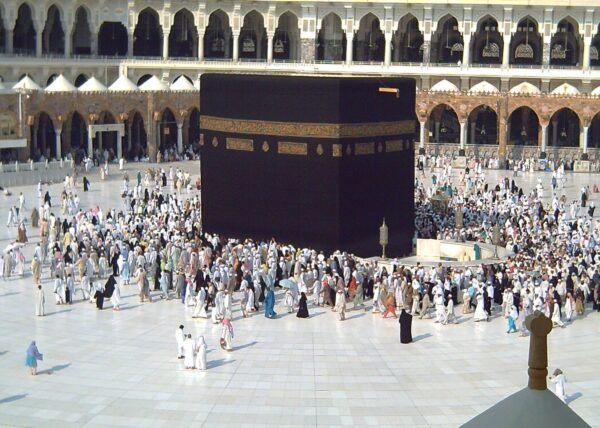
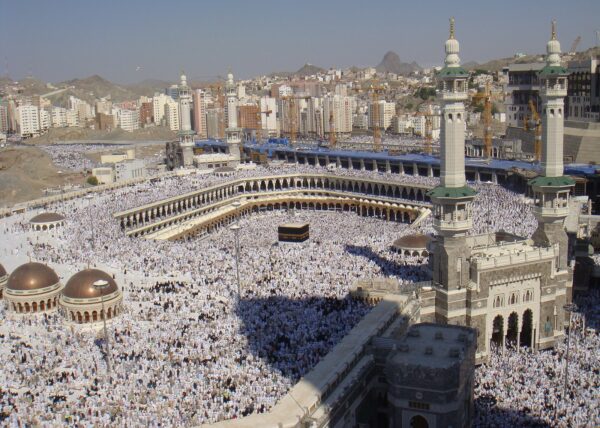
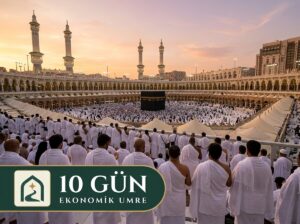
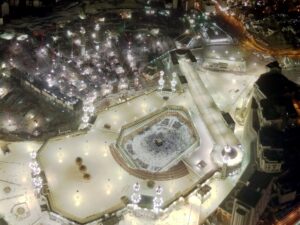
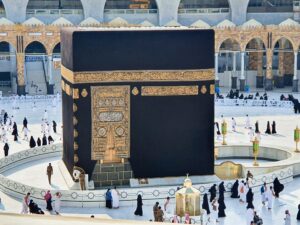
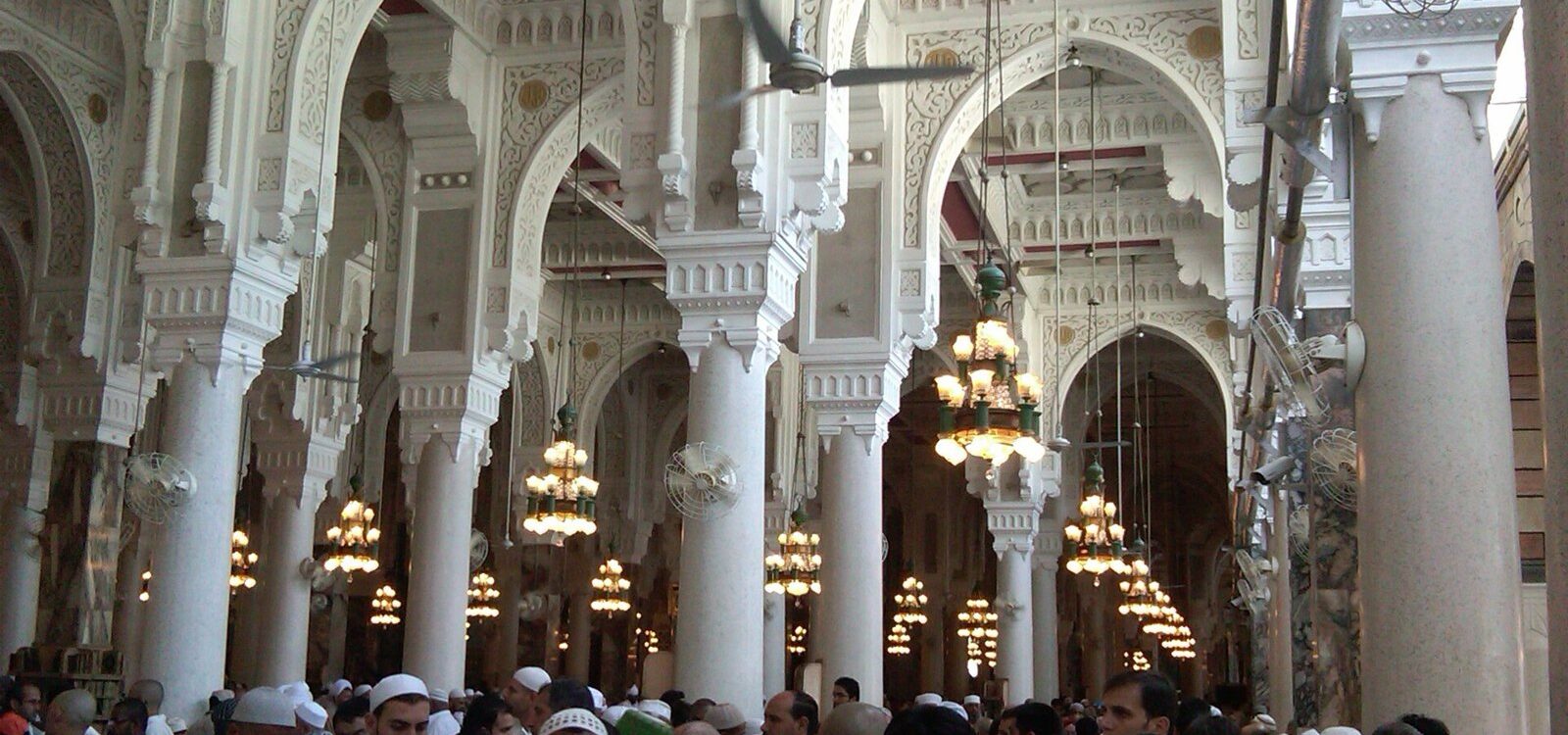
For four centuries the Ottoman sultans fulfilled the requirements of the title Khadim al-Haramayn with concrete works in Makkah and Madinah. The arcades that form the historic part of today’s Masjid al-Haram were built in the reigns of Süleyman the Magnificent and Selim II to a design by Mimar Sinan, and after the flood of 1630 the Kaaba was rebuilt by Murad IV; the details of that construction are in our article on where the Kaaba is. The Ayn Zubaydah channels that bring water to Makkah were repaired by the endowment of Mihrimah Sultan, the daughter of Süleyman, and the Ajyad Fortress protecting Makkah was built at the end of the 18th century. In Madinah the Prophet’s Mosque was repaired in the reign of Mahmud II, the dome over the Prophet’s grave was painted green in 1818, and in the reign of Sultan Abdülmecid the mosque was largely rebuilt between 1849 and 1861. The endowments of the Haramayn (Evkâf-ı Haremeyn) transferred income every year to the people, the madrasas and the poor of the two cities; many endowments from Istanbul to the Balkans set aside part of their income for the Haramayn. Although most of these works now lie within the Saudi expansions, the historic arcades of Masjid al-Haram and the old section of the Prophet’s Mosque still stand in place.
- The arcades of Masjid al-Haram: Süleyman the Magnificent and Selim II, to Mimar Sinan’s design (16th century).
- The rebuilding of the Kaaba: Murad IV, after the flood of 1630.
- The renewal of the Prophet’s Mosque: Mahmud II (the Green Dome, 1818) and Abdülmecid (1849–1861).
- Water channels and forts: the repairs of Ayn Zubaydah, the Ajyad Fortress, the way stations of the Hajj road.
- The Surre and the endowments: the money and gifts sent every year, the income of the Evkâf-ı Haremeyn.
- The Hejaz Railway: Damascus–Madinah, 1908.
| Period | Event | Meaning |
|---|---|---|
| 13th century | The Mamluk sultans use the title Khadim al-Haramayn | Service to the Haramayn becomes a source of legitimacy for rule |
| From 1413 | The Surre is sent regularly every year | The Ottomans’ annual support for the Haramayn begins |
| 1482 | Cem Sultan goes on Hajj from Cairo | The only member of the Ottoman dynasty to go on Hajj |
| 1517 | Selim I conquers Egypt; the Hijaz comes under the Ottomans | The title passes to the Ottoman sultans |
| 16th century | The arcades of Masjid al-Haram and the water channels | Building works of the age of Süleyman, Selim II and Mimar Sinan |
| 1630 | Murad IV has the Kaaba rebuilt | The present walls of the Kaaba |
| 1818 / 1849–1861 | The Green Dome and the rebuilding of the Prophet’s Mosque | The reigns of Mahmud II and Abdülmecid |
| 1908 | The Hejaz Railway reaches Madinah | The Damascus–Madinah journey falls to a few days |
| 1986 | The kings of Saudi Arabia officially adopt the title | Today’s usage |
Service to the Haramayn Today and Hajj from Türkiye
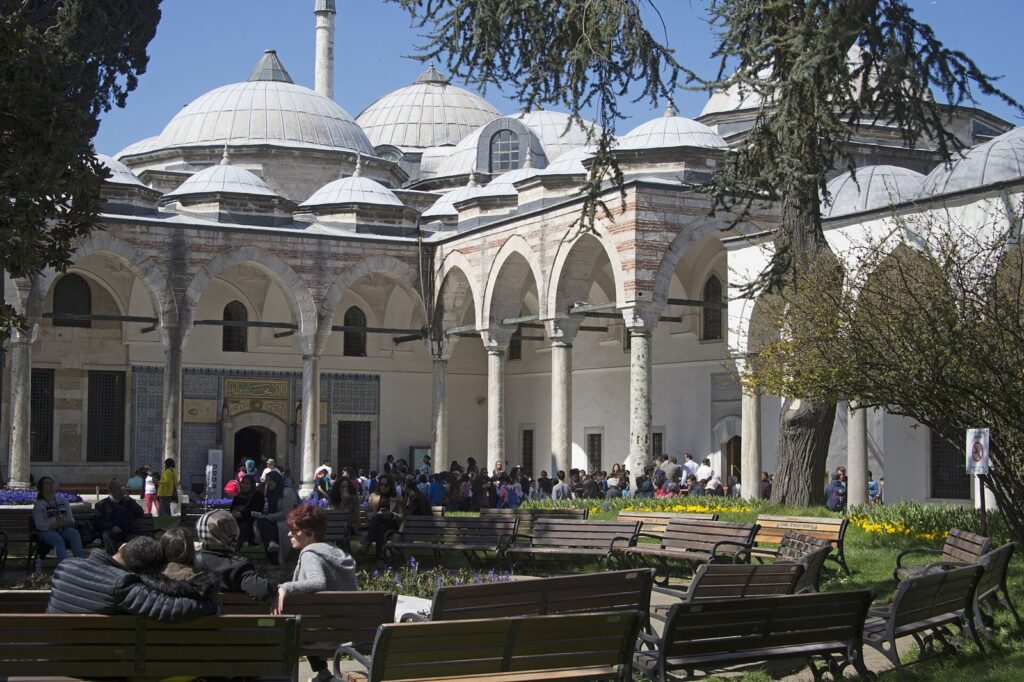
With the end of the Ottoman state the administration of the Haramayn passed first to the Hashemite Emirate and, after 1925, to the Saudi authorities. Today the expansions of Masjid al-Haram and the Prophet’s Mosque, the organisation of Hajj and Umrah, the weaving of the Kaaba cover and the allocation of Hajj places to countries are carried out by Saudi Arabia. Going on Hajj from Türkiye is done through the organisation of the Presidency of Religious Affairs (Diyanet), which has taken the place of the Ottoman Damascus caravan, and through authorised agencies, with the draw and registration system; this system is explained in our article on how to apply for Hajj. The Chamber of the Sacred Relics at Topkapı Palace, from which the Surre procession was sent off, with the old doors of the Kaaba, its spout, its keys and pieces of its cover, is the most visible memorial in Istanbul of the Ottoman service to the Haramayn. The site of the Ajyad Fortress in Makkah, and the railway station and the Ottoman bazaar in Madinah, are the traces of this history that can be seen on the spot; these points are described in our article on places to visit in Makkah.
Important: The fact that “the Ottoman sultans did not go on Hajj” should not be confused with the ruling on the obligation of Hajj. Hajj is obligatory once in a lifetime for every Muslim who is able; the sultans’ not going rested on an excuse which the scholars considered valid on the grounds that the state should not be left without a head, and it sets no example for anyone today. Those who do not want to wait for the draw can perform Umrah; Hajj is performed through the registration system of Diyanet and the authorised agencies.
What Does Knowing the History of Hajj Add to the Journey?
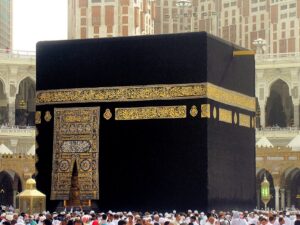
A Turkish pilgrim on the Hajj or Umrah journey who looks at the arcades of Masjid al-Haram, the walls of the Kaaba, the green dome in Madinah and the railway station sees the traces of four centuries of service. Knowing these traces turns the visit from a tourist excursion into a walk through history: to know that the spout beside the Kaaba dates from the Ottomans, that a section of the Prophet’s Mosque is the work of Abdülmecid, and that the road to Madinah once began by train from Istanbul is a reason for gratitude to remember while making supplication. For those who want to see more of the Ottoman Hajj routes, the Surre and the services to the Haramayn, the Ottoman monuments in Jerusalem, Damascus and Cairo are parts of the same story; those routes are on our Jerusalem tours page. For Hajj programmes see our Hajj tours page.
Frequently Asked Questions
What does Khadim al-Haramayn mean?
It means “Servant of the Two Sanctuaries”; it is the title of rulers who served Masjid al-Haram in Makkah and the Prophet’s Mosque in Madinah. The Mamluk sultans, the Ottoman sultans from Selim I onwards and, since 1986, the kings of Saudi Arabia have used this title.
Did any Ottoman sultan go on Hajj?
No reigning Ottoman sultan performed the Hajj. Of the members of the dynasty, only Cem Sultan went on Hajj, from Cairo in 1482 while he was in Egypt.
Why did the Ottoman sultans not go on Hajj?
The scholars regarded the state being left without a head and the disruption of order during a journey of months as an excuse postponing the sultan’s Hajj; instead, the sultans secured the Hajj routes, sent the Surre and built up the Haramayn.
What is the Surre procession?
It is the official caravan carrying the money and gifts which the Ottoman sultan sent every year before the Hajj season to the people of Makkah and Madinah, the officials of the Haram and the poor. It travelled from Istanbul via Üsküdar to Damascus and from there to the Hijaz.
How far did the Hejaz Railway go?
From Damascus to Madinah, about 1,300 kilometres. The extension to Makkah of the line, which reached Madinah in 1908, was planned but never carried out because of the First World War.
Can Ottoman monuments be seen in Makkah and Madinah?
Yes; the historic arcades of Masjid al-Haram, the walls of the Kaaba and the Golden Spout, the sections of the Prophet’s Mosque from the reign of Abdülmecid and the Green Dome, and the Hejaz Railway station in Madinah can still be seen in place today.

Cihat Murat Yüksel is the editor of the RotaNur blog and the founder of Markention. Drawing on the sources of Türkiye's Presidency of Religious Affairs (Diyanet), he turns the questions travellers ask most about preparing for Umrah, Hajj and halal travel into clear, practical guides.
Questions answered in this article
What Does Khadim al-Haramayn Mean?
In Arabic “khadim” means one who serves and “haramayn” means “the two sanctuaries”; the Haramayn refers to the sacred precincts of Makkah and Madinah whose boundaries are fixed, and in a narrower sense to Masjid al-Haram and the Prophet’s Mosque. The form “al-Haramayn al-Sharifayn” (the two noble sanctuaries) is also common. Khadim al-Haramayn, or in its full form Khadim al-Haramayn al-Sharifayn, means the servant of these two holy places and stresses that the ruler’s claim over Makkah and Madinah is one of “service”, not of “dominion”. The essence of the title is to secure the Hajj routes, to look after the livelihood of the people of the Haram, to undertake the upkeep of the two mosques and to make the pilgrims’ worship easier. The boundaries of the Haramayn, the rulings of the Haram area and the structure of Masjid al-Haram are described in our article on Masjid al-Haram, and the Haram of Madinah in our article on the Prophet’s Mosque.
Hakim al-Haramayn or Khadim al-Haramayn?
According to a widespread account, when Selim I conquered Egypt in 1517 and took over the administration of the Hijaz, he objected when his name was announced in the Friday sermon as “Hakim al-Haramayn” (ruler of the two sanctuaries) and asked to be called “Khadim al-Haramayn” (servant of the two sanctuaries). Although the details of the account are told differently in the sources, this anecdote best sums up the meaning of the title in the Ottoman world: before Makkah and Madinah the sultan regards himself not as a sovereign but as a servant.
Who Used the Title?
The history of the title is the history of whose protection Makkah and Madinah were under. The claim to serve the Haramayn was a source of legitimacy for every great Islamic state that held control of Makkah and the Hajj routes. The Abbasid caliphs protected the Hajj routes and the Haram, and the Mamluk sultans used the title Khadim al-Haramayn officially from the 13th century onwards. When the administration of the Hijaz passed to the Ottomans with the conquest of Egypt in 1517, the title passed to Selim I and after him to all the Ottoman sultans; in Ottoman documents and Friday sermons the sultan was referred to by this title. After the end of the Ottoman state the title was not used for a time, and the kings of Saudi Arabia officially adopted the title “Khadim al-Haramayn al-Sharifayn” from 1986. Today the king of Saudi Arabia is known by this title, and the expansion projects of Masjid al-Haram and the Prophet’s Mosque are carried out in his name.
Did the Ottoman Sultans Go on Hajj?
The question of “sultans who went on Hajj” is a natural curiosity about a dynasty that served the Haramayn for four centuries. The answer is no; no reigning Ottoman sultan performed the Hajj. Although this may seem surprising at first sight, it is a situation explained by the scholars and statesmen of the period: for the sultan to leave Istanbul for a journey lasting months meant the state being left without a head and the campaign order of the army being disrupted. Hajj is obligatory for every Muslim who is able; but the scholars regarded the endangering of public order in the ruler’s absence as an excuse that postponed the Hajj, and considered it appropriate for the sultans to send a proxy and to fulfil their obligations by serving the Haramayn. Instead of going on Hajj, the sultans secured the Hajj routes, sent the Surre to the Haramayn every year and commissioned great building works in Makkah and Madinah. For whom Hajj is obligatory and the rulings on excuses are explained in our article on what Hajj is.
Who is the only member of the Ottoman dynasty to have gone on Hajj?
Cem Sultan. The son of Mehmed the Conqueror, Cem Sultan, during the period when he had lost the struggle for the throne to his elder brother Bayezid II and taken refuge in Egypt, joined the Hajj caravan from Cairo in 1482 and performed the Hajj. He is recorded in the sources as the only male member of the Ottoman dynasty to have gone on Hajj; on his return from Hajj he entered the struggle for the throne again, took refuge with the Knights of Rhodes and died in captivity in Europe.
What Is the Surre Procession?
“Surre” means “purse of money” in Arabic; the Surre procession was the official caravan that carried the money, gifts and offerings such as the Kaaba cover which the Ottoman sultan sent every year before the Hajj season to be distributed to the people of Makkah and Madinah, the officials of the Haram, the scholars and the poor. It is accepted that the first Surre was sent in the reign of Bayezid I (Yıldırım Bayezid) and that it became a regular annual practice from Mehmed I (Çelebi Mehmed) onwards; after Selim I the Surre became the most visible expression of the title Khadim al-Haramayn. The Surre procession was seen off with ceremony in Istanbul, set out from Üsküdar, reached Damascus by way of Anatolia and there joined the Damascus Hajj caravan to travel to Madinah and Makkah. The procession was led by the “Surre emini” (commissioner of the Surre), the purses of money and chests of gifts were carried on camels, and the pilgrims who joined the procession went on Hajj with the caravan. The tradition of the Surre continued until the years of the First World War; the last Surres were sent by the Hejaz Railway and by sea.
When did the Surre procession set out?
The Surre procession traditionally left Istanbul in the middle of the Hijri month of Rajab, around the night of Raghaib; in this way a journey of about four to five months was made so as to arrive in time for the Hajj season in Dhul Hijjah. At the send-off ceremony in Topkapı Palace the Surre registers were sealed in the presence of the sultan, the procession was ferried across to Üsküdar, and the people saw it off with prayers all along the road. After the Hejaz Railway opened, the Surre was sent by train from Haydarpaşa to Damascus and from there to Madinah. In brief, the journey of the Surre procession was as follows:
What Does Knowing the History of Hajj Add to the Journey?
A Turkish pilgrim on the Hajj or Umrah journey who looks at the arcades of Masjid al-Haram, the walls of the Kaaba, the green dome in Madinah and the railway station sees the traces of four centuries of service. Knowing these traces turns the visit from a tourist excursion into a walk through history: to know that the spout beside the Kaaba dates from the Ottomans, that a section of the Prophet’s Mosque is the work of Abdülmecid, and that the road to Madinah once began by train from Istanbul is a reason for gratitude to remember while making supplication. For those who want to see more of the Ottoman Hajj routes, the Surre and the services to the Haramayn, the Ottoman monuments in Jerusalem, Damascus and Cairo are parts of the same story; those routes are on our Jerusalem tours page. For Hajj programmes see our Hajj tours page.