


Contents 13 sections
- Where Is Pristina?
- Is Turkish spoken in Pristina?
- A Brief History of Pristina
- The Imperial (Fatih) Mosque and the Bazaar Mosque
- The Clock Tower, the Great Hamam and the Yaşar Paşa Mosque
- The Kosovo Museum and the Ethnographic Museum
- Mother Teresa Boulevard, the NEWBORN Monument and the National Library
- The Tomb of Sultan Murad Hüdavendigâr and Gazimestan
- How do you get to the Tomb of Sultan Murad?
- Gračanica Monastery, Ulpiana and Germia Park
- Food and Shopping in Pristina
- How and When to Go to Pristina
- Frequently Asked Questions
A list of Pristina places to visit describes the youngest capital in the Balkans: from the mosque built by Mehmed the Conqueror to the independence monument erected in 2008, from the Ottoman bazaar to the Yugoslav-era library, from the Tomb of Sultan Murad on the plain where the Battle of Kosovo was fought to the road leading to the Şar Mountains, the layers of history stand side by side. Pristina, the capital of Kosovo, is not as well-preserved an Ottoman city as Prizren; but with its old bazaar, where the Imperial (Fatih) Mosque, the Bazaar Mosque, the Clock Tower and the Great Hamam stand together, its museums and the places of visit around it, it is an indispensable stop on Balkan tours. In this article we have brought together where Pristina is and its brief history, the places to see within the city, the Tomb of Sultan Murad Hüdavendigâr and Gazimestan, the surrounding stops such as Gračanica and Ulpiana, the food, transport and a one-day route.
In Short
A list of Pristina places to visit describes the youngest capital in the Balkans: from the mosque built by Mehmed the Conqueror to the independence monument erected in 2008, from the Ottoman bazaar to the Yugoslav-era library, from the Tomb of Sultan Murad on the plain where the Battle of Kosovo was fought to the road leading to the Şar Mountains, the layers of history stand side by side. Pristina, the capital of Kosovo, is not as well-preserved an Ottoman city as Prizren; but with its old bazaar, where the Imperial (Fatih) Mosque, the Bazaar Mosque, the Clock Tower and the Great Hamam stand together, its museums and the places of visit around it, it is an indispensable stop on Balkan tours.
Where Is Pristina?
Pristina is the largest city and capital of Kosovo, founded on the edge of the Kosovo Plain in the north-east of the country, with a population of more than two hundred thousand. It is about an hour and a half by road from Üsküp (Skopje), about an hour by motorway from Prizren and five hours from Belgrade. The city’s airport, Adem Jashari International Airport, is fifteen kilometres from the centre; the flight from Istanbul takes about two hours. Citizens of Türkiye enter Kosovo with a passport and without a visa, and the currency used in the country is the euro. In Pristina Albanian is the main language; Turkish is heard in the quarters where the Kosovo Turks live and in the bazaar, but it is not as widespread as in Prizren. For the other stops on the Balkan route see our articles on places to visit in Prizren, places to visit in Üsküp and places to visit in Ohrid.
Is Turkish spoken in Pristina?
Kosovo Turks live in Pristina too, and Turkish is among the languages in official use at the municipal level in the city; but Albanian dominates everyday life. Turkish is heard among some of the shopkeepers in the bazaar, around the Imperial Mosque and in the Turkish cultural institutions; although it is not as widespread as in Prizren, Turkish visitors can make themselves understood in most places. Most of the young population also speaks English.
A Brief History of Pristina
To understand the city one must look briefly at its history, because in Pristina every street bears the name of a different period. Ulpiana, near Pristina, was an important city of the Roman period; in the Middle Ages Pristina was one of the towns where the Serbian kings resided. In 1389, on the Kosovo Plain just outside the city, the First Battle of Kosovo was fought between the Ottoman army and the Balkan alliance; Sultan Murad I fell as a martyr in this battle, and the present tomb was built at the place where his internal organs were buried. Pristina came definitively under Ottoman rule in the 15th century, gained its identity as an Ottoman town with the Imperial Mosque and remained Ottoman until 1912. The city grew rapidly in the Yugoslav period; after the war of 1999 it came under international administration and became the capital of Kosovo, which declared its independence on 17 February 2008. Today Pristina, with its young population, its cafés and its universities, is one of the liveliest cities in the Balkans; in its streets the traces of the Ottoman, Yugoslav and independence periods are intertwined.
The Imperial (Fatih) Mosque and the Bazaar Mosque
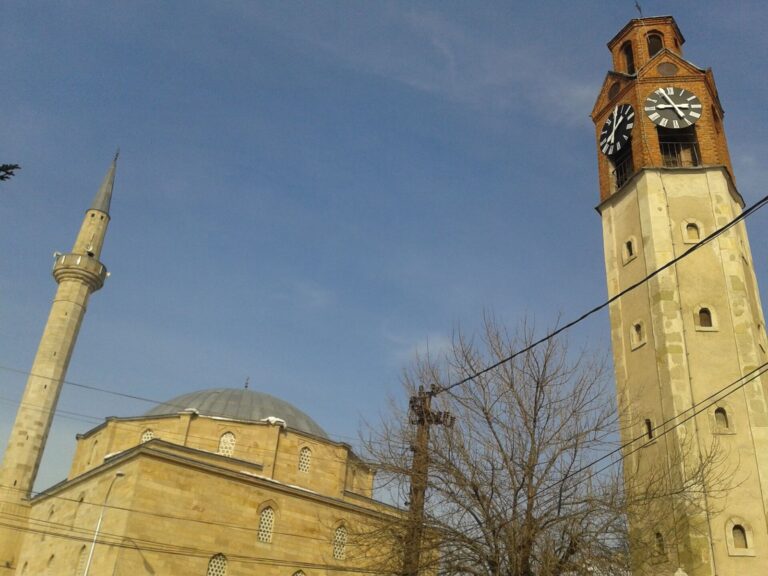
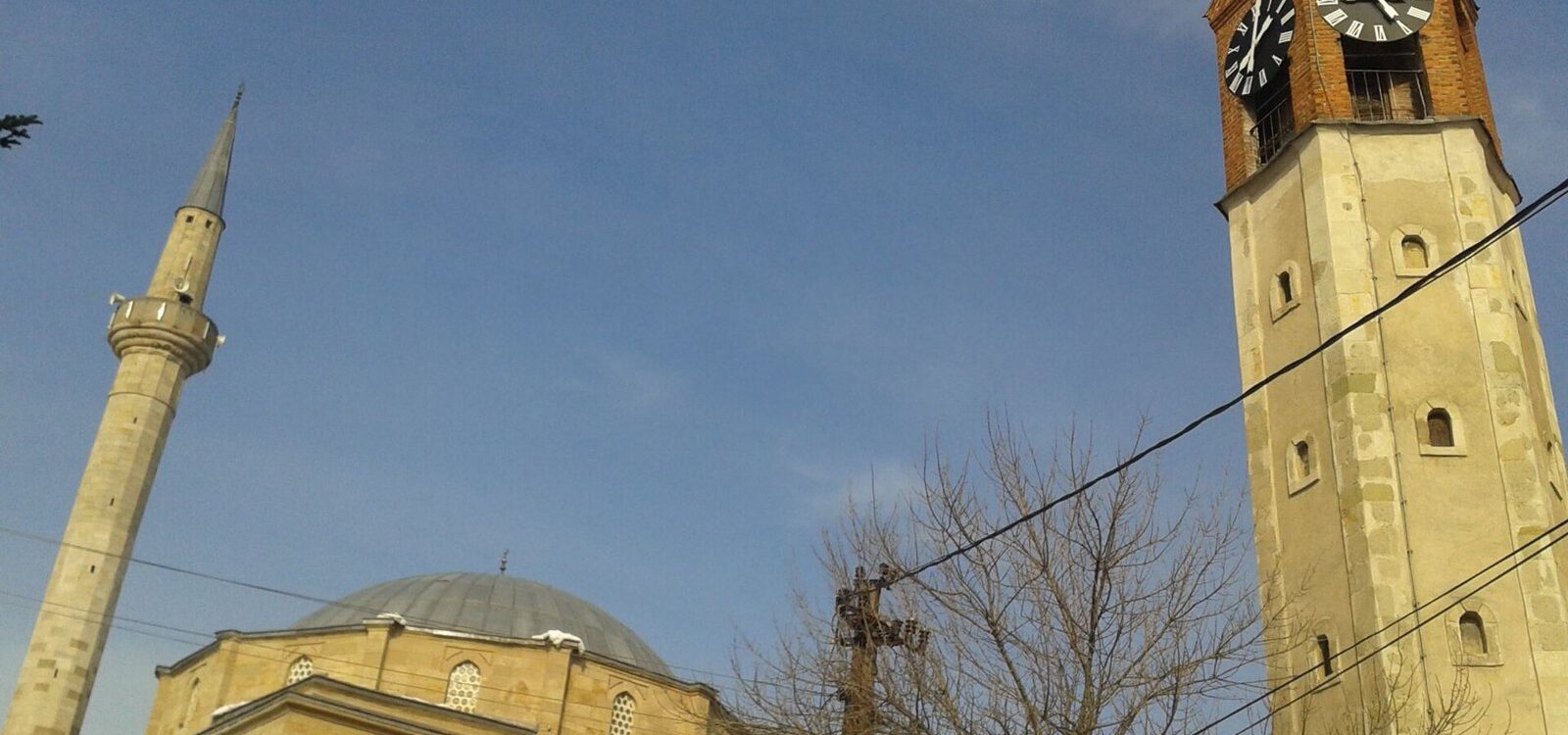
The Imperial Mosque (in Turkish the Fatih Mosque, in Albanian Xhamia e Mbretit, “the King’s Mosque”), the most important Ottoman monument in Pristina, was built in 1461 by Mehmed the Conqueror; with its great dome, stonework and mihrab-minbar arrangement it is the most magnificent example of classical Ottoman architecture in Kosovo. The mosque is open for worship and gathers the largest Friday congregation in the city. A few hundred metres away, the Bazaar Mosque (the Stone Mosque), built after the Battle of Kosovo of 1389 in the reign of Bayezid I, is considered the oldest mosque in the city; it is small but attracts attention with its stone minaret. The area between the two mosques is the surviving part of the Ottoman bazaar and forms the historic centre of Pristina. When visiting the mosques one should respect the prayer times, dress modestly and not disturb the congregation while taking photographs. The fountain in the courtyard of the Imperial Mosque and the old cemetery behind the mosque are the quiet corners of Ottoman Pristina; at noon on Friday the mosque and its surroundings fill completely, and the morning hours are better for a visit.
The Clock Tower, the Great Hamam and the Yaşar Paşa Mosque
The Clock Tower (Sahat Kulla) beside the Imperial Mosque is a brick-bodied Ottoman clock tower built in the 19th century; these towers, built to announce the times of prayer and of the market, are a shared symbol of the Balkan towns. The nearby Great Hamam (Hamami i Madh) is a double bath dating from the 15th century; after long lying in ruins it was restored and has begun to be used as a cultural venue. The Yaşar Paşa Mosque, built in 1834, is a late Ottoman mosque known for the painted decoration of its interior. There is also an Ottoman fountain from the 15th century and old shops in the bazaar. These three buildings and the Imperial and Bazaar mosques are within a few minutes’ walk of one another; exploring this area in the morning hours as the bazaar shops open is the shortest way to see the Ottoman face of Pristina.
The Kosovo Museum and the Ethnographic Museum
The Kosovo Museum, opposite the Imperial Mosque, operates in a yellow building built in 1889 in the Austro-Hungarian style and used as a military building in the Ottoman period; its archaeological and ethnographic collections display finds from Ulpiana, the famous Neolithic figurine of the “Goddess on the Throne” and objects from the Ottoman period. The Ethnographic Museum (the Emin Gjiku complex) near the museum consists of two Ottoman mansions from the 18th century; its rooms are furnished with the objects, clothing and kitchen arrangement of the period, and it is the best place to see traditional Muslim domestic life in Kosovo. Both museums are small and can be seen together in an hour to an hour and a half; since the days on which the museums are open can change, it is necessary to check in the morning. The streets where the museums stand are also the oldest quarter of Pristina; Ottoman mansions, stone-walled courtyards and small mosques can be seen on foot in this area.
Mother Teresa Boulevard, the NEWBORN Monument and the National Library
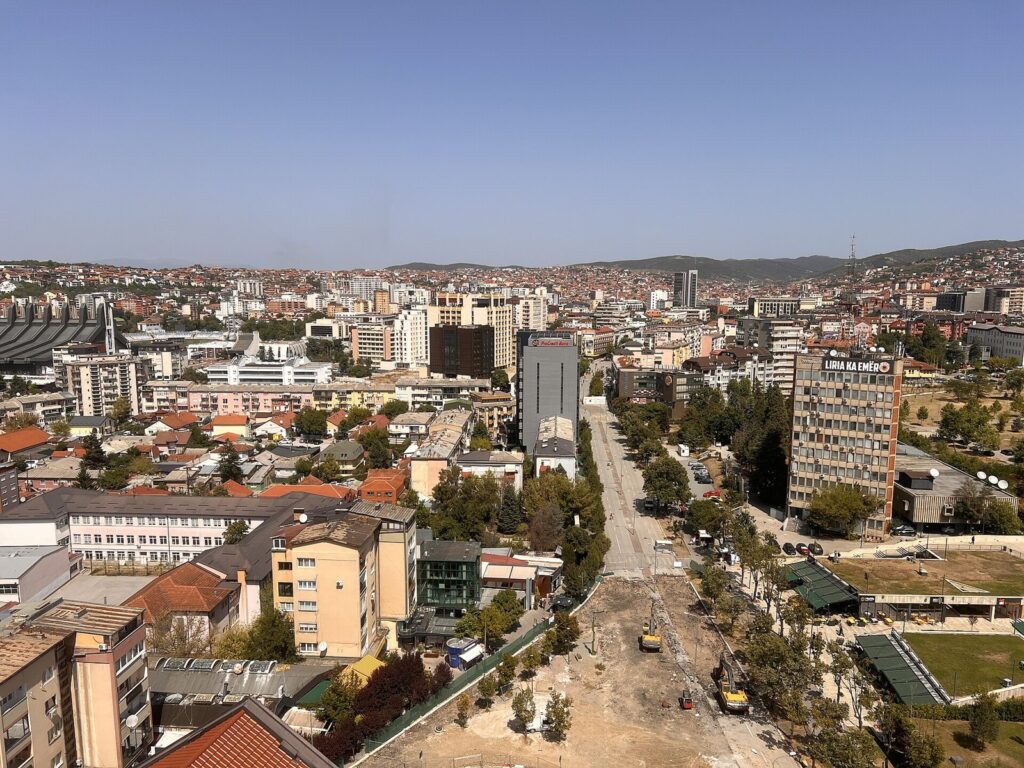
The modern centre of the city is the pedestrian boulevard Mother Teresa (Nene Tereza) Boulevard; surrounded by cafés, shops and statues, this boulevard is the meeting place of the people of Pristina in the evenings. Around the boulevard are the NEWBORN monument, erected on independence day in 2008 and repainted every year, the statue of Bill Clinton commemorating America’s support in 1999, and the Cathedral of Mother Teresa belonging to Kosovo’s Catholic community. The National Library of Kosovo, built in 1982, is a Yugoslav-era building that appears on lists of the strangest buildings in the world with its domes and its metal mesh cladding; it is one of the symbols of the city thanks to its architecture, and its interior can be visited. Drinking a macchiato in the cafés lined along the boulevard and watching the evening stroll of the people of Pristina is the easiest way to see the young and lively face of the city. The statue of Skanderbeg and Zahir Pajaziti Square at the end of the boulevard are the starting point of a city tour; the Ottoman bazaar connects to the boulevard by a few minutes’ walk.
The Tomb of Sultan Murad Hüdavendigâr and Gazimestan
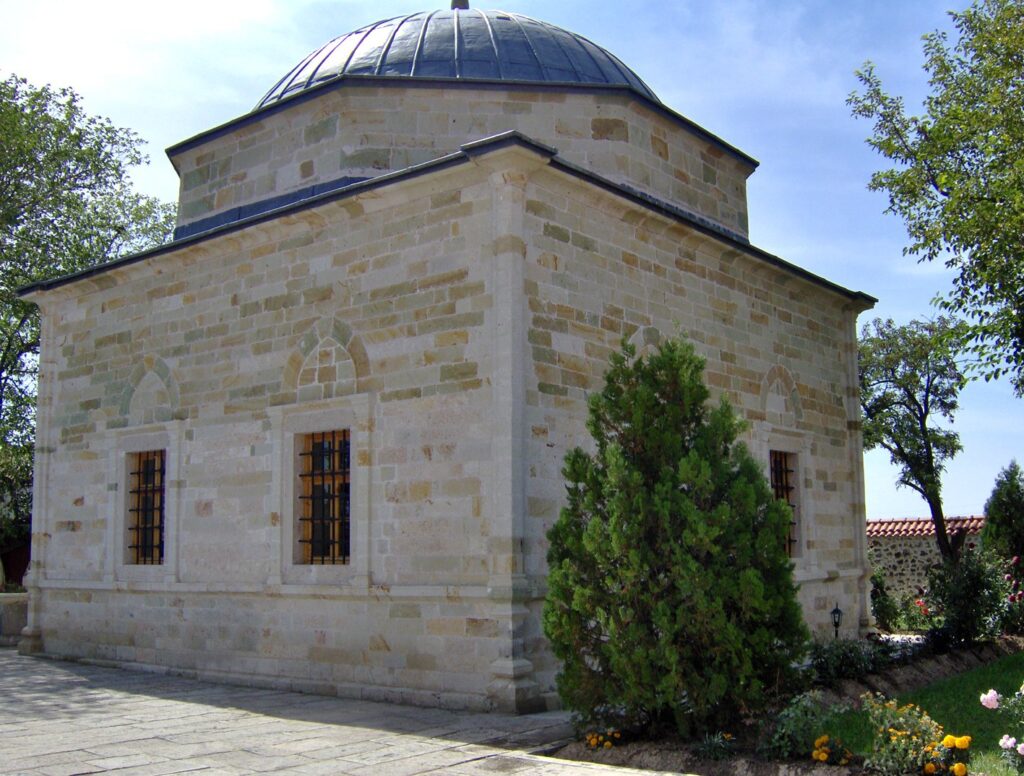
The most visited place in Pristina is not inside the city but outside it. In the village of Mazgit, about six kilometres north-west of Pristina, stands the tomb built at the place where the internal organs of Sultan Murad I (Hüdavendigâr), who fell as a martyr in the Battle of Kosovo of 1389, were buried; his body was taken to Bursa. The tomb, also known as the Meşhed-i Hüdavendigâr, was repaired several times in the Ottoman period, was restored in the 2000s with the support of Türkiye, and the keeper’s house beside it was turned into a museum. The tomb is the place most often visited by Turkish visitors in Pristina; at the entrance the Fatiha is recited, and people sit in the courtyard. Gazimestan, near the tomb, is a tower-shaped Serbian monument erected in 1953 in memory of the Battle of Kosovo; it holds a central place in the Serbian historical narrative, and from its top the whole of the Kosovo Plain can be seen. The two monuments place two different memories of the same battle side by side, a few hundred metres apart. For the place of the Ottomans in Balkan history see also our articles on places to visit in Bosnia and Herzegovina and places to visit in Sarajevo.
How do you get to the Tomb of Sultan Murad?
The tomb is about ten to fifteen minutes from the centre of Pristina by the road towards Mitroviça; it is reached by taxi or tour bus, as public transport is infrequent. The tomb is open to visitors every day; shoes are taken off at the entrance and modest dress is worn. The Gazimestan monument is a few minutes from the tomb and can be seen in the same half day.
Important: Citizens of Türkiye enter Kosovo with a passport and without a visa; the currency is the euro. For those planning to cross by road from Kosovo into Serbia the border arrangements are different; because Serbia does not treat Kosovo’s border crossings as its own points of entry, entering Serbia via Kosovo can cause problems. On routes that also include Serbia it is safer to enter Serbia first; clarify your route with your guide in advance.
Gračanica Monastery, Ulpiana and Germia Park
When the city centre is done, the surroundings of Pristina hold a few more stops that offer history and nature together. Gračanica Monastery, ten kilometres south-east of Pristina, is a Serbian Orthodox monastery built at the beginning of the 14th century and is among the Medieval Monuments in Kosovo on the UNESCO World Heritage List; with its frescoes and stepped domes it is one of the finest examples of Byzantine architecture in the Balkans, and it is open to visitors under certain arrangements. Ulpiana, right beside the monastery, is an ancient city of the Roman and Byzantine periods; in the excavation area the remains of walls, a basilica and mosaics can be seen. Germia Park in the east of the city is the weekend escape of the people of Pristina; with its wooded hills, walking paths and, in the summer months, its open-air pool, it lets the city breathe. In the village of Mramor near Pristina, the Bear Sanctuary, where bears rescued from captivity live, is a popular stop for families with children. All of these places can be seen on a half-day excursion. On a longer programme, the Ibar Bridge and Ottoman mosques of Mitroviça to the north, the Grand Bazaar and Hadum Mosque of Gjakova to the west and the old town of Prizren are stops that can be visited on day trips from Pristina.
Food and Shopping in Pristina
The cuisine of Pristina continues the Balkan and Ottoman tradition; finding halal food in the city is no problem, because the great majority of the population is Muslim. For breakfast there is layered flia and pite, for lunch and dinner kebab, meatballs (qofte), tavë (oven-baked meat and vegetables), stuffed vine leaves and beans (pasul), and for dessert tulumba, baklava and trileçe are the best-known dishes. The cafés on Mother Teresa Boulevard are famous for their coffee culture; in Kosovo the macchiato is drunk at every hour of the day alongside Turkish coffee. For shopping, the jewellers in the Ottoman bazaar, handmade copper and wooden goods, Kosovo’s local honey and jams and textiles with Albanian motifs stand out. In Ramadan the boulevard and the bazaar fill up after iftar; on the holy nights a programme is held at the Imperial Mosque. Portions in the restaurants are large and the dishes are close to the Turkish palate; on the menus the Albanian names are usually accompanied by an English explanation.
- Flia and pite: layered Balkan pastries for breakfast and snacks.
- Tavë and qofte: oven-baked meat and vegetables and meatballs; for lunch and dinner.
- Trileçe and tulumba: Balkan desserts; with coffee in the cafés.
- Bazaar shopping: copper, wood, honey and jam; bargaining is possible.
How and When to Go to Pristina
Direct flights from Istanbul to Pristina take about two hours; from Adem Jashari Airport the city centre is reached in twenty to thirty minutes by taxi or shuttle. It is an hour and a half by road from Üsküp, an hour from Prizren and three and a half to four hours from Ohrid; on Balkan tours Pristina is usually the first stop on a route entered from Üsküp and continuing towards Prizren and Albania. RotaNur’s Bosnia and Balkan tours combine Pristina, Prizren, Üsküp and Ohrid in a single programme; for other programmes see our cultural tours page, and for your questions our contact page. The best seasons are spring and autumn; the summers are hot and the winters snowy and cold. The city centre is explored on foot; a vehicle is needed for the Tomb of Sultan Murad, Gračanica and Germia. How visits to churches and monasteries are planned with a halal tourism approach is explained in our article on what halal tourism is. A one-day Pristina route can be put together like this:
- Morning: the Imperial Mosque, the Bazaar Mosque, the Clock Tower and the Great Hamam; breakfast in the bazaar.
- Late morning: the Kosovo Museum and the Ethnographic Museum.
- Midday: lunch on Mother Teresa Boulevard; the NEWBORN monument, the National Library, the cathedral.
- Afternoon: the Tomb of Sultan Murad Hüdavendigâr and Gazimestan.
- Evening: coffee on the boulevard; on the second day Gračanica, Ulpiana and Germia.
| # | Stop | Period | Note |
|---|---|---|---|
| 1 | The Imperial (Fatih) Mosque | 1461, Ottoman | The largest mosque in the city; open for worship |
| 2 | The Bazaar Mosque (Stone Mosque) | End of the 14th century | The oldest mosque in the city |
| 3 | The Clock Tower | 19th century | Beside the Imperial Mosque |
| 4 | The Great Hamam | 15th century | Restored; cultural venue |
| 5 | The Yaşar Paşa Mosque | 1834 | Painted decoration |
| 6 | The Kosovo Museum and the Ethnographic Museum | Building of 1889; 18th-century mansions | One to one and a half hours |
| 7 | Mother Teresa Boulevard and NEWBORN | Modern centre; 2008 | Cafés, evening stroll |
| 8 | The National Library | 1982 | Unusual architecture |
| 9 | The Tomb of Sultan Murad Hüdavendigâr | After 1389; restoration in the 2000s | Mazgit, 6 km from the centre |
| 10 | Gazimestan | 1953 | View of the Kosovo Plain |
| 11 | Gračanica Monastery and Ulpiana | 14th century; Roman | UNESCO; visiting arrangements vary |
| 12 | Germia Park | Nature | Walking and picnics |
Frequently Asked Questions
Which country is Pristina in?
Pristina is the capital and largest city of Kosovo; it lies on the edge of the Kosovo Plain, an hour and a half from Üsküp and an hour from Prizren.
Do you need a visa for Pristina?
No; citizens of Türkiye enter Kosovo with a passport and without a visa. The currency is the euro.
How many days should you stay in Pristina?
The city centre can be explored on foot in a day; two days are enough together with the Tomb of Sultan Murad, Gračanica and Germia. On Balkan tours a single day is usually given to Pristina.
How do you get to Pristina?
About two hours by direct flight from Istanbul; twenty to thirty minutes from the airport to the centre. It is an hour and a half by road from Üsküp and an hour from Prizren.
Where is the Tomb of Sultan Murad?
It is in the village of Mazgit, about six kilometres north-west of Pristina; it is the tomb where the internal organs of Sultan Murad I were buried at the place where he fell in the Battle of Kosovo of 1389. The Gazimestan monument is right beside it.
Is halal food available in Pristina?
Yes; the great majority of the population of Pristina is Muslim and most of the restaurants serve halal food. Flia, pite, tavë, qofte and trileçe are the best-known dishes.
Cihat Murat Yüksel is the editor of the RotaNur blog and the founder of Markention. Drawing on the sources of Türkiye's Presidency of Religious Affairs (Diyanet), he turns the questions travellers ask most about preparing for Umrah, Hajj and halal travel into clear, practical guides.
Questions answered in this article
Where Is Pristina?
Pristina is the largest city and capital of Kosovo, founded on the edge of the Kosovo Plain in the north-east of the country, with a population of more than two hundred thousand. It is about an hour and a half by road from Üsküp (Skopje), about an hour by motorway from Prizren and five hours from Belgrade. The city’s airport, Adem Jashari International Airport, is fifteen kilometres from the centre; the flight from Istanbul takes about two hours. Citizens of Türkiye enter Kosovo with a passport and without a visa, and the currency used in the country is the euro. In Pristina Albanian is the main language; Turkish is heard in the quarters where the Kosovo Turks live and in the bazaar, but it is not as widespread as in Prizren. For the other stops on the Balkan route see our articles on places to visit in Prizren, places to visit in Üsküp and places to visit in Ohrid.
Is Turkish spoken in Pristina?
Kosovo Turks live in Pristina too, and Turkish is among the languages in official use at the municipal level in the city; but Albanian dominates everyday life. Turkish is heard among some of the shopkeepers in the bazaar, around the Imperial Mosque and in the Turkish cultural institutions; although it is not as widespread as in Prizren, Turkish visitors can make themselves understood in most places. Most of the young population also speaks English.
How do you get to the Tomb of Sultan Murad?
The tomb is about ten to fifteen minutes from the centre of Pristina by the road towards Mitroviça; it is reached by taxi or tour bus, as public transport is infrequent. The tomb is open to visitors every day; shoes are taken off at the entrance and modest dress is worn. The Gazimestan monument is a few minutes from the tomb and can be seen in the same half day.