









Contents 12 sections
- Where Is Masjid al-Jumu’ah?
- The First Friday Prayer of the Hijrah
- Friday in Madinah before the Hijrah
- The Mosque’s Other Names
- A History of Masjid al-Jumu’ah
- Architecture
- Visiting Information and Etiquette
- How to Get to Masjid al-Jumu’ah
- Masjid al-Jumu’ah in Umrah Programmes
- The Last Stop on the Road of the Hijrah
- Frequently Asked Questions
- References
Masjid al-Jumu’ah is the historic mosque in the south-west of Madinah, in the Ranuna valley near Quba Mosque, standing on the place where the Prophet (peace be upon him) led the first Friday prayer on his Hijrah journey from Quba to Madinah. In this guide, we look at where the mosque is, the place of the first Friday prayer within the Hijrah, the mosque’s other names, its history, architecture and visiting information, together with our sources.
In Short
Masjid al-Jumu’ah lies about 900 metres north of Quba Mosque and about 6 kilometres from the Prophet’s Mosque. During the Hijrah, the Prophet set out from Quba on a Friday, led the first Friday prayer in the Ranuna valley, in the lands of the tribe of Salim ibn Awf, and then entered Madinah. The present building was opened in 1992 after a reconstruction and expansion that began in 1989.
- Location: About 900 m north of Quba Mosque, Ranuna valley.
- Name: From the Prophet leading the first Friday prayer here.
- Other names: Masjid al-Wadi, Masjid al-Qubayb, Masjid Atikah.
- Present building: Reconstruction and expansion, 1989-1992.
- Capacity: At most 70 before the expansion, about 650 people today.
Where Is Masjid al-Jumu’ah?
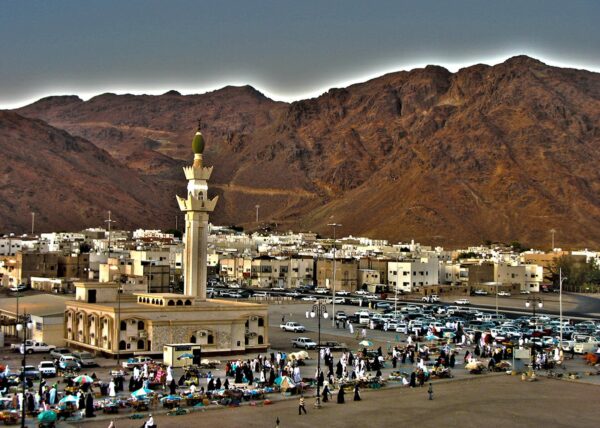
According to Saudipedia, Saudi Arabia’s official encyclopaedia, Masjid al-Jumu’ah lies in the south-west of Madinah, about 900 metres north of Quba Mosque and about 6 kilometres from the Prophet’s Mosque. The place where the mosque stands is the area referred to in the sources as the Ranuna valley; at the time of the Hijrah, this was the homeland of the tribe of Salim ibn Awf.
Being so close to Quba makes Masjid al-Jumu’ah a stop that can be seen on the same route as a visit to Quba Mosque. The “Medine” (Madinah) entry of the TDV Encyclopaedia of Islam also counts Masjid al-Jumu’ah, together with the Prophet’s Mosque and the Quba, Qiblatayn and Ghamamah mosques, among the places to visit in present-day Madinah. We have gathered the other places to visit in Madinah in our guide to places to visit in Madinah.
Info Card: Masjid al-Jumu’ah
- Where
- South-west of Madinah, Ranuna valley
- Distance from Quba
- About 900 m north of Quba Mosque
- Distance from the Haram
- About 6 km from the Prophet’s Mosque
- Reason for the name
- The Prophet led the first Friday prayer here during the Hijrah
- Other names
- Masjid al-Wadi, Masjid al-Qubayb, Masjid Atikah
- Present building
- Reconstruction and expansion in 1989, opened in 1992
- Capacity
- At most 70 people before, about 650 people after the expansion
- Visiting
- No official visiting hours have been published
- In the Umrah programme
- A voluntary sirah visit; not part of Umrah
The First Friday Prayer of the Hijrah
According to the “Hicret” (Hijrah) entry of the TDV Encyclopaedia of Islam, the Prophet arrived at Quba, just south of Madinah, on Monday 8 Rabi al-Awwal (20 September 622). For the length of his stay in Quba, Ibn Ishaq and Ibn Hisham say four days, while a narration reported by al-Bukhari says fourteen days; there are other views too. During this time he had a mosque built in Quba; this building is known today as Quba Mosque.
The Prophet set out from Quba towards Madinah on a Friday. When he reached the Ranuna valley, he stopped among the tribe of Salim ibn Awf and, as the time of the Friday prayer had come, he led the first Friday prayer at the prayer place in the valley; after the prayer, he reached the city. The “Cuma” (Friday) entry of the TDV Encyclopaedia of Islam bases this account on Ibn Hisham’s al-Sirah. Masjid al-Jumu’ah carries the memory of the place where this prayer was performed.
Friday in Madinah before the Hijrah
According to the same entry, once their numbers had grown, the Muslims of Madinah had chosen Friday as their day of gathering and worship, and As’ad ibn Zurarah had begun leading them in the Friday prayer. The importance of Masjid al-Jumu’ah therefore does not come from its being the first congregational prayer held in Madinah, but from its being the place of the first Friday prayer the Prophet led on the road of the Hijrah.
The Mosque’s Other Names
Saudipedia records that, besides Masjid al-Jumu’ah, the mosque is also known as Masjid al-Wadi, Masjid al-Qubayb and Masjid Atikah. The name “al-Wadi” recalls the mosque’s location in the Ranuna valley. Its Arabic name is “Masjid al-Jumu’ah”; the TDV Encyclopaedia of Islam refers to the building as “Mescid-i Cum’a”.
A History of Masjid al-Jumu’ah
The main periods recorded in the sources are as follows:
We have not been able to find a verified detailed record of the building phases between the Hijrah and 1989; for this reason, we give no dates for the periods in between.
Architecture
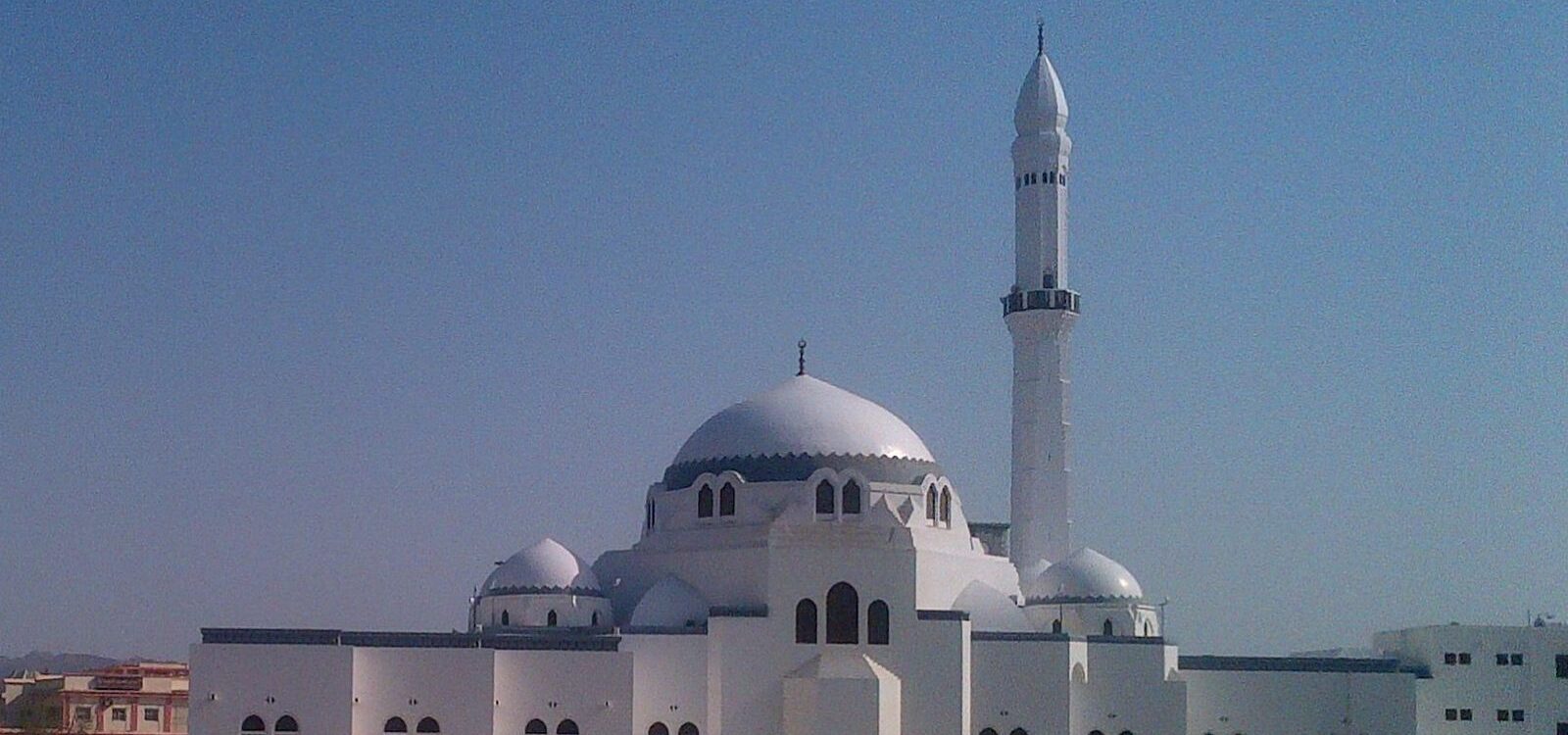
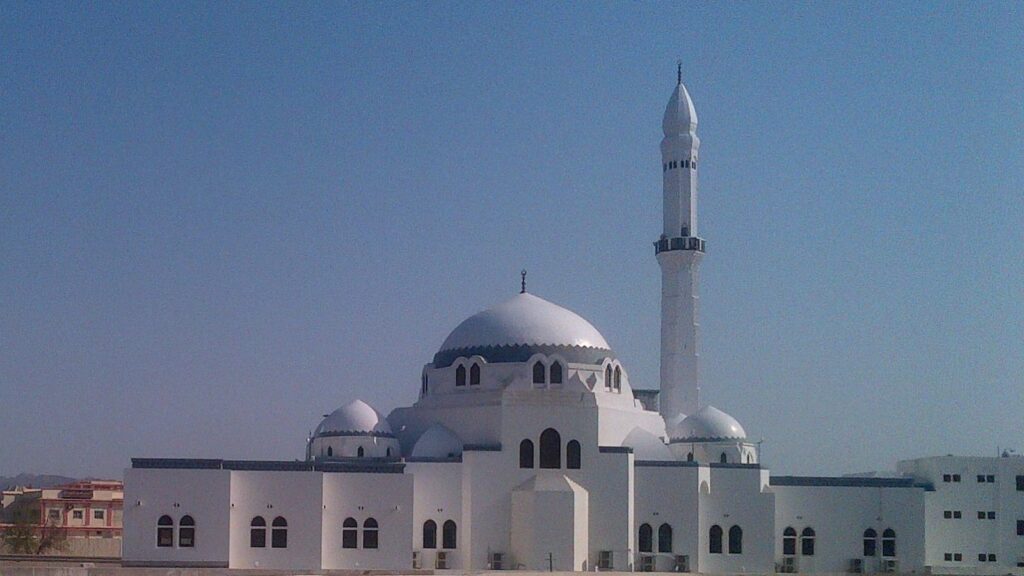
According to Saudipedia, the present Masjid al-Jumu’ah has a large dome in the middle of the prayer hall surrounded by four smaller domes; the building has a tall minaret. With the 1989-1992 expansion, the mosque grew from a small building for seventy people into a mosque for about 650 people.
Visiting Information and Etiquette
No official visiting hours have been published for Masjid al-Jumu’ah, and we have not been able to find verified information on the hours when its doors are open. As the mosque is a place of worship where the daily prayers are performed, we suggest planning your visit close to a prayer time and, if the door is closed, contenting yourself with seeing the mosque from outside. As practices may change, it is best to confirm the current situation on site.
Some points to keep in mind during the visit:
- Go in clean and modest clothing; follow the directions of the staff.
- Do not pass in front of people who are praying, and do not speak loudly.
- Avoid practices that have no place in the religion, such as rubbing your hands and face on the walls and doors or taking away stones or soil.
- Plan it as a short stop on the same route as the visit to Quba Mosque.
There is no special form of worship for visiting Masjid al-Jumu’ah; the visit is made to see a stop on the Hijrah journey and to remember the sirah.
How to Get to Masjid al-Jumu’ah
The mosque, about 6 kilometres from the Prophet’s Mosque, is reached by vehicle; it is about 900 metres from Quba Mosque. You can plan the visit as follows:
- Together with Quba: After visiting Quba Mosque, you can go on to Masjid al-Jumu’ah by a short road to the north.
- Taxi or ride-hailing apps: It can be reached from around the Prophet’s Mosque by entering “Masjid al-Jumu’ah” as the destination.
- Combining it with a city tour: On a Madinah tour covering Quba, Masjid al-Qiblatayn and Uhud, it is also possible to stop at Masjid al-Jumu’ah.
Masjid al-Jumu’ah in Umrah Programmes
Because of its closeness to Quba, Masjid al-Jumu’ah often appears in Umrah programmes that include Madinah as a stop seen after the visit to Quba. This visit is not part of the act of worship of Umrah; the obligatory and necessary acts of Umrah are performed in Makkah. The mosque visit is a voluntary visit made to get to know the sirah on the spot.
The road from Quba to Masjid al-Jumu’ah, and from there to the Prophet’s Mosque, roughly recalls the route the Prophet followed on the last day of the Hijrah. Keeping this order in mind helps you experience the visit as the story of a journey rather than a list of places.
The Last Stop on the Road of the Hijrah
Masjid al-Jumu’ah, halfway along the short road between Quba and Madinah, marks the last stop of the Hijrah before it reached Madinah. This prayer, which the Prophet led in congregation among a tribe before entering his new home, is the first Friday of life in Madinah. Someone visiting the mosque can recall the meaning of the Hijrah once more by thinking of that day’s simple prayer place beneath today’s domes.
Frequently Asked Questions
Where is Masjid al-Jumu’ah?
Why is it called Masjid al-Jumu’ah?
When was the first Friday prayer performed?
It was performed in 622, the year of the Hijrah, on the Friday the Prophet left Quba. The Prophet arrived at Quba on Monday 8 Rabi al-Awwal (20 September 622); as there are different narrations about the length of his stay in Quba, such as four days and fourteen days, views also differ on the exact date of the Friday.
What are the other names of Masjid al-Jumu’ah?
How many people does Masjid al-Jumu’ah hold?
Is Masjid al-Jumu’ah close to Quba Mosque?
Is this the first Friday prayer performed in Madinah?
Is the visit to Masjid al-Jumu’ah part of Umrah?
No. This visit is not among the essential rites of Umrah; it is a voluntary sirah visit made in Madinah.
References
This article was prepared by the RotaNur editorial team on the basis of the sources below. On religious matters, the approach of the Presidency of Religious Affairs of Türkiye (Diyanet) and the TDV Encyclopaedia of Islam has been followed; as the visiting arrangements in Madinah may change, please confirm the current situation from official sources before you set out.
- Saudipedia, “Which Mosque Was the First to Host the Friday Prayer?”. saudipedia.com. Accessed: 04.11.2026.
- Hayreddin Karaman, “Cuma”, TDV İslâm Ansiklopedisi, vol. 8, 1993, pp. 85-89. islamansiklopedisi.org.tr. Accessed: 04.11.2026.
- Ahmet Önkal, “Hicret”, TDV İslâm Ansiklopedisi, vol. 17, 1998, pp. 458-462. islamansiklopedisi.org.tr. Accessed: 04.11.2026.
- Nebi Bozkurt, Mustafa Sabri Küçükaşcı, “Medine”, TDV İslâm Ansiklopedisi, vol. 28, 2003, pp. 305-318. islamansiklopedisi.org.tr. Accessed: 04.11.2026.

Cihat Murat Yüksel is the editor of the RotaNur blog and the founder of Markention. Drawing on the sources of Türkiye's Presidency of Religious Affairs (Diyanet), he turns the questions travellers ask most about preparing for Umrah, Hajj and halal travel into clear, practical guides.
Questions answered in this article
Where Is Masjid al-Jumu’ah?
According to Saudipedia, Saudi Arabia’s official encyclopaedia, Masjid al-Jumu’ah lies in the south-west of Madinah, about 900 metres north of Quba Mosque and about 6 kilometres from the Prophet’s Mosque. The place where the mosque stands is the area referred to in the sources as the Ranuna valley; at the time of the Hijrah, this was the homeland of the tribe of Salim ibn Awf.

Comments (0)