






Contents 15 sections
- What Is Hajj Perfume?
- Scents Brought Back from Hajj: Musk, Amber, Oud and Rose
- What is musk?
- What is amber?
- What is oud?
- Rose and the Taif rose
- Kaaba scent and Rawdah scent
- The Difference Between the Scents: How Does Each One Smell?
- What Is Bakhoor, and How Does It Differ from Attar?
- Can Scent Be Applied While in Ihram?
- Can scent be applied before entering ihram?
- Scented soap and wet wipes
- How Is Hajj Perfume Used and Stored?
- Frequently Asked Questions
- References
Hajj perfume, known in Türkiye as “hacı kokusu” (the pilgrim’s scent), usually means the alcohol-free, oil-based attars that are brought back in small bottles and offered to guests on the return from Hajj and Umrah. The name mostly refers not to a single scent but to musk, amber, oud or rose attar. In this article, we explain the names of the scents brought back from Hajj, what musk, amber, oud and bakhoor are, how the scents differ from one another and the ruling on wearing scent in ihram, on the basis of the TDV Encyclopaedia of Islam (TDV İslâm Ansiklopedisi) and the fatwas of Türkiye’s High Council of Religious Affairs (Din İşleri Yüksek Kurulu). The information on scent profiles is taken from the product descriptions in our shop.
In Short
What is called “Hajj perfume” or “hajji oil” is usually an alcohol-free, oil-based attar. Among the scents brought back from Hajj, musk, amber, oud and rose are mentioned most; those sold under the names Kaaba scent and Rawdah scent are blends of these notes. Scent is not applied while in ihram; attar is used before entering ihram or after leaving it.
- Name: Usually called Hajj perfume, hajji oil or attar.
- Best known: Musk, amber, oud, rose.
- Features: Alcohol-free, oil-based, in a small bottle, used in small amounts.
- In ihram: Applying scent is an ihram restriction; applying it to the body before ihram is recommended (mustahabb) according to the Hanafis.
- Bakhoor: It is not applied but burned; it is a scent for the room.
What Is Hajj Perfume?
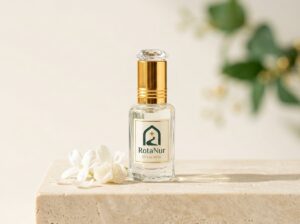
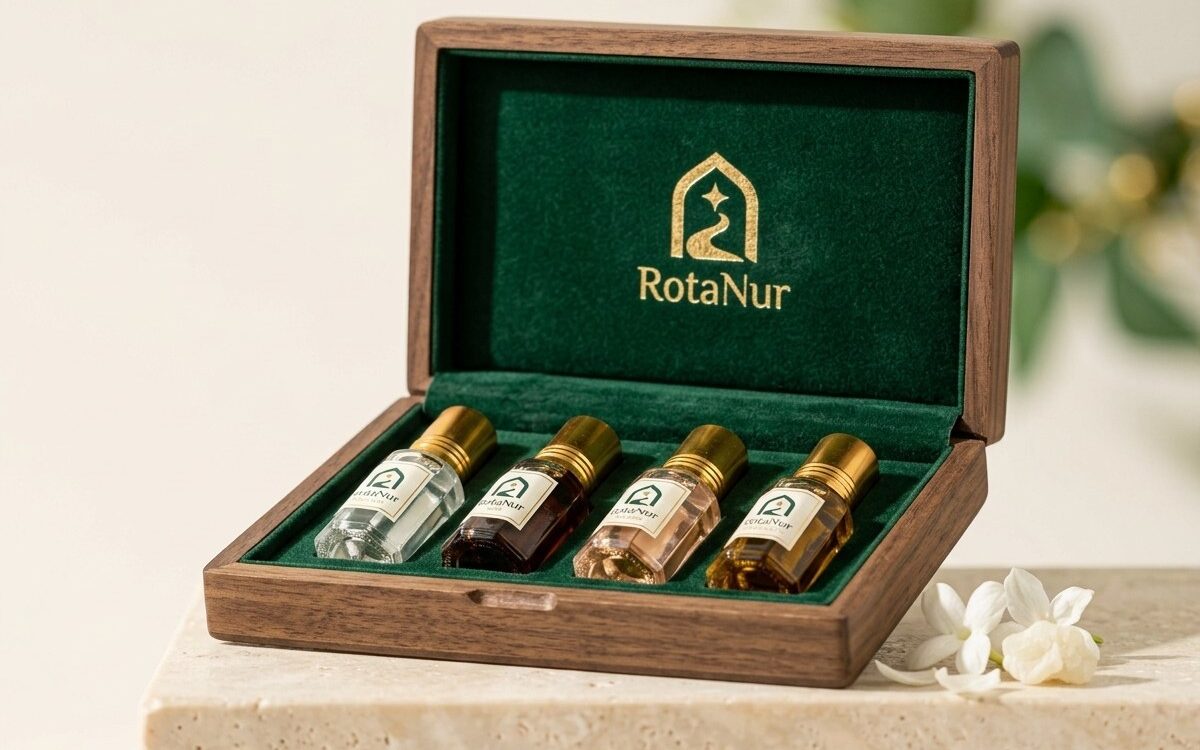
Hajj perfume usually describes not a particular brand or a single attar, but the scents that those returning from Hajj and Umrah offer to their guests or give as gifts in small bottles. What the attars in our shop have in common is that they contain no alcohol and are oil-based. The word “attar” in the product names comes from the same root: according to the TDV Encyclopaedia of Islam, the Arabic itr means “pleasant scent”; attar was the name once given to those who sold pleasant scents, and in Turkish it is mostly pronounced “aktar”. These attars are not sprayed like alcohol-based perfumes; a very small amount is applied to the wrist, the neck and the beard with a roll-on tip or the bottle’s stick.
The answer sought by those who ask “what is the name of the scent that comes from Hajj?” is most often one of these four words: musk, amber, oud and rose. Most of the bottles brought by pilgrims carry either one of these scents or a blend of several. Below we take each one in turn.
Scents Brought Back from Hajj: Musk, Amber, Oud and Rose
What is musk?
According to the TDV Encyclopaedia of Islam, musk is a strong-smelling, dark brown substance obtained from a gland of the male musk deer, which lives in regions such as Tibet and Mongolia; throughout history it has been used in making perfume and medicine. The encyclopaedia also records that, because musk was expensive, it was mixed with other substances or cheaper substances were sold under the same name. For this reason, most of the attars sold today under the name “musk” are not animal musk but attars that carry a musk note.
Musk has a special place in Islamic culture. The Qur’an states that the seal of the drink of Paradise is musk (al-Mutaffifin 83/25-26). According to the encyclopaedia, the Prophet regarded musk as the finest of scents and applied musk before entering ihram and before the tawaf on the day of Eid al-Adha. The scent known in Türkiye as “Musk Tahara” is white musk, with a clean, powdery and light character.
What is amber?
Amber (ambergris) is a pleasant-smelling, waxy substance found floating in the sea or washed up on the shore. According to the “Amber” entry of the TDV Encyclopaedia of Islam, it forms in the intestines of the sperm whale; the longer it stays in the sea, the harder it becomes, the lighter its colour and the finer its scent. It has mostly been used in making perfume, creams and ointments, as well as in items such as prayer beads, incense and candles. As an attar, the amber note is a warm, sweet and enveloping scent; it is preferred in cool weather and in the evening.
What is oud?
Oud, also known as agarwood or aloeswood, is obtained from a fragrant tree. The TDV Encyclopaedia of Islam counts the agarwood tree first among the incense materials that are burned for their scent. The oud note is deep, woody and slightly smoky; it feels intense at first and softens within a few minutes. The oud attar in our shop is not pure oud oil but an alcohol-free attar that carries the oud note; we state this clearly on the product page as well.
Rose and the Taif rose
Rose also holds an important place among the scents brought by pilgrims. The Taif rose is a variety of damask rose that grows in the Taif region near Makkah and is used in the production of rose water and rose oil. The rose note is fresh and floral; in the Eastern tradition of scent it is worn by men as well.
Kaaba scent and Rawdah scent
These two names describe a blend, not a single raw material. The Kaaba scent attar in our shop is made up of oud, amber and rose notes; the Rawdah scent attar is made up of jasmine, rose and white musk notes. Neither is the scent actually used at the Kaaba or in the Rawdah; they are attars prepared with inspiration from that atmosphere. The TDV Encyclopaedia of Islam records the belief that the Rawdah al-Mutahharah smells of musk and amber.
The Difference Between the Scents: How Does Each One Smell?
The table below summarises the scent profiles given in the product descriptions of the attars in our shop. The perception of scent varies from person to person; if you are buying for the first time, it is safer to start with a light scent.
| Scent | Character | When |
|---|---|---|
| White musk | Clean, powdery, with the freshness of soap | Daytime, crowded settings |
| Taif rose | Fresh, elegant, floral | Daytime, spring and summer |
| Rawdah scent | Jasmine, rose and musk; fresh | All day |
| Amber | Warm, sweet, resinous | Evening, winter |
| Oud | Deep, woody, slightly smoky | Evening, special occasions |
| Kaaba scent | A blend of oud, amber and rose | Evening, gifts |
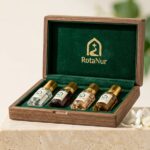
You can find all of the scents on our musk, oud and alcohol-free attars page. For those who are not sure which scent to choose, there is also a four-piece attar gift set that offers four scents together. Current prices are on the product pages.
What Is Bakhoor, and How Does It Differ from Attar?
Bakhoor is a scent that is burned, not applied. The TDV Encyclopaedia of Islam defines bakhoor as a substance whose fragrant smoke is enjoyed by throwing it on the fire or burning it in a special vessel, that is, incense; agarwood, sandalwood, resin and similar materials are burned in the form of sticks, shavings, powder or bark. The special vessel in which incense is burned is called a censer (buhurdan).
According to the same entry, there is no tradition of burning incense as part of worship in Islam; the Prophet ordered incense to be burned in mosques not for worship but to provide a pleasant scent. It is related that incense was burned when Umar sat on the minbar, and that the traveller Ibn Jubayr described how, in the twelfth century, plenty of incense was burned in the mosque in Makkah during the month of Ramadan. The bakhoor that pilgrims bring home today is used for the same purpose, to scent the house when receiving guests. Bakhoor is not lit directly with a lighter; it is heated on charcoal or an electric burner. The details are on the bakhoor and incense burner set page.
Can Scent Be Applied While in Ihram?
No. According to the High Council of Religious Affairs, it is not permissible for a person in ihram to use scent for as long as they remain in ihram. If a scented substance is applied to the whole of a limb, or to different places to the extent of a limb, a dam (sacrificing a sheep or a goat) is required; if it is applied to less than that, charity (sadaqah) to the amount of one fitrah is required. According to the “Ihram” entry of the TDV Encyclopaedia of Islam, every kind of scent is forbidden to the person in ihram in the Hanafi, Shafi’i and Hanbali schools.
Can scent be applied before entering ihram?
Applying a pleasant scent to the body before entering ihram is sunnah according to the Shafi’is and Hanbalis, recommended (mustahabb) according to the Hanafis and disliked (makruh) according to Imam Malik. Applying scent to the clothing, however, is not permissible according to the majority; wearing an ihram garment that has been scented or has absorbed scent is not considered permissible in the Hanafi and Maliki schools. For this reason, attar is applied only to the body before the intention and the talbiyah; it is not applied to the ihram garment. It is not applied again after entering ihram.
Scented soap and wet wipes
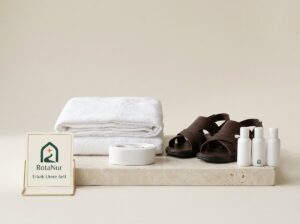
The High Council of Religious Affairs states that scented soap, detergent and wet wipes are used for cleaning, not for perfuming oneself, and that using them without the aim of perfuming therefore does not require a penalty; it nevertheless advises that unscented ones be preferred. We have gathered the products prepared for the ihram period on our unscented ihram-friendly care page; we explained all of the restrictions in our article on ihram restrictions.
How Is Hajj Perfume Used and Stored?
- Start with a small amount Oil-based attar is concentrated; with scents such as oud and amber, a single touch is usually enough.
- Apply to the pulse points The inside of the wrist, the neck, behind the ear and the beard; do not rub the scent in, it opens up by itself with the warmth of the skin.
- Test on clothing Oil-based attar can leave a mark on light-coloured fabric; try it first on a spot that cannot be seen.
- Layer By applying the intense scent (oud) first and the light one (white musk) over it, you can obtain a softer trail.
- Store in a cool place Keep the bottle closed, in a dry place away from direct sunlight.
When offering scent to a guest, instead of touching the tip of the bottle directly to the guest’s hand, a small touch on the wrist or the back of the hand is enough. If you are going to take gifts to a large circle, you can look at our Umrah gifts page, and for the other items you will take with you, at our Umrah packing list article.
Frequently Asked Questions
What is the name of the scent that comes from Hajj?
It is usually called Hajj perfume or hajji oil; the scent inside the bottle is most often musk, amber, oud or rose. Those sold under the names Kaaba scent and Rawdah scent are blends of these notes.
Does the scent worn by pilgrims contain alcohol?
The attars called Hajj perfume are alcohol-free and oil-based. All of the attars in our shop are alcohol-free; the ingredients are written on each product page.
Are musk and white musk the same thing?
No. Classic musk is a dark and intense scent; white musk is clean, powdery and light. Most of the scents sold in Türkiye under the name Musk Tahara have the character of white musk.
Can Hajj perfume be applied while in ihram?
Is Kaaba scent the scent used at the Kaaba?
No. The attar sold under the name Kaaba scent is a blend of oud, amber and rose notes; it is not the scent actually used at the Kaaba.
Are bakhoor and incense sticks the same thing?
Bakhoor is used by heating fragrant materials such as agarwood on charcoal or a burner; incense sticks burn by themselves. Both are scents for the room and are not applied to the skin.
How long does Hajj perfume last?
According to our product descriptions, oil-based attars can be sensed for between six and ten hours depending on skin type; they can last longer on clothing.
References
This article was prepared by the RotaNur editorial team on the basis of the sources below. In religious rulings, the approach of the Presidency of Religious Affairs of Türkiye (Diyanet) and the Hanafi school are taken as the basis; for questions about your personal situation, consult Diyanet’s current fatwas. The scent profiles and usage information are taken from RotaNur product descriptions.
- “Misk” (Musk), TDV İslâm Ansiklopedisi (TDV Encyclopaedia of Islam). islamansiklopedisi.org.tr. Accessed: 11.11.2026.
- Sargon Erdem, “Amber”, TDV İslâm Ansiklopedisi (TDV Encyclopaedia of Islam), 1991. islamansiklopedisi.org.tr. Accessed: 11.11.2026.
- “Buhur” (Incense), TDV İslâm Ansiklopedisi (TDV Encyclopaedia of Islam). islamansiklopedisi.org.tr. Accessed: 11.11.2026.
- Salim Öğüt, “Ihram” (Ihram), TDV İslâm Ansiklopedisi (TDV Encyclopaedia of Islam), 2000. islamansiklopedisi.org.tr. Accessed: 11.11.2026.
- Presidency of Religious Affairs of Türkiye (Diyanet), High Council of Religious Affairs, “Ihramlı kimse banyo yaparken ve çamaşır yıkarken sabun veya deterjan kullanabilir mi?” (Can a person in ihram use soap or detergent when bathing and washing clothes?), Fatwas. kurul.diyanet.gov.tr. Accessed: 11.11.2026.
- Nil Sarı, “Attâr”, TDV İslâm Ansiklopedisi (TDV Encyclopaedia of Islam), 1991. islamansiklopedisi.org.tr. Accessed: 11.11.2026.

Cihat Murat Yüksel is the editor of the RotaNur blog and the founder of Markention. Drawing on the sources of Türkiye's Presidency of Religious Affairs (Diyanet), he turns the questions travellers ask most about preparing for Umrah, Hajj and halal travel into clear, practical guides.
Questions answered in this article
What Is Hajj Perfume?
Hajj perfume usually describes not a particular brand or a single attar, but the scents that those returning from Hajj and Umrah offer to their guests or give as gifts in small bottles. What the attars in our shop have in common is that they contain no alcohol and are oil-based. The word “attar” in the product names comes from the same root: according to the TDV Encyclopaedia of Islam, the Arabic itr means “pleasant scent”; attar was the name once given to those who sold pleasant scents, and in Turkish it is mostly pronounced “aktar”. These attars are not sprayed like alcohol-based perfumes; a very small amount is applied to the wrist, the neck and the beard with a roll-on tip or the bottle’s stick.
What is musk?
According to the TDV Encyclopaedia of Islam, musk is a strong-smelling, dark brown substance obtained from a gland of the male musk deer, which lives in regions such as Tibet and Mongolia; throughout history it has been used in making perfume and medicine. The encyclopaedia also records that, because musk was expensive, it was mixed with other substances or cheaper substances were sold under the same name. For this reason, most of the attars sold today under the name “musk” are not animal musk but attars that carry a musk note.
What is amber?
Amber (ambergris) is a pleasant-smelling, waxy substance found floating in the sea or washed up on the shore. According to the “Amber” entry of the TDV Encyclopaedia of Islam, it forms in the intestines of the sperm whale; the longer it stays in the sea, the harder it becomes, the lighter its colour and the finer its scent. It has mostly been used in making perfume, creams and ointments, as well as in items such as prayer beads, incense and candles. As an attar, the amber note is a warm, sweet and enveloping scent; it is preferred in cool weather and in the evening.
What is oud?
Oud, also known as agarwood or aloeswood, is obtained from a fragrant tree. The TDV Encyclopaedia of Islam counts the agarwood tree first among the incense materials that are burned for their scent. The oud note is deep, woody and slightly smoky; it feels intense at first and softens within a few minutes. The oud attar in our shop is not pure oud oil but an alcohol-free attar that carries the oud note; we state this clearly on the product page as well.
The Difference Between the Scents: How Does Each One Smell?
The table below summarises the scent profiles given in the product descriptions of the attars in our shop. The perception of scent varies from person to person; if you are buying for the first time, it is safer to start with a light scent.
What Is Bakhoor, and How Does It Differ from Attar?
Bakhoor is a scent that is burned, not applied. The TDV Encyclopaedia of Islam defines bakhoor as a substance whose fragrant smoke is enjoyed by throwing it on the fire or burning it in a special vessel, that is, incense; agarwood, sandalwood, resin and similar materials are burned in the form of sticks, shavings, powder or bark. The special vessel in which incense is burned is called a censer (buhurdan).
Can Scent Be Applied While in Ihram?
No. According to the High Council of Religious Affairs, it is not permissible for a person in ihram to use scent for as long as they remain in ihram. If a scented substance is applied to the whole of a limb, or to different places to the extent of a limb, a dam (sacrificing a sheep or a goat) is required; if it is applied to less than that, charity (sadaqah) to the amount of one fitrah is required. According to the “Ihram” entry of the TDV Encyclopaedia of Islam, every kind of scent is forbidden to the person in ihram in the Hanafi, Shafi’i and Hanbali schools.
Can scent be applied before entering ihram?
Applying a pleasant scent to the body before entering ihram is sunnah according to the Shafi’is and Hanbalis, recommended (mustahabb) according to the Hanafis and disliked (makruh) according to Imam Malik. Applying scent to the clothing, however, is not permissible according to the majority; wearing an ihram garment that has been scented or has absorbed scent is not considered permissible in the Hanafi and Maliki schools. For this reason, attar is applied only to the body before the intention and the talbiyah; it is not applied to the ihram garment. It is not applied again after entering ihram.

Comments (0)