







Contents 8 sections
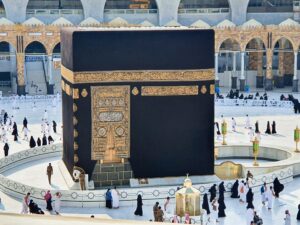
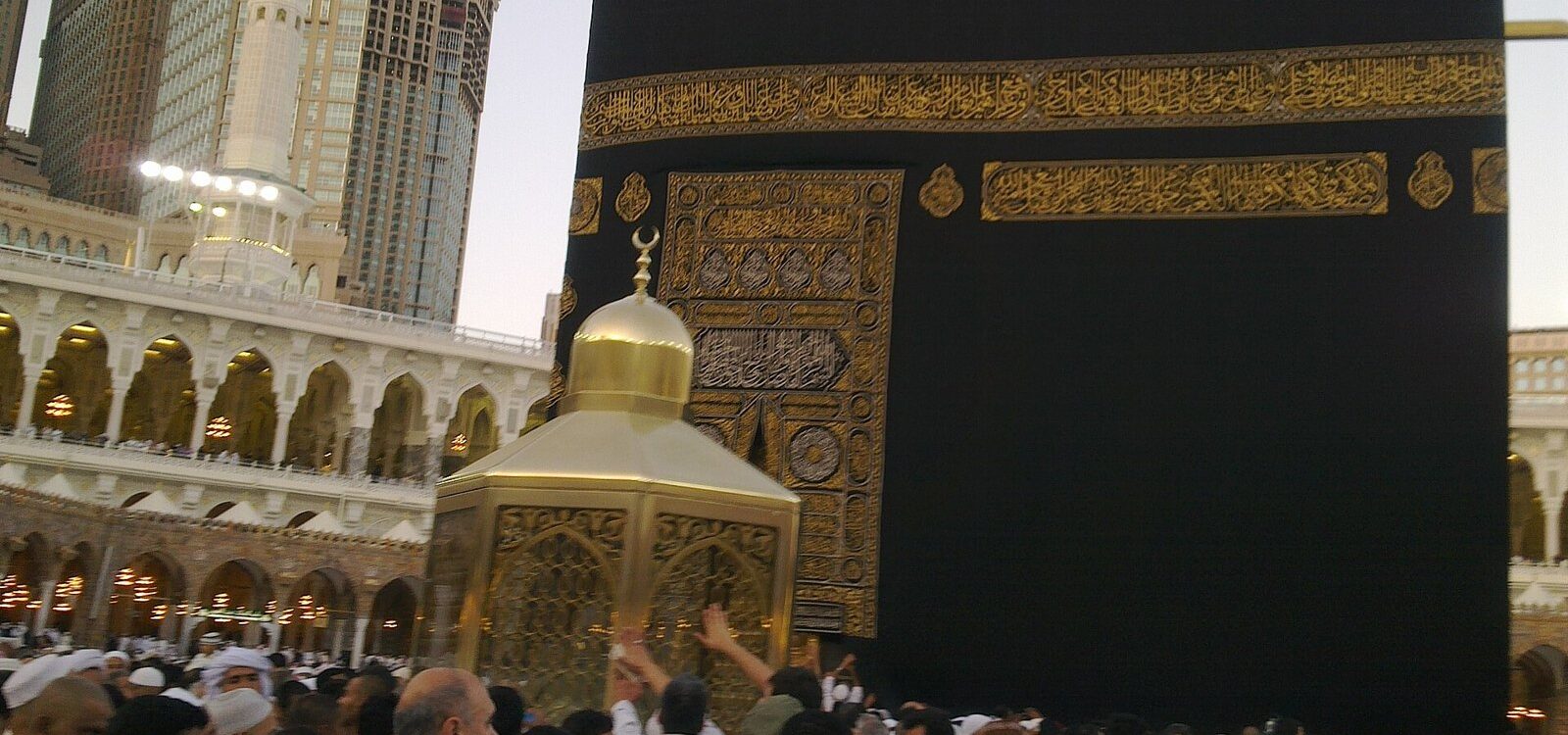
Maqam Ibrahim is the stone that stands on the door side of the Kaaba, inside a gold-coloured enclosure, and is accepted as bearing the footprints of the Prophet Ibrahim (peace be upon him). It is mentioned by name in two separate verses of the Qur’an; it is also the preferred place for the two-rak’ah prayer performed after every tawaf in Umrah and Hajj. In this article, we explain what Maqam Ibrahim is, its place in the Qur’an, its connection with the tawaf prayer and how to behave in the crowd, on the basis of Diyanet sources.
In Short
Maqam Ibrahim is the stone on which, according to narration, the Prophet Ibrahim stood while building the Kaaba. Verse 125 of Surah al-Baqarah says, “Take the Maqam of Ibrahim as a place of prayer.” It is virtuous to perform the two-rak’ah prayer after tawaf behind the Maqam; in a crowd, performing it anywhere in Masjid al-Haram is sufficient.
- Location: On the side of the Kaaba’s door (the Multazam), inside the tawaf area.
- In the Qur’an: Al-Baqarah 2/125 and Al Imran 3/97.
- Tawaf prayer: Wajib according to the Hanafi school.
What Is Maqam Ibrahim?
The word “maqam” means “a place where one stands” in Arabic. In Islamic sources, Maqam Ibrahim is described as the stone on which the Prophet Ibrahim stood as he worked, raising the walls of the Kaaba together with his son Ismail (peace be upon them). On the stone there are two hollows in the shape of footprints.
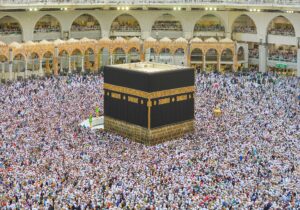
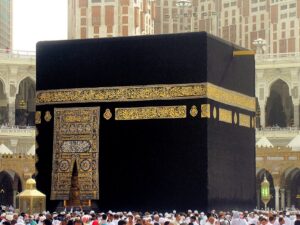
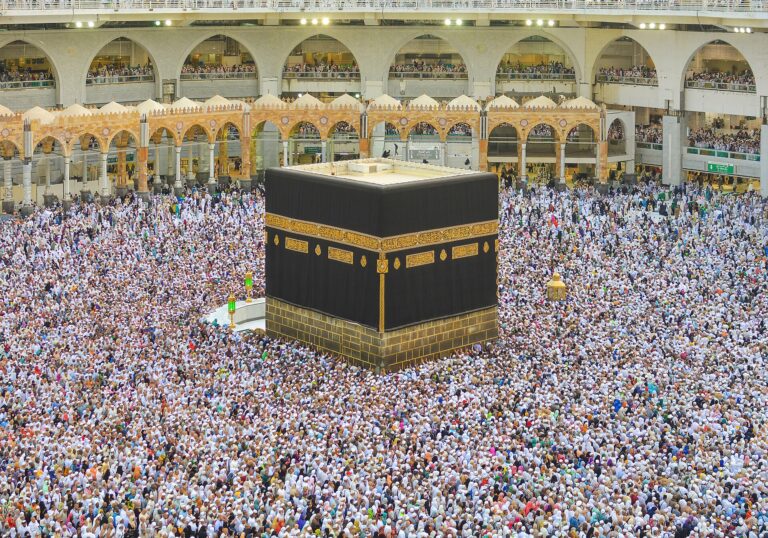
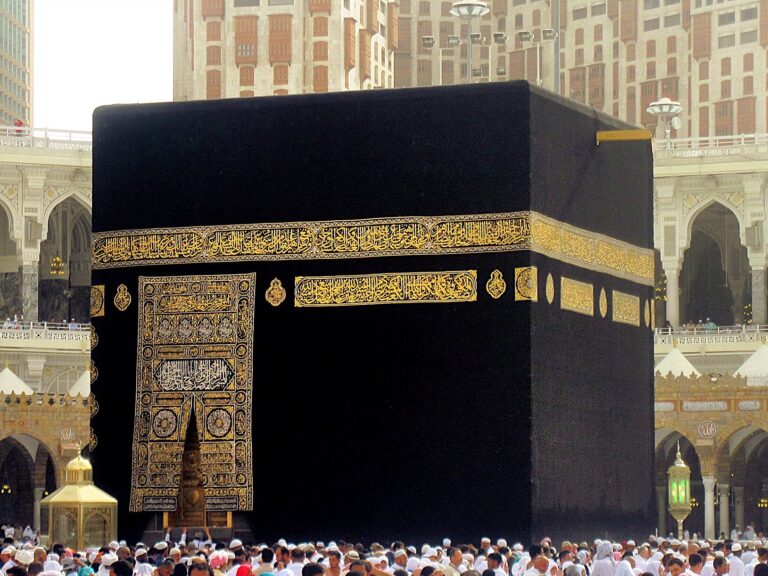
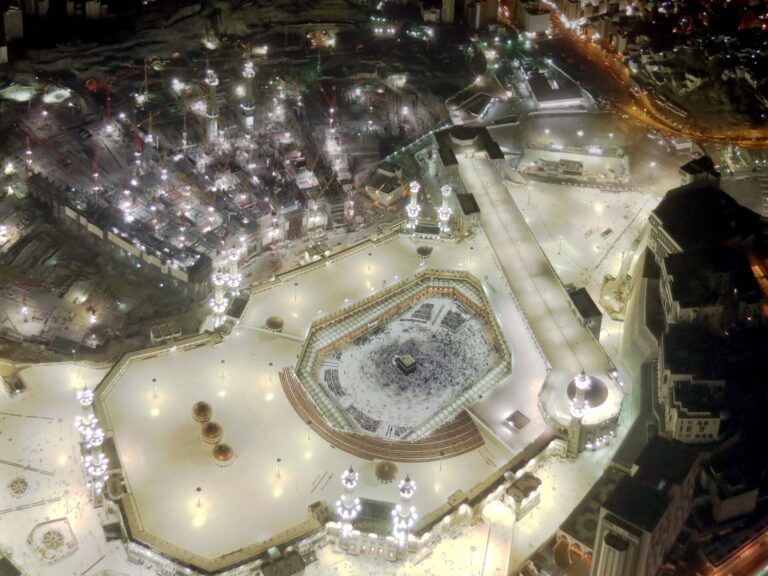
Today the stone is kept in an enclosure of crystal and metal, opposite the eastern face of the Kaaba where its door is. Those performing tawaf continue their tawaf by passing between the Kaaba and the Maqam or around the outside of the Maqam. For the other parts of the Kaaba, see our article on the parts of the Kaaba.
Maqam Ibrahim in the Qur’an
Maqam Ibrahim is mentioned explicitly in two verses:
- Al-Baqarah 2/125: After stating that the Kaaba was made a place of gathering and security for people, the verse says, “Take the Maqam of Ibrahim as a place of prayer.”
- Al Imran 3/97: The verse states that there are clear signs in the Kaaba, that one of them is Maqam Ibrahim and that whoever enters it will be safe.
For the translation and explanation of the verses, Diyanet’s Kur’an Yolu commentary can be consulted.
The Tawaf Prayer and Maqam Ibrahim
Every tawaf performed in Umrah or Hajj consists of seven laps (shawt); when the tawaf is finished, the two-rak’ah tawaf prayer is performed. This prayer is wajib according to the Hanafi school. As it is narrated that the Prophet (peace be upon him) went behind Maqam Ibrahim after tawaf and prayed there, it is virtuous to perform the prayer behind the Maqam, with the Maqam and the Kaaba in the same line.
However, this is not a condition. If the tawaf area is very crowded, the prayer can be performed anywhere in Masjid al-Haram, or even elsewhere in the Haram area. Diyanet also reminds pilgrims not to stand in prayer behind the Maqam in a crowd in a way that blocks those performing tawaf, and not to cause harm to others.
If the Tawaf Prayer Falls in a Disliked Time
According to the Hanafi school, prayer is not performed while the sun is rising, at the moment it is at its zenith and while it is setting. If the tawaf ends at one of these times, the tawaf prayer is performed after the disliked (karahah) time has passed. For the steps of tawaf, see our article on how to perform tawaf.
Dua at Maqam Ibrahim
It is good to make dua after the tawaf prayer; this dua has no fixed wording, and a person may make dua in their own language. As there is no authentic report saying that “this particular dua must be recited” specifically at Maqam Ibrahim, approach the “Maqam dua” texts circulating on social media with caution. For the duas that can be recited throughout Umrah, our article on duas to recite in Umrah may help.
Things to Keep in Mind When Visiting
- Rubbing one’s face on the enclosure, or rubbing a cloth or handkerchief on it and keeping it in the hope of blessing, is not a practice that has a place in the religion; Diyanet sources advise avoiding such behaviour.
- The area around the Maqam is one of the most congested points of the tawaf. Those who are elderly or with children can perform the prayer on the upper floors or outside the tawaf area.
- Stopping in the flow of the tawaf to take photographs creates a risk both for you and for others.
Frequently Asked Questions
Is Maqam Ibrahim inside the Kaaba?
No. It stands outside the Kaaba, in the tawaf area, opposite the door of the Kaaba.
Is it a condition to pray behind Maqam Ibrahim?
It is not a condition; it is virtuous. The tawaf prayer can be performed anywhere in Masjid al-Haram.
Are Maqam Ibrahim and the Hajar al-Aswad the same thing?
No. The Hajar al-Aswad (the Black Stone) is the black stone set in the eastern corner of the Kaaba, and it is the starting point of tawaf. For details, see our article on the Hajar al-Aswad.
References
Method: This article was prepared on the basis of the Qur’an, the Hajj and Umrah manual of the Presidency of Religious Affairs of Türkiye (Diyanet) and the TDV Encyclopaedia of Islam. Religious rulings are given according to the Hanafi school. Last checked: 29.10.2026.
- TDV İslâm Ansiklopedisi, “Makām-ı İbrâhîm”. islamansiklopedisi.org.tr. Accessed: 29.10.2026.
- Presidency of Religious Affairs of Türkiye (Diyanet), Kur’an-ı Kerim Meali (Translation of the Qur’an), al-Baqarah 2/125; Al Imran 3/97. kuran.diyanet.gov.tr. Accessed: 29.10.2026.
- Presidency of Religious Affairs of Türkiye (Diyanet), General Directorate of Hajj and Umrah Services, Hac ve Umre Rehberi (Hajj and Umrah Guide). hac.diyanet.gov.tr. Accessed: 29.10.2026.

Cihat Murat Yüksel is the editor of the RotaNur blog and the founder of Markention. Drawing on the sources of Türkiye's Presidency of Religious Affairs (Diyanet), he turns the questions travellers ask most about preparing for Umrah, Hajj and halal travel into clear, practical guides.
Questions answered in this article
What Is Maqam Ibrahim?
The word “maqam” means “a place where one stands” in Arabic. In Islamic sources, Maqam Ibrahim is described as the stone on which the Prophet Ibrahim stood as he worked, raising the walls of the Kaaba together with his son Ismail (peace be upon them). On the stone there are two hollows in the shape of footprints.


Comments (0)