









Contents 11 sections
- Where Is Masjid al-Jinn?
- The Event Behind the Name
- Where does the name Masjid al-Haras come from?
- The History of Masjid al-Jinn
- Architecture
- Visiting Information and Etiquette
- How to Get to Masjid al-Jinn
- Masjid al-Jinn in Umrah Programmes
- The Place Where the Quran Was Heard
- Frequently Asked Questions
- References
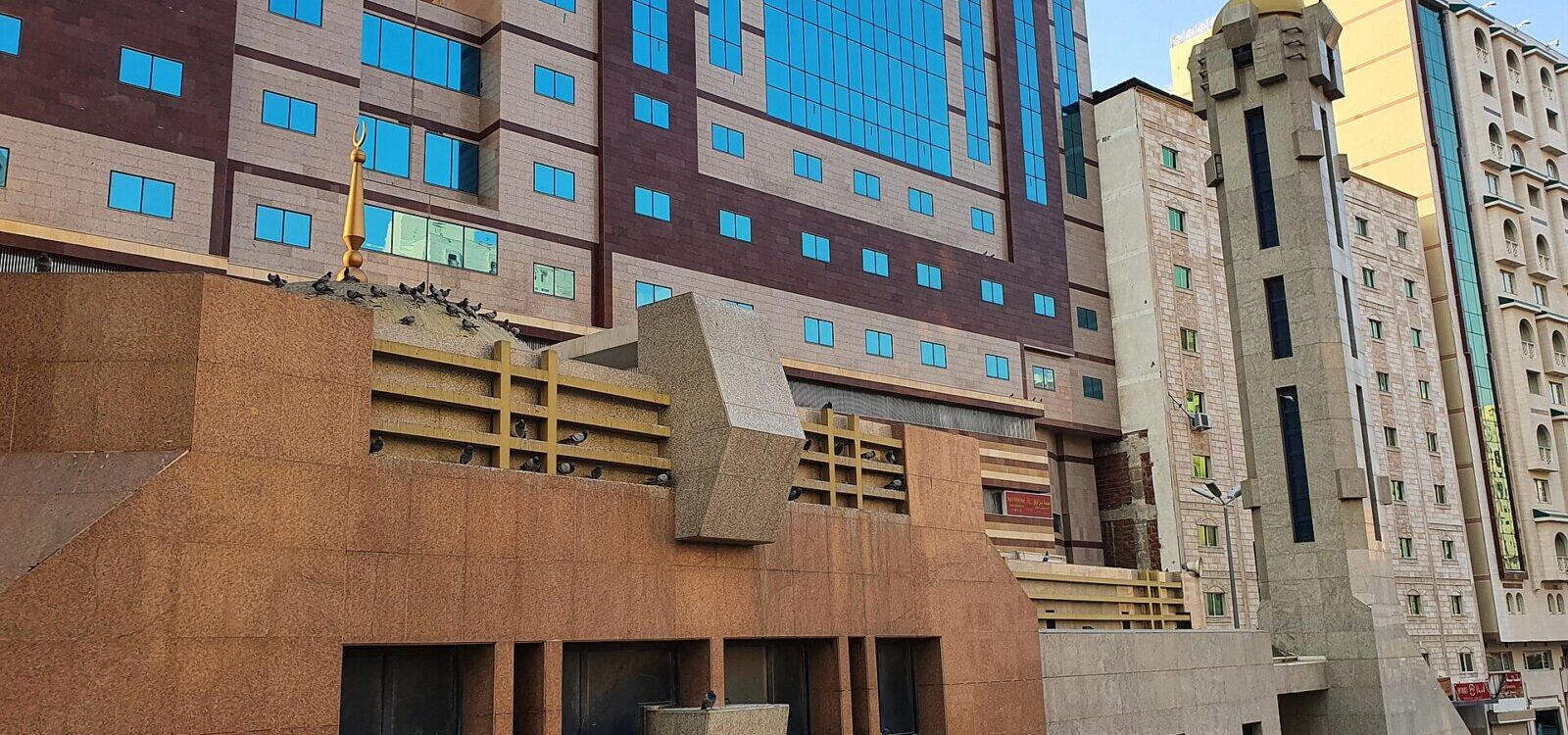
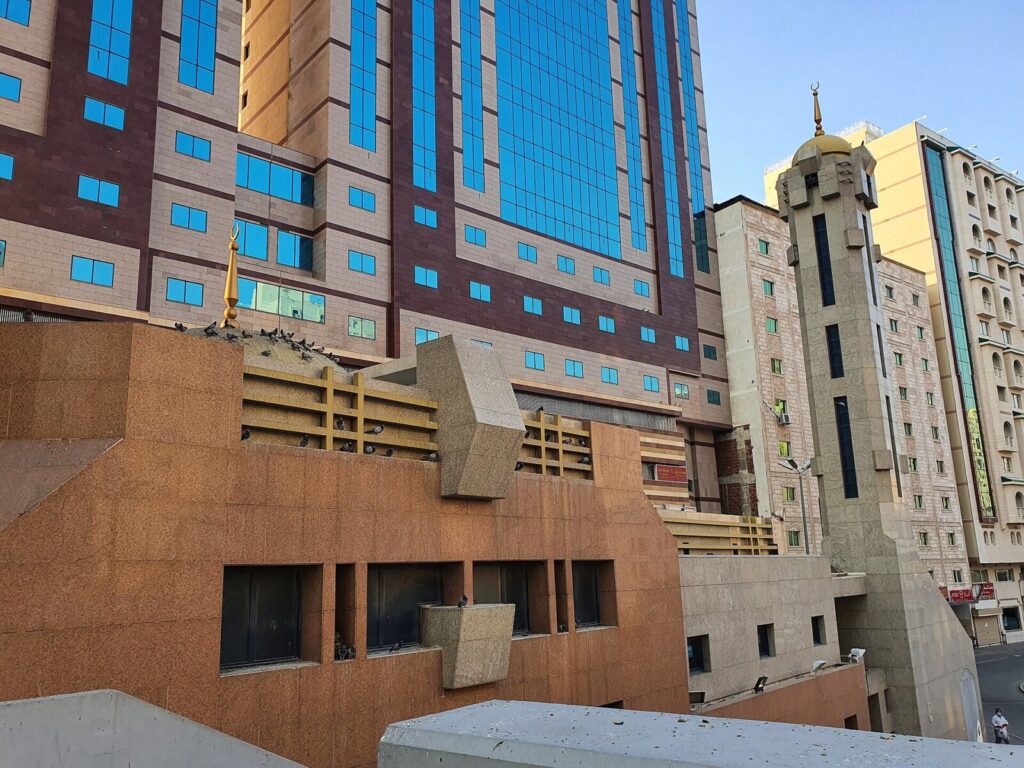
Masjid al-Jinn is a historic mosque in Makkah, north of the Haram and next to the Jannat al-Mu’alla cemetery, built at the spot known as the place where the jinn listened to the Quran from the Prophet (peace be upon him). In this guide, we look at where the mosque is, where its name comes from, its connection with Surah al-Jinn, the stories behind its other names “Masjid al-Haras” and “Masjid al-Bay’ah”, its history from the Ottoman period to the present day and visiting information, together with our sources.
In Short
Masjid al-Jinn is located in Makkah, about 2 kilometres north of the Haram, near Jannat al-Mu’alla. According to the reports, the Prophet (peace be upon him) recited the Quran to the jinn at this spot, and a group of jinn pledged allegiance to him here; the event is described in the Quran in Surah al-Jinn. Because the night watchmen used to gather here, it is also known as Masjid al-Haras. The present building was rebuilt as a modern mosque in 2000.
- Location: Makkah, about 2 km north of the Haram; next to Jannat al-Mu’alla.
- Other names: Masjid al-Haras, Masjid al-Bay’ah.
- Event: The jinn listening to the Quran from the Prophet and pledging allegiance.
- First building: 1112 AH (1700), architect Ibrahim Agha.
- Present building: Rebuilt in 2000, in the reign of King Fahd.
Where Is Masjid al-Jinn?
According to the TDV Encyclopaedia of Islam, Masjid al-Jinn stands on a hill in Makkah about 2 kilometres north of the Haram, near the Jannat al-Mu’alla cemetery. Saudipedia, Saudi Arabia’s official encyclopaedia, states that the mosque is today in the al-Ghazzah district, beside the Second Ring Road (Umar ibn al-Khattab Road), and that its northern side adjoins Jannat al-Mu’alla. According to the same source, the mosque is one of the closest mosques to Masjid al-Haram, and the call to prayer and the prayers at the Haram can be heard around it.
Because one of the mosque’s doors faces the entrance to the cemetery, it is also used as a meeting point for funerals. For this reason, a visit to Masjid al-Jinn is often planned together with a visit to Jannat al-Mu’alla. We have gathered the other sites to visit in Makkah and their distances in our guide to places to visit in Makkah.
Info Card: Masjid al-Jinn
- Where
- Makkah, al-Ghazzah district; south of Jannat al-Mu’alla, beside the Second Ring Road
- Distance from the Haram
- About 2 km north of the Haram
- Other names
- Masjid al-Haras, Masjid al-Bay’ah
- Related surah
- Surah al-Jinn (29th juz of the Quran)
- First building
- 1112 AH (1700), architect Ibrahim Agha
- Latest renovation
- 2000, reign of King Fahd ibn Abd al-Aziz
- Visiting
- A mosque open for worship; no official visiting hours have been published
- Getting there
- A short drive from the Haram
- In the Umrah programme
- A voluntary sirah visit; not part of Umrah
The Event Behind the Name
What sets Masjid al-Jinn apart from the other mosques of Makkah is that the event it is linked to is described in the Quran. According to Saudipedia, the Prophet (peace be upon him) met a group of jinn at this place; the jinn listened to the verses he recited, accepted Islam and pledged allegiance to him. The event is described in Surah al-Jinn, in the 29th juz of the Quran. Reading a translation of the meaning of this surah, such as Diyanet’s, before your visit helps you better understand the memory the mosque carries.
The TDV Encyclopaedia of Islam relates the reports about the site of the mosque as follows: while reciting the Quran to the jinn, the Prophet drew a line on the ground so that Abdullah ibn Mas’ud, who was with him, would not go beyond it; for this reason the spot was also called “mawdi’ al-khatt”, meaning “the place of the line”. Because of the report that seven jinn pledged allegiance to the Prophet here, the mosque is also known as Masjid al-Bay’ah, meaning “the mosque of the pledge”.
Where does the name Masjid al-Haras come from?
According to the TDV Encyclopaedia of Islam, the mosque was also called “Masjid al-Haras”, meaning “the mosque of the watchmen”, because the city’s night watchmen gathered on this hill to change shifts. Saudipedia explains the same name by the fact that in the Umayyad period Makkah’s watchmen gathered here and were then dispatched to the districts and neighbourhoods of the city. In this way, the mosque’s three names carry three different memories: the jinn listening to the Quran, the pledge of allegiance and the city’s night watch.
The History of Masjid al-Jinn
The early sources mention the place where the meeting took place, but they do not speak of a building there. Information about the mosque building belongs to a later period. The main periods mentioned in the sources are as follows:
The two sources look at the first building of the Ottoman period from different angles: the TDV Encyclopaedia of Islam dates the first building to 1700 and attributes it to the architect Ibrahim Agha, while Saudipedia records that in 1714 the mihrab of the mosque, which had been lost in floods, was found under the ground. Both accounts show that the mosque remained below ground level for a long time. The building you see today is the result of the reconstruction in 2000.
Architecture
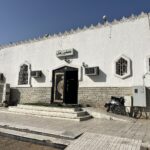
According to the TDV Encyclopaedia of Islam, the first mosque in 1700 was an underground structure with no dome and no minaret; in 2000 it was brought entirely above ground and turned into a modern mosque with a minaret. Saudipedia states that modern mosque architecture techniques were used in this expansion and that the exterior walls were clad in artificial stone. The mosque overlooks the Sulaymaniyah and Shi’b Amir districts and the surrounding mountains.
We were unable to find verified information about the mosque’s floor area and capacity. Saudipedia records that there are car parks, restaurants and shops around the mosque.
Visiting Information and Etiquette
Masjid al-Jinn is a mosque where the daily prayers are held and a regular stop for visitors going to and from the Haram. Saudipedia states that, thanks to its location connected to the entrances and exits of the Second Ring Road, the mosque is a junction point that helps disperse the crowds during the Hajj and Umrah seasons. As no official visiting hours have been published for the mosque, timing your visit to coincide with one of the daily prayers is the most practical option.
Some points to keep in mind during the visit:
- Go in clean, modest clothing; use the sections and entrances set aside for women.
- Remember that the door opening onto the cemetery is used for funerals, and keep the way clear during a funeral.
- Do not turn to special practices that have no place in the religion on the basis of the reports linked to the mosque; if the time is suitable, simply pray and make supplication in the mosque.
- Avoid practices such as rubbing your hands and face on the walls or taking away stones or soil.
There is no special form of worship for visiting Masjid al-Jinn. The visit is an occasion to recall Surah al-Jinn and to reflect that the Quran addresses the jinn as well as human beings.
How to Get to Masjid al-Jinn
The most practical way to reach the mosque, about 2 kilometres north of the Haram, is by vehicle. Given the heat of Makkah and its sloping roads, walking can be tiring, especially at midday. Visitors usually choose one of the following options:
- Taxi or ride-hailing app: It can be reached with a short drive from the area around Masjid al-Haram.
- Together with Jannat al-Mu’alla: Moving on to the mosque after visiting the cemetery lets you complete two visits at the same stop.
- Guided city tour: On Makkah visiting tours, Masjid al-Jinn is one of the stops closest to the city centre, together with Jannat al-Mu’alla.
Masjid al-Jinn in Umrah Programmes
In Umrah programmes that include Makkah, Masjid al-Jinn may be one of the stops on the city tour, together with sirah sites such as Jannat al-Mu’alla, Jabal al-Nour and Mount Thawr. This visit is not part of the Umrah rites and is not among the essential acts of Umrah. The visit to Masjid al-Jinn is a voluntary one, made to get to know the sirah on the spot.
The content of the tour varies from programme to programme; on some tours, only the outside of the mosque is shown from the vehicle. If you would like to pray at the mosque, it is a good idea to let your tour guide know in advance or to go separately in your free time.
The Place Where the Quran Was Heard
Masjid al-Jinn looks like a modern mosque at a busy junction in Makkah; but the place where it stands carries the memory of a surah that tells how the Quran was recited not only to human beings but also to the jinn. Reading a translation of the meaning of Surah al-Jinn before your visit will make the few minutes you spend in this simple mosque far more meaningful.
Frequently Asked Questions
Where is Masjid al-Jinn?
Why is it called Masjid al-Jinn?
What are the other names of Masjid al-Jinn?
What does mawdi’ al-khatt mean?
When was Masjid al-Jinn built?
How far is Masjid al-Jinn from the Haram?
Can you pray at Masjid al-Jinn?
Yes, Masjid al-Jinn is a mosque where the daily prayers are held. As no official visiting hours have been published, it is advisable to time your visit to coincide with the prayer times.
Is the visit to Masjid al-Jinn part of Umrah?
No. The visit to Masjid al-Jinn is not one of the essential rites of Umrah; it is a voluntary sirah visit made in Makkah.
References
This article was prepared by the RotaNur editorial team on the basis of the sources below. On religious matters, the approach of the Presidency of Religious Affairs of Türkiye (Diyanet) and the TDV Encyclopaedia of Islam has been followed; as the visiting arrangements in Makkah may change, please confirm the current situation from official sources before you set out.
- H. Ahmet Sezikli, “Mescid-i Cin”, TDV İslâm Ansiklopedisi, vol. 29, 2004, pp. 271-272. islamansiklopedisi.org.tr. Accessed: 04.11.2026.
- Saudipedia, “Al-Jinn Mosque”. saudipedia.com. Accessed: 04.11.2026.

Cihat Murat Yüksel is the editor of the RotaNur blog and the founder of Markention. Drawing on the sources of Türkiye's Presidency of Religious Affairs (Diyanet), he turns the questions travellers ask most about preparing for Umrah, Hajj and halal travel into clear, practical guides.
Questions answered in this article
Where Is Masjid al-Jinn?
According to the TDV Encyclopaedia of Islam, Masjid al-Jinn stands on a hill in Makkah about 2 kilometres north of the Haram, near the Jannat al-Mu’alla cemetery. Saudipedia, Saudi Arabia’s official encyclopaedia, states that the mosque is today in the al-Ghazzah district, beside the Second Ring Road (Umar ibn al-Khattab Road), and that its northern side adjoins Jannat al-Mu’alla. According to the same source, the mosque is one of the closest mosques to Masjid al-Haram, and the call to prayer and the prayers at the Haram can be heard around it.
Where does the name Masjid al-Haras come from?
According to the TDV Encyclopaedia of Islam, the mosque was also called “Masjid al-Haras”, meaning “the mosque of the watchmen”, because the city’s night watchmen gathered on this hill to change shifts. Saudipedia explains the same name by the fact that in the Umayyad period Makkah’s watchmen gathered here and were then dispatched to the districts and neighbourhoods of the city. In this way, the mosque’s three names carry three different memories: the jinn listening to the Quran, the pledge of allegiance and the city’s night watch.

Comments (0)