




Contents 17 sections
- What Is Fasting and Who Is Obliged to Fast?
- What Breaks Your Fast: Acts Requiring a Make-Up Fast and Expiation
- How is the expiation fast kept?
- Situations Requiring Only a Make-Up Fast
- Does vomiting break the fast?
- Things That Do Not Break the Fast
- Does eating or drinking out of forgetfulness break the fast?
- Does brushing your teeth break the fast?
- Do Medical Examination and Treatment Methods Break the Fast?
- Does getting an injection break the fast?
- Do eye drops break the fast?
- The Concession Not to Fast: Illness, Travel and Other Excuses
- Fasting on Umrah and While Travelling
- What Should Be Done When the Fast Is Broken?
- For Those Who Wish to Spend Ramadan in the Haram
- Frequently Asked Questions
- Sources
What breaks your fast is a question whose basic framework is drawn by the Quran: fasting is abstaining, with the intention of worship, from eating, drinking and sexual intercourse from the break of dawn (true dawn, fajr al-sadiq) until sunset (al-Baqarah 2/187). Situations other than these three, such as eye drops, injections, brushing the teeth or a blood test, are assessed through rulings that scholars have derived by analogy with these three principles. In this article, on the basis of the fatwas of the High Board of Religious Affairs of the Presidency of Religious Affairs in Türkiye (Diyanet) and the Hanafi school, we explain in turn the acts that break the fast in a way requiring both a make-up fast (qada) and expiation (kaffarah), those that require only a make-up fast, the things that do not break the fast, and today’s methods of medical examination and treatment. According to the Diyanet calendar, Ramadan 2027 begins on Monday, 8 February 2027; going through this list before Ramadan settles in advance most of the questions that come to mind while fasting.
In Brief
The things that definitely break the fast are eating, drinking and sexual intercourse. According to the Hanafi school, a person who deliberately breaks a Ramadan fast with these owes both a make-up fast and expiation. A fast broken by mistake, under coercion or through an error requires only a make-up fast. Eating out of forgetfulness, eye drops, injections that contain no nourishment and blood tests do not break the fast.
- Definition of fasting: Abstaining from eating, drinking and sexual intercourse from the break of dawn until sunset.
- Expiation (kaffarah): Required of a person who breaks a Ramadan fast without an excuse and deliberately, by eating, drinking or sexual intercourse.
- Cigarettes and hookah: Break the fast.
- Eye drops and asthma inhalers: Do not break the fast.
- Injections and IV drips: Do not break the fast if they are not nourishing or pleasure-giving; a nourishing IV drip breaks it.
What Is Fasting and Who Is Obliged to Fast?
Fasting is one of the five basic pillars of Islam, and fasting in the month of Ramadan is obligatory (fard) (al-Baqarah 2/183-185). According to the explanation of the High Board of Religious Affairs, fasting is obligatory for those who are Muslim, sane and have reached puberty. Children who have not reached puberty are not obliged to fast; however, they are encouraged to fast so that they grow accustomed to worship. It is forbidden (haram) for women to fast during menstruation and postnatal bleeding; a fast kept on these days is not valid and is made up later.
The essence of fasting is “abstaining”. In the language of Islamic jurisprudence (fiqh) this is called imsak. Because eating, drinking and sexual intercourse are clearly stated in verses and hadiths, all Islamic scholars agree that they break the fast. Situations outside these have been assessed either by comparing them with these three (analogy, qiyas) or by starting from the concept of imsak, and for this reason differences of opinion have arisen between the schools. The rulings below are according to the Hanafi school, which is widely followed in Türkiye, and the explanations of Diyanet.
What Breaks Your Fast: Acts Requiring a Make-Up Fast and Expiation
According to the Hanafi school, if a person who has made the intention for the Ramadan fast in time, either during the night or during the day, who knows that he is fasting and who has no legitimate excuse deliberately breaks his fast with one of the acts below, he both makes up that day’s fast and performs expiation.
- Eating and drinking deliberately: Taking something in through the mouth and swallowing it for nourishment, as medicine or for pleasure.
- Sexual intercourse: Being intimate with one’s spouse during the daytime in Ramadan; expiation applies to both parties.
- Using pleasure-giving substances: The High Board of Religious Affairs counts tobacco products such as cigarettes and hookah, and narcotic substances, within the prohibitions of fasting; the fast of a person who uses them is broken.
The basis of expiation is the hadith reporting that the Prophet ordered a Companion who had been intimate with his wife during the daytime in Ramadan to free a slave; if he was unable to do so, to fast for two months without a break; and if he was unable to do that either, to feed sixty poor people (Bukhari, Sawm 30; Muslim, Siyam 81). Expiation applies only to the Ramadan fast; a person who breaks a make-up, vowed or voluntary fast owes only a make-up fast.
How is the expiation fast kept?
The expiation fast is kept for two lunar months or sixty days without a break. If even one day is missed in between for a reason such as illness, the count starts again from the beginning, except for women’s days of menstruation. For this reason, the expiation fast should be started at a time when it will not coincide with days on which fasting is not possible, such as the month of Ramadan and the days of Eid. Those who cannot fast sixty consecutive days for health reasons feed sixty poor people morning and evening for one day each, or give each of them the amount of one fitrah.
Situations Requiring Only a Make-Up Fast
Some situations that break the fast do not require expiation, because they do not involve intent, pleasure or the purpose of nourishment; the person only fasts one day in place of that day. The main examples found in Diyanet’s catechism (ilmihal) and fatwas are the following:
- Water accidentally going down the throat while performing ablution (wudu) or rinsing the mouth.
- Eating or drinking something under coercion.
- Swallowing something that is not normally eaten (such as a stone, paper or a metal coin).
- Deliberately vomiting a mouthful.
- Continuing to eat the pre-dawn meal (suhoor) in the belief that the time of imsak has not yet begun, or breaking the fast early in the belief that the sun has set.
- After eating out of forgetfulness, thinking that the fast has been broken and then deliberately continuing to eat.
- Receiving an injection containing nourishment, an IV drip or blood; an endoscopy or colonoscopy performed with water; general and regional anaesthesia with an IV drip attached.
Does vomiting break the fast?
Vomiting that comes on by itself does not break the fast, whatever its amount. A person’s deliberately vomiting a mouthful, however, breaks the fast and requires only a make-up fast. The basis of this ruling is the Prophet’s saying, “Whoever is overcome by vomiting does not have to make up the fast; but whoever vomits deliberately, let him make it up” (Tirmidhi, Sawm 25).
Things That Do Not Break the Fast
The hadiths report that bathing, taking water into the mouth and rinsing it, using a miswak, applying kohl, wearing scent and applying oil do not break the fast. Starting from this principle, the High Board of Religious Affairs explains that the following do not break the fast:
- Eating and drinking after forgetting that one is fasting.
- Brushing the teeth and using a miswak (as long as toothpaste and water are not swallowed).
- Showering, bathing, and wearing scent and perfume.
- Using eye drops, ear drops and sublingual (under-the-tongue) medicine.
- The inhaler that asthma patients spray into the mouth.
- Injections that are not nourishing or pleasure-giving (such as painkillers, antibiotics, vaccines and insulin).
- Having blood drawn for a blood test, a biopsy, an angiogram and local anaesthesia.
- Having a wet dream while asleep, and vomiting that comes on by itself.
Does eating or drinking out of forgetfulness break the fast?
It does not. The Prophet said, “Whoever eats or drinks out of forgetfulness while fasting, let him complete his fast, for it is Allah who has fed him and given him to drink” (Bukhari, Sawm 26; Muslim, Siyam 171). The moment the person remembers, he removes what is in his mouth and continues his fast; his fast is valid.
Does brushing your teeth break the fast?
It does not. Authentic sources report that the Prophet used a miswak while fasting. When brushing with toothpaste, care is taken not to swallow the paste or the water; leaving brushing until after iftar or to the time of suhoor is the more cautious way.
Do Medical Examination and Treatment Methods Break the Fast?
Because some of today’s medical procedures did not exist in the time of the Prophet, the High Board of Religious Affairs has assessed them one by one according to the criteria of “whether it carries the meaning of eating and drinking” and “whether something of the nature of nourishment reaches the stomach”. The table below is a summary of this fatwa; a person receiving treatment should first consult their doctor and then Diyanet’s current explanations.
| Procedure | Ruling | Reason |
|---|---|---|
| Eye and ear drops | Does not break | The amount is very small; the part that reaches the digestive tract is excused |
| Asthma inhaler | Does not break | It is doubtful whether it reaches the stomach; it is likened to the water of ablution |
| Sublingual medicine | Does not break | It is absorbed in the tissue of the mouth and does not reach the stomach |
| Injection containing no nourishment | Does not break | It does not carry the meaning of eating and drinking |
| Nourishing IV drip, receiving blood | Breaks | It has the nature of nourishment |
| Endoscopy, colonoscopy | Breaks if water is given | Water is given into the digestive system through the device |
| Local anaesthesia | Does not break | It does not reach the stomach |
| General and regional anaesthesia | Breaks | An IV drip is given throughout the procedure |
| Rectal suppository | Does not break | It has no nourishing property |
| Haemodialysis | Does not break if no fluid is given | Peritoneal dialysis breaks it, because a fluid containing nourishment is given |
Does getting an injection break the fast?
The ruling on an injection depends on its purpose. Injections that are not nourishing or pleasure-giving, such as painkillers, antibiotics or vaccines, do not break the fast. Nourishing or pleasure-giving injections, however, do break the fast; receiving an IV drip and blood intravenously is subject to the same ruling.
Do eye drops break the fast?
They do not. Taking into account that the medicine dropped into the eye is very little, that most of it is absorbed in the tissues of the eye and nose, and that the amount reaching the digestive tract is next to nothing, the High Board of Religious Affairs has ruled that eye drops do not break the fast.
The Concession Not to Fast: Illness, Travel and Other Excuses
Some people have not broken the fast but are counted as permitted not to fast. The Quran says, “Whoever among you is ill or on a journey, then an equal number of other days” (al-Baqarah 2/184). The High Board of Religious Affairs explains this concession (rukhsah) with the following excuses:
- Travel: A person who is going to set out on a journey of at least ninety kilometres may refrain from making the intention to fast during the night. A person who sets out on the journey after making the intention completes his fast if he has no excuse; if he breaks it, only a make-up fast is required.
- Illness: A person whose illness would increase or be prolonged if he fasted, including when a trustworthy doctor states this, does not fast, on condition that he makes it up later.
- Old age and illness with no hope of recovery: A person who cannot fast gives fidyah for each day.
- Pregnancy and breastfeeding: A mother who fears harm to herself or her child may refrain from fasting and makes it up later.
- Heavy work and extreme thirst: A person whose health would suffer serious harm may break his fast and makes it up later.
Important: The amount of the fidyah for one fast is equal to one fitrah. The fitrah amount announced by Diyanet in Türkiye on 13 January 2026 is valid from the beginning of Ramadan 2026 until the beginning of Ramadan 2027; when the new amount for Ramadan 2027 is announced, this article will be updated. For a person who does not have a permanent excuse, giving fidyah is not sufficient; he must make up the fast he could not keep later.
Fasting on Umrah and While Travelling
Those going on Umrah during Ramadan are counted as travellers according to the Hanafi school on the day they set out from Türkiye and for as long as they intend to stay in Makkah and Madinah for less than fifteen days; they may therefore make use of the concession not to fast. However, if the journey does not cause hardship, fasting is more meritorious. A person who is fasting during a flight breaks the fast when the sun sets where he is; if he can still see the sun from inside the plane, the time of iftar is not considered to have come. We explained the effect of being a traveller on the prayer in our article on prayer while travelling, and the virtue and crowds of being in the Haram during Ramadan in our article on the best time for Umrah.
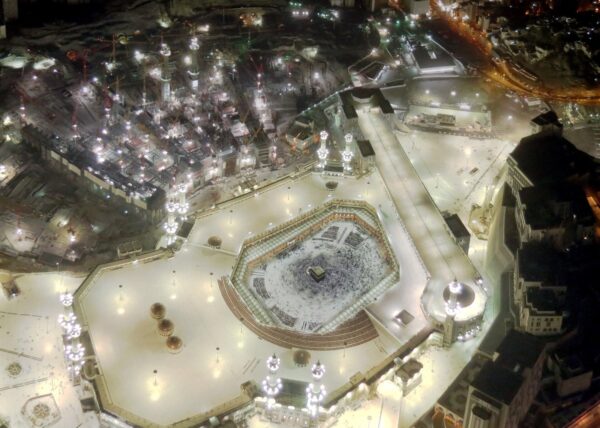
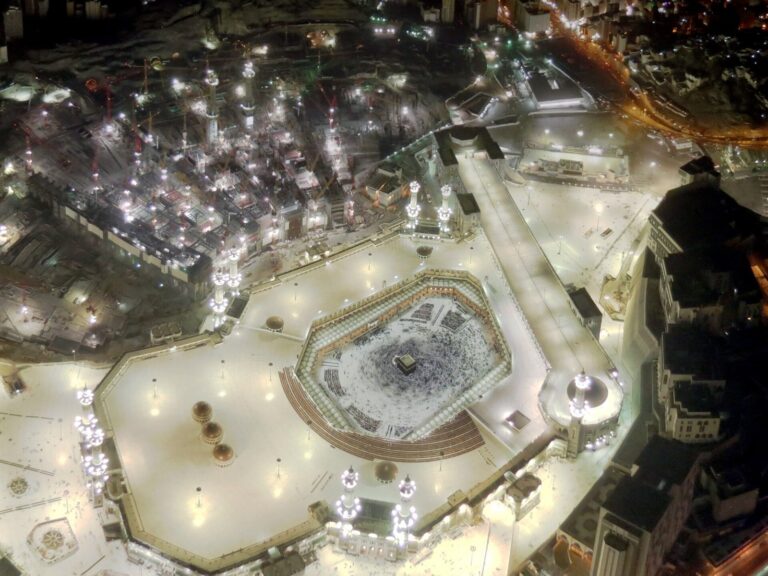
Ramadan in Makkah means a long night of worship that lasts from iftar to suhoor. Going to the Haram early for the taraweeh and tahajjud prayers, breaking the fast at the shared tables in the Haram and resting at the hotel during the day make both fasting and worship easier. In our Ramadan Umrah programmes, this routine is planned taking into account the hotel’s distance to the Haram and the dates that coincide with Laylat al-Qadr.
What Should Be Done When the Fast Is Broken?
Whatever the reason for breaking it, a person whose fast has been broken spends the rest of that day without eating or drinking out of respect for Ramadan. Then he makes up the day he could not fast after Ramadan, before the next Ramadan. Make-up fasts do not have to be kept consecutively; however, it is better to pay off the debt as soon as possible. If expiation is required, the sixty-day fast is also started on a date that will not coincide with Ramadan and the days of Eid. A person who it becomes clear will never be able to fast because of illness or old age gives fidyah for each day. On matters about which you are unsure in your own situation, you can consult Diyanet’s fatwa line or the provincial and district muftiates.
Voluntary fasts such as that of the Day of Arafah are broken by the same rules; a person who breaks a voluntary fast owes only a make-up fast. For the virtue of the Arafah fast and the acts of worship performed on that day, see our article on the Day of Arafah dua.
For Those Who Wish to Spend Ramadan in the Haram
For those who wish to spend the month of Ramadan fasting in Makkah and Madinah, RotaNur organises Umrah tours covering flights, accommodation, transfers, guidance by a religious official and visa procedures. To learn about the Ramadan 2027 dates, hotel options and availability, you can write to us 24/7 through our contact page or the WhatsApp button on the page.
Frequently Asked Questions
What are the 3 things that break the fast?
The three things clearly stated in the verses and hadiths, on which all scholars agree, are eating, drinking and sexual intercourse. Other situations are assessed by comparison with these.
Does swallowing the saliva in your mouth break the fast?
It does not. A person’s swallowing the saliva in his own mouth does not harm the fast; however, saliva or food remains taken out of the mouth and swallowed again do break the fast.
Does giving blood break the fast?
According to the Hanafi school and Diyanet’s explanations, giving blood and having blood drawn for a test do not break the fast. It is better to leave giving an amount of blood that would cause weakness until after iftar.
Does taking a bath break the fast?
It does not. Bathing, showering and performing ablution do not affect the fast; one only takes care not to let water go down the throat through the mouth and nose. Accidentally swallowing the water breaks the fast and requires a make-up fast.
Does chewing gum while fasting break the fast?
Gums containing sugar and flavouring break the fast because they leave a substance that is swallowed. Chewing gum from which no substance dissolves at all is considered disliked (makruh); a fasting person should stay away from chewing gum.
What is the difference between a make-up fast and expiation?
A make-up fast (qada) is fasting one day in place of a day that could not be fasted or was broken. Expiation (kaffarah), on the other hand, is fasting sixty days without a break, in addition to the make-up fast, as the penalty for deliberately breaking a Ramadan fast.
Sources
This article was prepared by the RotaNur editorial team on the basis of the sources below. In religious rulings, the fatwas of the High Board of Religious Affairs of the Presidency of Religious Affairs (Diyanet) and the Hanafi school have been taken as the basis; for decisions related to health, please consult your doctor first. The Ramadan 2027 dates follow the calendar published by Diyanet. Last checked: 20.10.2026.
- Diyanet İşleri Başkanlığı Din İşleri Yüksek Kurulu, “Orucu Bozan ve Bozmayan Muayene ve Tedavi Yöntemleri” [Examination and treatment methods that do and do not break the fast], Fatwas. kurul.diyanet.gov.tr. Accessed: 20.10.2026.
- Diyanet İşleri Başkanlığı Din İşleri Yüksek Kurulu, “Göz damlasının orucu bozup bozmayacağının hükmü nedir?” [What is the ruling on whether eye drops break the fast?], Fatwas. kurul.diyanet.gov.tr. Accessed: 20.10.2026.
- Diyanet İşleri Başkanlığı Din İşleri Yüksek Kurulu, “Sigara veya keyif verici madde kullanmak orucu bozar mı?” [Does smoking or using pleasure-giving substances break the fast?], Fatwas. kurul.diyanet.gov.tr. Accessed: 20.10.2026.
- Diyanet İşleri Başkanlığı Din İşleri Yüksek Kurulu, “Oruç tutmamayı mubah kılan mazeretler nelerdir?” [What are the excuses that make not fasting permissible?], Fatwas. kurul.diyanet.gov.tr. Accessed: 20.10.2026.
- Diyanet İşleri Başkanlığı Din İşleri Yüksek Kurulu, “Oruç tutmakla yükümlü olmanın şartları nedir?” [What are the conditions for being obliged to fast?], Fatwas. kurul.diyanet.gov.tr. Accessed: 20.10.2026.
- Diyanet İşleri Başkanlığı, İlmihal I: İman ve İbadetler [Catechism I: Faith and Worship], “Oruç” (Fasting) chapter, Diyanet İşleri Başkanlığı Yayınları, Ankara. See also TDV İslâm Ansiklopedisi, “Oruç”. Accessed: 20.10.2026.

Cihat Murat Yüksel is the editor of the RotaNur blog and the founder of Markention. Drawing on the sources of Türkiye's Presidency of Religious Affairs (Diyanet), he turns the questions travellers ask most about preparing for Umrah, Hajj and halal travel into clear, practical guides.
Questions answered in this article
What Is Fasting and Who Is Obliged to Fast?
Fasting is one of the five basic pillars of Islam, and fasting in the month of Ramadan is obligatory (fard) (al-Baqarah 2/183-185). According to the explanation of the High Board of Religious Affairs, fasting is obligatory for those who are Muslim, sane and have reached puberty. Children who have not reached puberty are not obliged to fast; however, they are encouraged to fast so that they grow accustomed to worship. It is forbidden (haram) for women to fast during menstruation and postnatal bleeding; a fast kept on these days is not valid and is made up later.
How is the expiation fast kept?
The expiation fast is kept for two lunar months or sixty days without a break. If even one day is missed in between for a reason such as illness, the count starts again from the beginning, except for women’s days of menstruation. For this reason, the expiation fast should be started at a time when it will not coincide with days on which fasting is not possible, such as the month of Ramadan and the days of Eid. Those who cannot fast sixty consecutive days for health reasons feed sixty poor people morning and evening for one day each, or give each of them the amount of one fitrah.
Does vomiting break the fast?
Vomiting that comes on by itself does not break the fast, whatever its amount. A person’s deliberately vomiting a mouthful, however, breaks the fast and requires only a make-up fast. The basis of this ruling is the Prophet’s saying, “Whoever is overcome by vomiting does not have to make up the fast; but whoever vomits deliberately, let him make it up” (Tirmidhi, Sawm 25).
Does eating or drinking out of forgetfulness break the fast?
It does not. The Prophet said, “Whoever eats or drinks out of forgetfulness while fasting, let him complete his fast, for it is Allah who has fed him and given him to drink” (Bukhari, Sawm 26; Muslim, Siyam 171). The moment the person remembers, he removes what is in his mouth and continues his fast; his fast is valid.
Does brushing your teeth break the fast?
It does not. Authentic sources report that the Prophet used a miswak while fasting. When brushing with toothpaste, care is taken not to swallow the paste or the water; leaving brushing until after iftar or to the time of suhoor is the more cautious way.
Do Medical Examination and Treatment Methods Break the Fast?
Because some of today’s medical procedures did not exist in the time of the Prophet, the High Board of Religious Affairs has assessed them one by one according to the criteria of “whether it carries the meaning of eating and drinking” and “whether something of the nature of nourishment reaches the stomach”. The table below is a summary of this fatwa; a person receiving treatment should first consult their doctor and then Diyanet’s current explanations.
Does getting an injection break the fast?
The ruling on an injection depends on its purpose. Injections that are not nourishing or pleasure-giving, such as painkillers, antibiotics or vaccines, do not break the fast. Nourishing or pleasure-giving injections, however, do break the fast; receiving an IV drip and blood intravenously is subject to the same ruling.
Do eye drops break the fast?
They do not. Taking into account that the medicine dropped into the eye is very little, that most of it is absorbed in the tissues of the eye and nose, and that the amount reaching the digestive tract is next to nothing, the High Board of Religious Affairs has ruled that eye drops do not break the fast.
What Should Be Done When the Fast Is Broken?
Whatever the reason for breaking it, a person whose fast has been broken spends the rest of that day without eating or drinking out of respect for Ramadan. Then he makes up the day he could not fast after Ramadan, before the next Ramadan. Make-up fasts do not have to be kept consecutively; however, it is better to pay off the debt as soon as possible. If expiation is required, the sixty-day fast is also started on a date that will not coincide with Ramadan and the days of Eid. A person who it becomes clear will never be able to fast because of illness or old age gives fidyah for each day. On matters about which you are unsure in your own situation, you can consult Diyanet’s fatwa line or the provincial and district muftiates.